What to Wear in Japan in Winter: Tokyo, Osaka, Kyoto and Fukuoka from December to February
What to wear in Japan in winter: JMA temperatures for Tokyo, Osaka, Kyoto and Fukuoka, layering for heated trains, coats, shoes, heat packs and a 5-day packing list.
Quick answer
Tokyo, Osaka, Kyoto and Fukuoka rarely get lying snow in winter, but days are around 10°C and early mornings near 0°C. According to Japan Meteorological Agency normals, January average highs/lows are: Tokyo 9.8/1.2°C, Kyoto 9.1/1.5°C, Osaka 9.7/3.0°C, Fukuoka 10.2/3.9°C. Wear a thin base layer, a front-opening mid layer and a windproof coat that is easy to take off, and open your coat on heated trains and in department stores. Choose water-resistant shoes that slip on and off easily. Heat packs are sold at drugstores and convenience stores; disposable ones can go on a plane, platinum catalytic warmers cannot.
The most common mistake with what to wear in Japan in winter is not wearing too little but wearing too much. From December to February, Tokyo, Osaka, Kyoto and Fukuoka are around 10°C in the daytime and close to 0°C early in the morning, yet trains, department stores and restaurants are heated strongly. A thick sweater you cannot take off will make you sweat indoors and then chill you when you step back into the wind. This guide compares winter temperatures in the four cities using Japan Meteorological Agency normals, explains how the cold differs from city to city, then covers how to choose a coat and shoes, buying thermal wear and heat packs (kairo) in Japan, whether you can fly with them, and a packing list for a 5-day trip.
How cold is Japan in winter? Tokyo, Osaka, Kyoto and Fukuoka from December to February
In short: the four cities have similar winter temperatures. January is the coldest month, with average highs of about 9–10°C and average lows of about 1–4°C. The differences lie in humidity, wind and how often it snows. The figures below are JMA normals for each observation station[1][2][3][4].
| City | Dec high/low | Jan high/low | Feb high/low | Jan avg. humidity | Days with snowfall in Jan |
|---|---|---|---|---|---|
| Tokyo | 12.0/3.8°C | 9.8/1.2°C | 10.9/2.1°C | 51% | about 2.8 |
| Osaka | 12.3/5.3°C | 9.7/3.0°C | 10.5/3.2°C | 61% | about 4.7 |
| Kyoto | 11.6/3.5°C | 9.1/1.5°C | 10.0/1.6°C | 67% | about 16.3 |
| Fukuoka | 12.6/5.8°C | 10.2/3.9°C | 11.6/4.4°C | 63% | about 9.2 |
| Naha (reference) | 21.5/16.8°C | 19.8/14.9°C | 20.2/15.1°C | 66% | none |
A few things stand out in the table:
- Tokyo and Kyoto have the coldest mornings: January average lows are only 1.2°C and 1.5°C, so mornings often hover around 0°C, about 2°C colder than Osaka and Fukuoka.
- "Days with snowfall" does not mean lying snow: JMA counts days on which any snowfall was observed, mostly brief flurries. Kyoto sees snowflakes on about 16 days in January and Fukuoka on about 9, but snow rarely settles in the city.
- Tokyo is the driest: average humidity in January is just 51%, with lots of sunny days, so skin, lips and throat dry out and static shocks are common.
- December and February are a bit milder than January: daytime highs in early December can reach around 15°C, which is when layering pays off most.
The key to dressing for Japan in winter: cold outside, hot inside
In short: combine a thin base layer, a front-opening mid layer and an easy-to-remove outer layer, and make sure each one can be taken off or opened within 30 seconds. Japanese trains, underground malls, department stores and restaurants run their heating hard in winter. Ride a train for ten-odd minutes in a down jacket and you start to sweat, then the wind outside the station feels even colder.
What each of the three layers does:
- Base layer: thin thermal or long-sleeve cotton top. In cities like Tokyo and Osaka where days are around 10°C, regular-weight thermals are enough; very thick ones get stuffy indoors. If you run warm, a normal long-sleeve top will do.
- Mid layer: front-opening cardigan, fleece or thin down vest. Avoid thick turtleneck pullovers, because you cannot take them off indoors. A zip or button-front mid layer can be opened to cool down.
- Outer layer: windproof coat or jacket. Blocking wind matters more than thickness; most of the cold in Tokyo and Fukuoka comes from the wind. Take the coat off and carry it indoors, or at least open the front.
Add a scarf, gloves and a beanie. Accessories are the fastest way to adjust: put them on when cold, take them off and stuff them in your bag indoors. It is much easier than removing your coat.
To gauge how much to wear on a given day, check the "Clothing Index" (服装指数) on the Japan Weather Association's tenki.jp[7]. Based on forecast morning, evening and daytime temperatures, it uses a number and an illustration to suggest whether you need a coat, a light jacket or something heavier. A quick look before heading out tells you what you need.
Handling the daily temperature swing: a January day in Tokyo
Using Tokyo's January normals (low 1.2°C, high 9.8°C)[1], here is how one outfit can be adjusted through the day:
| Time | Where and conditions | What to do |
|---|---|---|
| 08:00 | Walking to the station, close to the day's low | Coat zipped up, scarf and gloves on |
| 08:30 | 30 minutes on a heated subway car | Scarf off, coat open |
| 09:30 | Strolling outdoors around Senso-ji | Coat closed, gloves on, heat pack in pocket |
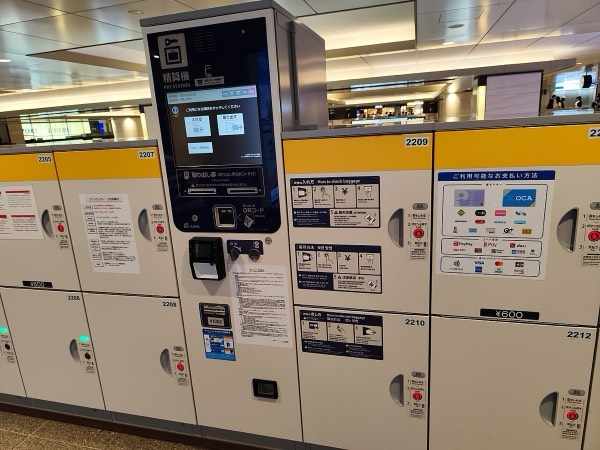
| 12:00 | Lunch and shopping in a department store food hall | Coat off and carried, or in a coin locker |
| 14:00 | Park or riverside, warmest part of the day at about 10°C | Coat open, scarf depending on wind |
| 17:00 | Temperature drops quickly after dark | Scarf and gloves back on |
| 19:00 | One hour outdoors watching illuminations | Mid layer closed, add a beanie; feet get cold first |
The point of this example is that you never need to change clothes during the day; opening, removing and accessories do all the work. That means you can pack a few fewer bulky items.
How to dress in Tokyo, Kyoto, Osaka and Fukuoka: city by city
In short: the basic approach is the same in all four cities, but in Tokyo you guard against wind and dryness, in Kyoto you look after your feet and the early mornings, Osaka is damp but mild, and Fukuoka is windy and cloudy. Here is what to watch for in each city.
What to wear in Tokyo in December: dry north wind, so moisturize and block the wind
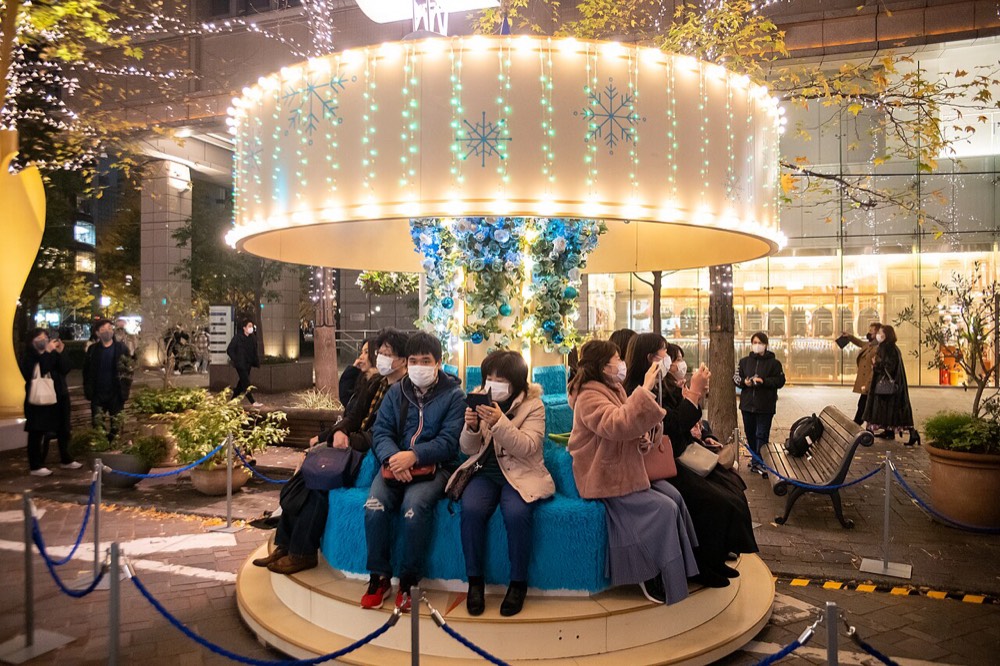
Tokyo's winter is defined by sunny days, dry air and wind from the northwest. In JMA normals, the most frequent wind direction from December to February is north-northwest, and January sunshine is about 193 hours, the most of the four cities[1]. It feels fine in the sun, but step into a gap between buildings or onto a riverbank and it feels markedly colder.
- December: about 12°C in the daytime. A long-sleeve top with a sweater or fleece and a windproof coat on top. Add a scarf for evening Christmas illuminations.
- January and February: about 1–2°C in the early morning. Add a light down vest under your coat, or simply wear a light down jacket; cover your neck and ears.
- Dealing with dryness: bring lip balm, hand cream and moisturizer. Wool and synthetic coats build up static, so touch a wall before touching a door handle.
To fit Tokyo's winter illuminations and New Year shrine visits into your trip, see Japan in December and Japan in January.
What to wear in Kyoto in winter: damp basin cold, and cold feet in temples
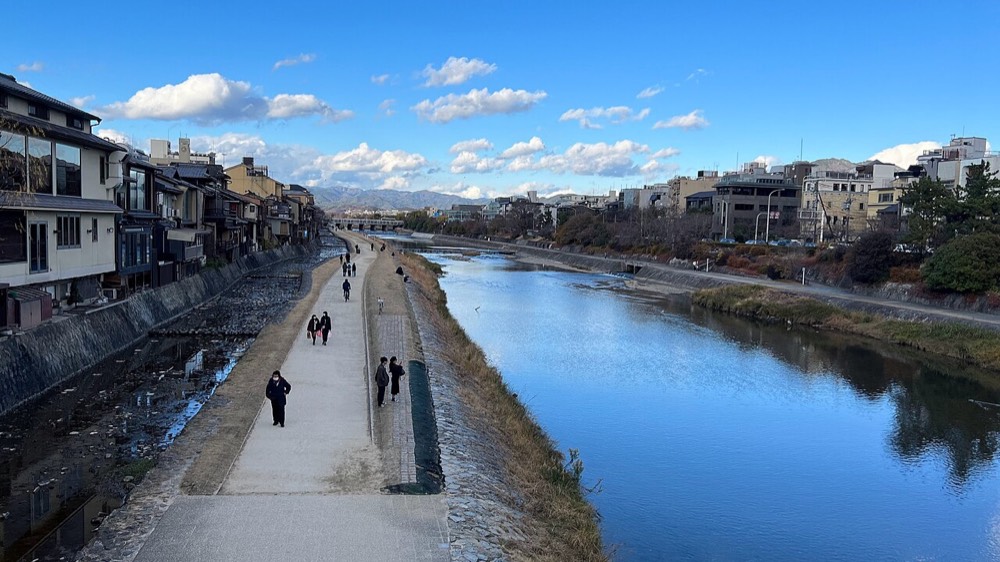
Kyoto locals often describe winter as "sokobie" (底冷え), a damp cold that seems to creep up from the soles of your feet. In numbers, Kyoto's January average low is 1.5°C, similar to Tokyo, but humidity is higher at 67%, the average wind speed is only 1.7 m/s, and snowfall is observed on about 16 days in January[3]. In other words, Kyoto's cold is not so much wind-driven; cold air settles at ground level in the basin, ringed by mountains on three sides, and combined with the moisture it feels bone-chilling.
In Kyoto, pay special attention to your legs and feet:
- Temples require removing shoes: many temples' main halls, abbots' quarters and buildings opened specially in winter must be entered without shoes, and the wooden floors and tatami are very cold. A pair of thick socks (wool or terry) makes more difference than an extra top.
- Add a layer under your trousers: for early visits to places with slopes and long stretches outdoors, such as Fushimi Inari or Kiyomizu-dera, wear thermal leggings under your trousers.
- Mornings and evenings are the hardest: sunny Kyoto days are actually pleasant; the coldest times are early morning and after sunset. Bring gloves and a beanie for morning sightseeing.
Many Kyoto temple buildings open specially only from January to March; for planning, see Kyoto winter travel guide.
What to wear in Osaka in winter: mild but damp, windy by the sea
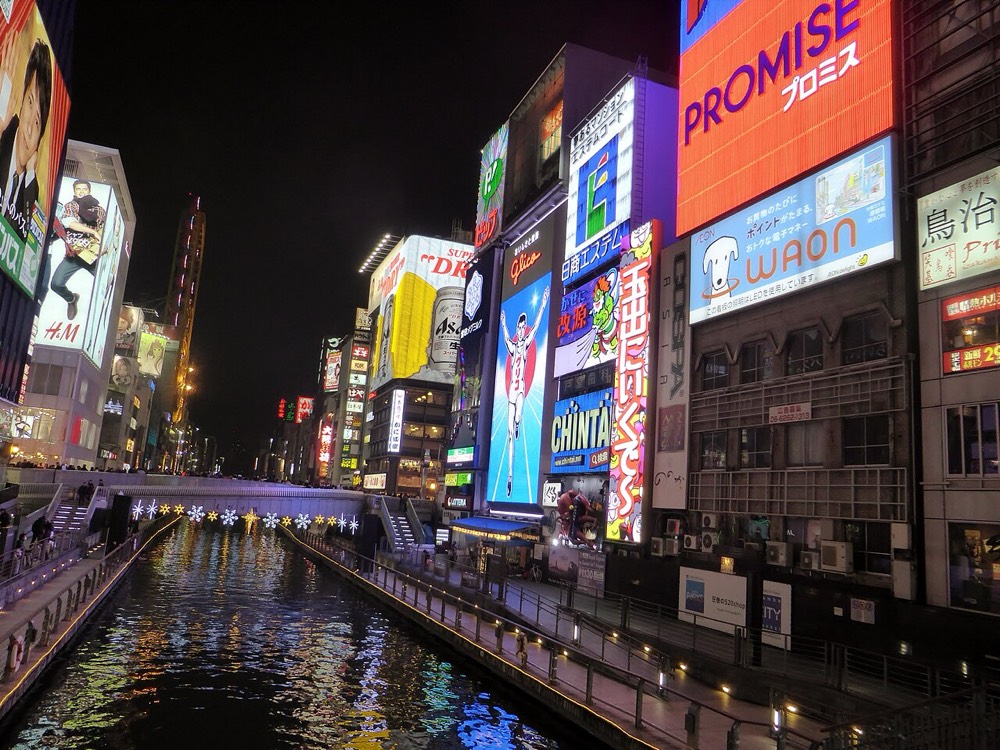
Osaka has the least cold mornings of the four cities, with an average low of 3.0°C in January and 5.3°C in December[2]. The city centre is mostly underground malls, shopping arcades and indoor shopping, so you spend much of your time in heated spaces. Your mid layer need not be thick; a windproof coat that is easy to take off matters most.
When you need an extra layer: seaside spots such as Universal Studios Japan, Tempozan and the Kaiyukan aquarium, or evening walks outdoors around Dotonbori and Midosuji. The wind comes off the water and you spend a long time queuing or standing, so heat packs and a scarf are very useful. Osaka's winter sights, events and itineraries are covered in full in Osaka in winter.
What to wear in Fukuoka in winter: windiest, cloudiest, and keep your legs warm at yatai stalls
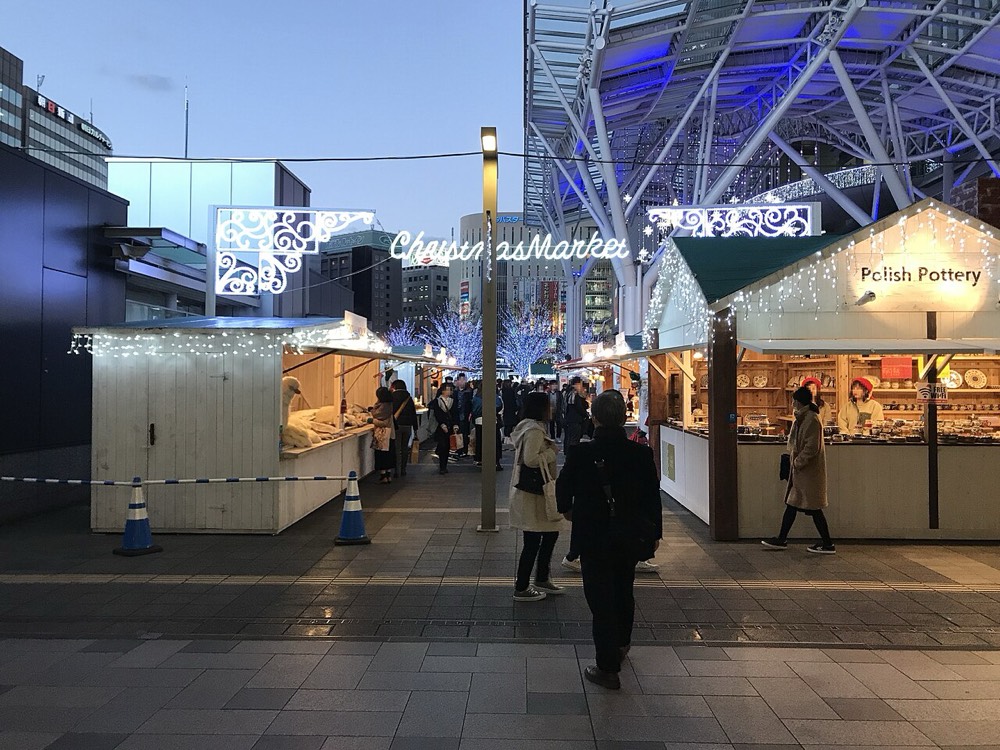
Fukuoka has the highest average temperatures of the four cities, with a January average high of 10.2°C and low of 3.9°C, but its average wind speed of 3.2 m/s is also the highest, and January sunshine is only about 104 hours, roughly half of Tokyo's[4]. Fukuoka sits in northern Kyushu facing the Sea of Japan side, with many cloudy winter days and occasional flurries. The numbers look mild, but walking by the sea or between Tenjin's buildings feels colder than expected.
- Make your coat windproof: more than thickness, Fukuoka calls for a coat that blocks wind; a hat or hooded jacket is also handy.
- Yatai stalls mean sitting outdoors: the stalls in Nakasu and Tenjin are mostly sheltered only by plastic sheeting, and after an hour your feet get cold. Wear trousers and thick socks, and put a heat pack on your lap.
- Grey skies and light drizzle: carry a folding umbrella and choose a water-resistant coat.
Which winter coat should you bring to Japan? Match it to your itinerary
In short: if you can bring only one, a mid-length windproof jacket plus a packable light down is the most versatile choice for Tokyo, Osaka, Kyoto and Fukuoka. Below, common coat types are compared by itinerary to help you decide which suits you.
| Coat type | Good for | Not ideal for |
|---|---|---|
| Packable light down (jacket or vest) | Packing light, city trips with frequent indoor/outdoor switching; can be worn under a coat as a mid layer | Standing outdoors for hours at illuminations or in queues; not enough on its own |
| Wool coat | City sightseeing in December and February, people who want to look good in photos; itineraries heavy on department stores and restaurants | Soaks up rain and gets heavy; less suited to cloudy, rainy Fukuoka or seaside trips |
| Windproof, water-resistant jacket (trench, softshell) + fleece mid layer | Fukuoka, seaside spots, unsettled weather, rain-averse travelers; very active days | Just these two layers may not be enough on January mornings; add a light down or thermals |
| Long heavy down coat | People who feel the cold, trips adding Hokkaido or Tohoku, long periods outdoors | Shopping-only trips in Tokyo or Osaka; too hot indoors and bulky to carry |
Two practical rules when choosing a coat: first, you should be able to open it one-handed on a train, so zips or snaps beat fiddly toggles; second, it should have pockets for heat packs and your phone, and somewhere to stash gloves.
What shoes to wear in Japan in winter: rain, temples and lots of walking
In short: in non-snow cities, water-resistant, comfortable sneakers or ankle boots that slip on and off easily are enough; you do not need snow boots. Independent travelers spend a lot of time on foot each day, and shoes affect your trip more than your coat.
What to look for:
- Water resistance first: winter is not the rainy season, but in a cold rain, mesh uppers soak through to your soles and leave you cold all day. Choose leather, synthetic leather or water-resistant uppers, or spray on water repellent before leaving.
- Easy on and off: Kyoto temples, some restaurants (zashiki rooms), ryokan and machiya guesthouses require removing shoes. Tightly laced high boots take time every time, so choose zips or a slightly roomier pair you can slip into.
- Treaded soles: stone paving on cold mornings, shrine approaches and underground mall exit ramps can be slippery, and smooth flat soles slip easily.
- Break in new shoes first: feet crack and blister easily in winter, so walk a full day in them before the trip.
Socks are part of your footwear too: pack a few thicker pairs and wear the thickest on your temple day. Holes in socks are embarrassing when shoes come off, so check before heading out.
Buy thermals and down in Japan? What to get at UNIQLO and drugstores
In short: thermals, light down and heat packs can all be bought in Japan. Bring one or two pieces for your first day and top up locally based on how cold you actually feel.
UNIQLO: HEATTECH thermals come in three weights: regular, Extra Warm and Ultra Warm. In cities like Tokyo, Osaka, Kyoto and Fukuoka with days around 10°C, regular is enough; Extra Warm and Ultra Warm suit Hokkaido or outdoor-heavy trips better and can feel too hot indoors. Packable Ultra Light Down comes in jacket and vest styles. Styles and prices change every season and there are frequent limited-time winter discounts, so check prices on the UNIQLO Japan website. Popular sizes may sell out in December and January, so if you wear an unusual size, sort it out before you leave.
Drugstores and convenience stores: heat packs, lip balm, moisturizer, masks and throat lozenges are all available. Drugstores usually have large packs at lower prices; convenience stores are good for grabbing one or two in a pinch.
Tax refunds: purchases above the tax-free threshold at one store qualify for a refund. From November 2026, Japan switched to a system where you pay tax first and get it refunded on departure; see Japan tax-free refund changes 2026 for the process. Thermals and coats count as general goods; bring your passport when shopping.
How to use heat packs (kairo): types, where to stick them and flying with them
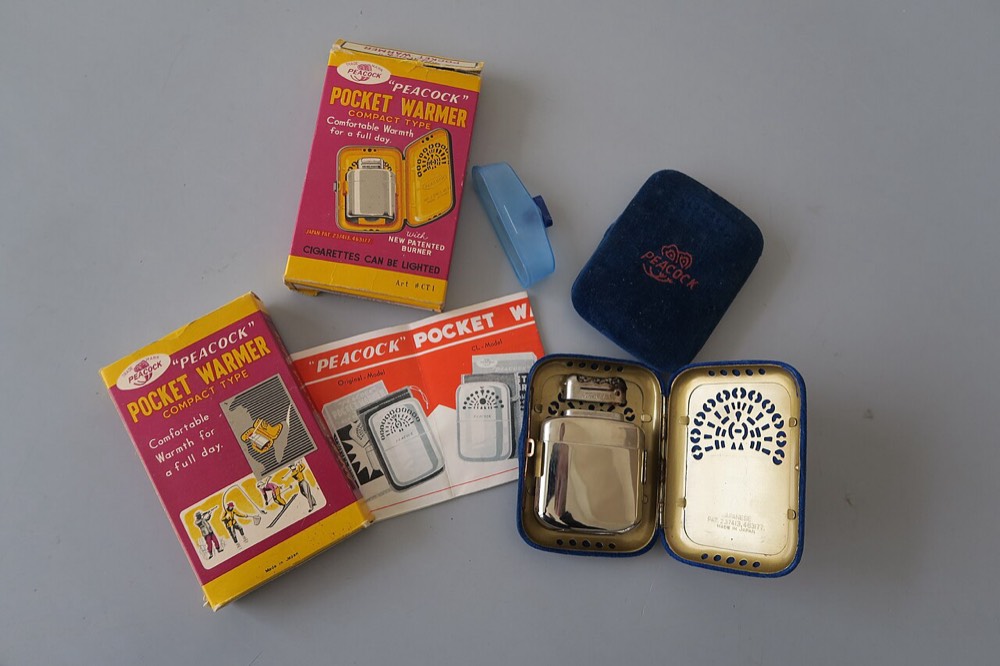
In short: Japanese disposable heat packs come as stick-on (haru), non-stick (haranai) and foot types for shoes. Stick them on clothing, never directly on skin. Disposable iron-powder heat packs can generally be taken on a plane; fuel-based platinum catalytic warmers cannot.
| Type | Japanese | How to use | Best for |
|---|---|---|---|
| Non-stick | 貼らないカイロ | Open, shake and keep in a pocket or hold in your hand | Cold hands, warming up while taking photos |
| Stick-on | 貼るカイロ | Stick on the outside of your base layer at the lower back or belly | All-day outdoor sightseeing, illuminations |
| Foot | 靴下用・くつ用カイロ | Stick on socks or place under the insole | Kyoto temples, yatai stalls, outdoor queues |
| Mini | ミニカイロ | Tuck into gloves or a pocket | Short outings |
How to use them:
- Once you tear open the outer pack, air starts the heating; it takes a few minutes to warm up, so open it before you head out.
- Stick-on types go on clothing (for example the outside of your thermal top), never directly on skin; foot types are only for shoes or socks, and should not be swapped with regular ones.
- Do not use them while sleeping or keep them pressed in one spot for long. Tokyo's consumer safety material notes that some people got low-temperature burns even when following the package directions[8]; move the pack if it feels too hot, and see a doctor if your skin turns red or blisters.
- When cool, dispose of them according to local rules; this is usually non-burnable waste, and at a hotel you can ask the front desk.
Can you fly with them? On the Japanese Ministry of Land, Infrastructure, Transport and Tourism's list of representative restricted items, "oil-filled pocket warmers and platinum warmers" are marked as banned in both carry-on and checked baggage[6]. Ordinary disposable iron-powder heat packs are not on this list and can usually go in both carry-on and checked bags, but because they contain iron, one in your pocket may set off the metal detector at security, so put them in your bag first. Rechargeable electric warmers contain lithium batteries and are subject to power bank and lithium battery rules. Airlines and departure points may be stricter, so check your airline's website before flying.
5-day Japan winter packing list (Tokyo, Osaka, Kyoto, Fukuoka)
In short: for 5 days, bring 2 outer layers, 2 mid layers and 3 base layers plus accessories and moisturizers, counting the outfit you wear to the airport. This example assumes December to February in non-snow cities:
| Item | Quantity | Notes |
|---|---|---|
| Windproof jacket or coat | 1 (worn) | Pick one with pockets that opens easily |
| Packable light down jacket or vest | 1 | Wear under your coat when cold, stash in your bag when warm |
| Mid layers (front-opening knit, fleece) | 2 | Avoid thick turtlenecks you cannot take off |
| Base layers (thermals or long-sleeve tops) | 3 | Wash at the hotel or buy more in Japan |
| Trousers | 2 | One to change; add 1 pair of leggings if you feel the cold |
| Socks | 5–6 pairs | At least 2 thick pairs for temple days |
| Shoes | 1 pair (worn) + 1 if needed | Water-resistant sneakers or ankle boots that slip on easily |
| Scarf, gloves, beanie | 1 each | Touchscreen-compatible gloves |
| Heat packs | A few to start | Top up at drugstores or convenience stores |
| Moisturizers | Lip balm, hand cream, lotion | Tokyo is especially dry |
| Folding umbrella | 1 | Cold rain is the worst |
| Power bank | 1 | Carry-on only, not in checked bags |
For documents, mobile data and transport cards, check against the Japan trip checklist.
Before you go: three things to check a week before departure
- Check the forecast twice: look at the long-range trend a week out, then the local forecast and tenki.jp's Clothing Index the day before. During a cold snap, mornings can drop below 0°C; in a mild spell, days can approach 15°C, so decide on the heavy down the night before.
- Check whether your trip includes snow country or long hours outdoors: if even one day takes you to Hokkaido, Tohoku or Nagano, or you will be outdoors at night for illuminations or a New Year countdown, plan that day's clothing separately. For events by month, see guides such as Japan in February.
- Leave some space in your luggage: thermals, light down or souvenirs bought in Japan will fill your bag on the way home, so packing cubes or a foldable shopping bag come in handy.
FAQ
Do I need a down jacket for Japan in winter?
For Tokyo, Osaka, Kyoto and Fukuoka, a wool coat or padded jacket is enough in early December. In January and February, mornings are close to 0°C, so a packable light down jacket is the most useful item: wear it under your coat when cold and stuff it in your bag when warm. You only need a long, heavy down coat for Hokkaido, Tohoku or long evenings outdoors at illuminations.
What should I wear in Tokyo in December?
Tokyo in December averages a high of 12.0°C and a low of 3.8°C, with many sunny, dry days. In the daytime, wear a long-sleeve top with a sweater or fleece and a windproof coat on top; add a scarf and gloves for evening Christmas illuminations. The north-northwesterly wind makes it feel colder, so cover your neck and ears.
Can I wear sneakers in Japan in winter?
Yes. In non-snow cities the pavement is dry most days, and comfortable sneakers are ideal. Pick a pair without mesh uppers or spray them with water repellent so they do not soak through in rain. In Kyoto you will often take your shoes off at temples, so choose shoes you can slip on without lacing and wear thicker socks.
Should I buy thermal underwear before the trip or in Japan?
Either works. UNIQLO has stores in all major cities and near airports, and HEATTECH comes in three warmth levels: regular, Extra Warm and Ultra Warm, so topping up locally is easy, though popular sizes can sell out in winter. If you are outdoors on day one, bring at least one or two pieces. Check prices on the UNIQLO Japan website.
Can I take heat packs (kairo) on a plane?
Disposable iron-powder heat packs are not on the Japanese Ministry of Land, Infrastructure, Transport and Tourism's list of restricted items and can generally go in both carry-on and checked baggage. Fuel-based platinum catalytic warmers (oil-filled kairo) are banned in both, and rechargeable electric warmers fall under lithium battery rules. Airlines and departure countries may be stricter, so check with your airline.
Sources
- Japan Meteorological Agency, past weather data: Tokyo climate normals (1991–2020): Average high and low temperatures, humidity, wind speed, sunshine and snow days for December to February
- Japan Meteorological Agency, past weather data: Osaka climate normals (1991–2020): December to February temperature, humidity and snow days
- Japan Meteorological Agency, past weather data: Kyoto climate normals (1991–2020): December to February temperature, humidity, wind speed and snow days
- Japan Meteorological Agency, past weather data: Fukuoka climate normals (1991–2020): December to February temperature, wind speed, sunshine and snow days
- Japan Meteorological Agency, past weather data: Naha climate normals (1991–2020): Okinawa winter temperature and wind speed
- Ministry of Land, Infrastructure, Transport and Tourism: Representative items restricted in carry-on or checked baggage (updated April 24, 2026): Rules for oil-filled pocket warmers, platinum warmers and power banks
- Japan Weather Association tenki.jp: Clothing Index: Daily index suggesting what to wear based on forecast temperatures
- Tokyo Metropolitan Consumer Center: material on burns from disposable heat packs: Cases and precautions for low-temperature burns from heat packs
Fares, opening hours and event dates can change. Information checked on 2026.11.24; please confirm with official sources before you go.