Japan Coin Lockers Guide: Sizes, Prices, IC Card Payment, Vacancy Apps and Overnight Rules (2026)
Japan coin lockers explained: sizes for 24- and 28-inch suitcases, daily prices, Suica payment, the 2 a.m. overnight rule, and what to do when lockers are full.
Quick answer
Japanese station coin lockers (koin rokkā) charge per day by size. JR East's Multi-ecube lockers cost about 300 to 1,100 yen a day, roll over to a new day at 2 a.m., and hold items for up to 3 days including the first day; after that, items are removed to storage. Large compartments are usually about 34 cm deep, so measure thick suitcases first. Big stations often fill up before noon: check live vacancies and book on the Multi-ecube website (500 yen extra per box), or use ecbo cloak (800 yen a day for a suitcase) or a staffed baggage counter.
Coin lockers (koin rokkā) are the most common way to store luggage when traveling independently in Japan. If you want a few more hours of sightseeing after checkout, or you stop off on the way to another city, you can put your suitcase in a station locker and walk around empty-handed. Many travelers only find out on the spot that every large locker is taken, that their suitcase will not fit, or that collecting it the next day costs an extra day. This guide covers locker sizes, prices, how to pay with an IC card, overnight charging rules, alternatives when lockers are full, and new services in 2026.
What sizes are Japanese coin lockers? Will a 24- or 28-inch suitcase fit?
Short answer: the limits on large lockers are a depth of about 34 cm and a height of about 65 cm. Most 24-inch suitcases fit upright in a large locker, a 28-inch suitcase has to lie on its side, and anything thicker than 34 cm will not fit.
There is no national standard for locker sizes in Japan. Each operator and station uses different units, usually labeled small (S), medium (M), large (L) and extra-large (LL or LW). Narita International Airport publishes inner dimensions, so here it is as an example[3]:
| Size | Inner size (W × D × H, cm) | Price per day | Roughly fits |
|---|---|---|---|
| Small | 33 × 34 × 66 | 400 yen | Backpack, carry-on (if thin enough) |
| Medium | 50 × 34 × 66 | 600 yen | Carry-on, most 20- to 24-inch cases upright |
| Large | 86 × 34 × 66 | 800 yen | 24-inch upright, 28-inch on its side |
| Multi-ecube LW | 86 × 56 × 65 | 1,200 yen | Thick 28- to 32-inch cases, two suitcases |
| Extra-large (Terminal 3 only) | 227 × 34 × 66 | 1,200 yen per 12 hours | Skis, golf bags |
How to tell whether your bag will fit:
- Measure the thickness first: the depth of about 34 cm is where most bags get stuck. Expandable suitcases often exceed it when expanded, so zip them back before you go.
- Then measure the height including wheels: brands measure "inches" differently. A typical 24-inch case is around 60 to 70 cm tall including wheels, right around the 65 cm limit, so it sometimes has to lie flat.
- Check the width if lying flat: on its side, a 28-inch case must be narrower than the locker height of about 65 cm and shorter than the locker width of about 86 cm.
Station lockers are not necessarily the same size as the airport ones, so treat the table as a reference. At newer Multi-ecube lockers, within 15 minutes of depositing you can switch to a larger box at the original door if one is free (larger only, never smaller).
How much do coin lockers cost in Japan? 2026 price examples
Short answer: most station lockers cost 300 to 1,100 yen a day, and large compartments from 700 yen up are common. You pay by the day, not by the hour.
Multi-ecube, the multi-function locker run by the JR East group, is the fastest-growing system. Its official FAQ gives these daily price ranges[2]:
| Size | Price per day (varies by location) |
|---|---|
| SS | 300–400 yen |
| S | 400–500 yen |
| M | 500–900 yen |
| L | 700–1,100 yen |
| LW | 800–1,000 yen |
A real example: the Multi-ecube lockers that opened on April 17, 2026 outside the 3rd-floor ticket gates at Hankyu Osaka-umeda Station charge 500 yen for S, 600 yen for M and 800 yen for L[8].
Watch out for two extra charges:
- Booking fee: reserving online adds 500 yen per box, regardless of size or number of days[2].
- Variable pricing: some lockers carry a "変動料金制" (variable pricing) sticker. The first day's price changes with the time of day and demand, and from day 2 the regular rate applies[13]. The amount on the pay station screen is the current price.
Private railways, subways and tourist sites set their own coin locker prices, and there is no single price list to quote, so go by the price posted on site.
How do you use a coin locker in Japan? Opening with an IC card or a ticket
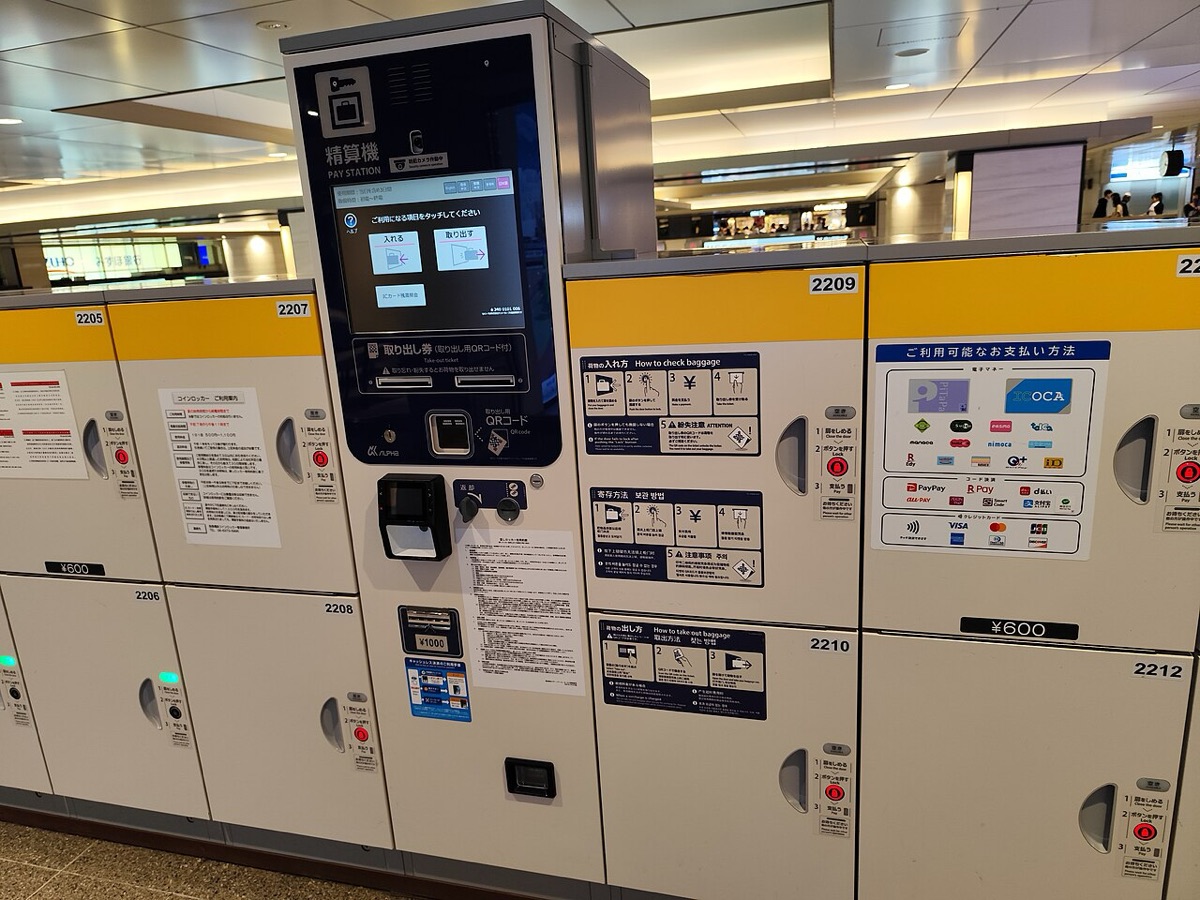
Short answer: at newer lockers, you choose a box at the pay station, pay, and open it later with a take-out ticket or the IC card you paid with. At old coin lockers, you insert coins and take the key.
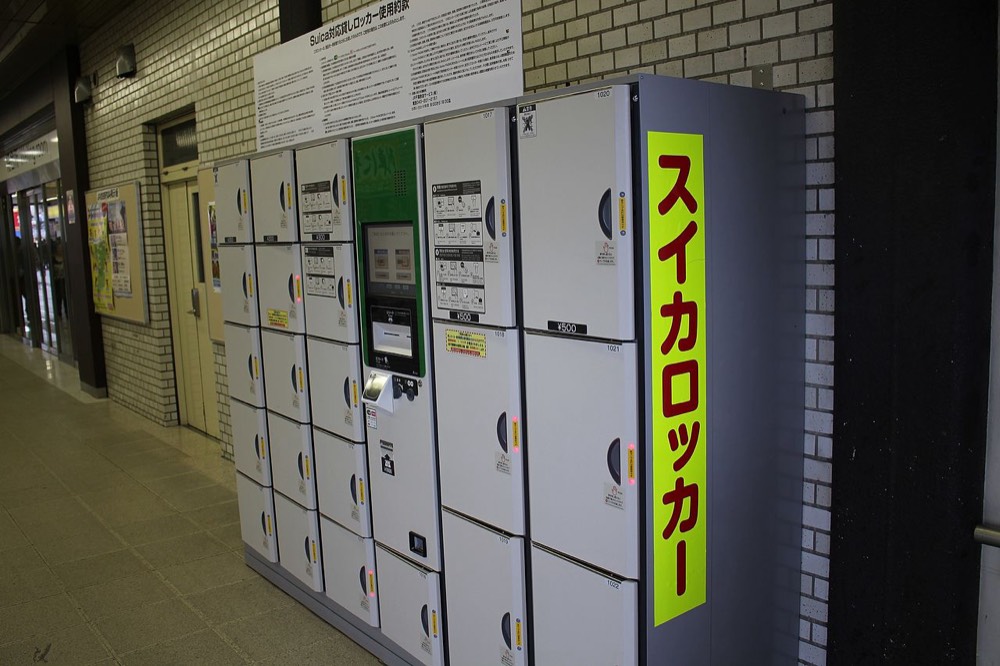
Japanese lockers fall into three broad types, each paid for and opened differently:
| Type | How to pay | How to open | Note |
|---|---|---|---|
| Old coin-only lockers | 100 yen coins only | Physical key | Get coins ready; if you lose the key, contact the operator |
| IC card lockers (Suica, PASMO, ICOCA, etc.) | Transit IC card | Tap the same IC card | The card is your key, so don't let a companion walk off with it |
| Multi-function lockers (Multi-ecube, etc.) | IC card, QR payment, credit card | Ticket QR code or number, or the IC card you paid with | Live vacancies and booking available |
According to JR East's official media, Multi-ecube accepts transit IC cards such as Suica and PASMO; QR payments such as PayPay, d-barai, Alipay and WeChat Pay; and Visa, JCB, Mastercard and American Express credit cards[4]. To set up Suica on your phone, see our Suica setup guide for iPhone and Android.
Walk-in deposit at a Multi-ecube locker (no booking):
- Tap "預入" (deposit) on the touchscreen.
- Pick a box lit green (available) and confirm the size and price.
- Choose a payment method and pay.
- Take the take-out ticket (取出し券) the machine prints. It has a QR code and a number. Without it, only the IC card you paid with will open the box.
- Put your bag in the assigned box, close the door and push the lever beside it down to lock.
To collect, tap "取出" (take out) on the screen and scan the ticket's QR code or enter the number. Note that each deposit allows only one retrieval: once you open the door and take your things, the session ends, and putting them back means paying again. The only exception is the yellow "再開扉" (reopen door) button, which lets you reopen the box within 15 minutes of depositing to add items.
Can you leave luggage in a coin locker overnight? Day-change times and maximum days
Short answer: yes, but every time the day-change time passes you pay another day. JR East lockers switch at 2 a.m., standard Narita Airport lockers at midnight, and most lockers allow 3 days at most.
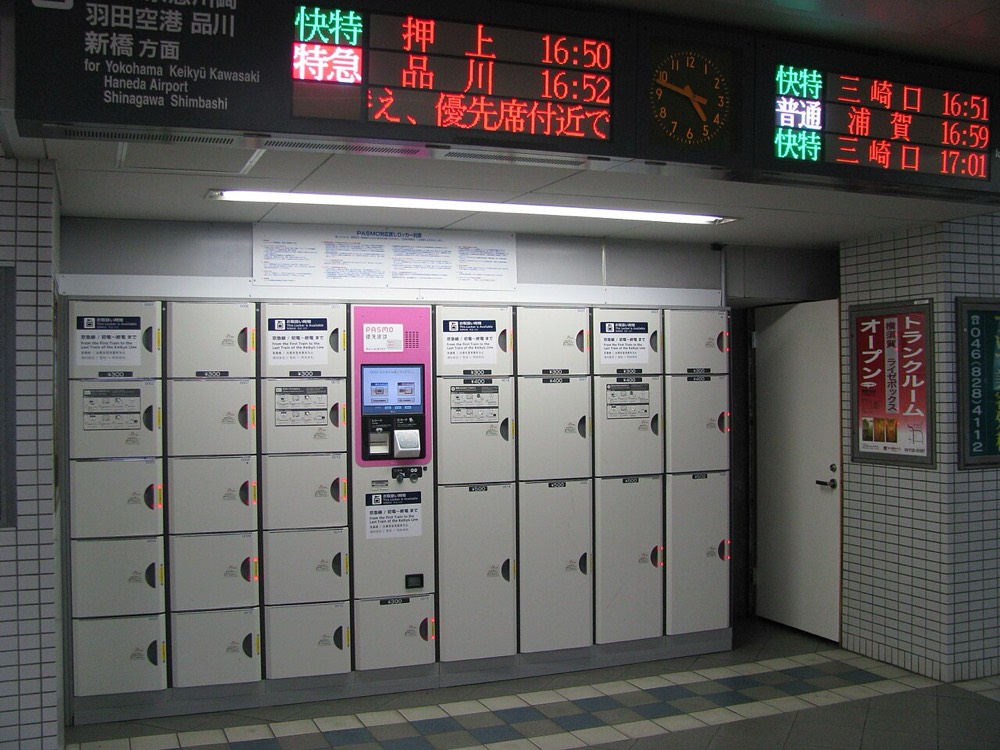
Most Japanese lockers do not run on 24-hour periods. Instead, one day is added each time the day-change time passes. Deposit at 11 p.m. and collect at 8 a.m. the next day, and you pay for 2 days even though you only used 9 hours. Rules by system:
| Locker | Day changes at | Maximum | After the limit |
|---|---|---|---|
| Multi-ecube (JR East group) | 2 a.m. daily | 3 days including the first (some locations differ) | Opened and moved to storage for 30 days with a storage fee, then treated as abandoned |
| Narita Airport standard lockers | Midnight | 8 days for small, medium and large; 5 days for extra-large | Per airport rules |
| ecbo cloak shop storage | Calendar day (each new date adds a day) | Depends on the shop | Depends on the shop |
The Multi-ecube terms state that items left longer than 3 days are moved to a company facility, with a daily storage fee equal to the overtime rate. Anything unclaimed after 30 days is treated as abandoned and disposed of[1]. At Narita Airport, the day ends at midnight, so depositing at 9 p.m. and collecting at 1 a.m. counts as 2 days[3].
Other private railways and subways set their own day-change times and maximum periods (many use 2 a.m., but not all), so read the terms posted on the locker. If you need 4 days or more, for example leaving a big suitcase in Tokyo while you visit Hokkaido, lockers are the wrong choice. Ask your hotel to hold it, or use luggage delivery in Japan.
The terms also list what you may not store: cash, credit cards, passports, driver's licenses, keys, electronics holding important data, expensive jewelry, date-specific tickets, live animals, flammable or dangerous goods, and anything over 30 kg. Compensation for loss is capped at 30,000 yen per use[1], so always keep your passport and cash with you.
What to do when lockers are full: vacancy apps and alternatives
Short answer: first check live vacancies or book on the Multi-ecube website. If everything near the station is full, look for a staffed baggage counter or ecbo cloak storage at a shop.
Check vacancies and book on the Multi-ecube website
The Multi-ecube website (multiecube.com) shows live vacancies by size at each station without registration. To book, you register with an email address and a credit card[4]. Booking rules:
- Bookings open 1 month before the date of use, by the day, for up to 3 days.
- Each box costs an extra 500 yen to book. Premium members (500 yen a month) pay no booking fee.
- Shortly after 2 a.m. on the day, you receive an email with your booking number and QR code. At the locker, choose "WEB reservation" and scan the code to deposit.
JR East's earlier locker booking service, To Locca, ended on January 16, 2025, and Multi-ecube WEB took over[11]. If you only need to know which station has lockers and near which exit, the Japanese-language site Coin Locker Navi lets you search by station, but it does not show live vacancies nationwide.
Staffed baggage counters at stations and tourist areas
Major stations, airports and tourist areas often have baggage counters run by companies such as Yamato Transport. They are not limited by locker size, but they have opening hours, so collect your bags before closing. For example, in autumn 2026 the City of Kyoto and the Kyoto City Tourism Association are running a temporary luggage storage and delivery point in the plaza in front of Kyoto Station (in front of Hotel Granvia Kyoto)[10]:
| Item | Details |
|---|---|
| Dates | November 21, 22, 23, 28 and 29, 2026 (5 days) |
| Hours | 9:00–20:00 |
| Storage | 1,000 yen per item, or 800 yen if booked in advance |
| Same-day delivery to lodging in Kyoto city | 1,500 yen per item (1,400 yen booked), accepted until 14:00 |
| Same-day delivery to lodging in Osaka city | 2,500 yen per item (2,400 yen booked), accepted until 11:30 |
Bookings are made on the Kyoto Station Smart Navi web map, with no app needed. For getting around the station, see our Kyoto transport guide.
ecbo cloak: leave your bags at a shop
ecbo cloak lets you book storage space at partner shops such as cafés and stores through its app or website. Its official price is 500 yen a day for a bag with a longest side under 45 cm, and 800 yen a day for a suitcase of 45 cm or more. There is no size limit, but each item must weigh 20 kg or less, and some locations such as those inside stations charge different prices[5]. From December 2025, 378 7-Eleven stores across Japan began offering the service in stages, using back-room space that can hold large suitcases and strollers that don't fit in lockers[6].
With ecbo cloak, you drop off and collect during the shop's opening hours, and the maximum number of days depends on the shop. It also charges by calendar day, so dropping off at 5 p.m. and collecting the next morning counts as 2 days[5].
Coin lockers vs other luggage storage in Japan: how to choose
Short answer: for a few hours with a small or medium bag, use a locker. For big bags or peak season, book a locker or use a staffed counter. If you're changing cities, send your luggage ahead.
| Option | Typical price | Size limit | Booking | Hours | Best for |
|---|---|---|---|---|---|
| Regular coin / IC card lockers | About 300–1,100 yen a day | Box size; few large boxes | No | Usually station hours | A few hours with a backpack or small-to-medium case |
| Bookable lockers (Multi-ecube) | Daily rate + 500 yen booking | As above; some LW boxes | Yes, from 1 month ahead | Depends on location | Peak season, when you must have a large box |
| Staffed station counters | e.g. 1,000 yen at Kyoto's temporary point | Flexible | Some | Opening hours | Large cases, skis, several bags |
| ecbo cloak shop storage | 500 yen per bag, 800 yen per suitcase | No size limit, up to 20 kg | Required | Shop hours | When station lockers are full |
| Delivery (hotel to hotel, locker to hotel) | Several thousand yen per item | Depends on carrier | Yes | Cut-off times | Changing cities, not wanting to touch your bags again that day |
Hotel-to-hotel delivery usually means handing your bag to the front desk the day before and picking it up at your next hotel the following day. Rates, sizes and airport delivery are covered in our luggage delivery guide for Japan, so we won't repeat them here.
Lockers suit you if: you'll collect the bag the same day, you're carrying a backpack or a suitcase of 24 inches or less, and you're at a major station with plenty of lockers.
Lockers don't suit you if: you need 4 days or more, you have a thick suitcase of 28 inches or more, you arrive at Kyoto or Shinjuku Station around noon in autumn foliage or cherry blossom season, or you'll come back very late (station entrances may be closed). In these cases, booking, a staffed counter or delivery saves time.
New in 2026: locker-to-hotel delivery, now at Narita Airport too
Short answer: JR East keeps adding Multi-ecube lockers and now offers same-day delivery from lockers to hotels, giving travelers with big suitcases another option.
- Numbers: 912 units at 290 stations as of end of March 2026[8]. By end of August 2026, there were 1,149 units at 381 stations and locations in Kanto, Tohoku, Kansai, Hokkaido, Kyushu and elsewhere, with a target of 2,000 units by fiscal 2030[7].
- Tokyo and Sendai: from August 1, 2026, bags left in Multi-ecube lockers at Tokyo Station can be delivered the same day by Hakobyun Quick rail freight to hotels around Sendai Station and in the Akiu Onsen area. From Sendai Station, bags go to hotels around Tokyo[9].
- Narita Airport: lockers opened at Terminal 2 B1 on September 5, Terminal 1 North Wing 1F on September 17, and Terminal 3 2F on October 8, 2026. Regular storage costs 400 to 1,200 yen a day. For same-day hotel delivery, deposit by 11:30 a.m. for delivery by 9 p.m., at 3,400 to 3,600 yen for general members[7]. Narita Airport's website says delivery covers hotels in 10 Tokyo wards and Urayasu and is not available from Terminal 3[3].
- Tokyo, Osaka and Kyoto: Multi-ecube lockers at Tokyo, Shinjuku, Ueno, Shinagawa, Ikebukuro, Shibuya and other stations, plus Kyoto Station and Kyobashi and Tenmabashi in Osaka, also offer same-day hotel delivery. Booking deadlines and drop-off times are listed on the official website[4].
For getting from the airport into the city, see our Narita Airport to Tokyo transport comparison and Tokyo transport guide.
Common coin locker mistakes in Japan
Short answer: the most common losses are paying an extra day by passing the day-change time and looking for a large box at noon, followed by losing the ticket or IC card.
- Assuming 24-hour billing: deposit in the evening and collect the next day, and you always pay 2 days. If you only need overnight storage, ask your hotel whether it can hold your bag after checkout. That is often cheaper than a locker.
- Looking for a large box at noon: big stations such as Kyoto and Shinjuku have few large boxes, and in peak season they can fill up by mid-morning. Check vacancies on the website before you arrive, or book.
- Throwing away the ticket or lending out your IC card: either the take-out ticket (QR code or 6-digit number) or the IC card you paid with opens the box[12]. If you lose both, call the 24-hour line at 0120-829-532 with the station name and the 4-digit box number on the door, and you may have to wait for office staff.
- Taking something out and wanting to put it back: opening the door ends the session and you'll pay again, so plan before you open it.
- Leaving your passport or cash in the locker: the terms prohibit it, and compensation is capped.
- Forgetting that station entrances close: if the lockers are inside the ticket gates or in an underground mall, you may not be able to reach them late at night. If you'll collect after the last train, choose a location open 24 hours.
Before you go: planning it smoothly
Decide before you leave which days you need storage and for how long: lockers for same-day returns, your hotel for overnight or longer, and delivery when changing cities. Note your suitcase's height including wheels and its thickness, so you can compare it with the locker on the spot. In peak season at big stations in Kyoto and Tokyo, book a Multi-ecube box early or check a staffed counter's hours. For the rest of your preparation, see our Japan trip checklist.
FAQ
Can I leave my bag in a Japanese coin locker overnight?
Yes, but you pay for an extra day. JR East's Multi-ecube lockers switch days at 2 a.m., so depositing at 11 p.m. and collecting the next morning counts as 2 days. Standard lockers at Narita Airport switch at midnight. Most station lockers allow a maximum of 3 days including the first day, so use a staffed counter or your hotel for longer stays.
Will a 28-inch suitcase fit in a Japanese coin locker?
It depends on the suitcase's thickness and on that station's large lockers. At Narita Airport, for example, a large compartment is about 86 cm wide, 34 cm deep and 66 cm high inside, so the bag must be no thicker than 34 cm and may need to lie on its side. Expandable bags often exceed the depth when expanded. Large compartments are scarce at stations, so book one or use a staffed counter.
Can I pay for coin lockers in Japan with Suica or a credit card?
Newer lockers usually accept them. Multi-ecube takes transit IC cards such as Suica and PASMO, QR payments such as PayPay, and Visa, JCB, Mastercard and American Express. Older coin-only lockers take 100 yen coins only. Accepted payment methods are posted on the door or pay station, so check before you deposit.
Is there an app to find vacant coin lockers in Japan?
JR East's Multi-ecube website shows live vacancies without registration and lets you book a box (500 yen extra per box). The older To Locca service ended on January 16, 2025. Coin Locker Navi lets you look up locker locations by station. If you cannot find a locker, the ecbo cloak app lets you book storage at a shop.
What if I lose my locker ticket or IC card?
At Multi-ecube lockers, either the take-out ticket (QR code or 6-digit number) or the IC card you paid with will open the box. If you have neither, call the 24-hour line at 0120-829-532 with the station name and the 4-digit box number on the door. A local office will send staff, and you may need to show ID.
Sources
- JR East Smart Logistics: Multi-ecube Locker Terms of Use: 2 a.m. day change, 3-day maximum, removal to storage for 30 days, prohibited items, liability cap
- Multi-ecube FAQ: How much does it cost?: Daily price ranges for sizes SS to LW, 500 yen booking fee
- Narita International Airport: Coin Lockers: Inner dimensions and prices by size, midnight day change, maximum days (checked November 2026)
- JR East official media: How to use Multi-ecube multi-function lockers: Payment methods, vacancy search, booking rules, stations with same-day hotel delivery
- ecbo cloak Help: Price plans and luggage sizes: 500 yen per bag, 800 yen per suitcase, 20 kg limit, charged by calendar day (updated September 2026)
- Honichi Lab: 7-Eleven introduces ecbo cloak: Rolled out at 378 7-Eleven stores nationwide from December 2025
- LOGI-TODAY: Multi-ecube installed at Narita Airport: Start dates at Narita's three terminals, same-day hotel delivery terms, 1,149 units as of end of August 2026
- LOGI-TODAY: Multi-ecube at Hankyu Osaka-umeda Station: 912 units at 290 stations as of end of March 2026, prices at Hankyu Osaka-umeda
- Travel Voice: JR East expands JRE Tebura-tabi: Same-day hotel delivery from Tokyo and Sendai station lockers via Hakobyun Quick from August 1, 2026
- City of Kyoto: Temporary luggage delivery and storage point (announced October 29, 2026): Dates and prices of the November 2026 temporary luggage service at Kyoto Station
- FUN! JAPAN: Coin lockers and luggage storage in Tokyo and Osaka compared: To Locca ended on January 16, 2025 and was replaced by Multi-ecube WEB
- Multi-ecube FAQ: I can't open the locker because I don't have the IC card I paid with: Lost ticket procedure and support phone number
- JR East Smart Logistics: About variable pricing: Some lockers use time-based pricing on the first day
Fares, opening hours and event dates can change. Information checked on 2026.11.11; please confirm with official sources before you go.