Kyoto Transport Guide 2026: City Buses, Subway, Day Passes and How to Avoid the Crowds
Getting around Kyoto: city bus 230 yen, subway 220-360 yen, the 1,100 yen Subway and Bus One-Day Pass, the discontinued bus pass, crowd tips and the 2027 fare plan.
Quick answer
Kyoto City Bus costs 230 yen for adults in the flat-fare zone, and the Kyoto Municipal Subway costs 220-360 yen. The main pass you can still buy in October 2026 is the Subway and Bus One-Day Pass at 1,100 yen for adults; the bus-only One-Day Pass was discontinued in September 2023. Kyoto plans to raise city bus fares for non-residents from fiscal 2027 (draft: 350-400 yen), but this is not yet final.
The biggest headaches with getting around Kyoto are packed buses and day passes that have changed several times. This guide sets out the situation as of October 2026: how to ride Kyoto City Buses and the Municipal Subway, which day passes you can still buy (the old bus-only pass was discontinued long ago), how to use the subway and private railways to avoid traffic, and the latest on Kyoto's plan to raise bus fares for visitors in fiscal 2027. The aim is that on your first trip you spend your time at the sights, not in bus lines.
What Transport Is There in Kyoto? Five Types to Know
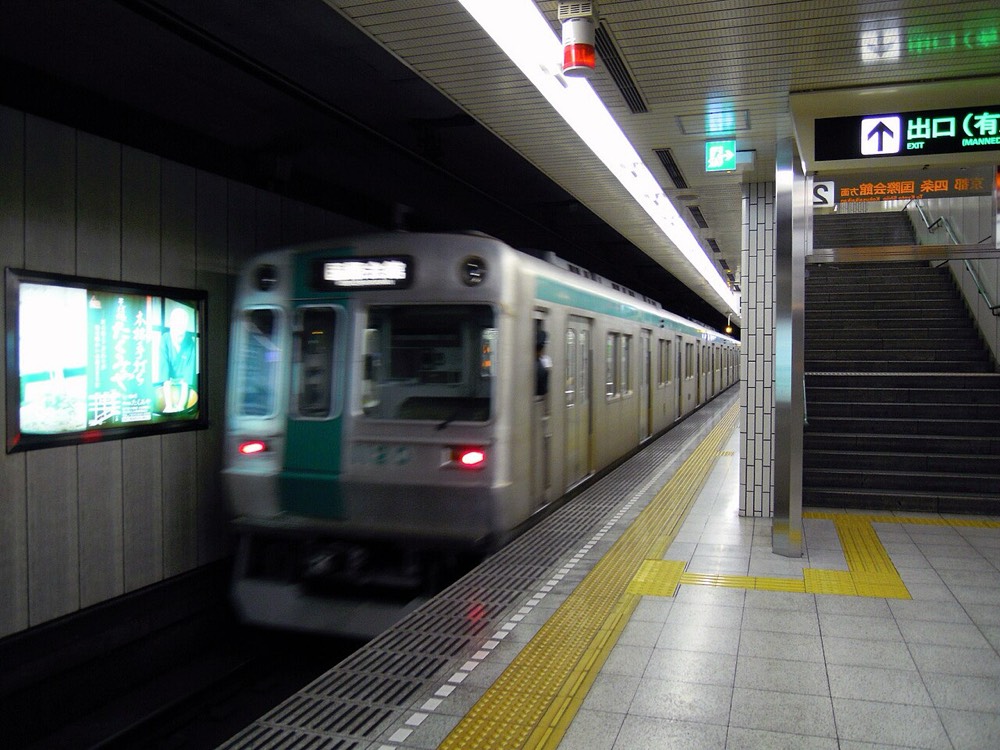
In short: central Kyoto runs on the subway plus city buses. For Fushimi and Uji use JR and Keihan, and for Arashiyama use JR, Hankyu or Randen.
| Transport | Main use | Adult one-way fare | Notes |
|---|---|---|---|
| Kyoto City Bus | Sights in the city (Kiyomizu-dera, Kinkaku-ji, Ginkaku-ji) | 230 yen in the flat-fare zone | Densest network, but the most prone to traffic |
| Kyoto Municipal Subway | Karasuma Line (north-south) and Tozai Line | 220-360 yen | On time and free of traffic; direct to Nijo Castle and Keage |
| JR West | Sagano Line (Arashiyama), Nara Line (Fushimi Inari, Uji) | By distance | Most convenient from Kyoto Station |
| Keihan Railway | Gion-Shijo, Kiyomizu-Gojo, Fushimi Inari, Uji | By distance | Runs north-south along the Kamo River, avoiding Higashiyama buses |
| Hankyu, Randen | Kawaramachi to Arashiyama, Shijo-Omiya to Arashiyama | Randen flat 250 yen | Alternative routes toward Arashiyama |
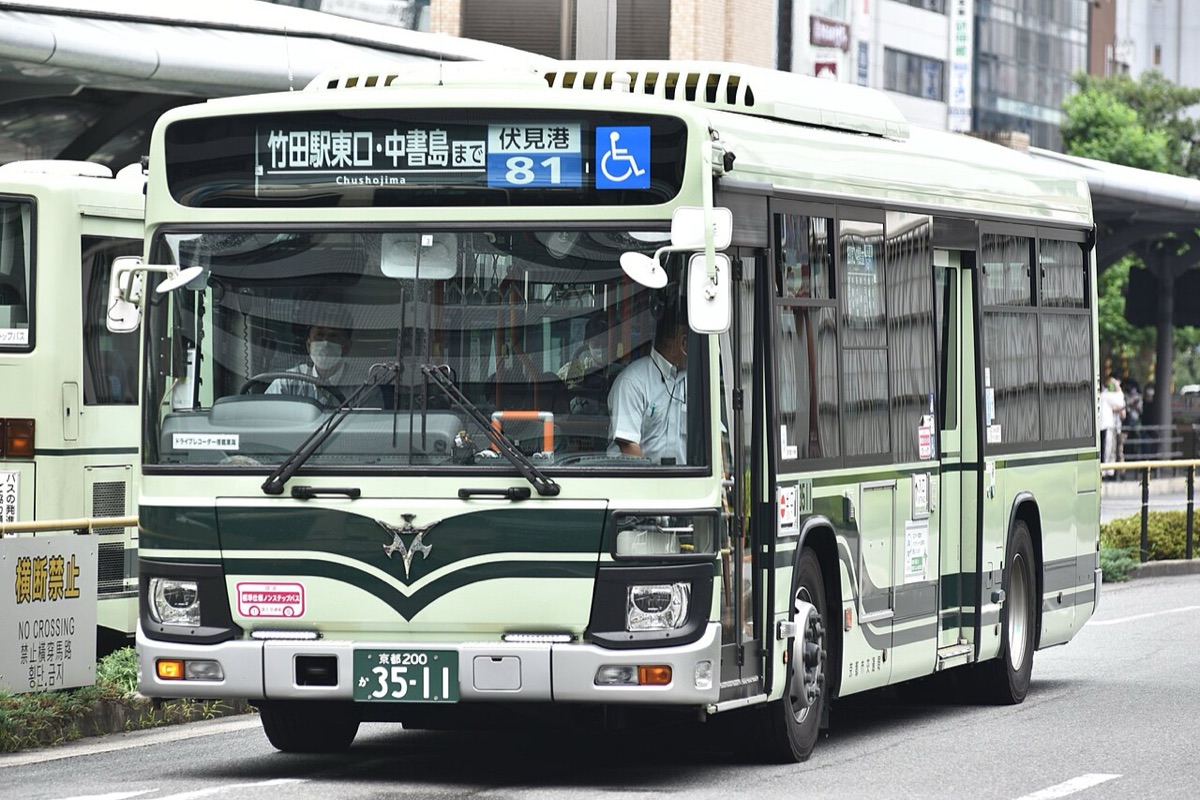
On Kyoto City Buses, the fare is 230 yen however far you ride within the flat-fare zone, and when the Transportation Bureau adjusted fares on some systems in 2024 it confirmed that the flat-fare zone stays at 230 yen.[4] The municipal subway is priced by distance, at 220-360 yen for adults.[3] Transit IC cards (ICOCA, Suica, Suica in an iPhone and so on) work on all of the above. For setting up an IC card and adding it to your phone, see the Suica guide for iPhone and Android.
Which Kyoto Day Pass to Choose: What You Can Still Buy in 2026
In short: most travelers will be fine with the Subway and Bus One-Day Pass. If you only ride the subway, choose the Subway One-Day Pass. Foreign visitors staying along the Keihan line may consider Keihan's sightseeing pass.
Many older guides still recommend the 700 yen Bus One-Day Pass, but the Kyoto City Transportation Bureau stopped selling it on September 30, 2023, and it could not be used after March 31, 2024.[2] The main tickets Kyoto Travel lists as of October 2026 are as follows.[1][6]
| Pass | Adult / child | Coverage | Best for |
|---|---|---|---|
| Subway and Bus One-Day Pass | 1,100 / 550 yen | All municipal subway and city bus routes, plus some Kyoto Bus, Keihan Bus and West JR Bus routes | A day covering 3 or more areas |
| Subway One-Day Pass | 800 / 400 yen | All municipal subway lines | Sights along the subway, such as Nijo Castle, Keage and Fushimi |
| Kyoto Subway and Randen 1-Day Ticket | 1,300 yen (adults only) | All municipal subway lines plus Randen | City plus Arashiyama on the same day |
| Keihan "Kyoto Sightseeing Pass" | 1-day 1,100 yen, 24-hour 1,300 yen | Designated sections of Keihan Railway | Short-stay foreign visitors only; passport required to buy |
| Kyoto-Arashiyama 1-Day Pass (digital) | 1,400 yen | All Hankyu and Randen lines, Kyoto Bus in the Arashiyama-Saga area | Kawaramachi to Arashiyama; on sale Oct 1 to Dec 20, 2026 |
The Subway and Bus One-Day Pass can be bought at the city bus and subway service offices, the Kyoto Sightseeing Information Center "Kyo Navi," subway station counters, on city buses, and at some convenience stores. A digital version is available in the KANSAI MaaS app.[1] Note that parts of Kurama, Kibune and Ohara are outside the pass area, and a Subway One-Day Pass bought from a station machine is valid only on the day of purchase.
How do you decide whether to buy one? A bus ride is 230 yen, so you need 5 rides in a day (1,150 yen) before paying per ride costs more than the pass. If your plan is subway to Nijo Castle in the morning, bus to Kinkaku-ji in the afternoon and back to Shijo in the evening, that is about 4 to 5 rides and the pass is simpler. If you will walk around Higashiyama all day, just tap an IC card.
How to Ride Kyoto Buses: Boarding and the Sightseeing Express
In short: on a regular city bus you board at the rear door and pay when leaving by the front door. On holidays from Kyoto Station to Kiyomizu-dera or Ginkaku-ji, consider the sightseeing express bus at 500 yen.
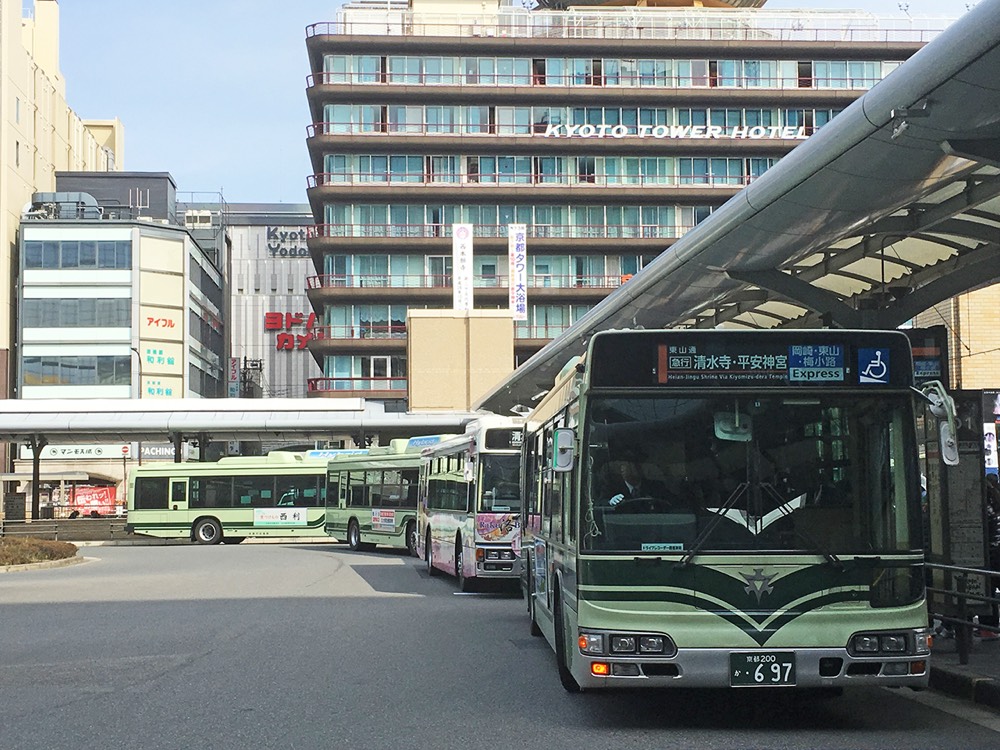
Steps for a regular city bus
- At the stop, check the route number and direction. The bus terminal in front of Kyoto Station is divided into zones A, B, C and D by destination.
- Board through the middle or rear door (a few routes are exceptions, so check the door signs).
- Press the bell before your stop, and when leaving by the front door, tap an IC card or put cash or a day pass into the fare box beside the driver.
- The change machine on board can give you coins, but it cannot break 5,000 or 10,000 yen notes.
Sightseeing Express Buses EX100 and EX101: Since June 2024, the Kyoto City Transportation Bureau has run sightseeing express buses from Kyoto Station that stop only at major sights, on weekends, national holidays and around the New Year. EX100 goes toward Gojozaka (Kiyomizu-dera), Gion, Heian Jingu and Ginkaku-ji, and EX101 goes to Gojozaka (Kiyomizu-dera). The fare is 500 yen for adults and 250 yen for children, and the Subway and Bus One-Day Pass is also valid. Check the Bureau's notices for the actual operating days.
Is Traffic in Kyoto Really That Bad? How to Avoid the Crowds
In short: in peak season Kyoto buses are often too full to board. The most effective approach is to take rail instead of a bus wherever you can, and to schedule popular sights for the morning.
| Destination | Not recommended (prone to jams) | Better alternative |
|---|---|---|
| Kiyomizu-dera | City bus from Kyoto Station to Gojozaka | Walk from Keihan Kiyomizu-Gojo Station, or take EX101 on holidays |
| Fushimi Inari Taisha | Bus | JR Nara Line to Inari Station, about 5 minutes |
| Ginkaku-ji, Nanzen-ji | City bus Route 5 the whole way | Tozai Line subway to Keage, then walk along the Philosopher's Path |
| Kinkaku-ji | Direct bus from Kyoto Station | Karasuma Line subway to Kitaoji, then a bus, to shorten the bus leg |
| Arashiyama | City bus, Kyoto Bus | JR Sagano Line, Hankyu, Randen |
| Uji | None | JR Nara Line or Keihan Uji Line |
Other ways to avoid the crowds
- Shift your timing: 9:00-11:00 and 15:00-17:00 are the peak movement times for tourists, so try to reach your first sight before then.
- Keep large luggage off buses: Kyoto asks visitors to use luggage delivery or storage services. A suitcase takes up space on a bus and makes it hard to get on and off. For how to send luggage, see the Japan luggage delivery guide.
- Split a taxi: with 3 or 4 people, a short taxi ride split between you costs about the same as the bus and saves queuing time.
- Link nearby sights on foot: Kiyomizu-dera to Gion and Ginkaku-ji to Nanzen-ji are both good walks, and the scenery is better than from a vehicle.
To organize your days by area, see the three-day area-based examples in Kyoto attractions.
Will Kyoto City Bus Fares Go Up for Tourists in 2027? Latest Progress
In short: Kyoto plans to introduce a "resident-priority fare" during fiscal 2027, with a draft city bus fare of 350-400 yen for non-residents. The fare stays at 230 yen through 2026, and the plan still needs approval from the city assembly and the national government.
In February 2026, Kyoto Mayor Koji Matsui put forward to the city assembly a plan to set fares by place of residence. Residents' fares would fall to 200 yen, and non-residents (domestic and international visitors alike) would pay about 350-400 yen. Residency is expected to be identified through a transit IC card linked to the My Number card. According to a September 2026 report, the city is aiming for implementation during fiscal 2027, but details such as how residency is verified and coordination with private bus companies are still under discussion.[5] The change requires an ordinance amendment and approval from the Ministry of Land, Infrastructure, Transport and Tourism, so neither the final fare nor the start date has been decided, and nothing has been announced about how day passes would be adjusted. Please follow the notices on the Kyoto City Transportation Bureau website.
The Transportation Bureau is also preparing a contactless credit-card boarding system for city buses and the subway. The tender documents list city buses and all stations on the subway's Karasuma and Tozai lines as targets,[7] but as of October 2026 we could not find an official launch date, so for now rely on an IC card or cash.
How to Get to Kyoto from Kansai Airport and Osaka
In short: after flying into Kansai Airport, the JR limited express HARUKA goes directly to Kyoto Station. From central Osaka you can choose JR, Keihan or Hankyu.
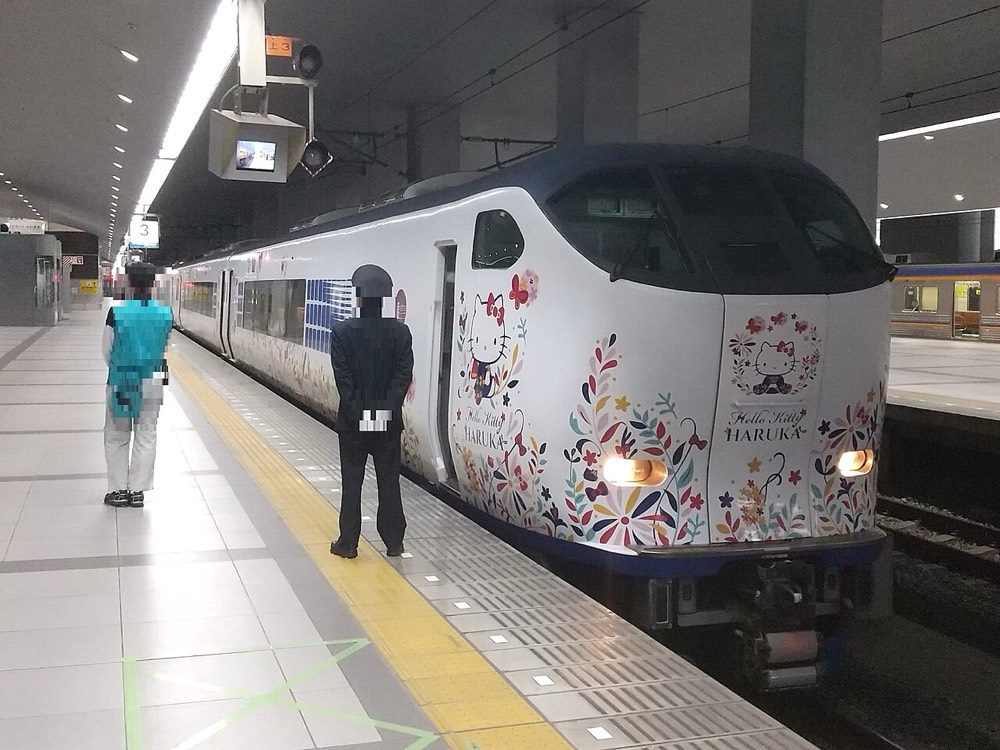
For travelers from Taiwan, there are direct flights from both Taoyuan and Kaohsiung to Kansai Airport, with a flight time of about 2.5 hours. From the airport there are two main ways to reach Kyoto. The JR limited express HARUKA goes directly to Kyoto Station in about 1 hour 20 minutes, which suits stays near Kyoto Station. The airport limousine bus goes directly to the Hachijo exit of Kyoto Station and is easier with a lot of luggage. From Osaka, the JR Special Rapid Service is the fastest to Kyoto Station, Keihan goes directly to Gion-Shijo and Sanjo, and Hankyu goes directly to Shijo-Kawaramachi. Choose whichever needs the fewest transfers for your accommodation. To decide which area to stay in, see where to stay in Kyoto.
Kyoto Transport Tips Before You Go
- Check the name of the day pass. What you can buy now is the 1,100 yen "Subway and Bus One-Day Pass." Ignore older guides that mention the 700 yen "Bus One-Day Pass."
- Top up your IC card first. If your balance is short when paying on leaving a city bus, you have to make up the difference in cash on board, which holds up the passengers behind you.
- Use the pass discounts. The Subway and Bus One-Day Pass and the Subway One-Day Pass give admission discounts at facilities such as Nijo Castle and the Kyoto Railway Museum. Just show the pass.
- Watch for last services. Some city bus routes stop running at 21:00-22:00, so at night take the subway or JR from the suburbs back into the city.
- If you are traveling in 2027 or later, city bus fares and day passes may both have changed. Check the official notices again before booking, or return to the Kyoto travel overview for our updates.
FAQ
Can you still buy the Kyoto bus one-day pass?
No. The Kyoto City Transportation Bureau's Bus One-Day Pass (700 yen) stopped selling on September 30, 2023 and could no longer be used after March 31, 2024. For unlimited rides in one day, the main option now is the Subway and Bus One-Day Pass at 1,100 yen for adults, which covers both the municipal subway and city buses.
Is the Kyoto subway and bus one-day pass worth it?
Roughly, it pays for itself from about 4 rides a day on city buses or the subway (a bus ride is 230 yen). If you will mostly be walking in one area that day, for example only Higashiyama, paying per ride with an IC card is cheaper. The pass also gives discounted admission at around 50 facilities.
Can you use an EasyCard in Kyoto?
Taiwan's EasyCard (Yoyo Card) does not work in Japan. Japanese transit IC cards such as ICOCA and Suica (including Suica in an iPhone's Wallet) work on Kyoto City Buses, the subway, JR, Keihan, Hankyu and Randen: just tap on boarding. Contactless credit-card boarding is still being prepared for Kyoto City Buses and the subway.
What can you do about crowded buses in Kyoto?
Use rail where you can, such as the subway, JR or Keihan, and walk the last part. For example, take the JR Nara Line to Fushimi Inari and the Keihan Line to Kiyomizu-Gojo for Kiyomizu-dera. When you have to take a bus, avoid 9:00-11:00 and 15:00-17:00, or take the direct sightseeing express bus on holidays.
Are Kyoto City Bus fares going up?
Kyoto has proposed a resident-priority fare plan, expected during fiscal 2027, that would lower the fare to 200 yen for residents and set a draft price of 350-400 yen for non-residents. It still needs an ordinance amendment and approval from the Ministry of Land, Infrastructure, Transport and Tourism, so amounts and timing may change. The fare remains 230 yen through 2026.
Sources
- Kyoto Travel | Discount Tickets (お得な乗車券): Prices and where to buy the Subway and Bus One-Day Pass, Subway One-Day Pass and others
- Kyoto City Transportation Bureau | Sales of the Bus One-Day Pass ended at the end of September 2023: Bus One-Day Pass discontinued
- Kyoto City Transportation Bureau | Taking the Kyoto City Subway: Subway fares of 220-360 yen
- Kyoto City Transportation Bureau press release (2024): City bus flat-fare zone stays at 230 yen
- Business Insider Japan | Kyoto City Bus resident-priority fare (September 23, 2026): Progress on the dual-pricing plan
- Kyoto City Official Travel Guide | Getting around Kyoto: Passes for foreign visitors such as the Keihan Kyoto Sightseeing Pass
- Kyoto City Transportation Bureau | Contactless credit card payment system specifications: Plan to introduce contactless card boarding on city buses and the subway
Fares, opening hours and event dates can change. Information checked on 2026.10.19; please confirm with official sources before you go.