Japan Public Holidays 2027: Full List, Golden Week, Obon, New Year and the Best Dates to Avoid Crowds
Japan public holidays 2027: all 17 days, five three-day weekends, Golden Week May 1-5, Obon, New Year, plus November 2026 holidays and tips to avoid crowds.
Quick answer
According to Japan's Cabinet Office, 2027 has 17 public holidays (including a substitute holiday on March 22), creating five three-day weekends: Jan 9-11, Mar 20-22, Jul 17-19, Sep 18-20 and Oct 9-11. Golden Week 2027 is a five-day break from Saturday, May 1 to Wednesday, May 5. Obon peaks around August 13-16, and the New Year break runs December 29, 2026 to January 3, 2027. The only remaining 2026 holiday is November 23 (Mon), with a three-day weekend on Nov 21-23.
When planning an independent trip to Japan, the biggest trap is often not the weather but colliding with Japan's own holidays: hotels sell out, Shinkansen seats disappear, and the queues at sights get absurd. This guide covers Japan public holidays 2027 in full: the official 2027 list from the Cabinet Office, every three-day weekend and Golden Week, the actual break periods for Obon and the New Year, the remaining November 2026 long weekend, and how to pick travel dates that avoid crowds and price spikes.
Japan's 2027 public holidays at a glance
Bottom line: Japan has 17 public holidays in 2027 (including one substitute holiday). Monday holidays create five three-day weekends, and Golden Week is a five-day break from May 1 to 5.
Japan's public holidays are set by the Act on National Holidays, and the Cabinet Office publishes each year's official dates[1]. The Vernal and Autumnal Equinox Days are not fixed by law; the National Astronomical Observatory announces the following year's dates in the Official Gazette every February. The 2027 equinox dates were published in February 2026, so the 2027 table on the Cabinet Office page is already final[1].
| Date | Day | Holiday (Japanese) | Impact on travel |
|---|---|---|---|
| January 1 | Fri | New Year's Day (元日) | Peak of the New Year period; most restaurants close on New Year's Day |
| January 11 | Mon | Coming of Age Day (成人の日) | Jan 9-11 three-day weekend |
| February 11 | Thu | National Foundation Day (建国記念の日) | Midweek; taking Feb 12 off makes four days |
| February 23 | Tue | Emperor's Birthday (天皇誕生日) | Midweek; taking Feb 22 off makes four days |
| March 21 | Sun | Vernal Equinox Day (春分の日) | Falls on Sunday, so the next day is a substitute holiday |
| March 22 | Mon | Substitute holiday (休日) | Mar 20-22 three-day weekend, close to Japanese school spring break |
| April 29 | Thu | Showa Day (昭和の日) | Start of Golden Week; April 30 is a working day |
| May 3 | Mon | Constitution Memorial Day (憲法記念日) | Golden Week five-day break May 1-5 |
| May 4 | Tue | Greenery Day (みどりの日) | Same as above |
| May 5 | Wed | Children's Day (こどもの日) | Same as above; work resumes May 6 |
| July 19 | Mon | Marine Day (海の日) | Jul 17-19 three-day weekend, just before school summer break |
| August 11 | Wed | Mountain Day (山の日) | Followed by the Obon homecoming rush |
| September 20 | Mon | Respect for the Aged Day (敬老の日) | Sep 18-20 three-day weekend |
| September 23 | Thu | Autumnal Equinox Day (秋分の日) | Midweek; no Silver Week long break |
| October 11 | Mon | Sports Day (スポーツの日) | Oct 9-11 three-day weekend |
| November 3 | Wed | Culture Day (文化の日) | Midweek |
| November 23 | Tue | Labor Thanksgiving Day (勤労感謝の日) | Taking Nov 22 off makes four days, during autumn leaves season |
nippon.com's analysis notes that most 2027 holidays do not fall on a Monday or Friday, so the calendar is "unlucky" overall and few long breaks form naturally[2]. For visitors that is actually good news: domestic holiday crowds are concentrated in a few periods, and most other times are relatively easy to plan around.
Three-day weekends and long breaks in 2027
Bottom line: In 2027, the periods to avoid are Golden Week (May 1-5), Obon (mid-August), the New Year break, and the Saturday-to-Monday stretch of the five three-day weekends.
Working from the Cabinet Office holiday list and the long-weekend periods compiled by Best Calendar[3], the main 2027 breaks are:
| Break | Dates | Length | Crowd level |
|---|---|---|---|
| New Year (2026→2027) | Dec 29, 2026 (Tue) - Jan 3, 2027 (Sun) | 6 days | Very high |
| Coming of Age Day weekend | Jan 9 (Sat) - Jan 11 (Mon) | 3 days | Medium; ski resorts and onsen busier |
| Vernal Equinox weekend | Mar 20 (Sat) - Mar 22 (Mon) | 3 days | High; spring break and early cherry blossoms |
| Golden Week | May 1 (Sat) - May 5 (Wed) | 5 days | Very high |
| Marine Day weekend | Jul 17 (Sat) - Jul 19 (Mon) | 3 days | High; beaches and theme parks |
| Obon | From Mountain Day Aug 11 (Wed), peak around Aug 13-16 | Depends on company | Very high |
| Respect for the Aged Day weekend | Sep 18 (Sat) - Sep 20 (Mon) | 3 days | Medium |
| Sports Day weekend | Oct 9 (Sat) - Oct 11 (Mon) | 3 days | Medium; peak autumn travel season |
| New Year (2027→2028) | Dec 29, 2027 (Wed) - Jan 3, 2028 (Mon) | 6 days | Very high |
A few situations people often ask about:
- All-reserved Shinkansen on the January and March long weekends: JR Central has announced that all Nozomi seats on the Tokaido and Sanyo Shinkansen will be reserved, with no non-reserved cars, from January 9 to 11 and from March 20 to 22, 2027[4]; Golden Week and later periods have not been announced yet.
- No three-day weekend in February: National Foundation Day (Feb 11) is a Thursday and the Emperor's Birthday (Feb 23) is a Tuesday, so most Japanese workers need to take leave to make a long weekend. This has less impact on visitors heading to the Sapporo Snow Festival in February.
- A "hidden" four-day weekend in November: Labor Thanksgiving Day is a Tuesday, and many people take Monday, Nov 22 off for a Nov 20-23 break, right at the peak of autumn leaves in Kyoto and Tokyo, so hotels will be in high demand.
- No autumn Silver Week in 2027: September 2026 had a five-day break from the 19th to the 23rd. In 2027 the Autumnal Equinox falls on a Thursday, with two working days between it and the Respect for the Aged Day weekend, so no similar long break forms.
How Golden Week 2027 works and which days are busiest
Bottom line: The core of Golden Week 2027 is the five-day break from Saturday, May 1 to Wednesday, May 5. April 29 is a standalone holiday, and normal weekdays resume on May 6.
nippon.com points out that because Constitution Memorial Day falls on a Monday, Golden Week 2027 naturally forms five consecutive days off; taking April 30 (Fri) off stretches it to seven days from April 29 to May 5, and adding May 6 and 7 creates an 11-day break from April 29 to May 9[2]. Some Japanese will take leave this way, so you may also see departure crowds around April 29 and return crowds around May 9.
Typical conditions during Golden Week:
- Transport: In 2026, JR Central made all Nozomi seats on the Tokaido and Sanyo Shinkansen reserved-only from April 24 to May 6, with no non-reserved cars[4]. The 2027 period has not been announced yet; this is past-year reference, but you can expect Nozomi to go all-reserved around the holiday again.
- Accommodation: Hotel rates in popular cities and tourist areas often rise noticeably compared with weekdays, and good onsen ryokan fill up early.
- Sights: Theme parks, zoos, popular shrines and temples and suburban attractions are the most crowded. The first day of the break is worst for traffic leaving cities, and the last day for traffic coming back.
If you want to visit Japan in spring while avoiding Golden Week, weekdays in mid-to-late April or anything after May 6 work best. In mid-May, right after Golden Week, crowds and room rates usually drop back, and the weather is pleasant.
Do Obon and the New Year count as holidays?
Bottom line: Obon is not a public holiday but is one of Japan's biggest homecoming rushes; the New Year is a period when national government offices are closed by law. Treat both as peak season.
Obon (お盆)
Obon is a traditional custom of honoring ancestors and visiting family graves, and in most regions it falls around August 13 to 16. It is not on the list of public holidays, but many companies give an Obon break. Best Calendar lists Mountain Day on Wednesday, August 11 through Monday, August 16, 2027 as a reference holiday period that includes typical company leave[3], which means the actual number of days off depends on each company. In 2026, JR Central's all-reserved Nozomi period ran from August 7 to 16[4], showing that the peak season extends well beyond just four days.
Besides the Shinkansen and domestic flights, expressways also see long-distance traffic jams. If you plan to drive or take a highway bus in mid-August, leave plenty of extra time.
Year-end and New Year
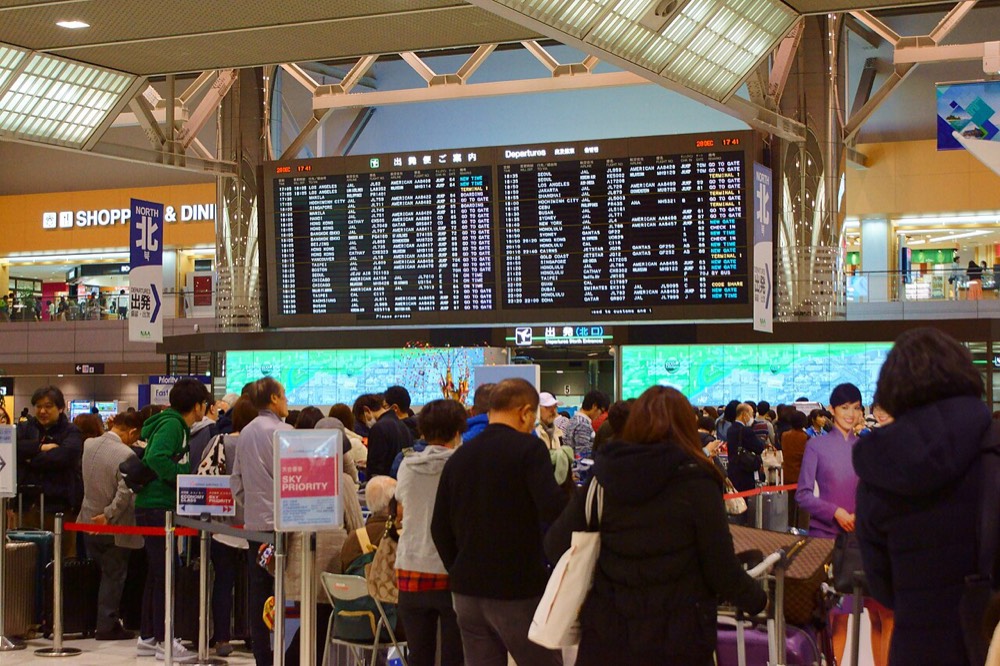
Japanese law closes national government offices from December 29 to January 3[5], and most private companies follow a similar schedule. The 2026-2027 break runs from Tuesday, December 29 to Sunday, January 3, six days in total; nippon.com notes that taking December 28 off as well allows a nine-day break from December 26 to January 3[2]. JR Central has announced that all Nozomi seats are reserved from December 25, 2026 to January 5, 2027[4].
Besides expensive, hard-to-book transport and hotels, many restaurants and museums close around New Year's Day. For bank and shop closures, hatsumode shrine visits and lucky bags, see our Japan New Year guide.
Remaining holidays in November 2026 for near-term trips
Bottom line: The only public holiday left in 2026 is Labor Thanksgiving Day on Monday, November 23, and the Nov 21-23 three-day weekend is the one to avoid most; Culture Day on Tuesday, November 3 has already passed.
According to the Cabinet Office[1], the November 2026 holidays look like this:
| Date | Holiday | Long weekend | Advice |
|---|---|---|---|
| November 3 (Tue) | Culture Day | Tuesday holiday; taking Nov 2 off makes Oct 31-Nov 3 four days | Already passed |
| November 23 (Mon) | Labor Thanksgiving Day | Nov 21 (Sat) - Nov 23 (Mon) three-day weekend | Overlaps peak autumn leaves in Kyoto; best avoided |
JR Central has already announced that all Nozomi seats are reserved from November 21 to 23[4], a sign of heavy demand between Tokyo, Nagoya, Kyoto and Osaka. If your trip falls in late November, schedule Kyoto for weekdays from November 24 onward, or stay in Osaka and commute in. Weather, autumn leaves timing and festivals across Japan in November are covered in our Japan in November guide.
December has no public holidays, so early and mid-December is a relatively easy time to book before the year-end peak; after that comes the New Year break starting December 29.
Traveling during Japanese holidays: tips for tickets, hotels and itineraries
Bottom line: If you can, start and end your trip on weekdays; if you can't avoid a holiday, book early, travel against the flow, and visit popular sights early in the morning or after the holiday.
- Check the calendar before buying flights: Before confirming flights, compare your dates with the holiday table in this guide. Avoiding the first day of a holiday on the way in and the last day on the way out usually cuts the crowds in half.
- Reserve Shinkansen seats the moment they go on sale: JR reserved seats go on sale at 10:00 one month before the travel date. During holidays Nozomi may be all-reserved with no non-reserved cars[4]; for booking steps and oversized luggage rules, see our Shinkansen booking guide.
- Book hotels 2-3 months ahead with free cancellation: Holiday rates are high and rooms are scarce, so secure a room with a cancellable rate first, then compare prices later.
- Travel against the flow: On the first day of a break, crowds move from Tokyo and Osaka out to the regions; on the last day it reverses. Heading back to a big city in the middle of a break is often quieter.
- Visit popular sights early or after the holiday: Theme parks, zoos and famous shrines are most crowded during holidays; if you can push them to a weekday after the break, do.
- Watch for holidays in your own country: Besides Japanese holidays, long breaks in other countries also crowd popular sights, such as Lunar New Year and school vacations in various regions. Factor both into your plans.
To prepare documents, mobile data and transport cards before you go, use our Japan trip checklist.
How to pick the smoothest travel dates
If your dates are flexible, the easiest periods to plan in 2027 are roughly: mid-January to February (after the New Year break, a good time for Hokkaido and Tohoku winter trips), weekdays in mid-April, mid-May to June, weekdays from late September to early October, and weekdays in late November after the three-day weekend. Before booking flights, check your dates against the holiday tables above and you will avoid most "I arrived and all of Japan was on holiday" surprises.
FAQ
When is Golden Week 2027 in Japan?
The five-day Golden Week break in 2027 runs from Saturday, May 1 to Wednesday, May 5. Showa Day on Thursday, April 29 stands alone, and Friday, April 30 is a working day, so many people take it off to make a seven-day break from April 29 to May 5. Work and school resume on May 6, which is a good time to avoid crowds.
How many three-day weekends does Japan have in 2027?
Based on the Cabinet Office holiday list, 2027 has five three-day weekends created by Monday holidays: January 9-11 (Coming of Age Day), March 20-22 (Vernal Equinox substitute holiday), July 17-19 (Marine Day), September 18-20 (Respect for the Aged Day) and October 9-11 (Sports Day). May 1-5 is also a five-day break.
Is Obon a public holiday in Japan?
No. Obon is a traditional custom of returning home to honor ancestors and is not on the list of national holidays, but many companies give an Obon break, usually around August 13-16. In 2027, Mountain Day on Wednesday, August 11 is a public holiday, and combined with company leave, homecoming and travel crowds peak in mid-August.
Is there a Silver Week in Japan in 2027?
Not like the five-day autumn break in 2026. Respect for the Aged Day falls on Monday, September 20, creating a September 18-20 three-day weekend, while the Autumnal Equinox on Thursday, September 23 falls midweek. The 21st and 22nd are working days, so there is no long break unless people take leave.
When is the New Year holiday in Japan, and what day is New Year's Day 2027?
Japan's year-end and New Year period generally means December 29 to January 3, when national government offices are closed by law. New Year's Day 2027 is a Friday, so the 2026-2027 break runs from Tuesday, December 29 to Sunday, January 3. For 2027-2028 it is Wednesday, December 29 to Monday, January 3, 2028.
Is traveling in Japan during holidays expensive, and how can I avoid it?
Yes. Demand for domestic flights, the Shinkansen and hotels surges during holidays, and hotels in popular areas often cost much more than on weekdays and fill up early. The best approach is to start and end your trip on weekdays outside the holiday, such as after May 6 for Golden Week. If you must travel then, book hotels 2-3 months ahead and reserve Shinkansen seats as soon as they go on sale one month before.
Sources
- Cabinet Office: national holidays: Official 2026 and 2027 public holiday lists; equinox dates are published in the Official Gazette each February by the National Astronomical Observatory
- nippon.com: Public holidays in 2027: Five three-day weekends, the five-day Golden Week and ways to extend it with leave (May 26, 2026)
- Best Calendar: 2027 calendar (holidays and long weekends): 2027 holiday periods, including typical company leave for Obon and New Year
- JR Central: all-reserved Nozomi periods: FY2026 periods when all Nozomi seats are reserved for Golden Week, Obon, three-day weekends and New Year, plus the January and March 2027 three-day weekends
- Hourei Lead: Act on Holidays of Administrative Organs: National government offices are closed December 29 to January 3
Fares, opening hours and event dates can change. Information checked on 2026.11.13; please confirm with official sources before you go.