Japan New Year Guide 2026-2027: Closures, Hatsumode Shrine Visits, Lucky Bags and Transport
New Year in Japan 2026-2027: bank and government closures, which shops stay open, hatsumode shrine etiquette, lucky bags and the Nozomi reserved-seat period.
Quick answer
Japan's New Year holiday is called nenmatsu nenshi: government offices close from December 29 to January 3, and bank counters close from December 31 to January 3 (for 2026-2027 the last banking day is December 30, with banks reopening on January 4). Many restaurants and small shops close on January 1, while convenience stores and most ATMs keep working. All Nozomi Shinkansen trains are reserved-seat only from December 25, 2026 to January 5, 2027, so book tickets and hotels early.
Spending New Year in Japan is a dream trip for many travelers: listening to temple bells on New Year's Eve, making the first shrine visit (hatsumode, 初詣) early on January 1, and chasing lucky bags on January 2. But Japan's "nenmatsu nenshi" (年末年始, the year-end and New Year period) is also when the most shops, banks and government offices are closed, and without planning you may find nowhere to eat or no bank open to change money. This guide covers the 2026-2027 closure patterns, how to do hatsumode, how to buy a lucky bag, and which transport to book early.
What are the dates of nenmatsu nenshi? 2026-2027 calendar
The short answer: it generally means about December 29 to January 3. In 2026-2027 January 1 falls on a Friday, so the break runs from Tuesday, December 29 to Sunday, January 3.
"Nenmatsu nenshi" has no single legal definition, but Japan's national administrative organs are legally closed from December 29 to January 3[1], and most private companies follow the same rhythm, so this is when Japanese people head home and travel.
| Date | Day | What to expect in Japan |
|---|---|---|
| Dec 25-28, 2026 | Fri-Mon | Last working day for government offices is Dec 28; all Nozomi trains reserved-seat only from Dec 25 |
| Dec 29-30 | Tue-Wed | Peak of the homecoming rush; banks still open, Dec 30 is the last banking day |
| Dec 31 (Omisoka) | Thu | Banks closed; toshikoshi soba, the Joya no Kane bells, hatsumode from midnight |
| Jan 1, 2027 (Ganjitsu) | Fri | The day the most shops are closed; shrines and temples are at their busiest |
| Jan 2-3 | Sat-Sun | Some malls and department stores start hatsuuri (first sales); return rush |
| Jan 4 | Mon | Government offices and banks reopen |
| Jan 5 | Tue | Last day of all-reserved Nozomi |
Are shops closed over the Japanese New Year? What closes and what stays open
The short answer: government offices and bank counters always close; on January 1 many privately run restaurants and small shops close; convenience stores, station and airport shops and most chains stay open.
What closes
- Government offices: national offices are closed from December 29 to January 3[1]. In 2026-2027 the last working day is Monday, December 28, and they reopen on Monday, January 4. Municipal counters follow their own ordinances, but most match the national schedule[2].
- Bank counters: Japanese banks are legally closed from December 31 to January 3. In 2026 the last banking day is Wednesday, December 30, and banks reopen on Monday, January 4, 2027[2]. If you need to exchange money at a bank, do it before December 30.
- Post offices: Japan Post usually announces its year-end and New Year counter hours in mid-December, and as of October the 2026 arrangements had not been announced[2].
- Restaurants and small shops: JNTO notes that almost all restaurants close on New Year's Day and may stay closed for the next few days[3]. Family-run ramen shops, izakaya and bars often stay closed until January 3 or longer.
- Museums, galleries and some attractions: most close around year-end through New Year's Day. Dates differ for each venue, so check the official website before you go.
What stays open
- Convenience stores: most stay open 24 hours and are your last resort for food on January 1.
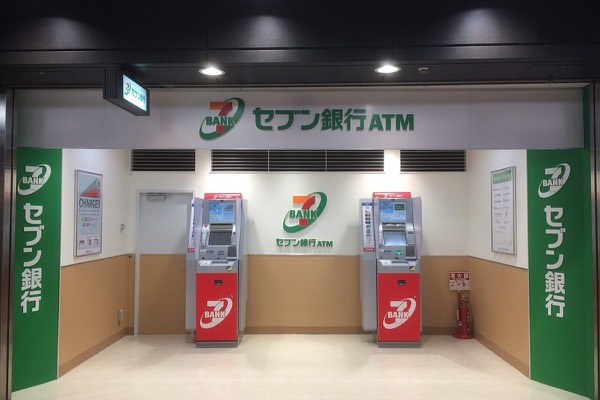
- ATMs: most ATMs keep working over the holiday, but some services may pause late at night or early in the morning. In 2025-2026, for example, some Japan Post Bank ATM transactions were suspended from 21:00 on December 31 to 7:00 on January 1[2].
- Fast-food chains, family restaurants and gyudon shops: most stay open, though hours may be shortened.
- Restaurants and shops in stations, airports and large hotels: these usually stay open.
- Large malls and department stores: in past years many closed on January 1 and started hatsuuri on January 2, while some malls opened on January 1. Hours for 2027 are mostly announced in December, so rely on each store's website.
What is hatsumode? How to visit a shrine at New Year in Japan
The short answer: hatsumode is the first visit to a shrine or temple in the new year to pray for a safe year, usually made between January 1 and 3.
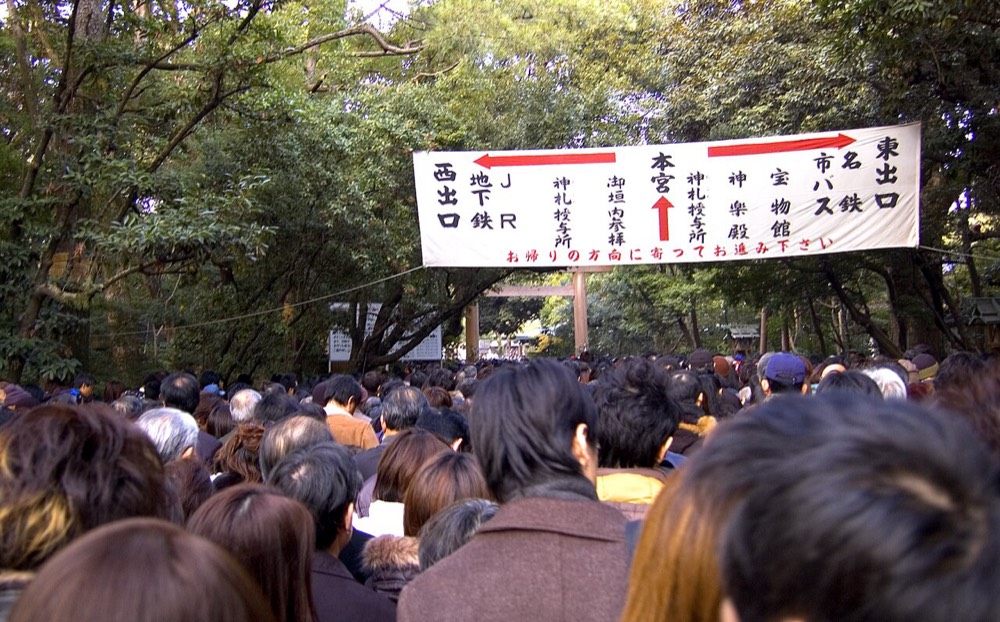
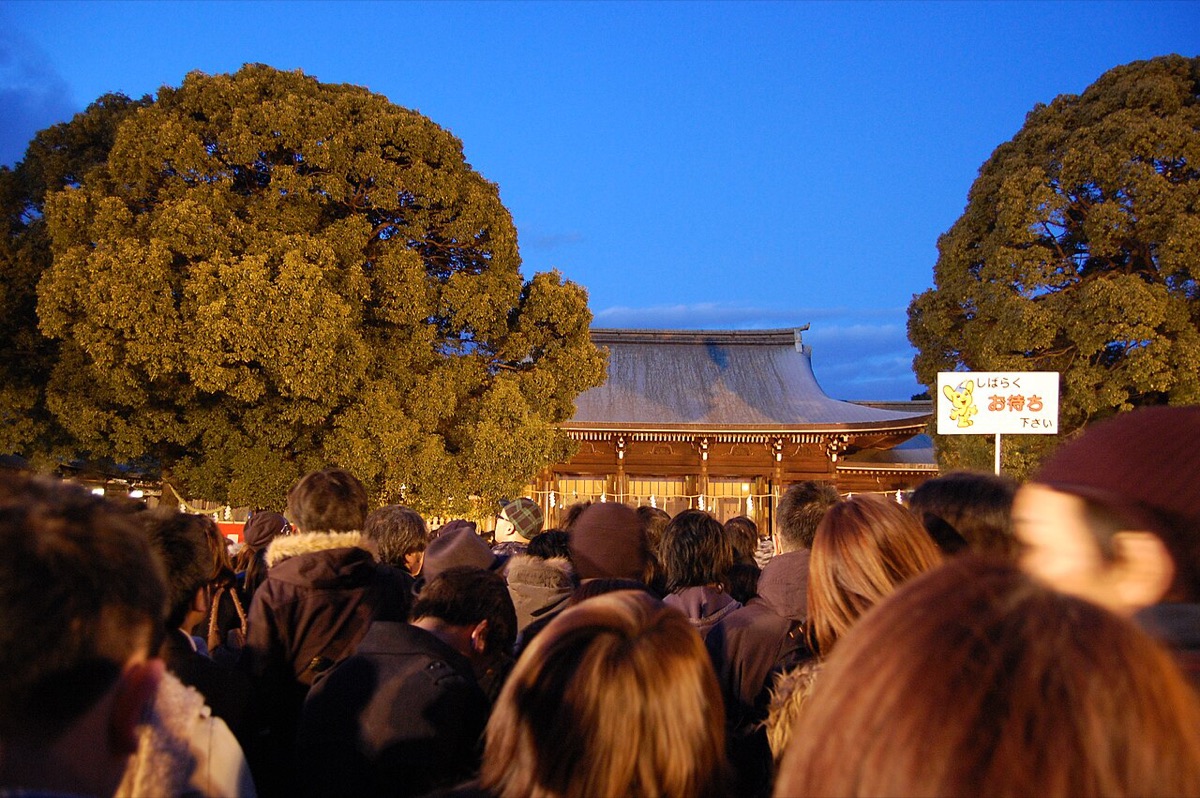
JNTO explains that on New Year's Eve many people queue in front of famous shrines to welcome the new year, praying and ringing the bell just after midnight, and in many cities trains run later into the night[3]. Tokyo's Meiji Jingu is the shrine with the most hatsumode visitors in Japan, and its official website also says hatsumode is the busiest time of the year[5].
Shrine etiquette (two bows, two claps, one bow)
- Bow lightly before the torii gate, then walk in. Keep to the sides of the approach, since the center is regarded as the path of the gods.
- At the purification fountain (temizuya), wash your left hand and then your right with the ladle, pour water into your left palm to rinse your mouth, and finally rinse the ladle handle.
- In front of the main hall, toss in an offering (saisen) and ring the bell.
- Bow twice, clap twice, press your hands together and make a wish, then bow once more.
- Afterwards you can draw a fortune slip (omikuji), buy an amulet (omamori), or return last year's amulet to the old-charm collection point.
Temples (such as Senso-ji) are different: you do not clap, you just put your hands together and pray silently.
Popular shrines and temples at New Year
- Tokyo: Meiji Jingu and Senso-ji; nearby, Kawasaki Daishi and Naritasan Shinshoji.
- Kansai: Fushimi Inari Taisha and Yasaka Shrine in Kyoto, and Sumiyoshi Taisha in Osaka.
- Kyushu: Dazaifu Tenmangu in Fukuoka.
Crowds peak at midnight and during the day on January 1, and queuing to pray can take a long time. To avoid them, go on a weekday on or after January 4 or early in the morning, which still counts as hatsumode.
How do people spend Omisoka? Joya no Kane and toshikoshi soba
The short answer: on December 31 Japanese people eat "toshikoshi soba" (year-crossing noodles), watch TV specials, and around midnight go to a temple to hear the "Joya no Kane" bells.
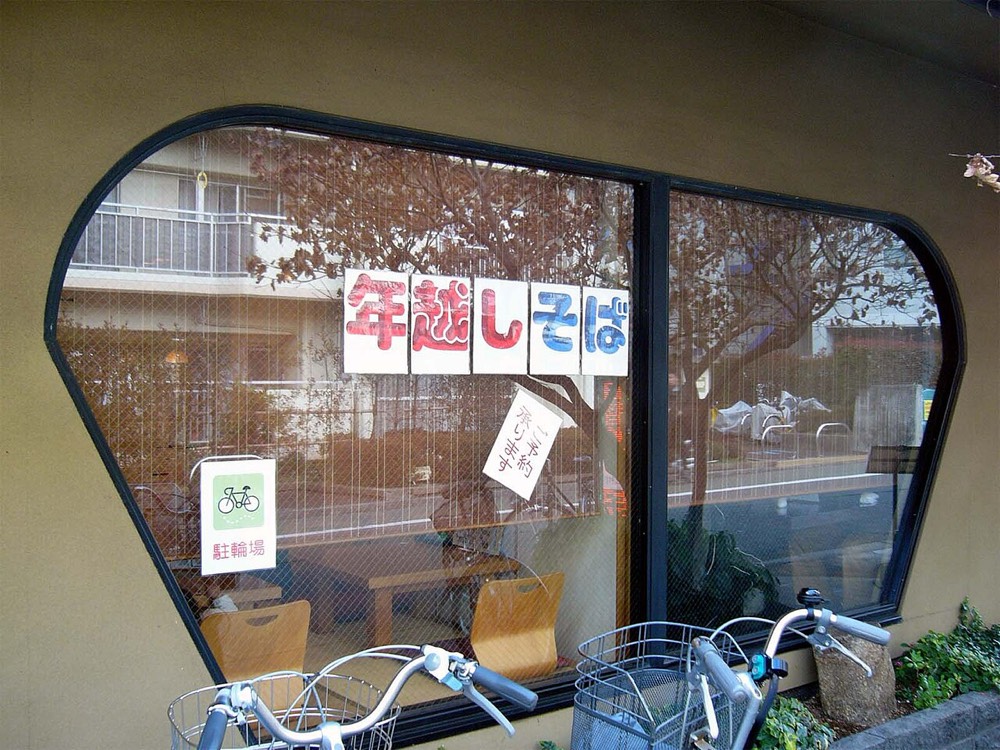
- Toshikoshi soba: eaten on the evening of December 31, symbolizing cutting off the past year's bad luck and living a long life.
- Joya no Kane: Buddhist temples ring their bells 108 times on New Year's Eve, symbolizing the removal of 108 human worldly desires. Some temples let visitors queue to ring the bell, and you usually need to line up early or register in advance.
- Osechi cuisine: the traditional food eaten during New Year, each dish carrying a lucky meaning. JNTO notes that ordinary restaurants rarely serve it, but department store food halls sell it[3].
Whether large countdown events are held and whether there are traffic controls depends each year on the organizers' announcements, so check before you go.
How to buy a Japanese lucky bag: hatsuuri tips
The short answer: lucky bags go on sale at "hatsuuri" on the first business day of the new year; popular ones are often pre-ordered online or sold by lottery, and in-store you will need to queue.
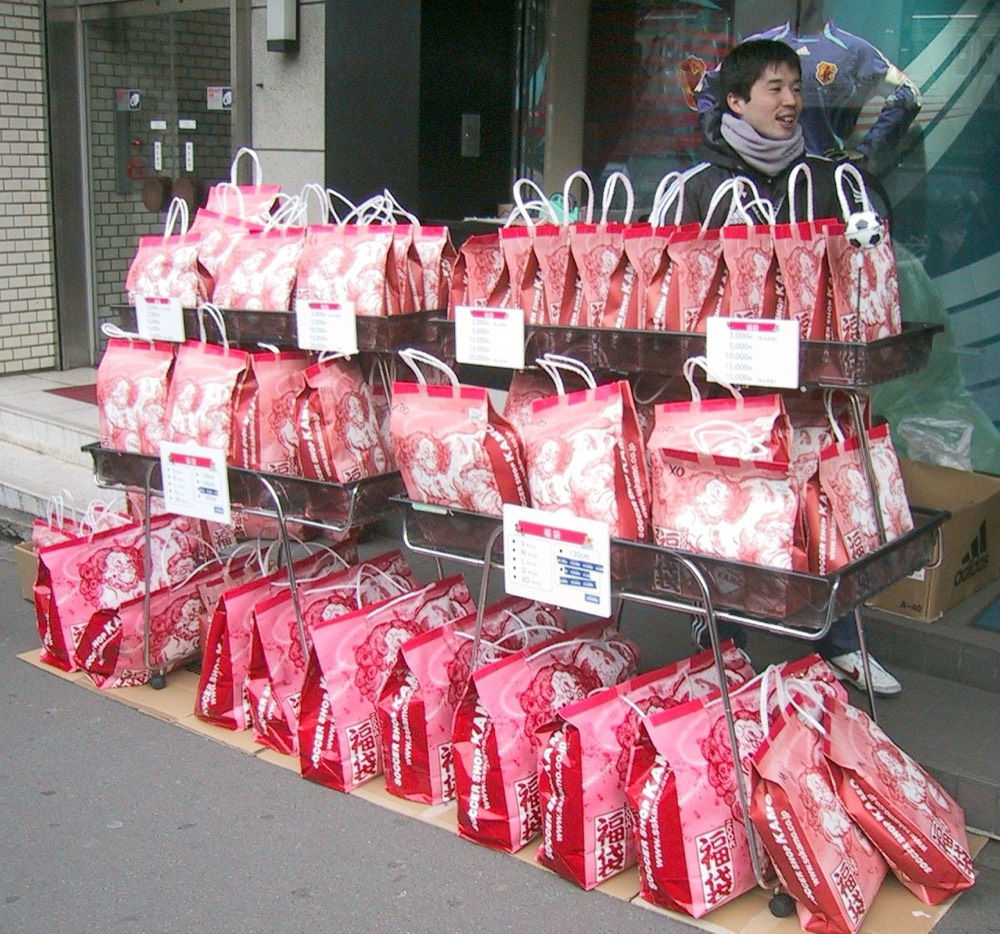
A lucky bag (fukubukuro, 福袋) is a New Year specialty in which a store packs several items into a bag and sells it for less than the total value. Tips for buying:
- Check the sale date: hatsuuri dates differ by department store, mall and brand, and 2027 dates are mostly announced in December.
- Online pre-orders and lotteries: in recent years popular brands often open online pre-orders or lotteries in December. Delivery times vary, so tourists should watch the delivery address and timing.
- Queue in store: popular stores have long lines before opening, so arrive early if you want one.
- Read the contents: some bags show what is inside (nakami ga mieru fukubukuro), and wrong sizes usually cannot be exchanged.
- Tax-free: whether tax-free shopping applies depends on the store and the rules. For the new refund system, see Japan tax-free refund 2026.
New Year transport in Japan: how early to book Shinkansen, flights and hotels
The short answer: year-end and New Year is one of the most crowded transport periods of the year, so reserve Shinkansen seats, flights and hotels early.
- Shinkansen: JR Central has announced that from December 25, 2026 to January 5, 2027 all Nozomi trains between Tokyo and Hakata are reserved-seat only, and reserved seats go on sale at 10:00 a.m. one month before the travel date. Hikari, Kodama and others still keep non-reserved cars[4]. If you hold a JR Pass, see the Nozomi supplement rules in Is the JR Pass worth it?.
- New Year's Eve trains: JNTO says trains run later into the night in many cities[3], but whether each railway runs all night differs from year to year, so check each company's announcement in December.
- Luggage delivery: parcel volumes are high at year-end and Takkyubin may be delayed. For sending arrangements, see Japan luggage delivery guide.
- From Taiwan: for travelers flying from Taiwan (Taoyuan, Songshan, Taichung and Kaohsiung), flights to Japan at year-end are peak season, so book flights and hotels 2 to 3 months ahead.
Pre-trip reminders: New Year in Japan checklist
| Item | Advice |
|---|---|
| Cash | Withdraw or exchange before December 30, and do not rely only on banks over New Year |
| Meals | Buy breakfast for January 1 on December 31; on January 1 aim for hotels, stations and chain restaurants |
| Attractions | Museums and galleries often close at year-end, so check each website |
| Transport | Book Shinkansen reserved seats the moment they go on sale one month ahead |
| Illness or emergencies | JNTO Visitor Hotline 050-3816-2787, 24 hours, every day of the year, with Chinese-language service among others[6] |
| Staying warm | Queuing outdoors on New Year's Eve is cold, so bring hand warmers and gloves |
If you want to combine New Year with other winter events, see Japan Christmas illuminations 2026; for more seasonal ideas, visit the seasonal events section, and before you leave check the Japan trip checklist.
FAQ
Is everything closed in Japan over New Year?
Not everything. Government offices and bank counters always close, and on January 1 many privately run restaurants and small shops close too, often until around January 3. Convenience stores, most fast-food and family-restaurant chains, and shops in stations and airports usually stay open, though sometimes with shorter hours.
Can I withdraw cash from ATMs over the Japanese New Year?
Mostly yes. Bank counters close from December 31 to January 3, but convenience store ATMs and most bank ATMs still work, although some may pause service late at night or early in the morning. Withdraw several days of cash before December 30.
When should I do hatsumode? Does it have to be January 1?
Hatsumode is the first shrine or temple visit of the new year. It is customarily done between January 1 and 3, but going later in early January also counts. Crowds are biggest at midnight and during the day on January 1, so go on or after January 4 or early in the morning to avoid them.
When can I buy a Japanese lucky bag, and can tourists buy one?
Lucky bags (fukubukuro) go on sale at hatsuuri, the first business day of the year, and popular brands often take online pre-orders or run lotteries earlier. Tourists can queue in store, but popular bags sell out soon after opening. Dates for 2027 are usually announced in December, so follow each store's website.
Are flights and Shinkansen tickets expensive over the Japanese New Year?
They cost more than usual and are harder to book. JR Central has announced that all Nozomi trains are reserved-seat only from December 25, 2026 to January 5, 2027, and reserved seats go on sale at 10:00 a.m. one month before the travel date. For travelers flying from Taiwan, year-end flights and Japanese hotels are also peak season, so book 2 to 3 months ahead.
Sources
- Hourei Lead: Act on Holidays of Administrative Organs: Holidays of national administrative organs include December 29 to January 3
- Best Calendar: 2026-2027 year-end and New Year closures of banks, post offices and city offices: Banks last open December 30 and reopen January 4; post office schedule not yet announced; ATM downtime examples
- JNTO: New Year Celebrations in Japan: Most restaurants closed on January 1, hatsumode, osechi cuisine
- JR Central: Nozomi all-reserved-seat period: All Nozomi trains reserved-seat only from December 25, 2026 to January 5, 2027
- Meiji Jingu official website: Hatsumode is the busiest time of year for visitors
- JNTO: Japan Visitor Hotline: 24 hours, every day of the year, in English, Chinese and Korean
Fares, opening hours and event dates can change. Information checked on 2026.10.19; please confirm with official sources before you go.