Kyoto Winter Travel Guide: Kyo no Fuyu no Tabi Special Openings, Kinkakuji in Snow, Winter Light-Ups and Festivals
Kyoto in winter, December to February: Kyo no Fuyu no Tabi special openings, Kinkakuji in snow, winter light-ups, year-end markets, Setsubun and weather.
Quick answer
Kyoto in winter (December–February) is quieter, with three highlights: the Kyo no Fuyu no Tabi special opening of non-public cultural properties from early January to mid-March (the 60th edition in 2026 ran January 9–March 18, mostly ¥800 per site; the 61st edition for 2027 is not yet announced); Kinkakuji in snow on mornings after a cold snap in January or February; and festivals such as Shimai Kobo on December 21, Shimai Tenjin on December 25, New Year's Eve bells, Toka Ebisu on January 8–12 and Setsubun on February 3. Kyoto averages 4.8°C in January.
Kyoto in winter has more to offer than many people expect. From December to February the autumn-leaf crowds are gone, and in their place come Kyo no Fuyu no Tabi, a special opening of cultural properties normally closed to the public, the chance of seeing Kinkakuji in snow, and a run of festivals from year-end markets and New Year's Eve bells to Setsubun. This guide covers how the winter special opening works, when you might see snow, winter light-ups and festival dates, plus weather, clothing and accommodation tips.
Is Kyoto worth visiting in winter?
In short: yes, especially if you want temples without the crowds. Winter is Kyoto's low season, lines at major temples are shorter than in spring or autumn, and there are special openings and New Year events you can only see in winter.
Three main reasons to visit Kyoto in winter:
- Special openings of non-public cultural properties: every winter the Kyoto City Tourism Association runs "Kyo no Fuyu no Tabi," opening temple buildings, gardens and Buddhist statues that are normally closed[1].
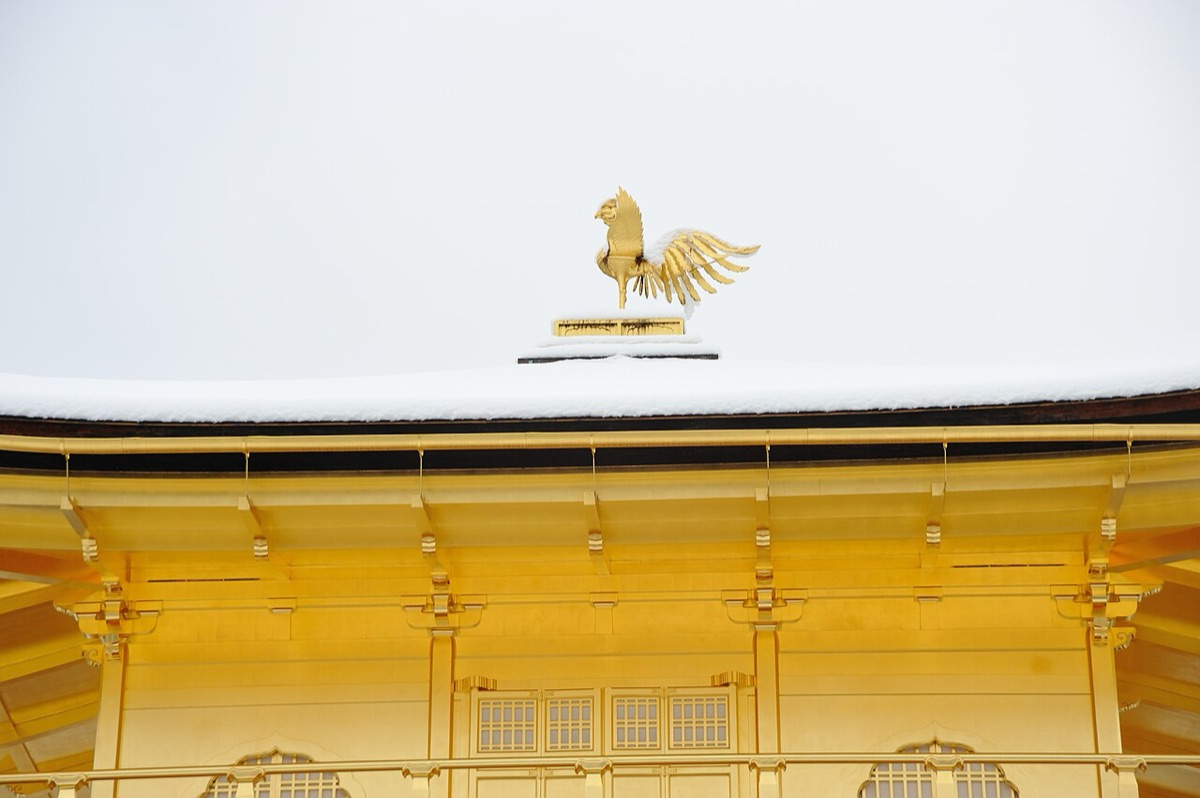
- Snow scenes: settled snow is uncommon in central Kyoto, but after a cold snap the temples of northern Kyoto, such as Kinkakuji and Daitokuji, turn white, a sight many photographers wait for.
- Seasonal rituals: year-end markets in December, bells on New Year's Eve, first shrine visits and Toka Ebisu at New Year, and Setsubun in February show how Kyoto sees out the old year and welcomes the new one.
Note that late December to around January 3 is the Japanese New Year holiday period, when transport and hotels cost more and some shops close; from early January to mid-February is the quietest time of the year. Kyoto's accommodation tax moved to a five-tier system from March 2026, rising with room price, so see Kyoto accommodation tax 2026 before booking.
What is Kyo no Fuyu no Tabi, and when is it in 2027?
In short: "Kyo no Fuyu no Tabi" is a special opening of non-public cultural properties held each year from January to March; as of November 8, 2026 the 61st edition for 2027 had not been announced, so the following is past-year reference[1].
Kyo no Fuyu no Tabi is organized by the Kyoto City Tourism Association. Each edition has a theme and opens temple buildings, gardens, screen paintings and Buddhist statues that are normally closed or only partly open, for a limited period, with guides explaining at most sites[1]. The 60th edition in 2026 tied in with the NHK historical drama and focused on temples linked to the brothers Toyotomi Hidenaga and Hideyoshi[1].
| Item | 60th edition (2026, past-year reference) |
|---|---|
| Dates | Friday, January 9 – Wednesday, March 18, 2026 |
| Sites | 15 non-public cultural properties |
| Admission (most sites) | Adults ¥800, elementary school students ¥400 |
| Exceptions | To-ji Five-Story Pagoda ¥1,200 for adults, Hokoku Shrine study hall and treasure hall ¥1,000, and others by site |
| Special tours | Monk-guided visits at Nishi Hongan-ji and Higashi Hongan-ji required online booking, with separate fees |
| Stamp rally | Collect 3 stamps at special-opening sites and exchange them for tea and Japanese sweets at designated venues |
(Kyoto Travel, checked October 2026[1])
The pattern: the 2025 edition ran January 10 to March 18 and the 2026 edition January 9 to March 18, so it typically starts in early or mid-January and ends in mid-March. The sites change every year, and a temple open last winter may not open again, so always check the current list on the official site. The stamp rally is for individual visitors only, not groups or tour buses[1].
Does it snow in Kyoto in winter? How to see Kinkakuji in snow
In short: it snows in Kyoto every year, but days with settled snow are few, and snow often melts before midday; to see Kinkakuji in snow, watch the forecast and go early the next morning.
Japan Meteorological Agency normals for 1991–2020 show snow falling on about 16.3 days in January, 14.2 days in February and 6.9 days in December, yet total monthly snowfall is only about 5 cm in January, 7 cm in February and 2 cm in December[2], so snow days are common but each fall is light, usually a single night of snow when cold air moves south. The hillier northern areas, Kita and Sakyo wards, get settled snow more easily than the center, so Kinkakuji, Daitokuji and Kibune–Kurama have better odds.
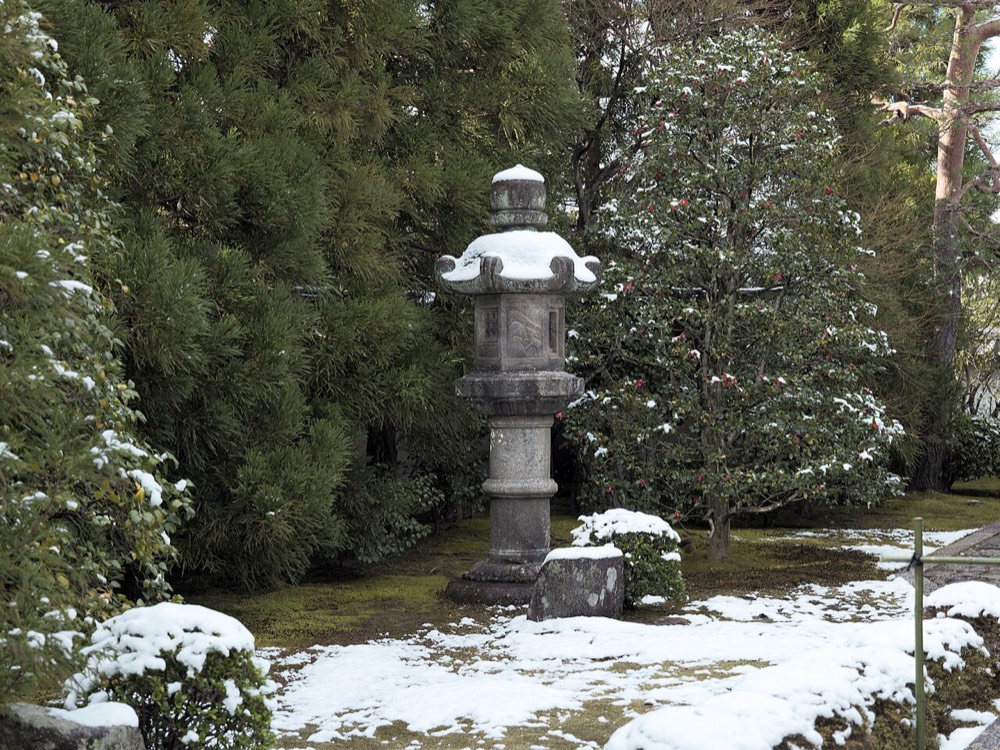
Steps to catch Kinkakuji in snow:
- Check the forecast the night before: a forecast of "snow" or "snow then clear" for Kyoto city is your chance.
- Enter at 9:00 opening: Kinkakuji is open daily 9:00–17:00, adult admission ¥500[3]. Snow usually lasts only through the morning, and once the sun is out it slides off the roof quickly.
- Allow extra travel time: city buses are often delayed in snow, so take the Karasuma subway line to Kitaoji and change to a bus, or take a taxi.
- Wear non-slip shoes: approaches and stone steps get very slippery when icy.
For Kinkakuji's route, tickets and access, see the Kinkakuji guide. On snowy days it is busier than a normal winter day, since many people have the same idea, so the earlier the better.
What winter light-ups are there in Kyoto? Is the Arashiyama Hanatoro still held?
In short: both the Arashiyama and Higashiyama Hanatoro have ended, and winter light-ups in Kyoto are now run separately by temples, shrines and venues, with dates announced each year. Below is the winter 2025–26 lineup as past-year reference[4].
Kyoto Prefecture's official notice says the "Kyoto Hanatoro" events ended after reaching their 20-year milestone: the last Arashiyama Hanatoro was in December 2021 and the last Higashiyama Hanatoro in March 2022[8]. Articles still describing a winter Arashiyama Hanatoro are out of date.
The Arashiyama bamboo grove is now lit in autumn instead: the Arashiyama Tsukitoro, organized by the Arashiyama Tsukitoro Executive Committee, runs from September 30 to November 8 in 2026, daily 18:00–21:00 (last entry 20:40), with bamboo lanterns lining about 1 km of the bamboo grove path. Same-day tickets cost 1,500 yen (cash only, sold from 17:50 at the booth on the bamboo grove path), online advance tickets with guaranteed entry cost 2,000 yen, children 12 and under are free, and it is cancelled in severe weather[9]. Its final night in 2026 is November 8, so it will be over for a December-or-later winter trip.
| Event (2025–26, past-year reference) | Venue | Dates and times |
|---|---|---|
| Heian Jingu night visit "NAKED Yorumairi" | Heian Jingu | December 19–30, 2025 and January 6–18, 2026, 17:30–21:30 |
| LIGHT CYCLES KYOTO | Kyoto Botanical Garden | January 6–February 28, 2026, 18:00–21:30 (closed Mondays) |
| Eizan Railway "Illumi-station" | Yase-Hieizanguchi Station | December 12, 2025–February 15, 2026 |
| Kodaiji winter evening tea ceremony "Yobanashi" | Kodaiji | Fridays to Sundays, January 16–March 1, 2026, reservation required |
| Kitano Tenmangu plum garden opening | Kitano Tenmangu | From February 1, 2026, 9:00–20:30 |
| To-ji "Tsuki Kairo" garden light-up | To-ji | February 11–March 11, 2026, 18:00–21:00 |
(Kyoto Travel, page updated January 2026[4])
As of October 30, 2026, light-ups for winter 2026–27 had not yet been announced; most are announced between November and December. Winter light-ups are smaller than autumn ones and far less crowded, which makes them a good after-dinner walk. Kyoto nights are often near 0°C, so dress warmer than in the daytime for outdoor events.
Kyoto winter festivals: what's on from December to February?
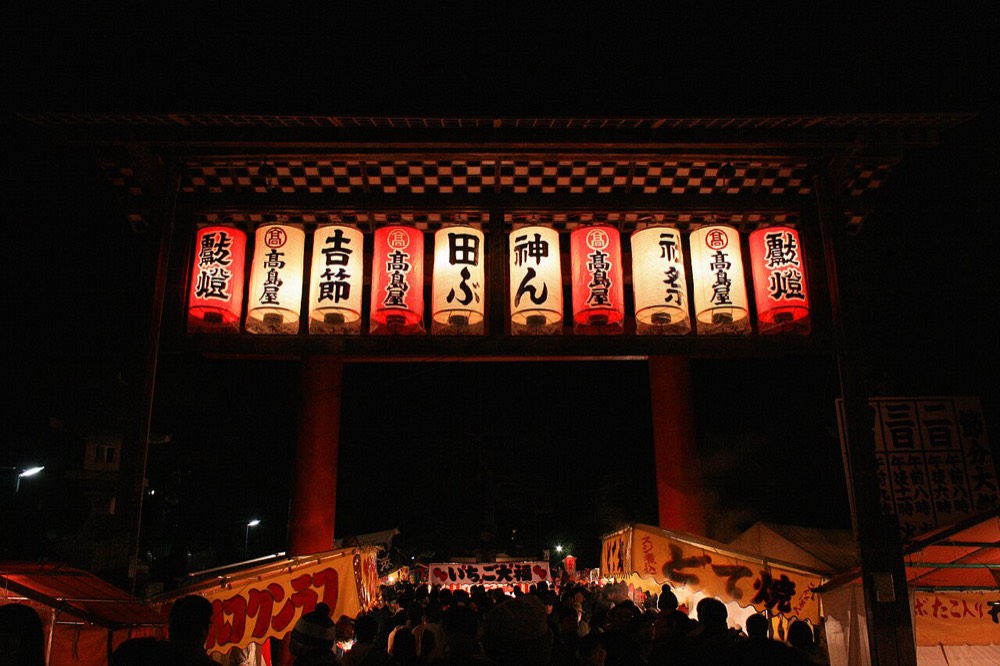
In short: December brings year-end markets and New Year's Eve bells, January first shrine visits and Toka Ebisu, February Setsubun. Dates for December 2026 have been published by Kyoto Travel[5]; January and February 2027 follow fixed annual dates.
| Date | Festival / event | Venue | Highlights |
|---|---|---|---|
| Early December | Daikon-daki | Senbon Shakado (around December 7–8), Ryotoku-ji (around December 9–10) and others | Daikon radish simmered in large pots, eaten for good health; dates and fees per each temple |
| Monday, December 21, 2026 | Shimai Kobo | To-ji | Last of the year's monthly Kobo markets on the 21st, packed with antiques and food stalls |
| Friday, December 25, 2026 | Shimai Tenjin | Kitano Tenmangu | Last of the year's monthly Tenjin markets on the 25th |
| Sunday, December 27, 2026 | Trial bell ringing | Chion-in | Practice ringing ahead of New Year's Eve |
| December 31 | New Year's Eve bells, Okera-mairi | Temples citywide, Yasaka Shrine | 108 bell strikes to see out the year; the okera fire at Yasaka Shrine |
| From January 1 | Hatsumode (first shrine visit) | Fushimi Inari Taisha, Yasaka Shrine, Heian Jingu and others | The year's first visit; busiest January 1–3 |
| January 8–12 | Toka Ebisu | Kyoto Ebisu Shrine | Lucky bamboo branches for business prosperity |
| Around February 3 | Setsubun festivals | Yoshida Shrine, Rozan-ji, Mibu-dera, Senbon Shakado and others | Demon-chasing rites and bean throwing; food stalls at Yoshida Shrine |
(December dates from Kyoto Travel[5]; January and February from Kyoto Travel's annual event pages[6][7])
A few worth singling out:
- Shimai Kobo and Shimai Tenjin: To-ji's Kobo market is one of the largest in Japan, and the year-end one is especially lively, with antiques, kimono fabric and New Year goods[5].
- Toka Ebisu: over the five days centered on January 10, Kyoto Ebisu Shrine hands out lucky bamboo branches, with the biggest crowds on the evening of the 10th[6].
- Setsubun: at Yoshida Shrine's tsuina rite a figure in a four-eyed golden mask drives out demons, and Rozan-ji has "Oni Horaku," where red, blue and black demons dance to a rhythm[7]. Kyoto also has the "Shiho-mairi" custom of visiting Yoshida Shrine, Mibu-dera, Fushimi Inari (or Yasaka) and Kitano Tenmangu on Setsubun[7].
Each temple handles New Year's Eve bells differently: some require a lottery or numbered tickets in advance, others only let you watch, so check the temple's official site if you want to ring the bell yourself. For New Year visits and transport, see the Japan January travel guide.
How cold is Kyoto in winter, and what should I wear?
In short: Kyoto in winter is about 9–12°C in the daytime and 1–3°C in the morning and evening, and feels colder than the numbers suggest, so bring a warm coat, scarf and gloves, plus thick socks for temple visits where you remove your shoes.
| Month | Mean temp | Mean high | Mean low | Total snowfall | Snow days |
|---|---|---|---|---|---|
| December | 7.2°C | 11.6°C | 3.5°C | about 2 cm | 6.9 |
| January | 4.8°C | 9.1°C | 1.5°C | about 5 cm | 16.3 |
| February | 5.4°C | 10.0°C | 1.6°C | about 7 cm | 14.2 |
(Japan Meteorological Agency normals, 1991–2020[2])
Kyoto sits in a basin and is known for "sokobie," a cold that creeps up from the ground; mornings are often around 0°C. What to wear:
- Layers: a thermal top and sweater under a windproof warm coat that you can take off indoors.
- Thick socks: many main halls and study halls require you to remove your shoes, the wooden floors are cold, and special-opening sites are mostly unheated.
- Scarf, gloves and heat packs: especially for evening light-ups or queuing for New Year's Eve bells.
- Waterproof, comfortable shoes: stone approaches are slippery after snow or rain.
How to plan a Kyoto winter itinerary
In short: focus on festivals and year-end atmosphere in December, and on the special openings and snow from mid-January to mid-February; avoid the busiest New Year days and you can see Kyoto at its quietest for less.
| Period | Crowds and prices | Suggested focus |
|---|---|---|
| Early to mid-December | Quieter after the autumn-leaf season, hotel prices ease | Daikon-daki, the last autumn color, winter light-ups |
| Late December to January 3 | New Year holidays, transport and hotels cost more, some shops close | Shimai Kobo, Shimai Tenjin, New Year's Eve bells, hatsumode |
| Early January to mid-February | Lowest season of the year, easier lines even at major temples | Kyo no Fuyu no Tabi (from early or mid-January in past years), snow scenes, Toka Ebisu, Setsubun |
| Late February | Plum blossoms begin, crowds slowly return | Kitano Tenmangu plum garden, second half of the winter special opening |
City buses are often delayed in snow, so use the subway and trains where possible and plan routes with the Kyoto transport guide. To warm up in hot springs, consider adding Kibune, Kurama or Arashiyama.
Before you go
- Dates and sites for Kyo no Fuyu no Tabi 2027 follow Kyoto Travel's announcement, usually released before the end of the year.
- Plan Kinkakuji around a snow forecast; entering at 9:00 gives the best chance of settled snow.
- From December 31 to January 3 some temples change their hours, and restaurants and shops may close.
- Kyoto's accommodation tax rose from March 2026 and New Year room rates climb too, so book early.
- You will often remove your shoes inside temples, so wear thick socks.
FAQ
When does Kyo no Fuyu no Tabi 2027 start?
As of November 8, 2026, the Kyoto City Tourism Association had not announced the dates or sites for the 61st edition. In past years it has started in early or mid-January and ended around March 18: the 60th edition ran January 9–March 18, 2026, and the 2025 edition January 10–March 18. Details usually come out before the end of the year, so check Kyoto Travel before you go.
Does it snow in Kyoto in winter? Is Kinkakuji in snow easy to see?
It does snow, but settled snow in the city is uncommon. Japan Meteorological Agency normals record snow on about 16 days in January and 14 days in February, but total snowfall is only about 5 cm and 7 cm, mostly light falls during cold snaps, and snow often melts by midday. To see Kinkakuji in snow, watch for a snow forecast the night before and enter at 9:00 opening; admission is ¥500 for adults.
What should I wear in Kyoto in winter?
Kyoto averages 4.8°C in January with a mean low of 1.5°C, and the basin makes mornings and evenings feel colder; temple interiors are mostly unheated and you often remove your shoes. Wear a thermal layer and sweater under a warm coat, with scarf, gloves and thick socks, and waterproof, comfortable shoes on snowy days.
What festivals and events are there in Kyoto in December?
In December 2026 there are two year-end markets, Shimai Kobo at To-ji (December 21) and Shimai Tenjin at Kitano Tenmangu (December 25); daikon-daki radish events at Senbon Shakado and other temples in early December; New Year's Eve bells at temples and Okera-mairi at Yasaka Shrine on December 31. Chion-in holds a trial bell ringing on December 27. Check each temple or shrine for details.
Is the Arashiyama Hanatoro still held in winter?
No. The Arashiyama Hanatoro was held for the last time in December 2021, and the Higashiyama Hanatoro ended in March 2022. The Arashiyama bamboo grove now has an autumn light-up instead, the Arashiyama Tsukitoro, which in 2026 runs September 30 to November 8, so it is not on in winter. Winter light-ups in Kyoto are run separately by temples, shrines and venues such as the botanical garden, for example past night visits at Heian Jingu, light shows at the Kyoto Botanical Garden and garden light-ups at To-ji, with dates changing each year.
Sources
- Kyoto Travel: Kyo no Fuyu no Tabi special opening of non-public cultural properties: 60th edition (January 9–March 18, 2026) dates, 15 sites, fees and stamp rally; 61st edition not yet announced (checked November 8, 2026)
- Japan Meteorological Agency: Kyoto climate normals (1991–2020): December–February mean, maximum and minimum temperatures, total snowfall and snow days (checked November 8, 2026)
- Kinkakuji (Rokuon-ji) official: Access and visiting: Open 9:00–17:00, adults ¥500
- Kyoto Travel: Enjoying winter nights in Kyoto: Winter 2025–26 night events and light-ups (past-year reference)
- Kyoto Travel: December events: 2026 Shimai Kobo December 21, Shimai Tenjin December 25, New Year's Eve bells, Chion-in trial ringing December 27
- Kyoto Travel: January events: Toka Ebisu January 8–12, San Kobo Mairi, Miyako Shichifukujin pilgrimage
- Kyoto Travel: February events (Setsubun): Yoshida Shrine tsuina rite, Rozan-ji Oni Horaku, Mibu Kyogen, Shiho-mairi
- Kyoto Prefecture: About the FY2021 Kyoto Hanatoro: Arashiyama and Higashiyama Hanatoro ended after fiscal 2021
- Kyoto City Official Travel Guide: Arashiyama Tsukitoro: 2026 dates (September 30 to November 8), lighting hours, tickets and location
Fares, opening hours and event dates can change. Information checked on 2026.11.08; please confirm with official sources before you go.