Osaka in Winter: December to February Weather, What to Wear, Winter Sights and Events
Osaka in winter: JMA weather normals for December–February, whether it snows, what to wear, illuminations, Toka Ebisu, fugu and crab, New Year closures and a 3-day plan.
Quick answer
Osaka winters are damp and chilly but rarely snowy. Japan Meteorological Agency normals: December averages a high of 12.3°C and low of 5.3°C, January is coldest (9.7°C / 3.0°C), February 10.5°C / 3.2°C. Snow falls on about 5 days in each of January and February, but total snowfall is only 0–1 cm, so it almost never settles in the city. Wear thermals, a sweater and a windproof jacket. December brings illuminations and Christmas markets, January 9–11 is Toka Ebisu, and February has Kobe Luminarie and the Osaka Castle plum grove. Osaka Castle Main Tower closes December 28–January 1.
Osaka in winter (December to February) is cold but not very snowy, with plenty of sunny days and little rain. Add illuminations, New Year festivals and winter foods like fugu and crab, and it is actually a good season for independent travel. This guide uses Japan Meteorological Agency normals to lay out each month's temperatures, rainfall and chance of snow, explains what to wear each month, then puts Osaka's winter sights, events, New Year closures and day-trip options side by side. It ends with a timed 3-day winter itinerary and cost estimate, so you can decide when to go and how to plan it.
Osaka winter weather: December, January and February compared
In short: January is Osaka's coldest month, averaging 6.2°C. Through the whole winter, daytime is mostly around 10°C and mornings and evenings 3–5°C, and it is the driest time of the year[1].
The table below shows JMA normals for the Osaka station, 1991–2020[1]. "Snow days" counts days with any observed snowfall, including days with just a few flakes; it does not mean snow on the ground.
| Month | Mean temp | Avg high | Avg low | Precipitation | Sunshine | Snow days | Total snowfall |
|---|---|---|---|---|---|---|---|
| December | 8.7°C | 12.3°C | 5.3°C | 55.5 mm | 152.1 hours | 1.8 days | 0 cm |
| January | 6.2°C | 9.7°C | 3.0°C | 47.0 mm | 146.5 hours | 4.7 days | 0 cm |
| February | 6.6°C | 10.5°C | 3.2°C | 60.5 mm | 140.6 hours | 5.5 days | 1 cm |
| (Reference) March | 9.9°C | 14.2°C | 6.0°C | 103.1 mm | 172.2 hours | 1.9 days | — |
A few things in these numbers matter for planning:
- December to February each get only about 50–60 mm of precipitation, less than 60% of March, so all-day rain is uncommon and outdoor plans are easier.
- February's average temperature is actually slightly higher than January's, but cold snaps are common early in the month, so late January to early February usually feels like the coldest two or three weeks.
- It gets dark early in winter. According to NAOJ data for Kyoto, sunset is around 16:50 in late December and around 17:50 at the end of February, with Osaka only about a minute different[8]. For sunset and night views, enter an observation deck around 16:00.
Does it snow in Osaka in winter?
In short: snow falls, but it almost never settles in the city. Normals record snowfall on about 4.7 days in January and 5.5 days in February, but total snowfall is only 0–1 cm[1]. It is mostly light snow during strong cold snaps that melts as it lands.
So if you are choosing winter in Osaka just to see snow, adjust your expectations. You may occasionally see flakes drifting through the city, but snow-covered rooftops like Kinkakuji in Kyoto are very rare in central Osaka. The Kyoto basin gets snow a little more often; see the Kyoto winter travel guide. For real snow, it is more practical to head to the Sea of Japan side, such as Kinosaki Onsen in northern Hyogo, where snow is much more likely than in Osaka and winter is also matsuba crab season.
What to wear in Osaka in winter, month by month
In short: the key for Osaka in winter is "windproof and easy to take off." Outdoors it is damp and cold, but subways, department stores and restaurants are strongly heated, so one very heavy coat is inconvenient; layering works best.
| Month | How daytime feels | What to wear | Must-have extras |
|---|---|---|---|
| December | 10–12°C on sunny days, noticeably colder after dusk | Long sleeves plus a sweater or fleece, with a coat or light down jacket | Scarf; add a layer for evening illuminations |
| January | About 9°C by day, around 3°C mornings and evenings | Thermals, a sweater and a light down or padded windproof jacket | Gloves, beanie, heat packs |
| February | Similar to January, warming in the second half | Same as January; a heavy coat is enough by late February | Gloves and scarf; wind protection for plum viewing |
Common clothing mistakes:
- Bringing only one super-thick down jacket. It gets stuffy on the subway and in shops, and it is bulky to carry once off. A light down jacket plus a sweater is more flexible.
- Underestimating the waterfront wind. Tempozan (Kaiyukan), Universal Studios Japan and the Osaka Port area are by the sea, and on windy days they feel several degrees colder than the city center, so add a layer for queues and night views.
- Packing snow boots. Central Osaka rarely has settled snow, so ordinary waterproof walking shoes are enough; consider non-slip shoes only if you are going to the Sea of Japan side, such as Kinosaki Onsen. For Hokkaido-level gear, see what to wear in Hokkaido in winter; Osaka doesn't need anything that heavy.
Osaka winter things to do: what to see from December to February
In short: December is illumination and Christmas season, January is New Year festivals, and late January to February brings Kobe Luminarie and the Osaka Castle plum grove. Events with their own guides are only summarized below; see each guide for dates and prices.
| When | Event / sight | Highlight | Details |
|---|---|---|---|
| November 3–January 31 | Osaka Festival of Lights | Midosuji illumination until December 31; Nakanoshima main period December 11–25 | Osaka Festival of Lights 2026 |
| Mid-November–December 25 | Christmas markets | Two main markets at Umeda Sky Building and Tennoji Park | Osaka Christmas markets 2026 |
| November 13–January 17 | USJ Christmas | Night light shows and Hogwarts castle projection | USJ Christmas 2026 |
| December 31–January 3 | New Year's Eve and shrine visits | USJ countdown, Shitennoji New Year's Eve bell, Sumiyoshi Taisha first visit | Osaka New Year countdown 2026-2027 |
| January 9–11 | Toka Ebisu at Imamiya Ebisu Shrine | Osaka merchants' New Year festival for business prosperity | Next section |
| January 23 (2027) | Wakakusa Yamayaki, Nara | Evening fireworks and the whole hillside set alight, about 1 hour from Osaka | Wakakusa Yamayaki 2027 |
| January 29–February 7 (2027) | Kobe Luminarie | 32nd edition, with a paid area at Meriken Park | Kobe Luminarie 2027 |
| Early February–early March | Osaka Castle Park plum grove | Early varieties bloom in January; February is the main viewing period | Below |
December: illuminations, Christmas markets and Christmas at USJ
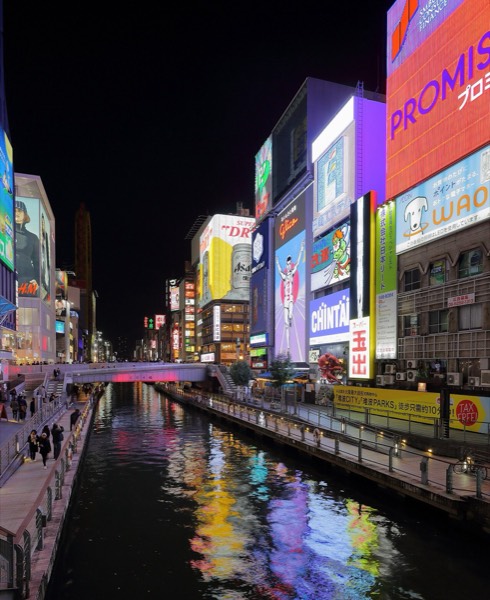
December is Osaka's liveliest winter month. The Midosuji illumination of the Osaka Festival of Lights stretches about 4 km from Umeda to Namba and can be seen from dusk to late at night; in mid-December Nakanoshima adds projection shows and light displays, and you can walk both areas in one evening. The Christmas markets are mainly at Umeda Sky Building and Tennoji Park and are most atmospheric at night. USJ's Christmas event has night light shows, so stay until after dark if you want to see them.
January: New Year, Toka Ebisu and Wakakusa Yamayaki
January 1–3 is peak time for New Year shrine visits, with long queues at shrines such as Osaka Tenmangu and Sumiyoshi Taisha, while many shops outside the shrines take a holiday. After New Year, the most distinctly Osaka event is Toka Ebisu (next section). In late January there is also Wakakusa Yamayaki in Nara; it takes about 40 minutes from Osaka to Nara by Kintetsu, so you can watch the burning in the evening and be back in Osaka the same night.
February: Kobe Luminarie and the Osaka Castle plum grove
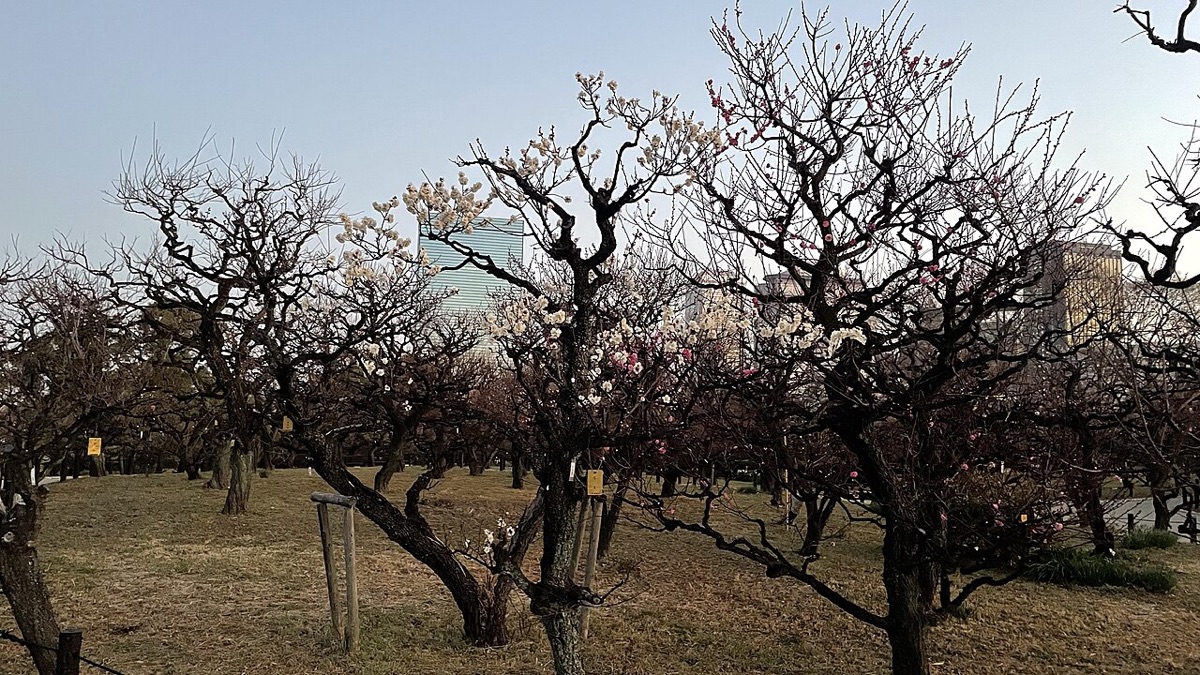
Kobe Luminarie 2027 runs January 29–February 7. From Osaka it takes about 20–30 minutes by train to Sannomiya, so it fits well into an evening. The Osaka Castle Park plum grove has about 100 varieties and 1,270 plum trees (Osaka City data from 2015); early varieties begin blooming in January, February is the main viewing period, and blossoms last into March[5]. The grove is inside the park and free to enter, and it pairs naturally with Osaka Castle Main Tower; for tickets and how to visit, see the Osaka Castle ticket and Main Tower guide.
What is Toka Ebisu? How to visit Imamiya Ebisu Shrine on January 9–11
In short: Toka Ebisu is the New Year festival for Ebisu (Ebessan), the god of business. Osaka's most famous one is at Imamiya Ebisu Shrine in Naniwa Ward, held every year on January 9 (Yoi Ebisu), 10 (Hon Ebisu) and 11 (Nokori Ebisu)[2]. In 2027 it is again January 9–11, and the 10th falls on a Sunday, so expect even bigger crowds.
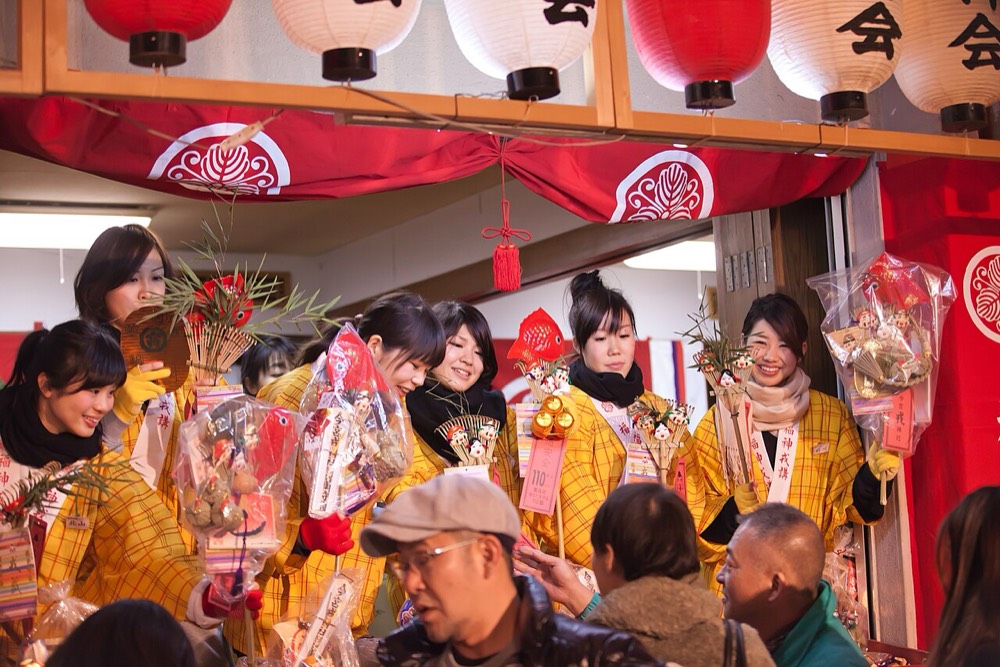
At the shrine, "fuku-musume" in yellow kimono hand out bamboo branches called fukuzasa, and visitors buy lucky charms such as sea bream, rice bags and gold coins to hang on them as a wish for prosperous business. On January 10 there is also the Hoe Kago parade, in which geisha, fuku-musume and celebrities ride palanquins from the Dotonbori area to the shrine; it is organized by a local promotion association, not by the shrine itself[2]. In past years the parade has taken place during the day; the 2027 times have not been announced yet. The access information below does not change from year to year:
- Nankai Koya Line, Imamiya-Ebisu Station: walk east and you are there; the closest option.
- Osaka Metro Midosuji Line, Daikokucho Station Exit 3: about 8 minutes on foot.
- Osaka Metro Sakaisuji Line, Ebisucho Station Exit 5: about 8 minutes on foot; about 5 minutes from Hankai Tramway Ebisucho Station.
- JR Shin-Imamiya Station: about 10 minutes on foot.
During the festival there are road restrictions around the shrine and no parking, so always go by train[2]. According to OSAKA-INFO, the festival starts at 0:00 on the 9th and ends at 24:00 on the 11th[2]; to avoid crowds, choose a weekday morning. The evening, when all the lanterns are lit, has the best atmosphere but is also the most crowded. The shrine is close to Shinsekai and Tsutenkaku, so it is easy to go for kushikatsu afterwards; see Tsutenkaku tickets and a Shinsekai walk.
What to eat in Osaka in winter: fugu, crab and kantodaki
In short: the best things to eat in Osaka in winter are fugu hot pot (tetchiri), crab dishes, and Kansai-style oden, which locals call kantodaki. For year-round classics like takoyaki and okonomiyaki, see the Osaka food guide.
Fugu (tetchiri and tessa)
According to OSAKA-INFO, about 60% of the fugu eaten in Japan is eaten in Osaka[4]. Osaka people call fugu sashimi "tessa" and fugu hot pot "tetchiri"; the names come from teppo (gun), a dark joke that eating poisonous fugu could kill you. Fugu hot pot is a classic winter dish, finished with zosui rice porridge cooked in the leftover broth.
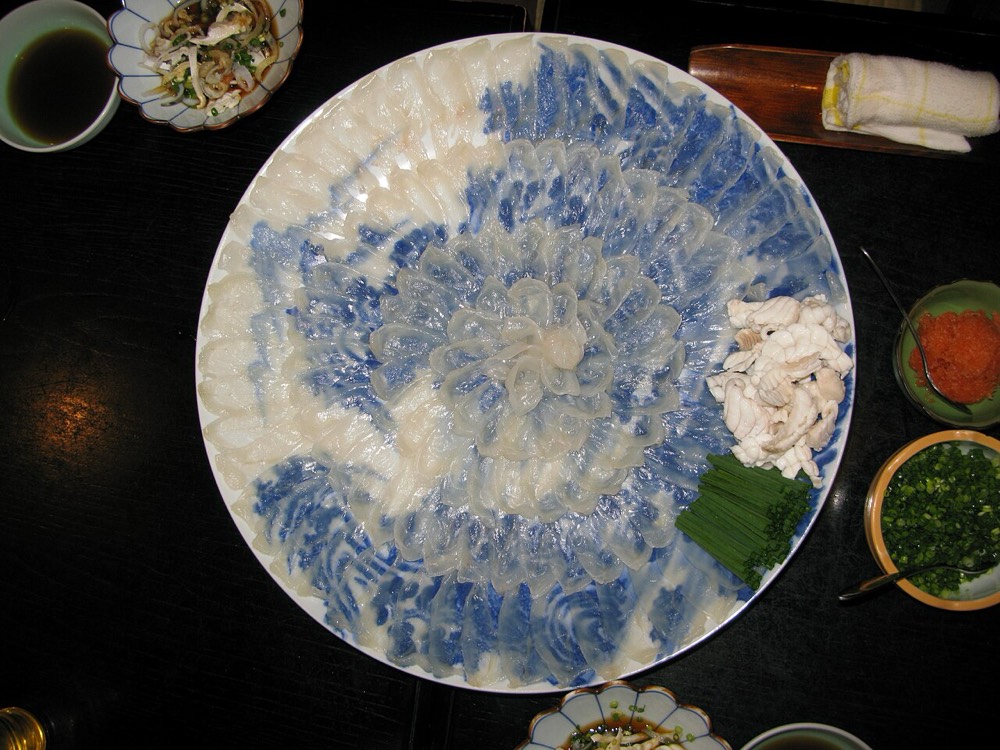
Price reference: the entry-level set at the fugu chain Genpin (fugu skin, tessa, tetchiri, zosui and dessert, five courses) is ¥5,300 at its Kyoto Gion branch[9], and set prices at its Osaka branches are similar but vary by branch and period. Specialist restaurants or places serving wild tiger fugu cost much more, so check whether the fish is farmed or wild before ordering. Kuromon Market also has fugu shops and sashimi stalls; see the Kuromon Market food guide.
Crab and matsuba crab season
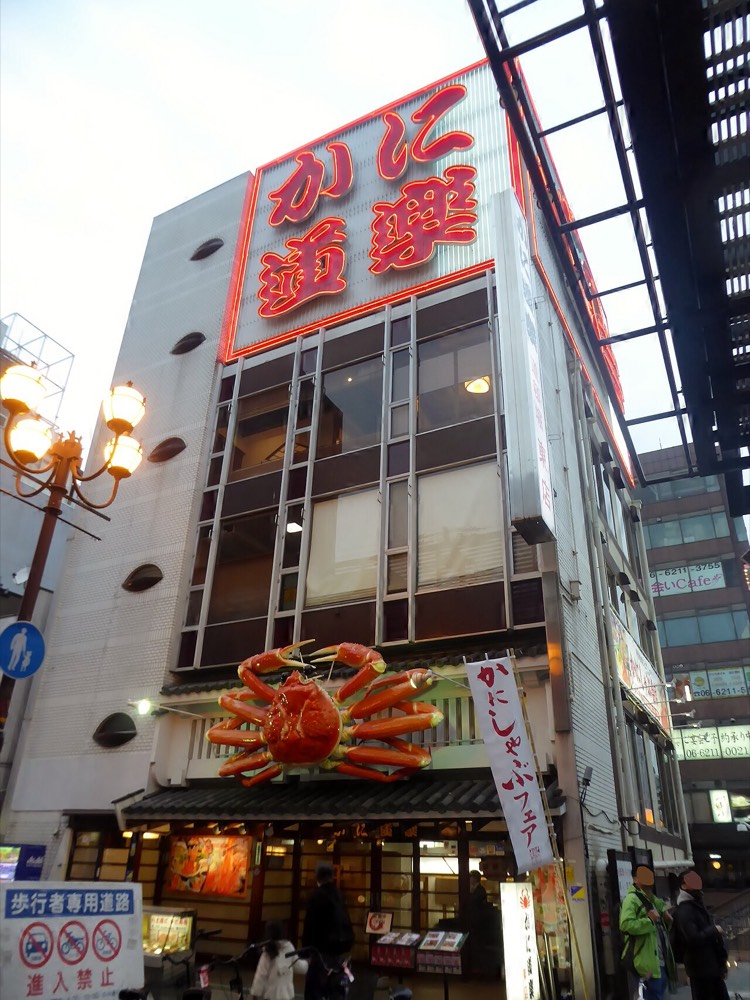
Dotonbori's famous moving giant crab sign is there all year, but winter is the season to eat crab. Male snow crab from the Sea of Japan opens for fishing every year on November 6; it is called matsuba crab in Hyogo and Tottori and echizen crab in Fukui. For the differences in types and prices, see the Japan snow crab season guide. You can eat crab hot pot and shabu-shabu in central Osaka, but for freshly landed matsuba crab, the best option is an overnight stay at Kinosaki Onsen.
Kantodaki (Osaka-style oden)
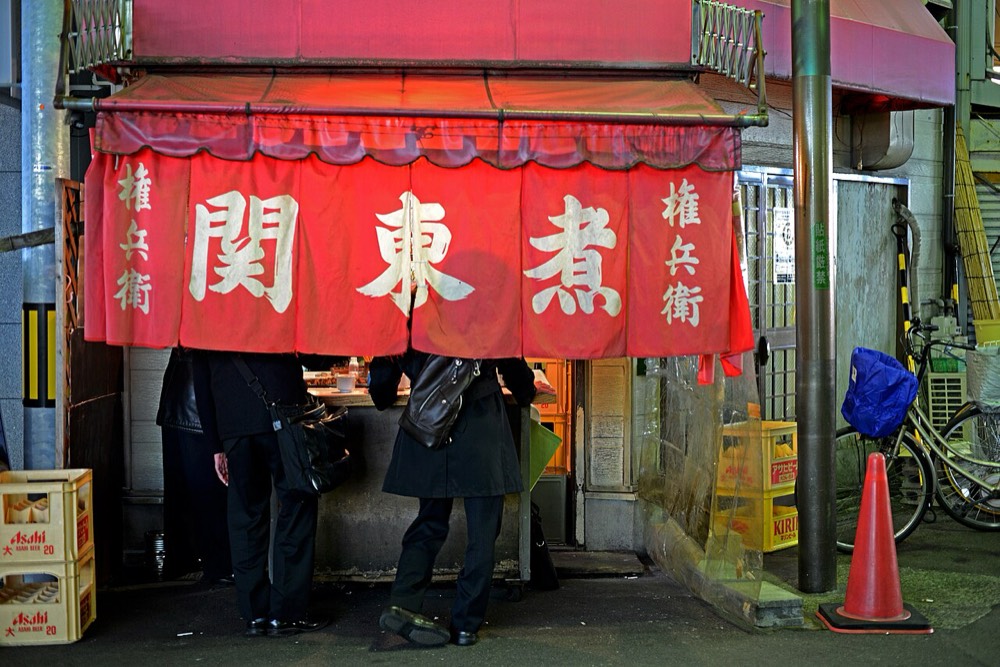
Osaka people call oden "kantodaki," made with a kombu broth and light soy sauce, often with beef tendon and octopus. Takoume in Dotonbori, founded in 1844, is often called one of Japan's oldest oden restaurants; a plate at the counter on a winter night tastes far more of Osaka than convenience-store oden. Check the restaurant's own notices for opening hours and New Year closures.
Where to go when it rains or is too cold: indoor options in Osaka in winter
In short: on rainy days or during cold snaps, switch to indoor sights. Central Osaka has plenty of places where you can spend half a day indoors; the table below sorts them by purpose.
| Indoor sight | Best for | Price reference | Winter notes |
|---|---|---|---|
| Osaka Aquarium Kaiyukan | Families, aquarium fans | Adults from ¥2,700 (varies by date) | Closed 2 days every January; check the official site for 2027. See the Kaiyukan ticket guide |
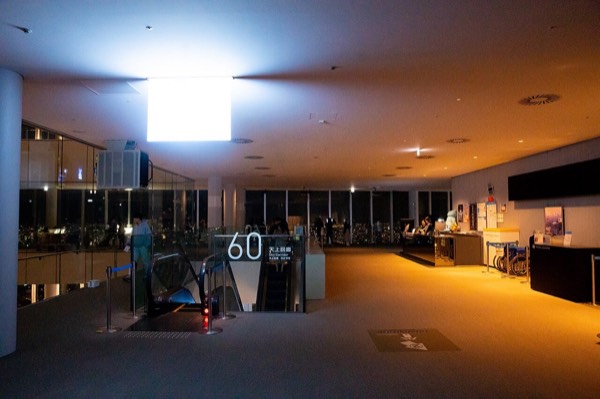
| Abeno Harukas 300 | Night views and sunsets | Adult same-day ticket ¥2,200 | Enter around 16:00 in winter to see both sunset and night views. See Abeno Harukas 300 observatory |
| Spa World | Hot springs without leaving the city | Junior high age and up ¥2,000 weekdays, ¥2,700 weekends and holidays (pool included) | Baths open 10:00 to 8:45 the next morning; 24:00–5:00 adds a ¥1,300 late-night fee and ¥150 bathing tax; no entry with tattoos[6][7] |
| Umeda underground malls and department stores | Shopping, escaping the cold | Free | Most department stores close on New Year's Day and often launch fukubukuro lucky bags when they reopen on January 2 |
Spa World, next to Shinsekai, is a large hot spring complex with European and Asian themed bath zones, which switch between men and women each month[7]. If you have tattoos (including stickers), you cannot enter; consider Arima Onsen or other places where covering them may be allowed, and check the rules before you go[6].
Day trips from Osaka that suit winter: hot springs, crab and Yamayaki
In short: for a winter day trip from Osaka, hot springs come first. The transport and prices for all three routes below are covered in separate guides; here they are compared by who they suit.
| Route | Time from Osaka | Why in winter | Best for |
|---|---|---|---|
| Arima Onsen day trip | About 1 hour | Two kinds of hot spring, kinsen and ginsen, an easy same-day round trip | Half a day to a day free, want a soak |
| Kinosaki Onsen | About 2 h 40 min by limited express | Outdoor bath-hopping plus matsuba crab season (early November to March); snow more likely than in Osaka | Happy to stay a night, want crab and snow |
| Wakakusa Yamayaki / Nara day trip | About 40 minutes by Kintetsu | Yamayaki on the fourth Saturday of January; Nara Park is quieter in winter | Late-January travelers who want a festival |
The round trip from Osaka to Kinosaki Onsen alone takes over 5 hours, so a day trip is rushed. Stay a night, have a crab dinner at your ryokan, and do another round of the outdoor baths the next morning.
What to watch for over New Year: closures and opening from December 28 to January 3
In short: the period from about December 28 to January 3 is the one stretch of Osaka's winter that needs careful planning, as sights close, shops take holidays, and transport and hotel prices change.
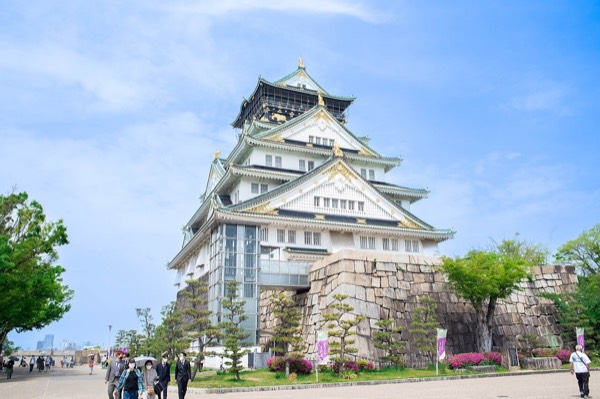
- Osaka Castle Main Tower: closed every year December 28–January 1, reopening January 2; normally open 9:00–18:00 with last entry at 17:30[3]. Osaka Castle Park itself is open all year, so you can still walk there on New Year's Day.
- Department stores: most close on New Year's Day and reopen on January 2 with fukubukuro lucky bags, which draw huge crowds.
- Restaurants and long-running shops: independently run places often close until January 3 or longer, so check year-end notices for places you want to visit.
- Shrines: Osaka Tenmangu, Sumiyoshi Taisha and Imamiya Ebisu Shrine usually extend their hours around New Year's Day and are at their busiest; New Year's Eve transport and shrine hours are covered in Osaka New Year countdown 2026-2027.
- Hotels: prices rise sharply and rooms fill up from around December 29 to January 3; for choosing an area, see where to stay in Osaka.
Sample 3-day Osaka winter itinerary (December weekday version)
In short: winter days are short, so do "outdoors during the day, then switch to indoor sights or night views after 16:00." The example below assumes weekdays in early to mid-December and covers Osaka Castle, a hot spring day trip, Kaiyukan and the illuminations over 3 days.
Day 1: Osaka Castle, Shinsekai, sunset at Harukas and the Midosuji illumination
| Time | Plan | Notes |
|---|---|---|
| 9:00 | Osaka Castle Main Tower | Fewest people at opening; allow about 1.5 hours[3] |
| 11:30 | Lunch at Kuromon Market | Most shops close before evening, so midday is best |
| 13:30 | Tsutenkaku and a Shinsekai walk | In January, add Imamiya Ebisu Shrine on the way |
| 16:00 | Abeno Harukas 300 | December sunset is around 16:50; stay on for night views |
| 18:30 | Midosuji illumination and dinner in Dotonbori | Walk from Shinsaibashi to Namba; have tetchiri or kantodaki for dinner |
Day 2: Arima Onsen day trip + an evening in Umeda
| Time | Plan | Notes |
|---|---|---|
| 9:00 | Leave Osaka | By train or highway bus, about 1 hour |
| 10:30 | Arima Onsen town walk and Kin no Yu | Quieter before noon |
| 12:30 | Lunch in the onsen town | Add Gin no Yu in the afternoon if you like |
| 15:00 | Return to Osaka | Back in Umeda before evening |
| 17:30 | Umeda Sky Building Christmas market | Until December 25; from December 11–25 you can go to the Nakanoshima projection shows instead |
Day 3: Kaiyukan, Tempozan and a hot spring to finish
| Time | Plan | Notes |
|---|---|---|
| 10:00 | Osaka Aquarium Kaiyukan | Buy a timed e-ticket on the official site first |
| 13:00 | Lunch and a look around Tempozan | Windy by the sea; add a layer |
| 15:00 | Spa World | Warm up in the baths for 2–3 hours |
| 18:30 | Dinner in Shinsekai or Namba | Don't stay out too late before your departure day |
If you travel in January, swap Day 2 for Nara (timed for Wakakusa Yamayaki on January 23); in late January to early February, move Day 2's evening to Kobe Luminarie, and swap Osaka Castle on the first or last day for the plum grove. If you will visit three or more paid attractions in a day, it may be worth considering the Osaka Amazing Pass, but in this itinerary Harukas 300, Kaiyukan and Spa World are not covered by the free entries, so the pass may not pay off.
Ticket and transport cost estimate for 3 days
The table covers only admission and day-trip transport, not accommodation, food or city subway fares (per adult).
| Item | Reference price |
|---|---|
| Osaka Castle Main Tower | ¥1,200[3] |
| Abeno Harukas 300 (same-day ticket) | ¥2,200 |
| Arima Onsen round-trip transport (from Namba, example route via Hanshin) | About ¥2,280 |
| Kin no Yu (weekends and holidays) | ¥800 |
| Osaka Aquarium Kaiyukan | From ¥2,700 |
| Spa World (weekday, pool included) | ¥2,000[6] |
| Total | From about ¥11,180 |
Add about ¥5,000 or more if you have one fugu set dinner. The illuminations, Christmas markets, Toka Ebisu and the Osaka Castle plum grove are all free, so winter trip costs come mainly from admission and food.
Who is Osaka in winter for, and who should skip it?
Good for:
- People who want city illuminations and Christmas markets without the cost of Hokkaido: December evenings in Osaka are packed with events.
- People who dislike heat and crowds: apart from New Year and Christmas weekends, winter sights are easier to fit in than in cherry blossom or autumn leaf season.
- People who want fugu and crab: both are winter-only highlights.
- People who want to add a hot spring: Arima and Kinosaki are both within reach of Osaka.
Not ideal for:
- People set on heavy snow and snow play: central Osaka almost never has settled snow, so plan Hokkaido or Tohoku, or at least stay on the Sea of Japan side.
- People who can only travel December 29–January 3 and want to visit Osaka Castle Main Tower or old shops: expect many closures and holidays.
- People who really feel the cold and plan mostly outdoor queuing (such as a full day at USJ): the sea wind makes it feel colder than the numbers suggest.
How to plan it smoothly: pre-trip tips for Osaka in winter
- Pick your month first: for illuminations and Christmas, early to mid-December; for New Year festivals, after January 4 (to avoid holiday closures); for plum blossoms and Kobe Luminarie, late January to early February.
- Save night views for after 16:00: sunset is early in winter, and evenings are when Osaka looks best.
- Check New Year notices one by one: the castle tower, department stores and restaurants all have different holidays, so keep plans for December 28–January 3 flexible.
- Bring easy-to-remove warm layers: a light down jacket, thermals, scarf and gloves plus heat packs are enough for Osaka's winter.
FAQ
Does it snow in Osaka in winter?
Snow falls, but it rarely settles. JMA normals record snow on about 1.8 days in December, 4.7 in January and 5.5 in February, yet total snowfall is only 0–1 cm. It is mostly light flurries during cold snaps that melt on contact. To see snowy scenery, head to the Sea of Japan side, such as Kinosaki Onsen, or the mountains to the north.
How cold is Osaka in winter, and which month is coldest?
January is coldest, with an average of 6.2°C, an average high of 9.7°C and low of 3.0°C. February is similar (6.6°C), and December is milder at 8.7°C. On sunny days it feels around 10°C, but mornings, evenings and windy waterfront areas (Tempozan, Universal Studios Japan) feel much colder.
Do I need a down jacket in Osaka in winter?
For January and February, bring a light down or padded windproof jacket over thermals and a sweater; in early December a heavy coat is enough. Trains, department stores and restaurants are strongly heated, so layers you can take off easily work best. You don't need Hokkaido-style snow boots; ordinary comfortable shoes are fine.
Are Osaka attractions open over New Year?
Most outdoor sights and shrines stay open, and New Year shrine visits are when crowds peak. But Osaka Castle Main Tower closes every year from December 28 to January 1, most department stores close on New Year's Day, and some restaurants and long-running shops take a holiday. If you are visiting between late December and January 3, check each place's year-end notice.
Is Universal Studios Japan worth visiting in winter?
Yes. There is a Christmas season; in 2026 Universal Holiday Wonders runs until January 17, 2027. The downside is standing outside in queues in the cold, and the park is by the sea and windy, so bring an extra warm layer and heat packs. A separate paid countdown event is held on New Year's Eve.
Sources
- Japan Meteorological Agency: Osaka climate normals (1991–2020): December–February mean, high and low temperatures, precipitation, sunshine hours, total snowfall and snow days (checked November 2026)
- OSAKA-INFO: Imamiya Ebisu Shrine Toka Ebisu: Yoi Ebisu on January 9, Hon Ebisu on the 10th, Nokori Ebisu on the 11th every year; access and the Hoe Kago parade
- Osaka Castle Main Tower: visitor information: Open 9:00–18:00, adults ¥1,200, closed December 28–January 1 (checked November 2026)
- OSAKA-INFO: Osaka food culture, bounty of mountain and sea: Tessa, tetchiri and Osaka's fugu food culture
- Osaka City newsletter (February 2015): Osaka Castle Park plum grove: About 100 varieties and 1,270 plum trees, viewable January to March (2015 data)
- Spa World: admission fees: Junior high age and up: ¥2,000 weekdays, ¥2,700 weekends and holidays (pool included); no entry with tattoos (checked November 2026)
- Spa World: opening hours: Baths open 10:00 to 8:45 the next morning
- National Astronomical Observatory of Japan: Kyoto sunrise and sunset (December 2026, February 2027): Winter sunset times for the Kyoto–Osaka area (Osaka differs from Kyoto by about one minute)
- HOT PEPPER Gourmet: Genpin Kyoto Gion course: Five-course set with tessa, tetchiri and zosui for ¥5,300 (checked November 2026)
Fares, opening hours and event dates can change. Information checked on 2026.11.17; please confirm with official sources before you go.