Wakakusa Yamayaki 2027: January 23 Ignition Time, Fireworks, Viewing Spots and Getting Around Nara
Wakakusa Yamayaki 2027 is on Saturday, January 23, with fireworks at 18:15 and ignition at 18:30. Schedule, free and paid viewing spots, weather rules and Nara access.
Quick answer
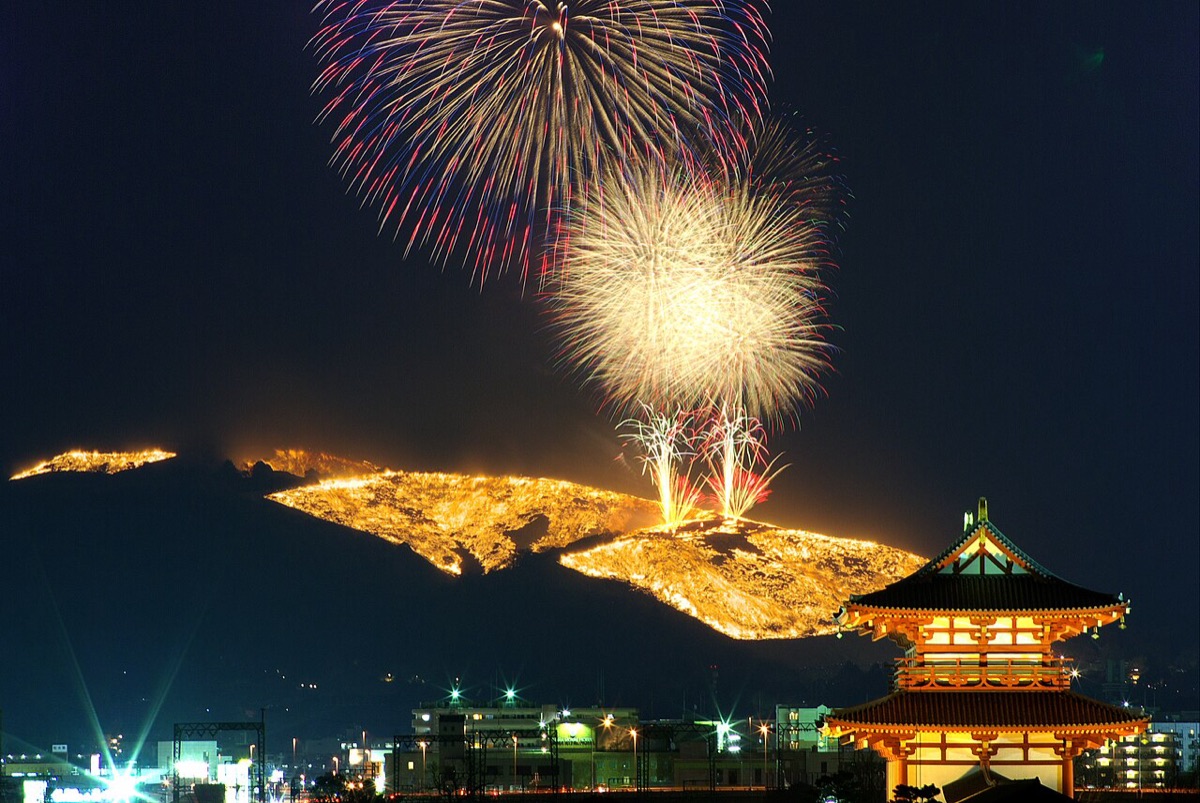
Wakakusa Yamayaki is held on the fourth Saturday of January, and the official date for 2027 is Saturday, January 23. The sacred fire procession leaves Tobihino at Kasuga Taisha at 17:05, fireworks start at 18:15, the whole hill is lit at 18:30, and the burn is mostly over by about 19:30. Light rain or snow does not stop it; heavy rain, heavy snow or strong wind cancels it with no postponement, announced by 10:00 on the day. Nara Park areas are free, and paid foothill ticket prices are due in early November.
Wakakusa Yamayaki (若草山焼き, the burning of Mount Wakakusa) is Nara's best-known winter festival: after sunset the dead grass covering the whole of Mount Wakakusa is set alight and lines of fire climb the slope, with fireworks to open the show. The official date for 2027 is Saturday, January 23. This guide covers the full event-day schedule, free and paid viewing spots, whether rain or snow cancels it, road closures and the crowds afterwards, and how to combine it with Nara Park during the day, so you can watch it and still get back to Osaka or Kyoto smoothly.
When is Wakakusa Yamayaki 2027? Official schedule
The short answer: Saturday, January 23, 2027, with fireworks at 18:15 and the whole hill lit at 18:30, mostly burned out by about 19:30. This is the 2027 schedule published on Nara Prefecture's official website, not an estimate[1].
Wakakusa Yamayaki is always held on the fourth Saturday of January[7], which in 2027 falls on January 23. Nara Prefecture launched the 2027 official website in October 2026 and has been publishing the program and ticket schedule since[7]. The main program on the day is as follows (times are approximate and may change with the weather)[2][3]:
| Time | Event | Place |
|---|---|---|
| About 13:00–18:00 | Kasuga no Otondo (burning of old charms and shimenawa ropes) | Tobihino, Kasuga Taisha |
| 16:45 | Goshinka Hotaisai (receiving the sacred fire) | Otondo site, Tobihino |
| 17:00 | Fire brigade departure ceremony (about 300 members) | Special stage at the foot of Mount Wakakusa |
| 17:05 | Sacred fire procession departs, passing Mizutani Bridge around 17:25 | Tobihino → Nogami Shrine |
| 17:40 | Nogami Shrine ceremony | Nogami Shrine, foot of Mount Wakakusa |
| 18:15 | Nara Raisan grand fireworks | Foot of Mount Wakakusa |
| 18:30 | Whole-mountain ignition | Mount Wakakusa |
| 18:30 to about 19:30 | Burning, then fires put out in sequence | Mount Wakakusa |
How many fireworks are there?
The official site describes the fireworks as the largest display in Nara Prefecture, including a *shakudama* large-format shell that is rarely seen in the prefecture[2]. As for the number of shells, the site only mentions that the display was expanded to about 600 in 2010 for the 1,300th anniversary of the Heijo capital[5]; the official site does not give a number for 2027. The "about 600 shots" figure you see online is a past-year reference, not an official 2027 number.
What happens during the day? Is the deer cracker throwing contest still held?
The main daytime event is Kasuga no Otondo at Tobihino, starting around 1 p.m., when old talismans and New Year decorations are burned in a furnace about 5 meters square and 3 meters high[2]. In past years a "deer cracker throwing contest" (鹿せんべい飛ばし大会) was held at the foot of the mountain, but it is not on the official 2027 schedule[2][3]. Check the official site for later announcements and do not arrive early just for it.
What is Wakakusa Yamayaki? Origins and highlights
The short answer: Wakakusa Yamayaki is a winter tradition in which about 33 hectares of dead grass covering Mount Wakakusa are burned in one go, combined with shrine rituals, a sacred fire procession and fireworks. It is one of the few nights when you can see a whole mountain glowing red from central Nara.
Mount Wakakusa is about 342 meters high, made up of three rounded grassy tiers at about 270, 305 and 342 meters[5]. According to the official site, the Uguisuzuka burial mound at the summit was once said to be haunted, and people believed misfortune would follow if the hill was not burned before the New Year, so they set fires on their own. The fires repeatedly spread toward Todaiji, and in the late Edo period Todaiji, Kofukuji and the Nara magistrate's office took over the burning as a rite of memorial and safety[5]. Today it is organized by the Wakakusa Yamayaki Organizing Committee, with its secretariat at the Nara Prefectural Government[7].
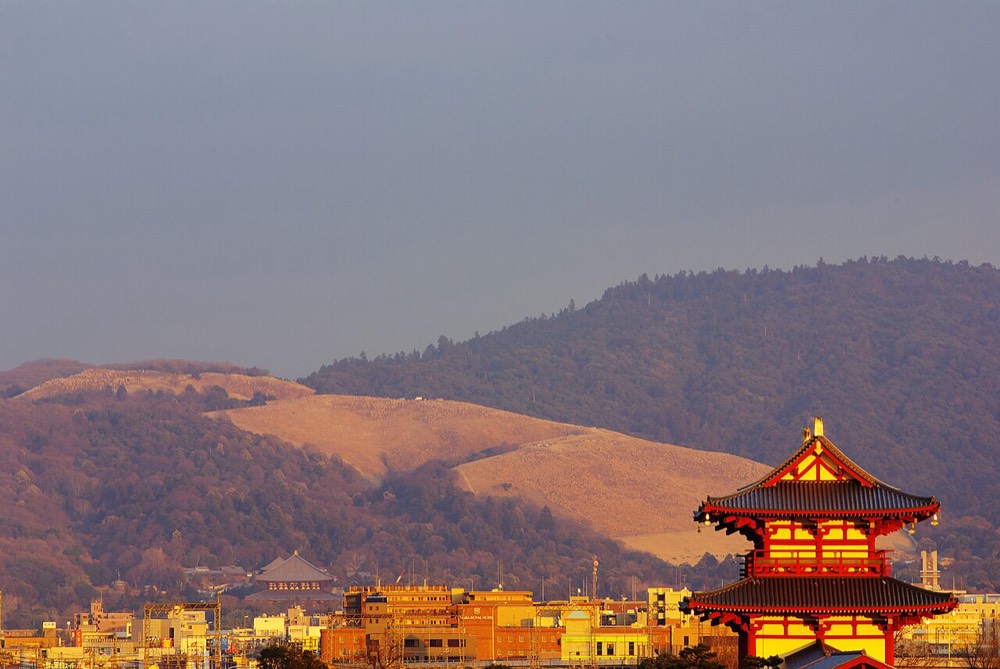
The burn covers about 33 hectares with a perimeter of about 3,800 meters[2]. At the signal of conch shells and trumpets, about 300 fire brigade members carry fire from the large bonfire at the foot of the hill to their torches and light the grass together[1].
The highlights come in three parts:
- Sacred fire procession (from 17:05): About 40 people in period costume, including priests, monks and officials, led by Kinpusenji yamabushi blowing conch shells, carry the sacred fire from Tobihino at Kasuga Taisha to Nogami Shrine at the foot of the hill[1]. Organizers ask spectators not to run alongside or chase the procession, and to watch from safe spots on the sidewalks along the route[1].
- Fireworks (from 18:15): Launched in front of Mount Wakakusa; winter air is clear, so they are easy to see from far away.
- The burning (from 18:30): The fire is strongest for about 30 minutes after ignition, so around 19:00 is the best time for photos[3].
Wakakusa Yamayaki viewing spots: free or paid?
The short answer: buy a ticket for the paid foothill area if you want to be close; go to Kasugano Garden or Ukigumo Garden in Nara Park for free; head to the Heijo Palace Site if you want to avoid crowds.
| Viewing spot | Cost | Features | Best for |
|---|---|---|---|
| Paid foothill viewing area, Mount Wakakusa | Paid (individual prices due in early November 2026) | Closest to the fire, standing only; toilets at the Iraka reception building | Seeing the ignition and burning up close |
| Nara Park Bus Terminal rooftop | Paid (details per official announcements) | Fewer people, elevator access | Older travelers, avoiding crowds |
| Around Nara Park (Kasugano Garden, Ukigumo Garden, etc.) | Free | Open views but very crowded | Budget travelers who want the atmosphere |
| Heijo Palace Site | Free | Distant view of the burning and fireworks from around Suzakumon Gate | Photographing the gate and the burning together, avoiding crowds |
This table is based on the official FAQ[3]. The organizers also say you can watch from anywhere in Nara city with a view of Mount Wakakusa[3], such as open spots around Kofukuji or Sarusawa Pond, though how much buildings or trees block the view depends on where you stand.
When do paid foothill tickets go on sale?
Purchase details for individual 2027 paid foothill viewing area tickets are due in early November 2026, with sales planned for mid-November[6]. Group pre-sales for 10 or more people are 2,000 yen per person[3]. Japanese residents can also receive tickets as a furusato nozei (hometown tax) return gift from Nara Prefecture or Nara City[6]. Tickets cannot be refunded for personal reasons, and the event counts as held if even one firework is launched[3], so confirm your plans before buying.
What should I know about watching from the Heijo Palace Site?
The Heijo Palace Site is some distance from Mount Wakakusa, so you see the outline of the whole hill and the fireworks, which suits a telephoto lens to frame Suzakumon Gate with the burning. It is a wide open field with no shelter at night and can be windy in winter, so dress warmly. Heading home from Yamato-Saidaiji Station on the Kintetsu line is easier than squeezing into Kintetsu-Nara Station from Nara Park.
Will rain or snow cancel it? Weather rules
The short answer: light rain or light snow does not stop it; heavy rain, heavy snow, strong wind or fire warnings cancel it with no postponement, and the decision is posted on the official site by 10:00 on the day[3].
- How it is announced: Only on the official website; ticket holders are not contacted individually[3].
- No rescheduling: A cancelled event is not moved to another date[3].
- Re-burning: If the hill does not burn well on the day, it may be re-burned in the daytime in early February[3], but a daytime burn lacks the night-time effect and is not guaranteed.
- Fireworks only: If fireworks are launched but the burning is cancelled, paid area tickets are not refunded[3].
Evenings in Nara in late January are often close to freezing, and you will stand outside for one to two hours, so gloves, a hat and hand warmers are very useful. For weather and clothing across Japan in winter, see our Japan January travel guide.
Getting to Mount Wakakusa from Osaka or Kyoto, and road closures on the day
The short answer: take the train to Kintetsu-Nara Station and walk about 20 minutes to the foothill. Roads around Nara Park are restricted from the afternoon, so do not drive, and do not count on a taxi getting you to the site[3][4].
| From | To the Iraka foothill reception | Notes |
|---|---|---|
| Kintetsu-Nara Station | About 20 minutes on foot east from Exit 2 | Direct or easy Kintetsu connections from Osaka-Namba and Kyoto |
| JR Nara Station | About 40 minutes on foot | Suits JR pass holders, but a long walk |
| Nara Kotsu buses | City Loop (outer) to "Todaiji Daibutsuden / Kasuga Taisha-mae", then about 5 minutes on foot; or a bus bound for Kasuga Taisha Honden to "Nara Kasugano International Forum Iraka-mae" | Services and stops may change in the afternoon because of road closures |
This follows the official access page[4]. From the Iraka reception it takes another 15 to 30 minutes to walk to the paid foothill area[4].
Road closures and parking
- Closure hours: Based on past years, roads around Nara Park are restricted from about 15:00 to 20:00, and from 18:00 to 19:30 some sections are closed even to buses and taxis[4]. Check the official site for the exact 2027 closures.
- Buses and taxis: After 15:00 they can only reach the Daibutsuden-mae intersection or Kencho-mae; taxis cannot get in until about 19:30[3].
- Parking: There is no event parking and no bicycle parking at Mount Wakakusa, and organizers strongly recommend public transport[3].
- Mountain closed: You cannot go up Mount Wakakusa on the day; the Shin-Wakakusayama course of the Nara Okuyama Driveway is closed from about 14:00 to 20:00, and Kasugayama Primeval Forest trails close from noon[3].
How can I avoid the crowds going home?
Organizers warn that around the end of the fireworks and ignition (about 18:30), the area from the foothill to the Daibutsuden-mae intersection is extremely crowded, and walking to Kintetsu-Nara Station can take about an hour[3]. More relaxed options:
- Stay until the burning is mostly over at about 19:30, then walk slowly to the station[3].
- Have dinner near Nara Park first and leave after 20:00 when the crowds have thinned.
- Kintetsu usually adds extra trains in the late 19:00s, but station entry may be restricted[3], so check the last trains back to Osaka or Kyoto in advance.
Planning a Nara winter festival day: Nara Park by day, the burning by night
The short answer: the burning does not start until 6 p.m., so spend the day at Nara Park, Todaiji and Kasuga Taisha, watch the Otondo and the procession at Tobihino in the late afternoon, and stay put for the burning.
Sample day trip from Osaka or Kyoto
- Morning: Take the Kintetsu line to Kintetsu-Nara Station, visit Kofukuji and Todaiji's Great Buddha Hall, and feed the deer in Nara Park.
- After lunch: Visit Kasuga Taisha, then watch Kasuga no Otondo at Tobihino in the afternoon.
- Before 15:00: Eat something and buy hand warmers early, because shops and toilets nearby get long lines once the closures start.
- 16:45–17:40: Watch the Goshinka Hotaisai and the sacred fire procession at Tobihino and along the route.
- 18:15–19:30: Watch the fireworks and the burning from your chosen spot.
- After 19:30: Walk back to Kintetsu-Nara Station at a relaxed pace.
For the order of sights and transport around Nara Park, see our Nara day trip guide. If you visited Nara in autumn for the Shosoin Exhibition, the winter burning shows the same Nara Park in a completely different light.
Staying in Nara
After the burning the crowds are heavy, so if you would rather not rush back to Osaka, staying in central Nara the night before or that night makes things much easier. For a distinctive Nara stay, see our introduction to Hoshinoya Nara Prison; weekend rooms around the burning tend to fill early, so book once your dates are set. For more Kansai plans, start from our Osaka travel overview.
Before you go: what to prepare for Wakakusa Yamayaki
- Check the official site: Whether it goes ahead is posted by 10:00 on the day[3], and 2027 details such as paid area prices and closed roads will be updated over time.
- Stay warm: You will stand outside for a long time, so wear a windproof jacket, bring gloves and hand warmers, and choose comfortable shoes.
- Arrive early: Crowds build noticeably after 17:00[3], so come in the afternoon if you want a good spot.
- Use the toilet beforehand: No temporary toilets are set up, only public ones[3], so allow time for lines.
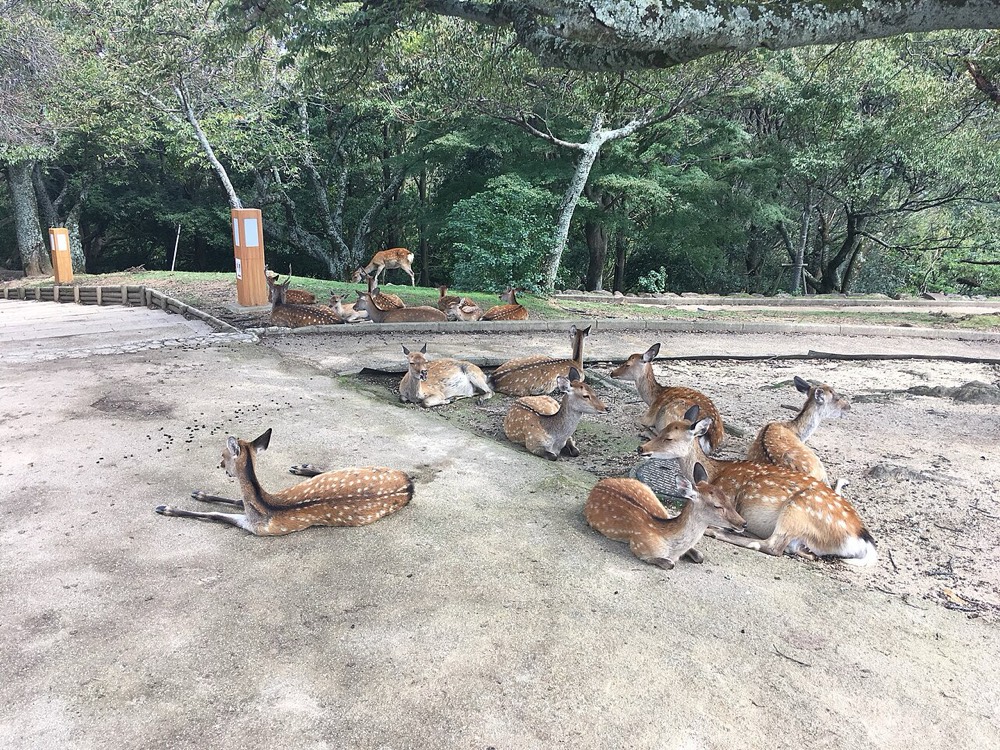
- Mind the deer and the fire: Nara Park's deer are around in the evening too, so watch your step in the crowd; do not block others with selfie sticks or tripods, and stay away from the cordon lines.
- Leave time to get home: If you are returning to Osaka or Kyoto, allow at least an hour of buffer, or simply stay a night in Nara.
FAQ
When is Wakakusa Yamayaki 2027 and what time is the ignition?
Wakakusa Yamayaki 2027 takes place on Saturday, January 23. According to Nara Prefecture's schedule, fireworks start at 18:15 and the whole hill is lit at 18:30. The fire is strongest for about 30 minutes after ignition, and most of the slope has burned by around 19:30. Times may change with the weather, so check the official site before going.
Does the burning go ahead in rain or snow? Is it postponed?
Light rain or light snow does not stop it. Heavy rain, heavy snow, strong wind or fire-related warnings can cancel it. The decision is posted on the official website by 10:00 on the day, with no individual notices. A cancelled event is not moved to another date; if the hill does not burn well, it may be re-burned in the daytime in early February.
Do I need a ticket to watch Wakakusa Yamayaki?
Not necessarily. Kasugano Garden, Ukigumo Garden and other parts of Nara Park are free but very crowded. For the closest view, buy a ticket for the paid foothill viewing area; individual prices and how to buy are due in early November 2026, with sales in mid-November. Group pre-sales for 10 or more people are 2,000 yen per person.
How do I get to Wakakusa Yamayaki from Osaka?
The easiest way is the Kintetsu line from Osaka-Namba to Kintetsu-Nara Station, then a walk of about 20 minutes east from Exit 2 to the foothill reception. From JR Nara Station the walk is about 40 minutes. Roads around Nara Park are restricted from about 15:00, and buses and taxis can only reach the Daibutsuden-mae intersection or Kencho-mae, so use trains and walk.
Can I climb Mount Wakakusa on the day of the burning?
No. Mount Wakakusa is closed on the day, the Shin-Wakakusayama course of the Nara Okuyama Driveway is closed from about 14:00 to 20:00, and the Kasugayama Primeval Forest trails are closed from noon. If you want the summit view over Nara, go on another day.
Sources
- Wakakusa Yamayaki official website (Nara Prefecture and the Wakakusa Yamayaki Organizing Committee): 2027 date and event-day program
- Wakakusa Yamayaki official website: Schedule and highlights: Otondo bonfire, sacred fire procession, fireworks and ignition times, burn area
- Wakakusa Yamayaki official website: FAQ: Weather cancellation rules, viewing spots, crowds, road closures, mountain access
- Wakakusa Yamayaki official website: Access: Walking times from stations, bus routes, road closure hours
- Wakakusa Yamayaki official website: About Wakakusa Yamayaki: Origins, height and area of Mount Wakakusa, fireworks history
- Wakakusa Yamayaki official website: Tickets: Sales schedule for paid foothill viewing area tickets
- Nara Prefecture: Wakakusa Yamayaki: Held on the fourth Saturday of January; 2027 announcements
Fares, opening hours and event dates can change. Information checked on 2026.10.31; please confirm with official sources before you go.