Kinosaki Onsen Guide: The Seven Public Baths, Snow Crab Season, Getting There and Where to Stay
Kinosaki Onsen guide: public bath hours and closing days, the ¥1,500 Yumepa day pass, trains from Osaka and Kyoto, snow crab season from November, and sample plans.
Quick answer
Kinosaki Onsen, in Toyooka, Hyogo, is famous for bath-hopping between public baths in a town that treats itself as one big inn. Of the seven public baths, Sato-no-yu by the station has been closed since April 2024, so six are open, each ¥800 for adults. The Yumepa day pass costs ¥1,500, and most ryokan in town give guests a bath pass. From Osaka the Limited Express Konotori takes about 2 hours 40 minutes (¥6,140 one way, reserved seat, regular season); from Kyoto the Limited Express Kinosaki takes about 2 hours 20 minutes (¥5,370). Snow crab season runs from early November to March.
Kinosaki Onsen (城崎温泉) in Toyooka, northern Hyogo, is the classic bath-hopping hot spring town within reach of the Kansai region: check into a ryokan, change into a yukata and walk in wooden geta along the willow-lined canal from one public bath to the next. This guide covers the current status, hours and closing days of the seven public baths of Kinosaki Onsen, how to get the most out of the Yumepa day pass, trains and fares from Osaka, Kyoto and Kobe, how to eat snow crab in Kinosaki once the season opens in November, and sample plans for a day trip and an overnight stay.
What is Kinosaki Onsen like? The whole town is one inn
In short: the heart of Kinosaki is its sotoyu, the public bathhouses along the streets. Your ryokan is where you sleep and eat; to bathe, you head out. Toyooka City's planning documents describe this as "the whole town is one inn"[3]: the station is the entrance, the streets are the corridors and the public baths are the big communal bath.
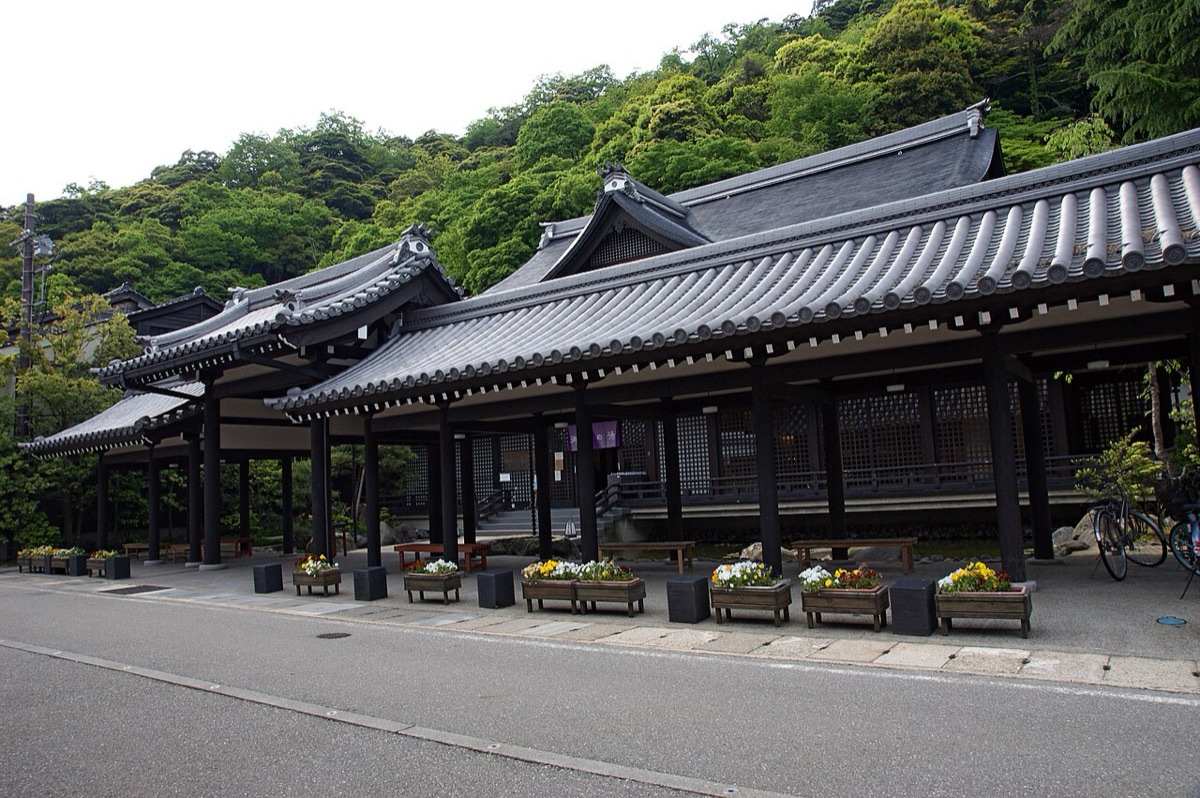
The hot spring town stretches west from Kinosaki-Onsen Station along both banks of the Otani River (Otanigawa), and you can cover it all on foot. Stone bridges, weeping willows and wooden ryokan line the water, and it is especially atmospheric when lit up at night. All the public baths share the same water: a 42°C sodium-calcium chloride high-temperature spring[1], slightly salty and good at keeping you warm.
Another frequent question: Visit Kinosaki states that all of Kinosaki's public baths accept guests with tattoos[2], which is unusual for a Japanese hot spring town. For general bathing etiquette, such as washing before you get in and keeping your towel out of the water, see Japan travel etiquette.
The seven public baths of Kinosaki Onsen: hours, closing days and features
In short: six of the seven public baths are open, each ¥800 for adults and ¥400 for children[1]. Sato-no-yu in front of the station has been closed since April 2024[2]; Toyooka City adopted a rebuilding plan in May 2025[3], and no reopening date has been announced.
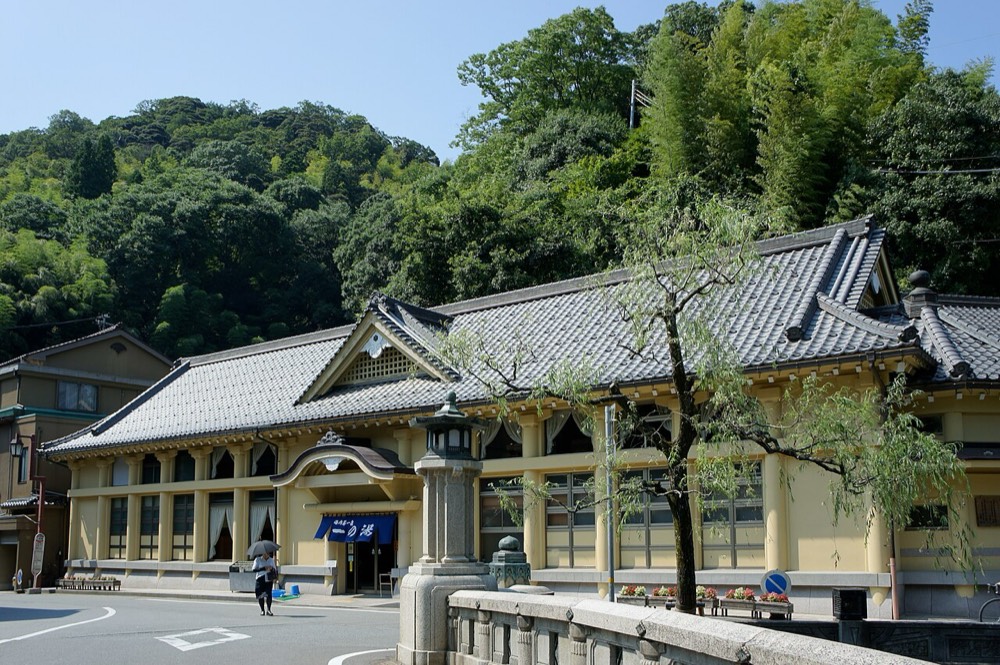
| Bath | Hours | Closed | Features |
|---|---|---|---|
| Kono-yu | 7:00–23:00 | Tuesday | The oldest bath; legend says a stork healing its leg found the spring; garden outdoor bath[15] |
| Mandara-yu | 15:00–23:00 | Wednesday | Karahafu-style gabled building, outdoor bath facing the hill |
| Gosho-no-yu | 7:00–23:00 | Thursday | Outdoor bath that borrows the hillside as scenery; temple-like exterior |
| Ichi-no-yu | 7:00–23:00 | Wednesday | In the center of town; family bath currently suspended |
| Yanagi-yu | 15:00–23:00 | Thursday | The smallest of the seven, good for a quick soak |
| Jizo-yu | 7:00–23:00 | Monday | Spacious tatami rest area on the 2nd floor; family bath suspended |
| Sato-no-yu | Closed | – | In front of Kinosaki-Onsen Station, being rebuilt[3] |
Source: Kinosaki Onsen Ryokan Cooperative official site[1]. Last entry at each bath is 30 minutes before closing; "children" means age 3 through elementary school.
A few things to plan around:
- Two baths close on both Wednesday and Thursday: Mandara-yu and Ichi-no-yu on Wednesday, Gosho-no-yu and Yanagi-yu on Thursday, leaving only four open on those days. To try all six, Friday to Sunday is the safest choice.
- Mandara-yu and Yanagi-yu open at 3 p.m.: if you arrive in the morning on a day trip, start with the other four.
- Kono-yu renovation: Visit Kinosaki's bath overview lists Kono-yu as closed for renovation from May 11 to October 30, 2026[2], while its Kono-yu page, updated in November, shows regular hours[15]. Check the "現在の外湯" (current bath status) page on the official site before you go.
- Towels and bags: ryokan provide a towel and small bag; day visitors should bring their own towel and carry as few valuables as possible.
How the Yumepa day pass works: ryokan guests vs day visitors
In short: day visitors buy the Yumepa day pass, ¥1,500 for adults and ¥750 for children, at any bath's ticket window, with unlimited entry that day[1]. If you stay at a ryokan in the hot spring town, you are usually handed a bath pass at check-in and do not need to buy one[2].
The math is simple: one bath costs ¥800, two cost ¥1,600, already more than the day pass. If you plan to visit two or more baths, buy the pass. Only buy single tickets if you want one bath before rushing back.
Two things to check about the guest pass. First, Visit Kinosaki recommends confirming with your accommodation that it is provided[2]; places on the edge of town or outside the cooperative may not offer it. Second, ryokan usually lend a yukata, bag and towel, and some lend geta, so ask at check-in.
Bath-hopping step by step
- Change into your yukata at the ryokan and take your pass (or buy a day pass at the first bath) and a towel.
- Show your pass or pay at the counter, and put your shoes or geta in the shoe locker.
- Undress in the changing room and wash before getting in; the baths are separated by gender and you bathe naked[2].
- Soak for 10–15 minutes, drink some water and rest before walking to the next one. Three or four baths a day is a comfortable pace.
- Last entry at most baths is 22:30, so don't leave the last one too late.
Yukata strolling: how to enjoy the hot spring town
In short: the official site describes Kinosaki as a town to tour in yukata[4]. Strolling the Otani River banks in yukata and geta from dusk into the night is the quintessential Kinosaki scene.
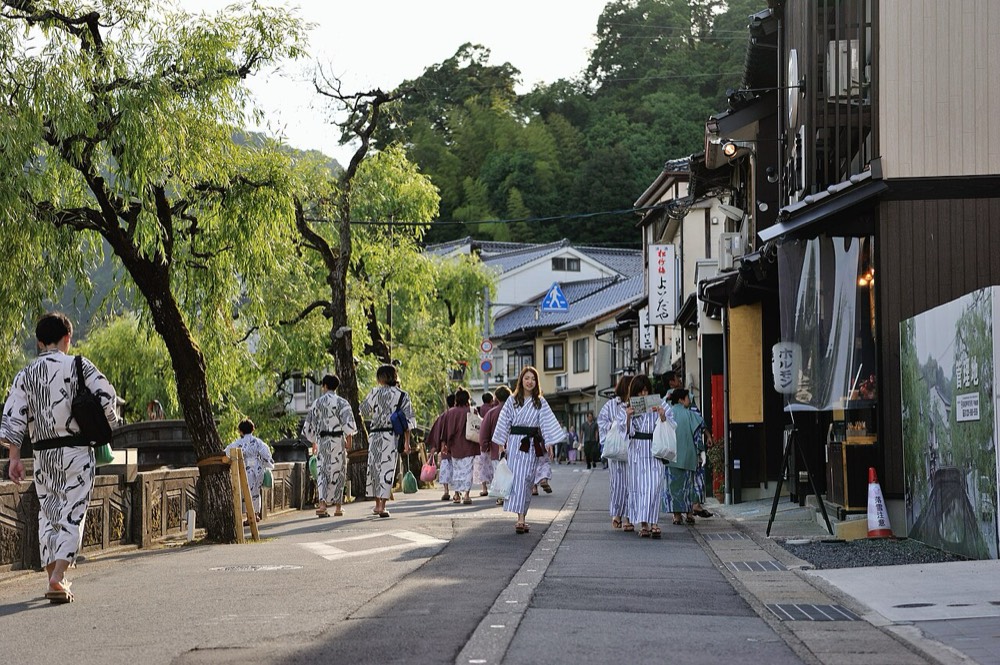
You can wear a yukata without staying at a ryokan: there are yukata rental shops in town, with prices and plans set by each shop. If you plan to shop around, the "Yukata & Crab Kingdom Passport" sold at the Kinosaki Onsen Tourist Center costs ¥300 and is valid for a year. Partner souvenir shops, sake shops and fish shops give a small gift for purchases of ¥1,000 or more, and guests on a one-night, two-meal ryokan stay get a free drink (stays booked through travel sites or agencies may not qualify)[14].
You don't need a set route. From the station, walk west along the main street past Jizo-yu, Ichi-no-yu, Yanagi-yu and Gosho-no-yu to Kono-yu and the ropeway station. Along the way are hot spring eggs, cafés and souvenir shops, and in crab season some shops sell crab buns out front[11].
Kinosaki Onsen Ropeway and Onsenji Temple
The Kinosaki Onsen Ropeway starts from its base station at the far end of town, stops at Onsenji Station midway and ends at the summit of Mt. Daishi, where you can look down over the hot spring town. In the winter period from November 1, 2026 to January 31, 2027, the last uphill car leaves at 16:30 and the last downhill car at 16:50, subject to weather[13]. For fares and closing days, check the ropeway's notices (phone 0796-32-2530).
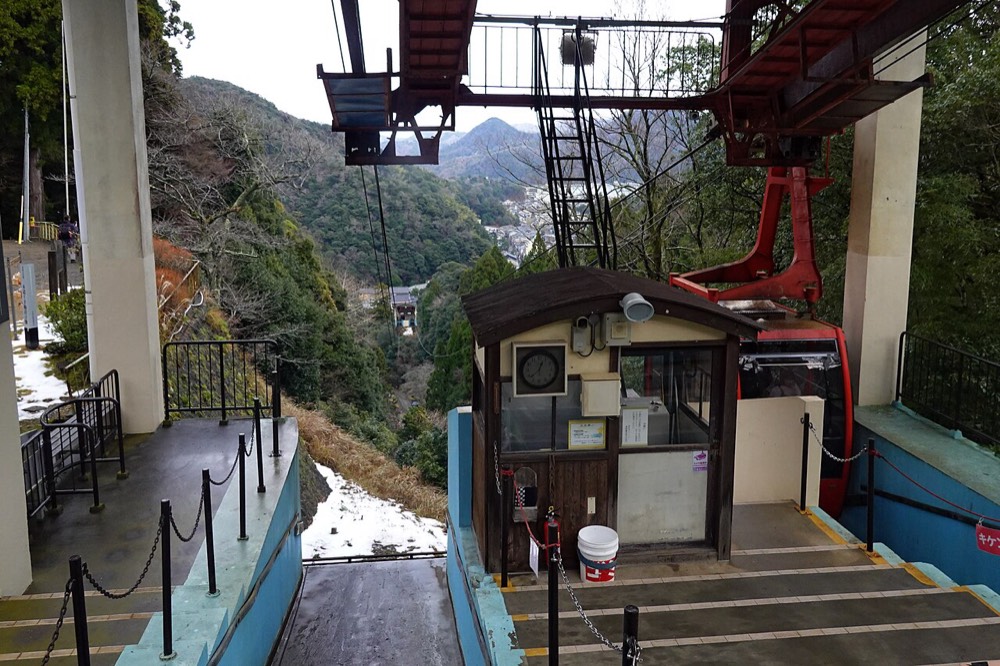
In winter it starts getting dark after 4 p.m., so go up between noon and 3 p.m., then soak at Kono-yu right next door when you come down.
Getting to Kinosaki Onsen from Osaka, Kyoto and Kobe
In short: JR limited expresses run direct. From Osaka or Shin-Osaka the Konotori takes about 2 hours 40 minutes, from Kyoto the Kinosaki about 2 hours 20 minutes, and from Sannomiya the Hamakaze about 2 hours 30 minutes, all without changing trains[4]. The Limited Express Hashidate from Kyoto goes to Amanohashidate, not Kinosaki, so don't board the wrong train.
| From | How | Time (approx.) | One-way fare (adult, regular season, reserved seat) |
|---|---|---|---|
| Osaka / Shin-Osaka | JR Limited Express Konotori | 2 h 40 min[4] | ¥6,140 (fare ¥3,410 + express ¥2,730)[5] |
| Kyoto | JR Limited Express Kinosaki | 2 h 20 min[4] | ¥5,370 (fare ¥2,640 + express ¥2,730)[6] |
| Sannomiya (Kobe) | JR Limited Express Hamakaze | 2 h 30 min[4] | See JR's official site |
| Osaka Umeda (Hankyu Sanbangai) | Zentan Bus highway bus | 3 h 10 min[4] | Depends on stop and date; up to about ¥5,700 on the route[9] |
| Kyoto Station Karasuma Exit | Highway bus | 3 h 40 min[4] | See the operator's notices |
Common questions:
- The express charge changes by season: the Konotori reserved-seat charge is ¥200 less in the off-peak season, ¥200 more in the busy season and ¥400 more in the peak season[5]. The New Year holidays and crab-season weekends are often busy season.
- Actual journey time: on the 2026 timetable, for example, the Konotori No. 9 leaving Osaka at 12:11 arrives at Kinosaki Onsen at 14:54, about 2 hours 43 minutes[16]. Trains are infrequent, so check your return train in advance.
- Book the bus: the Zentan Bus Osaka line also stops at Shin-Osaka, Senri New Town, Takarazuka and Nishinomiya-kita, and can be booked online[9].
- After you arrive: from Kinosaki-Onsen Station you can walk to your ryokan or take the shuttle run by the ryokan cooperative[4].
Can I use the Kansai WIDE Area Pass?
Yes. JR West's Kansai WIDE Area Pass costs ¥12,000 for adults and ¥6,000 for children for 5 consecutive days, and the Konotori is on the list of covered trains, though you must reserve a seat[7]. A round trip from Osaka to Kinosaki Onsen alone costs ¥12,280 in the regular season, already more than the pass; add a trip to Amanohashidate or Okayama within the 5 days and it is a clear win. Only holders of a foreign passport entering Japan as a "Temporary Visitor" can buy it[7]. For coverage, exchange and seat reservations, see the Kansai WIDE Area Pass guide.
Note that the old Kansai Area Pass stopped selling on September 30, 2026, and it never covered limited expresses other than HARUKA[8], so it cannot be used on the express trains to Kinosaki.
Kinosaki Onsen crab season: how to eat Matsuba and Tsuiyama crab
In short: Kinosaki calls its crab season, November 2026 to March 2027, the "Crab Kingdom" (kani okoku). Fish shops, restaurants and souvenir shops sell crab specials, and there are crab sukiyaki and course meals for day visitors[10]. Hyogo's Matsuba crab season opens in early November and runs to March[12]. Brands and national price ranges are covered in full in the Japan snow crab season guide; this section focuses on eating crab in Kinosaki itself.
Brand crabs around Kinosaki
- Tsuiyama crab (Tsuiyama-gani): Matsuba crab landed at Tsuiyama Fishing Port, 10–15 minutes by car from Kinosaki Onsen, identified by a blue tag. During the season there is an early-morning auction you can watch[12].
- Shibayama crab (Shibayama-gani): a Matsuba crab brand landed at Shibayama Port in Kami Town to the west, often seen at Kinosaki ryokan and shops.
- Seko-gani (female crab): much smaller than the male, prized for its red roe[11]. The female season is shorter than the male season, so aim for before the end of the year.
Ryokan dinner vs eating on a day trip
Most Kinosaki ryokan offer one-night, two-meal stays, with a kaiseki dinner that from November to March often features Matsuba crab[11]. Crab plans vary enormously in price depending on the grade of crab (whether it carries a brand tag), how many crabs per person, and weekday or weekend. At the same ryokan, a plan built around crab legs and one with a whole live crab can differ several times over, so check each ryokan's plans for actual prices rather than trusting the words "full crab course."
Day visitors have three main options[11]:
- Seafood market dining rooms upstairs: live crabs are sold downstairs and eaten upstairs; some accept walk-ins.
- Crab specialty restaurants: full crab courses usually need a reservation, and popular places book up early on weekends.
- Street snacks: crab buns, crab soup and the like let you taste the season on a budget.
If a "Matsuba crab" looks suspiciously cheap, ask whether it is live, whether it carries a port tag, or whether it is frozen snow crab from elsewhere.
Kinosaki Onsen day trip or overnight? Sample plans
In short: from Osaka or Kyoto it is over 2 hours each way. A day trip covers 3–4 baths and a crab lunch but feels rushed; to experience bath-hopping in yukata at night and a crab kaiseki dinner, stay overnight.
Day trip example (from Osaka, Friday to Sunday)
| Time | Plan |
|---|---|
| Around 8:30 | Limited Express Konotori from Osaka Station (check the day's timetable) |
| Around 11:15 | Arrive at Kinosaki-Onsen Station; buy the Yumepa day pass at your first bath |
| 11:30 | Jizo-yu, then stroll along the Otani River to Ichi-no-yu |
| 12:30 | Lunch at a seafood market dining room or crab restaurant (book popular places) |
| 14:00 | Ropeway up to Onsenji Temple and the summit of Mt. Daishi |
| 15:30 | Kono-yu (outdoor bath) |
| 16:30 | On the way back, Mandara-yu or Yanagi-yu (open from 15:00) and souvenir shopping |
| Around 17:30 | Limited express back to Osaka, arriving around 20:00–20:30 |
Cost example (1 adult, regular season): round-trip limited express ¥12,280[5] + Yumepa day pass ¥1,500[1] = ¥13,780, plus lunch and the ropeway. With a Kansai WIDE Area Pass, the transport part is covered.
Overnight example
- Day 1: leave around midday, check in around 15:00 and change into a yukata → soak at Gosho-no-yu and Ichi-no-yu in the evening → crab kaiseki dinner at 18:00 → after 20:00, stroll the lit-up town and visit Yanagi-yu or Mandara-yu.
- Day 2: the baths open at 7:00, so head to Kono-yu while it is quiet → breakfast and check-out → leave your luggage and ride the ropeway, shop for souvenirs → afternoon express home. You can also take the Kyoto Tango Railway on to Amanohashidate; see the Amanohashidate and Ine day trip.
For general questions about choosing a ryokan, such as two-meal plans, private baths and check-in, see how to choose a Japanese ryokan. In Kinosaki most ryokan sit within walking distance in the hot spring town, so simply pick one near the bath you most want to visit. Crab-season weekends and the New Year period are the hardest to book; the earlier you book, the more choice you have.
What to watch out for in Kinosaki Onsen in winter
In short: Kinosaki is on the Sea of Japan side and gets snow in winter. The streets have snow-melting water pipes, so the ground is often wet and slippery. Keep warm and watch your footing when strolling in yukata; geta slip easily on snow and wet ground, so non-slip shoes are safer.
- Stay warm: ryokan usually provide a haori or jacket to wear over your yukata; dry your hair before heading out after a bath.
- Timing: it gets dark early in winter and the last uphill ropeway leaves at 16:30[13], so schedule sightseeing before 3 p.m.
- Transport: heavy snow can delay or cancel limited expresses, so leave a buffer if you have important plans the next day.
- Crowds: on crab-season weekends there can be queues at the baths; just after the 7:00 opening and during dinner time are relatively quiet.
Who is Kinosaki Onsen for, and who is it not for?
Good for:
- Travelers who want the Japanese hot spring experience of strolling in yukata and visiting several baths in one night.
- Anyone who wants to eat Matsuba crab in winter and combine it with hot springs in one trip.
- Kansai WIDE Area Pass holders heading to northern Kinki or Amanohashidate within 5 days.
- Travelers with tattoos who are often turned away at other hot spring towns[2].
Less suited to:
- Those with only half a day who want a quick soak from Osaka; Arima Onsen, about 1 hour from Osaka, saves time.
- Those who want a private open-air bath in their room and would rather not go out. Kinosaki's highlight is its public baths, so a luxury ryokan in another hot spring town suits that better.
- Those on a tight budget who want a ryokan stay on a crab-season weekend, when room rates peak. Try a weekday, or a room-and-breakfast stay plus a crab meal out.
Before you go: how to plan it smoothly
- Check the day of the week first: two baths close on both Wednesday and Thursday. To try all six, go Friday to Sunday, and check the "現在の外湯" live status page.
- Choose your ticket: for a single Kinosaki trip, buy ordinary limited express tickets; if you have other long trips such as Amanohashidate or Okayama within 5 days, consider the Kansai WIDE Area Pass.
- Book crab early: ryokan plans and popular crab restaurants need early reservations; compare prices only after confirming crab grade and quantity.
- Wear the right shoes in winter: a yukata with non-slip shoes and a jacket is far safer than geta on snow.
- Sato-no-yu is not back yet: the bath in front of the station is still being rebuilt, so there are currently six public baths, not seven. Don't be misled by old information.
FAQ
Are all seven public baths in Kinosaki Onsen open?
No. Sato-no-yu (Kinosaki Onsen Community Center) in front of Kinosaki-Onsen Station has been closed since April 2024 because the building is old. Toyooka City has drawn up a rebuilding plan, but no reopening date has been set. The six open baths are Kono-yu, Mandara-yu, Gosho-no-yu, Ichi-no-yu, Yanagi-yu and Jizo-yu, each with its own weekly closing day.
How much is the Kinosaki Onsen day pass, and is it worth it?
The Yumepa day pass costs ¥1,500 for adults and ¥750 for children, sold at any bath's ticket window, with unlimited entry that day. A single bath costs ¥800 for adults, so the pass pays off from the second bath. If you stay at a ryokan in town, you are usually given a bath pass at check-in; confirm with your inn.
What is the fastest way from Osaka to Kinosaki Onsen, and how much does it cost?
Take the JR Limited Express Konotori from Osaka or Shin-Osaka straight to Kinosaki-Onsen Station, about 2 hours 40 minutes. A reserved seat in the regular season costs ¥6,140 one way (¥3,410 fare plus ¥2,730 limited express charge). Zentan Bus also runs highway buses from Osaka Umeda, about 3 hours 10 minutes; fares depend on the stop and date.
Does the Kansai WIDE Area Pass cover Kinosaki Onsen?
Yes. JR West's Kansai WIDE Area Pass (¥12,000 for adults, 5 consecutive days) covers the Limited Express Konotori with a seat reservation. One round trip from Osaka costs about ¥12,280, already more than the pass. The old Kansai Area Pass stopped selling on September 30, 2026, and never covered limited expresses to Kinosaki.
When is crab season in Kinosaki Onsen, and can day-trippers eat crab?
Matsuba crab season in Hyogo opens in early November, and Kinosaki calls November to March its Crab Kingdom season. Day-trippers can eat at the second-floor dining rooms of seafood markets or at crab restaurants; some take walk-ins, while popular places need reservations. Prices vary widely by size and grade, so check with each shop.
Does it snow in Kinosaki Onsen in winter? What should I watch out for?
Yes. Kinosaki is on the Sea of Japan side of northern Hyogo and gets snow in winter. The streets have snow-melting water pipes, so the ground is often wet. Wear the jacket your ryokan provides over your yukata and non-slip shoes rather than geta. The last uphill ropeway leaves at 16:30 from November to January, so go up early.
Sources
- Kinosaki Onsen Ryokan Cooperative | Public baths: Hours, closing days and prices of the six baths, Yumepa day pass price, spring type
- Visit Kinosaki | The 7 Mystic Onsen: Ryokan guest bath pass, day pass, Sato-no-yu closure, tattoo policy
- Toyooka City | Kinosaki Onsen Community Center (Sato-no-yu) basic development plan: Rebuilding plan adopted in May 2025, the whole-town-as-one-inn concept
- Kinosaki Onsen Ryokan Cooperative | Access: Travel times by train, highway bus, car and plane
- JR Group | Limited Express Konotori fares: Osaka to Kinosaki Onsen fare and reserved-seat charge, seasonal adjustments (October 2026)
- JR Group | Limited Express Kinosaki fares: Kyoto to Kinosaki Onsen fare and reserved-seat charge (October 2026)
- JR West | Kansai WIDE Area Pass: Price, validity, Konotori requires reservation, eligibility
- JR West | Kansai Area Pass: Sales ended September 30, 2026; limited expresses other than HARUKA not covered
- Nippon Travel Agency | Zentan Bus Kinosaki Onsen–Osaka line: Osaka stops, fare range, online booking
- Kinosaki Onsen Ryokan Cooperative | Crab Kingdom: Crab season November 2026 to March 2027, day-visitor crab meal categories
- Visit Kinosaki | Snow Crab Season in Kinosaki: Ryokan kaiseki, seafood market dining rooms, female crab, Tsuiyama Port
- Japan Tourism Agency multilingual commentary database | Matsuba crab: Tsuiyama crab identified by blue tag, morning auction at Tsuiyama Port, early November to March
- Kinosaki Onsen Ryokan Cooperative | Kinosaki Onsen Ropeway winter hours: Last departures from November 1, 2026 to January 31, 2027
- Kinosaki Onsen Ryokan Cooperative | Yukata & Crab Kingdom Passport: ¥300, valid 1 year, partner shop perks
- Visit Kinosaki | Kono-yu: Kono-yu hours, closing day, outdoor bath and stork legend
- Ekitan | Osaka to Kinosaki Onsen fares and times: Direct Konotori journey time and fare example
Fares, opening hours and event dates can change. Information checked on 2026.11.05; please confirm with official sources before you go.