How to Choose a Japanese Onsen Ryokan: Half-Board Stays, Private Baths, Check-In, Etiquette and Booking Tips
First onsen ryokan stay in Japan? What half-board includes, per-person pricing, check-in, yukata, private baths, bathing etiquette, tattoos, bathing tax and booking tips.
Quick answer
Most Japanese onsen ryokan are sold as half-board stays (one night with two meals), priced per person per night and including dinner (often kaiseki-style) and the next morning's breakfast; JNTO puts the average at about 15,000 yen per person per night, with high-end ryokan costing more. After check-in you change into the yukata in your room and usually choose a dinner time. Overnight guests can use the large public baths free; private baths (kashikiri) may be free or extra and often need booking. A bathing tax applies, with a standard rate of 150 yen per person per day, and places like Kyoto, Tokyo and Hokkaido also charge an accommodation tax. Tattoo rules vary, so ask in advance.
The biggest difference between a Japanese onsen ryokan and an ordinary hotel is that the overnight stay is itself the main event: a half-board dinner and breakfast, wandering the inn in a yukata, and a soak before bed and again at dawn. This guide answers the questions first-timers at a Japanese onsen ryokan ask most: what half-board includes, why rates are per person, the flow from check-in to check-out, how to choose between the public baths and a private bath (kashikiri), bathing etiquette and tattoo rules, the bathing tax and accommodation taxes, and what to know about booking, cancellations, children and dietary needs.
What does a half-board onsen ryokan stay include, and how are rates calculated?
The short answer: half-board (ippaku nishoku) means one night plus dinner and the next morning's breakfast, priced per person per night, so for two people in one room the total is the per-person rate times two.
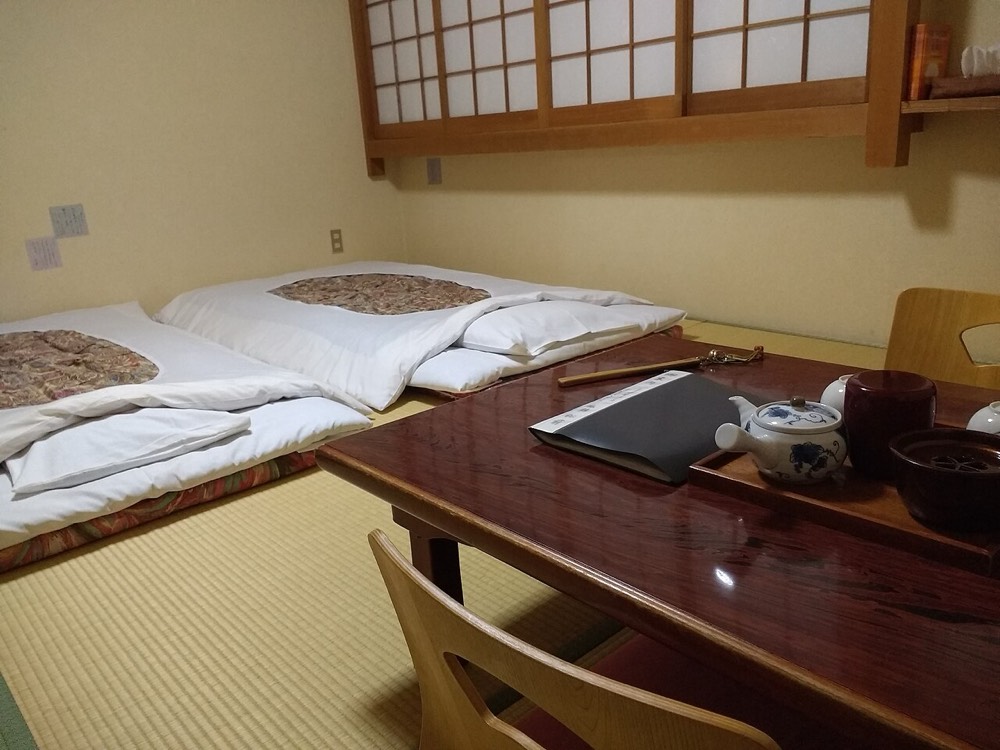
The Japan National Tourism Organization (JNTO) describes a typical ryokan as tatami-floored rooms, futon bedding laid on the floor, yukata robes, an in-house kaiseki dinner and a Japanese breakfast, with meals built on local seasonal ingredients and served either in your room or in a dining hall depending on the inn[1]. JNTO also notes that ryokan charge per person, usually with meals included, at an average of about 15,000 yen per person per night, with high-end ryokan costing more[1].
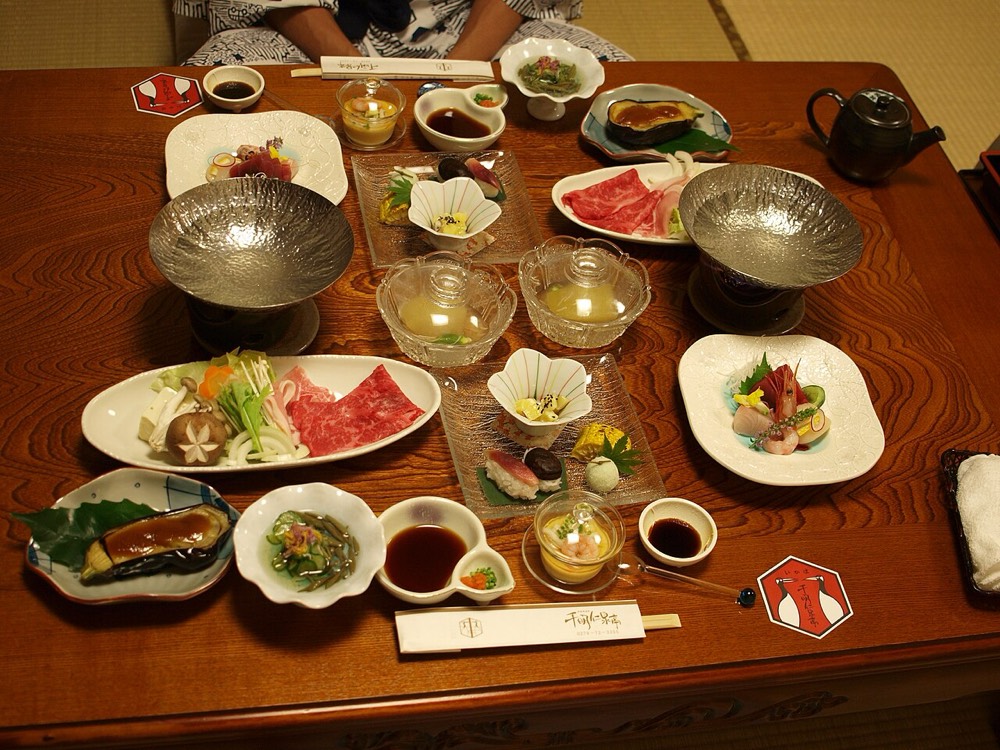
Common ryokan plan types:
| Plan | Japanese | Includes | Best for |
|---|---|---|---|
| Half-board | 1泊2食付き | Room + dinner + breakfast | First-timers who want the full experience |
| Bed and breakfast | 1泊朝食付き | Room + breakfast | Eating dinner out in the onsen town |
| Room only | 素泊まり | Room only | Tight budgets, late arrivals or many dietary limits |
| Room with private open-air bath | 露天風呂付き客室 | Room with its own outdoor bath | Couples, families, people with tattoos or who prefer not to bathe communally |
A few things that commonly confuse people:
- The per-person rate changes with group size: in the same tatami room, four guests usually pay less each than two, and solo travelers often pay the most or are not accepted.
- Weekends and holidays cost more: Saturday nights, the night before a holiday, New Year and autumn leaf season can push the same plan much higher.
- Taxes are separate: the bathing tax and, in some areas, an accommodation tax are often collected at check-out; see below.
From check-in to check-out: yukata, dinner times and futon
The short answer: check in in the afternoon, soak first, change into your yukata before dinner, find your futon already laid out when you return, and check out after breakfast. Follow that rhythm and nothing will catch you off guard.
At a typical onsen ryokan, the night goes roughly like this:
- Arrival and shoes off: you take off your shoes before entering the inn or your room and switch to slippers; JNTO notes that staff explain the customs for shoes, bathing and yukata[1]. Leave the slippers at the door before stepping onto tatami.
- Check-in: many ryokan check in from around 3 p.m. Staff show you to your room, serve tea and a sweet, and ask you to pick a dinner slot and breakfast time.
- First soak: the hour before dinner is one of the quieter times at the large baths, and some guests book a private bath for this slot.
- Change into the yukata: your room has a yukata (cotton robe) and sash, plus a jacket (tanzen or haori) in cold seasons. Wrap the left side over the right; right over left is how the dead are dressed. JNTO notes guests often wear only underwear beneath the yukata[2], and you can wear it around the inn and the onsen town.
- Dinner: a multi-course kaiseki-style dinner served dish by dish takes about 1.5 to 2 hours. Arrive on time, as being late can upset the kitchen's timing.
- Futon: at many ryokan, staff lay out the futon while you are at dinner; some inns now have beds or ask guests to lay out their own.
- Morning soak and breakfast: an early-morning bath is one of the joys of a ryokan, and breakfast usually has set time slots.
- Check-out: settle drinks, private bath fees and the bathing tax; check-out time depends on the inn, so confirm it at check-in.
Public baths, private baths (kashikiri) or a room with its own open-air bath?
The short answer: public baths are the cheapest and most common, private baths suit families, couples or anyone uncomfortable bathing with others, and a room with its own open-air bath gives the most freedom at the highest price.
| Type | Japanese | Cost | Booking | Notes |
|---|---|---|---|---|
| Large public bath | 大浴場・大浴場の露天風呂 | Free for guests | Not needed | Separated by gender, sometimes swapped by time |
| Private bath | 貸切風呂・家族風呂 | Varies: free or extra | Often reserved or signed up for on site | One group has it to themselves; time limits vary by inn |
| Room with private open-air bath | 露天風呂付き客室 | Included in room rate | Chosen when booking | Use it any time, but rates are much higher |
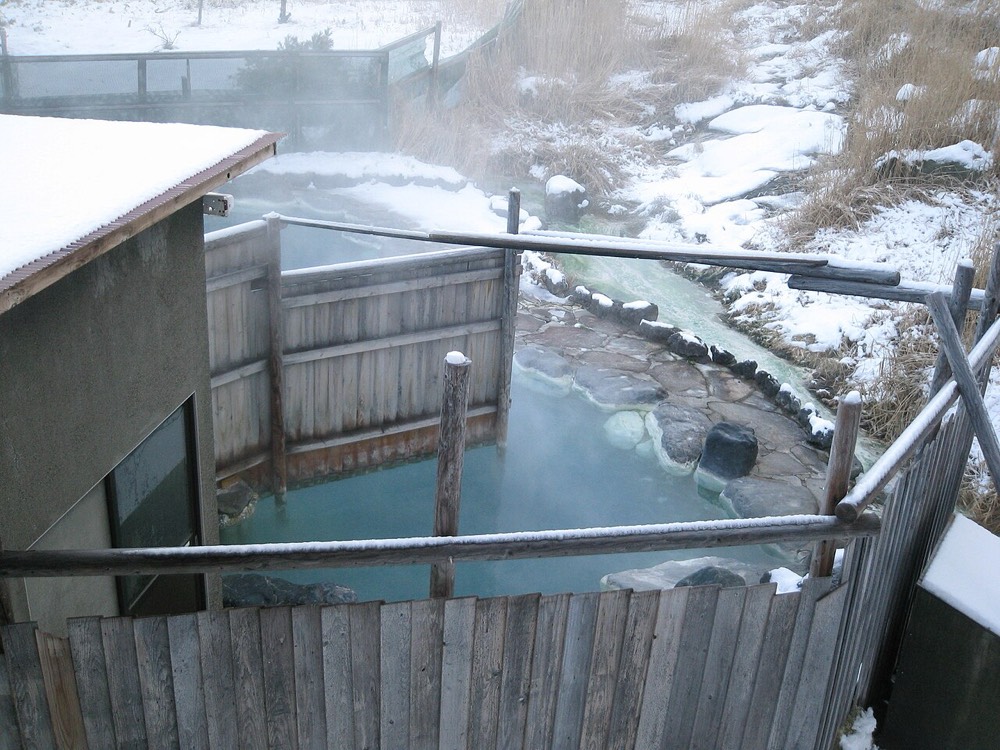
JNTO notes that the public onsen at a ryokan or hotel are usually free for overnight guests, while private baths usually cost extra and must be reserved in advance or at the front desk, where you get a key; small groups can share one[2]. Some ryokan swap the men's and women's baths late at night or early in the morning so guests can try both, so check the curtain color or signs each time: 男湯 is for men and 女湯 is for women.
On Yado Nippon, the booking site of the Japan Ryokan & Hotel Association, you can filter about 2,600 member ryokan and hotels nationwide by plan types such as rooms with a private open-air bath[9], which is faster than clicking through properties one by one on a general booking site.
Onsen ryokan etiquette: what to do before and after bathing
The short answer: wash thoroughly at the shower stations before getting in, keep your towel out of the water, tie up long hair, no swimsuits and no photos. Do these and you will not cause offense.
Basic bathing steps:
- Changing room: put your clothes and valuables in a basket or locker; hot spring minerals can discolor jewelry, so take it off first[2].
- Wash: wash your whole body at the seated shower stations beside the bath; shampoo and body wash are usually provided[2].
- Rinse and adjust to the heat: pour hot water over your hands and feet first so your body gets used to the temperature[4].
- Get in: keep the small towel out of the bath, on your head or the edge; tie up long hair and do not put your head under the water[2].
- Get out: stand up slowly to avoid dizziness, and towel off before returning to the changing room rather than walking in dripping wet.
JNTO points out that most onsen require full nudity, as swimsuits are seen as contaminating the water; no drinking alcohol or eating in the bath, and keep each soak to about 30 minutes[2]. Photography is forbidden in bathing areas, so leave your phone behind.
The bathing precautions posted at hot springs under Ministry of the Environment standards include some health tips worth remembering[4]:
- Avoid bathing right before or after a meal or after drinking, and never bathe drunk.
- Drink about a glass of water before and after bathing, especially for an early-morning soak.
- Older people and those with high blood pressure or heart disease should avoid baths of 42°C or hotter.
- Older people and children should avoid bathing alone where possible.
Japanese ryokan tattoo rules: can you use the onsen with tattoos?
The short answer: there is no nationwide rule; each ryokan decides for itself. Cover small tattoos with stickers, choose a private bath or a room with its own open-air bath for larger ones, and ask before you book.
In the Japan Tourism Agency's 2015 survey, about 56% of responding ryokan and hotels refused bathers with tattoos in their public baths, about 13% allowed them with conditions (such as covering them) and about 31% had no restriction[5]. In 2016 the agency compiled examples of how facilities accommodate foreign visitors with tattoos, including covering them with stickers, steering guests to quieter times, or offering private baths[6].
JNTO describes tattoo policies as "very case-by-case", possibly with more leniency for international visitors, but you should be prepared to be turned away[2]. Practical approaches:
- Small tattoos: bring skin-colored tattoo cover stickers; some onsen sell them, and they are also available at stores such as Don Quijote[2].
- Large tattoos: book a ryokan with reservable private baths or a room with its own open-air bath.
- Ask by email first: in Japanese you can write: 「タトゥーが入っていますが、大浴場を利用できますか?」 (I have a tattoo; may I use the large public bath?)
Bathing tax and accommodation tax: what are the extra charges at check-out?
The short answer: the bathing tax is a local tax on using hot springs, with a standard rate of 150 yen per person per day; the accommodation tax is a separate tax charged by some cities and prefectures. Both may be collected on top of the room rate.
According to the Ministry of Internal Affairs and Communications, the bathing tax is an earmarked tax levied by municipalities where hot spring baths are located, collected by the lodging and paid to the municipality, and used for environmental sanitation facilities, protecting hot spring sources, fire services and promoting tourism; the standard rate is 150 yen per person per day, with each municipality setting its rate by ordinance[3]. Actual rates differ: Takasaki City in Gunma, for example, charges 150 yen for overnight guests and 50 yen for day bathers[10], while some onsen towns set rates above the standard.
The accommodation tax is a separate local tax that applies whether or not there is a hot spring:
| Area | Overview |
|---|---|
| Kyoto City | Five brackets by per-person nightly room rate, up to 10,000 yen from March 2026; the rate excludes meals[7] |
| Hokkaido | Introduced from April 2026, with some municipalities adding their own tax[8] |
| Tokyo, Fukuoka Prefecture and others | Also charge accommodation tax, with different amounts and thresholds |
On a half-board ryokan plan, the cost of dinner and breakfast is not counted in the room rate used for Kyoto City's accommodation tax[7]. For how each city calculates it and whether children pay, see Kyoto accommodation tax 2026.
How to book an onsen ryokan: cancellations, children and dietary needs
The short answer: book weekends and peak seasons at popular onsen towns 1 to 3 months ahead, and settle group size, children's ages, dietary restrictions and tattoo questions at the time of booking.
Where to book: the ryokan's own website, the Japan Ryokan & Hotel Association's Yado Nippon, Japanese booking sites or international booking platforms all work. Official sites sometimes have more plans (such as a free private bath or upgraded dinner), while international platforms offer interfaces in your language and easy comparison.
Cancellation: cancellation fees follow each ryokan's accommodation terms; generally the closer to the stay, the higher the percentage, and a no-show is usually charged in full. Because meals are prepared in advance, plans with meals may have earlier cancellation deadlines than hotels, so read the cancellation policy on the booking page carefully.
Children: ryokan often price children in separate categories, such as elementary school children, young children with meals and bedding, and co-sleeping without meals (soine). Age bands and prices vary by inn, so choose the right category when booking, or there may be no children's meal prepared. Many ryokan also provide children's yukata.
Dietary needs: vegetarian, religious or allergy requirements should be stated clearly when booking, ideally listing the specific foods you cannot eat. Half-board meals are usually prepared in advance, so raising it on arrival is often too late; if the ryokan cannot cope, book a bed-and-breakfast or room-only plan and eat dinner out in the onsen town.
Language: many ryokan websites have English pages, but small ryokan may be Japanese-only. Communicating by email with some simple Japanese is less likely to cause misunderstandings than phoning.
Recommended onsen ryokan towns: good picks for winter
The short answer: for a first ryokan stay, an onsen town with streets to stroll makes the biggest impression, and winter snow and evening illuminations add even more. This site has guides to the following onsen towns:
| Onsen town | Area | Highlights | Full guide |
|---|---|---|---|
| Kurokawa Onsen | Kumamoto | Open-air bath hopping with the Nyuto Tegata pass, winter bamboo lanterns | Kurokawa Onsen guide |
| Noboribetsu Onsen | Hokkaido | Jigokudani (Hell Valley), many large ryokan | Noboribetsu Onsen guide |
| Ginzan Onsen | Yamagata | Gas lamps in the snow, winter day-visitor controls | Ginzan Onsen winter guide |
| Arima Onsen | Hyogo | Gold and silver springs, easy from Osaka and Kobe | Arima Onsen day trip |
| Yufuin and Beppu | Oita | Onsen town strolls and the Hells of Beppu | Yufuin and Beppu 2-day onsen trip |
Small, popular onsen towns such as Ginzan have few ryokan, and winter weekends often sell out months ahead; large onsen areas such as Noboribetsu and Beppu have many ryokan, so last-minute rooms are easier to find.
Before you go: a checklist for your first onsen ryokan stay
- Check the price unit: see whether the rate is per person or per room, and whether tax and bathing tax are included.
- Pick a dinner slot: choose it at check-in, and tell the ryokan if you will arrive late, as dinner usually has a latest start time.
- Sign up for the private bath early: popular slots (before and after dinner) fill fast, so book at check-in.
- Ask about tattoos, diet and children in advance: settle everything in one email and keep the reply.
- Do not bathe after drinking: rest after a drink at dinner and soak in the morning instead.
- Carry some cash: some small ryokan and onsen-town shops do not take cards, and the bathing tax and drinks may be paid on the spot.
FAQ
How much does a Japanese onsen ryokan with dinner and breakfast cost?
Rates are per person per night and include dinner and the next day's breakfast. JNTO puts the ryokan average at about 15,000 yen per person per night; popular onsen towns or rooms with a private open-air bath often run 20,000 to 50,000 yen or more, and weekends, holidays and New Year cost more. The per-person rate for the same room differs for 2 or 4 guests, so check whether prices are per person or per room.
Do private baths (kashikiri) cost extra, and how do I book one?
It depends on the ryokan. Some are free for guests and you sign up for a time slot at check-in; others charge per use and need advance booking or a key from the front desk. JNTO notes that private baths usually cost extra and need reserving. A room with its own open-air bath includes the bath in the room rate, so you can use it any time.
Can I stay at an onsen ryokan and use the public bath if I have tattoos?
You can stay, but whether you can use the large baths depends on each ryokan. In a 2015 Japan Tourism Agency survey, about 56% of lodgings refused bathers with tattoos, about 13% allowed them with conditions and about 31% had no restriction. Cover small tattoos with stickers; for large ones choose a private bath or a room with its own open-air bath, and ask by email before booking.
What is the onsen bathing tax, and how much is it?
The bathing tax (nyuto-zei) is a local tax charged by municipalities with hot spring baths, collected by the ryokan and used for hot spring protection, fire services and tourism. The Local Tax Act sets a standard of 150 yen per person per day, but each municipality sets its own rate; day bathing is often taxed less, some areas charge more, and the actual amount appears on your bill or booking page.
Can a ryokan handle vegetarian diets or food allergies?
Often, but you must say so when booking. Half-board meals are usually prepared before you arrive, so mentioning it on the day is often too late. List the specific foods you cannot eat (such as meat, fish, egg, dairy, shellfish or alcohol used in cooking) and confirm the ryokan can cope; if not, book a breakfast-only or room-only plan instead.
Sources
- JNTO: Japanese Ryokan Guide: Ryokan facilities, half-board meals, per-person pricing and average price of about 15,000 yen
- JNTO: Onsen hot springs – on tattoos and etiquette: Bathing steps, towels and long hair, tattoo stickers, private baths
- Ministry of Internal Affairs and Communications: Local tax system – Bathing tax: Standard bathing tax of 150 yen per person per day, collected by lodgings, and its uses
- Morioka City: Notice format for hot spring contraindications and bathing precautions: Precautions before, during and after bathing, based on Ministry of the Environment posting standards
- Travel Voice: About 30% of lodgings allow bathers with tattoos (Japan Tourism Agency survey): 2015 survey: about 56% refuse, about 13% conditional, about 31% no restriction
- Travel Voice: Japan Tourism Agency publishes examples for foreign visitors with tattoos: 2016: covering with stickers, adjusting bathing times, directing guests to private baths
- Kyoto City: Accommodation tax: Kyoto accommodation tax brackets; room rate excludes meals
- Hokkaido Government: Hokkaido accommodation tax: Hokkaido accommodation tax from April 2026
- Japan Ryokan & Hotel Association: Yado Nippon: Search and plan types for about 2,600 member ryokan and hotels nationwide
- Takasaki City: Bathing tax guide: Example of a municipal rate: 150 yen for overnight guests, 50 yen for day bathers
Fares, opening hours and event dates can change. Information checked on 2026.10.25; please confirm with official sources before you go.