Ginzan Onsen in Winter: Snow Scenes, Night Views, Day-Trip Entry Limits, Access and Booking a Ryokan
Ginzan Onsen in winter: day-tripper entry rules and the reserved shuttle, access from Oishida Station, ryokan booking, night views and pairing it with Zao.
Quick answer
Ginzan Onsen (Obanazawa, Yamagata) restricts day visitors in winter: you must transfer to a shuttle bus at Taisho Romankan, about 2 km away, and walking in is not allowed. In winter 2025-26 (Dec 20, 2025 to Mar 1, 2026) the reserved Priority Pass cost 1,000-1,500 yen per person by time slot, including the round-trip shuttle, with children of elementary school age and under free. The official site has announced the system will continue for winter 2026-27 (December 2026 to early March 2027), with details still to come. To enjoy the snowy gas-lamp night scene without rushing for a bus, stay overnight.
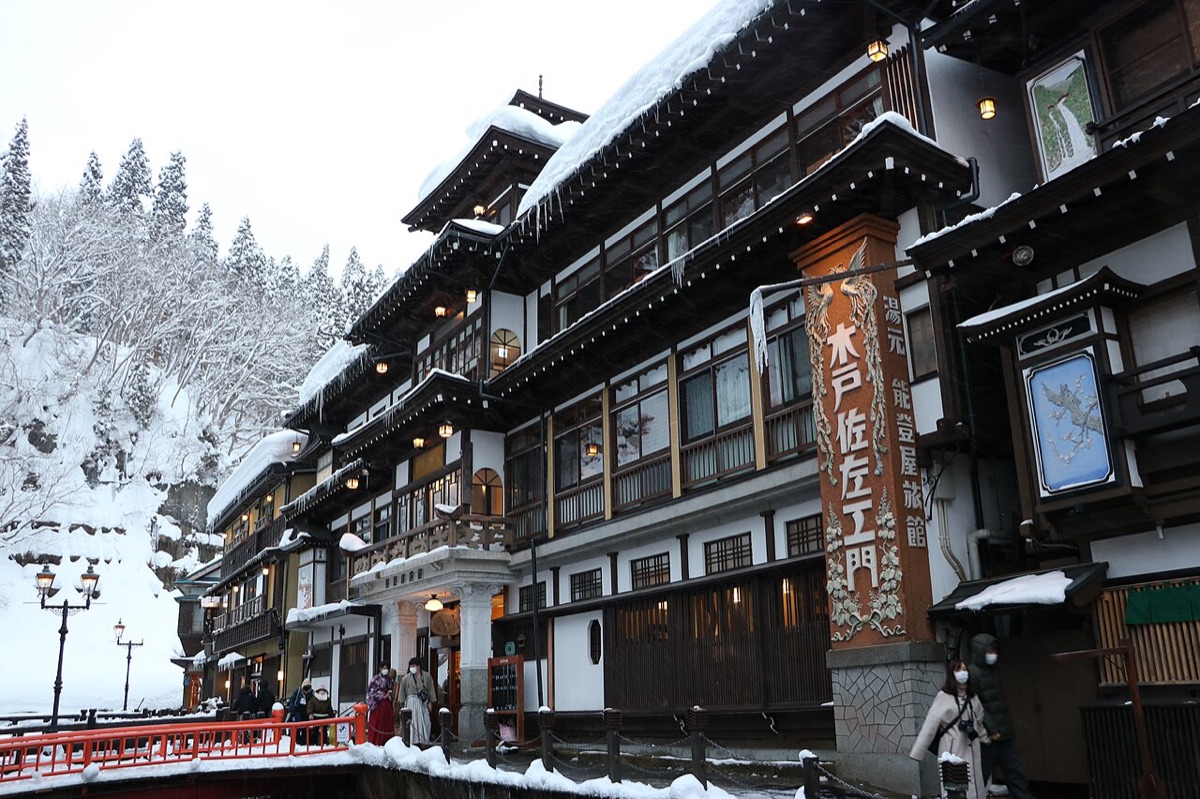
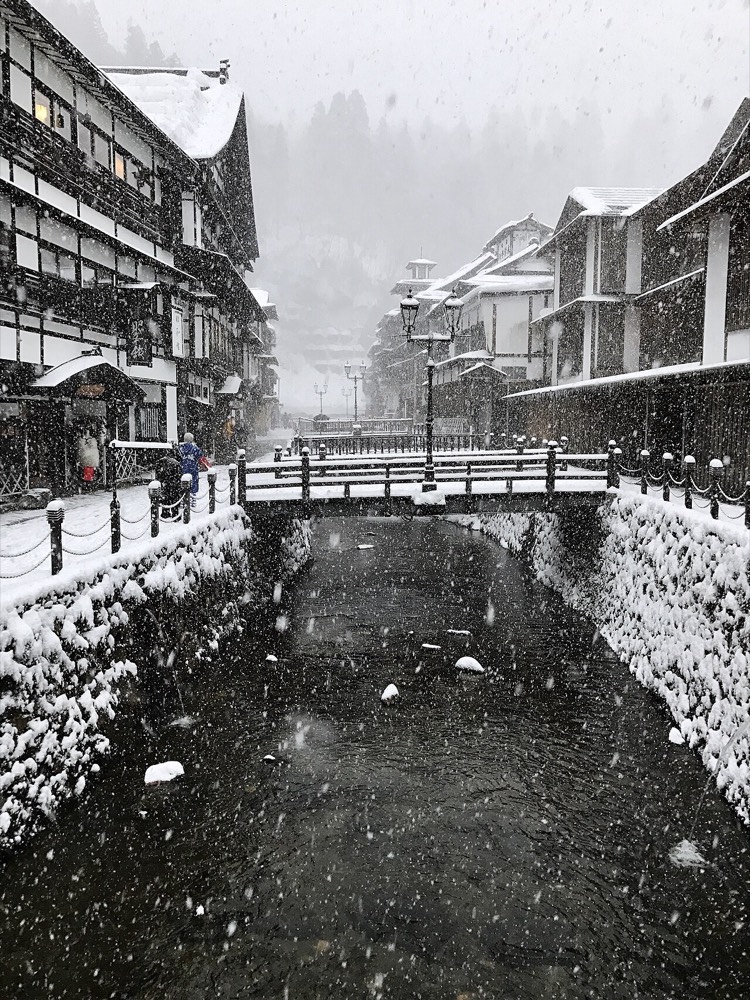
Ginzan Onsen (ぎんざんおんせん) sits deep in the mountains of Obanazawa in Yamagata Prefecture. Its three- and four-story wooden Taisho-era inns line the Ginzan River, and when snow falls and the gas lamps come on, it becomes Japan's best-known image of a "snow country" hot spring town. But the town is tiny and served by a single road, so in winter day visitors cannot drive or walk straight in; they must transfer to a reserved shuttle bus. This guide covers Ginzan Onsen's winter entry rules (past seasons and the 2026-27 preview), how to get there, booking a ryokan, when to see the night view, and how to pair it with the Zao snow monsters and Yamadera.
Does Ginzan Onsen restrict entry in winter? The rules explained
Yes. Since winter 2024, Ginzan Onsen has restricted traffic and adjusted entry numbers for day visitors in winter[6]. The town has only one access road, so a single car stuck in the snow can cause a chain of congestion that keeps ambulances and fire engines out. Snow also slides off the roofs, so the building side of the street cannot be used, which limits how many people can walk safely[2].
2024-25: the first season
The first season ran from December 20, 2024 to the end of March 2025. Day visitors' vehicles were barred from 16:00 to 10:00 the next day on Prefectural Route 188 beyond the Juichi Bansho site; from 10:00 to 16:00 they had to switch to a shuttle bus at Taisho Romankan; and from 17:00 to 20:00 day visitors were capped at 100 people per hour[4]. Guests with inn or restaurant reservations, residents and businesses were exempt[5].
2025-26: the reserved "Priority Pass"
The second season (December 20, 2025 to March 1, 2026) switched to full park-and-ride: every day visitor, whether driving or arriving by bus, got off at Taisho Romankan and took a shuttle bus into town. Outbound buses ran from 9:00 to 18:00 at :00, :20 and :40 past each hour, with 35 reservable seats per slot, and the last return bus left at 19:30[1].
The Priority Pass is a reservation for a specific time slot that lets you board without queuing. You can ride the shuttle without one, but you join the line on the spot, and the wait can be long at busy times. The price is the time-based fare plus the reservation charge[3]:
| Outbound departure (Taisho Romankan) | Time-based fare (adult, round trip) | Plus Priority Pass | Total per person |
|---|---|---|---|
| 9:00-10:40 | 800 yen | 500 yen | 1,300 yen |
| 11:00-13:40 | 500 yen | 500 yen | 1,000 yen |
| 14:00-18:00 | 1,000 yen | 500 yen | 1,500 yen |
Other key rules (2025-26)[1]:
- Children up to elementary school age ride free, up to the number of adults in the group.
- Individuals in groups of 10 or fewer could buy from 13 days before the ride date until 17:00 the day before; credit card only, with a 165-yen fee per booking.
- Arriving at Taisho Romankan early or late voids the reservation, and late arrivals get no refund.
- Cancellation fees: 20% from 20 to 8 days before, 30% from 7 to 2 days before, 50% the day before, 100% on the day.
- Bring your reservation number and an original photo ID on the day.
- Guests staying at Ginzan Onsen are not eligible to buy the pass.
2026-27: announced, details to follow
The official site has posted a "2026-2027 Winter Access Guide", with the system planned from December 2026 to early March 2027 and final dates to be updated once confirmed[2]. The planned prices and time slots match the previous season, with two changes:
- Return trips also get a designated bus, in principle 1 hour 20 minutes after your outbound bus. You board the designated bus with priority; if you want to leave earlier you queue for a free seat, and if you miss it you lose priority.
- To allow time for lunch, visitors entering between 11:00 and 14:00 can take any return bus up to 15:20.
The site also warns that same-day places will be very limited and recommends booking ahead. The booking link is still marked "in preparation", so keep an eye on the Ginzan Onsen official site and the Obanazawa City website.
How to get to Ginzan Onsen from Tokyo, Sendai and Yamagata Airport
The nearest station is JR Oishida Station on the Yamagata Shinkansen, followed by about 40 minutes on a local bus[7]. In winter the official site says local bus passengers without a day-visit reservation may also have to get off at Taisho Romankan and switch to the shuttle[2], so check the current season's rules before boarding.
| From | How | Notes |
|---|---|---|
| Tokyo | Yamagata Shinkansen "Tsubasa" direct to Oishida, then bus | Covered by the Japan Rail Pass and JR East passes |
| Sendai | Express bus toward Shinjo, get off at Obanazawa and take a bus for about 40 minutes; or JR Senzan Line to Yamagata and change | Express bus to Obanazawa about 2 hours[7] |
| Yamagata Airport | About 1 hour by car | Public transport is infrequent; check official information |
| Driving | Tohoku-Chuo Expressway to Obanazawa IC, then about 30 minutes | Winter tires required; Route 347 closes in winter |
The bus from Oishida Station to Ginzan Onsen is run by Hanagasa Bus with only a few departures a day; check the operator's latest fares and timetable. Some ryokan offer pick-up from Oishida Station for overnight guests by reservation. If you plan to use a rail pass to cover more of Tohoku, read whether the JR Pass is worth it before choosing between the nationwide pass and a regional one.
What to know about driving in winter
Ginzan Onsen is in heavy-snow country, so winter tires are a must and snow-driving experience is strongly advised. The official site notes that National Route 347 from the Furukawa side closes in winter, and that Prefectural Route 29 over the Sebuari Pass from Murayama is an extremely narrow mountain road to avoid[7]. Day visitors who drive can only park at Taisho Romankan in winter anyway, so if you are not used to snow, the shinkansen plus bus is the safer choice.
When is the Ginzan Onsen night view best? Day trip or overnight?
The most photographed moment is the "blue hour", when the gas lamps are lit but the sky is not fully dark. Sunset comes early in Tohoku in winter and it starts getting dark after about 4:30 pm, so the light and snow balance best from dusk into early evening; exact lighting times vary, so follow on-site notices.
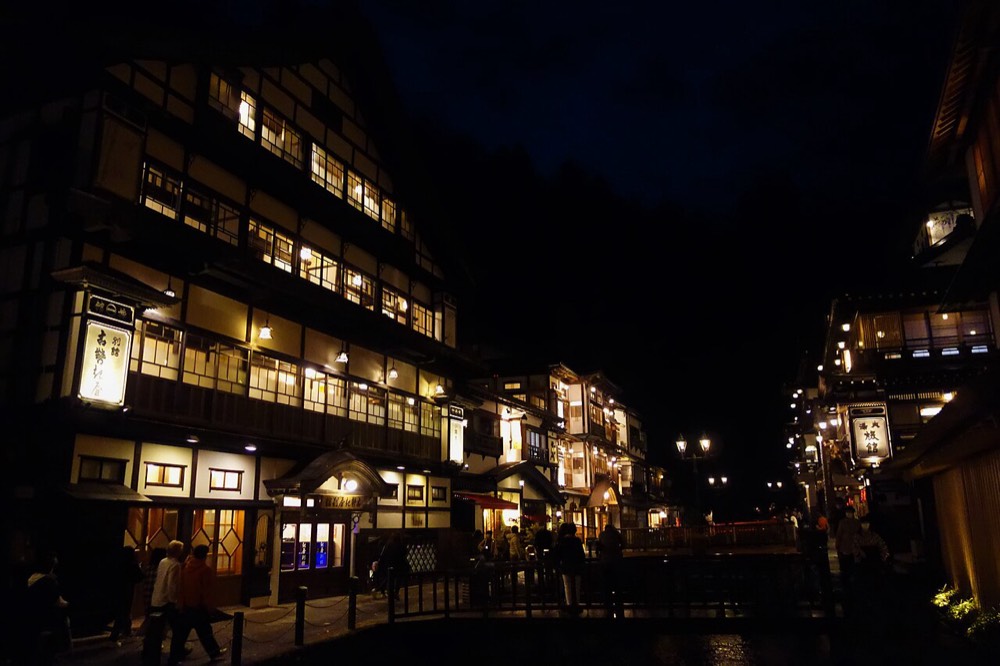
In 2025-26, day visitors who wanted the night view booked a 14:00-18:00 shuttle, watched dusk and the lamps come on, and left before the last return bus at 19:30[1]. For 2026-27 the preview says return buses will be designated (1 hour 20 minutes after your outbound bus)[2], so your time in town will be more fixed and you need to choose your entry slot carefully.
| Day trip | Overnight stay | |
|---|---|---|
| Getting in | Shuttle from Taisho Romankan, reservation recommended | As arranged by your inn, no day-visit ticket needed |
| Night view | Only a short window after the lamps come on | Late night and empty early-morning snow scenes |
| Crowds | Busiest around the main bridge at dusk | Much quieter after day visitors leave |
| Budget | Shuttle 1,000-1,500 yen (past season) | Room rates are high and rooms few; book early |
How early should I book a ryokan at Ginzan Onsen?
There are only a dozen or so inns in the town, each with few rooms, and winter weekends and the New Year period sell out first, so book as soon as your dates are set and pick weekdays if you can. The official site has a ryokan list and an availability search. After booking, confirm three things: how to arrive in winter (where to park, whether there is a pick-up from Oishida Station), whether you can leave luggage after check-out, and what time dinner starts. If you are moving between several places, use luggage delivery in Japan to send big bags ahead to your next hotel; dragging a suitcase through snow is hard work.
Where can you bathe at Ginzan Onsen? Public bath and footbath
Day visitors can bathe too. The public bath Shirogane-yu costs 500 yen for adults and 200 yen for elementary school children. It has one indoor bath each for men and women, with no hair dryers or lockers, and towels are sold separately; it is open roughly 8:30-16:00 (last entry 15:30) and closed on Wednesdays[8]. The other public bath, Omokage-yu, is currently closed. There is also the free Waraku footbath for warming up after a walk.
Some ryokan also offer day bathing, but whether it is available in winter, and the hours and prices, differ by inn; ask the ryokan or the Ginzan Onsen tourist information office (0237-28-3933).
Ginzan Onsen + Zao snow monsters + Yamadera: planning a winter Yamagata trip
Ginzan Onsen, the Zao snow monsters and Yamadera are all in Yamagata Prefecture, and Yamagata Station is the easiest base. Allow at least two nights and put the snow monsters and Ginzan on different days.
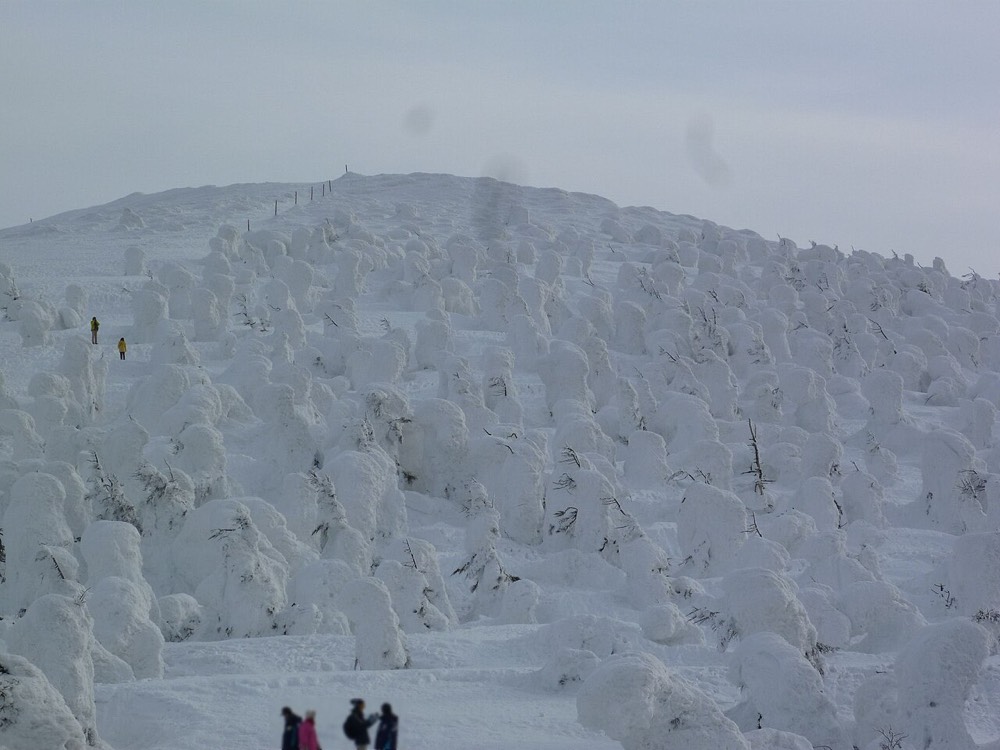
The Zao snow monsters (juhyo) are fir trees encased in frozen wind-blown snow, seen by taking the Zao Ropeway up from Zao Onsen[10]; they are usually at their best from late January to late February. Night light-ups are past-season reference only: in winter 2025-26 they ran on set dates from late December to late February, 17:00-21:00, with an adult round-trip ropeway fare of 4,400 yen[9]. Dates and fares for 2026-27 have not been announced yet, so check the Zao Ropeway site. Yamadera (Risshakuji) is reached directly from Yamagata Station on the JR Senzan Line and involves climbing about a thousand stone steps, which ice over in winter, so wear shoes with good grip.
| Day | Plan | Stay |
|---|---|---|
| Day 1 | Yamagata Shinkansen from Tokyo to Yamagata; Yamadera in the afternoon | Yamagata city or Zao Onsen |
| Day 2 | Zao Ropeway for the snow monsters, plus the night light-up on scheduled days | Zao Onsen |
| Day 3 | Back to Yamagata, shinkansen to Oishida, bus to Ginzan Onsen for dusk and the lamps | Ginzan Onsen |
| Day 4 | Early-morning snow photos and a bath, then back to Oishida for the shinkansen after noon | - |
Transport and hotels get especially busy over the New Year, and some shops close, so if you plan to go then, read our New Year in Japan guide first.
What to wear to Ginzan Onsen in winter, and photo etiquette
Winter at Ginzan Onsen usually means sub-zero temperatures and steady snowfall, so dress as you would for a Hokkaido winter: thermal base layer, fleece mid-layer, a waterproof and windproof jacket, plus waterproof snow boots (or boots with grippy soles), gloves and a hat. The streets ice over and ordinary sneakers slip easily. For layering details, see our Hokkaido winter clothing guide.
For photos, crowds concentrate on the main bridge and in front of Notoya Ryokan at dusk, so do not occupy the bridge for long. In winter the official guidance is to walk on the river side of the diamond-shaped tiles in the middle of the street, since the building side is a falling-snow danger zone[2]. The inns are where guests are resting, so do not walk into lobbies uninvited or point cameras at guest-room windows.
Before you go: how to plan it smoothly
- Decide whether to stay overnight first: for the full night view without day-trip crowds, budget for a night; for a day trip, make securing a shuttle reservation your priority.
- Watch the official site: details for winter 2026-27 are expected before the season starts, and seats are limited once booking opens.
- Leave buffer time: buses from Oishida are infrequent and the shinkansen can be delayed by snow, so do not plan tight connections.
- Footwear matters more than your coat: non-slip shoes plus hand and foot warmers make the whole trip far more comfortable.
FAQ
Can I visit Ginzan Onsen as a day trip in winter?
Yes, but you have to follow the winter rules. In recent winters, day visitors park or get off at Taisho Romankan and take a shuttle bus into the onsen town. In 2025-26 outbound buses ran 9:00-18:00 and the last return was 19:30. Book a Priority Pass in advance, because the same-day queue can be long.
How much is the Ginzan Onsen shuttle bus?
In winter 2025-26 the Priority Pass, including the round-trip fare, cost 1,300 yen for 9:00-10:40 departures, 1,000 yen for 11:00-13:40 and 1,500 yen for 14:00-18:00. Children up to elementary school age rode free, up to the number of adults in the group. The 2026-27 page says prices are planned to stay the same, pending confirmation.
Can I walk from Taisho Romankan to Ginzan Onsen?
Not in winter. The official site asks visitors not to walk the roughly 2 km: sidewalks are not cleared, so you would be on the road, which snow walls narrow, and blizzards can cut visibility to a few meters. Wait for the shuttle even if there is a queue.
Do ryokan guests need a shuttle ticket?
No. Under the past rules, overnight guests were not eligible for the Priority Pass and could arrive as arranged by their inn. Parking and pick-up differ by ryokan, so confirm your winter arrival plan with the inn after booking.
Can I combine Ginzan Onsen with the Zao snow monsters?
Yes. Both are in Yamagata Prefecture, so split them across two days: one day up the Zao Ropeway for the snow monsters (usually best from late January to late February) and another day for an overnight stay at Ginzan. Yamagata Station is the easiest base: buses go to Zao Onsen, and for Ginzan you take the shinkansen to Oishida and then a bus.
Sources
- Ginzan Onsen Association: Winter Priority Pass 2025-26 booking notice: 2025-26 dates, prices by time slot, child policy, sales window, cancellation fees, last return bus
- Ginzan Onsen Association: 2026-2027 Winter Access Guide: Planned 2026-27 period, no-walking rule, designated return buses, planned prices (not yet final)
- Ginzanso Co., Ltd.: Ginzan Onsen shuttle bus fares and charges (Dec 2, 2025): Time-based fares of 800/500/1,000 yen plus the 500-yen Priority Pass
- Norimono News: Ginzan Onsen winter traffic restrictions and entry limits (2024): 2024-25 restriction hours and the 100-people-per-hour cap
- Travel Watch: Ginzan Onsen winter traffic restrictions and entry limits: 2024-25 restricted section and exemptions
- Travel Voice: Ginzan Onsen winter entry limits: Background to the entry limits
- Ginzan Onsen Association: Access: Routes from Oishida, Sendai and Tokyo, and roads closed in winter
- Rurubu & more: Shirogane-yu: Public bath fee, hours and closing day
- Walkerplus: Zao Juhyo Light-up: Past light-up hours and ropeway fare
- Zao Ropeway official site: Ropeway operating status
Fares, opening hours and event dates can change. Information checked on 2026.10.21; please confirm with official sources before you go.