Noboribetsu Onsen Guide: Jigokudani Walks, Getting There from Sapporo and New Chitose Airport, and Choosing a Ryokan
How to get to Noboribetsu Onsen from Sapporo and New Chitose Airport by bus or JR, with 2026 fares, plus Jigokudani walks, day-use baths, where to stay and winter tips.
Quick answer
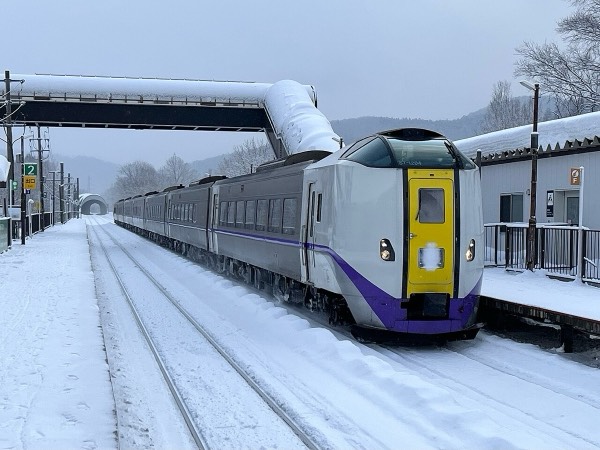
Noboribetsu Onsen is in southern Hokkaido. From Sapporo, a JR limited express takes about 1 hour 10 minutes to Noboribetsu Station, followed by a Donan Bus ride of about 15 minutes. Donan Bus also runs direct coaches: the Sapporo Onsen-go makes only one round trip a day (morning from the onsen, afternoon from Sapporo) and costs 3,800 yen one way for adults from December 2026 to March 2027, and the New Chitose Airport Airport-go costs 2,400 yen, both requiring advance online booking. Highlights are the free Noboribetsu Jigokudani, Oyunuma Pond and the Oyunuma River natural footbath, and large ryokan such as Dai-ichi Takimotokan offer day-use bathing.
Noboribetsu Onsen (登別温泉, Noboribetsu Onsen) is one of Hokkaido's best-known hot spring towns, with a steaming volcanic crater, Jigokudani, right behind its main street. You can reach it from Sapporo or New Chitose Airport in a little over an hour. This guide covers buses and JR from Sapporo and New Chitose Airport (including November 2026 times and fares), the walking route through Jigokudani and Oyunuma, day-use bath prices, how to choose an area and ryokan, and what to watch for in winter, so you can decide between staying the night and a day trip.
Noboribetsu Onsen Access: How to Get There from Sapporo and New Chitose Airport
The bottom line: if you want to ride all the way to the hot spring town without changing, take Donan Bus's direct highway coaches; if you want more departures and flexibility, take a JR limited express to Noboribetsu Station and a bus up the hill.
The hot spring town sits in a valley about 8 km from JR Noboribetsu Station[1], so by JR you always need a bus or taxi for the last stretch. The direct buses run less often, but they drop you right in town, which is very convenient with luggage.
| From | How | Approx. time | Adult one-way fare |
|---|---|---|---|
| Sapporo Station | Donan Bus Onsen-go, direct | About 1 hr 40 min | 3,800 yen from December 2026 to March 2027, variable fare; one round trip a day |
| Sapporo Station | JR limited express Hokuto or Suzuran to Noboribetsu Station + Donan Bus | About 1 hr 10 min by train + about 15 min by bus | Check JR Hokkaido and Donan Bus |
| New Chitose Airport | Donan Bus Noboribetsu Onsen Airport-go, direct | About 1 hr | 2,400 yen from December 2026 to March 2027, variable fare |
| New Chitose Airport | Donan Bus Hayabusa-go (via Noboribetsu Onsen to Muroran) | About 1 hr 15 min | 2,400 yen from December 2026 to March 2027 |
| New Chitose Airport | JR rapid to Minami-Chitose, limited express to Noboribetsu Station + Donan Bus | Depends on connections | Check JR Hokkaido and Donan Bus |
| Hakodate | JR limited express Hokuto to Noboribetsu Station + Donan Bus | About 2 hr 25 min by train | Check JR Hokkaido |
JR travel times follow the Noboribetsu International Tourism and Convention Association's access page[1]; bus times and fares follow Donan Bus's November 2026 timetables and its fare notice from December[2][9][10].
Direct Bus Departures and Booking
Donan Bus's direct coaches use variable fares, split into A, B and C price levels that apply by month:
| Route | Fare A | Fare B | Fare C | December 2026 to March 2027 |
|---|---|---|---|---|
| Noboribetsu Onsen to Sapporo Station (Onsen-go) | 3,800 yen | 3,200 yen | 2,800 yen | Fare A |
| Noboribetsu Onsen to New Chitose Airport (Airport-go, Hayabusa-go) | 2,400 yen | 2,200 yen | 1,900 yen | Fare A |
October and November 2026 use Fare B, and Fare A applies from December through March 2027[10]. On Donan Bus's timetable (the times announced from December are the same), the Onsen-go makes only one round trip a day: it leaves the hot spring town in the morning (Ashiyu Iriguchi 9:20, Noboribetsu Onsen 9:30) and reaches Sapporo Station at 11:15, and leaves Sapporo Station at 13:40 and reaches Noboribetsu Onsen at 15:20[2][10]. In other words, if you ride it from Sapporo there is no direct bus back the same day, so it only works for an overnight stay; for a day trip, the JR limited express both ways is the practical choice. From New Chitose Airport to Noboribetsu Onsen there are three departures, at 13:20, 14:10 and 15:10 (the 13:20 and 15:10 are Hayabusa-go), and in the other direction three departures from Noboribetsu Onsen to the airport at 9:55, 10:30 and 11:45[2][9].
Every departure must be booked online at least 2 hours before it leaves the first stop, and the Hayabusa-go requires advance online payment[2][9]. Times and fares can change, so check Donan Bus's official site before you travel. The association's access page also lists services such as the Hakucho-go and Muroran-go that pass through the town[1], which can serve as backups.
Changing from JR to the Bus
At JR Noboribetsu Station, Donan Bus services to Noboribetsu Onsen leave from in front of the station and take about 15 minutes. Departures thin out in the evening, so check times and fares on Donan Bus's site before you arrive. With lots of luggage or a group, taking a taxi is common. For a full overview of getting around Hokkaido without a car, see Hokkaido without a car.
Noboribetsu Jigokudani and Nearby Sights: Walking Route and Time Needed
The bottom line: the star of Noboribetsu Onsen is the free Noboribetsu Jigokudani, and the trail continues uphill to Oyunuma Pond and the Oyunuma River natural footbath. The full walk takes about 2 to 3 hours.
Noboribetsu Jigokudani (Hell Valley)
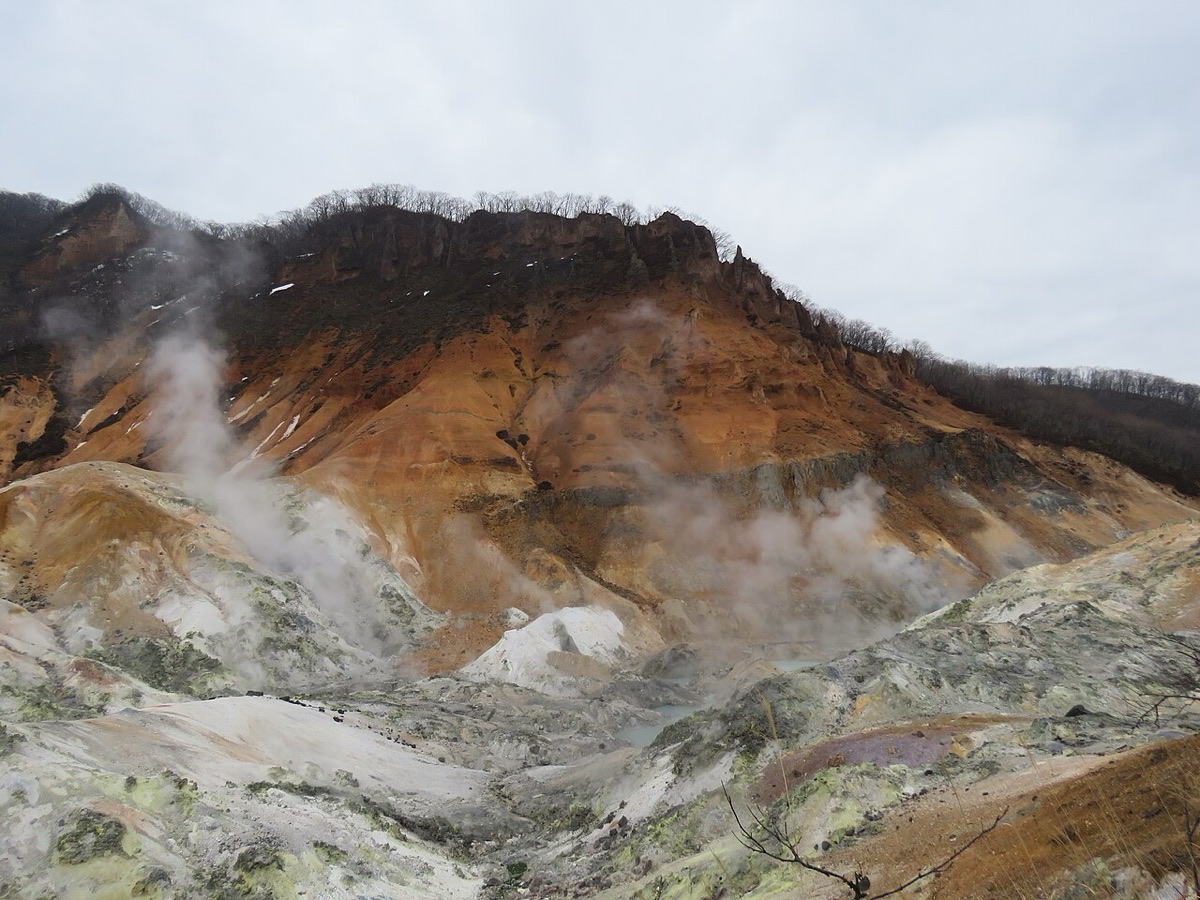
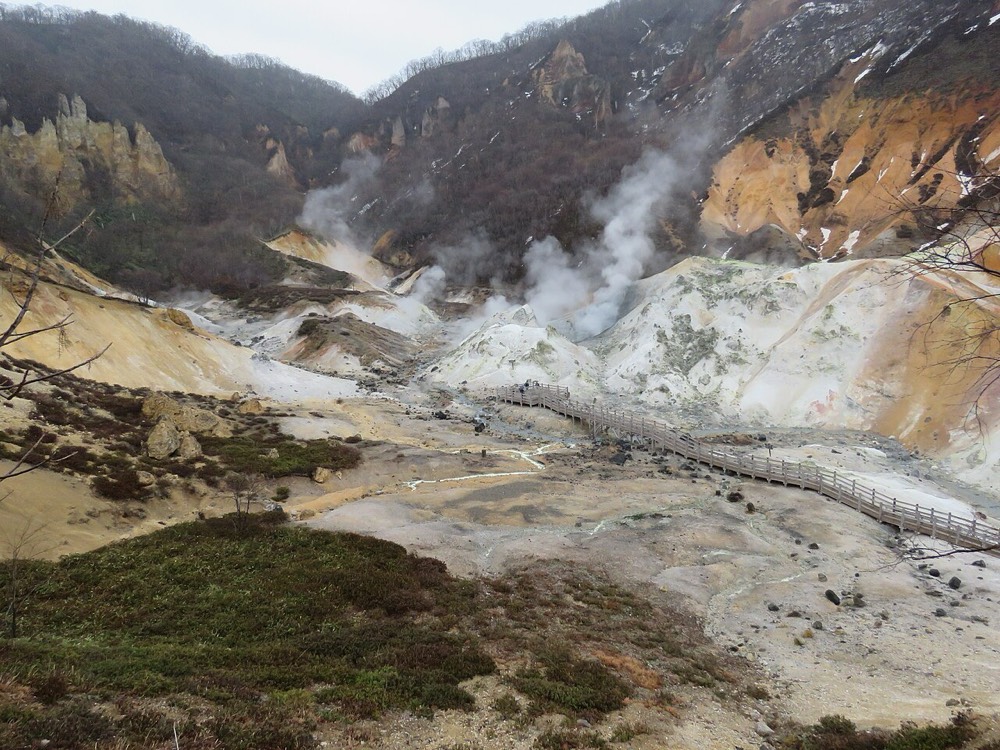
Noboribetsu Jigokudani is an explosion crater formed by volcanic activity on Mt. Hiyori, about 450 m across and about 11 hectares in area. Steam vents bubble throughout the valley, which is where the name "hell where demons live" comes from[3]. About 10,000 tonnes of hot spring water of many types flows out here every day and supplies the hotels and ryokan in town[3]. The Jigokudani observation deck is a few minutes' walk from the town, with a wheelchair slope from the park service center to the deck; if you drive, parking is 500 yen per visit (shared with the Oyunuma lot, except in winter)[3].
Oyunuma Pond and the Oyunuma River Natural Footbath
Walking up the trail from Jigokudani brings you to Oyunuma, a gourd-shaped pond about 1 km around. Sulfur springs at about 130°C gush from the bottom, the surface is around 40 to 50°C, and the water is a grayish black[4].
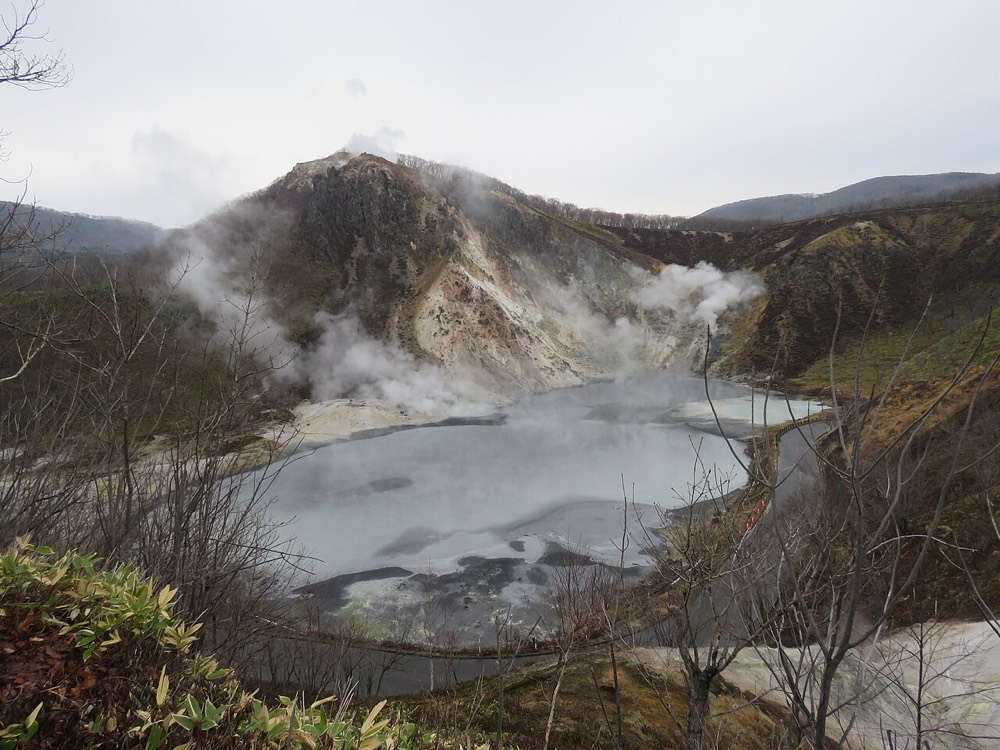
Hot water flowing out of Oyunuma forms the Oyunuma River. Follow the Oyunuma River nature trail to near Taisho Jigoku, and there is a stretch where you can put your feet straight into the warm river, a natural footbath that is free to use. Bring a small towel to dry off before putting your shoes back on.
Sengen Park and Enmado
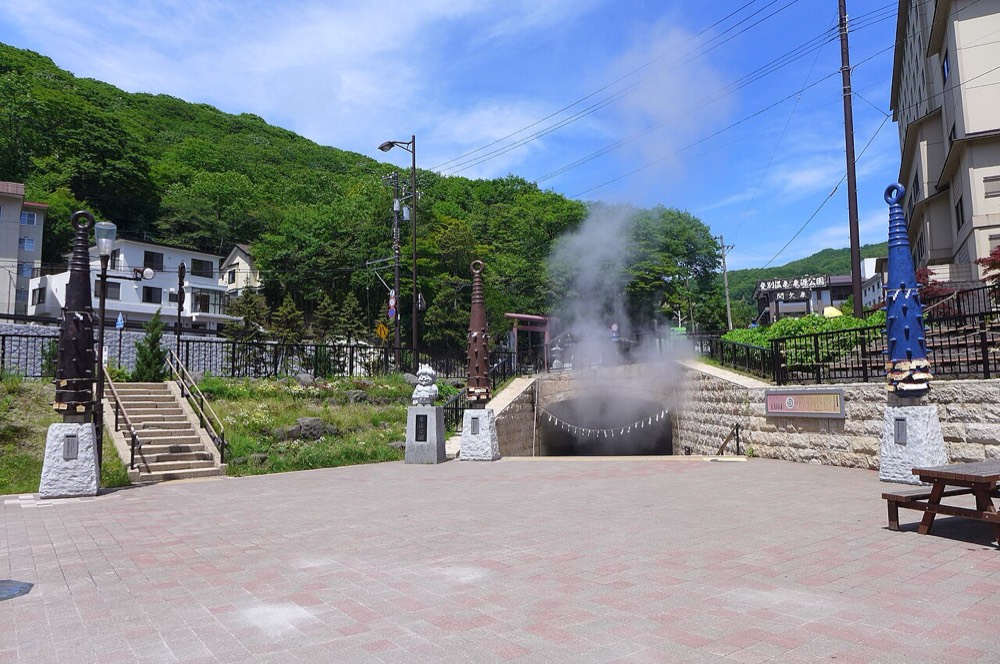
Back in town, Sengen Park has a geyser that erupts with a roar and clouds of steam roughly every 3 hours, free to watch. Enmado on Gokuraku-dori stages a mechanical King Enma puppet show at set times: 10:00, 11:00, 13:00, 15:00, 17:00, 20:00 and 21:00, which may be suspended in bad weather.
Suggested Walking Order
- Walk from town to the Jigokudani observation deck (about 10 minutes) and follow the boardwalk past the steam vents.
- Climb from Jigokudani to the Oyunuma observation point (about 20 to 30 minutes, uphill).
- Take the Oyunuma River nature trail and soak your feet in the natural footbath.
- Follow the trail back to town, and visit Sengen Park and Enmado in the early evening.
The boardwalks and trails have plenty of steps, so wear good walking shoes; with a stroller or limited mobility, it is best to go only as far as the Jigokudani observation deck.
Things to Do in Noboribetsu: Bear Park, Date Jidaimura and the Jigoku Matsuri
The bottom line: the attractions most often added near town are Noboribetsu Bear Park and Noboribetsu Date Jidaimura, both paid; in summer, the Noboribetsu Jigoku Matsuri takes place on the last weekend of August every year.
| Attraction | Location | Hours | Adult admission |
|---|---|---|---|
| Noboribetsu Bear Park | About 7 minutes by ropeway up from the town | Oct 21 to Apr 20: 9:30 to 16:30 (last entry 15:50); Apr 21 to Oct 20: 9:00 to 17:00 | 3,200 yen, including the round-trip ropeway |
| Noboribetsu Date Jidaimura | Between Noboribetsu Station and the hot spring town (Nakanoboribetsu-cho) | Nov 1, 2026 to Mar 19, 2027: 9:00 to 16:00; open daily | 3,300 yen |
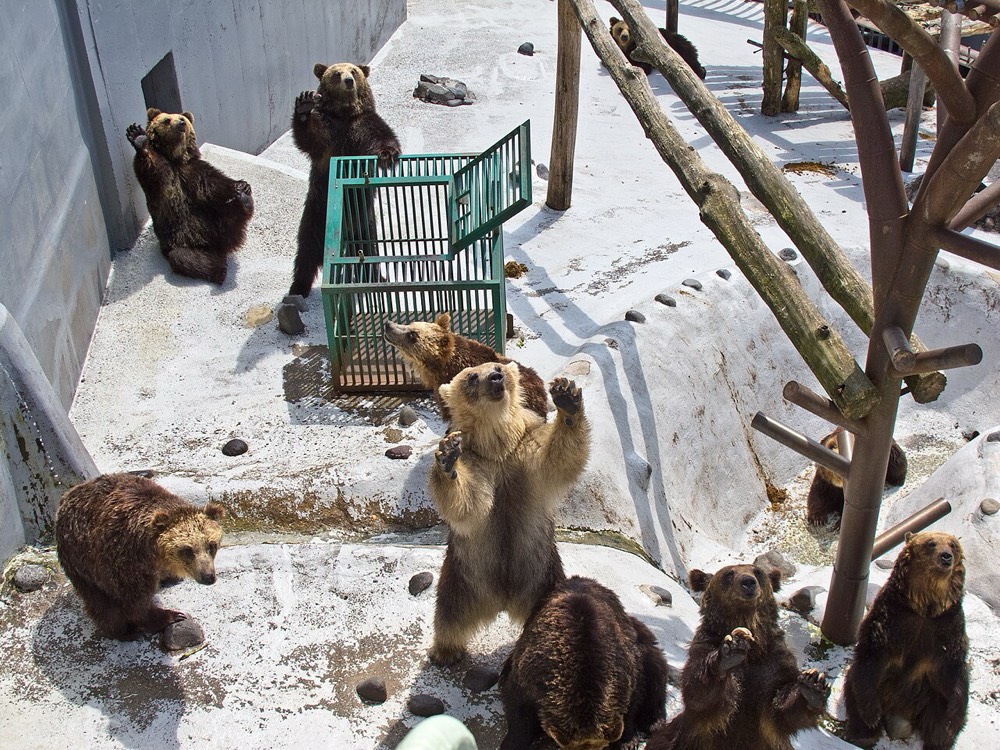
Noboribetsu Bear Park lets you see brown bears up close. Admission includes the round-trip ropeway; children (age 4 through 6th grade) pay 1,600 yen and ages 3 and under are free, and the park stays open on snowy winter days[6]. It closes from April 5 to 23, 2027, for the ropeway's statutory inspection[6].
Noboribetsu Date Jidaimura recreates an Edo-period townscape with ninja shows and period dramas. Elementary school children pay 1,700 yen and ages 4 to preschool 600 yen; it closes for maintenance from March 8 to 11, 2027[7]. Jidaimura is not in the hot spring town, so you need transport to get there.
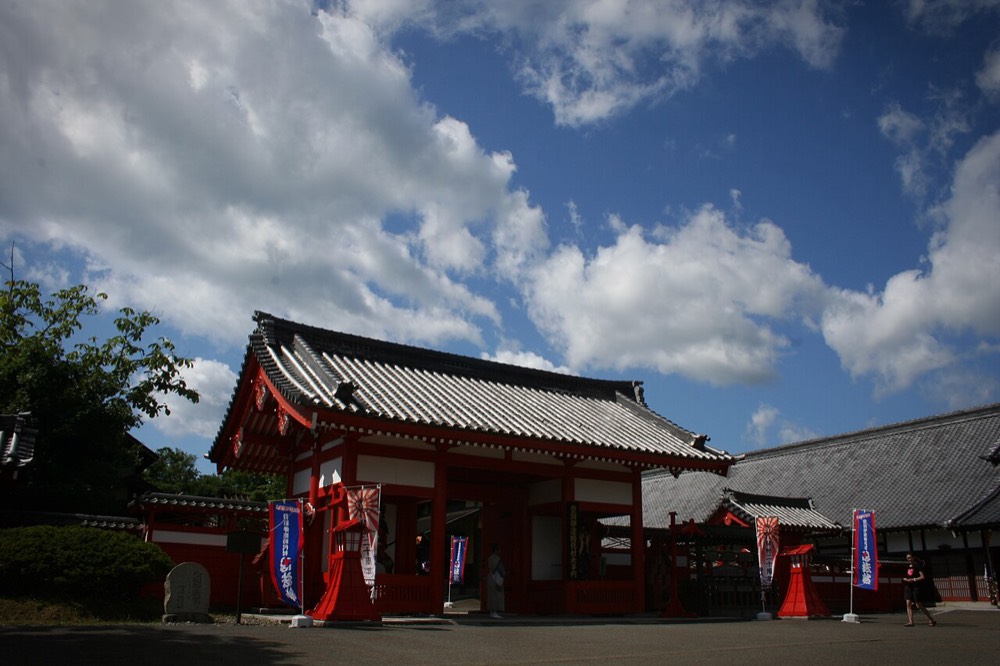
Noboribetsu Jigoku Matsuri
The Noboribetsu Jigoku Matsuri (Hell Festival) is held every year on the last Saturday and Sunday of August. It is based on the legend of King Enma leading his demons from Jigokudani into town, with a demon portable shrine, taiko drums and demon dances, and King Enma parades along Gokuraku-dori only on these two days[8]. The 63rd festival took place on August 29 and 30, 2026; the 2027 dates have not been announced, and the following is based on past years: it is usually held on the last weekend of August. Parking is paid during the festival and fills up quickly, so public transport is recommended[8].
On certain summer and autumn dates, ticketed Oni Hanabi (demon fireworks) shows are held at the Jigokudani observation deck. Popular dates sell out, so check the Noboribetsu tourism association's announcements for the schedule.
Where to Stay in Noboribetsu Onsen: Areas and How to Choose a Ryokan
The bottom line: for a first visit, staying in the center of the hot spring town near Jigokudani and Gokuraku-dori is the most convenient, with Jigokudani, Sengen Park and Enmado all within walking distance. For more quiet, consider Karurusu Onsen further up the mountain.
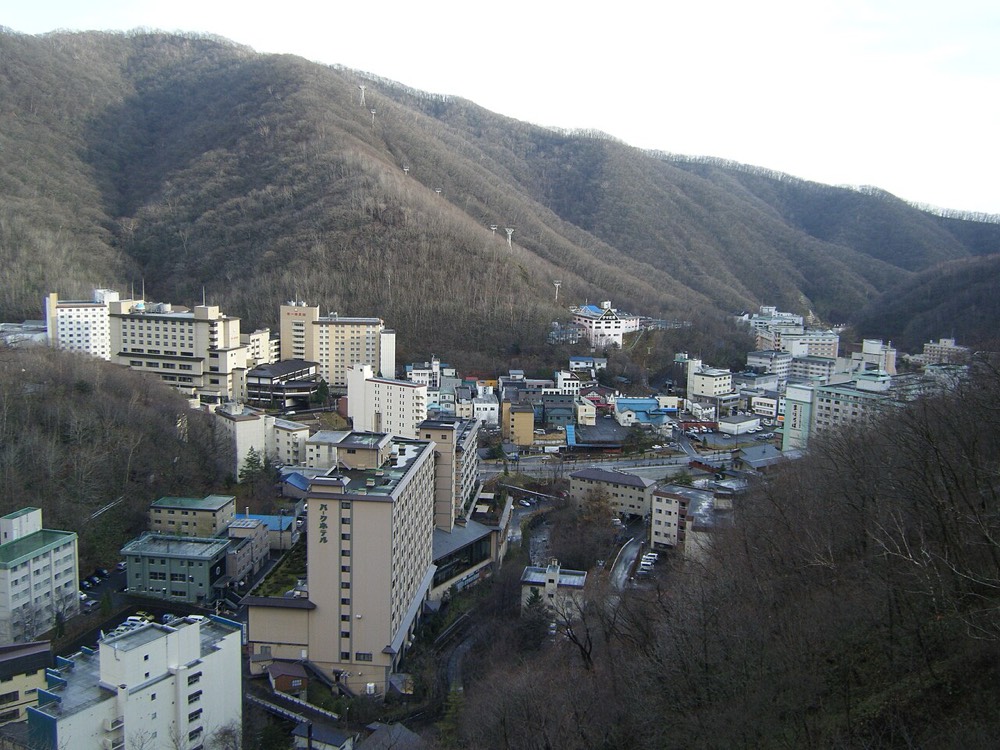
Area Comparison
| Area | Features | Best for |
|---|---|---|
| Town center (Gokuraku-dori, around Jigokudani) | Large hot spring hotels clustered together, main sights within walking distance, direct buses stop here | First-timers, walking to Jigokudani, arriving by bus |
| Edge of town | More small and mid-sized inns, a little away from the crowds | A quieter stay if you don't mind walking a few extra minutes |
| Karurusu Onsen | A small mountain hot spring village beyond Noboribetsu Onsen, with small inns | Self-drivers wanting to avoid tourist crowds |
| Around Noboribetsu Station | Handy for JR but about 8 km from the hot spring town | A transfer point only, or an early train the next day |
The town center has several well-known large hot spring hotels, such as Dai-ichi Takimotokan, Noboribetsu Grand Hotel, Noboribetsu Manseikaku, Noboribetsu Sekisuitei and Hotel Yumoto Noboribetsu[5], with large public baths and full facilities. There are also small inns with fewer rooms that emphasize privacy.
Five Things to Check When Choosing a Ryokan
- Walking distance: If you want to walk to Jigokudani early in the morning or at night, choose a ryokan within walking distance in the town center.
- Baths and spring types: Large ryokan usually have several baths; check the official site for spring types and open-air baths.
- Meal style: Large hotels mostly serve buffets, while small and mid-sized ryokan tend to serve kaiseki-style courses. With children, a buffet is more flexible.
- Room type: Japanese-style rooms fit several people and suit families; Western-style rooms have beds. When booking, check whether yukata are included and whether non-smoking rooms are available.
- Transfers: Some ryokan offer pickup from the station or the city; ask the ryokan directly when booking whether this is available and whether it needs a reservation.
If Sapporo is your main base and you are adding one night in Noboribetsu, see where to stay in Sapporo to plan the nights before and after.
Noboribetsu Day Trip and Day-Use Onsen: Can You Bathe Without Staying?
The bottom line: yes. Several ryokan in town offer day-use bathing (bathing without an overnight stay), so even a same-day trip from Sapporo or the airport leaves time for a soak.
| Facility | Hours (admission until) | Adult / child |
|---|---|---|
| Dai-ichi Takimotokan | 9:00 to 21:00 (admission 9:00 to 18:00) | 2,500 / 1,500 yen |
| Noboribetsu Grand Hotel | 12:30 to 20:00 | 2,000 / 1,000 yen |
| Noboribetsu Manseikaku | 7:00 to 9:30, 13:30 to 20:00 | 1,300 / 650 yen |
| Hotel Yumoto Noboribetsu | 13:00 to 20:00 (admission until 19:00) | 1,400 / 700 yen |
| Noboribetsu Sekisuitei | 11:00 to 19:00 (admission until 18:00) | 1,200 / 600 yen |
| Yumoto Sagiriyu | 9:00 to 21:00 (admission until 20:30) | 550 / 180 yen |
These figures follow the Noboribetsu tourism association's day-use page (checked October 2026)[5]. Some prices come with conditions, and ryokan may suspend day-use bathing when fully booked or during maintenance, so check with each facility before you go.
Sample Noboribetsu Day Trip (from Sapporo)
- Take a JR limited express to Noboribetsu Station in the morning and a bus to the hot spring town, arriving before noon.
- Have lunch in town, then walk Jigokudani, Oyunuma and the natural footbath in the afternoon (about 2.5 hours).
- Return to town for an hour at a day-use onsen.
- In the early evening, take the bus to Noboribetsu Station and a JR limited express back to Sapporo (the Onsen-go only leaves the hot spring town in the morning, so there is no direct evening bus to Sapporo).
If you have less time, see just the Jigokudani observation deck, then take the ropeway up to Bear Park. If this is your first Japanese onsen, read the public bath rules in Japan travel etiquette before you go in, and if you have tattoos, check the facility's policy first.
Is Noboribetsu Onsen Good in Winter? Snow Season Tips
The bottom line: Noboribetsu Onsen is atmospheric in winter, with the steam in Jigokudani even more striking against the snow, but be prepared for icy trails and some seasonal closures.
- Trails and boardwalks: Some boardwalks may close when snow piles up, and icy surfaces are slippery, so wear boots with non-slip soles or add crampons.
- Winter closures: The Oyunuma parking lot closes in winter, and the shared Jigokudani and Oyunuma parking ticket does not apply in winter[3][4].
- Early darkness: In December and January it gets dark a little after 4 p.m., so try to finish walks by 3 p.m.
- Driving with care: Winter mountain roads require winter tires and snow-driving experience. If you are not used to it, take the direct bus or JR.
- Weather and transport: Heavy snow can delay or cancel buses and JR trains, so leave extra buffer time on the day you head back or catch a flight.
For what to wear outdoors in Hokkaido in winter, see Hokkaido winter clothing.
Before You Go: How to Plan Noboribetsu Onsen Smoothly
- Book direct buses early: The Onsen-go and Airport-go are reservation-only, so book online once your dates are set, especially for holidays and long weekends.
- One night vs. a day trip: To enjoy dinner, the town at night and Jigokudani in the early morning, stay a night; if time is tight, a day trip still covers Jigokudani and a soak.
- Pair it with the rest of your trip: Noboribetsu sits between Sapporo and Hakodate and is close to New Chitose Airport, so it works well as your first night in Hokkaido or your last night before flying out. For more Hokkaido planning, start from the Hokkaido travel overview.
FAQ
What is the easiest way to get from Sapporo to Noboribetsu Onsen?
The most frequent and flexible option is the JR Hokuto or Suzuran limited express to Noboribetsu Station, about 1 hour 10 minutes, then a Donan Bus of about 15 minutes to the hot spring town. The Donan Bus Onsen-go is direct but makes only one round trip a day, leaving Sapporo Station at 13:40 and Noboribetsu Onsen at 9:30, so it cannot be used for a same-day return and suits overnight stays; it costs 3,800 yen one way for adults from December 2026 to March 2027, booked online.
Can I go straight from New Chitose Airport to Noboribetsu Onsen?
Yes. Donan Bus's Noboribetsu Onsen Airport-go and Hayabusa-go run direct from New Chitose Airport in about 1 hour to 1 hour 15 minutes, 2,400 yen one way for adults from December 2026 to March 2027. Fares vary by month, and you must book online at least 2 hours before departure from the first stop. You can also take a JR rapid train to Minami-Chitose and change to a limited express to Noboribetsu.
Does Noboribetsu Jigokudani have an entry fee, and how long should I spend there?
Noboribetsu Jigokudani is free, and the observation deck is a short walk from the hot spring town. The observation deck alone takes about 30 minutes; if you continue along the trail to Oyunuma Pond and soak your feet in the Oyunuma River natural footbath before walking back, allow 2 to 3 hours. Parking is 500 yen per visit if you drive.
Is a Noboribetsu day trip possible?
Yes. Leave Sapporo in the morning, arrive before noon, walk Jigokudani and Oyunuma in the afternoon, soak in a day-use onsen, and in the early evening take the bus to Noboribetsu Station and a JR limited express back to Sapporo (the direct bus has no evening departure to Sapporo). Day-use bathing costs about 550 to 2,500 yen. That said, the town at night and Jigokudani in the early morning are worth seeing, so staying a night is more relaxed if you have time.
What should I watch out for at Noboribetsu Onsen in winter?
Streets and trails are often snowy and icy in winter, so wear non-slip footwear; some boardwalks and the Oyunuma parking lot close for the season. Driving requires winter tires and snow-driving experience, so take the bus or JR if you are not used to it. Steam stands out beautifully in snowy Jigokudani, but it gets dark early, so finish outdoor plans by about 3 p.m.
Sources
- Noboribetsu International Tourism and Convention Association: Access: JR, bus and driving routes and travel times
- Donan Bus: Onsen-go and Airport-go timetable and variable fares (November 2026): Direct bus times and fares from Sapporo and New Chitose Airport
- Noboribetsu International Tourism and Convention Association: Noboribetsu Jigokudani: Crater size, hot spring output and parking
- Noboribetsu International Tourism and Convention Association: Oyunuma: Oyunuma temperatures and winter parking closure
- Noboribetsu International Tourism and Convention Association: Day-use hot springs: Day-use bathing facilities, hours and prices
- Noboribetsu Bear Park: Visitor information: Admission, hours and winter operation
- Noboribetsu Date Jidaimura official site: 2026 winter hours and admission
- Noboribetsu International Tourism and Convention Association: Noboribetsu Jigoku Matsuri: Festival timing and program
- Donan Bus: Hayabusa-go timetable and variable fares (November 2026): New Chitose Airport services via Noboribetsu Onsen
- Donan Bus: variable fares for December 2026 to March 2027: Fare A applies from December 2026 to March 2027, with timetables
Fares, opening hours and event dates can change. Information checked on 2026.11.26; please confirm with official sources before you go.