Niseko Ski Guide 2026-27: Choosing Between the Four Resorts, Lift Pass Prices, Access, Where to Stay and Budget
Niseko skiing 2026-27: Grand Hirafu, Hanazono, Niseko Village and Annupuri compared, all-mountain lift pass prices, airport and Sapporo buses, where to stay and a budget.
Quick answer
Niseko United's four linked resorts (Grand Hirafu, Hanazono, Niseko Village, Annupuri) are scheduled to open on November 28 for 2026-27. An adult all-mountain 1-day pass costs 13,500 yen in peak season (Dec 24–Feb 28) and a 3-day pass 39,500 yen; early-season passes (8,800 yen) are sold only at the resort. From Dec 12 to Mar 21, reservation-only direct buses run from New Chitose and Sapporo (Sapporo line 6,000 yen one way, about 3 hours). Powder is most reliable in January and February; New Year and Lunar New Year are the priciest and busiest.
Skiing in Niseko (ニセコ) is the first choice for many people's first Hokkaido ski trip, but once you start booking, the questions get specific: which of the four resorts should be your base? How many days of all-mountain pass should you buy? How do you get there from New Chitose Airport? Should you stay in Hirafu, Kutchan or a resort hotel? This guide covers Niseko only: the officially announced 2026-27 opening dates, lift pass prices, direct bus timetables, trade-offs between accommodation areas, a 3–4 day budget and the off-piste rules, so you can decide how to book.
Where are the Niseko ski resorts? The four resorts and 2026-27 opening dates
Bottom line: Niseko United (ニセコユナイテッド) is four linked resorts on Mount Niseko Annupuri (ニセコアンヌプリ). For 2026-27 all four are scheduled to open together on Saturday, November 28, 2026, and the last to close, Hirafu and Annupuri, run until May 5, 2027[1].
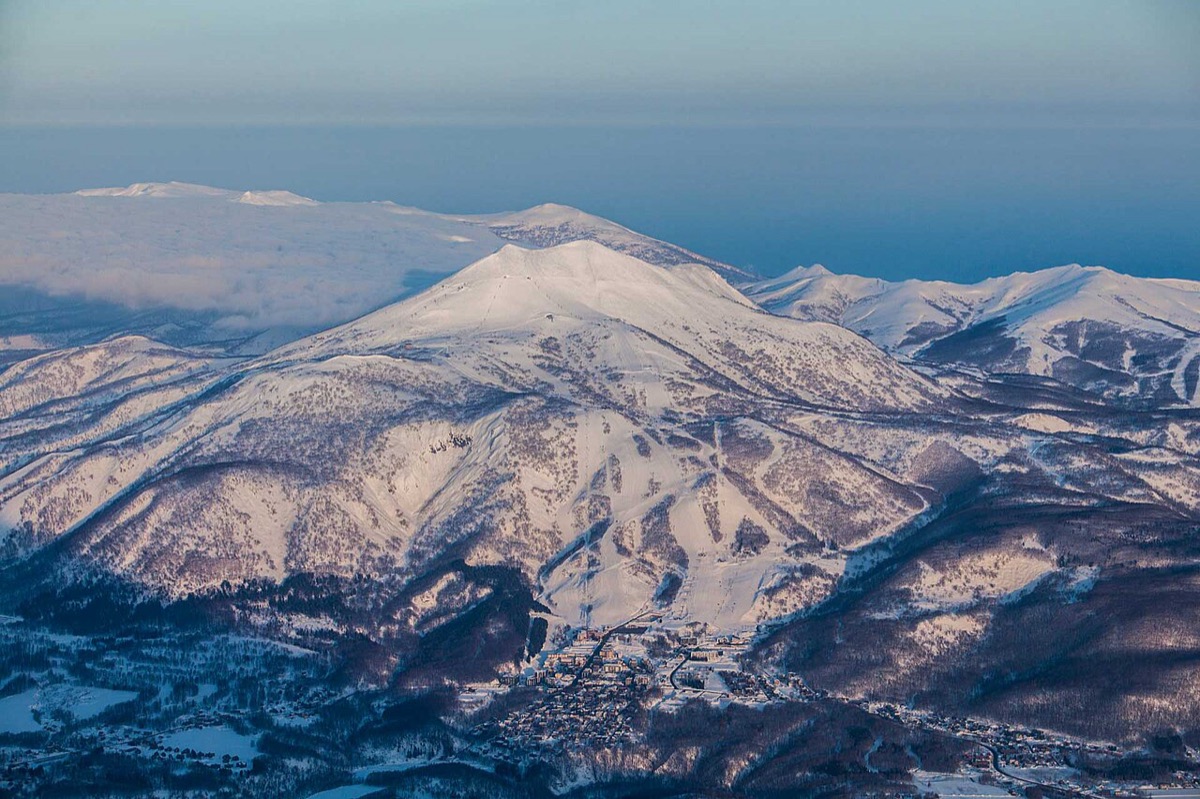
Niseko sits on the western side of central Hokkaido. The resorts straddle the towns of Kutchan and Niseko and face Mount Yotei, known as the "Fuji of Ezo." From east to west the four resorts are Grand Hirafu (グラン・ヒラフ), Hanazono (花園), Niseko Village and Annupuri (アンヌプリ). They connect near the summit, so an all-mountain pass lets you ski between all four.
| Resort | 2026-27 season (scheduled) | Runs / lifts | Day hours | Night skiing (12/12–3/22) |
|---|---|---|---|---|
| Grand Hirafu | 11/28–2027/5/5 | 21 runs / 10 lifts | 8:30–16:30 | Until 19:00 |
| Hanazono | 11/28–2027/4/11 | 12 runs / 4 lifts | 8:30–16:30 | 16:00–20:00 |
| Niseko Village | 11/28–2027/4/4 | 29 runs / 8 lifts | 8:30–16:30 | 16:30–19:00 |
| Annupuri | 11/28–2027/5/5 | 13 runs / 6 lifts | 8:30–16:30 | 16:30–19:30 |
The run counts, lift counts and hours come from each resort's trail map page on the Niseko United site[4][5][6][7], which notes that dates and hours may change. Early in the season usually only some runs are open: Hanazono's site says it opens partially on November 28 and will expand as snow allows[9], and Grand Hirafu's site showed 90 cm of snow at the summit and 20 cm at the base at 7:41 on November 28[8]. If you are going in early December, check the official "天気・運行情報" (weather and lift status) page on the day.
How to choose among Niseko's four resorts: beginners, families, powder hounds
Bottom line: First-timers who want the most options should pick Grand Hirafu; families should look at Hanazono or Niseko Village; skiers who want fewer crowds or spring skiing into May should pick Annupuri. Because the four are linked, you are really choosing which resort base to stay at; you can still ski across areas during the day.
Grand Hirafu: the biggest and liveliest
Grand Hirafu has the most lifts of the four, 10 in total. Its longest run, Holiday, is about 2,883 m, and Onsenzawa reaches a maximum slope of 40 degrees[5]. At its base is Hirafu (ひらふ) village, which has the biggest concentration of restaurants, bars, ski shops and English-language services, so you can eat out at night without a car.
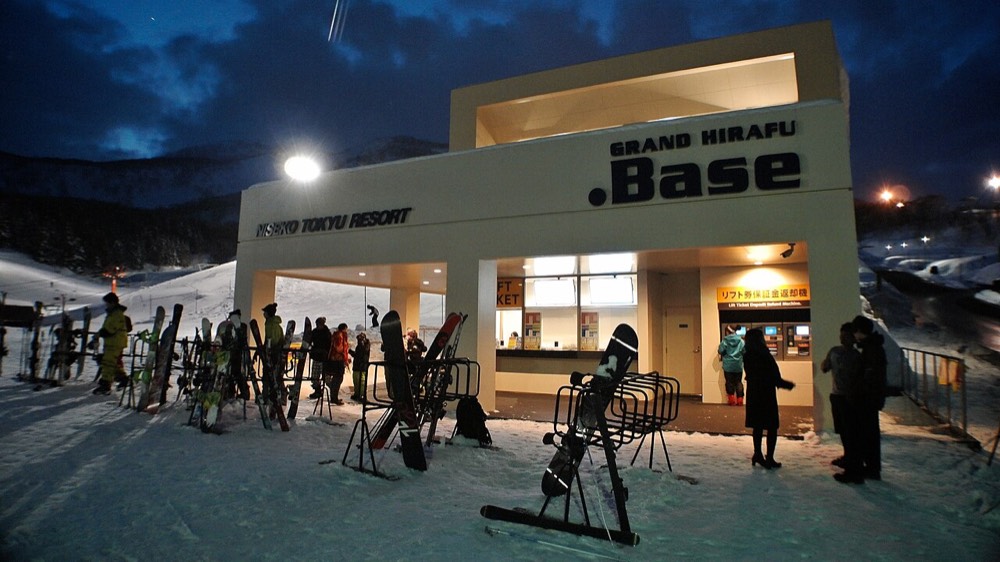
Beginners can use the official Beginners course (maximum slope 20 degrees, about 342 m)[5]. Note that skiing below the Ace Gondola (エースゴンドラ) is not permitted: after a run up top you ride the gondola back down, which the official site specifically points out[8]. The ski school offers lessons in Japanese and English[8].
- Good for: first-time visitors to Niseko, people who want evening options and a lively atmosphere.
- Not for: people who hate queues or want a quiet holiday; in peak season the base lifts and restaurants both have lines.
Hanazono: family-friendly with powder terrain
Hanazono sits east of Hirafu with only 4 lifts and 12 runs; the longest, Silver Dream, is about 2,700 m[7]. The resort promotes its wide powder bowls and tree runs, and it also offers childcare and an indoor kids' facility, Galaxy of Kidz[9], which is useful for families who want to leave children with staff while the adults ski.
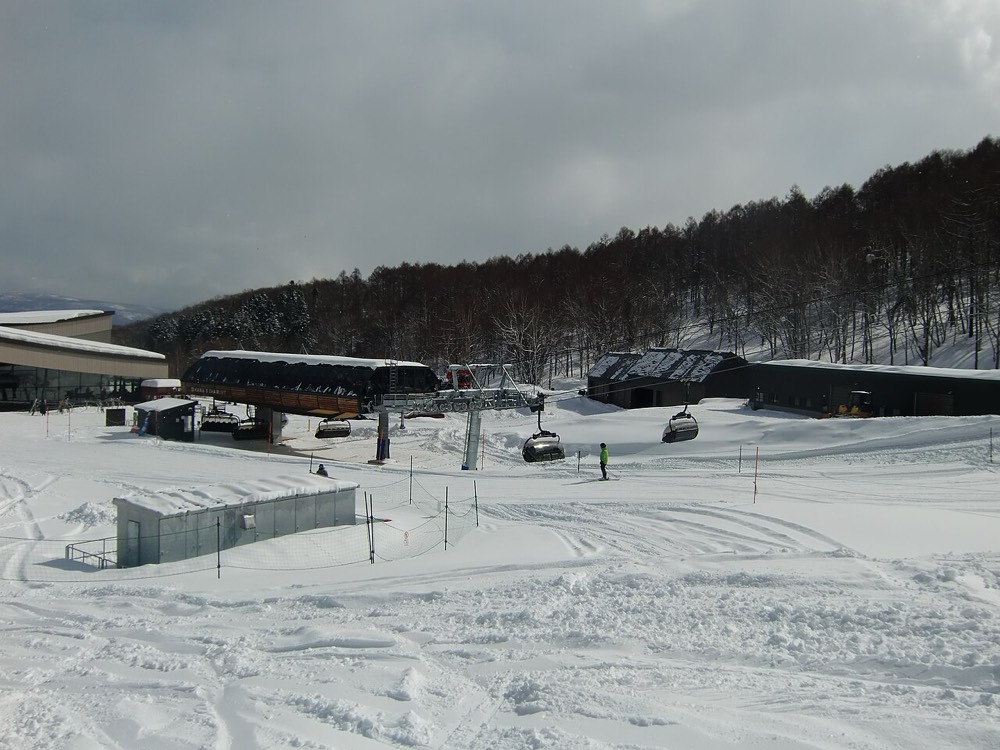
- Good for: families with children and skiers who want to work on tree and powder skills; night skiing runs until 20:00, the latest of the four[7].
- Not for: travelers on a tight budget; Hanazono also closes on April 11, earlier than Hirafu and Annupuri.
Niseko Village: the resort with the most runs
Niseko Village lists 29 runs, the most of the four, and its longest lift, the Niseko Gondola, is about 2,660 m with a ride of about 9 minutes[6]. Resort hotels such as Hilton Niseko Village sit at the base, with lodging, rentals and restaurants all within walking distance, which suits people who don't want to take a bus every day.
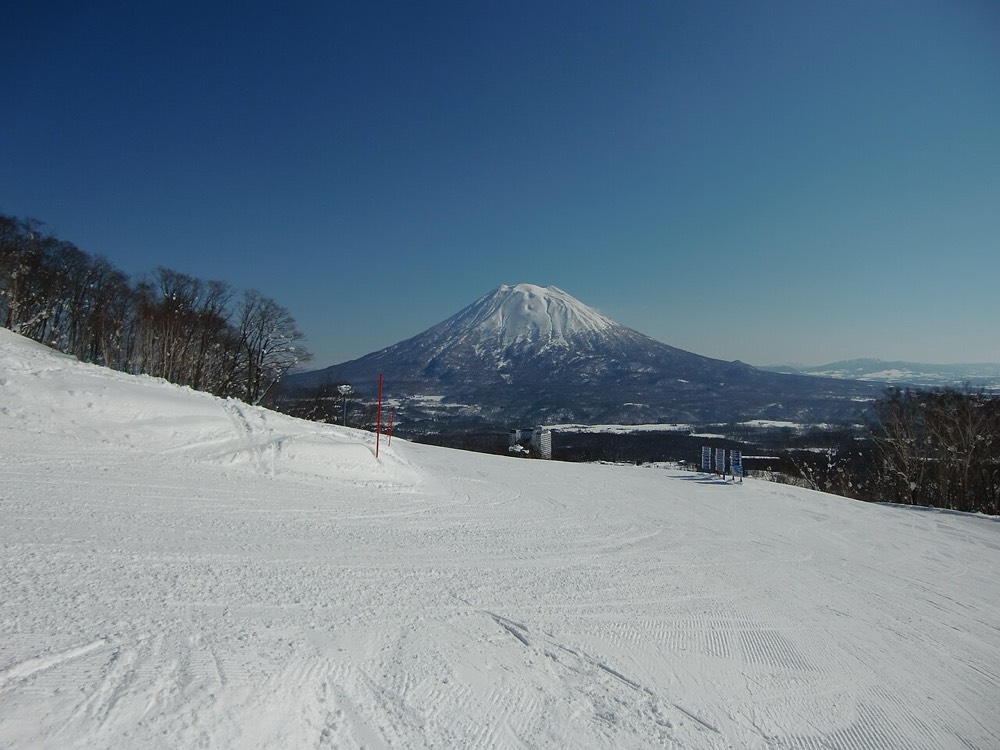
- Good for: people who want a resort-hotel stay and plenty of runs without the Hirafu crowds.
- Not for: people who want izakaya and bars in the evening; the village has fewer options than Hirafu. It also closes first, on April 4.
Annupuri: wide runs and the longest season
Annupuri is the westernmost area, with 13 runs and 6 lifts; the Annupuri Gondola is 2,274 m long and takes about 10 minutes[4]. The official site describes its winter terrain as wide runs and powder, night skiing runs until 19:30, and the season lasts until May 5[4].
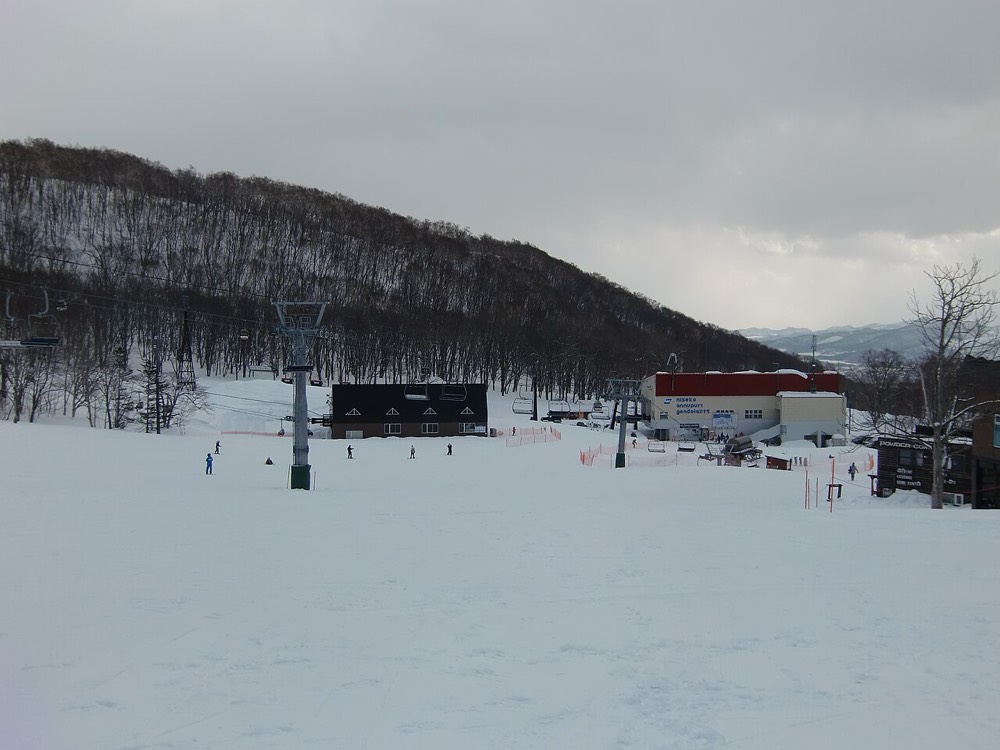
- Good for: people avoiding the Hirafu crowds and spring skiers from March to May; it is also the first stop on the direct bus from New Chitose (about 2 h 56 min)[2].
- Not for: people who want to walk to dinner or go shopping; there are far fewer shops and restaurants than in Hirafu.
Niseko lift passes 2026-27: all-mountain prices and how to buy
Bottom line: The Niseko United site lists only all-mountain passes. An adult 1-day pass costs 13,500 yen in peak season; buy a multi-day pass if you ski 3 days or more, and note that early-season passes (until December 11) are sold only at the resort[1].
| Season | Dates | Adult 1 day | Adult 3 days | Adult 4 days | Child 1 day (4–12) |
|---|---|---|---|---|---|
| Early | 2026/11/28–12/11 | 8,800 | 25,800 | 34,200 | 5,300 |
| Regular | 12/12–12/23, 2027/3/1–3/22 | 12,600 | 36,800 | 48,900 | 7,600 |
| Peak | 12/24–2027/2/28 | 13,500 | 39,500 | 52,500 | 8,100 |
| Spring | 3/23–4/4 | 8,800 | 25,800 | 34,200 | 5,300 |
| Final | 4/5–5/5 | 6,300 | — | — | 3,800 |
(Prices in yen. Junior high students aged 13–15 and seniors 65+ have separate prices; their peak 1-day pass is 11,500 yen.)
Things to know before you buy[1]:
- Multi-day passes run on consecutive days: they count from the day of issue through the last day, so a rest day in between still uses up a day. If your trip includes a day in Otaru or Sapporo, single-day passes are more flexible.
- 12-point ticket: one point per ride, 7,500 yen for adults in every season, good for a few afternoon runs or skiing with children.
- 50-hour ticket: 121,200 yen for adults, sold online only, aimed at long stays.
- No separate night ticket needed: during the night-skiing period, a 1-day pass stays valid until night skiing ends that evening.
- Buying online: most tickets can be bought in advance through the official "オンラインリフト券" (online lift ticket) page, but early-season tickets are not sold online.
As for single-resort tickets, the Niseko United site does not list any; besides the all-mountain pass, Hanazono's site also lists its own ticket types such as the "Black Pass"[9]. If you plan to stay in one area all day, compare prices on each resort's site; otherwise the all-mountain pass is the simplest choice.
Getting to Niseko from New Chitose Airport and Sapporo
Bottom line: From December 12 to March 21, the Hokkaido Chuo Bus direct bus is the easiest option (reservation required; Sapporo line 6,000 yen one way, about 3 hours). Outside that period, use another operator's airport bus or take JR to Kutchan and transfer[2].
| Route | Option | Travel time | Adult fare |
|---|---|---|---|
| New Chitose Airport → Niseko | Chuo Bus direct bus (12/12–3/21, reservation required) | About 2 h 56 min to Annupuri, 3 h 33 min to Hirafu | See the Chuo Bus booking page |
| Sapporo Station North Exit → Niseko | Chuo Bus direct bus (same) | About 3 h 6 min to Hirafu | 6,000 yen one way, 10,000 yen return |
| Sapporo → Kutchan | JR rapid to Otaru, then the Hakodate Line | Change at Otaru; about 2 to 2.5 hours in total | JR Hokkaido fares |
| New Chitose Airport → Niseko | White Liner, Hokkaido Resort Liner | See operator | See operator |
| Sapporo → Niseko | Drive (Route 230 via Nakayama Pass) | — | About 92 km to Hirafu |
Taking the direct bus: steps and times
- Book before you go: reserve on the Hokkaido Chuo Bus website. The official site warns that late December to early January sells out early[2].
- Boarding at New Chitose Airport: domestic terminal 1st floor, bay 8, departing daily at 10:00, 13:40, 14:40 and 15:30. The 10:00 bus reaches Annupuri at 12:56, Hilton Niseko Village at 13:16 and Hirafu at 13:33[2].
- Boarding in Sapporo: JR Sapporo Station North Exit at 7:50 and 9:20 (also Makomanai subway station at 8:30 and 10:00). The 7:50 bus reaches Hirafu at 10:56[2].
- Return: buses to the airport leave Hirafu at 8:00, 9:00, 10:00 and 15:30 and take about 3 h 28 min. For international flights, allow for terminal transfer and check-in time; if you fly before evening, take a morning bus. Buses to Sapporo leave Hirafu at 14:39 and 15:59[2].
On the Niseko United site the fare appears only under the Sapporo line, so for the airport line go by the fare shown on the Chuo Bus booking page. The site also lists two other operators, White Liner (Hokkaido Grand Service) and Hokkaido Resort Liner (Hokkaido Access Network), without timetables or fares, so check their own websites[2]. In early season (before December 11) the Chuo Bus direct service has not started yet, so these two operators or JR are your options. If you want to eat or shop at the airport before heading out, see the New Chitose Airport food and shopping guide.
Taking JR: cheaper but with transfers
According to Visit Hokkaido, a rapid or local train from Sapporo to Otaru takes about 33–46 minutes, the Hakodate Line from Otaru to Kutchan about 1 h 14–28 min, and on to Niseko Station about 15 minutes, for about 2 to 2.5 hours in total[10]. Trains south of Otaru are infrequent, so check connections in advance; from Kutchan Station to Hirafu you still need a bus or taxi.
People often ask about the Hokkaido Shinkansen: the Sapporo extension is planned to include a Kutchan station, but a government expert panel reported in March 2025 that the opening has slipped from the end of FY2030 to around the end of FY2038[12], so the shinkansen will not be an option for Niseko trips for years to come.
If you plan to drive in winter, the Nakayama Pass section of Route 230 often has snow and ice; it is not recommended without snow-driving experience. See the Hokkaido winter driving guide.
Where to stay in Niseko: Hirafu, Kutchan or a resort hotel?
Bottom line: Convenience and price move in opposite directions. Hirafu village is the most convenient and the most expensive, Kutchan town is the cheapest but means commuting every day, and ski-in resort hotels sit in between with fewer choices.
| Area | To the slopes | Dinner | Price level | Good for |
|---|---|---|---|---|
| Hirafu village (base of Grand Hirafu) | Mostly walkable or a short shuttle | Most choice; book ahead in peak season | Highest in peak season | First-timers, people who want nightlife |
| Hanazono | Hotels connect to the slopes | Mainly in-hotel | High | Families, service-focused travelers |
| Niseko Village | Hotels at the base of the slopes | Restaurants within the village | Mid to high | Resort holidays without daily buses |
| Around Annupuri | Many pensions and small inns | Few options | Mid | Quiet stays, spring skiing |
| Kutchan town (JR Kutchan Station) | Bus or taxi needed | Supermarkets, local restaurants | Relatively low | Tight budgets, JR travelers |
Peak-season room rates vary widely and change every year, so this guide does not quote specific figures; go by current prices on booking sites. When choosing a room, check three things:
- How you actually get to the lift: listings that all say "Hirafu" can be anything from ski-in/ski-out on the upper slope to a walk up a hill or a shuttle ride, and carrying gear up a snowy slope is harder than it sounds.
- A kitchen, or a supermarket nearby: Hirafu has plenty of restaurants but prices are high; with children or for a week-long stay, a kitchen saves a lot.
- Cancellation terms: rooms around Christmas, New Year and Lunar New Year often require early payment and are non-refundable, so read the terms before booking.
Niseko ski budget: how much do 3–4 days cost?
Bottom line: For one adult skiing 3 days in peak season, the lift pass plus the Sapporo return direct bus already comes to 49,500 yen; accommodation, rentals and lessons are the biggest variables[1][2].
| Item | 3 ski days (peak) | 4 ski days (peak) | Notes |
|---|---|---|---|
| All-mountain pass | 39,500 yen | 52,500 yen | In regular season (12/12–12/23 or March): 36,800 / 48,900 yen |
| Sapporo return direct bus | 10,000 yen | 10,000 yen | Return fare; for the airport line see the booking page |
| Confirmed subtotal | 49,500 yen | 62,500 yen | |
| Accommodation | Depends on area and dates | Depends on area and dates | Hirafu is priciest in peak season; Kutchan is relatively cheaper |
| Gear and clothing rental | Depends on shop | Depends on shop | Rental shops at the resorts and in the village; book ahead in peak season |
| Lessons | Depends on school | Depends on school | Chinese-language lessons are mostly private and the most expensive |
| Meals | Personal | Personal | Eating out in Hirafu is on the expensive side |
The real savings usually come from dates, not the lift pass itself: the same 4 days cost only 34,200 yen on an early-season or late-March spring pass, 18,300 yen less than in peak season. The trade-off is that early season may have only some runs open, and from late March the snow is wetter and heavier.
When is the best time to go? Niseko weather and crowds
Bottom line: For powder, go from mid-January through February; for lower prices and fewer people, go in mid-December or March. The busiest and most expensive times are Christmas–New Year (from December 24) and around Lunar New Year (February 6, 2027).
According to the Japan Meteorological Agency's 1991–2020 normals for Kutchan, snowfall is about 253 cm in both December and January, the average January temperature is about -5.4°C with an average low of about -9.6°C, and the deepest snow comes in February at about 181 cm[11]. Heavy snowfall also means frequent poor visibility: on stormy days the summit can be a whiteout, and the trees or lower runs are safer.
The two crowd peaks:
- Christmas to New Year: lift passes switch to peak prices from December 24[1], and hotels, buses and lessons fill up first.
- Lunar New Year: Lunar New Year's Day 2027 falls on February 6. In the week around it there are many families traveling from across Asia, and it overlaps with the Sapporo Snow Festival 2027 (February 4–11), so accommodation in both Sapporo and Niseko gets tight.
For warmth, the wind chill on the mountain is often much lower than the air temperature, so gloves, goggles, a neck gaiter and thermal base layers are essential; for what to wear, see the Hokkaido winter clothing guide.
Sample itinerary: 4 days, 3 nights (3 ski days)
Bottom line: The first and last days go almost entirely to travel, so "3 days of skiing" needs at least 4 days and 3 nights. The example below assumes peak season, the 10:00 direct bus from New Chitose and a stay in Hirafu.
| Day | Time | Plan |
|---|---|---|
| Day 1 | 10:00 | Take the direct bus from bay 8, New Chitose domestic terminal |
| 13:33 | Arrive in Hirafu, check in and pick up your pre-booked rental gear | |
| 16:00– | If you have energy, use a 12-point ticket for a few night runs, or have dinner in Hirafu | |
| Day 2 | 8:30 | Buy a 3-day pass; ski the Hirafu beginner course or take a lesson |
| 12:00 | Lunch; restaurants get queues in peak season, so eat a little earlier or later | |
| 16:30– | Night skiing or rest | |
| Day 3 | 8:30 | Ski across to Hanazono or Niseko Village; on clear days head higher for views of Mount Yotei |
| 15:00 | If snow gets heavier and visibility drops, move to the lower runs | |
| Day 4 | 8:30–12:00 | Ski until noon (the 3-day pass is still valid) |
| 15:30 | Take the direct bus from Hirafu, arriving at New Chitose at 18:58 |
If your flight leaves in the late afternoon, you will need the 8:00–10:00 bus on day 4, which means only about two and a half of your three days are on the snow; to ski three full days, make it 5 days and 4 nights, or don't ski on departure day.
Off-piste and safety: the Niseko Rules
Bottom line: Niseko allows skiing off-piste powder, but only by leaving through official open gates (ゲート). When the gates are closed, or in off-limits areas, you may never go out[3].
Niseko was once one of the places with the most fatal avalanche accidents in Japan, which is why the local community created the "ニセコルール" (Niseko Rules)[3]. The key points:
- Always enter the backcountry through a gate; ducking under boundary ropes is prohibited.
- Backcountry skiing is banned while gates are closed, and off-limits areas are banned at all times.
- Wear a helmet and carry an avalanche beacon in the backcountry; a probe and shovel are also strongly recommended.
- Elementary school children may enter the backcountry only with an adult.
- Violators may have their lift pass confiscated and be refused a new one; backcountry search and rescue costs at least 100,000 yen.
Whether gates open is decided each morning based on avalanche risk; check the Niseko avalanche information site and follow ski patrol instructions for the latest status. If you have no avalanche training and want to try off-piste powder, the safest way is a tour with a licensed guide, and make sure your travel insurance covers skiing and rescue costs.
Lessons: plenty in English, book Chinese early
Grand Hirafu's ski school offers lessons in Japanese and English[8]; Hanazono offers group lessons, private lessons and childcare programs[9]. Chinese-language teaching in Niseko is mainly private lessons from independent ski schools, with limited places that often book out early in peak season. For complete beginners, a half-day lesson on day one usually achieves more than two days of figuring it out alone.
Planning it smoothly: booking order and final reminders
- Book accommodation first, then the bus and lessons: where you stay decides which resort you start from each day and whether you need a shuttle.
- Travelling before December 11: passes are sold only at the resort, the Chuo Bus direct service hasn't started, and runs may be only partly open, so keep your plans flexible.
- December 24 to February 28: peak lift pass prices; around New Year and Lunar New Year, book buses, rentals and lessons early.
- Check for rest days before buying a multi-day pass: it counts consecutive days, so if you go to Sapporo or Otaru in between, buy single-day passes instead.
- Leave a margin for your flight home: the direct bus from Hirafu to the airport takes about 3 h 28 min and can be delayed in heavy snow, so international flights are best scheduled for the afternoon or later.
FAQ
How much is a Niseko lift pass per day? Can I buy a single-resort ticket?
Niseko United's official 2026-27 adult all-mountain 1-day pass costs 8,800 yen in early and spring season, 12,600 yen in regular season, 13,500 yen in peak season (Dec 24–Feb 28) and 6,300 yen in the final season; child passes (ages 4–12) are roughly 60% of the adult price. The Niseko United site lists only all-mountain passes; check each resort's own site for single-resort tickets.
Where should a first-timer stay in Niseko?
Hirafu village at the base of Grand Hirafu is the most convenient: the most restaurants, walking distance to lifts and things to do at night, but it is the most expensive in peak season. Families who want ski-in hotels and childcare can look at Hanazono or Niseko Village. On a tight budget, stay in Kutchan town near JR Kutchan Station and take a shuttle each day.
How long does it take from New Chitose Airport to Niseko, and what is the easiest way?
From December 12, 2026 to March 21, 2027, Hokkaido Chuo Bus runs four direct buses a day (10:00, 13:40, 14:40, 15:30), taking about 2 h 56 min to Annupuri and 3 h 33 min to Hirafu; reservations are required. Before December 12 this bus does not run, so use another operator's bus or take JR via Sapporo and Otaru to Kutchan.
When is the snow best in Niseko? Is December too early?
Powder is most reliable in January and February. Kutchan's climate normals show about 253 cm of snowfall in both December and January, with the deepest snow in February. Early December is early season and runs may be only partly open (Hanazono, for example, says it opens partially on November 28). From mid-December there is more terrain, but Christmas and New Year crowds and prices rise too.
Can I ski off-piste powder in Niseko?
Yes, but only through the official gates and under the Niseko Rules: never duck the boundary rope, do not go out when gates are closed, never enter off-limits areas, and wear a helmet and carry an avalanche beacon in the backcountry. Violators can lose their lift pass, and search and rescue costs at least 100,000 yen.
Are there Chinese-speaking ski instructors in Niseko?
Grand Hirafu's official site says its ski school teaches in Japanese and English. Chinese-language lessons in Niseko are mostly private lessons from independent ski schools, with prices and availability varying by school. They often book out early in peak season, so contact schools as soon as your accommodation is booked and check whether lift passes and rentals are included.
Sources
- Niseko United official: All-mountain lift tickets: 2026-27 operating periods for each resort, price seasons, 1–7 day and 12-point prices by age group, early-season tickets sold only at the resort
- Niseko United official: Access: 2026-27 Chuo Bus direct bus timetables from New Chitose and Sapporo, fares, reservations; other bus operators; driving distances from Sapporo
- Niseko United: NISEKO Rules: Backcountry rules, rescue costs, penalties and recommended equipment
- Niseko United: Grand Hirafu trail map: Number of runs and lifts, day and night hours, longest run, beginner course
- Niseko United: Niseko Village trail map: Number of runs and lifts, day and night hours, longest run and gondola
- Niseko United: Hanazono trail map: Number of runs and lifts, day and night hours, longest run
- Niseko United: Annupuri trail map: Number of runs and lifts, day and night hours, gondola length
- Niseko Tokyu Grand Hirafu official site: Opening on November 28, 2026; snow depth at 7:41 on November 28 (90 cm summit, 20 cm base); ski school lessons in Japanese and English
- Niseko HANAZONO Resort: Winter: Partial opening on November 28, childcare and indoor kids' facility, powder bowls and tree runs
- Visit Hokkaido: Access to the Niseko area: JR travel times from Sapporo via Otaru to Kutchan and Niseko; Highway Niseko bus
- Japan Meteorological Agency: Kutchan climate normals (1991–2020): December–February temperatures, snowfall and maximum snow depth
- Tetsudo Channel: Hokkaido Shinkansen Sapporo extension pushed to around end of FY2038: March 2025 government expert panel report delaying the Sapporo extension (including Kutchan Station)
Fares, opening hours and event dates can change. Information checked on 2026.11.28; please confirm with official sources before you go.