Driving in Hokkaido in Winter: Is It Dangerous? Snow Driving Tips, Rental Winter Tires, Route Difficulty and When Not to Drive
Is driving in Hokkaido in winter safe? Decide by month, route and experience: black ice and whiteout risks, rental tire and 4WD costs, route times and road info.
Quick answer
Winter driving in Hokkaido is possible, but the risk is higher than most people expect: braking hard at 50 km/h, a car stops in about 10 m on dry pavement but needs about 112 m on ice. Major rental companies fit winter tires as standard from November, while 4WD costs extra (from 1,650 yen per 24 hours at Toyota). If you have no snow experience, are travelling in January or February, need to cross mountain passes or would still be driving after dark, take JR or buses instead. Experienced drivers should stick to main roads such as Sapporo to Otaru and the Do-O Expressway, and allow at least 1.5 times the summer driving time.
Whether you can drive in Hokkaido in winter comes down to three things: whether you have experience driving on snow, the month you travel, and the route you plan to take. This guide neither scares you off nor talks you into it. It lays out the real risks, from braking distances on ice and blizzard road closures to darkness at 4 pm, then covers winter tire and 4WD costs for rental cars, the difficulty of the main routes and their winter travel times, the official road information tools to check before you set off, and what to do, in order, if you get stuck in snow or have an accident. Then you can decide whether this trip calls for a car or for the train.
Is driving in Hokkaido in winter dangerous? Decide with this table
The short answer: for drivers without snow experience, winter driving in Hokkaido is noticeably riskier than driving elsewhere in Japan, and the danger is not whether you can drive but whether the car will do what you tell it. A winter guide for foreign drivers produced by the Hokkaido Regional Development Bureau and others cites test results for braking hard at 50 km/h: about 10 m on dry pavement, about 35 m on compacted snow and about 112 m on ice (aisubahn)[3]. On ice, in other words, you need more than ten times the distance.
| Condition | More feasible | Better not to drive |
|---|---|---|
| Driving experience | Real experience driving on snow and ice where you live | Never driven on snow, or only once or twice |
| Month | Before mid-November or after mid-to-late March (less snow on the plains) | January to February, the coldest period with the most blizzards |
| Route | Main roads such as Sapporo to Otaru and the Do-O Expressway, mostly urban and flat | National roads over passes (toge), long distances in eastern Hokkaido |
| Time of day | Driving finished in daylight, arriving before dark | Still in the countryside after dusk, long night drives |
| Weather | No heavy snow or snowstorm warning on the day | Snowstorm or heavy snow warning or forecast |
| Flexibility | A spare day, free to cancel driving at any time | Flight the next day, tightly packed schedule |
If even one item falls in the right-hand column, seriously consider switching to JR or buses. If more than two do, give up on driving altogether.
Who winter driving suits
- People with winter driving experience in places like Canada, the Nordic countries or northern Japan, who know how to correct a skid and use engine braking.
- Travellers whose destination cannot be reached by public transport and lies mostly along flat main roads, such as a hot spring inn on the outskirts of town.
- Travellers who have left at least a day of slack and can accept "the weather is bad, so no driving today".
Who winter driving does not suit
- Drivers with no snow experience, or who have only driven in cities with little snow.
- Travellers who want to link Furano, Biei, Asahikawa, Sounkyo and other spots in a single day, or loop around eastern Hokkaido in winter.
- Anyone planning a long drive on the day before their flight home.
How difficult is winter driving in Hokkaido by month?
- November: the season of first snow and the first ice. Major rental companies fit winter tires as standard from November 1[6][9], but roads alternate between dry and icy, and many drivers skid after relaxing on stretches that "don't look snowy". Northern Road Navi also warns that deer collisions increase in autumn (October to November)[4].
- December: snow cover on the plains is stable, and the sun sets around 16:00 in Sapporo in December[1], so the window for comfortable driving is very short. Year-end holiday traffic also makes main roads busy.
- January to February: the coldest period, with the highest chance of snowstorms and ground blizzards (fukibuki, lying snow whipped up by strong wind), and the most frequent sudden pass closures. This is the period least recommended for beginners.
- March: days get longer (by the end of February, sunset in Sapporo is already at 17:22[2]), but snow melts during the day and refreezes in the morning and evening, so black ice (burakku aisubahn) actually becomes more common.
- April: the plains are mostly clear, but mountain passes can still get snow. Toyota's Hokkaido companies keep winter tires as standard until May 5[6], and Nippon Rent-A-Car until April 20[9].
The four biggest risks of driving on snow in Hokkaido
The biggest problem with snow driving in Hokkaido is that much of the danger does not look dangerous. These four are the main causes of accidents and strandings.
1. Black ice and icy roads (aisubahn / burakku aisubahn)
Compacted snow (atsusetsu) is snow pressed hard by passing vehicles; aisubahn is a thin layer of ice formed when melted snow refreezes; burakku aisubahn looks just like ordinary wet asphalt, and the official guide calls it the slipperiest of all[3]. Places where it tends to form:
- Bridges and viaducts: with no ground heat underneath, they freeze earlier than ordinary road surfaces.
- Tunnel entrances and exits: dry inside the tunnel, suddenly icy at the exit, with a sharp change in grip.
- Just before stop lines at intersections: repeated braking and pulling away polish the snow into smooth ice.
- Shaded spots, early mornings and evenings: meltwater from the day refreezes as temperatures drop.
2. Whiteouts and ground blizzards
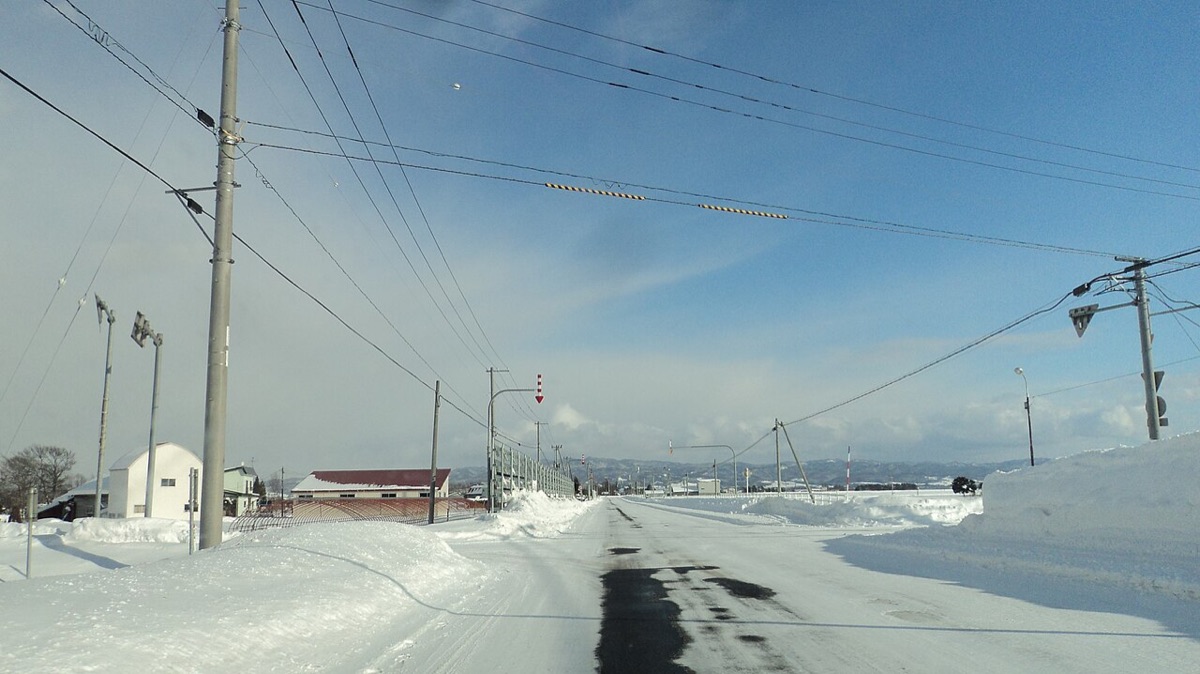
When a snowstorm hits or strong wind lifts lying snow, the view ahead can turn completely white in an instant, to the point where you cannot see the edge of the road. Snow thrown up by oncoming trucks can also wipe out visibility for a moment[3]. The red-and-white arrows (yabane) hanging over rural roads in Hokkaido are there to mark the road edge when snow piles up and visibility drops.
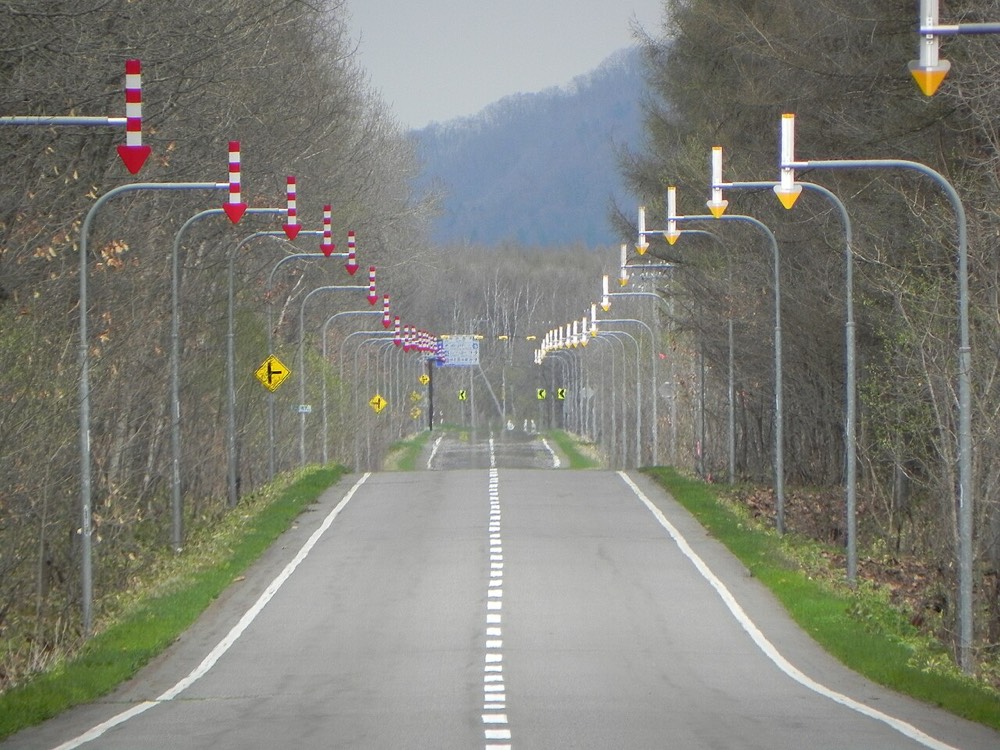
The official advice is simple: slow down and do not brake suddenly[3]. Stopping blindly in the middle of the lane in a whiteout can get you rear-ended, so find a michi-no-eki roadside station or a convenience store car park and wait before visibility gets bad.
3. Mountain passes (toge) and sudden closures
Travelling between cities in Hokkaido often means crossing a toge (mountain pass), with steep grades, many bends, high altitude and fast-changing weather. Most passes stay open in winter, but they close completely at short notice during snowstorms. On January 25, 2024, for example, the Abashiri Development and Construction Department closed several sections because of blowing snow, including 48 km of Route 244 over the Konpoku Pass and 34 km of Route 334 between Shari and Utoro, with the notice reading "reopening undecided". Roads reopen only after the weather recovers and inspections are done[15]. Getting stuck on the wrong side of a pass means not reaching your inn that day.
4. Early darkness
In Sapporo the sun sets at 16:01 on December 1, 2026, at 16:03 around the winter solstice and at 16:09 on December 31[1]. Sunsets get later through February: 16:47 on February 1 and 17:22 on February 28[2]. Rural roads have few streetlights, and after dark it is much harder to tell whether the surface is dry, wet or frozen.
| Date (Sapporo) | Sunrise | Sunset |
|---|---|---|
| December 1, 2026 | 6:46 | 16:01 |
| December 22, 2026 | 7:03 | 16:03 |
| December 31, 2026 | 7:06 | 16:09 |
| February 1, 2026 (reference) | 6:50 | 16:47 |
| February 28, 2026 (reference) | 6:13 | 17:22 |
Hokkaido winter route difficulty: which roads to drive and which to avoid
The short answer: in winter, stick to the main roads and expressways around Sapporo. Mountain passes, long distances in eastern Hokkaido and night driving are high risk. Distances and times in the table below come from Northern Road Navi's chart of distances and travel times between major cities in Hokkaido, and are normal-season reference values (prioritising national roads, with some expressway sections)[5]. There are no official winter travel times; we recommend allowing at least 1.5 times the times shown, and longer when it snows or roads close.
| Section | Main route | Distance (normal-season time) | Winter difficulty | Notes |
|---|---|---|---|---|
| Sapporo to Chitose (towards New Chitose Airport) | Do-O Expressway | 27 km (about 16 min, interchange to interchange) | Low to medium | Busy and fast; city and airport access roads are extra; heavy snow often causes jams near the airport |
| Sapporo to Otaru | Sasson Expressway | 31 km (about 24 min, interchange to interchange) | Low to medium | The shortest starter route; via National Route 5 it is 39 km (about 1 hr 11 min) |
| Sapporo to Asahikawa | Do-O Expressway (via Takikawa) | 81 km + 45 km (about 51 min + 34 min) | Medium | Mostly flat, but the Ishikari Plain is prone to ground blizzards |
| Sapporo to Furano | Do-O Expressway to Takikawa, then National Route 38 | 81 km + 58 km (about 51 min + 1 hr 12 min) | Medium | In winter, stick to this flat route and do not let the navigation take you on mountain shortcuts |
| Asahikawa to Furano | National Route 237 (via Biei) | 58 km (about 1 hr 25 min) | Medium | Rolling hills; the Biei area is windy and prone to ground blizzards |
| Sapporo to Niseko (Kutchan) | National Route 230 (Nakayama Pass) + Route 276 | 66 km + 25 km (about 1 hr 36 min + 32 min) | High | Nakayama Pass is high and steep, with heavy traffic in ski season |
| Sapporo to Obihiro | National Route 274 via Nissho Pass | 175 km (about 3 hr 40 min) | High | A long mountain crossing; the Doto Expressway (Chitose to Shimizu 129 km, about 1 hr 48 min) is steadier but also closes in bad weather |
| Asahikawa to Sounkyo to Kitami | Asahikawa-Monbetsu Expressway + National Route 39 (Sekihoku Pass) | Check on Northern Road Navi | High | Sekihoku Pass east of Sounkyo is a regular winter closure |
| Eastern Hokkaido (Shiretoko, Konpoku Pass, Bihoro Pass and others) | National Routes 334, 244, 243 and others | Varies by route | High | The Shiretoko Pass Road is fully closed in winter; other passes often close at short notice in snowstorms[15] |
Roads closed every winter
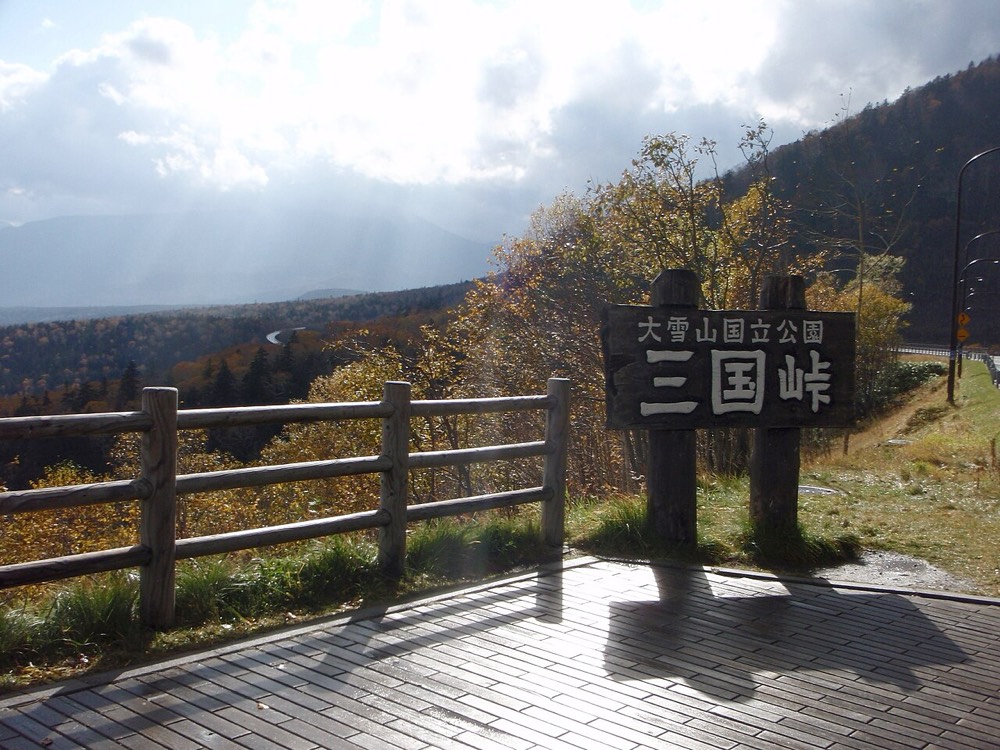
National Route 334, the Shiretoko Pass Road (between Rausu and Utoro, crossing the Shiretoko Pass), closes completely every winter. According to Northern Road Navi and past notices, the all-day closure usually starts in early November (from November 4 in the 2025 season) and lasts until late April of the following year[4]. The reopening date is announced each year depending on snow and clearing progress. To get from Shari to Rausu in winter you have to take Route 244 over the Konpoku Pass or another route, and that road also closes often in snowstorms[15]. Some prefectural roads (dodo) also have winter closures that your navigation may not show, so check Hokkaido road information before you leave.
What to know about renting a car in Hokkaido in winter: winter tires, 4WD, coverage and costs
The short answer: you do not need to request winter tires for a Hokkaido rental in winter, but you should actively add 4WD and full damage coverage, and rent an ETC card.
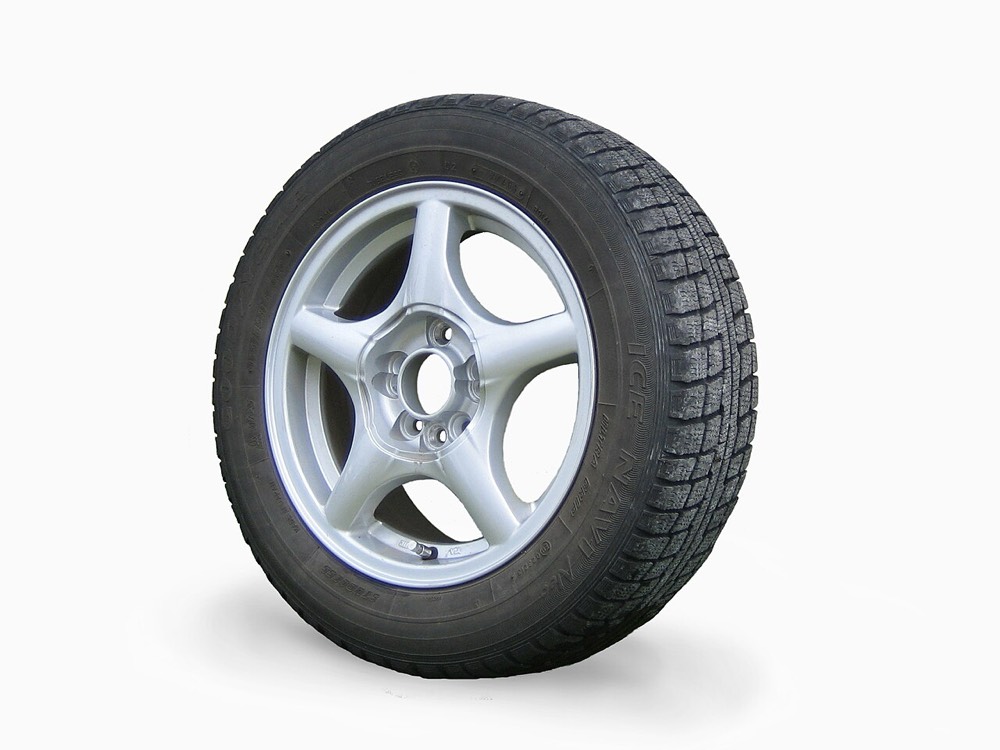
- Winter tires (sutaddoresu taiya): at Toyota Rent a Car's Hokkaido companies, every car has winter tires as standard from November 1 to May 5 in the 2026-27 season (from October 31 in Obihiro). Seasonal rates apply in this period, with no separate winter tire option fee[6]. At Nippon Rent-A-Car in Hokkaido, the standard period is November 1 to April 20 of the following year[9]. Winter rentals in Japan use studless winter tires, not snow chains.
- 4WD: not standard. Toyota's 4WD option costs 1,650 yen per 24 hours for standard classes, and SUV classes include 4WD in the base rate[7]. 4WD helps when pulling away, climbing and getting unstuck, but it does not shorten braking distances, so do not speed up just because you have 4WD.
- ABS: the official winter guide recommends that first-time snow drivers book a car with ABS, but it also warns that ABS can lengthen braking distances on ice and should not be relied on alone[3].
- Snow chains: Toyota says fees vary by shop and some shops do not offer them[7].
Winter rental costs and coverage (Toyota Rent a Car as an example)
| Item | Cost | Notes |
|---|---|---|
| Winter tires | No option fee during the standard period | Seasonal rates apply in this period; check the base rate on the booking screen[6] |
| 4WD option | 1,650 yen per 24 hours | Standard classes; included for SUV classes[7] |
| ETC card rental | 550 yen | Needed for expressways or the HEP[7] |
| Collision damage waiver | 1,100 yen per 24 hours | Waives the 50,000 yen deductibles for property damage and vehicle damage[8] |
| Anshin W Plan | 1,650 yen per 24 hours | Damage waiver plus NOC waiver[8] |
| NOC (non-operation charge) | 20,000 yen or 50,000 yen | 20,000 yen if you can drive the car back to the shop, 50,000 yen if you cannot[8] |
In winter, always take a plan that includes the NOC waiver. A minor scrape on snow or sliding into a roadside snowbank can both damage the car and trigger an NOC. Toyota also states that the NOC is not waived even under the Anshin W Plan if you commit an act prohibited by the rental terms or cause an accident deliberately[8]. Other companies (Nippon, Times and so on) use different plan names and amounts, so check each company's official website.
Driving licence: check the rules for where it was issued
For travellers from Taiwan: drivers with a Taiwan licence must carry the original licence plus an officially recognised Japanese translation. How to apply and what to watch for is covered in our Okinawa driving guide, and the same applies in Hokkaido. Travellers from other countries and regions: Japan generally accepts International Driving Permits issued under the 1949 Geneva Convention, and a small number of countries and regions use a "home licence plus Japanese translation" system instead. Follow the guidance of the Japanese police or your licensing authority.
ETC and the Hokkaido Expressway Pass (HEP)
The HEP is a flat-rate, unlimited expressway pass for foreign visitors in Hokkaido. It has to be booked together with a rental car, and you must rent an ETC card[10]. Nippon Rent-A-Car lists these prices: standard cars 7,700 yen for 2 to 4 days, 9,600 yen for 5 days and 13,500 yen for 7 days; kei cars 6,200 yen for 2 to 4 days[10]. The HEP period must match the rental period, cannot be extended and is not refunded if you return the car early[10]. JNTO says it is limited to holders of non-Japanese passports (or Japanese nationals with permanent residence abroad) and requires an International Driving Permit, with documents checked at purchase[11]. Travellers from Taiwan using a Taiwan licence plus a Japanese translation should ask the rental company whether they can buy it when booking. A winter caveat: the HEP tempts you to drive more, but the distance you can drive safely each winter day is limited, so estimate how much expressway driving you will actually do before deciding whether to buy it.
Snow driving tips for Hokkaido: a checklist from departure to parking
The following is based on the winter guide for foreign drivers from the Hokkaido Regional Development Bureau and others, and on JAF's advice[3][13]. Run through it when you pick up the car.
Before you set off
- At pick-up, check that the car has winter tires and that a snow brush and ice scraper are on board, and confirm whether the car has 4WD and ABS.
- Clear the snow off the roof. The official guide warns that roof snow can slide down over the windscreen while you are driving[3].
- Check that the washer fluid is a winter antifreeze type; you will use a lot of it when slush splashes the windscreen[3].
- Check the passes and weather along your route, and do not go out if there is a snowstorm or heavy snow warning. The official guide says it plainly: if the weather is bad, change your plans and stay put[3].
While driving
- Three "nevers": no sudden braking, no sudden acceleration, no sudden steering[3].
- Keep at least twice your usual following distance and watch the brake lights of the two cars ahead[3].
- Use engine braking downhill: in an automatic, shift from D to S, 2 or L and slow down gradually[3].
- Where it is safe and there are no cars in front or behind, brake gently at low speed to test how slippery the road is that day[3].
- When you see a shiny black surface, a bridge or a tunnel exit, lift off the accelerator and slow down early.
- Follow the wheel tracks of the cars ahead and avoid driving into deep snow[3].
Parking and overnight
- Lift the wipers off the windscreen so they do not freeze to the glass[3].
- Park in spaces that have already been cleared where possible, and do not block snow ploughs.
- Before leaving the next day, allow 15 to 20 minutes to clear snow and ice and warm up the car.
Fuel
Petrol stations in rural Hokkaido are far apart and some close at night or on holidays, so fill up when the tank is half empty. Self-service stations (serufu) are common, and the usual fuel is "regular" (standard petrol). Before returning the car, fill the tank as the rental company requires and keep the receipt.
How do I check Hokkaido road conditions before driving? Five official tools
The short answer: check the night before, one hour before leaving, and again during rest stops.
| Tool | What it shows | Website |
|---|---|---|
| Hokkaido road information (Hokkaido Regional Development Bureau) | National road closures, restrictions and road camera images | info-road.hdb.hkd.mlit.go.jp |
| Northern Road Navi (Civil Engineering Research Institute for Cold Region) | Pass and blizzard information, distance and time search, road camera links, with foreign-language pages | northern-road.ceri.go.jp/navi |
| NEXCO East Japan Drive Plaza | Closures and congestion on the Do-O, Sasson, Doto and other expressways | driveplaza.com |
| tenki.jp warnings and advisories | Heavy snow and snowstorm warnings for central, northern, eastern and southern Hokkaido | tenki.jp |
| JAF roadside assistance | Help when stuck in snow, broken down or with a flat battery (#8139) | jaf.or.jp |
What to look for: Hokkaido road information covers national roads[17], so check NEXCO East Japan for expressways. On tenki.jp, choose the areas you will pass through (Sapporo to Asahikawa is "central Hokkaido", while Furano and Asahikawa belong to "northern Hokkaido")[18]. Visit Hokkaido (visit-hokkaido.jp) also publishes seasonal travel information, but rely on the official tools above for live road conditions.
What to do if you get stuck in snow or have an accident
The short answer: make yourself safe first, then call in this order: 110/119, the rental company, then roadside assistance.
If you have an accident
- Turn on your hazard lights and, if it is safe, place a warning triangle behind the car.
- If anyone is hurt, call 119 (ambulance and fire). Call the police on 110 for any accident, however minor. Without a police accident report, the rental insurance and coverage may not apply.
- Call the rental company's accident line (the number is on your rental agreement or a sticker in the car) and follow their instructions.
If you get stuck in snow
JAF's self-recovery steps are: turn on your hazards and make the scene safe, dig the snow away from the front and back of the tires with a shovel, do not floor the accelerator and spin the wheels, rock gently back and forth to pack the snow down, and if needed put a traction plate or thick cloth under the drive wheels[13]. If you cannot get out yourself, call for help early:
- Call the rental company first: most rental companies have their own roadside assistance partner.
- JAF roadside assistance: dial #8139 or 0570-00-8139, 24 hours a day, all year[12]. Non-members can call too but must pay: pulling a car out of snow in the daytime on an ordinary road starts at about 21,700 yen[13]; the basic fee on ordinary roads is 15,700 yen in the daytime (8:00 to 20:00) and 19,630 yen at night, plus 830 yen per km for towing[14]. When the service is busy, members take priority.
While waiting in the car
The official guide's four key points: do not leave the vehicle (it is easy to get lost in a snowstorm), turn on your hazard lights, contact the police, fire service or roadside assistance, and clear the snow from around the exhaust pipe to avoid carbon monoxide poisoning[3]. Some rural areas have poor phone reception, which is another reason not to drive when the weather is bad.
Sample Hokkaido winter road trip: Sapporo to Furano to Asahikawa in 2 days
If you meet the "more feasible" conditions above, here is a plan that keeps the risk low: flat main roads only, about 2 to 3 hours of driving a day, done before dark, and a one-way rental (norisute; whether a drop-off fee applies depends on the rental company).
| Time | Day 1: Sapporo to Furano | Day 2: Furano to Biei to Asahikawa |
|---|---|---|
| 08:30-09:00 | Pick up the car in central Sapporo; check winter tires, 4WD and snow brush | Clear snow, warm up the car, check road information and warnings |
| 09:00 | Take the Do-O Expressway to Takikawa (about 51 min in summer; allow 1 hr 20 min or more in winter) | Leave at 9:30 on Route 237 to Biei (allow 1 hr or more in winter) |
| 10:30 | Exit at Takikawa IC and take Route 38 to Furano (about 1 hr 12 min in summer; allow 1 hr 45 min or more in winter) | Stop around Biei, parking only in cleared car parks |
| 12:30 | Arrive in Furano, lunch | After lunch, head to Asahikawa |
| 13:30-15:00 | Ski area or sightseeing in town | Return the car in Asahikawa by 14:30 |
| By 15:30 | Arrive at your accommodation, no more driving | Take the JR limited express back to Sapporo (about 1 hr 25 min) |
Day 1 is about 139 km and day 2 about 60 km, both finished before dark. For winter sights and places to stay in Furano, see Furano in winter. If there is a snowstorm warning on the day, take JR instead and do not force the drive.
Alternatives to driving: JR, buses and day tours
The short answer: in winter Hokkaido, public transport does not leave you at a disadvantage. JR links Sapporo, Otaru, Asahikawa, Hakodate and Noboribetsu, and buses and local day tours fill the gaps for Furano, Biei, Sounkyo and other areas. Routes, fares and how to work out the JR Hokkaido Rail Pass are covered in Hokkaido without a car; to decide whether a pass is worth it, see the JR Hokkaido Rail Pass guide.
A middle-ground option is to take JR between cities and rent a car only for short trips on the day at your destination, for example renting for half a day in Furano to reach the ski area or nearby sights. That avoids long distances and passes while keeping some flexibility. The MLIT Hokkaido District Transport Bureau also ran winter driving simulator sessions for foreign visitors at New Chitose Airport in January and February 2026 with the Hokkaido police, JAF and others, which shows how seriously the authorities take winter driving safety[16].
Before you go
- One week before departure: check your licence documents, book 4WD and a coverage plan with the NOC waiver, and rent an ETC card.
- Clothing and footwear: you will get out of the car to park, refuel and clear snow, so non-slip shoes and gloves matter. See what to wear in Hokkaido in winter. For December weather and events, see Hokkaido in December.
- Every morning before driving, check Hokkaido road information, NEXCO East Japan and tenki.jp warnings, and do not drive in a snowstorm.
- Keep at least one spare day, stay in Sapporo or near New Chitose Airport the night before your flight home, and do not plan a long drive on the last day.
- Save 110, 119, the rental company's accident line and JAF #8139 in your phone.
FAQ
Can I drive in Hokkaido in winter if I have never driven on snow?
It is not recommended. Braking distances on snow and ice are several times longer than on dry roads, and recovering from a skid takes experience. If you must drive, go after mid-March or before mid-November, stick to main roads such as Sapporo to Otaru or the Do-O Expressway, finish in daylight, rent a car with ABS and 4WD, and cancel as soon as conditions turn bad.
Do I need 4WD for a winter rental car in Hokkaido?
It is not mandatory, but it is recommended. 4WD helps when pulling away, climbing and getting unstuck, but it does not shorten braking distances, and you will still slide on ice. Toyota Rent a Car charges 1,650 yen per 24 hours for 4WD on standard classes, and some SUV classes include it. Check the booking screen for the actual price.
Which roads in Hokkaido close in winter?
The best-known seasonal closure is National Route 334, the Shiretoko Pass Road, which usually closes from early November until late April. Other passes stay open in winter but often close completely at short notice during blizzards. For example, a 48 km section of Route 244 over the Konpoku Pass was closed for blowing snow with no reopening time given. Always check Hokkaido road information before you set off.
How far can I drive per day on a Hokkaido winter road trip?
Plan on no more than about 150 km, or around 3 hours of actual driving, per day, and reach your accommodation before dark. In December the sun sets around 16:00 in Sapporo, so aim to wrap up by about 15:30. Split distances you could cover in one summer day over two days in winter, and keep a spare day for road closures.
Who should I call if my rental car gets stuck in snow or I have an accident?
If anyone is hurt, call 119. For any accident, call the police on 110, because without a police accident report your insurance may not pay out. Then call the rental company's accident line. If you are simply stuck in snow, call the roadside assistance number your rental company gives you, or JAF on #8139. For non-members, pulling a car out on an ordinary road in the daytime starts at about 21,700 yen.
Sources
- National Astronomical Observatory of Japan, Calendar Division: Sapporo sunrise and sunset, December 2026: Sunset 16:01 on December 1 and 16:03 around the winter solstice
- National Astronomical Observatory of Japan, Calendar Division: Sapporo sunrise and sunset, February 2026: Sunset 16:47 on February 1 and 17:22 on February 28
- Hokkaido council for promoting drive tourism by foreign visitors (Hokkaido Regional Development Bureau and others): Winter Driving – Drive Safely in Ice and Snow: Braking distances at 50 km/h, black ice and what to do if stranded
- Northern Road Navi (Civil Engineering Research Institute for Cold Region): Pass and blizzard information, road camera links, Shiretoko Pass Road winter closure notice and autumn deer collision warning
- Northern Road Navi: distances and travel times between major cities in Hokkaido (data as of end of March 2025): Distance and normal-season travel time for each section
- Toyota Rent a Car: shops and periods with winter tires as standard: Winter tires standard at Hokkaido companies from 11/1 to 5/5 (Obihiro from 10/31), with seasonal rates
- Toyota Rent a Car: optional equipment: Fees for 4WD, winter tires and ETC card rental
- Toyota Rent a Car: insurance and coverage: Deductibles, NOC of 20,000 or 50,000 yen, Anshin W Plan
- Nippon Rent-A-Car: winter tires: Winter tires standard in Hokkaido from 11/1 to 4/20 of the following year
- Nippon Rent-A-Car: Expressway Pass programs: Hokkaido Expressway Pass prices by number of days and purchase conditions
- JNTO: Expressway Passes: HEP eligibility (non-Japanese passport, International Driving Permit), updated January 2026
- JAF: calling road service by phone: #8139 and 0570-00-8139, 24 hours a day, all year
- JAF: how to free your car when stuck in snow: 21,700 yen for non-members to pull a car out of snow (daytime, ordinary road) and self-recovery steps
- JAF: road service fees: Non-member basic fees and towing fees (from April 1, 2024)
- Hokkaido Regional Development Bureau, Abashiri Development and Construction Department: road closures in the district (January 25, 2024): Closures of Route 244 over the Konpoku Pass, Route 334 and others due to blowing snow
- MLIT Hokkaido District Transport Bureau: winter road driving experience for foreign visitors (January 2026): Winter driving simulator sessions at New Chitose Airport
- Hokkaido Regional Development Bureau: Hokkaido road information: National road closures, restrictions and road camera images
- tenki.jp: warnings and advisories (central Hokkaido): Heavy snow and snowstorm warnings and advisories
Fares, opening hours and event dates can change. Information checked on 2026.11.07; please confirm with official sources before you go.