Kyoto Souvenirs 2026: How to Choose Yatsuhashi, Matcha Sweets and Pickles, and Where to Buy Them Fast at Kyoto Station
Kyoto souvenirs compared by shelf life and price: yatsuhashi, Ajari-mochi, Cha no Ka, matcha sweets, shichimi and pickles, plus where to buy at Kyoto Station.
Quick answer
With Kyoto souvenirs, check shelf life before price. Ajari-mochi (1,523 yen for 10) keeps only 5 days at room temperature including the production day, so buy it on your last day. Shogoin's Hijiri nama yatsuhashi is 756 yen for 10 and keeps 12 days; Malebranche's Cha no Ka is 1,520 yen for 8 and keeps about 15 days; Itohkyuemon's matcha langue de chat keeps about 45 days, ideal for gifts handed over later. At Kyoto Station, JR Kyoto Isetan B1 (10:00–20:00), ASTY inside the Shinkansen gates and Kyoto Porta (some areas from 7:30) cover almost everything.
Choosing Kyoto souvenirs works differently from Tokyo or Osaka: the most famous ones, nama yatsuhashi and Ajari-mochi, are Japanese sweets that do not keep long, and buying them at the wrong point in your trip means they expire before you get home. This guide compares nama yatsuhashi, Ajari-mochi, Cha no Ka, Uji matcha sweets, shichimi spice and Kyoto pickles on four criteria — shelf life, price per box, whether they need refrigeration and how easy they are to carry — then covers where to buy them at Kyoto Station and in the city, opening hours, and what to pick for colleagues, family and tea-loving friends.
Kyoto souvenir comparison: price, shelf life and refrigeration
The short answer: for anything that must keep a week or more, choose Cha no Ka or matcha langue de chat; for the classic Kyoto taste, choose nama yatsuhashi; Ajari-mochi is delicious but lasts only 5 days, so buy it last. Prices below are from official online shops or sales listings (checked November 2026).
| Item (brand) | Typical size and price | Shelf life | Storage | Portability | Best for |
|---|---|---|---|---|---|
| Nama yatsuhashi "Hijiri" (Shogoin Yatsuhashi Sohonten) | 10 pieces 756 yen; individually wrapped 12 pieces 1,188 yen | 12 days[2] | Room temperature | Light box, crushes easily | Family and friends who want the authentic Kyoto taste |
| Otabe / Fuwafuwa Otabe (Bijuu) | Fuwafuwa Otabe 5 pieces 756–810 yen (depending on period) | 10 days including production day[14] | Room temperature; the maker says do not refrigerate | Light | People who like a soft, fluffy texture |
| Ajari-mochi (Mangetsu) | 141 yen each, 10 pieces 1,523 yen | 5 days at room temperature including production day[3] | Room temperature | Individually wrapped, squashes easily | People you will see the day after you get home |
| Cha no Ka (Malebranche) | 6 pieces 1,140, 8 pieces 1,520, 14 pieces 2,700, 24 pieces 4,560 yen | About 15 days from shipping[4] | Contains chocolate; sensitive to heat | Flat boxes stack well | Offices, older relatives, formal gifts |
| Uji matcha langue de chat "Hagoromo" (Itohkyuemon) | 10 pieces 1,490 yen | About 45 days[8] | Below 25°C | Easy | People you will see a week or two later |
| Kyo Baum (Bijuu) | Kyoto Station limited box 1,576 yen, mini 702 yen | Not stated in the release; check the label when buying | Room temperature | Tall, takes up space | Baumkuchen fans, children |
| Shichimi togarashi (Shichimiya Honpo) | 15g small bag, 25g large bag, with spice tin, etc.; see the official online shop for prices | Keeps well unopened; refrigerate after opening[10] | Room temperature | Smallest and lightest | Home cooks, gifts for many people |
| Kyoto pickles (e.g. Nishiri) | Senmaizuke 100g 864 yen, shibazuke 100g 756 yen, suguki 229g 1,296 yen[12] | Varies by item; check when buying | Senmaizuke is shipped refrigerated | Contains brine; handle with care | People living nearby, yourself |
How to choose nama yatsuhashi: Shogoin, Izutsu or Otabe?
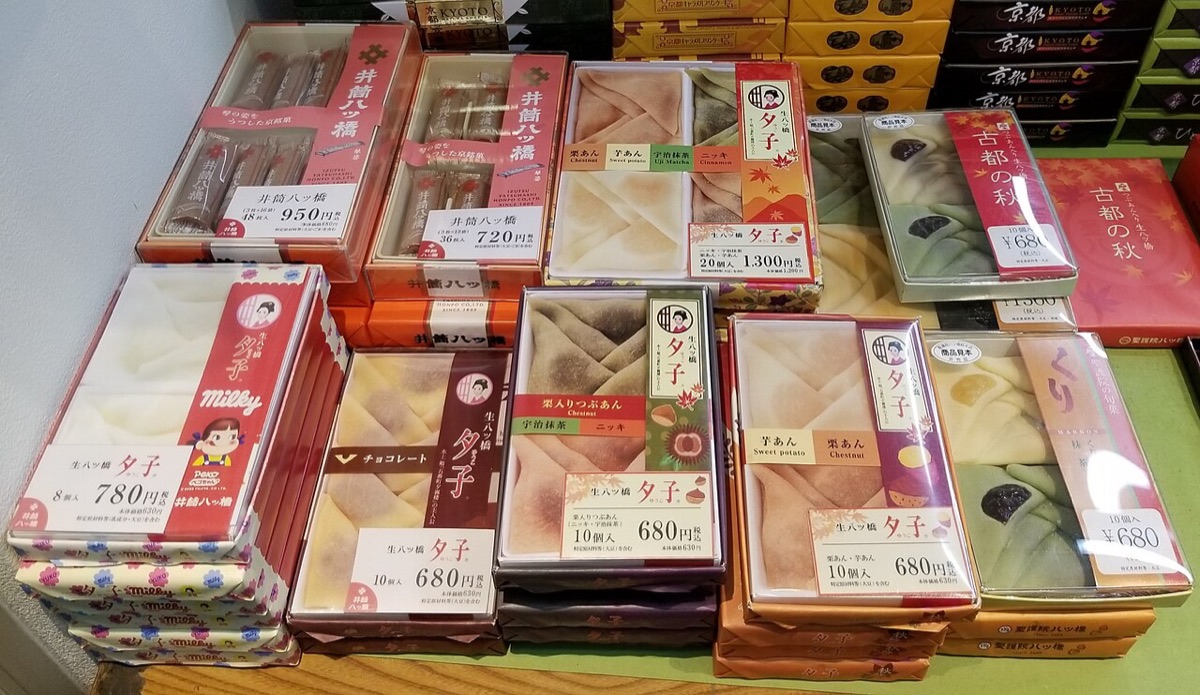
Nama yatsuhashi is the signature Kyoto souvenir. The three long-established makers taste fairly similar; what really matters is flavor, packaging and how many days it keeps.
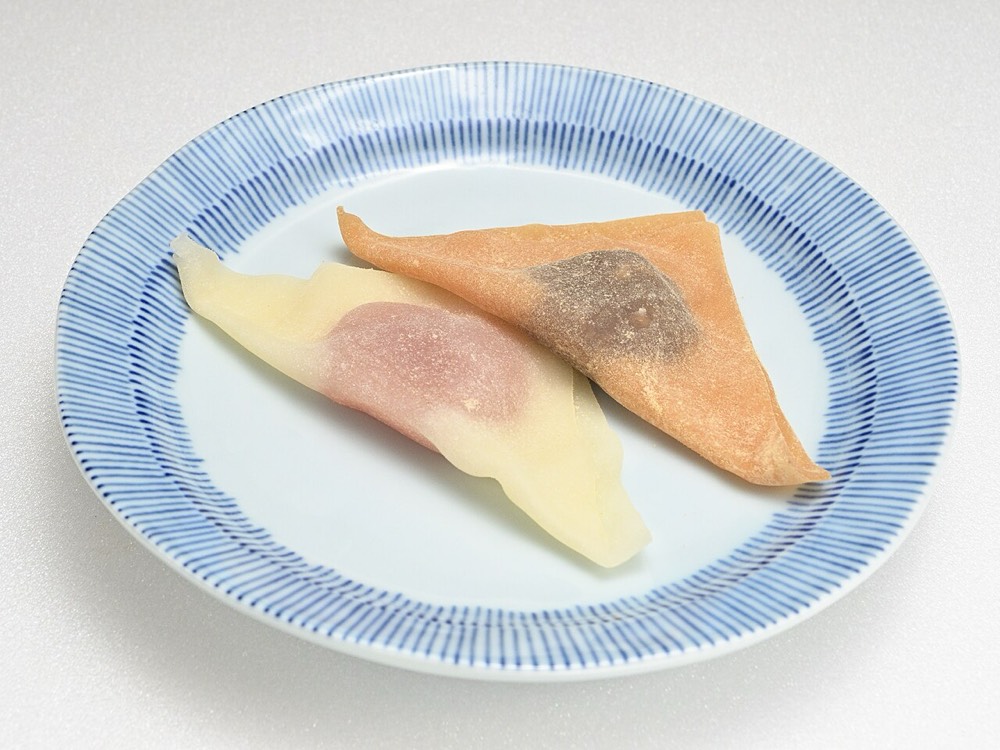
First, know the two types. Original "yatsuhashi" is a crisp baked cracker of rice flour, sugar and cinnamon, shaped like a koto harp. "Nama yatsuhashi" is the unbaked soft dough, most often folded into a triangle around chunky red bean paste. Shogoin Yatsuhashi Sohonten introduces the two separately on its product page, and its baked yatsuhashi has been sold since the Genroku era.
- Shogoin Yatsuhashi Sohonten: its signature "Hijiri" is 756 yen for 10 pieces and keeps 12 days[2]; the individually wrapped version is 594 yen for 6 and 1,188 yen for 12, and the autumn-only "Koto no Aki" is also 756 yen for 10[1]. If you plan to hand them out, the individually wrapped version is the most convenient.
- Izutsu Yatsuhashi Honpo: known for its nama yatsuhashi "Yuko," with many flavors plus seasonal and collaboration editions (such as a milky flavor with Fujiya). We could not confirm current prices or shelf life from official pages, so go by the in-store labels or Izutsu's official site.
- Otabe (Bijuu): "Otabe" is this company's nama yatsuhashi brand. The newer "Fuwafuwa Otabe" has an even softer skin, comes in boxes of 5, keeps 10 days including the production day, and the maker specifically says to keep it at room temperature rather than in the fridge[14]. Media listed its price at 810 yen in September 2026[15].
How to choose: to try several flavors at once, get an assorted box from Shogoin or Izutsu; to share with many people, get individually wrapped packs; if it must keep more than two weeks, nama yatsuhashi is not a good fit — get baked yatsuhashi instead.
Ajari-mochi, Cha no Ka and Kyo Baum: choosing Kyoto-only sweets
These three are the most-requested Kyoto souvenirs besides nama yatsuhashi. The difference is shelf life: Ajari-mochi is shortest, Cha no Ka is in the middle, and matcha langue de chat lasts longest.
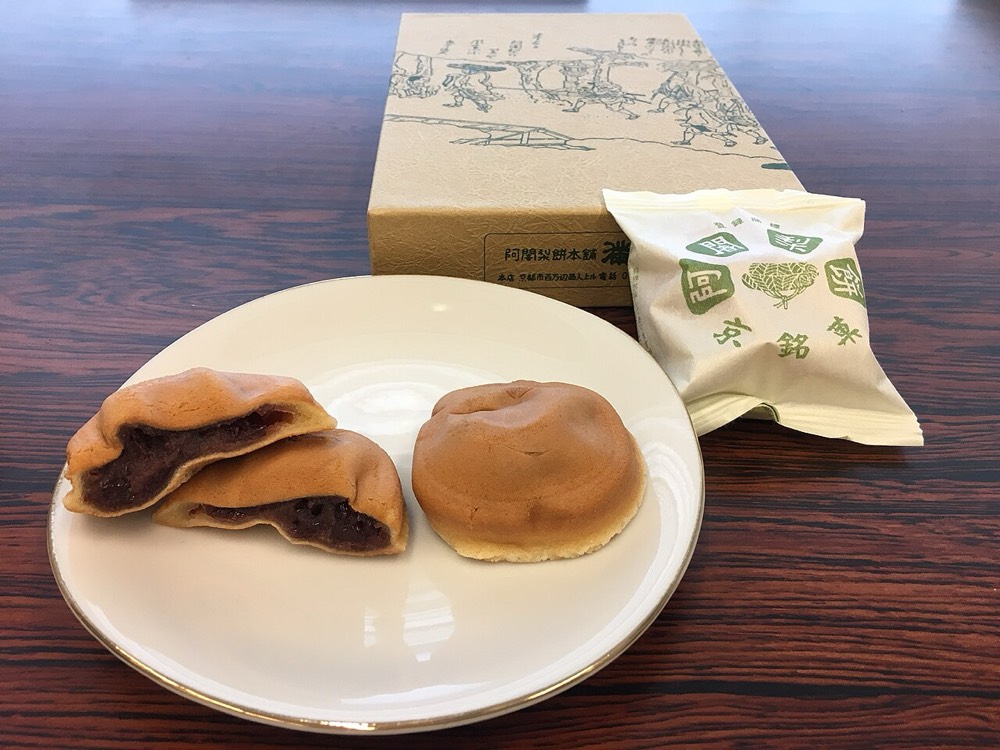
Ajari-mochi
A semi-moist sweet from Ajari-mochi Honpo Mangetsu, with a slightly chewy skin wrapped around chunky red bean paste. It costs 141 yen each or 1,523 yen for 10, and keeps only 5 days at room temperature including the production day[3]. It is sold at Mangetsu's main shop (Sakyo Ward), the Kinkakuji shop, kiosks inside Kyoto Station and department stores in various cities[3]. Station counters sometimes sell out, so if you must have it, buy it at the main shop the day before. Check the shop's own notices for the main shop's hours and closing days.
Cha no Ka
Malebranche's langue de chat made with thick koicha matcha and sandwiching white chocolate: 1,140 yen for 6 and 2,700 yen for 14, keeping about 15 days from shipping[4]. Because it contains chocolate, the official online shop switches to refrigerated delivery from May to mid-October; in summer, don't leave it in a hot car or on the outside of your luggage.
Kyo Baum
A matcha and soy-milk baumkuchen from Bijuu. From July 1, 2026, a dedicated shop called "atelier Kyo Baum" opened in Kyokonomi, the souvenir zone in Kyoto Porta's B1 East area at Kyoto Station, selling a station-limited box for 1,576 yen and a mini version for 702 yen, open 8:30–21:00[6]. The release does not give a shelf life, so check the label on the box.
Kyoto matcha souvenirs: tea leaves, matcha sweets or shichimi?
For tea lovers, the best choice is matcha sweets or small packs of tea from an established Uji tea house; for home cooks, shichimi is light and keeps well. The background of Uji matcha and its old tea houses is covered in our Uji day trip guide; here we focus only on buying gifts.
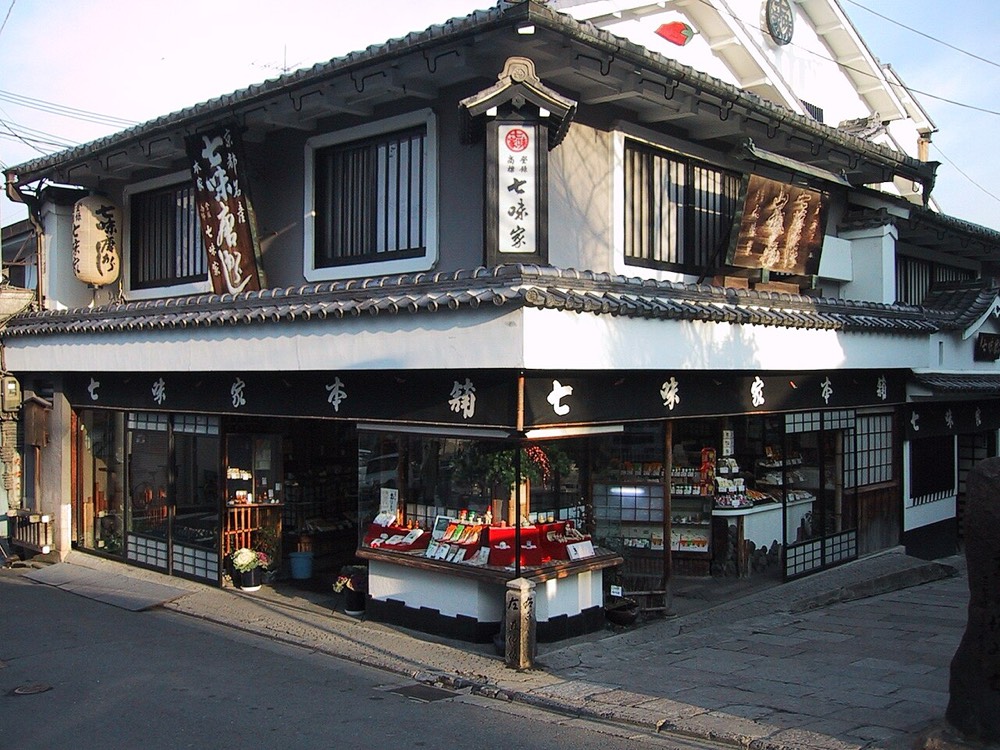
- Itohkyuemon: an Uji tea merchant with the widest range of matcha sweets. Its "Hagoromo" matcha langue de chat is 1,490 yen for 10 and keeps about 45 days below 25°C[8], the longest-lasting item compared in this guide. In Kyoto city there are Kyoto Ekimae, Gion Shijo, shops around Kiyomizuzaka, Nishiki Takakura and Fushimi Inari shops; in Uji, the main shop and JR Uji Ekimae shop[9].
- Nakamura Tokichi Honten: its Kyoto Station branch is on JR Kyoto Isetan 3F. It is mainly a sit-down tea house but also sells tea leaves and baked sweets, open 11:00–22:00[13]. Handy for buying tea while waiting for your train.
- Shichimiya Honpo: an old shop on the approach to Kiyomizu-dera, where Sannenzaka meets Gojozaka. Its shichimi togarashi comes in 15g small bags, 25g large bags, with a spice tin, and in "mame-bukuro" packs of 0.2g × 50; the maker recommends refrigerating once opened[10]. From November 21 to 30, 2026, it extends its hours to 9:30–20:30 for Kiyomizu-dera's special night viewing[11]. See the official online shop for prices.
Are Kyoto pickles a good souvenir?
If you live close by and can refrigerate them as soon as you get home, yes; if you have a long flight or several more days of travel, choose small shelf-stable packs.
The three signature Kyoto pickles are senmaizuke (thin turnip slices), shibazuke (eggplant with red shiso) and suguki (a sour turnip). At Kyo Tsukemono Nishiri's official online shop, for example, senmaizuke is 864 yen for 100g and is shipped refrigerated, shibazuke is 756 yen for 100g, and suguki is 1,296 yen for 229g; there is also "Ajiwai Putcho," a 270-yen shibazuke-flavored snack, for anyone who wants a Kyoto flavor without the brine[12].
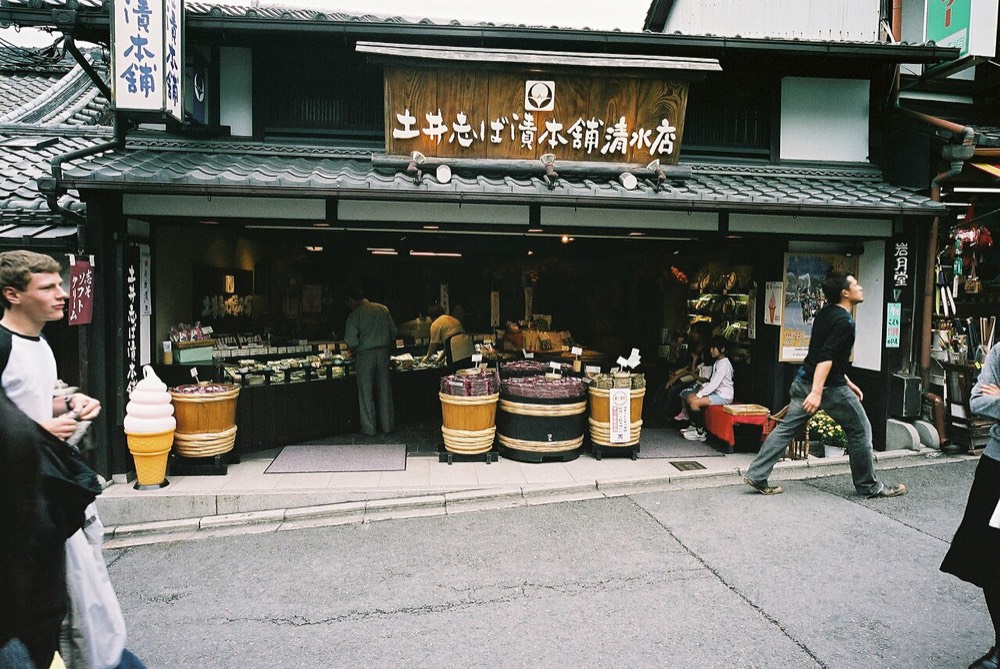
Three things to watch when buying pickles:
- Ask whether it needs refrigeration and how many days it keeps. This is printed on the pack; if unsure, ask staff to point it out.
- Vacuum packs with brine count as liquids. Put them in checked baggage, wrapped in an extra zip bag.
- Import quarantine rules differ by country. Some places restrict pickled vegetables or products containing meat; before you leave, check the customs or quarantine authority of the country or region you are entering.
Nishiki Market has many pickle shops; for how to explore it and its shop categories, see our Nishiki Market guide. If you want to sit down for Kyoto cuisine or yudofu, see Kyoto food recommendations.
Where to buy Kyoto souvenirs: Kyoto Station, Kiyomizuzaka and the city
Kyoto Station saves the most time: in 30 minutes before your train you can buy yatsuhashi, Cha no Ka and matcha sweets in one go. Only go into the city for limited editions or items sold only at main shops.
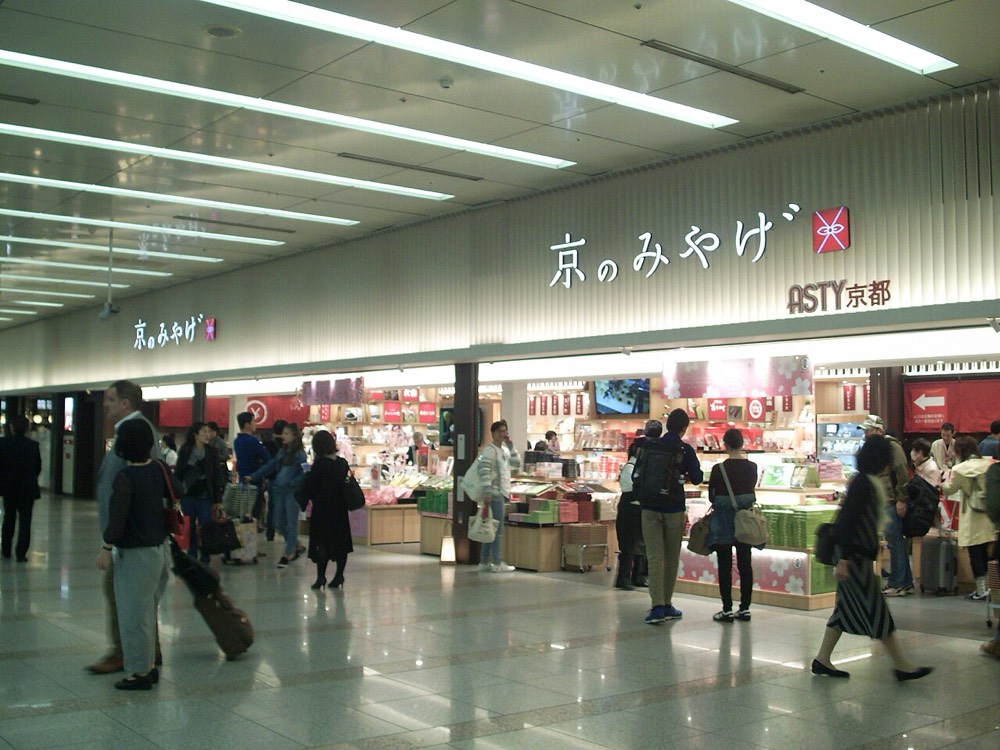
Souvenir areas at Kyoto Station
| Area | Location | Hours (checked November 2026) | Best for |
|---|---|---|---|
| JR Kyoto Isetan B1 | West side of the station (in front of the West Gate) | 10:00–20:00 (Malebranche counter as an example)[5] | Department-store food hall with the widest brand range |
| Kyoto Porta "Omiyage Kaido" | Station B1, 1F and 2F | 7:30–22:00[7] | Early and late trains |
| Kyoto Porta "Kyokonomi" | B1 East and West | 8:30–21:30[7] | Dedicated shops such as atelier Kyo Baum |
| ASTY Kyoto "Kyo no Miyage" | 2F inside the Shinkansen gates | 7:30–20:00 (Malebranche)[5] | When you only remember after passing the gates |
| Kintetsu Meitengai Miyakomichi | Hachijo exit side | 9:00–21:00 (Malebranche Hachijoguchi)[5] | Kintetsu users and Hachijo-side hotels |
| Kyoto Tower Sando 1F | Kyoto Tower building, opposite the Karasuma exit | 10:00–21:00 (Malebranche)[5] | Last-minute shopping on the way back to your hotel |
Each shop within these areas keeps its own hours; where a brand is named, its hours are used as the example. For getting around and transfers at Kyoto Station, see our Kyoto transport guide.
In the city and at sights
- Kiyomizuzaka and Sannenzaka: Shichimiya Honpo's main shop and Itohkyuemon's shops around Kiyomizuzaka are on the approach, so you can shop on your way to or from Kiyomizu-dera. The slopes are crowded and shops small, though, so it is not ideal for bulk buying.
- Gion Shijo and around Nishiki Market: Itohkyuemon's Gion Shijo and Nishiki Takakura shops, plus the market's pickle and dried-goods shops, suit a midday or afternoon stroll.
- Mangetsu main shop: near Demachiyanagi in Sakyo Ward. It needs a special trip, and suits people who want to be sure of getting Ajari-mochi.
Can I catch up at Kansai Airport?
You can, but do not leave a specific brand to the airport. Kansai Airport has shops selling souvenirs from across Japan, but we could not confirm from official sources whether particular Kyoto brands are sold after departure screening. If you are leaving from Kyoto, buying at Kyoto Station before you board is the safest option; to check airport shops, see the shop list on Kansai International Airport's official site.
Choosing by recipient: who it suits and who it doesn't
Decide first when the gift will actually reach the person, then choose what to buy — this is more useful than following popularity rankings.
| Recipient | Recommended | Not recommended | Why |
|---|---|---|---|
| Office colleagues (10–30 people) | Individually wrapped Hijiri, large Cha no Ka box, matcha langue de chat | Ajari-mochi in bulk | Needs individual wrapping and a long shelf life, so handing it out on Monday is fine |
| Family and people you live with | Assorted nama yatsuhashi, Ajari-mochi, Kyoto pickles | — | They can eat it as soon as you get home, closest to fresh |
| Tea lovers who know matcha | Tea leaves or matcha sweets from an Uji tea house | Generic matcha cookies from tourist areas | A tea house's own product shows more thought |
| Home cooks | Shichimi, sansho pepper | Pickles that need refrigeration | Light, small, shelf-stable and long-lasting |
| Friends you'll see in a week or two | Long-life sweets such as Hagoromo | Nama yatsuhashi, Ajari-mochi | About 45 days versus 5–12 days |
| Long flights with many connections | Boxed baked sweets | Pickles with brine, soft Japanese sweets | High risk of crushing and leaks |
Budget example: how much will it cost?
For "20 office colleagues + family + one tea-loving friend + yourself," using the official prices found above:
| Item | Quantity | Cost |
|---|---|---|
| Individually wrapped Hijiri, 12 pieces (for colleagues) | 2 boxes | 2,376 yen |
| Ajari-mochi, 10 pieces (family) | 1 box | 1,523 yen |
| Cha no Ka, 8 pieces (older relatives) | 1 box | 1,520 yen |
| Hagoromo, 10 pieces (tea-loving friend) | 1 box | 1,490 yen |
| Nishiri senmaizuke 100g (yourself) | 1 pack | 864 yen |
| Total | 7,773 yen |
Only if you spend this at a single tax-free shop in one go does it pass the 5,000-yen threshold; spread across several shops, each purchase usually falls short.
Planning it smoothly: buy in reverse order of shelf life
Work backwards from shelf life: buy long-lasting items first and short-lived ones at the station on your last day.
- Early to mid-trip: while at Kiyomizuzaka, Gion or Uji, buy shichimi, tea leaves and matcha langue de chat that keep a month or more, and leave them at your hotel.
- Second-to-last day: buy items that keep 10–15 days, such as Cha no Ka and nama yatsuhashi. If you are short on luggage space, use coin lockers or luggage forwarding.
- Last day: buy Ajari-mochi and any pickles that need refrigeration at Kyoto Station. For early trains, use Omiyage Kaido, which opens at 7:30.
- At the till: carry boxes flat, not upright, so the filling in nama yatsuhashi doesn't shift; if you spend 5,000 yen or more at a tax-free shop, have your passport ready.
From November 2026, tax refunds changed to paying the tax-inclusive price and getting the tax back at departure — see Japan's new tax-free refund system for the process. To fit souvenir shopping into your itinerary, see our Kyoto 3-day itinerary; setting aside an hour at Kyoto Station on your last day is enough.
FAQ
Which Kyoto souvenir keeps the longest?
Among the items compared here, Itohkyuemon's Uji matcha langue de chat 'Hagoromo' keeps longest at about 45 days, followed by Cha no Ka (about 15 days from shipping) and Shogoin's Hijiri nama yatsuhashi (12 days). Ajari-mochi lasts only 5 days including the production day. Unopened shichimi keeps a long time, but the maker recommends refrigerating it once opened.
What is the difference between yatsuhashi and nama yatsuhashi?
Yatsuhashi is a crisp baked cracker of rice flour, sugar and cinnamon, shaped like a koto harp. Nama yatsuhashi is the unbaked, soft and chewy version, usually folded into a triangle around red bean paste. Nama yatsuhashi is the taste most people associate with Kyoto, but it keeps for a shorter time; for distant recipients, the baked kind is safer.
How early do souvenir shops open at Kyoto Station?
According to Kyoto Porta's official site, the station's Omiyage Kaido shops open 7:30–22:00 and the Kyokonomi souvenir zone under Porta opens 8:30–21:30. Malebranche at ASTY Kyoto inside the Shinkansen gates also opens at 7:30. JR Kyoto Isetan B1 does not open until 10:00, so early-train travelers should head to those areas first.
Can I buy Ajari-mochi at Kyoto Station?
Yes. Listings show Ajari-mochi is sold at Mangetsu's main shop and Kinkakuji shop, at kiosks inside Kyoto Station including past the ticket gates, and at department stores, though station counters sometimes sell out. Because it keeps only 5 days, buy it at the station on your departure day; if you must have it, visit the main shop the day before.
Can I get a tax refund on Kyoto souvenirs?
Yes, at participating tax-free shops, if you spend 5,000 yen or more before tax at one shop on the same day. From November 2026 Japan charges tax at the till and refunds it after customs confirmation at departure; food you open and eat in Japan is not refundable. Department stores usually have a tax-free counter, while small street shops often do not offer it.
Can I take Kyoto pickles on a plane?
Generally yes, but check two things first: vacuum packs with brine count as liquids, so checked baggage is safer; and the quarantine rules of the country or region you are entering for pickled vegetables or products containing meat. Items that need refrigeration, such as senmaizuke, are not ideal for long trips; choose shelf-stable items or small shibazuke-flavored snacks instead.
Sources
- Shogoin Yatsuhashi Sohonten official online shop: Prices of Hijiri 10 pieces, individually wrapped Hijiri 6 and 12 pieces, seasonal 'Koto no Aki' (checked November 2026)
- Shogoin Yatsuhashi Sohonten | Hijiri, 10 pieces: 756 yen, keeps 12 days
- Japan Travel Guide GLTJP | Ajari-mochi: 141 yen each, 1,523 yen for 10, 5 days at room temperature including production day, where it is sold
- Malebranche official online shop | Cha no Ka: Keeps about 15 days from shipping; refrigerated shipping in summer because of chocolate; prices by box size
- Malebranche official | Shop list: Hours of Hachijoguchi (Miyakomichi), ASTY Kyoto (inside Shinkansen gates), Isetan B1 and Kyoto Tower Sando shops
- PR TIMES | atelier Kyo Baum Kyokonomi shop opens July 1 (Bijuu Co.): Kyoto Porta B1 East, 8:30–21:00, station-limited box 1,576 yen, mini 702 yen
- Kyoto Porta official | Souvenirs: Hours of Kyokonomi, Omiyage Kaido and souvenir areas on each floor
- Itohkyuemon official | Uji matcha langue de chat 'Hagoromo': 1,490 yen for 10, best before about 45 days, store below 25°C
- Itohkyuemon official | Shop list: Kyoto Ekimae, Gion Shijo, Kiyomizuzaka, Nishiki Takakura, Uji main shop and others
- Shichimiya Honpo official | Kyoto shichimi togarashi: Package types and sizes; refrigerate after opening
- Shichimiya Honpo official | Notice of changed opening hours: Open until 20:30 from November 21 to 30, 2026
- Kyo Tsukemono Nishiri official online shop: Prices and delivery methods for senmaizuke, shibazuke and suguki
- Mitsukoshi Isetan | Nakamura Tokichi Honten Kyoto Station: JR Kyoto Isetan 3F, opening hours, retail corner
- Netshop Tanto-sha Forum (PR TIMES) | Fuwafuwa Otabe mail-order launch: 5 pieces, best before 10 days including production day, store at room temperature (June 2025 release)
- GetNavi web | Why 'Fuwafuwa Otabe' is selling: Otabe prices and sales areas as of September 2026
Fares, opening hours and event dates can change. Information checked on 2026.11.11; please confirm with official sources before you go.