Nishiki Market Guide: Opening Hours, What to Eat, the No-Eating-While-Walking Rule and How to Get There
Nishiki Market guide: snack prices from tamagoyaki to tako tamago, a budget for two, the nearest station exits, hours and the no-eating-while-walking rule.
Quick answer
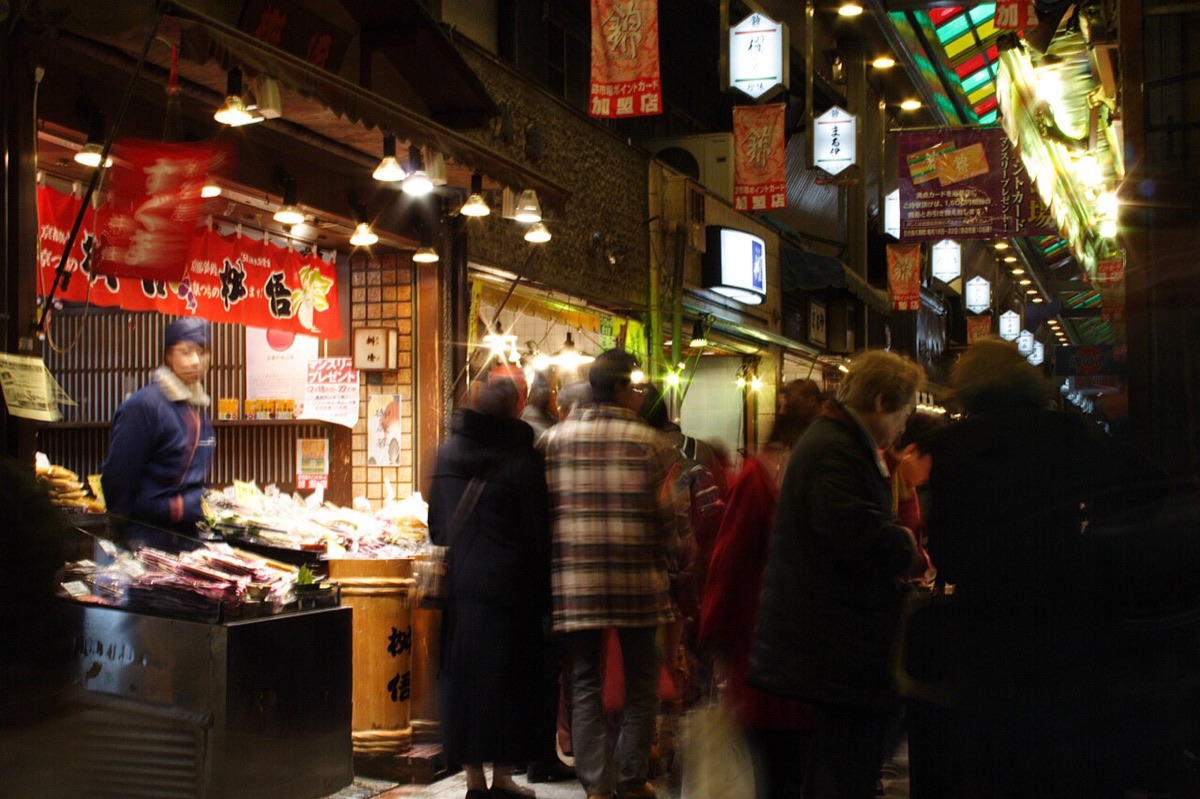
Nishiki Market runs along Nishikikoji-dori in Kyoto's Nakagyo Ward from Takakura-dori in the west to Teramachi-dori in the east: about 390 m long, with roughly 130 shops, it is known as "Kyoto's Kitchen". There are no market-wide hours; most shops open around 10:00 and close around 17:00, many close on Wednesdays, and many are closed January 1–3. The market asks visitors not to eat while walking but to finish food in or in front of the shop where they bought it. Most snacks cost ¥350–600, and two people grazing for an hour spend about ¥2,800–7,000. It is about a 3-minute walk from Exit 16 of subway Shijo / Hankyu Karasuma Station.
Nishiki Market (Nishiki Ichiba) is a covered shopping street about 390 m long in the heart of Kyoto. Known as "Kyoto's Kitchen" (Kyo no Daidokoro), it is one of the food stops almost every first-time visitor to Kyoto puts on the list. This guide covers Nishiki Market's opening hours and closing days, the official rule against eating while walking, item prices across budget, mid-range and premium snacks with a sample budget for two, which station exit to use, and a section-by-section route from west to east, so you can enjoy it smoothly without overspending.
What is Nishiki Market? "Kyoto's Kitchen" for 400 years
In short: Nishiki Market is a food market that has continued from the Edo period to the present day. It runs about 390 m east to west, the official site lists 131 shops, and it sells the ingredients Kyoto households and ryotei restaurants use every day[2][6].
The market lies on Nishikikoji-dori, a narrow street running parallel to and just north of Shijo-dori, from Takakura-dori at the west end to Teramachi-dori at the east end[7]. It is only about 3 m wide[10], with a red, yellow and green arched roof overhead, so you can browse even when it rains.
According to the Kyoto Nishiki Market Shopping Street Association, groundwater here stays at about 15–18°C all year, ideal for storing fresh fish and poultry. Combined with its central location close to the Imperial Palace, this meant a market formed here early on[2]. Key dates[2]:
- 1615: The Edo shogunate licensed three fish wholesalers in Kyoto, and Nishiki was one of them, making it an official fish market.
- 1770s: A vegetable market was approved, and after a dispute over trading rights it was formally recognized in 1774. The painter Ito Jakuchu, who was born into a vegetable wholesaling family in the market, is credited with helping save it during this dispute.
- 1927: Kyoto Central Wholesale Market opened and many wholesalers moved out; Nishiki then became a retail shopping street where ordinary shoppers could buy too.
- 1993: The current column-free arcade roof was completed.
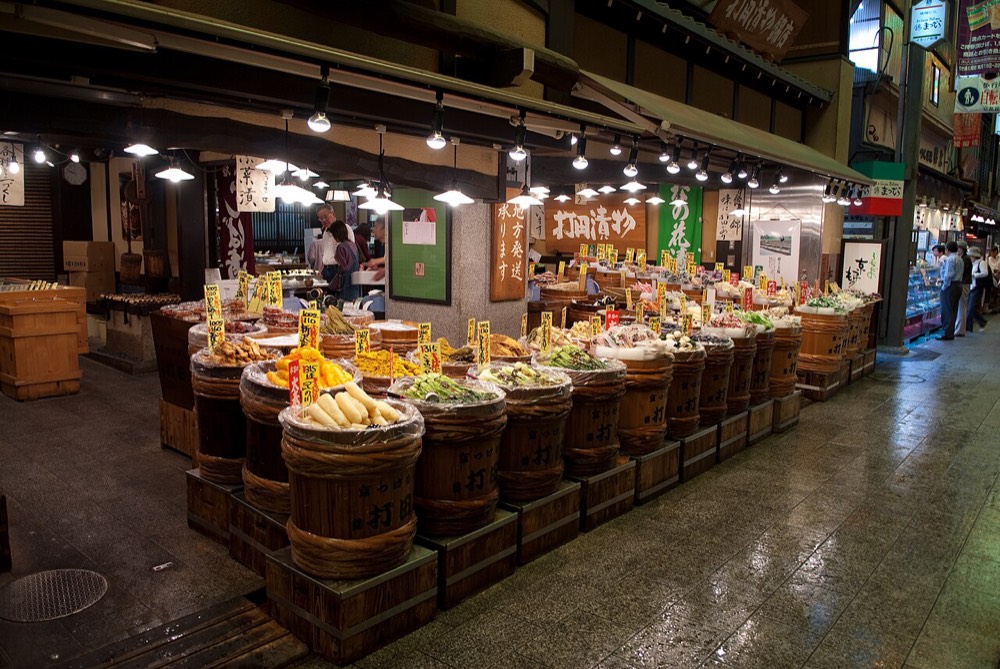
Today Nishiki is still mainly made up of shops selling fresh fish, dried goods, Kyoto pickles, yuba, nama-fu and Kyoto vegetables, joined by many snack, dessert and standing-bar shops[5]. Near the west entrance is a monument marking Ito Jakuchu's birthplace, and some shop shutters carry his artwork, which you can actually see best in the evening after the shops close[2].
Nishiki Market opening hours and closing days: when is best?
In short: Nishiki Market has no market-wide opening hours; each shop sets its own. Most open around 10 am and close around 17:00–18:00, and many shops close on Wednesdays[3][10].
The association's FAQ is clear: opening hours and closing days are set by each shop, so contact the shop directly if you want to visit a specific one. The market as a whole has no fixed closing day, but "many shops close on Wednesdays," many shops are closed January 1–3, and most stay open at the end of the year[3]. The official shop directory also notes that hours and closing days may change[6].
| Item | Details | Notes |
|---|---|---|
| Opening hours | Vary by shop; travel media generally quote 10:00–17:00 as a guide | Restaurants and izakaya may stay open into the evening |
| Closing days | No market-wide closing day; many shops close on Wednesdays | Many shops closed January 1–3 |
| Association office restroom | 10:00–17:00 | Not available January 1–4[3] |
| Market parking | 10:00–17:00, ¥500 for the first hour, then ¥300 per hour | Only 14 spaces; discount with ¥500+ spent at one shop[4] |
The best time is 10:00–11:00 am. JNTO also suggests arriving around 11:00 or earlier, as later in the day the crowds make it hard to move[9]. Midday to 3 pm is the busiest; after 16:00 there are fewer people, but prepared foods and snacks start selling out and some shops close early. If you are making a special trip to one shop, avoid Wednesdays and check that shop's own notices first.
Can you eat while walking at Nishiki Market? Official rules and etiquette
In short: No. Nishiki Market officially asks visitors "not to walk through the market while eating"; finish your food inside or in front of the shop where you bought it[1].
The reason given on the official "requests and information" page is that the aisles are narrow and crowded, and eating while walking can easily soil other shoppers' clothes and lead to trouble[1]. Kyoto's official English tourism site also lists this as a basic rule for Nishiki Market, reminding visitors to eat at the shop where they bought the food or take it home[7].
In practice:
- Stand and finish in the small space in front of the shop: many shops selling skewers, tamagoyaki or croquettes keep a little space by the entrance, and some have standing counters or seating.
- Return your rubbish to the same shop: hand skewers, paper cups and plates back to the shop when you finish. There are almost no public bins in the market, so do not carry them to the next shop.
- Do not block the aisle: when taking photos or waiting for friends, step close to the shop wall, and when it is busy stop at one shop at a time.
- Eat in stages if you want variety: finish at each shop before moving on, or buy takeaway pickles, dried goods and wagashi to eat back at your hotel.
What to eat at Nishiki Market and what it costs: budget, mid-range and premium
In short: Most snacks at Nishiki Market cost ¥350–600 each, Kyoto specialties such as rolled omelet and nama-fu fall around ¥700–1,100, and beef items start from ¥1,100. Prices vary a lot along the same street, so knowing the price bands first helps you avoid overspending[11][12].
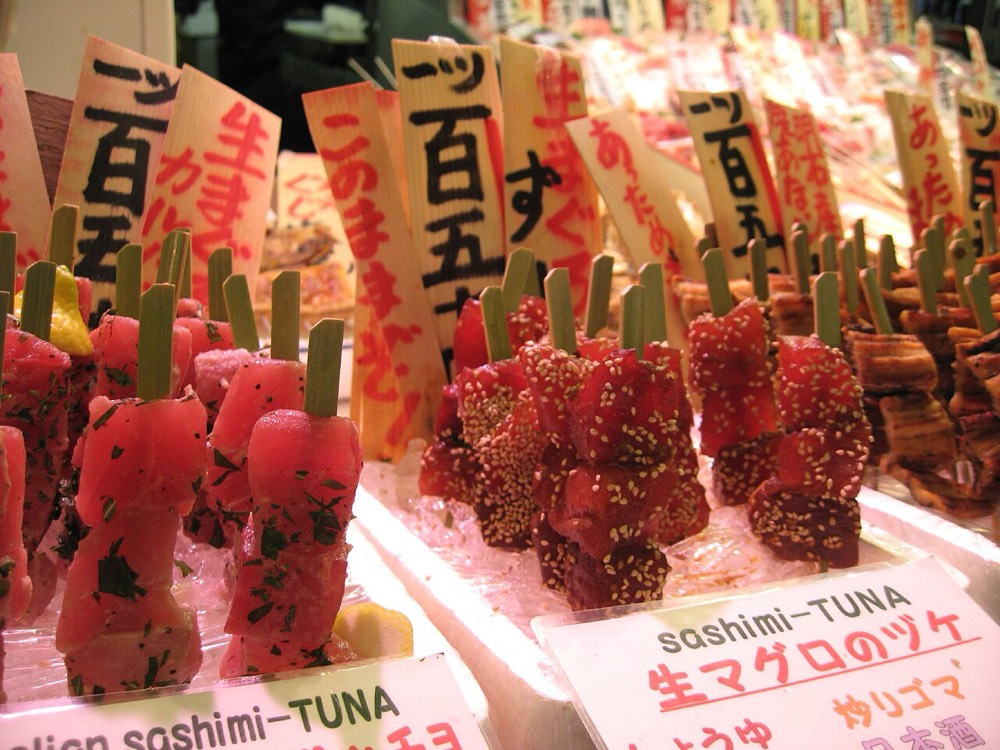
The item prices below come from shop features in Japanese travel media: Jalan News prices include tax and reflect information as of April 2025[11], and Mapple's article was updated in February 2025[12]. Prices at Nishiki change often, so treat them as a budgeting guide and go by the price tags on site.
| Price band | Representative item (shop) | Price per item |
|---|---|---|
| Budget (¥500 or less) | Soy milk doughnuts, 8 pieces (Konnamonja / こんなもんじゃ) | ¥400[12] |
| Budget | Whole pickled cucumber "PARI & PORI" (Uchida Tsukemono Nishikikoji / 打田漬物 錦小路店) | ¥400[11] |
| Budget | Shibazuke curry bread, suguki pirozhki (Uchida Tsukemono Nishikikoji) | ¥350 each[11] |
| Budget | Salmon carpaccio skewer (Sengyo Kimura / 鮮魚 木村) | ¥400[11] |
| Budget | Potato-and-butter fish cake tempura (Marutsune Kamaboko / 丸常蒲鉾店) | ¥400[11] |
| Budget | Tako tamago octopus-and-egg skewer (Nishiki Ichiba KAI / 錦市場 櫂KAI) | From ¥500 each[11] |
| Mid-range (¥600–1,000) | Pike conger (hamo) tempura skewer (Nishiki Uoriki / 錦 魚力) | ¥600[11][12] |
| Mid-range | Scallop grilled with butter and soy sauce (Kaisendokoro Kuwato / 海鮮処 桒藤) | ¥600[11] |
| Mid-range | Mini cream puffs, 5 pieces (Miki Keiran / 三木鶏卵) | ¥600[11] |
| Mid-range | Nama-fu dengaku, 5 skewers (Fusa Roho / 麩房老舗, limited daily) | ¥756[11] |
| Mid-range | Warabi mochi (KUMONOCHA Nishiki / 雲ノ茶) | ¥720–800[11] |
| Premium (¥1,000 and up) | Dashimaki rolled omelet, medium (Miki Keiran / 三木鶏卵) | ¥1,050[11] |
| Premium | Seared fatty beef sushi, 2 pieces (Kyo no Oniku-dokoro Hiro Nishiki / 京のお肉処 弘 錦店) | ¥1,100[11] |
| Premium | Steak rice box "steak-ju" (Kyo no Oniku-dokoro Hiro Nishiki) | ¥3,300[11] |
A few things to keep in mind when reading this table:
- Miki Keiran's dashimaki is sold by the roll[15], a size better suited to taking back to your hotel or as a gift than to a one-bite snack. For a bite of tamagoyaki in the market, look for shops selling small cut portions or skewers; prices on site.
- Tako tamago is a bite-size baby octopus with a quail egg stuffed into its head, simmered in a sweet soy sauce. Besides KAI, Sengyo Kimura's fish skewers include it too, and prices differ by shop[11].
- Pickles are priced by the pack, and types and weights vary widely; Uchida Tsukemono alone carries more than 50 kinds of Kyoto pickles[11]. Check the label, and most shops let you taste before buying.
Beyond the items in the table, you can find shops by category like this (shop names from the official Nishiki Market map[5]):
| Category | What to eat | Shops on the official map (examples) |
|---|---|---|
| Dashi rolled omelet | Kyoto-style tamagoyaki with plenty of dashi and little sweetness | Miki Keiran (三木鶏卵), Tanaka Keiran (田中鶏卵) |
| Kyoto pickles | Senmaizuke, shibazuke, suguki; tastings and vacuum packing available | Uchida (打田), Masuyo (桝俉), Nishiki Takakuraya (錦・高倉屋), Mori (もり) |
| Yuba and nama-fu | Fresh and dried yuba, nama-fu sweets | Yubakichi (湯波吉), Fuka (麩嘉), 麩房老舗 |
| Fresh fish and seafood | Sashimi skewers, grilled fish, oysters | Kimura (木村), Nishiki Daiyasu (錦大安), Uoriki (魚力), Nishiki Daimaru (錦大丸) |
| Kitchen tools | Kitchen knives, chopsticks | Aritsugu (有次), 弥生刃物 錦店, 箸屋万作 |
Yuba and nama-fu are signature ingredients of Kyoto's tofu and shojin cuisine, and the market's official site singles them out as local specialties of Nishiki[2]. Ask how to store pickles, and if you are flying, check your destination's rules on fresh food, pickles and meat products first; knives from shops such as Aritsugu must always go in checked baggage. To fit yudofu, Kyoto kaiseki and matcha desserts into your trip, see the Kyoto food guide.
How much do two people spend in an hour at Nishiki Market? A sample budget
In short: For two people grazing for an hour, a light round costs about ¥2,800, a standard round about ¥4,800, and adding wagyu brings it to about ¥7,000, or roughly ¥1,400–3,500 per person. These figures use the item prices from the previous section[11][12]; the actual total depends on what is available and the prices on the day.
| Plan | What two people order | Total for two | Per person |
|---|---|---|---|
| Light | Soy milk doughnuts, 8 pieces shared (400) + salmon skewer ×2 (800) + potato-butter tempura ×2 (800) + whole pickled cucumber ×2 (800) | ¥2,800 | ¥1,400 |
| Standard | Soy milk doughnuts, 8 pieces shared (400) + salmon skewer ×2 (800) + hamo tempura skewer ×2 (1,200) + mini cream puffs, 5 shared (600) + nama-fu dengaku, 5 shared (756) + tako tamago ×2 (from 1,000) | About ¥4,756 | About ¥2,400 |
| Splurge | Standard + seared fatty beef sushi, 2 pieces ×2 (2,200) | About ¥6,956 | About ¥3,500 |
Budgeting tips:
- Plan on ¥2,000–3,000 in cash per person. Payment methods depend on the shop[3], and small stalls often take cash only, so ¥1,000 notes and coins are handier than ¥10,000 notes.
- Share when there are two or more of you. Soy milk doughnuts, mini cream puffs and nama-fu dengaku all come several to a serving, so sharing lets you try more shops and fits the "finish in front of the shop" rule better.
- Budget separately for souvenirs. Miki Keiran's medium dashimaki is ¥1,050[11], and pickle prices vary widely by type and weight, so set aside a separate amount and buy souvenirs at the end so you are not carrying them all the way.
- Drinks and full meals are not included. If you want to sit down for udon or a seafood bowl, budget separately for a meal and check the shop's menu for prices.
Getting to Nishiki Market: which station exit to use
In short: From the subway or Hankyu at Shijo-Karasuma, Exit 16 (Daimaru East Exit) is the closest; walk north on Takakura-dori to the west entrance. From Hankyu Kyoto-Kawaramachi, take Exit 10 (Fujii Daimaru Exit) and walk north on Teramachi-dori to the east entrance[13][14].
The official Nishiki Market site lists these walking times: about 3 minutes from subway Shijo Station and Hankyu Karasuma Station, about 4 minutes from Hankyu Kyoto-Kawaramachi Station, about 10 minutes from Keihan Gion-Shijo Station, and about 2 minutes from the "Shijo Takakura (Daimaru-mae)" stop on City Bus 5 from Kyoto Station[4]. The official site does not give exit numbers, so the table below is based on Hankyu's official station maps (October 2026 edition):
| Station | Recommended exit | Where it comes out (per station map) | Exit hours | From the exit to the market |
|---|---|---|---|---|
| Subway Shijo / Hankyu Karasuma | Exit 16 "Daimaru East Exit" | Takakura-dori (north), Museum of Kyoto, Nishiki Market | 4:35–24:15[13] | North on Takakura-dori to the west entrance, about 3 min[4] |
| Hankyu Kyoto-Kawaramachi | Exit 10 "Fujii Daimaru Exit" | Teramachi-dori | 5:30–23:55[14] | North on Teramachi-dori to the east entrance, about 4 min[4] |
| Hankyu Kyoto-Kawaramachi | Exit 12 "Kyoto Shinkin Bank Exit" | Yanaginobamba-dori, Tominokoji-dori | 6:45–22:30[14] | One block north, entering the middle of the market |
Subway Shijo Station and Hankyu Karasuma Station are connected underground beneath Shijo-dori and share exit numbers; on the station map, the subway station sits in the middle of the concourse and Exit 16 lies further east beyond Hankyu Karasuma's East Gate[13]. If the signs are confusing, follow the signs for Daimaru: Exit 16 is literally named "Daimaru East Exit."
From Kyoto Station: Kyoto's tourism association recommends taking the Karasuma subway line to Shijo Station (about 4 minutes), going up to street level and walking about 5 minutes east along Shijo-dori, then turning north onto Takakura-dori at Daimaru Kyoto; the market's west entrance is at the next intersection[8]. Walking the underground concourse to Exit 16 instead cuts out part of the street-level walk, which is especially handy in the rain. The same page advises against taking city buses into the center, as stops, buses and roads all get congested[8].
By car: The market car park has only 14 spaces and is open 10:00–17:00, at ¥500 for the first hour and ¥300 per hour after that[4]. Central streets are narrow, so public transport is the way to go. For how to use Kyoto's subway, buses and day passes, see the Kyoto transport guide.
How to walk Nishiki Market: a section-by-section route from the west entrance to Nishiki Tenmangu
In short: Come up from Exit 16 and walk east from the west entrance (Takakura-dori) through three sections, west, middle and east, ending at Nishiki Tenmangu; with food stops this takes about an hour, while simply walking the 390 m end to end takes only about 5 minutes[2][5].
Nishiki Market is one straight east–west street divided by narrow north–south streets: from west to east, Takakura-dori, Sakaimachi-dori, Yanaginobamba-dori, Tominokoji-dori, Fuyacho-dori, Gokomachi-dori and Teramachi-dori, and the official map uses these street names to group the shops[5]. Below, the representative shops from the previous section are placed by their addresses[11]; times are suggested stays including queuing and finishing your food in front of the shop:
- Start (about 3 minutes): Come up from Exit 16 at subway Shijo or Hankyu Karasuma, walk north one block on Takakura-dori, and turn right into the market's west entrance[4][13].
- West section: Takakura-dori to Yanaginobamba-dori (suggested 15 minutes): Start with warabi mochi from KUMONOCHA or soy milk doughnuts from Konnamonja. Near Yanaginobamba-dori, Sengyo Kimura and Uchida Tsukemono Nishikikoji are both just west of the cross street, for sashimi skewers and pickle tastings[11].
- Middle section: Yanaginobamba-dori to Fuyacho-dori (suggested 20 minutes): Past Yanaginobamba-dori, Marutsune Kamaboko is on the east side and Miki Keiran is just west of Tominokoji-dori; look north up Tominokoji-dori for Nishiki Uoriki and its hamo tempura skewers[11]. Rolled-omelet shops cluster in this section, so buy dashimaki to take away here.
- East section: Fuyacho-dori to Gokomachi-dori (suggested 15 minutes): Just east of Fuyacho-dori are Kyo no Oniku-dokoro Hiro and Fusa Roho; toward Gokomachi-dori are Nishiki Ichiba KAI and Kaisendokoro Kuwato, so tako tamago, nama-fu dengaku and wagyu sushi are all in this section[11]. On a tight budget, save the decision on pricier items until here.
- Finish: Gokomachi-dori to Teramachi-dori and Nishiki Tenmangu (suggested 10 minutes): The Teramachi-dori corner is the market's east entrance, and a little further east, Nishiki Tenmangu stands at the market's east end on Shinkyogoku[9]. After visiting, head north into the Teramachi and Shinkyogoku shopping streets, or south to Shijo-Kawaramachi.
With only 30 minutes, buy one thing in the west section, have a hamo tempura skewer in the middle and tako tamago in the east, and walk briskly through the rest. Coming from Exit 10 at Hankyu Kyoto-Kawaramachi, reverse the route: start at the east entrance on Teramachi-dori, walk west, and finish by heading down Exit 16 to catch a train[14].
To avoid the crowds:
- Arrive at 10–11 am on a weekday; JNTO also suggests arriving around 11:00 or earlier, as later in the day the crowds make it hard to move[9].
- Avoid the end of the year: in late December Kyoto residents come to buy New Year food and the market is especially crowded.
- Wear your backpack on your front and leave large luggage in station lockers or at your hotel; the official site notes the market is not barrier-free, so be prepared if you are using a stroller or wheelchair[3].
- Follow the official rule throughout: the market asks visitors not to walk around while eating and to finish their food in front of or inside the shop where they bought it[1], so every "eat" in the route above means stopping at that shop and finishing before moving on.
JNTO notes that a quick walk-through takes about an hour, while keen shoppers may spend several hours[9]. If you want to fit Kiyomizu-dera and Gion into the same day, have brunch at Nishiki first and then walk east to the Kamo River and Gion. For other combinations of sights, see the Kyoto attractions guide.
Near Nishiki Market: Nishiki Tenmangu, Teramachi and Shinkyogoku
In short: Nishiki Tenmangu Shrine is right at the market's east entrance, the covered Teramachi Kyogoku and Shinkyogoku shopping streets run north from there, and Shijo-Kawaramachi and the Kamo River are a few minutes' walk east[9].
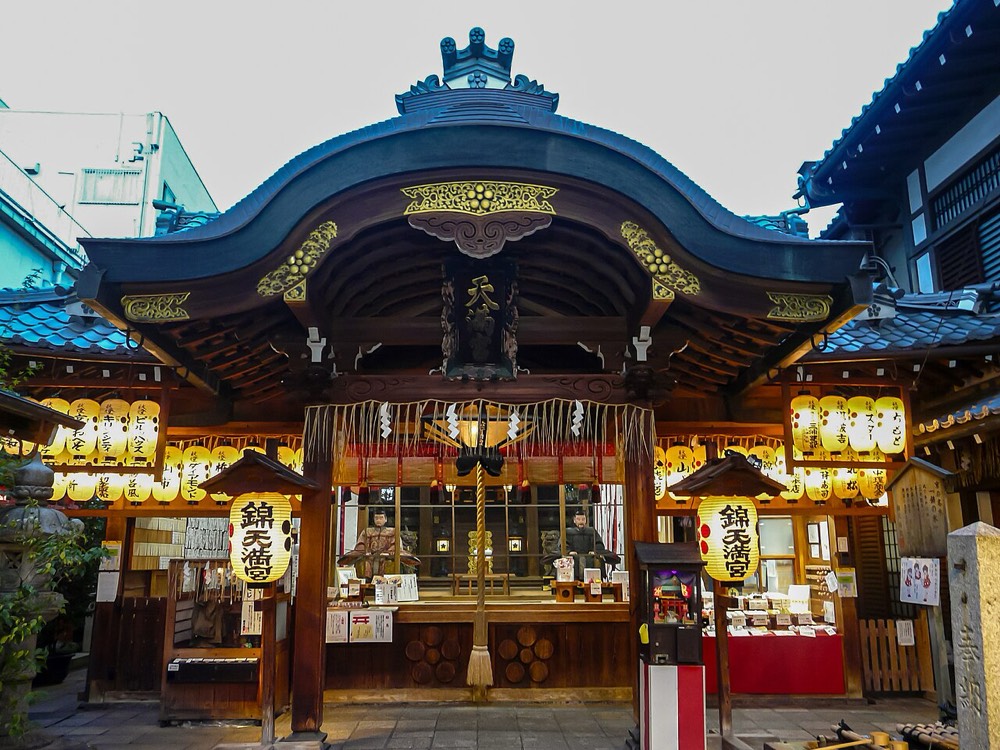
- Nishiki Tenmangu: A small shrine at the east end of Nishiki Market on Shinkyogoku, dedicated to the deity of learning; JNTO notes that many visitors come here to pray for academic success[9]. The ends of the shrine's torii gate are embedded in the buildings on either side, a scene many people stop to photograph.
- Teramachi Kyogoku and Shinkyogoku shopping streets: Two parallel covered arcades running north from the market's east entrance, with drugstores, souvenirs, clothing, Japanese goods and snacks; you can walk all the way to Sanjo-dori even in the rain.
- Shijo-Kawaramachi and the Kamo River: A few minutes' walk east is Kyoto's busiest department store district, and crossing Shijo Ohashi bridge further east brings you to Gion.
Shijo-Karasuma and Shijo-Kawaramachi around Nishiki Market are also popular places to stay, with easy transport and plenty of dinner options; see where to stay in Kyoto.
Before you go: what to know about Nishiki Market
- Payment methods vary by shop: the association says payment methods depend on each shop[3]; small shops are still mostly cash, so carrying some small change helps.
- Few restrooms: there are not many public restrooms in the market; the association office restroom is open 10:00–17:00[3], and nearby department stores are another option.
- Shipping souvenirs: the market has no combined shipping service, but the official online shop "Nishiki Kyo no Daidokoro" can ship items from multiple shops together[3]; check the online shop for delivery areas and overseas shipping.
- Ask before taking photos: greet the shop before photographing goods or staff; for interviews or professional filming, the market requires an application at least one month in advance[3].
- Check shop closing days: many shops close on Wednesdays, so check the official shop directory or the shop's own social media before visiting a particular long-established shop[3][6].
- Finish before you move on: remember "eat in front of the shop and return your rubbish to the shop"[1]; this is the most important rule at Nishiki Market.
FAQ
What time does Nishiki Market open and close?
Nishiki Market has no market-wide opening hours; each shop sets its own. Travel media generally quote 10:00–17:00 as a guide, and some restaurants and izakaya stay open into the evening. Shutters start coming down in the late afternoon, so aim to finish snacking and shopping by about 4 pm.
Which day is Nishiki Market closed?
The market as a whole has no fixed closing day, but the shopping street association says many shops close on Wednesdays, and many are closed January 1–3. Most shops stay open at the end of the year. If you are heading to a specific shop, check its own notices first.
Can you eat while walking at Nishiki Market?
No. The Kyoto Nishiki Market shopping street officially asks visitors not to walk through the market while eating. Finish your food inside or in front of the shop where you bought it, or take it home. The aisle is only about 3 m wide, and eating on the move can easily soil other people's clothes.
What is the fastest way from Kyoto Station to Nishiki Market?
Take the Karasuma subway line to Shijo Station (about 4 minutes), walk east through the underground concourse beneath Shijo-dori to Exit 16 "Daimaru East Exit," then go one block north on Takakura-dori to the market's west entrance. Kyoto's tourism association advises against taking city buses into the center because stops and roads get congested.
How much does a food crawl at Nishiki Market cost?
Based on 2025 shop prices reported by Japanese travel media, soy milk doughnuts are ¥400 for 8, a hamo tempura skewer ¥600 and Miki Keiran's medium dashimaki ¥1,050. Two people grazing for an hour spend about ¥2,800 for a light round, ¥4,800 for a standard one and ¥7,000 with wagyu sushi; check the price tags on site.
How much time do you need at Nishiki Market?
Walking end to end and trying two or three snacks takes about an hour. If you want to pick out pickles, dried goods or knives as souvenirs, or sit down for a meal, allow two hours or more. Afterwards, continue from Nishiki Tenmangu at the east end into the Teramachi and Shinkyogoku shopping streets.
Sources
- Kyoto Nishiki Market Shopping Street Association official | Requests and information (お願いとご案内): No eating while walking; eat in or in front of the shop where you bought the food (checked November 2026)
- Kyoto Nishiki Market official | The appeal of Nishiki Market (錦市場の魅力): Fish wholesaler licensed in 1615, vegetable market in the 1770s, Ito Jakuchu, about 390 m long
- Kyoto Nishiki Market official | FAQ (よくある質問): Hours and closing days set by each shop, many closed Wednesdays, January 1–3, restroom hours
- Kyoto Nishiki Market official | Access (アクセス): Walking times from each station, City Bus 5, parking hours and fees
- Kyoto Nishiki Market official | Market map (錦市場マップ): Shop names, categories and locations
- Kyoto Nishiki Market official | Shop directory (お店紹介): 131 registered shops (November 2026)
- Kyoto City Official Travel Guide | Kyoto Nishiki Food Market: About 400 m from Teramachi to Takakura, goods on sale, eat at the shop or take it home
- Kyoto City Official Travel Guide | Comfortable access to Central Kyoto City (Nishiki Market): Kyoto Station to Shijo Station about 4 minutes, walking route, buses not recommended
- Japan National Tourism Organization (JNTO) | Nishiki Market: Arrive by around 11:00, time needed, Nishiki Tenmangu
- Rurubu&more | Nishiki Market: About 130 shops, about 3 m wide, hours vary by shop
- Jalan News | 12 places to eat at Nishiki Market, Kyoto (錦市場の食べ歩き12選): Tax-inclusive item prices, shop addresses and hours (information as of April 16, 2025)
- Mapple Web | Nishiki Market street food and sweets (錦市場の食べ歩きグルメ&スイーツ): Konnamonja soy milk doughnuts ¥400 for 8, Uoriki hamo tempura skewer ¥600 (updated February 7, 2025)
- Hankyu Railway | Karasuma Station map (October 2026 edition): Exit 16 "Daimaru East Exit" for Takakura-dori (north) and Nishiki Market, 4:35–24:15; connected to subway Shijo Station
- Hankyu Railway | Kyoto-Kawaramachi Station map (October 2026 edition): Exit 10 "Fujii Daimaru Exit" for Teramachi-dori 5:30–23:55; Exit 12 for Yanaginobamba and Tominokoji 6:45–22:30
- Rurubu&more | Eating your way through Nishiki Market (錦市場で食べ歩き): Miki Keiran dashimaki sold by the roll (updated February 2023)
Fares, opening hours and event dates can change. Information checked on 2026.11.18; please confirm with official sources before you go.