Kyoto Yudofu Guide: Best Tofu Restaurants at Nanzen-ji, Arashiyama and Kiyomizu-dera Compared, with Prices and Reservations
Kyoto yudofu compared: Junsei and Okutan at Nanzen-ji, Sagano and Seizan Sodo in Arashiyama, Okabeya at Kiyomizu-dera. Set prices, hours, bookings and yuba options.
Quick answer
Kyoto's yudofu restaurants cluster in three areas: Nanzen-ji, Arashiyama and Kiyomizu-dera. Nanzenji Junsei's sets start at ¥3,850 and can be booked online; Okutan's Kiyomizu branch starts at ¥4,400, closes on Thursdays and takes cash only; Yudofu Sagano in Arashiyama charges ¥4,400 for its set and takes no advance bookings from mid-November to early December; Kiyomizu Junsei Okabeya is the cheapest at ¥2,500. For yuba, choose Junsei (the hot pot can be switched to yuba) or Okabeya's ¥2,750 Yuba Fuji set (checked November 2026).
Kyoto yudofu (湯豆腐) is the meal most worth fitting into a winter trip: tofu is gently warmed in kombu stock in a clay pot, then lifted out and dipped in sauce. It tastes light but deeply of soybeans. This guide compares the yudofu restaurants still operating around Nanzen-ji, Arashiyama and Kiyomizu-dera, with each one's set prices, what is in the set, hours, closing days and how to book. It also covers what to choose if you want yuba, are on a budget or are vegetarian, and how to combine the meal with nearby sights in a half-day plan.
What Is Kyoto Yudofu and How Do You Eat It?
In short: yudofu is a simple dish of tofu warmed in kombu stock. The point is to taste the tofu itself, not to cook flavour into it.
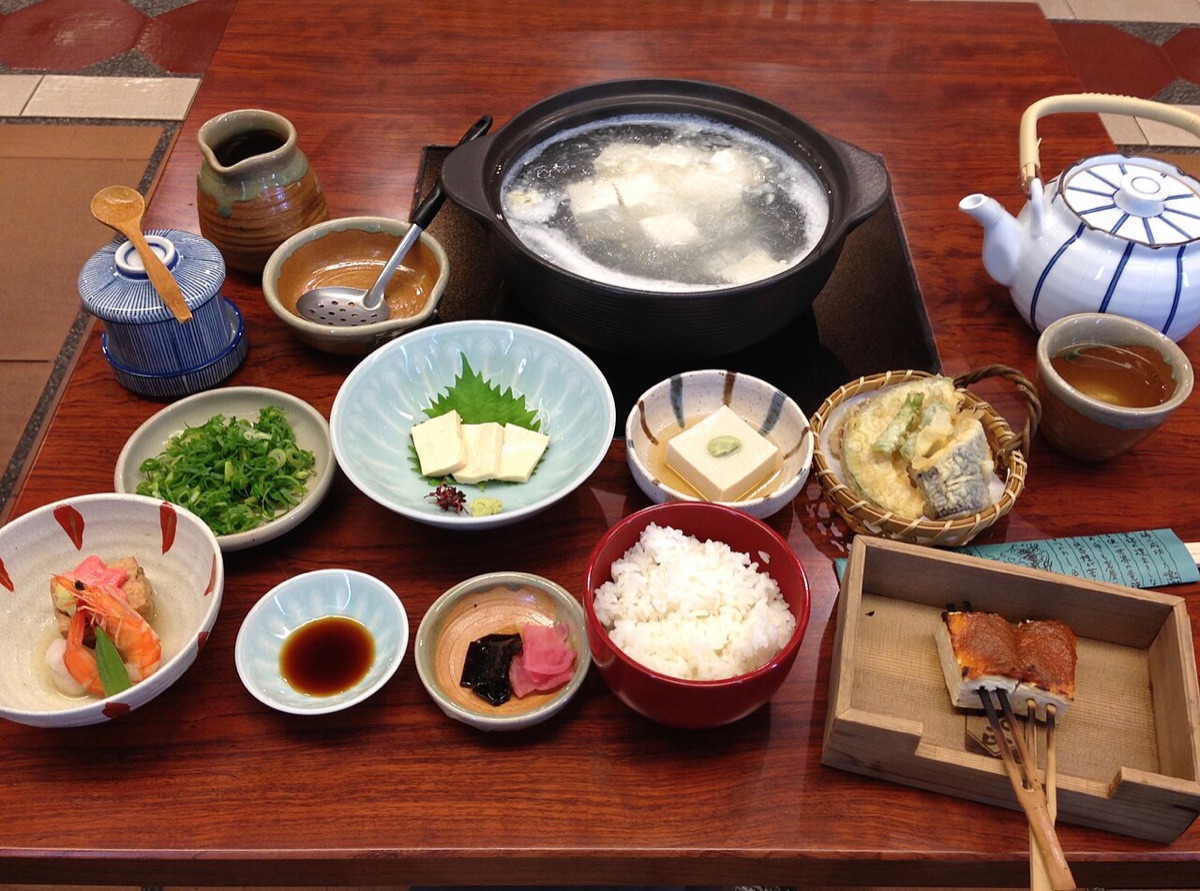
Kyoto's yudofu specialists usually serve it as a set: a pot of yudofu at the centre, with sesame tofu (goma-dofu), kinome dengaku (tofu skewers grilled with miso), vegetable tempura, simmered dishes, rice and pickles. If it is your first time, try this order:
- Lift the tofu once it trembles: there is usually kombu at the bottom of the pot. When the tofu is warm and its edges sway gently, it is ready. Boiling it too long makes it firm and full of holes.
- Use the strainer ladle: restaurants provide a mesh or slotted ladle. Lift one or two pieces at a time so they do not break up in the pot.
- Dip with condiments: pour sauce into your small bowl, add spring onion, grated ginger or shichimi, and dip the tofu briefly.
- Alternate with the sides: eat the dengaku and tempura while hot, and keep lifting yudofu until the end.
- Finish with rice and pickles: rice usually comes, or is eaten, last.
Yuba (湯葉) is the film that forms on the surface of heated soy milk. Some restaurants let you heat soy milk in the pot and lift the freshly formed raw yuba with chopsticks. It is silkier than yudofu and tastes sweeter of soy milk. Each restaurant below notes whether yuba is available.
Best Kyoto Yudofu Compared: 7 Places at Nanzen-ji, Arashiyama and Kiyomizu-dera
In short: for the lowest price choose Kiyomizu Junsei Okabeya, for garden atmosphere choose Nanzenji Junsei, and for a meal amid Arashiyama scenery choose Yudofu Sagano.
| Restaurant | Area | Signature set and price | Hours | Closed | Booking | Yuba |
|---|---|---|---|---|---|---|
| Nanzenji Junsei | Nanzen-ji | Hana course from ¥3,850 | Lunch 11:00–14:30 last order, dinner 17:00–19:00 last order | Irregular | Online via website | Yes (choice of hot pot) |
| Okutan, Nanzen-ji branch | Nanzen-ji | Media listing: Yudofu Hitotori ¥3,500 | Media listing: 11:00–15:00 | Thursday (media listing) | Phone to confirm | Unconfirmed |
| Okutan, Kiyomizu branch | Kiyomizu-dera | Okimari Hitotori ¥4,400 | Weekdays 11:00–16:30, weekends and holidays until 17:30 | Thursday | Yes, up to one month ahead | Not listed |
| Kiyomizu Junsei Okabeya | Kiyomizu-dera | Yudofu Fuji ¥2,500 | 10:30–16:00 (last order 15:00) | Not listed on website | TableCheck priority entry | Yes (Yuba Fuji ¥2,750) |
| Yudofu Sagano | Arashiyama | Yudofu set ¥4,400 | 11:00–17:30 (last order 16:30) | Irregular | Normally yes; not mid-Nov to early Dec | Sagano Gozen includes yuba sashimi |
| Seizan Sodo | Arashiyama (inside Tenryu-ji) | Media listing: yudofu set ¥3,240 | Media listing: 11:30–17:00 | Wednesday plus one Tuesday a month (media listing) | Phone to confirm | Media listing: yuba with yam |
| Saga Tofu Morika | Sagano | Tofu takeaway shop, not a restaurant | Media listing: 8:00–18:00 | Wednesday, irregular Tuesdays (media listing) | Not needed | — |
Nanzen-ji Yudofu: Junsei and Okutan
In short: the area in front of Nanzen-ji has the highest concentration of long-established yudofu restaurants. Junsei has the most complete information, takes bookings and serves dinner; Okutan is a long-established name with little public information, so phone first.
For Nanzen-ji's temple buildings, approach and aqueduct, see the Nanzen-ji guide; this section is only about food.
Nanzenji Junsei: Yudofu in a Garden, with Fresh Yuba as an Option
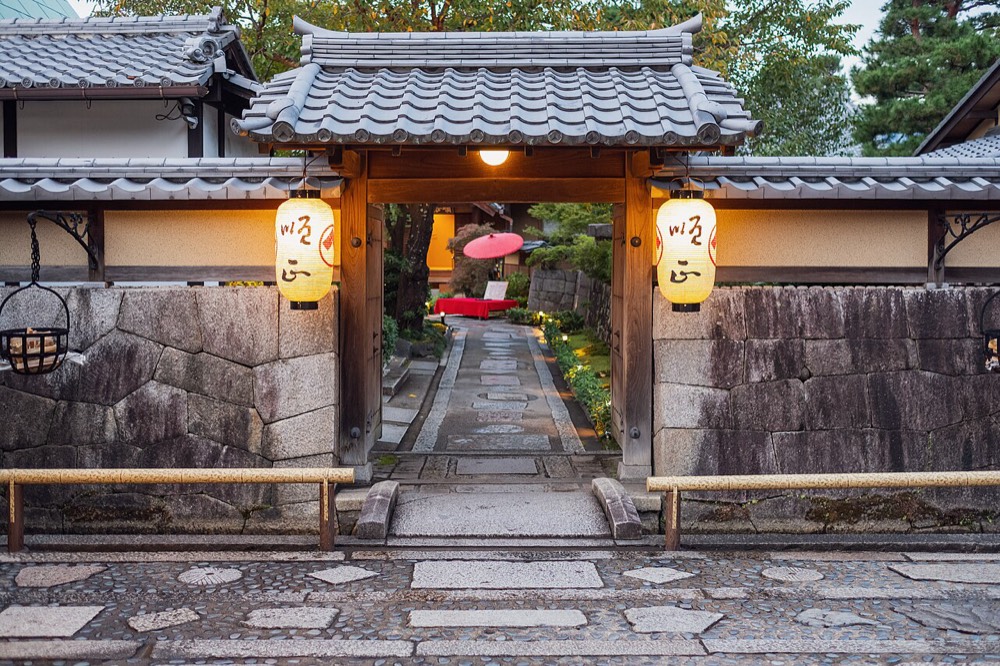
Junsei's entrance is beside the Nanzen-ji approach, and the grounds include a study hall registered as a cultural property and a stroll garden. Prices on its website (tax included) are ¥3,850 for the Hana course, ¥4,950 for the Tsuki course and ¥5,830 for the Yuki course, rising to Yudofu Shunsai from ¥7,700 and yudofu kaiseki at ¥11,000 to ¥16,500 (plus service charge)[1].
- Hana course: small dish, simmered dish, dengaku, vegetable tempura, rice and pickles, with a choice of yudofu or "fresh yuba you lift yourself from soy milk" for the hot pot[2].
- Tsuki course adds starters, sashimi and dessert[16], so Tsuki and above are not fully vegetarian.
- Hours: lunch 11:00–14:30 last order (closes 15:30), dinner 17:00–19:00 last order; irregular closures; cash and credit cards accepted[3].
- Access: about 5 minutes' walk from Exit 2 of Keage Station on the Tozai subway line; about 10 minutes from the Nanzenji-Eikando-michi stop on city bus 5[3].
- Booking: the website has an online reservation page.
Okutan, Nanzen-ji Branch: Long-Established, Phone Before You Go
Okutan (おくたん) is a long-established Kyoto yudofu name, and its Nanzen-ji branch is north of the temple's Sanmon gate. The Nanzen-ji branch has no website of its own. The travel media listing on Rurubu gives 11:00–15:00 (last order 14:00, varies by season), closed Thursdays (open if a public holiday), and the signature Yudofu Hitotori set at ¥3,500, ending early when sold out[4]. That listing shows no update date, and Okutan's Kiyomizu branch revised its prices in October 2025, so prices at the Nanzen-ji branch are probably different now; confirm by phone (075-771-8709). It is about 10 minutes' walk from Keage Station.
Arashiyama Yudofu: Sagano, Seizan Sodo and Morika
In short: Arashiyama's yudofu restaurants are all around Tenryu-ji. Choose Sagano for plenty of seats and no need to book, Seizan Sodo for a quiet meal inside a temple sub-temple, and Morika takeaway to taste a famous tofu maker's tofu cheaply.
Yudofu Sagano: A Large, Long-Running Restaurant Beside the Bamboo
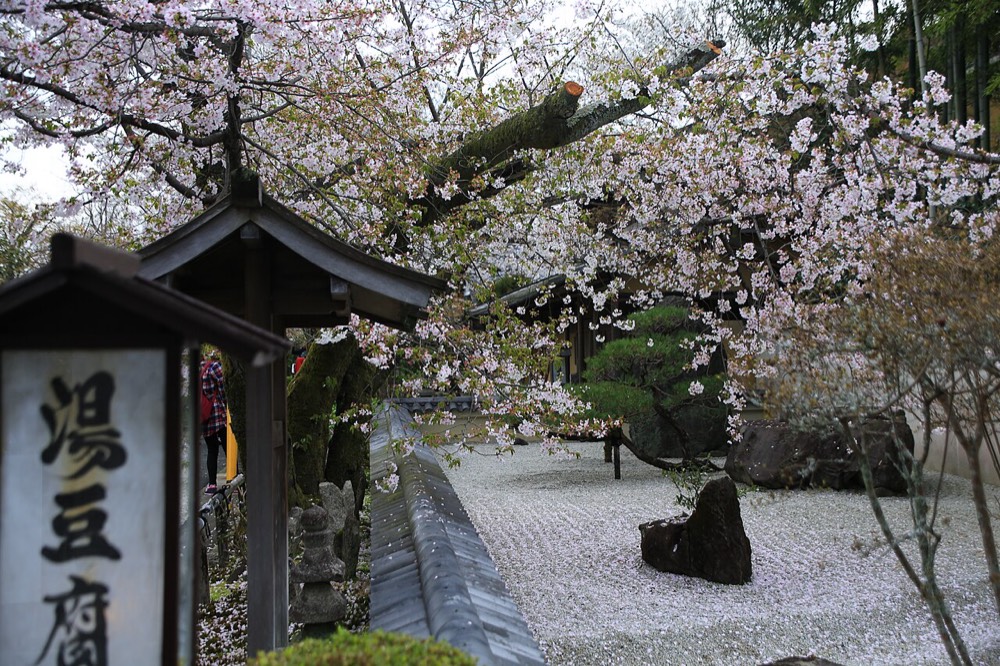
Sagano is on the south side of Tenryu-ji, with a counter in its new building and many tatami rooms in the main building, so it seats far more people than the others. Its website lists the Yudofu Teishoku at ¥4,400: yudofu made with Saga tofu, plus a warm dish, a fried dish, a small dish and pickles. The Sagano Gozen at ¥6,600 adds a hassun platter, yuba sashimi, simmered seasonal vegetables, vegetable kakiage and dessert[8].
- Hours: 11:00–17:30 (last order 16:30), irregular closures; about 6 minutes' walk from Randen Arashiyama Station[10].
- Booking: the website accepts bookings up to two days ahead, but from mid-November to early December each year it takes no advance bookings online or by phone, seating guests in order of arrival; cancellations within two days incur a 50% fee[9].
- Good for: large families or travelling with older relatives, thanks to the many seats and quick turnover.
Seizan Sodo: A Small Restaurant Inside a Tenryu-ji Sub-Temple
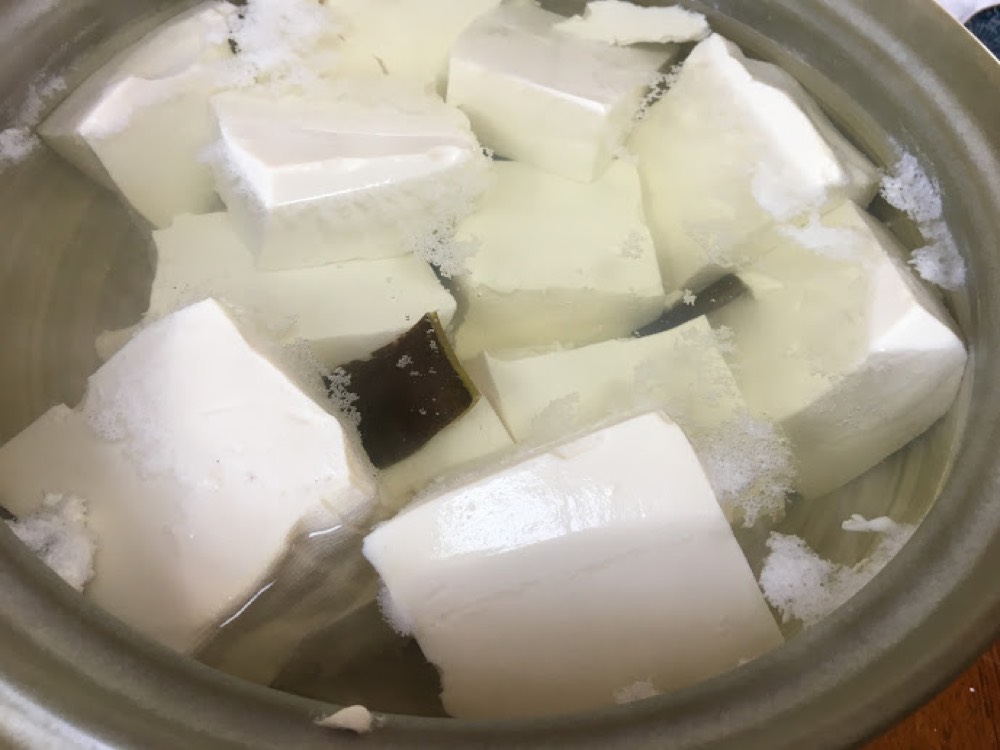
Seizan Sodo (せいざんそうどう) is inside Myochi-in, a sub-temple of Tenryu-ji. Media describe it as the oldest yudofu restaurant in Saga, and it has only a dozen or so seats. Kansai Walker's 2019 listing gives 11:30–17:00 (last order 16:30), closed Wednesdays and one Tuesday a month, and a six-dish yudofu set at ¥3,240 including sesame tofu and yuba with yam, using Morika's tofu[11]. This is 2019 data and the price has likely changed; the restaurant has no website, so confirm by phone (075-861-1609). It is about 2 minutes' walk from Randen Arashiyama Station.
Saga Tofu Morika: Take Away Famous Tofu on a Budget
Morika (もりか) is a long-established Saga tofu maker, not a restaurant. It mainly sells Saga tofu and hiryozu (fried tofu balls), and nearby temples and yudofu restaurants have used its tofu for years. 2019 data gives hours of 8:00–18:00, closed Wednesdays (the next day if a holiday) and irregular Tuesdays, about 15 minutes' walk from JR Saga-Arashiyama or Randen Arashiyama Station[12]. If you are staying in a hotel, you can buy tofu for a late-night snack, or eat a freshly fried hiryozu as you walk, which is far cheaper than a sit-down set. Check prices and hours on the spot.
For more Arashiyama sights and transport, see the Arashiyama day trip guide.
Kiyomizu-dera Yudofu: Okutan Kiyomizu and Okabeya
In short: there are two choices on the Kiyomizu-dera approach. Choose Okutan Kiyomizu for its old-style yudofu, or Okabeya to eat cheaply and quickly before moving on.
Okutan, Kiyomizu Branch: Complete Official Information, Cash Only
Okutan's Kiyomizu branch is in a residential lane near Kiyomizu-dera. Its website lists three sets (tax included): the Shojin Ryori course at ¥4,400 (cold tofu instead of yudofu); Okimari Hitotori at ¥4,400 (yudofu, kinome dengaku, grated yam soup, sesame tofu, vegetarian tempura, rice and pickles); and Mukashi Dofu Hitotori at ¥5,500, featuring firmer cotton tofu made the traditional way[5].
- Hours: Monday to Wednesday and Friday 11:00–16:30 (last order 16:00); weekends and holidays 11:00–17:30 (last order 17:00); closed Thursdays[6].
- Special hours in November 2026: the website announces evening opening until 20:00 (last order 19:00) from November 21 to 30, and normal opening on Thursday, November 26[7].
- Rules: one set per person, cash only; bookings accepted up to one month ahead, and groups of six or more are advised to book[7].
Kiyomizu Junsei Okabeya: The Cheapest Yudofu Set in Kyoto
Okabeya is beside the approach just before Kiyomizu-dera's three-storey pagoda; walk in from the Goryukaku sign. Its website lists the Yudofu Fuji set at ¥2,500, with yudofu, a simmered dish, sesame tofu, tofu dengaku, vegetable tempura, rice and pickles[13]. The Yuba Fuji set at ¥2,750 replaces the centrepiece with yuba you lift yourself and adds millet and mugwort wheat gluten[14].
- Hours: 10:30–16:00, last order 15:00; after 15:00 only group and travel agency bookings are accepted[15].
- Access: from Kyoto Station take city bus 206 or 106 to Gojo-zaka, then walk about 10 minutes[15].
- Booking: the website links to TableCheck for priority entry. Closing days are not listed on the website; check its notices.
For Kiyomizu-dera's opening hours, special night viewing and the surrounding slopes, see the Kiyomizu-dera guide.
How Much Does Kyoto Yudofu Cost? Budget Options and Price Table
In short: one basic set per person costs ¥2,500 to ¥4,500. For yuba sashimi or a dinner kaiseki, budget ¥6,000 or more.
| Budget | Option | Cost per person |
|---|---|---|
| Lowest | Morika takeaway tofu and hiryozu | A few hundred yen (check prices on the spot) |
| Affordable set | Okabeya Yudofu Fuji / Yuba Fuji | ¥2,500 / ¥2,750 |
| Standard set | Junsei Hana course | ¥3,850 |
| Standard set | Okutan Kiyomizu Okimari Hitotori, Sagano Yudofu Teishoku | ¥4,400 |
| With yuba and dessert | Junsei Tsuki course, Sagano Gozen | ¥4,950–6,600 |
| Formal dinner kaiseki | Junsei yudofu kaiseki | ¥11,000–16,500 plus service charge |
Two practical tips: Okutan Kiyomizu requires one set per person, so two people cannot share one; Junsei's and Sagano's higher-priced sets include sashimi or yuba sashimi, so if you only want tofu, the most basic set is enough.
When to Go to Avoid Queues: Bookings and Crowds
In short: arriving at opening time (10:30 or 11:00) is safest, and 12:00–13:30 is busiest. In the autumn-leaf season from mid-November to early December, Sagano in Arashiyama takes no bookings, so arrive early.
- Go in at opening: Okabeya opens at 10:30, Junsei and Sagano at 11:00. Eat first and visit temples afterwards to avoid the lunch peak.
- Switch to dinner: Junsei opens for dinner from 17:00, and Okutan Kiyomizu stays open until 20:00 from November 21 to 30, 2026; evenings are much quieter.
- Avoid closing days: both Okutan branches close on Thursdays, and Seizan Sodo and Morika on Wednesdays, so do not plan them for those days.
- Winter is peak season and a good time: after the autumn-leaf crowds leave in early December, weekday lunches in January and February are generally easier than in autumn. For other things to do in Kyoto in winter, see the Kyoto winter guide.
Kyoto Yudofu Half-Day Plans: Nanzen-ji, Arashiyama and Kiyomizu-dera
In short: yudofu works best as the midpoint of "temples in the morning, a hot pot at lunch". None of these three routes backtracks.
| Time | Nanzen-ji route | Arashiyama route | Kiyomizu-dera route |
|---|---|---|---|
| Early morning | 9:00 Keage subway station, walk the Keage Incline | 7:45 Bamboo Grove (least crowded) | 8:00 Kiyomizu-dera (opens 6:00) |
| Mid-morning | 9:30 Nanzen-ji Sanmon and Hojo, 10:30 aqueduct | 8:30 Tenryu-ji garden at opening | 9:30 walk Sannenzaka and Ninenzaka |
| Lunch | 11:00 Junsei at opening | 11:00 Sagano at opening | 10:30 back on the approach for Okabeya, or 11:00 Okutan Kiyomizu |
| Afternoon | 12:30 head north along the Philosopher's Path, reaching Ginkaku-ji around 14:00 | 13:00 stroll to Morika for tofu, then leave from JR Saga-Arashiyama Station | 12:30 stroll towards Yasaka and Gion |
For the second half of the Nanzen-ji route, including Ginkaku-ji admission and the walk, see the Ginkaku-ji and Philosopher's Path guide.
Can Vegetarians Eat Kyoto Yudofu?
In short: yudofu looks vegetarian, but the set may not be; strict vegetarians must ask the restaurant in advance.
None of the restaurants covered here say on their websites whether the dipping sauce or simmered dishes use bonito or other fish stock. The yudofu itself uses kombu stock, but sauces and simmered dishes may be seasoned with fish stock; Junsei's Tsuki course and above include sashimi, and some restaurants put shrimp in their simmered dishes. Okutan Kiyomizu has a "Shojin Ryori course", named after Buddhist vegetarian cuisine, but its website does not describe the stock either. When booking, write in Japanese 「魚や鰹節のだしも使わない料理を希望します」 and ask whether they can accommodate you. For other light dishes and shojin ryori options in Kyoto, see Kyoto food recommendations.
Who Is Kyoto Yudofu For, and Who Should Skip It?
In short: people who like light flavours and want to sit down for a slow meal beside a temple will be very happy; people who want a big, strongly flavoured meal or are on a tight budget may feel that ¥4,000-plus for tofu is poor value.
Good for:
- Visiting Kyoto in winter and wanting a hot lunch that is not greasy
- Travelling with older relatives or anyone with a sensitive stomach
- Enjoying gardens and tatami rooms, and being happy to spend over an hour eating
- Trying to lift your own yuba for the first time
Not ideal for:
- Big appetites or a taste for strong flavours: portions are refined, and some diners may not feel full
- Tight schedules: apart from Okabeya, most restaurants take about an hour
- Tight budgets: switch to Morika takeaway, or just have the ¥2,500 set at Okabeya
- Strict vegetarians who cannot communicate in Japanese: the stock ingredients are hard to confirm
Before You Go
- Choose the area first, then the restaurant: match yudofu to the day's sights, and do not cross between Nanzen-ji, Arashiyama and Kiyomizu-dera just for one meal.
- Note the closing days: Okutan on Thursdays, Seizan Sodo and Morika on Wednesdays; Junsei and Sagano close irregularly, so check their websites before going.
- Autumn-leaf season runs to early December: Sagano takes no bookings, so book Junsei and Okutan Kiyomizu if you can.
- Carry cash: Okutan Kiyomizu takes cash only, and it is wise to have enough cash for the others too.
- Double-check media listings: Okutan's Nanzen-ji branch, Seizan Sodo and Morika have no official notices to check, so confirm prices and hours by phone or on the spot.
FAQ
How much does yudofu cost in Kyoto per person?
Set meals at specialist restaurants run roughly ¥2,500 to ¥6,000. The cheapest is Kiyomizu Junsei Okabeya's Yudofu Fuji at ¥2,500; Nanzenji Junsei's Hana course is ¥3,850; the basic sets at Okutan Kiyomizu and Yudofu Sagano are both ¥4,400. Okutan Kiyomizu requires one set per person, so two people cannot share one.
Do I need a reservation for yudofu in Kyoto?
Book for weekends, the autumn-leaf season and around noon. Junsei takes bookings on its website; Okutan Kiyomizu accepts bookings up to one month ahead; Yudofu Sagano normally takes online bookings but not from mid-November to early December, when it is first come, first served. Without a booking, arrive at opening time.
What is the difference between Junsei and Okutan at Nanzen-ji?
Junsei sits on Nanzen-ji's approach with a registered cultural property study hall and garden, sets from ¥3,850, a choice of yudofu or self-made fresh yuba, and dinner service. Okutan's Nanzen-ji branch is a long-established name without its own website; media listings say it closes Thursdays and only opens until afternoon, so phone to confirm prices and hours.
Where can I eat yuba in Kyoto?
To lift fresh yuba from soy milk yourself, choose Nanzenji Junsei (the hot pot in Hana and other sets can be switched to yuba) or Okabeya's Yuba Fuji set near Kiyomizu-dera at ¥2,750. Yudofu Sagano's ¥6,600 Sagano Gozen includes yuba sashimi, good if you want both yudofu and yuba in one meal.
Can vegetarians eat yudofu in Kyoto?
The tofu itself is warmed in kombu stock, but the dipping sauce, simmered dishes or sides in a set may use bonito stock, and some simmered dishes include shrimp. None of the restaurants covered here state on their websites whether fish stock is used, so strict vegetarians should ask the restaurant directly when booking.
Sources
- Nanzenji Junsei | Menu: Hana, Tsuki and Yuki course prices, Yudofu Shunsai and kaiseki prices (checked November 2026)
- Nanzenji Junsei | Hana course: Hana course dishes; hot pot can be yudofu or fresh yuba
- Nanzenji Junsei | Access: Lunch and dinner hours, irregular closures, 5-minute walk from Keage Station, payment
- Rurubu & more | Sohonke Yudofu Okutan Nanzen-ji: Hours, Thursday closure, Yudofu Hitotori price (update date not shown)
- Sohonke Yudofu Okutan Kiyomizu | Menu: Shojin ryori course, Okimari Hitotori and Mukashi Dofu Hitotori prices and dishes
- Sohonke Yudofu Okutan Kiyomizu | Access: Weekday and weekend hours, Thursday closure
- Sohonke Yudofu Okutan Kiyomizu | Official home page: Extended evening hours in November 2026, booking and cancellation rules, cash only
- Yudofu Sagano | Cuisine: Yudofu set and Sagano Gozen prices and contents
- Yudofu Sagano | Official home page: Booking methods, no advance bookings mid-November to early December, cancellation fees
- GLTJP | Yudofu Sagano: Hours, irregular closures, about 6 minutes' walk from Randen Arashiyama Station (updated March 2026)
- Walkerplus | Yudofu in Arashiyama (Kansai Walker, 2019): Seizan Sodo hours, closures, set price and seats (2019 data)
- Walkerplus | Saga Tofu Morika: Morika hours, closures and access (2019 data)
- Kiyomizu Junsei Okabeya | Yudofu: Yudofu Fuji set price and dishes
- Kiyomizu Junsei Okabeya | Yuba: Yuba Fuji set price and dishes
- Kiyomizu Junsei Okabeya | Access: Hours, last order, bus routes
- Nanzenji Junsei | Tsuki course: Tsuki course dishes
Fares, opening hours and event dates can change. Information checked on 2026.11.24; please confirm with official sources before you go.