Nanzen-ji Guide: Sanmon Gate, Suirokaku Aqueduct, Autumn Leaves, Admission and Yudofu on the Way to the Philosopher's Path
Nanzen-ji guide: ¥600 Hojo garden and Sanmon, Nanzen-in open Nov 2026, Hatto and early-morning viewings, autumn leaves, yudofu, Keage Incline, Philosopher's Path.
Quick answer
Nanzen-ji's grounds and the Suirokaku aqueduct are free; the Hojo garden and Sanmon gate cost ¥600 each, and from March to November the temple opens 8:40–17:00. In 2026, Nanzen-in reopens after garden restoration from November 1 to 30 (¥500), the Hatto interior opens November 16–29 (except the 26th), and early-morning viewings from 7:30 run on set November dates (¥3,000, online booking). The leaves usually peak from mid-November to early December. It is about a 10-minute walk from Keage subway station.
Nanzen-ji is the head temple of the Rinzai Zen Nanzen-ji school in northern Higashiyama, Kyoto. Its Sanmon gate, red-brick Suirokaku aqueduct and Hojo dry landscape garden are classic Kyoto images, and most of the grounds are free to enter. This guide covers Nanzen-ji's admission and opening hours, the Nanzen-in garden opening and the Hatto and early-morning special viewings available only in November 2026, the autumn leaves peak, how to photograph the aqueduct, yudofu in front of the temple, and the walking route from the Keage Incline to the Philosopher's Path and Ginkaku-ji.
How Much Is Nanzen-ji Admission? Hours and Paid Areas
In short: the grounds and the aqueduct are free. Only three areas charge: the Hojo garden, the upper floor of the Sanmon gate and Nanzen-in, at ¥600, ¥600 and ¥500 for general admission[1].
| Paid area | General | High school | Elementary / junior high |
|---|---|---|---|
| Hojo garden | ¥600 | ¥500 | ¥400 |
| Sanmon gate (upper floor) | ¥600 | ¥500 | ¥400 |
| Nanzen-in | ¥500 | ¥450 | ¥350 |
Based on Nanzen-ji's official visitor information; groups of 30 or more get a discount[1]. Holders of a disability certificate and one companion enter free[1].
Opening hours vary by season[1]:
- March 1 – November 30: 8:40–17:00
- December 1 – end of February: 8:40–16:30
- Ticket sales: end 20 minutes before closing
- Year end: general visits suspended December 28–31; open as usual over New Year
The October 2026 notice also said weekends and holidays were extended by 15 minutes to 17:15[1]. For November, check the temple's monthly notice.
Each of the three paid areas needs its own ticket. If time is short, on a first visit choose the Hojo garden first, for the National Treasure building, its painted screens and the "Toranoko-watashi" garden; add the Sanmon if you enjoy views from up high.
November 2026 Only: Nanzen-in, the Hatto and Early-Morning Viewings
In short: this November Nanzen-ji opens three places you normally cannot see: Nanzen-in from November 1 to 30, the Hatto interior from November 16 to 29, and early-morning viewings on eight days[2][3].
| Item | 2026 dates and times | Fee |
|---|---|---|
| Nanzen-in garden opening | November 1–30 | ¥500 general[2] |
| Hatto interior special viewing | November 16–29 (closed the 26th), 9:00–16:00, paused 12:00–13:00 | ¥500 high school and older; free for elementary and junior high[2] |
| Early-morning special viewing | November 3, 7, 8, 21, 22, 23, 28, 29, 7:30–8:20 | ¥3,000[3] |
Nanzen-in had been closed for a long time for garden restoration work, and this November is a limited opening after the work[2]. It is the site of Emperor Kameyama's detached palace and the birthplace of Nanzen-ji, and its late-Kamakura pond-stroll garden is designated one of Kyoto's three great historic scenic gardens[7]. It sits just above the Suirokaku aqueduct; after the aqueduct, follow the slope uphill.
The early-morning special viewing is led by a monk and visits the Hojo's "Seiryoden Ohiru-no-ma" room and the inner sanctum of the "Gohoro" upper floor of the Sanmon, after which you can go straight into Nanzen-in at 8:40[3]. Read the rules carefully[3]:
- 30 people per session, first come, first served; no more bookings once full.
- Apply with the Google Form on the official site; each session closes at 16:00 three days before.
- Meet at 7:20 near the Hojo ticket entrance; latecomers are not waited for.
- Guiding is in Japanese only, and photography is banned inside.
- The fee includes a goshuin stamp from Nanzen-ji's main office and a souvenir.
Nanzen-ji Highlights: Sanmon Gate, Hojo Garden and Suirokaku Aqueduct
In short: the Sanmon is one of Japan's three great gates, the Hojo is a National Treasure and Suirokaku is a Meiji-era red-brick aqueduct, all within a few minutes' walk of each other[4][5][8].
Sanmon: the Gohoro and its "magnificent view"
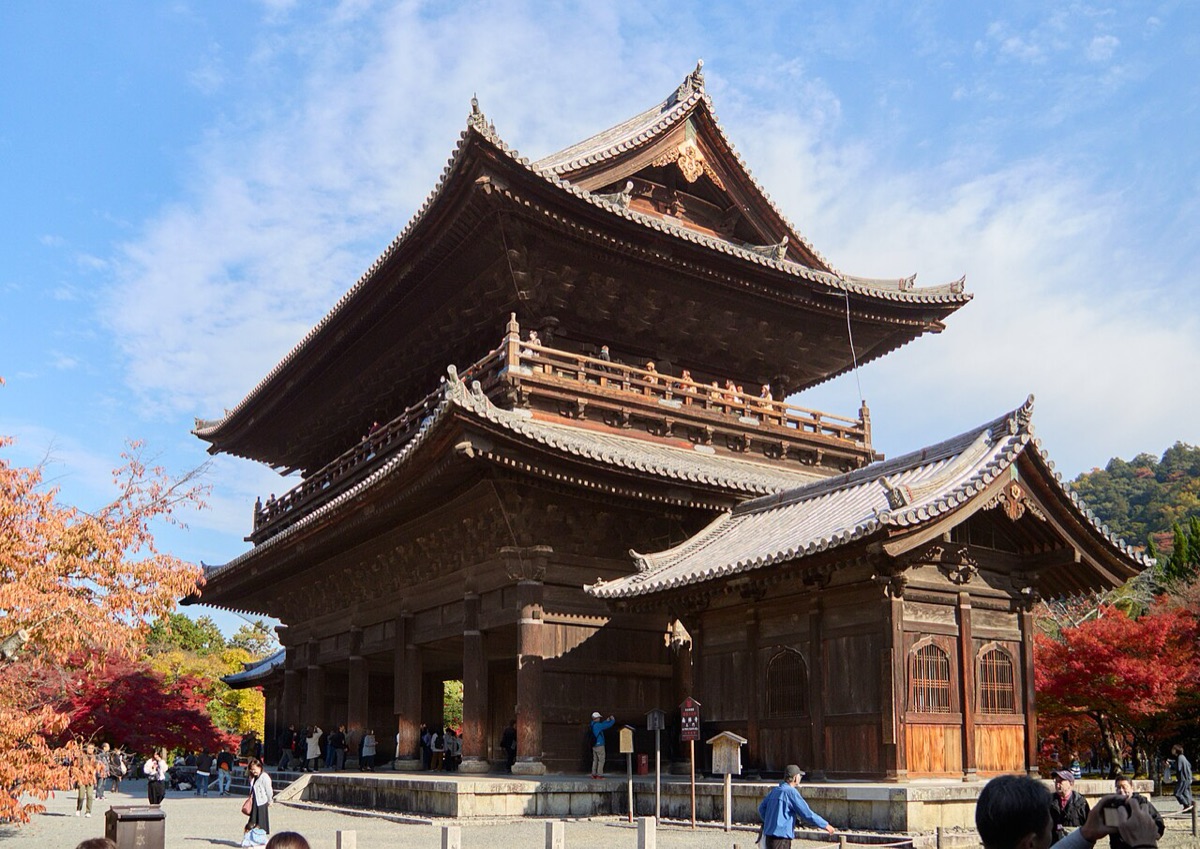
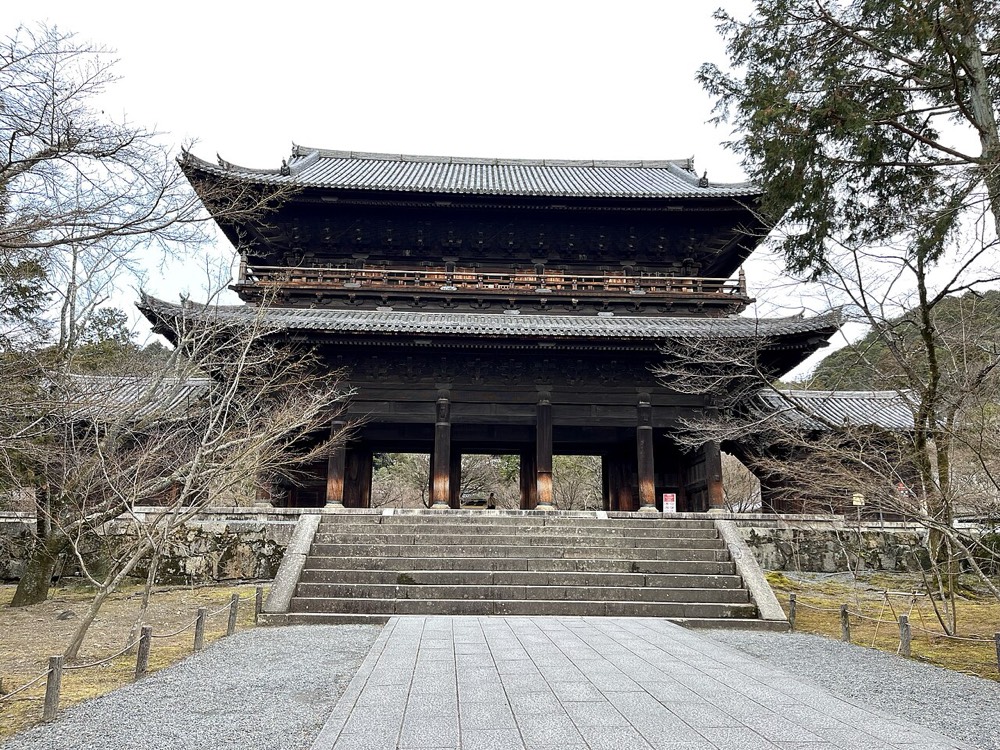
The current Sanmon was rebuilt in 1628 by Todo Takatora to mourn his retainers who died in the Summer Siege of Osaka. It stands about 22 m tall, is also called the "Tenka Ryumon", and its upper floor is known as the "Gohoro"[4]. It is the setting of the kabuki scene in which the outlaw Ishikawa Goemon stands on the gate and exclaims "Zekkei kana!" ("What a view!")[4]. To climb to the upper floor, buy a Sanmon ticket; the stairs are steep and narrow, so take care if you have a large backpack. From the top you can see across central Kyoto, the maples along the approach and the Western Hills in the distance. The inner sanctum upstairs is normally closed, and this year it can only be entered on the early-morning viewing[3].
Hojo Garden: Toranoko-watashi
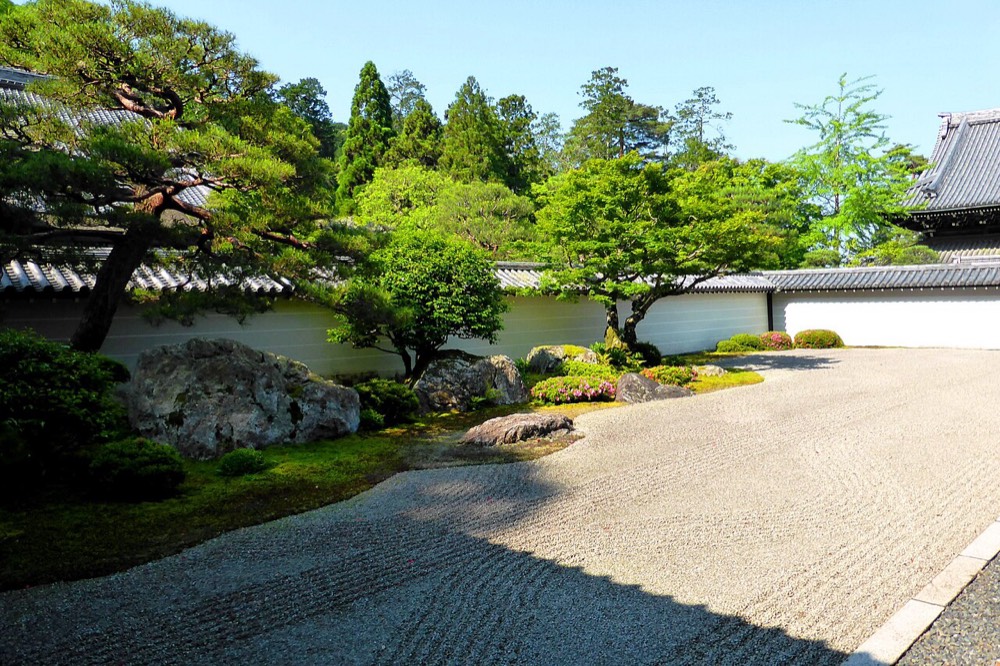
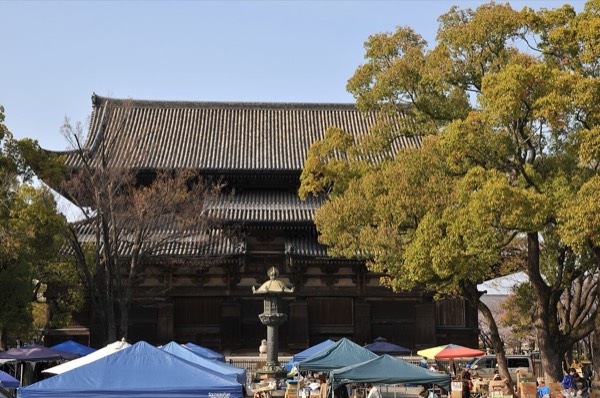
The Hojo was designated a National Treasure in 1953. The Large Hojo is said to have been moved from the Imperial Palace, while the Small Hojo is said to be from Fushimi Castle, and its "Tiger Room" holds the "Tigers" screens attributed to Kano Tanyu[5]. The dry landscape garden in front of the Large Hojo is attributed to Kobori Enshu and is popularly called the "Toranoko-watashi" (tiger cubs crossing the water) garden; large rocks lie across the white gravel, and it was designated a national Place of Scenic Beauty in 1951[6]. There is also the "Nyoshin-tei", with rocks set in the shape of the character for "heart", and the "Rokudo-tei", carpeted with haircap moss[6]. Shoes come off inside the Hojo, and you can sit on the veranda and take your time.
Suirokaku: how to photograph the brick arches
Suirokaku is an aqueduct bridge of the Lake Biwa Canal, which was begun in 1885 and completed in 1890. Its red-brick arches cross the grounds of Nanzen-ji, and water still flows along it today[8]. Together with the Keage Incline, it was designated a national historic site in 1996[12]. Suirokaku is free and accessible all day; for photos of the arcade without people, arrive before 8:30. Shooting the row of arches at an angle from beneath the bridge is the most popular composition. A path beside the bridge leads up to the channel on top, but please do not step into the water channel.
When Are Nanzen-ji's Autumn Leaves Best? 2026 Peak and Viewing Tips
In short: Nanzen-ji's maples usually peak from mid-November to early December, and the temple holds no night illumination[11].
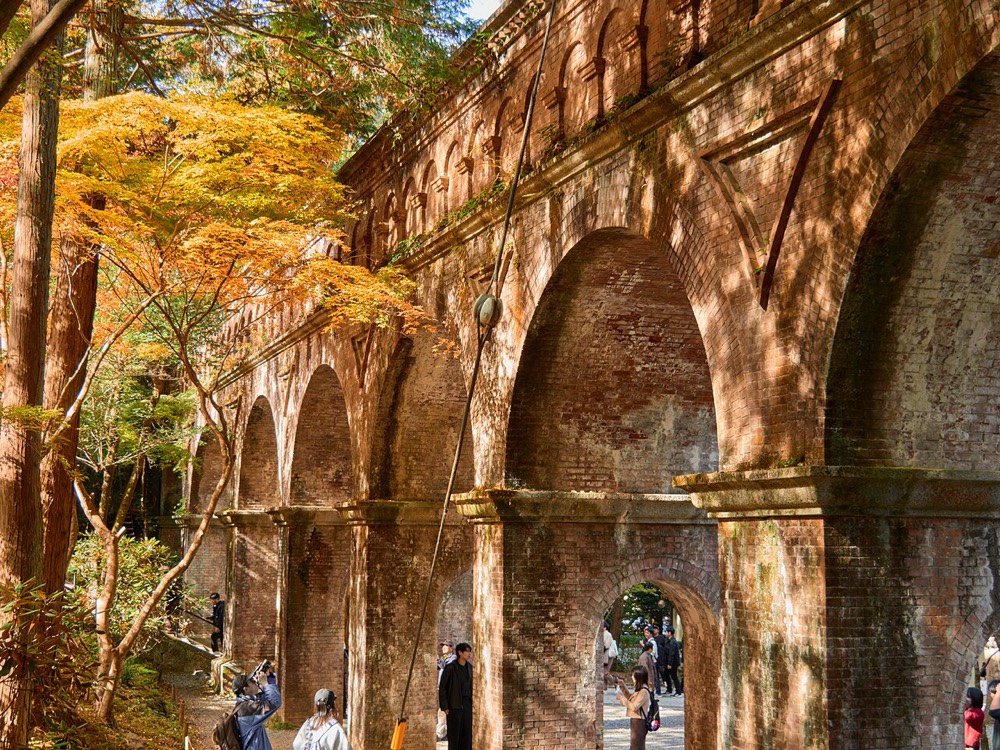
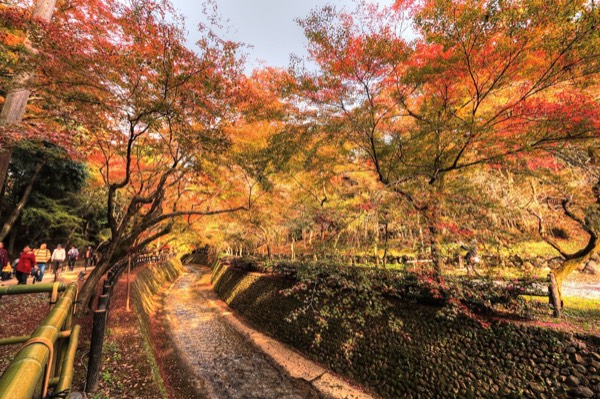
Nanzen-ji's maples are concentrated along the approach, around the Sanmon, near the aqueduct and at Nanzen-in, and they change colour at about the same time. This year's forecasts generally expect Kyoto's foliage to be later than usual; for the overall forecast and comparisons between spots, see the Kyoto autumn leaves 2026 guide. Planning around this year's special openings:
- November 16–29: the Hatto interior and Nanzen-in are both open, and most maples should be at their peak, making these the best two weeks this year.
- November 21–23 and 28–29: early-morning viewings let you see the Sanmon and Hojo before the crowds.
- Early December: Nanzen-in has closed, but the maples along the approach may still be colourful, and fallen leaves on the ground look lovely too.
The approach in front of the Sanmon is often packed around midday in foliage season. For clean shots of the Sanmon with maples, arriving before 8:30 is safest; tickets go on sale at 8:40, so photograph the approach first, then go into the Hojo.
Yudofu at Nanzen-ji: Long-Established Restaurants and Dining Tips
In short: the area in front of Nanzen-ji has Kyoto's greatest concentration of long-established yudofu restaurants, and a pot of yudofu after a temple visit is perfect in autumn and winter. For popular places, book ahead or arrive at the 11:00 opening.
Yudofu is tofu gently heated in a clay pot of kombu broth, scooped out and eaten with soy sauce and condiments, usually as a set with sesame tofu, dengaku and tempura. Restaurants often mentioned near Nanzen-ji:
| Restaurant | Hours | Notes |
|---|---|---|
| Nanzenji Junsei | Lunch last order 11:00–14:30 (closes 15:30), dinner last order 17:00–19:00 (closes 21:30), irregular closures[13] | Online booking; cash and credit cards; about 5 minutes on foot from Keage Station Exit 2[13] |
| Sohonke Yudofu Okutan, Nanzenji branch | Opening hours and closing days could not be confirmed on the restaurant's website | Near the north side of the Sanmon; check the latest information before going |
These hours were checked on the restaurant's website in October 2026; Junsei posts its closing days each month, so check before you go[13]. Eating and drinking are banned on Nanzen-ji's grounds[9], so finish any snacks outside the gate. For more Kyoto dishes and dining etiquette, see the Kyoto food guide.
Getting to Nanzen-ji and Walking Routes: Keage Incline to the Philosopher's Path
In short: take the Tozai subway line to Keage Station and walk about 10 minutes. The smoothest route is Keage Incline → Nanzen-ji → Suirokaku → Eikando → Philosopher's Path → Ginkaku-ji[10].
| How | Get off at | Walk |
|---|---|---|
| Tozai subway line | Keage Station | About 10 minutes[10] |
| City bus | Nanzenji Eikando-michi or Higashi-Tennocho | About 10 minutes[10] |
| Car | Parking lot 1 (¥1,000 for up to 2 hours, then ¥500 per hour) | May become bus-only from mid-November to mid-December[10] |
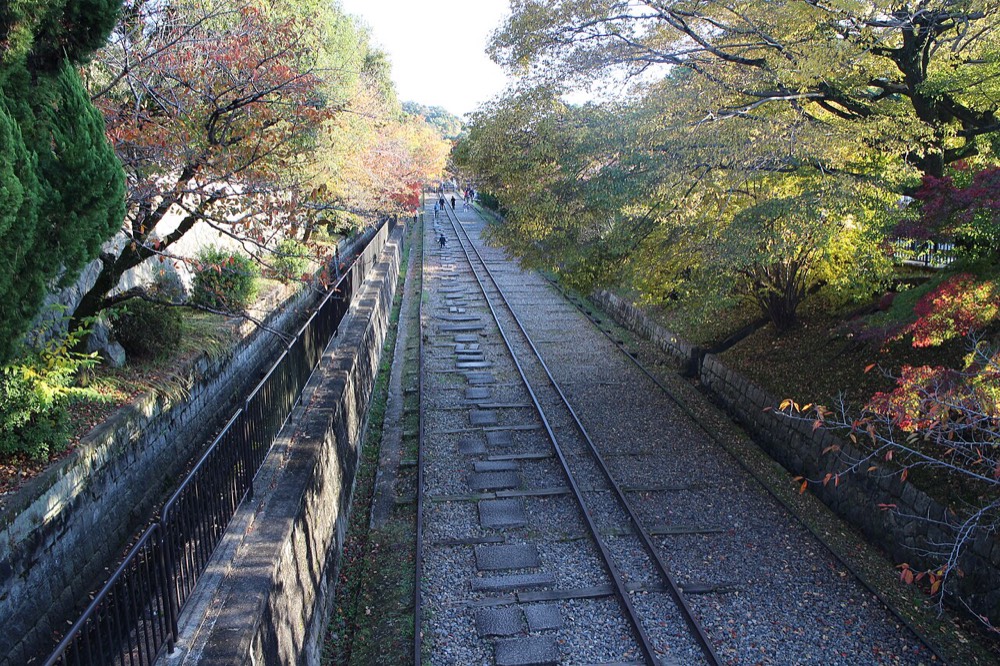
The Keage Incline is a former inclined railway that carried canal boats up and down the slope. It is 582 m long with a 36 m height difference, operated from 1891, stopped in 1948 and was restored for preservation in 1977[12]. The old tracks are now open to walk on, starting right outside Keage Station. Below the tracks you can pass through "Nejiri-mampo", a brick tunnel with spiral brickwork, which the temple's site describes as a shortcut into the grounds[10].
Suggested half-day route:
- 8:20 Start from Keage Station, walk the Keage Incline and go through Nejiri-mampo.
- 8:40 Nanzen-ji ticket sales open; see the Hojo garden first, then climb the Sanmon.
- 10:00 Suirokaku, plus Nanzen-in in November.
- 11:00 Yudofu lunch on the approach.
- 12:30 Walk north about 5–10 minutes to Eikando. Its 2026 autumn treasure exhibition runs November 11 to December 6, ¥1,500 general[14]; see the Eikando autumn leaves guide.
- 14:00 Join the Philosopher's Path north of Eikando and stroll about 1.5 km along the canal branch to Ginkaku-ji.
To make it a full day, return to Eikando in the evening for the night illumination (November 20 to December 6, ¥1,000)[14]. If you want to add Kinkaku-ji on the same day, note that it is in the northern hills on the other side of the city and the bus usually takes 40 minutes or more; the Kinkaku-ji guide explains how to get there.
Before You Go
- No tripods or photo shoots on the grounds: tripods, monopods, model shoots and shoots in wedding attire or other special costumes are banned, as are eating, drinking and riding bicycles onto the grounds[9].
- Read the early-morning viewing conditions: Japanese-only guiding, booking closes at 16:00 three days before each session, meet at 7:20[3].
- Nanzen-in is open in November: whether it stays open after December depends on the temple's announcements.
- Don't drive in foliage season: the parking lot may become bus-only at peak times, so take the subway or bus.
- Year-end closure: general visits are suspended December 28 to 31[1].
FAQ
Does Nanzen-ji charge admission, and what is free?
Entering the grounds is free, and you can see the outside of the Sanmon gate and Hatto, the Suirokaku aqueduct and the maples along the approach at no cost. Paid areas are the Hojo garden (¥600 general), the upper floor of the Sanmon gate (¥600 general) and Nanzen-in (¥500 general), each with its own ticket. In November 2026 the Hatto interior also opens for ¥500 (high school and older).
When are Nanzen-ji's autumn leaves best in 2026?
Nanzen-ji's maples usually peak from mid-November to early December, and the temple does not hold a night illumination. Forecasts for Kyoto this year are generally later than usual, so late November to early December is the safer window. Check foliage reports a week before you go. Nanzen-in is open November 1 to 30, so late November lets you see both.
What are Nanzen-ji's opening hours?
From March 1 to November 30, 8:40–17:00; from December 1 to the end of February, 8:40–16:30. Ticket sales end 20 minutes before closing. In October 2026, weekends and holidays were extended to 17:15. General visits are suspended December 28 to 31, but the temple stays open over New Year.
Where can I eat yudofu near Nanzen-ji?
The area in front of Nanzen-ji has Kyoto's highest concentration of long-established yudofu restaurants, such as Nanzenji Junsei and Okutan Nanzenji. Junsei's official site lists lunch with last orders 11:00–14:30 and dinner with last orders 17:00–19:00, with irregular closures and online booking. Hours and closing days change, so check each restaurant's website before you go.
What is the best route linking Nanzen-ji, the aqueduct and the Keage Incline?
From Keage subway station, walk along the old Keage Incline tracks, then pass through the brick tunnel known as Nejiri-mampo into Nanzen-ji. After the Sanmon gate and Hojo, head southeast of the Hatto to the Suirokaku aqueduct. Then go north past Eikando onto the Philosopher's Path and walk all the way to Ginkaku-ji.
Can I use a tripod or take kimono photos at Nanzen-ji?
Tripods and monopods are banned on Nanzen-ji's grounds, as are model shoots, group photo sessions and shoots in wedding attire or unusual costumes. Ordinary visitors wearing kimono are welcome, but commercial or professional shoots need the temple's permission. Eating and drinking on the grounds is also banned, so finish snacks outside the gate.
Sources
- Nanzen-ji official | Visitor information (拝観案内): Seasonal hours, fees for the Hojo garden, Sanmon and Nanzen-in, year-end closure (checked October 2026)
- Nanzen-ji official | Autumn 2026 special viewing of Nanzen-in garden and Hatto interior: Nanzen-in open November 1–30; Hatto special viewing November 16–29 and fees
- Nanzen-ji official | Autumn early-morning viewing: November 2026 early-morning special viewing dates, times, capacity, fee and how to apply
- Nanzen-ji official | Sanmon gate: History and height of the Sanmon, one of Japan's three great gates, Ishikawa Goemon legend
- Nanzen-ji official | Hojo: National Treasure Hojo, sliding-door paintings, Tiger Room
- Nanzen-ji official | Gardens: Toranoko-watashi garden, Nyoshin-tei, Rokudo-tei
- Nanzen-ji official | Nanzen-in: Site of Emperor Kameyama's detached palace, pond-stroll garden
- Nanzen-ji official | Lake Biwa Canal: Canal construction started 1885, completed 1890
- Nanzen-ji official | Requests and cautions on the temple grounds: Prohibited activities and photography rules on the grounds
- Nanzen-ji official | Access: 10-minute walk from Keage Station, bus stops, parking fees
- Walkerplus autumn leaves | Nanzen-ji: Usual peak, no light-up (as of October 2026)
- MLIT | Infrastructure tourism: Keage Incline: 582 m long, 36 m height difference, operated from 1891, stopped 1948, restored 1977, national historic site
- Nanzenji Junsei | Access: Opening hours, irregular closures, payment methods, 5 minutes on foot from Keage Station
- Eikando official | Visitor information: Autumn treasure exhibition and night illumination dates and fees
Fares, opening hours and event dates can change. Information checked on 2026.10.31; please confirm with official sources before you go.