Kitano Tenmangu Guide: Momiji-en Autumn Leaves and Night Illumination, Tenjin-san Market, Plum Season and Visiting Tips
Kitano Tenmangu is free to enter. Momiji-en is open to Dec 6, 2026, lit up until 20:00, 1,500 yen with a sweet. Autumn leaves, the 25th market, plums, charms, access.
Quick answer
Kitano Tenmangu (Kamigyo Ward, Kyoto) is open 7:00–20:00 and free to visit; only the seasonal gardens and the Treasure Hall charge. In 2026 the Odoi Momiji-en maple garden opens October 31–December 6, 9:00–16:00, with a sunset–20:00 illumination from November 13; adults pay 1,500 yen including a sweet. tenki.jp showed the leaves at peak on November 26, and the garden is open until December 6. A market is held on the 25th of every month, with the next one, Shimai Tenjin, on December 25, and Ofukuume plums are offered from December 13.
Kitano Tenmangu (北野天満宮, Kitano Tenmangū) is the Kyoto shrine dedicated to Sugawara no Michizane, the deity of learning. Most people know it as the place to pray for exam luck, but its autumn maples, the market on the 25th of every month and its early-spring plum blossoms are each worth a visit. This guide covers what is free and what costs money, the 2026 dates and prices for the Momiji-en night illumination, how to approach the Tenjin-san market, and how to pair the shrine with Kinkaku-ji and Kamishichiken in one day.
The short answer: the grounds are free and open 7:00–20:00[2]; you pay only for the seasonal gardens (Momiji-en in autumn, the plum garden in spring) and the Treasure Hall. In 2026 Momiji-en is open until December 6, with an illumination until 20:00 from November 13[1]. tenki.jp showed the leaves at peak on November 26[10], so the days until the garden closes on December 6 are the best time.
What is Kitano Tenmangu? Free areas versus paid areas
In short: Kitano Tenmangu is a leading shrine of the Tenjin faith across Japan. The main shrine area is free to visit, and the seasonal gardens are ticketed separately.
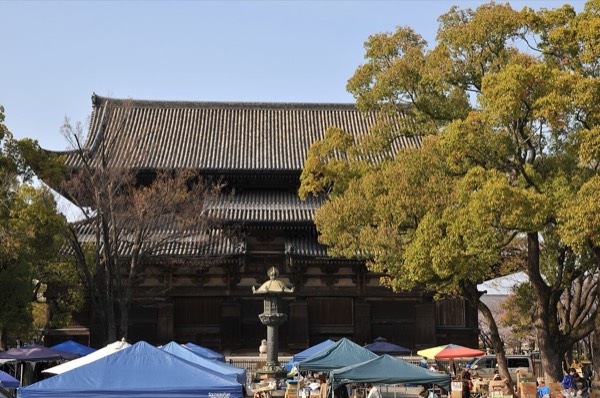
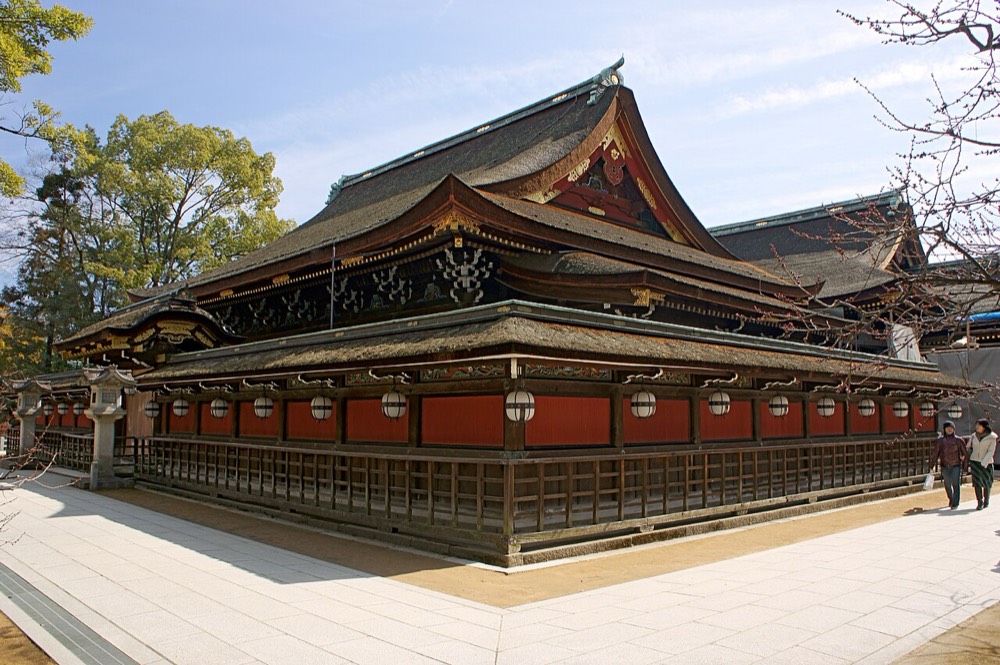
According to the shrine's English page, Kitano Tenmangu was founded in 947, and the current shrine building was built in 1607 (Keicho 12) by Toyotomi Hideyori and is designated a National Treasure[8]. The main hall, the stone-floored middle room and the worship hall are joined into a single structure, and the gold carvings and black lacquer under the eaves stand out on a sunny day.
Reclining ox statues are everywhere on the grounds. The shrine explains that the ox is Tenjin's messenger: Michizane was born in the year of the ox, and legend says that after he died in Dazaifu, the ox pulling his funeral cart lay down and refused to move, so he was buried on that spot[9]. Stroking an ox's head is said to sharpen the mind and help with exams; if part of your body is ailing, you stroke the same part of the ox[9]. Dazaifu Tenmangu in Fukuoka is the other great center of this faith; if you are heading to Kyushu, see the Dazaifu day trip.
| Area | Cost (2026) | Hours | Worth paying for? |
|---|---|---|---|
| Grounds (main hall, Sanko-mon gate, ox statues) | Free | 7:00–20:00[2] | A must |
| Historic Odoi Momiji-en | Adults 1,500 yen, elementary students 700 yen, sweet included[1] | 10/31–12/6, 9:00–16:00; illumination to 20:00 | Very worthwhile mid-November to early December |
| Treasure Hall autumn special exhibition | Adults 1,000 yen, junior high and high school students 500 yen[4] | 10/31–12/6, 10:00–16:30 | For fans of swords and historical artifacts |
| Treasure Hall on the 25th of each month | See official announcements | 25th, 9:00–16:00[8] | Combine with the market |
| Plum Garden Hana no Niwa | Varies by year; 3,000 yen same-day in 2026[5] | Usually early February to late March | Plum season only |
Prices are shown in Japanese yen.
Kitano Tenmangu autumn leaves: Momiji-en 2026 dates, tickets and night illumination
In short: in 2026 Momiji-en is open October 31–December 6, 9:00–16:00 (last entry 15:40), with a night illumination November 13–December 6 from sunset to 20:00 (last entry 19:40). Adults pay 1,500 yen, elementary school children 700 yen, and preschoolers enter free[1].
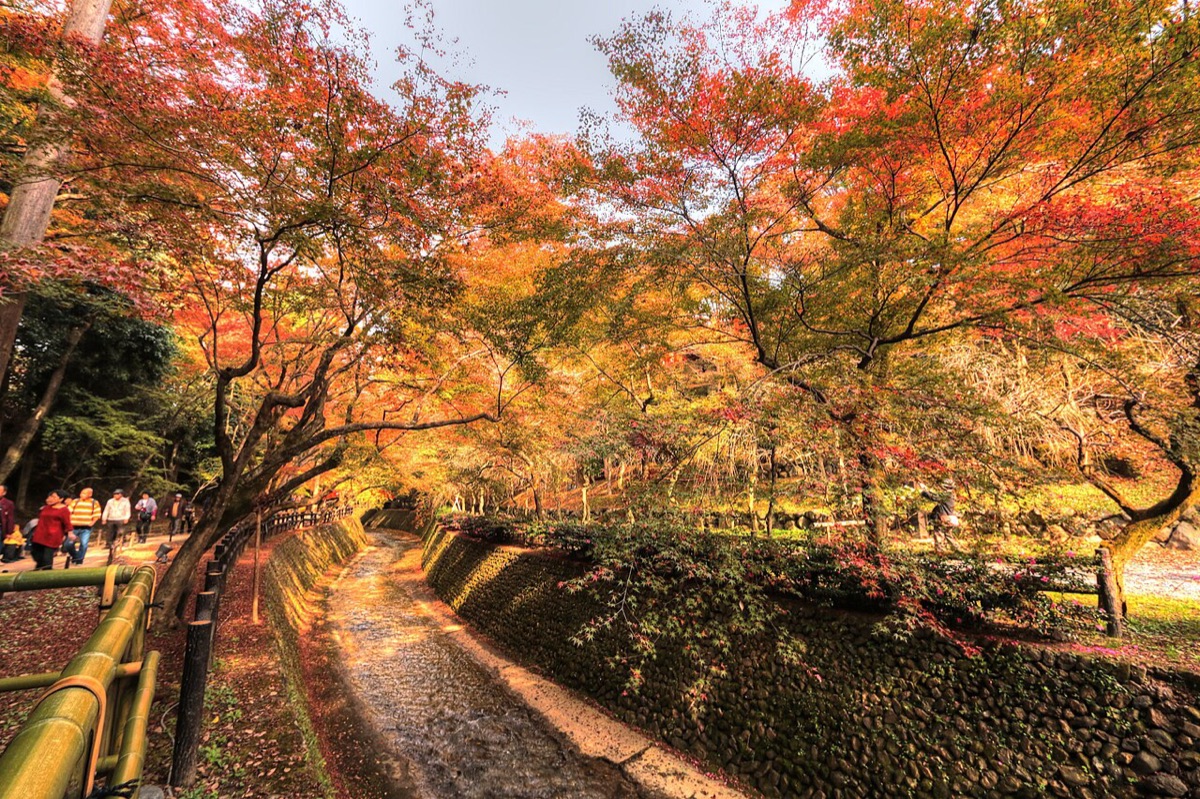
Momiji-en sits on the Odoi in the northwest of the grounds. The Odoi is an earthen embankment Toyotomi Hideyoshi built in 1591 for flood control and to mark the edge of the city; most of it has been leveled, and the stretch at Kitano Tenmangu is one of the few that remain[1]. The garden has about 350 maples, including an old three-trunked tree said to be over 400 years old, and the Kamiya River runs along the bottom of the valley under the vermilion Uguisu-bashi bridge[1]. Because the terrain combines an embankment and a ravine, you can look down on the leaves from above and then walk down to the stream to look up at them, which is what sets it apart from flat gardens.
Admission includes a tea sweet, a replica of "fu no yaki", a confection said to have been devised by Sen no Rikyu[1]. The official page does not mention matcha, so what is served on the day is what you get.
Can you see red leaves now?
tenki.jp's data on November 26 listed Momiji-en as "koyo migoro" (at peak), with the usual peak from mid-November to early December[10]. In other words, you have a good chance of full color any day until the garden closes on December 6, though more leaves fall as December goes on, so go sooner rather than later. Leaves change at different speeds across Kyoto; to compare other spots, see the live roundup in Kyoto autumn leaves 2026.
Day or night?
| Comparison | Daytime (9:00–16:00) | Night illumination (sunset–20:00) |
|---|---|---|
| Highlights | Layers of the ravine, sunlight through the leaves, a lookout over the main hall[1] | Lit maples reflected in the Kamiya River |
| Crowds | Busiest around midday | Concentrated right after lights-on; easier after 19:00 |
| Best for | Close-up photography, older relatives or children | People whose days are full and want an evening stop |
| Notes | Last entry 15:40 | Last entry 19:40, no tripods[1] |
The advantage of the night session is that it costs no daytime hours: visit Kinkaku-ji or Arashiyama in the day, have dinner around Kitano in the evening, then go in. Kyoto buses run less often at night, so check your route back in advance.
What is the Tenjin-san market? Visiting Kitano Tenmangu's market on the 25th
In short: the 25th of every month is Kitano Tenmangu's fair day, the "Tenjin-ichi" (nicknamed "Tenjin-san"), when the approach and grounds fill with stalls selling antiques, secondhand clothing, used tools, plants and snacks[8]. It falls on the 25th because Sugawara no Michizane was both born and died on the 25th.
The shrine's English page says the market is busy from around 6 a.m. until evening[8]; but according to Kyoto Kanko Navi's description from past years, stalls open one by one as they finish setting up, with most up and running by about 9:00, and closing times vary by stall[11]. Bargain hunters usually come early; if you just want to browse and snack, arriving after 10:00 is fine.
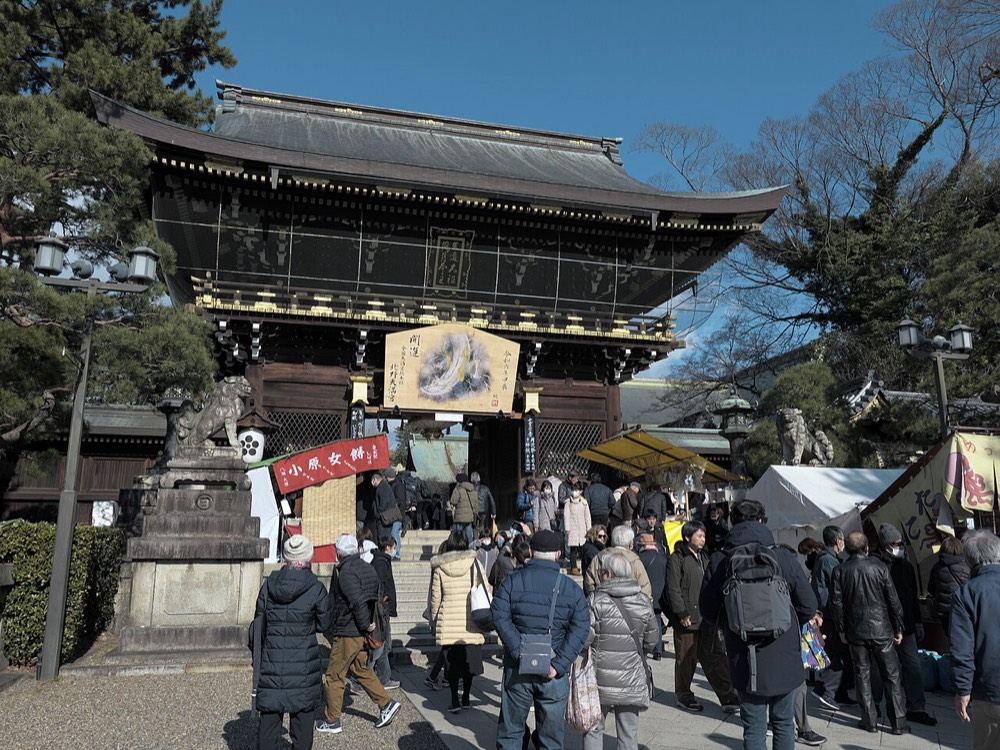
The next few markets (the November 25, 2026 market has already taken place):
| Date | Name | Notes |
|---|---|---|
| December 25, 2026 (Fri) | Shimai Tenjin | Last market of the year, with New Year goods such as shimekazari and herring roe added[12][11] |
| January 25, 2027 (Mon) | Hatsu Tenjin | First market of the year; as crowded as Shimai Tenjin (date is fixed; check the shrine for details) |
Practical tips for the market:
- The shrine car park is closed on the 25th; the shrine asks visitors to use public transport[3].
- Most antique stalls take cash only; whether you can haggle depends on the seller.
- The crush is worst from the tower gate toward the main hall, so leave big luggage in a station locker first.
- The Treasure Hall opens regularly only on the 25th of each month (9:00–16:00)[8], so pair it with the market to save time.
Kyoto's other famous fair is the Kobo-ichi at To-ji on the 21st of each month; for the year-end pairing of Shimai Kobo on December 21 and Shimai Tenjin on December 25, see the Kyoto winter travel guide.
When do Kitano Tenmangu's plum blossoms bloom? The plum garden and Baika-sai
In short: the Plum Garden Hana no Niwa usually opens from early February to late March, and the grounds hold about 1,500 plum trees of some 50 varieties[5]. The Baika-sai festival and its large outdoor tea ceremony are held every February 25[5]. The shrine has not yet announced 2027 garden dates or prices, so the following is past-year reference.
In 2026 the plum garden was run together with an art event: it stayed open until May 24, 9:00–20:30 with nightly illumination, and tickets were 2,800 yen in advance and 3,000 yen on the day for adults[5]. That was a one-off format for that year; whether 2027 follows suit depends on the shrine's announcement, so do not use it to budget.
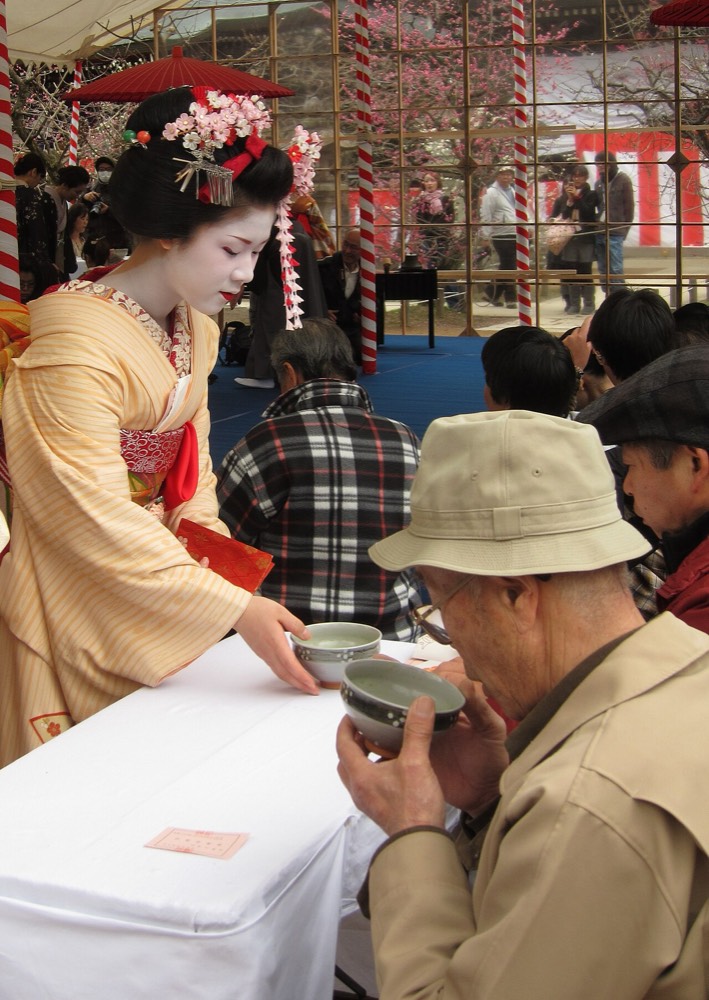
On Baika-sai day, geiko and maiko from neighboring Kamishichiken serve tea to guests under the plum trees. In past years the outdoor tea ceremony ran 10:00–15:00 and required a tea ticket (3,000 yen in past years)[13]. February 25, 2027 is a Thursday, so crowds should be a little lighter than on a weekend. For plum viewing across Japan in February and how other regions compare, see the Japan February travel guide.
Kitano Tenmangu omamori and Ofukuume: what to get and when
In short: study charms are Kitano Tenmangu's signature item, and the amulet counter is open until 19:30[2]; the year-end "Ofukuume" plums are offered from December 13[6].
From the official 2026 price list[7]:
| Item | Offering | Who it suits |
|---|---|---|
| Gakugyo Mamori (study charm) | 1,000 yen | The usual choice for students and exam takers |
| Kangaku Mamori | 800 yen | For children, or a smaller budget |
| Gakugyo Omamori (paulownia box) | 2,500 yen | A formal gift |
| Study pencils, set of 6 | 1,000 yen | Practical in the exam room; 2B lead |
| Prayer ema plaque | 800 yen (pen included) | If you want to write your wish on site |
Ofukuume are pickled plums made from the shrine's own trees; you drop one into tea on New Year's morning to pray for a year free of illness and misfortune. In 2026 they are offered from December 13 (Sun), about 6 plums for 700 yen, while supplies last[6]. If you are in Kyoto from mid-December to year's end, they make an easy thing to take home, but they are a New Year good-luck item, so save them for January 1.
From midnight on January 1 the shrine also offers "Omoi no Mama" plum branches, 1,000 yen each and limited to 10,000[6]. For Kitano Tenmangu's New Year's Eve opening hours and hatsumode crowds, see the Kyoto New Year countdown and hatsumode guide.
Getting to Kitano Tenmangu: bus and Randen
In short: from Kyoto Station, take city bus route 50 for about 35 minutes to "Kitano Tenmangu-mae"; by Randen (Keifuku Electric Railroad), get off at "Kitano-Hakubaicho Station" and walk about 5 minutes[3].
| From | Route | Time (official) |
|---|---|---|
| JR Kyoto Station | City bus 50 | About 35 min[3] |
| JR/subway Nijo Station | City bus 55 | About 15 min[3] |
| JR Emmachi Station | City bus 203 | About 10 min[3] |
| Subway Imadegawa Station | City bus 51, 203 | About 15 min[3] |
| Keihan Sanjo Station | City bus 10 | About 30 min[3] |
| From Arashiyama | Randen Kitano Line → Kitano-Hakubaicho Station | About 5 min on foot from the station[3] |
City buses cost a flat 230 yen for adults within the flat-fare zone. Route 50 from Kyoto Station runs through the city center and often gets stuck in traffic on autumn afternoons; if you are racing for the illumination, take the JR Sagano Line to Emmachi and switch to route 203, which keeps the road section short. For which day pass to choose and how IC cards work, see the Kyoto transport guide.
What to combine with Kitano Tenmangu: Hirano Shrine, Kamishichiken, Kinkaku-ji
In short: Kitano Tenmangu sits between Kinkaku-ji and Nishijin, and the smoothest combination is Kinkaku-ji → Kitano Tenmangu → Kamishichiken over half a day to a full day. Kyoto City's access guide lists "Kamishichiken → Kitano Tenmangu → Hirano Shrine" as a 25–40 minute walking course[14].
Hirano Shrine
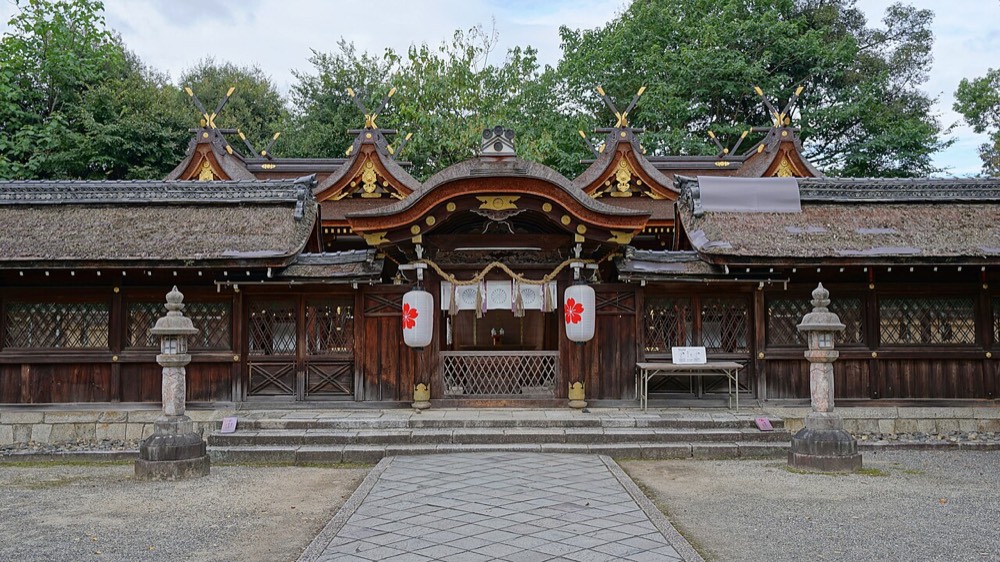
Hirano Shrine is just north of Kitano Tenmangu, a few minutes' walk away, and is known for cherry blossoms[14]. In autumn and winter it lacks the blossom-season bustle but is quiet, and its cypress-bark-roofed main hall has an old-world feel. It suits anyone who wants to see one more shrine without queuing.
Kamishichiken
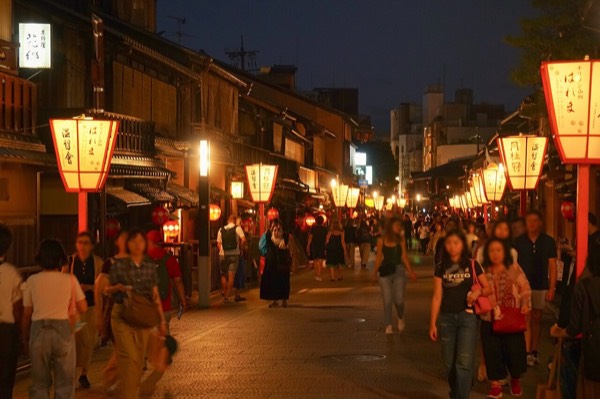
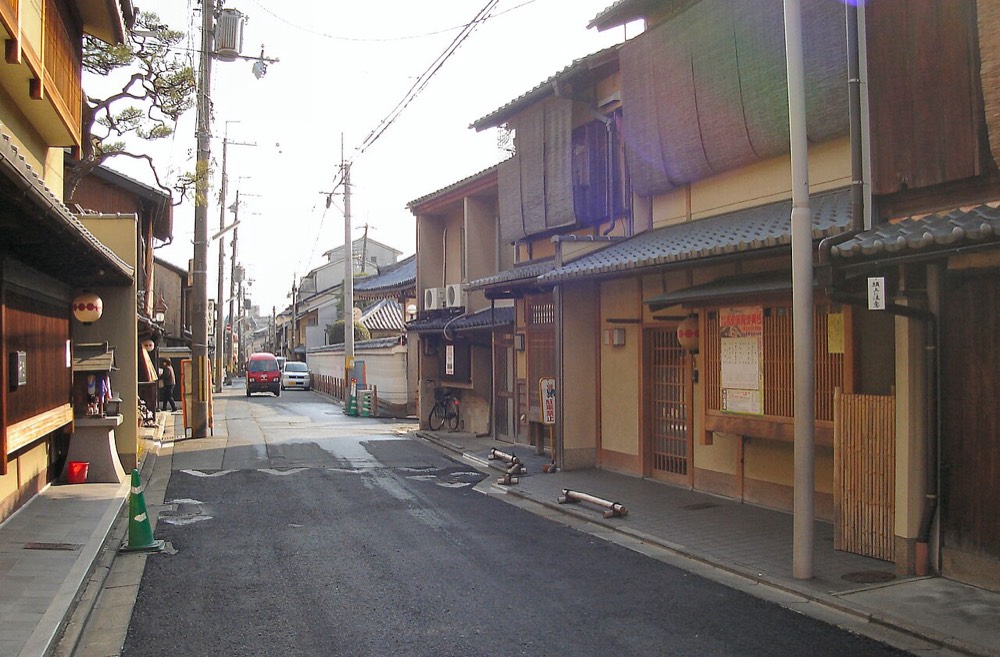
Kamishichiken lies outside Kitano Tenmangu's east gate. Its name comes from seven teahouses built in the Muromachi period for visitors to Kitano, and it is called Kyoto's oldest geisha district[14]. The street is lined with teahouses and machiya; by day you can stroll, take photos and rest at a sweets shop. Public geiko and maiko events are seasonal, so check each organizer's announcements. When taking photos, do not chase geiko or maiko, and do not enter private alleys.
City buses 102 and 204 run between Kinkaku-ji and Kitano Tenmangu[14] (on route 204, get off at Kitano-Hakubaicho and walk). For Kinkaku-ji tickets and the visiting route, see the Kinkaku-ji guide.
Sample one-day plan in autumn leaf season
Here is an example for a day when the market and Momiji-en coincide, built around the officially published hours (in 2026 the only such day, November 25, has passed; on other days before December 6, skip the market and start with the shrine visit):
| Time | Plan | Notes |
|---|---|---|
| 8:45 | Arrive at Kitano Tenmangu and browse the market | Most stalls are open by about 9:00[11] |
| 9:30 | Pray at the main hall, stroke the ox, buy charms | Amulet counter opens 9:00[2] |
| 10:15 | Treasure Hall autumn special exhibition | Opens 10:00[4] |
| 11:00 | Momiji-en daytime session | Last entry 15:40[1] |
| 12:00 | Lunch and a stroll in Kamishichiken | Right outside the east gate |
| 13:30 | City bus to Kinkaku-ji | Route 102 |
| 14:00 | Kinkaku-ji | About 30–40 minutes inside |
| 16:00 | Back to the Kitano area or rest at Hirano Shrine | — |
| 17:00 | Momiji-en night illumination (separate ticket) | Only if you want the night view; last entry 19:40 |
The official page does not say whether day and night require separate tickets, so check on site; if you only want to go once, pick one: daytime for the layers, night for the lights.
Sample budget (one adult)
| Item | Cost |
|---|---|
| Momiji-en | 1,500 yen |
| Treasure Hall autumn special exhibition | 1,000 yen |
| Study charm | 1,000 yen |
| City bus, 2 rides | 460 yen |
| Total | 3,960 yen |
If you skip the paid gardens and just pray and browse the market, you can spend nothing beyond transport.
Who is it for, and who should skip it?
Good for:
- Visitors in leaf season who want a ravine setting that can also be seen at night, on the same day as Kinkaku-ji.
- Anyone in Kyoto on the 25th who wants to hunt through an antiques market or buy vintage kimono fabric.
- People with family or friends facing exams who want to bring back a study charm or pencils.
- Visitors from mid-December who want to take Ofukuume home for New Year.
Not ideal for:
- People with only half a day who mainly want Kiyomizu-dera and Gion: Kitano is in the northwest of the city, and getting to and from Higashiyama takes a fair amount of time.
- Anyone expecting long maple-forest trails: Momiji-en is concentrated along one stretch of the Odoi and is smaller than Tofuku-ji or Eikando.
- Garden-focused visitors coming after December 7 and before the plum garden opens in February: no seasonal garden is open in that period.
Before you go
- Momiji-en's last day in 2026 is December 6 (Sun); weekends are busiest, and weekday mornings or after 19:00 are easier[1].
- Tripods are banned in the garden; for night photos bring a small stabilizer or brace against the railings.
- The car park is closed on the 25th and buses are more crowded on market days; coming from Arashiyama, take Randen instead[3].
- The grounds stay open until 20:00, but the amulet counter closes at 19:30[2]; if you arrive in the evening, buy your charms before entering Momiji-en.
- For other must-see Kyoto sights and the order to visit them, plan alongside Kyoto attractions.
FAQ
Is there an admission fee for Kitano Tenmangu?
Entering the grounds, seeing the main hall and touching the ox statues is free; the gates are open 7:00–20:00. You pay only for the seasonal Momiji-en (1,500 yen for adults in autumn 2026), the spring plum garden, and Treasure Hall special exhibitions (1,000 yen for adults in autumn 2026). If you just want to pray and buy a charm, no ticket is needed.
When are the autumn leaves best at Kitano Tenmangu?
Both the shrine and tenki.jp give mid-November to early December as the usual peak. tenki.jp listed Momiji-en at peak on November 26, 2026, so from now to early December is the best time. Momiji-en closes after December 6, 2026, so go before then.
What time does the Kitano Tenmangu night illumination start? Do I need to book?
In 2026 the illumination runs November 13 to December 6, from sunset to 20:00, last entry 19:40. The official page mentions no reservation system; tickets are sold on site. Tripods are banned in the garden. To avoid the crowds, go right after it lights up or after 19:00.
When is the Tenjin-san market at Kitano Tenmangu?
On the 25th of every month, because Sugawara no Michizane was both born and died on the 25th. The shrine's English page says it is busy from around 6 a.m. until evening; in past years most stalls were set up by about 9:00, and closing times vary by stall. December 25 (Shimai Tenjin) and January 25 (Hatsu Tenjin) are the busiest. The shrine car park is closed that day.
Which Kitano Tenmangu omamori is most popular, and how much is it?
The study charms are the best sellers. Per the official 2026 price list: Gakugyo Mamori 1,000 yen, Kangaku Mamori 800 yen, a paulownia-boxed Gakugyo Omamori 2,500 yen, and a set of 6 study pencils for 1,000 yen. The amulet counter is open 9:00–19:30. Families often buy them on behalf of students; there is no need to reserve.
Sources
- Kitano Tenmangu: Historic Odoi Momiji-en: Autumn 2026 dates, hours, illumination, fees, included sweet, about 350 maples, Uguisu-bashi bridge and Odoi history
- Kitano Tenmangu official website (home): Gates 7:00–20:00, prayers 9:00–16:00, amulet counter 9:00–19:30, autumn 2026 openings
- Kitano Tenmangu: Access: City bus routes and times, 5 minutes' walk from Kitano-Hakubaicho Station, car park closed on the 25th
- Kitano Tenmangu: Treasure Hall: Autumn 2026 special exhibition 'Tenjin-sama and the Toyotomi Family': dates, hours, fees
- Kitano Tenmangu: Plum Garden Hana no Niwa: About 1,500 trees of 50 varieties, usually early February to late March, 2026 fees
- Kitano Tenmangu: Ofukuume and Omoi no Mama: Ofukuume from December 13, about 6 plums for 700 yen; Omoi no Mama from January 1, 1,000 yen
- Kitano Tenmangu: Amulets and offerings: Prices of study charms, pencils and other items
- Kitano Tenmangu Shrine (official English page): Founded 947; current National Treasure shrine built by Toyotomi Hideyori in 1607; monthly market on the 25th; Treasure Hall open on the 25th
- Kitano Tenmangu: Kitano Tenmangu and the ox: Why the ox is Tenjin's messenger, and the custom of stroking the ox statues
- tenki.jp: Autumn leaves illumination (Kyoto Prefecture): Momiji-en at peak on November 26; usual peak mid-November to early December
- Kyoto Kanko Navi: Shimai Tenjin (Kitano Tenmangu): Year-end market stalls and opening times (past-year reference)
- Kyoto Kanko Navi: December events: Shimai Tenjin on December 25, 2026
- Rurubu&more: Kitano Tenmangu Baika-sai: Held every February 25; outdoor tea ceremony hours and ticket (past-year reference)
- Kyoto City school trip access guide: Kinkaku-ji (March 2026 edition): Bus routes between Kinkaku-ji and Kitano Tenmangu, Kamishichiken–Kitano Tenmangu–Hirano Shrine walk of about 25–40 minutes, origin of Kamishichiken
Fares, opening hours and event dates can change. Information checked on 2026.11.26; please confirm with official sources before you go.