Toji Kobo-ichi Market Guide: Hours on the 21st, How to Shop, December's Shimai Kobo and January's Hatsu Kobo
Toji's Kobo-ichi flea market fills the Kyoto temple on the 21st of every month. Hours, what's sold, Shimai Kobo (Dec 21, 2026), access, cash and haggling tips.
Quick answer
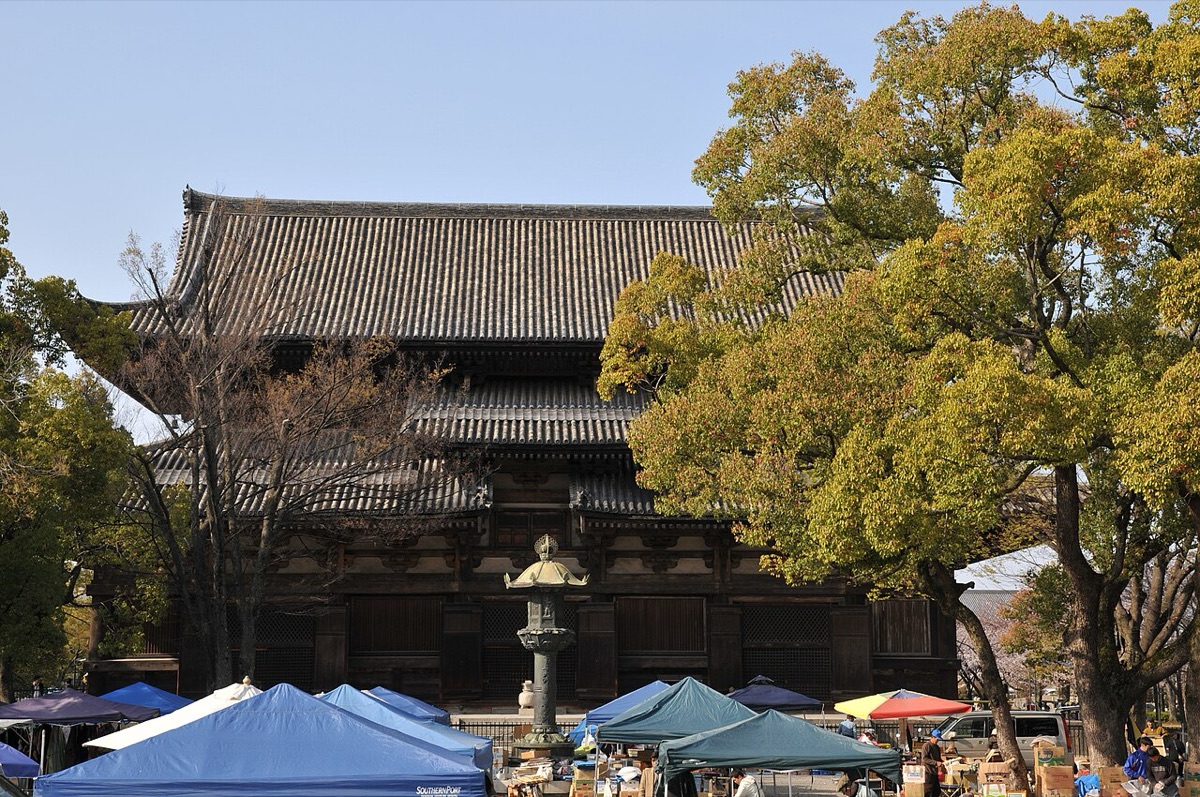
Kobo-ichi is the temple-fair market held at To-ji in Kyoto on the 21st of every month. The organizers say it has about 1,200–1,300 stalls and draws around 200,000 people a month, running roughly from 5 a.m. to about 4 p.m., rain or shine. The year-end Shimai Kobo falls on Monday, December 21, 2026, and the first market of the year, Hatsu Kobo, on Thursday, January 21, 2027; Kyoto City's tourism site lists both as 8:00–15:00. The market is free; the Kondo and Kodo halls cost 800 yen.
Toji Kobo-ichi (Kobo-ichi market) is the temple-fair market held at To-ji in Kyoto on the 21st of every month. Antiques, used kimono, pottery, bonsai, pickles and food stalls stretch from the Kondo hall to the Nandaimon gate, making it the largest temple market in Kyoto. This guide covers the best time to go, what's sold, how to get there from Kyoto Station, how payment and haggling work, and what to know about the two busiest days, Shimai Kobo on December 21, 2026 and Hatsu Kobo on January 21, 2027, then compares it with Kitano Tenmangu's Tenjin-san market and Chion-ji's handicraft market.
What is Toji's Kobo-ichi? Hours and size of the 21st market
Short answer: Kobo-ichi takes place on the 21st of every month, weekday or weekend. The organizer's website says it runs from about 5 a.m. to about 4 p.m. and goes ahead in rain, while a Rurubu article gives about 7:00 to 16:00, rain or shine[9].
The 21st is the memorial day of Kobo Daishi (Kukai), and every month on that day To-ji holds the Mieku service at the Mieido hall from 10 a.m.[1]. According to To-ji, it began with vendors setting up simple tea stalls along the approach, selling a cup for one sen to worshippers; stalls for dumplings, firewood, charcoal and pots followed, and the market slowly grew into what it is today[1]. Locals affectionately call it "Kobo-san."
On size, To-ji's website says close to 1,000 stalls, while the organizing To-ji Stall Management Committee says around 1,200–1,300 stalls and roughly 200,000 visitors a month[1][4]. Unlike a typical flea market, most sellers are professional dealers with shops elsewhere rather than individuals clearing out their homes, so quality and prices for antiques and fabric vary widely.
| Item | Details |
|---|---|
| Date | 21st of every month (whatever the day of the week) |
| Hours | About 5:00–16:00 (organizer's description; each stall opens and closes at its own time); Kyoto Kanko Navi lists 8:00–15:00 for Shimai Kobo and Hatsu Kobo |
| Rain | Generally goes ahead; rain-sensitive used clothing and antique stalls may not set up |
| Cost | Free to browse |
| Stalls | About 1,000–1,300 (To-ji and the organizers give different figures) |
| Parking | To-ji car park closed on the 21st |
| Sister market | Antique fair (Garakuta-ichi) on the first Sunday of each month, smaller |
A note on hours: the organizers state plainly that opening and closing times shift with the season, weather and vendor, and Kyoto Kanko Navi lists only 8:00–15:00 for Shimai Kobo and Hatsu Kobo[5][6]. Only some stalls are open very early; to see the full spread, arriving after 8 a.m. is the safer bet, and stalls start packing up in the afternoon. If you go late in the day, the best finds are usually gone.
What's sold at Kobo-ichi? Antiques, used kimono, plants and street food
Short answer: Kobo-ichi broadly splits into antiques and second-hand goods, used kimono and fabric, plants and bonsai, and food and snacks. There are no clear zones, but the organizer's website says flower and bonsai stalls cluster along the stone path inside the East Gate (Keiga-mon).
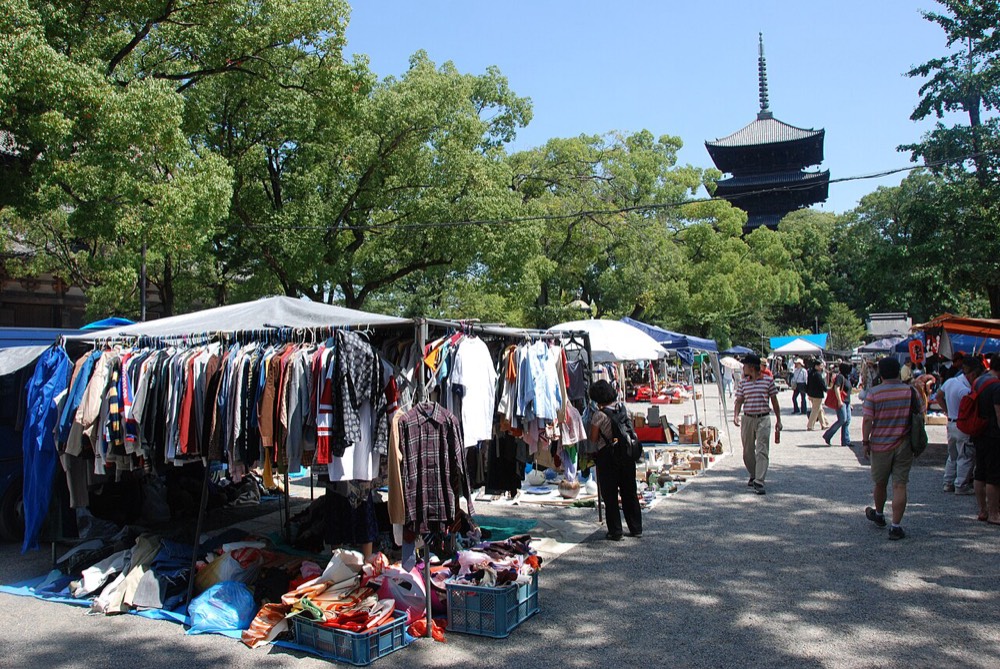
- Antiques and second-hand goods: porcelain, lacquerware, old tools and all kinds of vintage odds and ends form the core of Kobo-ichi. Authenticity and age are your own call, so do some homework before buying anything expensive.
- Used kimono and fabric: whole second-hand kimono, obi sashes, haori jackets and bundles of kimono offcuts (hagire), a favorite with crafters. Rurubu mentions used kimono from 100 yen[9]; actual prices depend on the stall.
- Pottery and household goods: Kiyomizu-ware bowls and plates, zelkova spoons and coasters, usually cheaper than souvenir shops in tourist areas.
- Plants and bonsai: seasonal flowers, bonsai and saplings. Visitors from abroad should note that plants with soil usually can't be taken out of or into most countries, so these suit people living in Japan.
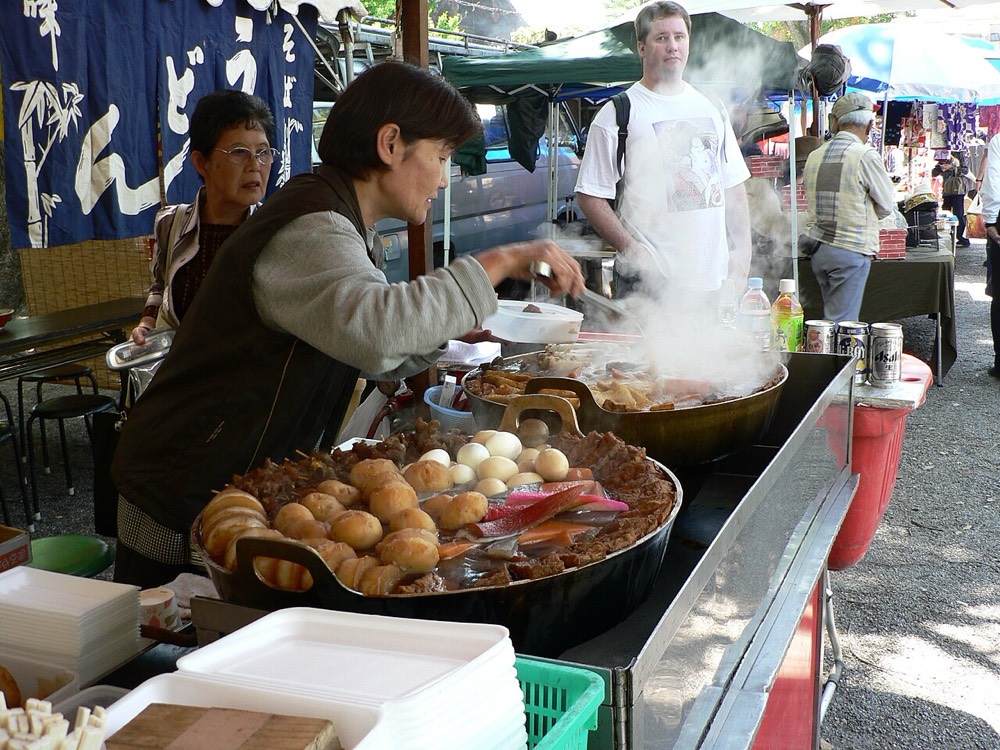
- Food and snacks: Kyoto pickles (kyo-tsukemono), dried goods, wagashi sweets, plus oden and other hot food and snack stalls to eat as you walk.
The organizer's website says a Japan Post "Yu-Pack" counter opens under the eaves of the Nandaimon gate on the 21st, so if you buy more than you can carry you can ship it to a hotel or address within Japan. That notice has been up for a long time, so whether the counter opens on the day, and whether it accepts overseas shipments, should be checked on site.
Shimai Kobo 2026 and Hatsu Kobo 2027: dates and how to prepare
Short answer: the last market of the year, Shimai Kobo, is on Monday, December 21, 2026, and the first of the new year, Hatsu Kobo, is on Thursday, January 21, 2027. Kyoto Kanko Navi lists both as 8:00–15:00, and both draw bigger crowds than ordinary months[5][6].
| Date | Name | What's special |
|---|---|---|
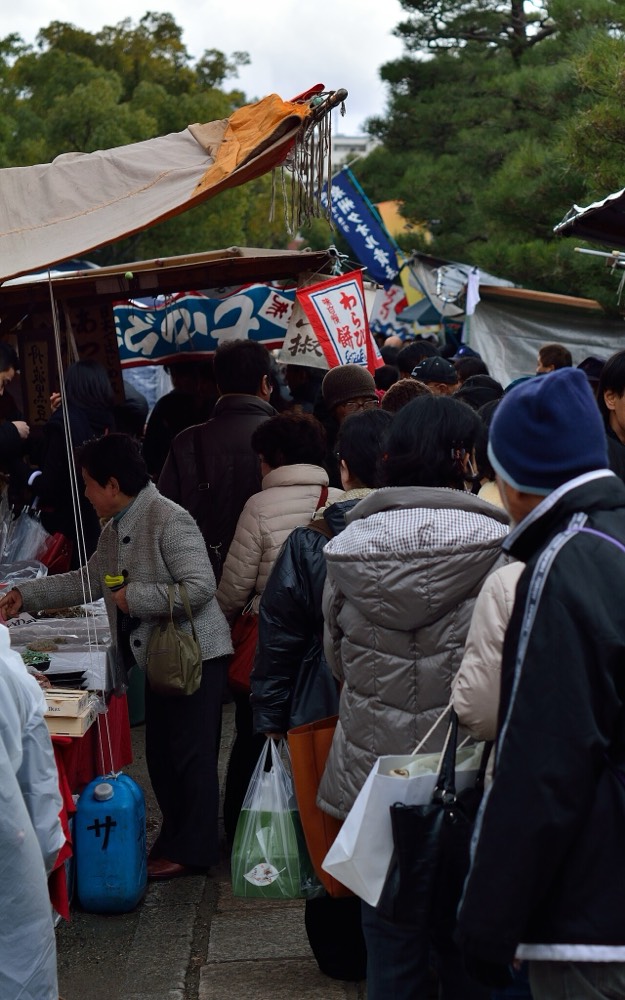
| December 21, 2026 (Mon) | Shimai Kobo | Last market of the year, with extra New Year goods such as shimenawa rope decorations and dried persimmons; locals come to stock up for the holidays[5][9] |
| January 21, 2027 (Thu) | Hatsu Kobo | First market of the year, about 1,000 stalls of antiques, local specialties, plants and pottery, busier than usual[6] |
| February 21, 2027 (Sun) | Kobo-ichi | Falls on a Sunday, so expect bigger crowds than on a weekday |
How to prepare for Shimai Kobo:
- Arrive before 9 a.m.: Rurubu also recommends going in the morning, when the selection is widest[9]. After 10 a.m. the main aisles are often so packed you can only shuffle along with the crowd.
- Wear warm clothes and comfortable shoes: early mornings in Kyoto in December are cold, and you'll be walking on gravel for two or three hours; after rain the ground gets muddy.
- Bring your own shopping bag: New Year goods, pickles and dried food fill your hands quickly.
- Don't plan to come back later: stalls don't necessarily appear every month, and in the crowds an item you liked is often sold, or the stall impossible to find, when you return.
Also note that December 21 falls in To-ji's regular viewing period; the autumn special opening of the pagoda's first floor ends on December 13, 2026[10], so you can't go inside the pagoda on Shimai Kobo day. For other year-end events in Kyoto, see the Kyoto winter guide.
How to get to Toji Kobo-ichi from Kyoto Station: walk, Kintetsu or bus
Short answer: walking is the most reliable, about 15 minutes (around 1.1 km) from Kyoto Station's Hachijo exit; to walk less, take the Kintetsu line to Toji Station and walk about 10 minutes[3].
| Option | From | Time | Cost | On the 21st |
|---|---|---|---|---|
| Walk | JR Kyoto Station Hachijo exit | About 15 min | Free | Most dependable; you can see the pagoda on the way |
| Kintetsu Kyoto Line | Kintetsu Kyoto Station → Toji Station (1 stop) | About 2 min ride + about 10 min walk | Check Kintetsu's official fare search | Short ride, but still a walk from the station |
| City bus 16 | Kyoto Station Hachijo exit | About 18 min per To-ji's site; get off at "Toji Nishimon-mae" | 230 yen | Roads around To-ji are congested on the 21st, often slower than walking |
| City bus 78 / 19 | Kyoto Station (Karasuma exit) or Hachijo exit | About 27–31 min per To-ji's site; get off at "Toji Minamimon-mae" | 230 yen | Better for people staying away from Kyoto Station who are on the route anyway |
A few reminders:
- The To-ji car park is closed on the 21st, and street parking nearby is scarce, so if you're driving or hiring a car, park at a paid lot around Kyoto Station and walk[3].
- The flat adult city bus fare is currently 230 yen. Kyoto City is considering separate fares for non-residents; check the Kyoto City Transportation Bureau for the actual date and amount. For how buses and the subway work overall, see the Kyoto transport guide.
- Both "Toji Nishimon-mae" on the west side and "Toji Minamimon-mae" on the south side lead straight into the market; the busiest entrances are the Nandaimon gate and the East Gate (Keiga-mon).
Do you need cash at Kobo-ichi? Haggling and etiquette
Short answer: stalls are independent businesses, and the organizers set no common rules on payment or bargaining; in practice it's mostly cash, and haggling is possible depending on the item and your manner.
- Bring cash and small change: some stalls take electronic payment, but don't count on it, and transit IC cards are of little use at stalls. Vendors often can't break a 10,000-yen note for a purchase of a few hundred yen in the morning, so get 1,000-yen notes and 100-yen coins at the station first.
- How far to haggle: for pricey, unpriced items such as antiques, second-hand goods and kimono, politely asking "Mo sukoshi yasuku narimasu ka?" (Could you go a little lower?) is common, and buying several items makes it easier. Priced items like food, pickles and plants usually aren't negotiable.
- Ask before touching or photographing: porcelain and lacquerware may be fragile, so ask the vendor before picking things up; it's also best to ask before photographing a stall or its goods, as some antique dealers don't like it.
- Take your rubbish with you: there are few places to throw things away on the grounds, so return containers to the stall you bought from or carry them out.
- Watch your belongings: Shimai Kobo and Hatsu Kobo are shoulder-to-shoulder, so wearing your backpack on your front is safer.
- Mind cross-border rules: plants with soil, meat products, some antiques and materials such as ivory may face quarantine or import restrictions when leaving Japan or entering your home country, so check the rules where you're headed before buying.
Does To-ji charge admission? Hall fees and planning on market day
Short answer: browsing the market and visiting the Mieido and Jikido halls are free; you only need a ticket for the Kondo and Kodo halls (home to the three-dimensional mandala), which cost 800 yen for adults in regular periods[2].
To-ji's gates are open 5:00–17:00, and the Kondo/Kodo and Kanchi-in open at 8:00 or 9:00 until 17:00 (last entry 16:30)[2]. Regular-period prices, which apply on Shimai Kobo and Hatsu Kobo days:
| Hall | Adults | High school students | Junior high and younger |
|---|---|---|---|
| Kondo and Kodo | 800 yen | 400 yen | 300 yen |
| Kanchi-in | 600 yen | 300 yen | See official site |
| Kondo/Kodo + Kanchi-in combined ticket | 1,200 yen | 500 yen | See official site |
| Mieido, Jikido | Free | Free | Free |
The inside of the five-storied pagoda (first floor) opens only in certain periods. The official price list shows January 1–8 as a pagoda opening period, and in past years it has also often opened from mid-January as part of the "Kyo no Fuyu no Tabi" winter program; the 2027 dates haven't been announced, so check To-ji's website before Hatsu Kobo if you want to go inside the pagoda[2].
A rough budget for market day (one adult):
| Item | Cost |
|---|---|
| Transport (walk both ways, or city bus at 230 yen each way) | 0–460 yen |
| Kondo and Kodo admission | 800 yen |
| Snacks (2–3 items such as oden, dango, amazake) | About 1,000–1,500 yen (varies by stall) |
| Shopping | Up to you; kimono offcuts and small dishes start from a few hundred yen |
Kobo-ichi, Tenjin-san or Tezukuri-ichi? Comparing Kyoto's three big markets
Short answer: choose Kobo-ichi for size and antiques, Tenjin-san if you're in northern Kyoto and want to add Kinkaku-ji, and Chion-ji's Tezukuri-ichi for handmade work by makers.
| To-ji Kobo-ichi | Kitano Tenmangu Tenjin-san | Chion-ji Tezukuri-ichi | |
|---|---|---|---|
| Date | 21st of every month | 25th of every month | 15th of every month (not in August) |
| Hours | About 5:00–16:00 (varies by stall) | Morning to evening (varies by stall) | 8:00–16:00 |
| Main goods | Antiques, used kimono and fabric, pottery, plants, food | Antiques, used clothing, old tools, plants, snacks | Crafts, accessories and food sold by the makers themselves |
| Year-end / New Year | Shimai Kobo 12/21 (Mon), Hatsu Kobo 1/21 (Thu) | Shimai Tenjin 12/25 (Fri), Hatsu Tenjin 1/25 (Mon) | 12/15 (Tue); January 2027 date per official site |
| Nearest station | About 10 min walk from Kintetsu Toji Station | About 5 min walk from Keifuku Kitano-Hakubaicho Station | In Tanaka Monzen-cho, Sakyo Ward; see official site for access |
| Pairs with | Kyoto Station, Fushimi Inari | Kinkaku-ji, Kamishichiken | Shimogamo Shrine, Kyoto University area |
Sources: To-ji's website and the organizers[1][4], Kitano Tenmangu's official site[7], and the Hyakumanben-san Handicraft Market official site[8].
- Tenjin-san is the closest in character to Kobo-ichi. A local saying goes that if it's sunny for Kobo-san it will rain for Tenjin-san, meaning the two markets often get opposite weather; it's a Kyoto joke, not a forecast. For Tenjin-san's hours, stalls and shrine highlights, see the Kitano Tenmangu guide.
- Tezukuri-ichi is run by makers and creators selling directly, with no antique dealers, more like a craft fair. Its official site notes that there are no rubbish bins and the ground gets muddy in rain, so wear shoes you don't mind getting dirty[8].
- To-ji also holds an antique fair (Garakuta-ichi) on the first Sunday of each month; in December 2026 it is on the 6th (per the organizer's website). It is smaller than the 21st market and suits people who want to avoid crowds[4].
Who is Kobo-ichi for, and how to plan the day
Short answer: if you like antiques, kimono fabric and market atmosphere, it's well worth a special trip; if you mainly want photos and dislike crowds, an ordinary weekday month suits you better than Shimai Kobo.
Good fit: treasure hunters and vintage lovers, crafters looking for kimono fabric, people who want a taste of everyday Kyoto life, and anyone whose trip happens to include the 21st.
Not such a good fit: people with half a day who want to tick off major sights, people with strollers or limited mobility (aisles are packed on Shimai Kobo day, and the ground is gravel and flagstones), and anyone expecting to pay by card everywhere.
Taking Shimai Kobo on December 21, 2026 as an example, a half-day to full-day plan starting from Kyoto Station:
- 8:30 Leave Kyoto Station's Hachijo exit and walk about 15 minutes to To-ji's East Gate.
- 8:45–10:00 Browse the antique and kimono fabric stalls first; if you like something, buy it.
- 10:00 Watch the Mieku service at the Mieido (from 10 a.m. on the 21st)[1]; visiting is free.
- 10:30–11:30 Visit the Kondo and Kodo halls (800 yen), a break from the crowds and a chance to warm up.
- 11:30–12:30 Back to the market for oden and dango, and pick up pickles, shimenawa and other New Year goods.
- 13:00 Walk back to Kyoto Station. In the afternoon, continue to Fushimi Inari Taisha or find lunch with the Kyoto Station food guide; for fitting it into a wider trip, see the Kyoto 3-day itinerary.
Before you go
- The date is always the 21st, but hours and stalls vary each month; check To-ji's website and the organizer's Instagram before you go.
- Shimai Kobo is on a Monday and Hatsu Kobo on a Thursday; both go ahead on weekdays and are still crowded. The To-ji car park is closed on the 21st.
- Carry 1,000-yen notes and 100-yen coins and bring your own bag; if you plan to take antiques, plants or food out of Japan, check the entry rules at your destination first.
- To round out your shopping list from a souvenir angle, see Kyoto souvenirs.
FAQ
Which day of the month is Toji's Kobo-ichi? Is it cancelled in rain?
It is always on the 21st, whatever the day of the week, because the 21st is the memorial day of Kobo Daishi (Kukai). The organizing committee says it goes ahead in rain, though stalls selling rain-sensitive goods such as used clothing or antiques may not set up or may close early. The next three are December 21, 2026 (Mon), January 21, 2027 (Thu) and February 21, 2027 (Sun).
What time does Kobo-ichi start, and when is the best time to go?
The organizers say roughly 5 a.m. to about 4 p.m. (around sunset), but each stall opens and closes at its own time depending on the season, weather and vendor. Kyoto City's tourism site lists Shimai Kobo and Hatsu Kobo as 8:00–15:00. For antiques and fabric, arrive around 8–9 a.m., when most stalls are up but the crowds haven't peaked.
Do I need a ticket for the Toji Kobo-ichi market?
No. The market itself is free, with stalls spread across the grounds and around the temple. You only pay to enter halls such as the Kondo and Kodo or Kanchi-in: in regular periods the Kondo and Kodo are 800 yen for adults, Kanchi-in 600 yen, and a combined ticket 1,200 yen. The Mieido and Jikido halls are free, and on the 21st you can watch the 10 a.m. Mieku service at the Mieido.
Can I pay by card or transit IC card at Kobo-ichi?
Each stall is an independent business and the organizers set no common payment rules. In practice it is mostly cash; some stalls take electronic payment, but don't count on it. Bring plenty of 1,000-yen notes and 100-yen coins, since big notes can be hard to change early in the morning; transit IC cards can't be used at the stalls.
How does Kobo-ichi differ from Kitano Tenmangu's Tenjin-san market?
Kobo-ichi is at To-ji on the 21st and is the larger of the two, with lots of antiques, used kimono, plants and food. Tenjin-san is at Kitano Tenmangu on the 25th, also mainly antiques and second-hand goods, and pairs easily with Kinkaku-ji and Kamishichiken. The year-end editions are Shimai Kobo on December 21 and Shimai Tenjin on December 25, four days apart, so a longer stay in Kyoto can cover both.
Sources
- To-ji: Mieku and Kobo-ichi: Mieku service at 10:00 on the 21st, origin of the market (one-sen tea stalls), close to 1,000 stalls
- To-ji: Admission information: Gates 5:00–17:00, Kondo and Kodo 8:00–17:00, fees by period, Mieido and Jikido free
- To-ji: Access: 15 minutes' walk from JR Kyoto Station Hachijo exit, 10 minutes from Kintetsu Toji Station, city bus routes, car park closed on the 21st
- To-ji Stall Management Committee (Kobo-ichi organizer) official Instagram: Monthly market and antique-fair notices; the organizer's website (touji-ennichi.com) also gives about 1,200–1,300 stalls, about 200,000 visitors a month, roughly 5:00–16:00, rain or shine, and the antique fair on the first Sunday
- Kyoto City Official Travel Guide (Kyoto Kanko Navi): Shimai Kobo at To-ji: December 21, 2026 (Mon), 8:00–15:00, goods on sale
- Kyoto City Official Travel Guide (Kyoto Kanko Navi): Hatsu Kobo at To-ji: January 21, 2027 (Thu), 8:00–15:00, about 1,000 stalls
- Kitano Tenmangu Shrine (official English page): Tenjin-san market on the 25th of every month
- Hyakumanben-san Handicraft Market (Tezukuri-ichi): 15th of every month (not in August), 8:00–16:00, rain or shine, makers sell directly
- Rurubu&more: Toji's year-end Shimai Kobo: Shimenawa, dried persimmons, pickles and used kimono at Shimai Kobo (2021 article, for reference)
- To-ji official website (home): Autumn 2026 special opening of the pagoda's first floor and the Kodo until December 13
Fares, opening hours and event dates can change. Information checked on 2026.11.27; please confirm with official sources before you go.