Eikando Autumn Leaves 2026: Night Illumination, Treasure Exhibition Tickets, Peak Time, Crowds and Access
Eikando autumn leaves 2026: treasure exhibition Nov 11–Dec 6 (¥1,500), night light-up Nov 20–Dec 6 (¥1,000), peak forecast, day/night rotation, crowds and access.
Quick answer
Eikando (Zenrin-ji) holds its 2026 autumn treasure exhibition from November 11 to December 6, with entry 9:00–16:00 (gates close 17:00) and ¥1,500 for adults. The night illumination runs November 20 to December 6, entry 17:30–20:30 (gates close 21:00), ¥1,000 for junior high students and older. Day and night are separate rotations with separate tickets, and no reservation is needed. tenki.jp forecasts the 2026 peak for late November to early December. From Kyoto Station, take City Bus 5 to Nanzenji Eikando-michi and walk about 3 minutes.
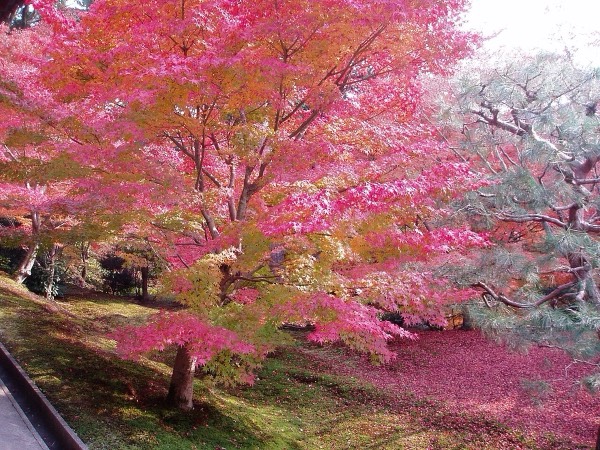
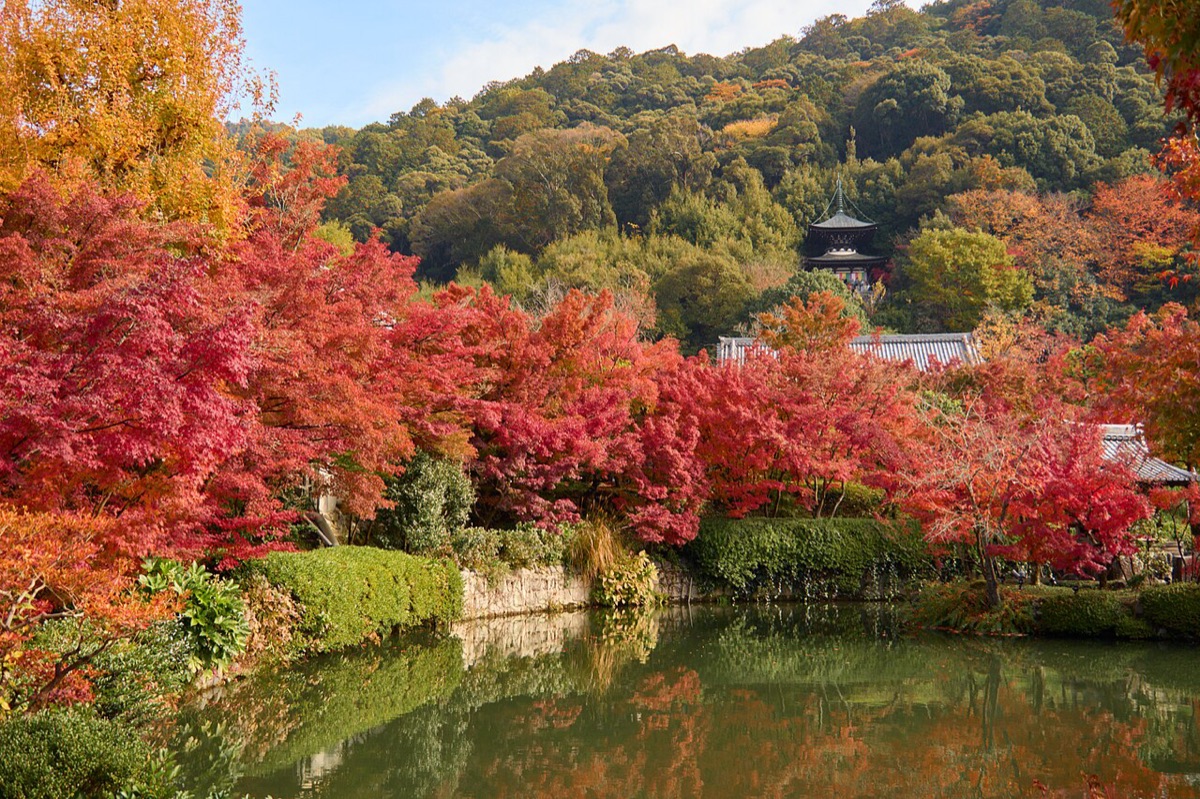
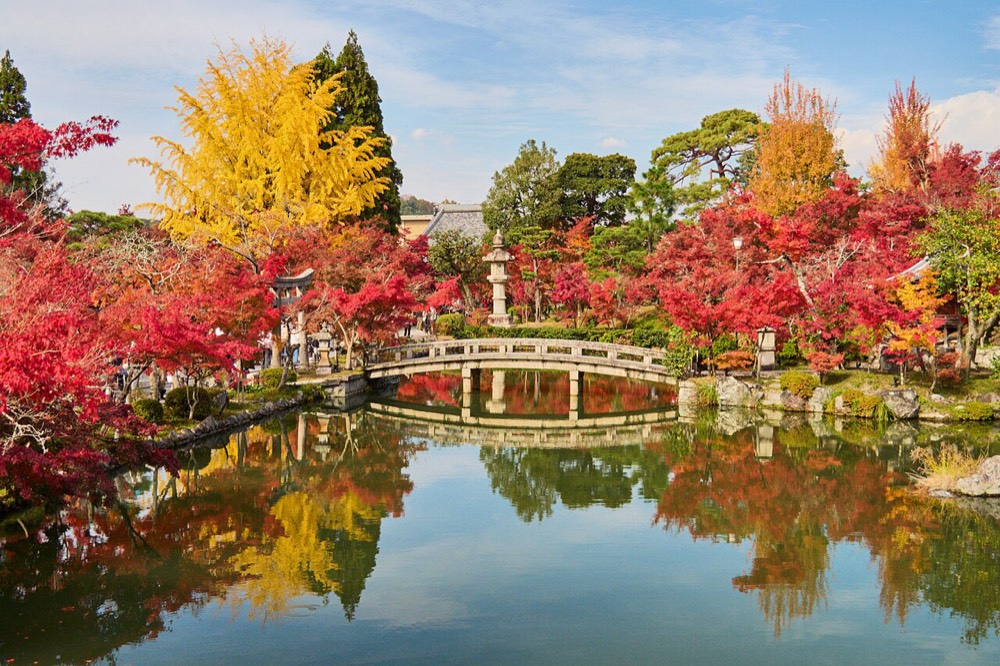
The autumn leaves at Eikando are among the most famous fall scenes in Kyoto's Higashiyama area. The temple has long been known by the phrase "Eikando for maples in autumn," and in late November its roughly 3,000 maple trees turn the Hojo Pond, the Tahoto pagoda and the corridors red[7]. This guide covers the dates and tickets for Eikando's 2026 autumn treasure exhibition and night illumination, how to split day and night visits, the peak forecast, when crowds are lightest, how to get there from Kyoto Station or by subway, and how to combine it with Nanzen-ji and the Philosopher's Path.
Eikando Autumn Leaves 2026: Treasure Exhibition and Night Illumination Dates
In short: Eikando has announced its 2026 schedule. The autumn treasure exhibition runs from Wednesday, November 11 to Sunday, December 6, and the night illumination from Friday, November 20 to Sunday, December 6[1][2].
Each autumn Eikando holds its "Autumn Treasure Exhibition" (秋の寺宝展), opening temple treasures not normally on view during the day; this is also the paid leaf-viewing period. In the evening there is a separate autumn leaves light-up, which the temple calls its "night autumn leaves light-up"[2]. The times are:
| Item | 2026 details |
|---|---|
| Autumn Treasure Exhibition (day) | Nov 11–Dec 6, entry 9:00–16:00, gates close 17:00[1] |
| Night illumination | Nov 20–Dec 6, entry 17:30–20:30, gates close 21:00[1] |
| Reservation needed? | No; no advance tickets, buy on the day, valid that day only[1] |
| Usual peak | Mid to late November[4] |
| 2026 peak forecast | Late November to early December (tenki.jp)[4] |
| Status on November 9 | Starting to turn (some colour, not yet at peak)[4] |
Compared with 2025 (November 11 to December 10), this year's exhibition ends earlier, on December 6. The peak is also forecast to be later than usual, so November 20 to December 6, when both day and night are open and the leaves are most likely red, is the easiest window to plan around this year.
How Much Is Eikando Admission? Day and Night Tickets Are Separate
In short: During the treasure exhibition, daytime entry is ¥1,500 for adults and the night illumination is ¥1,000 for junior high students and older. Day and night run on a rotation system, so one ticket does not let you stay from day into night[1].
| Ticket | Individual | Group (30+) |
|---|---|---|
| Exhibition: adults | ¥1,500 | ¥1,300 |
| Exhibition: university/vocational students | ¥1,000 | — |
| Exhibition: junior/senior high students | ¥800 | — |
| Night illumination: junior high and older | ¥1,000 | — |
| Regular (outside the exhibition): adults | ¥1,000 | ¥800 |
This is based on the visitor information page on Eikando's official site[1]. The site does not currently list fees for elementary school children during the exhibition or at night, so if you are bringing children, follow the on-site and official notices. Holders of disability certificates receive a discount[1].
The site states that the treasure exhibition and light-up are "入替制" (rotation)[1]: after the daytime gates close at 17:00 the grounds are cleared, and for the night session you queue and buy a ticket again. Seeing both means paying ¥2,500 and making two trips. If you can only choose one:
- For the treasures and clear leaf colours: go by day. The layers of red are best in sunlight, and there are special displays inside the halls.
- For night shots of reflections: go at night. The illuminated reflections on the Hojo Pond are Eikando's signature night image.
How to Explore Eikando: Mikaeri Amida, Tahoto Pagoda and Hojo Pond
In short: The usual route is to enter the halls first to see the Mikaeri Amida, then head outside to the Hojo Pond and Tahoto pagoda. The area around the pond has the densest maples[6][7].
Eikando's formal name is Zenrin-ji, and it is the head temple of the Jodo Shu Nishiyama Zenrin-ji branch. The temple dates back to 853, when Shinjo, a disciple of Kukai, founded it, and in 863 Emperor Seiwa gave it the name Zenrin-ji. It later became commonly known as Eikando after its seventh head priest, Yokan, also called Eikan[5][6].
Mikaeri Amida (the Looking-Back Amida)
The principal image of Amida-do Hall is a statue of Amida Nyorai with its head turned back over its left shoulder. It is about 77.6 cm tall and was designated an Important Cultural Property in 1999[6]. The temple's story is that on February 15, 1082, Yokan was walking around the altar chanting the Nembutsu when the Amida came down from the altar and began to lead him. When Yokan stopped in astonishment, the statue looked back and said, "Yokan, you are slow." Deeply moved, Yokan asked the Amida to keep that pose forever[5]. That is where the name "Mikaeri Amida" comes from. Photography of cultural properties inside the halls is not allowed[1].
Halls and Corridors
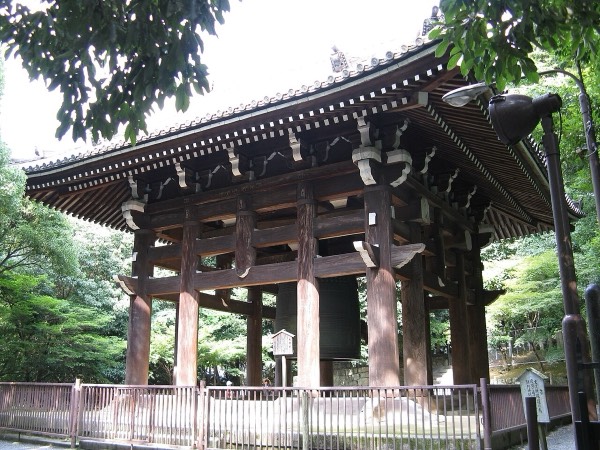
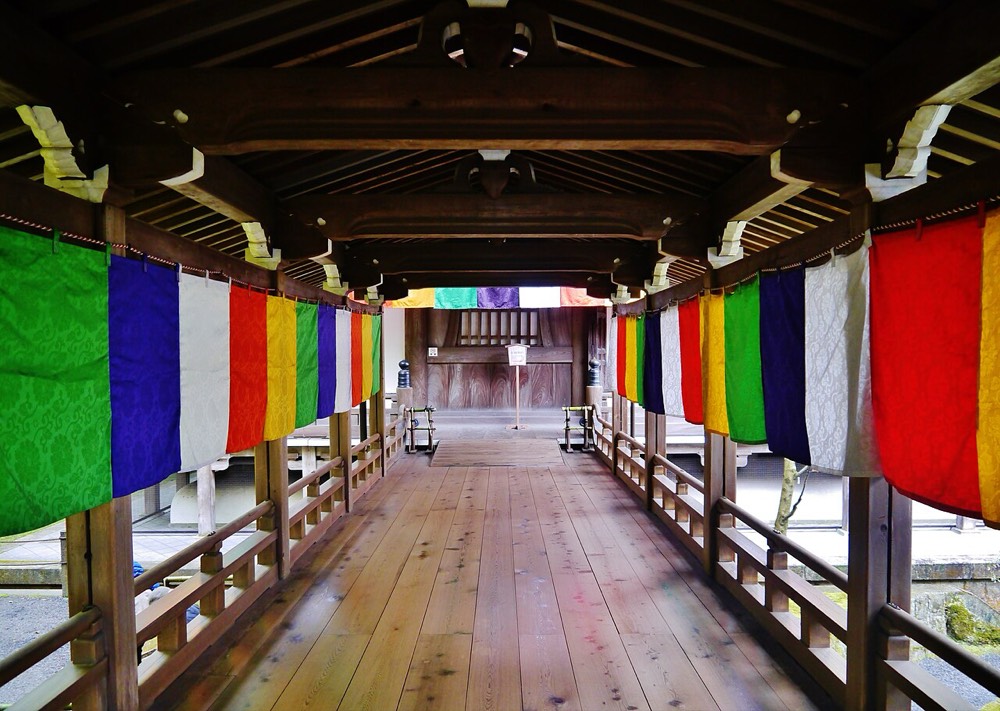
From the entrance, corridors link the halls. Miei-do is the largest building on the grounds, completed in 1912; Amida-do was originally built in 1597 as a mandala hall at Shitenno-ji in Osaka and moved here by Toyotomi Hideyori in 1607[6]. The Garyuro corridor connecting Miei-do and Kaisan-do is named for its winding, dragon-like shape[6], but the Garyuro is closed from November 11 to December 6, 2026, and the Senbutsu-do hall is also closed[1].
Tahoto Pagoda and Hojo Pond
The Tahoto pagoda stands on the hillside at the back of the grounds and was donated in 1928 by businessman Rokuka Seiji[6]. From up there you look down over the temple roofs and the leaves, and can also see across Kyoto. The temple says the Tahoto may close because of crowds or bad weather[1], so you may not always be able to go up.
The Hojo Pond, also called Benten Pond[6], is lined with maples. The stone arched bridge and its reflection are the most common photo composition at Eikando, and it is also the busiest spot during the night illumination. Keihan Railway's foliage guide also picks out the Hojo Pond, Tahoto and Miei-do as viewpoints that each show the maples differently[7].
The maples on the grounds are mainly Iroha momiji, Oomomiji and Nomura momiji[4]. There is also the "Iwagaki maple," named after a poem in the Kokin Wakashu by the Heian-period poet Fujiwara no Sekio, who lived here before the temple was built[6].
Eikando Night Illumination and Crowds: When Should You Go?
In short: By day, arrive at the 9:00 opening; for the night illumination, enter within the first hour after entry opens at 17:30. Weekends and late November are the busiest[1].
Eikando is one of Kyoto's most crowded temples in the foliage season, and on peak weekends the queue starts on the approach road. These are the easier times:
- Be at the gate by 8:45: Entry opens at 9:00, and the first group in finds the pond and corridors quietest, with time for photos.
- Avoid 11:00–15:00: Tour groups and independent visitors overlap, and the corridors move in stops and starts.
- Queue at about 17:15 for the night session: Entry opens at 17:30, and going in early lets you get a spot by the Hojo Pond. Night entry runs until 20:30 but may close early when crowded[1].
- Choose weekdays: At the same peak, weekdays are far easier than weekends. In early December, as the leaves start to fall, the crowds also ease a little.
Know the photography rules first: tripods and monopods are banned on the grounds; selfie sticks are banned inside buildings and should be avoided outdoors when crowded. Visitors who have been drinking may be refused entry, eating and smoking are not allowed on the grounds, and pets are not permitted[1].
Getting to Eikando: Nanzenji Eikando-michi Bus Stop and Keage Station
In short: The most direct route is City Bus 5 from Kyoto Station to the "Nanzenji Eikando-michi" stop, then about a 3-minute walk. By subway, use Keage Station on the Tozai Line and walk about 15 minutes[3].
| From | Route | Walk after |
|---|---|---|
| JR Kyoto Station | City Bus 5 → "Nanzenji Eikando-michi" | About 3 minutes[3] |
| Subway Kyoto Station | Karasuma Line to Karasuma-Oike, change to Tozai Line (toward Rokujizo) → Keage | About 15 minutes[3] |
| Around Keihan Sanjo Station | Bus to "Nanzenji Eikando-michi" | About 5 minutes (southeast)[7] |
In the foliage season City Bus 5 is packed from Kyoto Station and the roads are congested. When it is busy, take the subway to Keage, walk through the Nanzen-ji approach and then north to Eikando, fitting Nanzen-ji in on the way. For bus and subway tickets and which day pass to choose, see the Kyoto transport guide.
During the autumn treasure exhibition, private cars, motorbikes and electric kick scooters cannot enter or park, and tour buses cannot enter the grounds at any time of year[1], so use public transport.
Combining Eikando with Nanzen-ji and the Philosopher's Path
In short: Nanzen-ji is a few minutes' walk south of Eikando, and the Philosopher's Path starts to the north, so the three make a half-day to full-day walking route through northern Higashiyama.
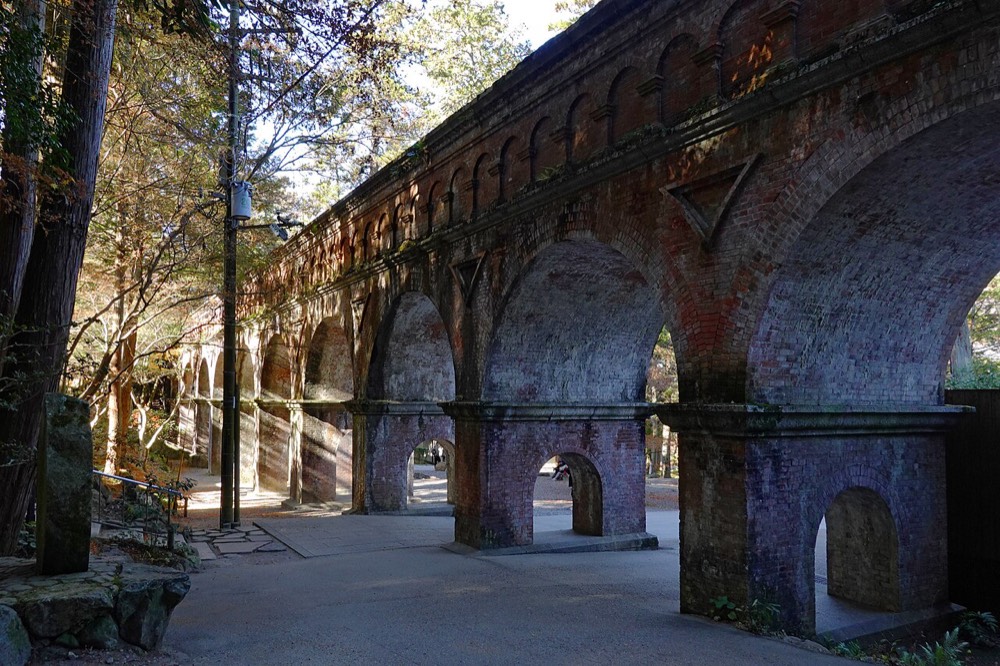
Nanzen-ji: You can walk the grounds freely, while the Sanmon gate and Hojo garden are charged separately at ¥600 each for adults. Hours are 8:40–17:00 from March to November and 8:40–16:30 from December, with entry ending 20 minutes before closing[8]. From the top of the Sanmon gate you can look over the Higashiyama foliage, and the red-brick Suirokaku aqueduct on the grounds, part of the Lake Biwa Canal, is a popular photo spot.
Philosopher's Path: A walkway along a branch of the Lake Biwa Canal. Its south end is near Nyakuoji Shrine, just north of Eikando, and its north end is near Ginkaku-ji. It is famous for cherry blossoms in spring, but the trees along it also turn red in autumn, with far fewer people than Eikando, so it is good for a slow walk with breaks.
Two common plans:
| Plan | Itinerary |
|---|---|
| Daytime | 9:00 Eikando → 11:00 Nanzen-ji (Sanmon, Suirokaku) → lunch → afternoon on the Philosopher's Path toward Ginkaku-ji |
| Night illumination | Morning at Nanzen-ji → afternoon on the Philosopher's Path → back to Eikando in the early evening to queue for the 17:30 night entry |
The night plan saves the daytime exhibition ticket and goes straight to the illumination. The drawback is backtracking in the early evening, and after the daytime session clears at 17:00 a queue starts forming at the night entrance. For other ways to link Higashiyama sights, see Kyoto attractions.
Before You Go: What to Check for Eikando
- Double-check the dates: In 2026 the treasure exhibition runs November 11 to December 6 and the night illumination November 20 to December 6, ending earlier than in past years[1].
- No reservation, no advance tickets: Buy on the day; tickets are valid that day only[1].
- Day and night are separate: A daytime ticket does not cover the night illumination; queue and buy again[1].
- Bring a shoe bag, leave the tripod: You remove your shoes to enter the halls, and tripods and monopods are banned[1].
- Check the foliage report before you go: tenki.jp forecasts this year's peak for late November to early December[4], and actual conditions may shift with the temperature.
- Do not drive: Parking is not available during the exhibition; if the city buses are jammed, take the subway to Keage and walk.
FAQ
When is the Eikando night illumination in 2026, and do I need a reservation?
Eikando's official site lists the 2026 night illumination from Friday, November 20 to Sunday, December 6, with entry from 17:30 until 20:30 and gates closing at 21:00. No reservation is needed and no advance tickets are sold; buy on the day at the gate, and the ticket is valid that day only. Entry may close early when crowded, so arrive before 18:00.
How much is Eikando admission? Do I need separate day and night tickets?
Yes, they are separate. During the autumn treasure exhibition, daytime entry is ¥1,500 for adults, ¥1,000 for university and vocational students and ¥800 for junior and senior high students; the night illumination is ¥1,000 for junior high and older. The temple uses a rotation system, so you cannot stay on from day into night and must queue and buy again.
When are Eikando's autumn leaves at their best in 2026?
According to tenki.jp, Eikando usually peaks from mid to late November, and the 2026 forecast is late November to early December, later than usual. On November 9 they had started to turn (iro-zukihajime), with some trees colouring but not yet at peak. For the richest colour, aim for late November and check the latest foliage report a week before you go.
What is the Mikaeri Amida and where can I see it?
The Mikaeri Amida is the principal image in Eikando's Amida-do Hall, a statue about 77.6 cm tall with its head turned back over its left shoulder, designated an Important Cultural Property. Legend says that in 1082 the Amida stepped down and looked back to urge on the monk Yokan as he chanted. Follow the corridors inside to Amida-do to see it.
Can I drive to Eikando, and are tripods allowed?
During the autumn treasure exhibition, private cars, motorbikes and electric kick scooters cannot enter or park, so use public transport. Tripods and monopods are banned on the grounds all year; selfie sticks are banned inside buildings and should be avoided outdoors in crowds, and cultural properties inside the halls may not be photographed.
Can I see Eikando, Nanzen-ji and the Philosopher's Path in one day?
Yes. All three are in northern Higashiyama within walking distance of each other. A common plan is Eikando at 9:00, then south to Nanzen-ji for the Sanmon gate and Suirokaku aqueduct, or north along the Philosopher's Path toward Ginkaku-ji. For the night illumination, explore elsewhere by day and return to Eikando in the early evening.
Sources
- Eikando official | Visitor information (拝観のご案内): Regular and autumn exhibition hours, fees, day/night rotation, no advance tickets, Garyuro closure, possible Tahoto closure, parking and photography rules (checked October 2026)
- Eikando official | 2026 Autumn Special Treasure Exhibition: 2026 exhibition and night illumination dates and hours
- Eikando official | Route to Eikando (永観堂への経路): City Bus 5 and Keage Station routes and walking times
- tenki.jp | Eikando autumn leaves peak and weather: Usual peak, 2026 forecast, status on November 9, maple species
- Eikando Zenrinji official (English) | Introduction: Founding, origin of the name Eikando, Mikaeri Amida legend
- Wikipedia (Japanese) | Zenrin-ji (Kyoto): Size and cultural property status of the principal image, Tahoto built in 1928, Hojo Pond, Garyuro, history of Amida-do
- Keihan Railway | Kyoto autumn leaves spots: Eikando: About 3,000 maples on the grounds; bus route from Sanjo Station
- Nanzen-ji official | Visitor information: Hojo garden and Sanmon gate hours and fees
Fares, opening hours and event dates can change. Information checked on 2026.11.09; please confirm with official sources before you go.