Ginkaku-ji and the Philosopher's Path: Admission, 2026 Autumn Leaves, Special Viewing, Access and the Walk to Nanzen-ji
Ginkaku-ji and Philosopher's Path guide: ¥1,000 admission, 8:30–17:00 in November, autumn 2026 Togudo special viewing, foliage timing, buses and the walk to Nanzen-ji.
Quick answer
Ginkaku-ji (officially Jisho-ji) costs ¥1,000 for adults and ¥500 for elementary and junior high students, and is open 8:30–17:00 from March to November 30 and 9:00–16:30 from December, every day of the year. From November 1 to December 5, 2026, guided special viewings of the Hondo and Togudo cost an extra ¥2,000. The Philosopher's Path is about 2 km long; its foliage usually peaks mid-November to early December, and tenki.jp expects early December this year. Walk south along the path past Honen-in and Eikan-do to reach Nanzen-ji.
Ginkaku-ji and the Philosopher's Path are the classic walking combination in Kyoto's Higashiyama: see Ginkaku-ji's Ginshadan sand garden and Kannon-den, then follow the canal-side Philosopher's Path south to Honen-in, Eikan-do and Nanzen-ji. With November's foliage season under way, this guide uses Ginkaku-ji's official site and early-November 2026 foliage reports to cover Ginkaku-ji's admission and hours, this autumn's special viewing of the Hondo and Togudo, when the Philosopher's Path leaves look best, how to get to Ginkaku-ji, and the full route and timing down to Nanzen-ji.
Ginkaku-ji admission and opening hours (2026)
In short: Ginkaku-ji costs ¥1,000 for high school students and older and ¥500 for elementary and junior high students; it is open 8:30–17:00 until November 30 and 9:00–16:30 from December, every day of the year[1].
| Item | Details |
|---|---|
| Admission | ¥1,000 high school and older, ¥500 elementary and junior high[1] |
| Visitors with disabilities | ¥100[1] |
| Group discount | None[1] |
| Summer hours (March 1 – November 30) | 8:30–17:00[1] |
| Winter hours (December 1 – end of February) | 9:00–16:30[1] |
| Closed | Open all year[1] |
| Parking | The temple has no parking; the city's Ginkakuji sightseeing car park gives priority to buses and taxis[1] |
Ginkaku-ji's admission rose from ¥500 to ¥1,000 on April 1, 2026[4]; many older guides still say ¥500, so go by the official site. You can pay in cash or with the temple's cashless payment, but cashless payment does not apply to special viewings or goshuin[1].
A visit takes about an hour[5]. JNTO suggests avoiding peak season, or going just after opening or shortly before closing, when there are far fewer people[5].
What to see at Ginkaku-ji: Jisho-ji's Kannon-den, Ginshadan and Kogetsudai
In short: Ginkaku-ji's official name is Jisho-ji, a temple of the Shokoku-ji branch of Rinzai Zen, and its two most important buildings, the Kannon-den (Silver Pavilion) and the Togudo, are both National Treasures[3].
According to JNTO, Ginkaku-ji began as a villa built by the Muromachi shogun Ashikaga Yoshimasa in his later years; after Yoshimasa died in 1490, it was turned into a temple as he had wished. Despite the name "Silver Pavilion," the building was never covered in silver leaf, and its plain look is often used to explain the aesthetic of wabi-sabi[5].
The temple's suggested route is: main gate → Ginkakuji-gaki (a hedge-lined approach of about 50 m) → middle gate (ticket office) → Hojo → Togudo → Ginshadan → Kogetsudai → Kannon-den → Sengetsusen spring → viewpoint[3]. Highlights:
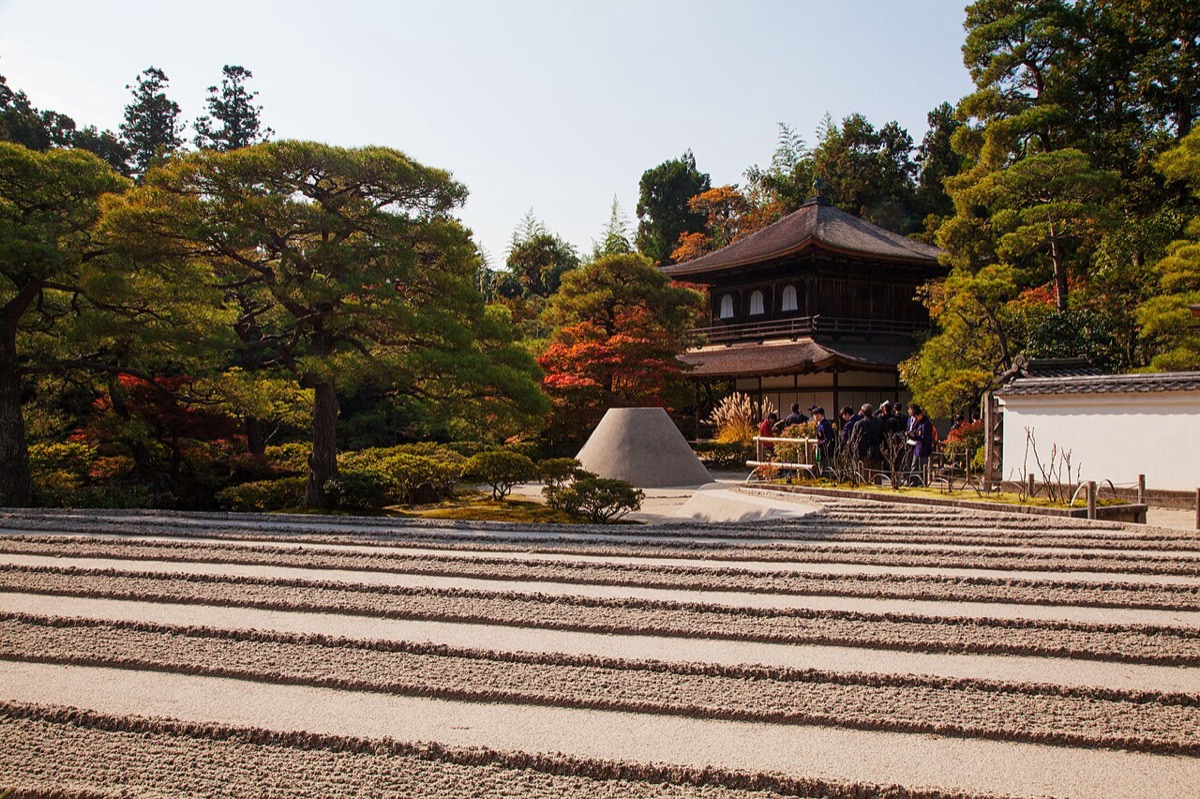
- Kannon-den (Silver Pavilion): Two storeys, the upper called Choonkaku and the lower Shinkuden; it is the only surviving Muromachi-period pavilion of its kind[3].
- Ginshadan and Kogetsudai: The raked white sand garden in front of the Hojo and the cone-shaped sand mound beside it. They are often said to reflect moonlight or be for moon viewing, but the official site notes these theories are unproven and that the sand forms likely date from the early modern period[3].
- Viewpoint: Climb the hillside behind the garden to look down over the Silver Pavilion and the city. This section has stairs and is not accessible by wheelchair or stroller[1].
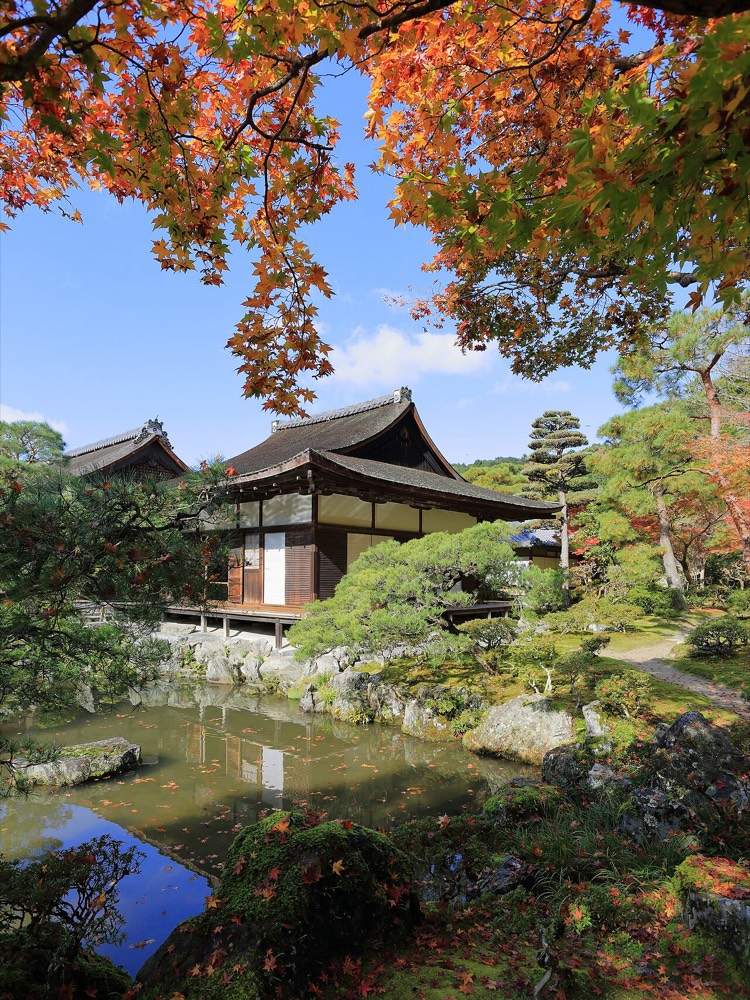
Kinkaku-ji and Ginkaku-ji are often compared, but they are in Kyoto's Kita Ward and Higashiyama respectively and not close to each other, so plan them as two separate half days. For the differences between them and how to get to Kinkaku-ji, see the Kinkaku-ji guide.
Autumn 2026 special viewing: Hondo, Togudo and Roseitei
In short: From November 1 to December 5, 2026, Ginkaku-ji opens its usually closed Hondo, the National Treasure Togudo and the Roseitei for Japanese-guided tours with on-site sign-up, at ¥2,000 per person plus regular admission[2].
| Item | Autumn 2026 special viewing |
|---|---|
| Dates | November 1 (Sun) – December 5 (Sat); may change or be cancelled for temple events[2] |
| Sessions | 10:00, 11:00, 12:00, 13:30, 14:30, 15:30; about 30 minutes each[2] |
| Cancelled sessions | 10:00, 11:00 and 12:00 on November 15[2] |
| Capacity | About 20 people per session, first come, first served[2] |
| Sign-up | A sign-up sheet is put out in front of the Hondo about 1 hour before each session; write your name and gather 10 minutes before the start[2] |
| Fee | ¥2,000 (includes a Togudo paper-cut souvenir), plus regular admission[2] |
Rules to know before joining[2]:
- Tours are in Japanese only; you cannot wander freely, and interpreting, translation apps and translation devices are not allowed.
- Photography, audio and video recording, note-taking and sketching are prohibited inside; bags, smartphones and tablets are checked at reception. Large luggage and pets cannot be stored.
- Preschool children cannot join, and groups of 7 or more are not accepted.
- Socks are required; bare feet or stockings only are not allowed.
Visitors who do not speak Japanese can still join, and the highlight is seeing the shoin architecture inside the Togudo with your own eyes, but expect not to follow the commentary. To secure a place, be at the Hondo about an hour before the session you want so you are there when the sheet comes out.
Ginkaku-ji and Philosopher's Path autumn leaves 2026: when are they best?
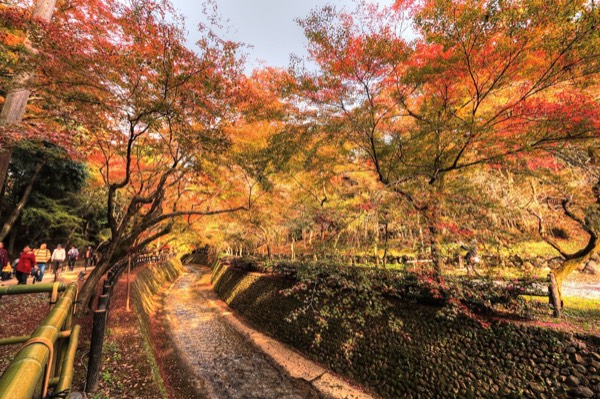
In short: Foliage along the Philosopher's Path and around Ginkaku-ji usually peaks from mid-November to early December[7]. This autumn is warm: as of November 2 the Philosopher's Path was still green, and tenki.jp expects the peak in early December[6].
| Source | Details | As of |
|---|---|---|
| Walkerplus | The Philosopher's Path usually starts turning in mid-November and peaks mid-November – early December; no illumination[7] | Color status updated November 2, 2026 |
| tenki.jp | The path usually peaks late November – early December; no color at all on November 2, peak this year expected in early December[6] | November 2, 2026 |
| Weathernews | Spots that usually peak from mid-November onward may be somewhat later than usual this year; sunny October should mean vivid colors[8] | Late October 2026 forecast |
Taken together, the safest window in 2026 is late November to early December. In mid-November you may only see partial color; in the first week of December some trees start dropping leaves, but fallen leaves carpeting the canal are lovely too. From December 1 Ginkaku-ji opens at 9:00 and closes at 16:30[1], so finish earlier in late autumn.
For forecasts and illumination schedules at other Kyoto foliage spots, see Kyoto autumn leaves 2026.
Ginkaku-ji to Nanzen-ji: Philosopher's Path walking route and timing
In short: Walking south from Ginkaku-ji along the Philosopher's Path to Nyakuoji Bridge, then via Eikan-do to Nanzen-ji, takes about an hour of pure walking; with visits, allow half a day to most of a day[7][10].
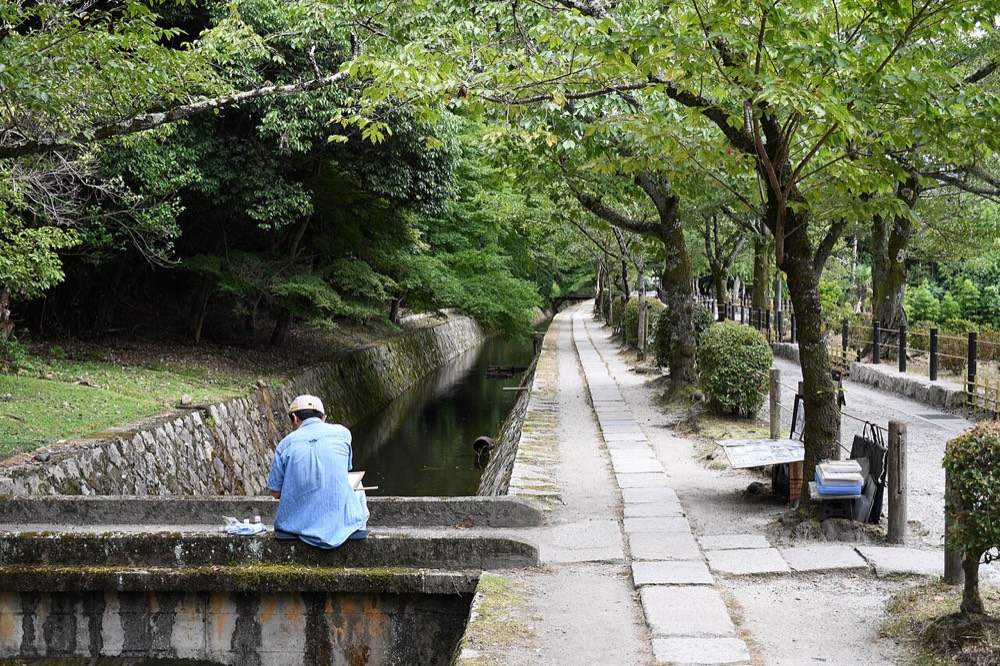
The Philosopher's Path (Tetsugaku-no-michi) is a walkway along a branch of the Lake Biwa Canal. tenki.jp marks it as running from Jodoji Bridge at the north end to Nyakuoji Bridge at the south end[6], about 2 km in total[7]. Kyoto's tourism association explains that the philosopher Nishida Kitaro walked along this canal almost every day from 1910 while teaching at Kyoto Imperial University, which gave the path its name[11].
Suggested route (north to south, which is gently downhill and easier):
- Ginkaku-ji (about 1 hour)[5]: Leave the gate and walk west down the approach; where it meets the canal is the north end of the Philosopher's Path.
- Northern section of the path: Stroll south along the canal, lined with cherry and maple trees, with cafés and small shops along the way.
- Honen-in (a side trip about 5 minutes uphill to the east): Its thatched gate and white sand mounds are full of atmosphere; according to Honen-in's official site entry is free, and it is open 6:00–16:00[9].
- Southern section → Nyakuoji Bridge: The path ends here.
- Eikan-do: A short way south of the Nyakuoji area. The autumn 2026 treasure exhibition runs November 11 – December 6 (¥1,500 general) and the night illumination November 20 – December 6 (¥1,000 junior high and older), with separate tickets for day and night[12].
- Nanzen-ji: About 10 minutes' walk south of Eikan-do. The grounds and the aqueduct are free, while the Hojo garden and Sanmon gate charge separately[13]. Leave from Keage subway station.
| Section | Approximate time | Cost |
|---|---|---|
| Ginkaku-ji visit | About 1 hour | ¥1,000[1] |
| Philosopher's Path (about 2 km) | About 30–40 minutes (without stops) | Free |
| Honen-in (grounds) | About 20–30 minutes | Free |
| Eikan-do (autumn treasure exhibition) | About 1 hour | ¥1,500[12] |
| Nanzen-ji (Hojo garden) | About 1 hour | ¥600[13] |
Walking times are estimates based on distance and will be slower on busy foliage weekends. For details on Eikan-do's and Nanzen-ji's foliage and visiting, see the Eikan-do autumn leaves guide and the Nanzen-ji guide.
Honen-in: a free temple beside the Philosopher's Path
In short: Honen-in is open 6:00–16:00[9], and its official site says entry to the grounds is normally free; the Hojo garden and fusuma paintings can only be seen during the "special opening of the temple buildings" on April 1–7 and November 18–24 each year, for a ¥800 cultural property preservation contribution.
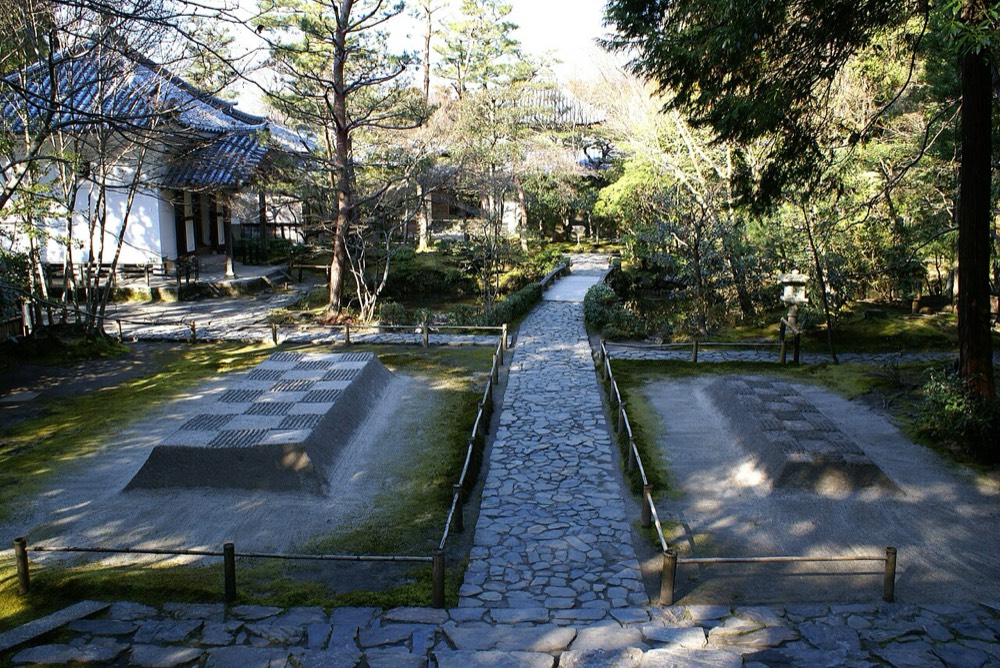
Honen-in sits at the foot of the hills east of the Philosopher's Path, a few minutes' walk uphill. Inside the gate is a white sand mound on each side, raked with patterns, a scene many people make the detour to see. The official site explains that the main hall is normally closed inside, but you can pray from the veranda.
The annual events page on Honen-in's official site (honen-in.jp) lists the autumn special opening as November 18–24 every year, 9:30–16:00. If you come in late November, you can pair it with the Philosopher's Path foliage; the temple's home page has no separate 2026 announcement, so go by the official site for dates.
Getting to Ginkaku-ji: which bus to take?
In short: Most people take a city bus to the Ginkakuji-michi stop and walk about 10 minutes; the EX100 sightseeing express and route 105 stop at Ginkakuji-mae, closer to the gate[1][5].
| Bus stop | Routes | Notes |
|---|---|---|
| Ginkakuji-michi | City Bus 5, 7, 32, 102, 203, 204[1] | Route 5 runs direct from Kyoto Station; about 10 minutes' walk to the gate[5] |
| Ginkakuji-mae | EX100, 105[1] | The EX100 sightseeing express runs only on designated days |
| From Kinkaku-ji | Kinkakuji-michi to Ginkakuji-michi on 102 or 204[1] | Check the transport bureau for route 102 operating days |
| From Doshisha / Shokoku-ji | Doshisha-mae to Ginkakuji-michi on 102 or 203[1] | — |
Tips for foliage season: Buses to Ginkaku-ji are often too full to stop on November weekends. A more reliable approach is to take a train to Demachiyanagi, Sanjo or Keage first, then transfer or walk. Another option is to walk the route in reverse: take the Tozai subway line to Keage, start at Nanzen-ji and walk north, finish at Ginkaku-ji, and catch a bus from Ginkakuji-michi.
For how to use Kyoto's city buses, subway, day passes and sightseeing express buses, see the Kyoto transport guide.
The Philosopher's Path in other seasons: cherry blossoms and crowds
In short: The Philosopher's Path is actually most famous for spring cherry blossoms; Kyoto's tourism association describes the branches forming a canopy over the path in full bloom[10]. Early April is the busiest time, and other seasons are relatively quiet.
- Spring (late March – early April): The cherry trees along the canal make this one of Kyoto's signature blossom walks, with weekend crowds rivaling foliage season.
- Early summer (June): Thick green shade and fewer visitors, perfect for a slow stroll.
- Autumn (mid-November – early December): Maples and ginkgo, combined with Ginkaku-ji, Eikan-do and Nanzen-ji.
- Winter (December – February): The fewest people, ideal for a quiet walk; Ginkaku-ji closes at 16:30, so set out early in the afternoon[1].
Before you go: how to plan it best
- Visit Ginkaku-ji first thing: The first hour after the 8:30 opening is the quietest[1][5]; then walk south and you will reach Nanzen-ji around lunchtime for yudofu.
- Sign up early for the special viewing: Each session takes only about 20 people[2], so if you want to see the Togudo, make Ginkaku-ji your first stop of the day.
- Wear comfortable shoes: Ginkaku-ji's viewpoint is up hillside stairs and Honen-in is uphill too; socks are required for the special viewing[2].
- Check the foliage again a week before: tenki.jp and Walkerplus update color status daily[6][7], and leaves are turning slowly this year.
- If time is short: With half a day, do "Ginkaku-ji → Philosopher's Path → Eikan-do"; with a full day, add Nanzen-ji and the Keage Incline. For other combinations of Kyoto sights, see the Kyoto attractions guide.
FAQ
How much is the Ginkaku-ji entrance fee?
Admission is ¥1,000 for high school students and older and ¥500 for elementary and junior high students, raised from ¥500 in April 2026. There is no group discount. You can pay in cash or with the temple's cashless payment, but cashless payment does not apply to special viewings or goshuin. The autumn special viewing of the Hondo and Togudo costs an extra ¥2,000.
When are Ginkaku-ji's autumn leaves best in 2026?
The Ginkaku-ji and Philosopher's Path area usually peaks from mid-November to early December. Autumn 2026 is warm: Weathernews expects spots that normally peak from mid-November onward to be somewhat later than usual, and tenki.jp's Philosopher's Path page still showed green leaves on November 2, forecasting early December. Late November to early December is the safer window.
How do I get from Kyoto Station to Ginkaku-ji?
Take City Bus 5 from Kyoto Station to the Ginkakuji-michi stop, then walk about 10 minutes along the approach. The EX100 sightseeing express bus, which runs on weekends and holidays, stops at Ginkakuji-mae, closer to the gate. Buses are packed in foliage season, so consider taking the subway or Keihan into the city first and transferring, or walking up from the Nanzen-ji side.
How long does it take to walk the Philosopher's Path?
The Philosopher's Path follows a branch of the Lake Biwa Canal for about 2 km, which takes about 30–40 minutes at a stroll. If you walk all the way from Ginkaku-ji to Nanzen-ji and visit Honen-in and Eikan-do on the way, allow half a day; Ginkaku-ji and the path alone take about 2–3 hours.
Can you go inside the Togudo at Ginkaku-ji?
Not normally. The Togudo is a National Treasure open only during special viewings. In autumn 2026 the special viewing runs from November 1 to December 5, with six sessions daily from 10:00 to 15:30 and about 20 people each, signed up first-come at the Hondo. The Japanese-language tour lasts about 30 minutes and costs ¥2,000 plus admission; preschool children cannot join and photography inside is not allowed.
Sources
- Ginkaku-ji (Jisho-ji) official | Access and visiting (アクセス・ご参拝について): Admission, seasonal hours, open all year, bus routes and stops, parking (checked November 2026)
- Ginkaku-ji (Jisho-ji) official | Events and special viewings (行事・特別拝観): Autumn 2026 special viewing: November 1 – December 5, sessions, fee and rules
- Ginkaku-ji (Jisho-ji) official | Temple guide (境内案内): Kannon-den and Togudo as National Treasures, Ginshadan and Kogetsudai, visiting route
- MATCHA | Kyoto's Ginkakuji raises its fee from April 1: Admission raised from ¥500 to ¥1,000 on April 1, 2026
- Japan National Tourism Organization (JNTO) | Silver Pavilion (Ginkakuji Temple): Ashikaga Yoshimasa's villa, converted to a temple in 1490, never covered in silver, about 1 hour visit, quieter early and late
- tenki.jp | Philosopher's Path autumn leaves (哲学の道 紅葉情報): Usual peak late November – early December, color status on November 2, 2026 and this year's estimate
- Walkerplus Autumn Leaves | Philosopher's Path (哲学の道の紅葉): Usual peak mid-November – early December, about 2 km long, no illumination
- Weathernews | Autumn leaves forecast 2026 (紅葉見頃予想2026): Spots that peak from mid-November onward somewhat later than usual; Arashiyama around November 23
- Kyoto City Official Travel Guide | Kyoto shrines and temples open to morning prayers and visits: Honen-in open 6:00–16:00
- Kyoto City Official Travel Guide | Philosopher's Path: Route (Ginkaku-ji to Nyakuoji Bridge), cherry blossoms, bus stops
- Kyoto City Official Travel Guide | The Philosopher's Path: Nishida Kitaro's Contemplative Route: Nishida Kitaro's walks from 1910, origin of the name
- Eikan-do official | Visitor information (拝観のご案内): Autumn 2026 treasure exhibition November 11 – December 6, night illumination November 20 – December 6 and fees
- Nanzen-ji official | Visitor information (拝観案内): Hojo garden and Sanmon fees and opening hours
Fares, opening hours and event dates can change. Information checked on 2026.11.02; please confirm with official sources before you go.