Can You Go to an Onsen in Japan with Tattoos? Cover Stickers, Private Baths, Tattoo-Friendly Onsen and the Rules
Onsen with tattoos in Japan: 2016 tourism agency guidance, four policy types, cover stickers, private bath prices, sento rules, and verified tattoo-friendly baths.
Quick answer
No law in Japan bans people with tattoos from onsen; each facility sets its own rules. On March 16, 2016, the Japan Tourism Agency told hotel, ryokan and hot spring associations that refusing a bather solely for having a tattoo is not appropriate, and suggested cover stickers, no action for palm-sized tattoos, and private baths. In practice: cover a small tattoo and ask first; with large tattoos, pick a facility with no restriction (such as Kinosaki Onsen's public baths, or Hakone Yuryo since April 2025), a private bath, or a room with its own open-air bath.
Whether you can go to an onsen in Japan with tattoos comes down to the facility. No law bans it, but many onsen, day-use hot springs and super sento state in their house rules that tattooed guests are not admitted, while more and more places have opened up or accept cover stickers. This guide skips basic bathing etiquette and focuses on the decisions tattooed travelers need to make: why you might be turned away, how to tell the four common policy types apart, when cover stickers help, which places say on their official sites that tattoos are fine, and Japanese phrases you can copy to ask.
Why do Japanese onsen refuse tattoos? Is it the law?
In short: it is not the law but each facility's house rules; ryokan and day-use onsen decide for themselves whether to admit tattooed guests.
According to J-CAST, a government written answer in February 2017 said the Public Bath Act does not restrict bathing by people with tattoos[3]. Restrictions mostly stem from the historical link between tattoos and organized crime: operators worry other guests, especially families, will feel uneasy, so they post signs saying "入れ墨・タトゥーお断り". The same report sets out how facility types differ[3]:
- Ordinary sento (public bathhouses): treated as facilities for public hygiene, with price caps and other support. The national bathhouse federation said it does not turn away tattooed customers and has no ban as an association.
- Super sento, day-use onsen and spas: mainly leisure businesses; an industry association said policies differ from place to place.
- Large baths at ryokan and hotels: run under the Hotel Business Act, and each property decides.
A 2015 Japan Tourism Agency survey of lodgings found that about 56% of responding facilities refused tattooed guests in their large baths, about 13% allowed them with conditions, and about 31% had no restriction[13]. The figures are a decade old and more places have opened up since, but the rule of checking first still holds. For bathing basics (wash before you get in, keep your towel out of the water), see Japan travel etiquette for first-timers.
What did the Japan Tourism Agency's 2016 guidance say?
In short: the agency asked operators not to refuse foreign travelers solely for having tattoos, and offered three kinds of measures: covering, adjusting time slots, and private baths. It is a reference for the industry, not a binding rule.
The agency sent the notice on March 16, 2016 to the Japan Hotel Association, the Japan Ryokan & Hotel Association, the Japan Spa Association and others. Its annex is titled 「入れ墨(タトゥー)がある外国人旅行者の入浴に際し留意すべきポイントと対応事例」, and the health ministry forwarded it to local health authorities on March 18[1]. The main points[1]:
| Item | What the agency's document says (summary) |
|---|---|
| Basic position | Refusing a bather solely for having a tattoo 「は適切ではございません」 (is not appropriate) |
| Points to note | People may have tattoos for religious, cultural or fashion reasons; tattoos cause no hygiene problem |
| Measure 1: cover | Cover the tattoo with a sticker or similar; hygienic bathing wear is another option |
| Measure 1, addendum | If the tattoo is small (for example palm-sized) and does not intimidate others, no special handling is required |
| Measure 2: timing | Steer bathers to times when fewer families are bathing |
| Measure 3: separate | Assign different baths, suggest private baths, or offer lodging guests a room with its own bath |
Two caveats. First, the document's title refers to foreign travelers; some facilities are more lenient with visitors, but not all follow this. Second, it is only guidance, and each facility can still set its own rules. JNTO likewise says tattoo rules are "very case-by-case": foreign visitors may get more leeway, but be prepared to be turned down[2].
What types of onsen tattoo rules are there? How to read the signs
In short: there are four common types: total ban, allowed if covered, no restriction, and private bath or in-room bath only. If you can read the Japanese sign, you can tell before you reach the door.
| Policy type | Common Japanese wording | What a tattooed guest can do | Example found in November 2026 |
|---|---|---|---|
| Total ban | 入れ墨・タトゥーのある方はご入館(ご入浴)をお断りします | No use of the large bath; some count tattoo stickers too | Yokohama Minatomirai Manyo Club: the admission notes on its official site refuse entry to people with tattoos or tattoo stickers[8] |
| Allowed if covered | シール等で隠せる場合はご入浴いただけます | Bathe with the tattoo fully covered, often with limits on number or size | One of the measures in the agency's examples[1]; conditions differ by facility |
| No restriction | タトゥーOK、入れ墨のある方もご入浴いただけます | Bathe as normal | Kinosaki Onsen public baths[4]; Hakone Yuryo (from April 1, 2025)[5] |
| Private bath, in-room bath | 貸切風呂、客室露天風呂、貸切個室 | No shared bathing; tattoos are usually not an issue | Kurokawa Onsen officially advises tattooed guests to ask each ryokan ahead or use a private bath[11] |
Another common case: the official site says nothing. Arima Onsen's Kin-no-yu, for example, lists hours and prices on its official facility page but states no tattoo policy[12]. Do not assume it is fine; calling or emailing is the safe move. For getting to Arima and planning your baths, see the Arima Onsen day trip guide.
Do onsen tattoo cover stickers work? How big a tattoo can they hide?
In short: covering a small tattoo with a sticker is often accepted, but there is no national size standard. Stickers rarely cover large tattoos completely, so do not force it.
JNTO describes tattoo stickers as skin-colored plastic patches, like a plaster, that can hide "small to medium sized" tattoos; some onsen sell them, and you can buy them online or at stores such as Don Quijote[2]. Things to watch:
- Ask whether stickers are accepted at all: at a total-ban facility, covering up will not get you in. Manyo Club's official site even lists tattoo stickers themselves among the reasons for refusing entry[8].
- Check the number and size allowed: the agency's examples use "palm-sized" as an example of a tattoo that needs no handling[1], so many people use palm size as a rough guide, but it is not a rule. Nifty Onsen's listing page also notes that sticker size and number limits vary, and says to ask each facility for details[9].
- Some accept only stickers they sell: your own stickers may not be accepted, so ask at the desk: タトゥーシールは売っていますか?
- Hot water loosens stickers: edges lift after a long soak. Check when you move or get out, and if one comes off, leave the bath and reapply it.
When not to rely on stickers: the tattoo is bigger than a sticker can cover, it is on a large area such as the back or chest, or you have many of them. Going straight to a no-restriction facility or a private bath, covered in the next sections, is far more relaxing than worrying about a sticker peeling off in the water.
Which onsen are tattoo-friendly? Examples verified on official sites
In short: Kinosaki Onsen's public baths and Hakone Yuryo state clearly on their official sites that they accept tattoos. For anywhere else, go by the official site or ask directly; rules can change.
| Place | Type | What the official site says (checked November 2026) | Price reference |
|---|---|---|---|
| Kinosaki Onsen (Hyogo) public baths | Onsen town public baths | All public baths accept tattoos of all shapes and sizes[4] | Yumepa day pass for the public baths ¥1,500[4] |
| Hakone Yuryo (Hakone-Yumoto, Kanagawa) | Day-use onsen | Tattoo restrictions lifted from April 1, 2025[5] | Large bath ¥1,700–1,800 weekdays, ¥2,000–2,200 weekends and holidays[6] |
| Kurokawa Onsen (Kumamoto) | Cluster of onsen ryokan | Rules differ by ryokan; ask ahead or use a private bath[11] | Varies by ryokan |
| Arima Onsen Kin-no-yu (Hyogo) | Public bath | No tattoo policy stated on the official facility page[12] | See the official site |
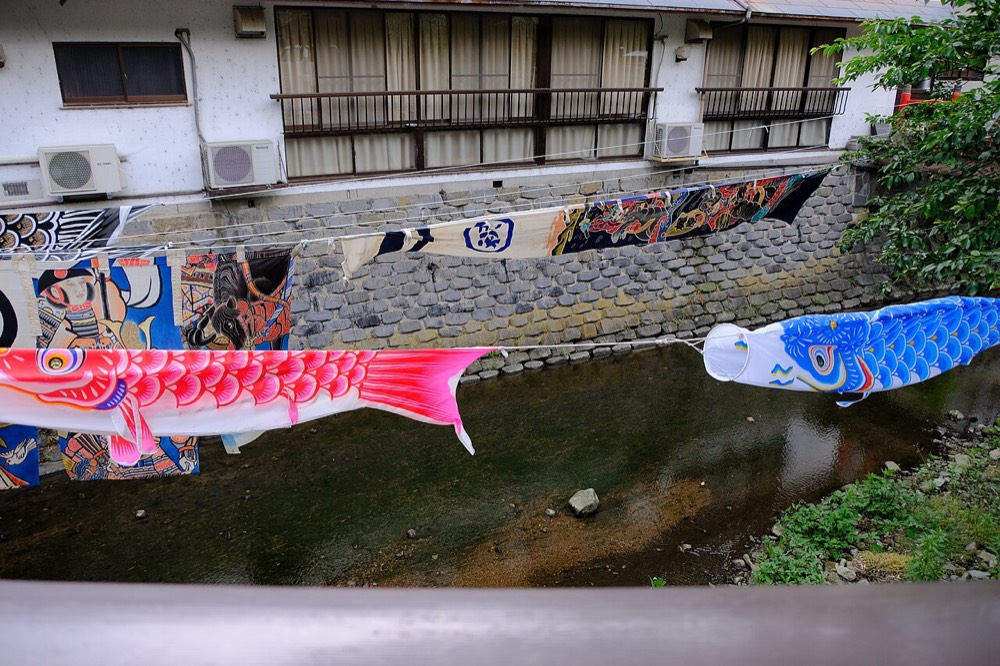
Kinosaki's official English tourism site stresses that accepting tattoos at its public baths is "a rarity" in Japan[4], which makes it one of the few onsen towns where travelers with large tattoos can go bath-hopping without worry. Each bath has a different closing day; for routes, see the Kinosaki Onsen guide.
Hakone Yuryo is in Hakone-Yumoto and works well as the last stop of a Hakone day trip. Public baths and ryokan in other onsen areas such as Kusatsu, Beppu and Noboribetsu each set their own rules, and official pages mostly do not summarize them in one place; check each facility's site before you go, or ask using the Japanese phrases below. The Kusatsu Onsen guide and the Beppu Jigoku Meguri guide cover transport and itineraries for those areas.
Where to look up tattoo-friendly onsen
- JNTO's official explanation: the Japan National Tourism Organization's English page covers the basics of tattoo rules, stickers and private baths[2].
- Japanese onsen information sites: Nifty Onsen, for example, has a regional list of baths that accept tattoos, while reminding readers to check details with each facility[9].
- The facility's own "ご利用案内" or "よくある質問" pages: search the page for 入れ墨, タトゥー or 刺青.
Listing sites can be older than official sites. Once you find a place listed as OK, confirm on its official site or by phone.
How to find private baths and in-room open-air baths, and what they cost
In short: private baths (kashikiri-buro) and rooms with their own open-air bath are the safest choice for large tattoos. Private baths at lodgings are free at some places and charged at others; day-use facilities charge by time slot.
A private bath is one you reserve or sign up for on the spot and have to your own group for a set time. JNTO notes that private baths usually cost extra and need to be booked ahead or arranged at the front desk[2]. For a real-world price, here is Hakone Yuryo's private open-air bath rooms, Hanare Yuya Kaden (checked November 2026, consumption tax and bathing tax included, priced per room)[6]:
| Room type | Capacity | Weekday, 120 min | Weekend/holiday, 120 min | 30-min extension (weekday / weekend) |
|---|---|---|---|---|
| Ichi-no-maki | 2 people | ¥10,400 | ¥11,400 | ¥2,600 / ¥2,850 |
| Ni-no-maki | 4 people | ¥12,400 | ¥13,400 | ¥3,100 / ¥3,350 |
| San-no-maki | 4 people | ¥14,400 | ¥15,400 | ¥3,600 / ¥3,850 |
Holiday rates also apply during Golden Week, mid-August and the New Year period[6]. Four people sharing Ni-no-maki on a weekday pay about ¥3,100 each, about 1.8 times the weekday large-bath price.
If you are staying overnight, filter lodgings like this:
- On Japanese booking sites, search for 「貸切風呂」 or 「客室露天風呂」; Jalan, for example, has a section titled 「貸切風呂のある温泉宿・ホテル」[14]. On English booking sites, search for "private onsen" or "private open-air bath"; filter names differ by site.
- Check whether the private bath is free and first-come, first-served, or paid and reserved, and whether you can book a slot when you book the room.
- A room with its own open-air bath (露天風呂付き客室) means no sharing at all, but costs more; book early for popular dates.
- After booking, still email the property about your tattoo and ask whether you can use the large bath.
The basics of ryokan meal plans, private baths and large baths are covered in how to choose a Japanese onsen ryokan, so they are not repeated here.
Can you go to a sento in Tokyo with tattoos?
In short: most ordinary sento will not turn you away for tattoos, but tell ordinary sento apart from super sento and spas, which often have bans.
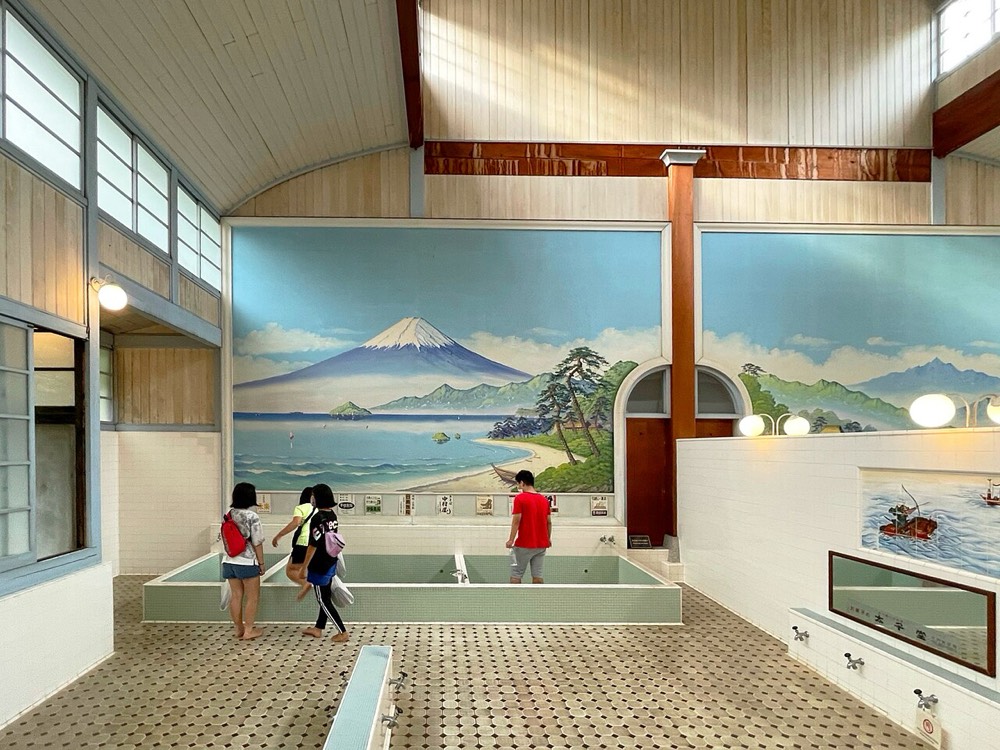
Ordinary sento are "general public baths" that serve public hygiene, and each prefecture sets a maximum bathing fee. The Tokyo Sento Association announced that from August 1, 2026, the adult fee (12 and over) at Tokyo sento is ¥600[7]. If the price at the door is clearly higher and the place has stone saunas, restaurants and the like, it is probably a super sento or spa, and you need to check its tattoo rules separately.
As noted above, the national bathhouse federation said in 2017 that it does not turn away tattooed customers[3]; however, the Tokyo Sento Association's site does not currently publish a statement on tattoos, and sento outside the association may have their own rules. The practical approach: check the sento's website or social media before going, or ask at the counter. Sento ban phone use and photos in the changing room and bathing area, and staff remind people about that more often than about tattoos.
How to ask about tattoos in Japanese: phrases you can copy
In short: ask ahead by email or phone, and state the location and size of your tattoo. That is far easier than being stopped at the door.
Steps:
- Decide what to ask: whether you can use the large bath, whether covering with stickers is OK, and whether there is a private bath.
- Email (or use the booking site's messaging) with the tattoo's location and approximate size; a photo makes it clearer.
- Keep the reply, and show it at check-in or at the entrance if the desk is unsure.
- On site, the posted rules and the front desk have the final say.
Useful Japanese phrases:
| What you want to ask | Japanese |
|---|---|
| I have a tattoo. Can I bathe? | タトゥーがあるのですが、入浴できますか? |
| Can I use the large bath? | 大浴場を利用できますか? |
| My tattoo is about the size of my palm | タトゥーの大きさは手のひらくらいです。 |
| I have a tattoo across my whole back | 背中全体にタトゥーがあります。 |
| Is it OK if I cover it with a sticker? | シールで隠せば入浴できますか? |
| Do you sell tattoo stickers? | タトゥーシールは売っていますか? |
| Do you have a private bath? Do I need to reserve it? | 貸切風呂はありますか?予約は必要ですか? |
| Do you have rooms with an open-air bath? | 露天風呂付きの客室はありますか? |
A sample email: 「〇月〇日に宿泊予定の〇〇です。右腕にタトゥー(約10cm×15cm)があります。大浴場を利用できますか。難しい場合、貸切風呂は利用できますか。」 Replace the date, name, body part and size with your own. (It says: I am staying on [date]; I have a tattoo on my right arm, about 10 cm × 15 cm; can I use the large bath, and if not, can I use the private bath?)
Do gyms, pools and beaches have tattoo rules too?
In short: some do. The rules are in each facility's terms of use or in local ordinances, so onsen are not the only places to check.
- Beaches: under Zushi City's ordinance on keeping Zushi Beach safe and pleasant, showing tattoos that intimidate others is banned at the beach in Kanagawa, and people who keep violating after repeated warnings are asked to leave[10]. Other beaches have different rules; check each municipality's notices.
- Pools, gyms, hotel pools: each sets its own rules. Common conditions are wearing a long-sleeved rash guard (ラッシュガード) or covering with stickers, and some ban tattoos outright. Before using one, search the "利用規約" or "ご利用案内" page for 入れ墨 or タトゥー.
- Theme parks and water parks: again, each park's rules apply; check before you go.
Which option fits your tattoo size?
In short: the bigger the tattoo, the more you should lean toward no-restriction facilities and private baths; small tattoos have the most options.
| Tattoo situation | Recommended approach | Less suitable |
|---|---|---|
| Small (finger, ankle, palm-sized or smaller) | Bring cover stickers and ask whether covered bathing is OK; ordinary sento and no-restriction onsen are options | Facilities whose official site says total ban |
| Medium (forearm, calf, part of a shoulder) | Pick facilities that state on their official site that tattoos are accepted, or use a private bath; check sticker limits | Trying to hide it with one or two stickers |
| Large (half the back or more, a full sleeve, several areas) | Places that clearly accept tattoos such as Kinosaki's public baths, private baths, rooms with an open-air bath | Super sento, large spas and other strict facilities |
| Traveling with children or older relatives, or just want to relax | Private baths or in-room open-air baths, with no need to think about others | Large baths at peak times |
If you have large tattoos and want to try several onsen, center your trip on onsen towns that clearly accept tattoos, and stay at ryokan with private baths elsewhere. It saves leaving it to chance at every stop.
Before you go
- Rules can change, and the official site is the final word: the facility examples here were checked on official sites in November 2026, so look again before you travel.
- Bring a few tattoo stickers for small tattoos, but confirm first that the facility accepts them.
- With large tattoos, book a private bath or a room with its own open-air bath, and keep an email record when booking.
- Tell ordinary sento apart from super sento and spas; their rules often differ.
- If you are turned away on site, follow the staff's explanation and switch to a private bath or another facility.
FAQ
Does Japanese law ban people with tattoos from onsen?
No. Restrictions come from each facility's house rules. A 2016 Japan Tourism Agency notice to the ryokan and hot spring industry said refusing someone solely because of a tattoo is not appropriate, and noted that tattoos pose no hygiene problem; the health ministry forwarded it to local health authorities that month. Each facility still makes the final call.
How big a tattoo can an onsen cover sticker hide?
There is no national size standard. Among the agency's examples, small tattoos (for example palm-sized) that do not intimidate others need no special handling, while larger ones are covered with stickers. Facilities set their own limits on the number and size of stickers, and some accept only the ones they sell, so ask at the front desk.
Can I go to a sento in Tokyo with tattoos?
Most ordinary sento will let you in. In 2017 the national bathhouse federation said it does not turn away tattooed customers and has no ban as an association. Super sento, spas and day-use onsen are a different category and often ban tattoos, so check which type a place is before you go.
How do I ask a ryokan about tattoos when booking?
Before booking, email the inn with the location and size of your tattoo, and ask whether you can use the large bath and whether there is a private bath. You can write: タトゥーがあるのですが、大浴場を利用できますか? with the size added. Keep the reply so you can show it at check-in.
How much does a private bath cost?
It varies widely. Private baths at ryokan are free at some inns and charged at others. At the day-use facility Hakone Yuryo, a private open-air bath room costs ¥10,400 to ¥14,400 on weekdays and ¥11,400 to ¥15,400 on weekends and holidays for 120 minutes (checked November 2026, tax and bathing tax included), shared by the group.
Do beaches and pools in Japan also restrict tattoos?
Some do. At Zushi Beach in Kanagawa, a city ordinance bans showing tattoos that intimidate others, and repeat violators are asked to leave. Public pools, gyms and hotel pools set their own rules, commonly requiring a long-sleeved rash guard or cover stickers, so read each facility's rules first.
Sources
- Ministry of Health, Labour and Welfare: Response to bathing by foreign travelers with tattoos (March 18, 2016, with the Japan Tourism Agency notice of March 16, 2016 and its annex): The agency's points to note and examples: cover stickers, palm-sized tattoos, time slots, private baths, rooms with their own bath
- JNTO: Onsen hot springs – on tattoos and etiquette: Case-by-case rules, where to buy tattoo stickers, private baths, emailing ahead
- J-CAST News: Bathing facilities that allow tattoos? Different rules at sento and day-use onsen (February 2017): Government written answer, comments from the national bathhouse federation and a hot spring industry association, ryokan under the Hotel Business Act
- Visit Kinosaki: The 7 Mystic Onsen: Kinosaki's public baths accept tattoos; ¥1,500 day pass
- Hakone Yuryo official site: Tattoo restrictions lifted from April 1, 2025
- Hakone Yuryo: Prices and hours: Large bath and private open-air bath rooms (Hanare Yuya Kaden): prices and hours
- Tokyo Sento Association: Bathing fee notice: Adult sento fee in Tokyo ¥600 from August 1, 2026
- Yokohama Minatomirai Manyo Club official site: Tattoo rule in the admission notes
- Nifty Onsen: Onsen, day-use hot springs and super sento that accept tattoos: Regional list of facilities that accept tattoos, with a reminder to confirm details with each facility
- Zushi City: Zushi Beach measures for fiscal 2022: Ordinance bans showing tattoos that intimidate others
- Kurokawa Onsen official site: FAQ: Tattoo rules differ by ryokan; ask ahead or use a private bath
- Arima Onsen Kin-no-yu: Facility information: Hours and prices; no tattoo policy stated on the page
- Travel Voice: Japan Tourism Agency survey finds about 30% of lodgings allow tattooed foreign guests to bathe (October 2015): 2015 survey: about 56% refuse, 13% conditional, 31% no restriction
- Jalan net: Onsen inns and hotels with private baths: List of onsen lodgings with private baths
Fares, opening hours and event dates can change. Information checked on 2026.11.07; please confirm with official sources before you go.