Hakone Day Trip Guide: Freepass Price, the Classic Loop and Hot Springs
Hakone day trip made easy: 2026 Hakone Freepass prices, the order of 8 transport modes on the loop, Owakudani and Hakone Shrine, a Shinjuku timetable and onsen tips.
Quick answer
The easiest Hakone day trip uses the Odakyu Hakone Freepass: the 2-day pass from Shinjuku is 7,100 yen for adults and 1,600 yen for children, and from Odawara or Hakone-Yumoto it is 6,000 yen for adults (confirmed October 2026). It gives unlimited rides on 8 kinds of transport, including the mountain train, cable car, ropeway, pirate ship and designated buses, plus one round trip between Shinjuku and Odawara. The Romancecar needs a separate limited express ticket.
A Hakone day trip is the classic outing from Tokyo: in the morning you take the Odakyu line from Shinjuku to Hakone-Yumoto, then ride the mountain train, cable car, ropeway and pirate ship in a loop, seeing the volcanic landscape of Owakudani and the Hakone Shrine torii on Lake Ashi, and finally return to Yumoto for a hot spring. This guide explains the 2026 price and use of the Hakone Freepass, whether to run the classic loop clockwise or counterclockwise, how long to spend at each stop, and backup plans for bad weather, so you can enjoy a complete day.
How Much Is the Hakone Freepass? 2026 Prices and What's Included
In short: the Hakone Freepass is an Odakyu pass. The 2-day pass from Shinjuku is 7,100 yen for adults, and includes one round trip on the Odakyu line between Shinjuku and Odawara, plus unlimited rides on 8 kinds of transport inside the Hakone area[1]. There is no 1-day pass, so even for a day trip you buy the 2-day pass.
| Starting station | 2-day adult | 2-day child | 3-day adult | 3-day child |
|---|---|---|---|---|
| Shinjuku, Yoyogi-Uehara | 7,100 yen | 1,600 yen | 7,500 yen | 1,850 yen |
| Machida | 6,820 yen | 1,600 yen | 7,220 yen | 1,850 yen |
| Odawara, Hakone-Yumoto, Gotemba, Mishima | 6,000 yen | 1,500 yen | 6,400 yen | 1,750 yen |
Prices are from the "Fares and where to buy" page of the Odakyu website[1], where you can also look up prices from other Odakyu stations.
What Transport Does the Hakone Freepass Cover?
The pass covers the following 8 modes, with unlimited boarding within the designated sections[2]:
- Hakone Tozan Railway (mountain train)
- Hakone Tozan Cable Car
- Hakone Ropeway
- Hakone Pirate Ship (sightseeing boat)
- Hakone Tozan Bus (designated sections)
- Sightseeing facility loop buses
- Odakyu Highway Bus
- Tokai Bus (designated sections)
It also includes one round trip on the Odakyu line between your departure station and Odawara, and you can get off along the way[1].
Rules to Know When Using the Freepass
- The Romancecar needs a separate limited express ticket: The pass includes only the ordinary fare, and the Romancecar is all reserved seating, so you must buy a limited express ticket separately[1][5].
- Regular sightseeing buses cannot be used[1].
- At the end of your trip, the pass is collected at your final station[1].
- If you go beyond the designated sections, you pay the difference.
- If a transport mode is suspended because of weather, you can apply for a refund at your final station for any mode you did not ride at all[1].
Where to Buy the Hakone Freepass
You can buy it with the Odakyu app "EMot," EMot online tickets, at Odakyu station ticket machines and windows, at the Odakyu Travel Service Center, at major Hakone Tozan Line stations, and at some travel agencies and 7-Eleven (Seven Ticket). It goes on sale from one month before your travel date, but station ticket machines sell only passes that start the same day[1]. A common approach among travelers from Taiwan is to buy it at the Odakyu ticket office after arriving at Shinjuku Station, or to buy a digital ticket ahead with EMot.
The Classic Hakone Loop: Recommended Route and Order
In short: for a day trip we recommend the counterclockwise loop: Shinjuku → Hakone-Yumoto → mountain train → Gora → cable car → Sounzan → ropeway → Owakudani → Togendai → pirate ship → Motohakone Port → bus back to Hakone-Yumoto. Going up the mountain in the morning gives you a better chance of seeing Mt. Fuji from Owakudani, and after a soak in Yumoto in the evening you can head straight back to Tokyo.
| Section | Transport | Highlights |
|---|---|---|
| Shinjuku → Hakone-Yumoto | Odakyu Romancecar, or express with a transfer | The Romancecar needs a separate limited express ticket; travel time varies by train |
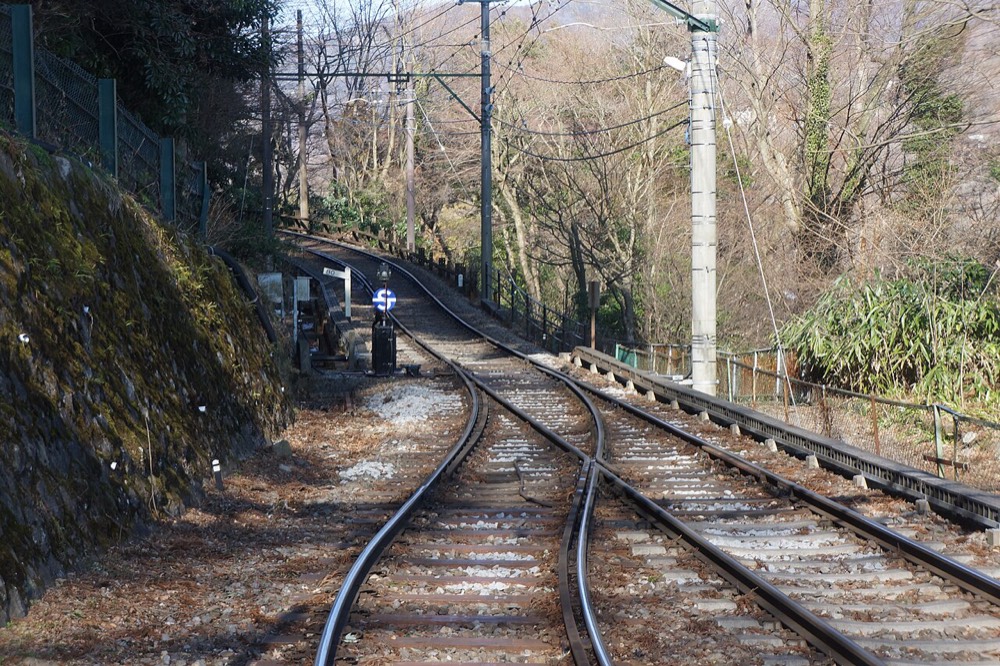
| Hakone-Yumoto → Gora | Hakone Tozan Railway | Climbs the mountain in switchbacks; lovely in the June hydrangea season |
| Gora → Sounzan | Hakone Tozan Cable Car | Funicular, short ride |
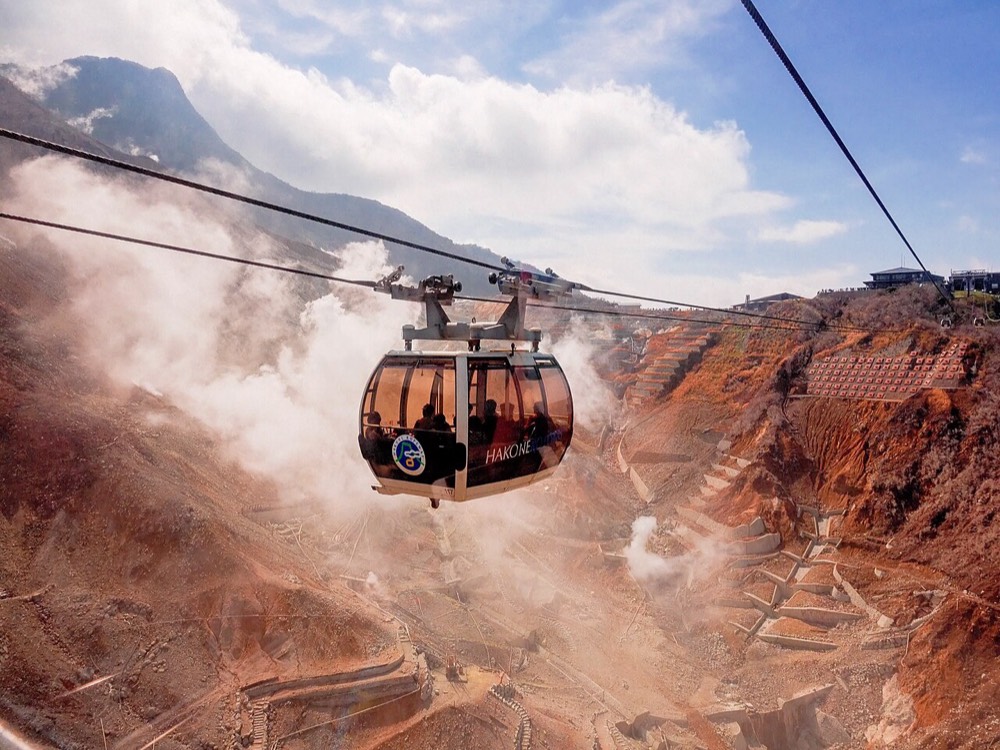
| Sounzan → Owakudani → Togendai | Hakone Ropeway | A bird's-eye view of the volcanic steam vents |
| Togendai → Hakone-machi Port / Motohakone Port | Hakone Pirate Ship | Lake Ashi cruise; Mt. Fuji is visible on clear days |
| Motohakone → Hakone-Yumoto | Hakone Tozan Bus | Descends along the old Tokaido road |
Romancecar travel time varies by train, so follow the Odakyu timetable[5]; for actual intervals and real-time operating status for each section, check Hakone Navi[3].
Why Counterclockwise?
The advantage of going counterclockwise (up the mountain first) is that cloud cover is usually lower in the morning, so you have a better chance of seeing Mt. Fuji from the ropeway and Owakudani. Also, taking the bus from Motohakone back to Yumoto in the afternoon connects neatly with a soak and your return trip. The opposite direction (bus to Motohakone first) also works, and suits those who want to visit Hakone Shrine first and avoid the morning lakeside crowds.
Hakone Sights: Highlights for a Day Trip
In short: with limited time in a day, build your day around Owakudani, the Lake Ashi pirate ship and Hakone Shrine, then add one museum or hot spring depending on your interests.
Owakudani: Volcanic Landscape and Black Eggs
Owakudani is a steam-vent area formed by Hakone's volcanic activity, and as the ropeway passes over it you can see white smoke rising from the valley. Its famous specialty is the "kuro-tamago" (black egg), an egg boiled in a hot spring pool until the shell turns black, and local lore says eating one extends your life. The Owakudani nature trail, which had been closed because of volcanic activity, can now be visited through "guided entry" with an online reservation from the Hakone Town Tourist Association[4].
Hakone Pirate Ship and Lake Ashi
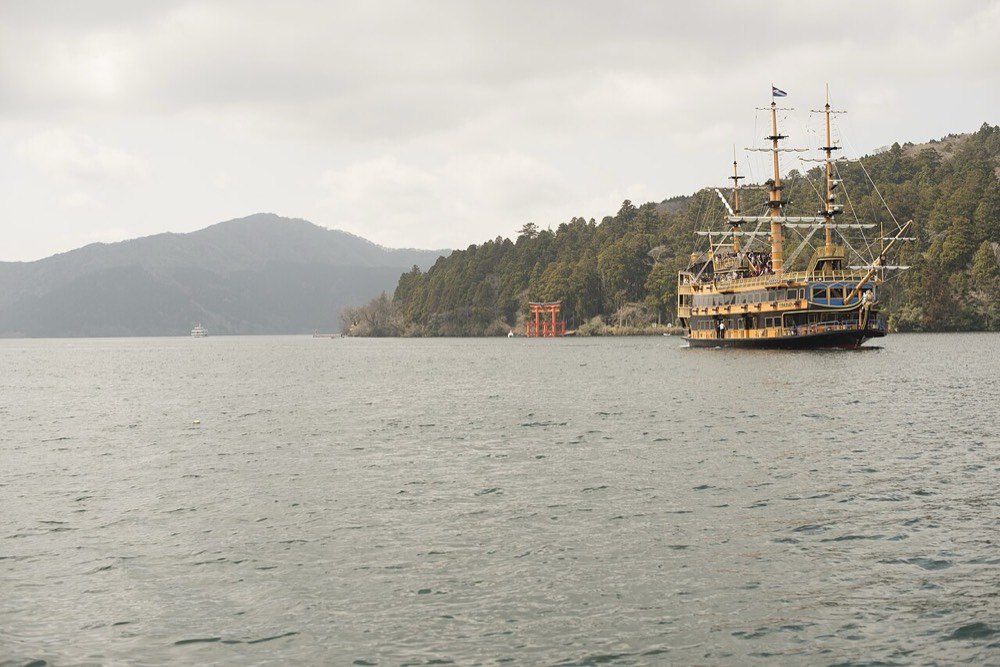
The Hakone Pirate Ship sails on Lake Ashi, connecting the three ports of Togendai, Hakone-machi and Motohakone, with ships built in a pirate-ship style that children especially love. On clear days you can see Mt. Fuji from the lake.
Hakone Shrine and the Torii in the Water
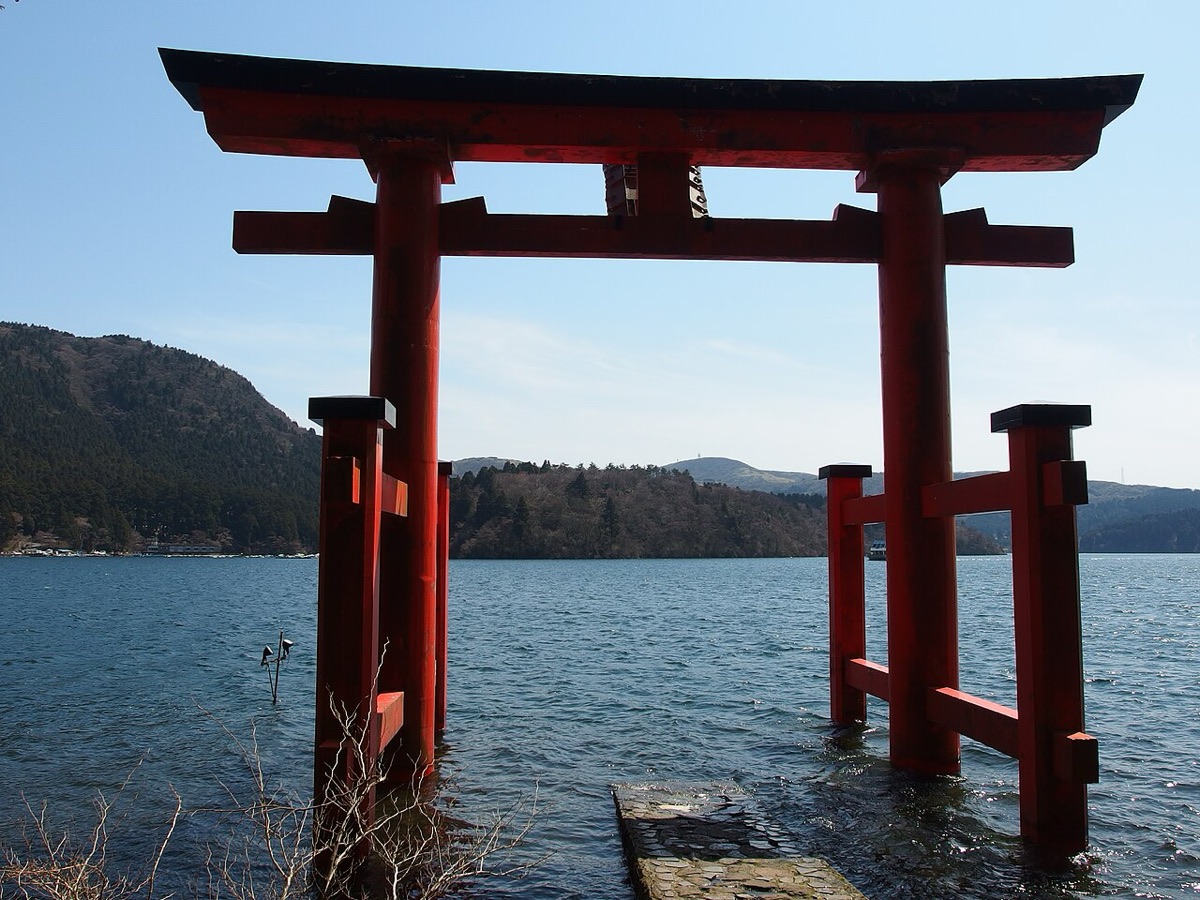
Hakone Shrine is near Motohakone Port, and its most famous feature is the "Peace Torii" standing in the water of Lake Ashi, Hakone's most popular photo spot. There is often a line to photograph the torii on weekends, so for a shot with fewer people, go early in the morning or toward evening.
Add a Stop by Interest
- Art: The Hakone Open-Air Museum (along the mountain train line) and the Pola Museum of Art are both listed among the Freepass discount facilities[2].
- Hot springs: Hakone-Yumoto has the most day-use hot springs, and they are on your way back.
Hakone Hot Spring Tips: How to Soak on a Day Trip
In short: the smoothest day-trip plan is to finish the loop, return to Hakone-Yumoto, and soak for one hour at a day-use hot spring, then go straight back to Shinjuku.
- Hakone-Yumoto is the gateway to the Hakone hot springs, and there are several day-use (same-day round trip) hot spring facilities near the station.
- The Freepass gives discounts at about 70 facilities, including hot spring facilities such as Hakone Yuryo[2]. Show your pass before entering and ask about the discount.
- If you want to stay one night, hot spring inns are concentrated around Gora and Sengokuhara. You can buy the 2-day pass and spread the loop over two days for a more relaxed trip.
Sample Hakone Day Trip Itinerary (From Shinjuku)
In short: leaving Shinjuku before 8:00 and returning by 6:00 to 7:00 p.m. is the most comfortable pace for a day trip.
| Time | Activity |
|---|---|
| 07:30–08:00 | Depart Shinjuku (Romancecar or express) |
| 09:30 | Transfer to the mountain train at Hakone-Yumoto |
| 10:30 | Cable car at Gora, ropeway at Sounzan |
| 11:00–12:00 | Walk around Owakudani, eat a black egg, lunch |
| 12:30 | Ropeway to Togendai, take the pirate ship |
| 13:30–15:00 | Motohakone: Hakone Shrine, lakeside walk |
| 15:30 | Bus back to Hakone-Yumoto |
| 16:00–17:00 | Soak in a hot spring in Yumoto, buy souvenirs |
| 17:30 | Train back to Shinjuku |
These times are a guide. Confirm actual departures using the route search on Hakone Navi[3].
How to Combine Hakone with the Rest of Your Tokyo Trip
- Hakone fits well in the middle of a Tokyo trip, giving you a day away from the city. If you also want to see Mt. Fuji, plan another day for the Mt. Fuji and Kawaguchiko day trip. The two routes are different, so it is hard to do both in one day.
- For Tokyo transport and how to use IC cards, see the Tokyo transport guide; for overall planning, see the Tokyo 5 days 4 nights itinerary.
- November is the autumn foliage season in Hakone. For foliage timing across Japan, see Japan autumn leaves 2026.
- You do not need to carry large luggage up the mountain. Leave it in a locker at Shinjuku Station, or use a luggage forwarding service in Japan.
Before You Go
- Check operating information the morning you go: The ropeway and pirate ship can both be suspended by strong wind, thick fog or volcanic conditions. The backup is to use Hakone Tozan buses to connect the areas[3].
- Choose a clear day: If you want to see Mt. Fuji, pick a sunny day and go up the mountain in the morning.
- Keep your pass safe: It is collected at your final station, and if you lose it you must pay for a replacement ticket yourself.
- Weekends and the foliage season are crowded, and there may be lines for the pirate ship and ropeway, so leave extra time.
FAQ
Is the Hakone Freepass worth it for a day trip?
In most cases, yes. There is no 1-day pass; the shortest is the 2-day pass. From Shinjuku the 2-day pass is 7,100 yen for adults and includes the round trip between Shinjuku and Odawara, plus the mountain train, cable car, ropeway and pirate ship. If you complete the classic loop it is usually cheaper than buying tickets separately. If you only go to Hakone-Yumoto for a hot spring and do not go up the mountain, it may not be worth it.
Can I ride the Romancecar with the Hakone Freepass?
Yes, but you must buy a limited express ticket separately. The Freepass covers only the ordinary Odakyu fare, and the Romancecar is all reserved seating, so buy the limited express ticket for your section on the Odakyu website, e-Romancecar or at a station.
Where can I buy the Hakone Freepass?
You can buy it with the Odakyu EMot app or EMot online tickets, at Odakyu station ticket machines and windows, at the Odakyu Travel Service Center, at major Hakone Tozan Line stations, and at some travel agencies and 7-Eleven (Seven Ticket). It goes on sale from one month before your travel date, but station ticket machines sell only passes that start the same day.
Will Owakudani close because of volcanic activity?
It can. The open areas around Owakudani are adjusted according to volcanic activity, volcanic gas levels and weather, and the ropeway may also stop. Check the operating information on Hakone Navi the morning you go. If a transport mode is suspended because of weather and you did not ride it at all, the Freepass rules allow a refund for that part at your final station.
Is there time for a hot spring on a Hakone day trip?
Yes, but it is best at the end of the day. After finishing the loop and returning to Hakone-Yumoto, soak for an hour at a day-use hot spring near the station, then take a train back to Tokyo. The Freepass gives discounts at about 70 facilities, including hot spring facilities such as Hakone Yuryo. If you have a tattoo, check first whether the facility allows bathing.
Sources
- Odakyu Electric Railway Hakone Freepass | Fares and where to buy: Pass prices, where to buy, and usage rules
- Odakyu Electric Railway Hakone Freepass: 8 transport modes, about 70 discount facilities
- Hakone Navi (Odakyu Hakone): Real-time operating status of each transport mode
- Hakone Town Tourist Association official site: Guided-entry reservations for the Owakudani nature trail
- Odakyu Romancecar: All reserved seating, limited express ticket required
Fares, opening hours and event dates can change. Information checked on 2026.10.19; please confirm with official sources before you go.