Beppu Hells Tour Guide: The 7 Jigoku, Common Ticket Prices, Bus Routes and Steam-Cooked Food
Beppu Hells guide: the 7 jigoku, the 2,400-yen two-day common ticket, 8:00–17:00 hours, buses between Kannawa and Shibaseki, time needed and steam cooking.
Quick answer
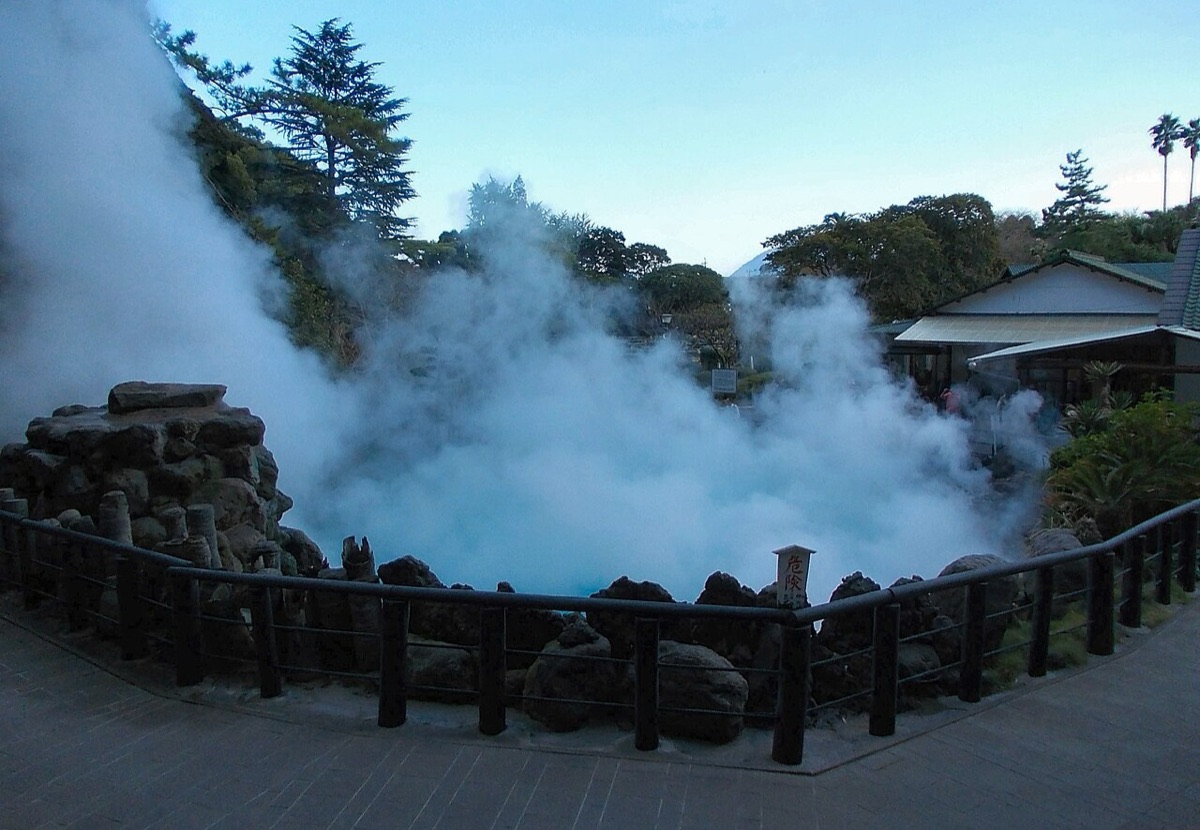
The Beppu Hells tour has seven sites. Umi, Oniishi Bozu, Kamado, Oniyama and Shiraike Jigoku sit together in Kannawa Onsen and can be linked on foot; Chinoike and Tatsumaki Jigoku are about 3 km away in the Shibaseki area and need a bus or car. All seven open daily from 8:00 to 17:00. The common ticket costs 2,400 yen for adults and 1,200 yen for children and is valid on the day of purchase and the next day; Umi Jigoku alone costs 500 yen for adults. The Kamenoi bus from Beppu Station to Kannawa takes about 20 minutes, and seeing everything takes about half a day (confirmed October 2026).
The Beppu Hells are the signature sight of Beppu Onsen in Oita Prefecture: seven natural hot springs close to 100°C, far too hot to bathe in, in colors from cobalt blue and milky white to blood red. Visiting them is known as the "hells tour" (jigoku meguri). This guide covers what each of the seven hells is like, the common ticket versus single admission, how to get between the Kannawa and Shibaseki areas, how much time you need, steam-cooked food and pudding, and why winter is a good time to go, so you can follow it and see them all smoothly.
What Is the Beppu Hells Tour? The 7 Hells at a Glance
The Beppu Hells tour means visiting seven natural steam vents and hot spring pools in Beppu City. According to the Japan National Tourism Organization, the water is heated by magma underground, and because it is too hot to bathe in, locals long ago called these springs "hells" (jigoku)[16]. The seven are run jointly by the Beppu Jigoku Association and open every day of the year from 8:00 to 17:00[1].
The seven hells are in two areas: five are in Kannawa Onsen and can be linked on foot, while Chinoike Jigoku and Tatsumaki Jigoku are about 3 km away in the Shibaseki area; the official site recommends a car or bus between the two[2]. Umi, Chinoike, Tatsumaki and Shiraike Jigoku are national Places of Scenic Beauty[16], and Chinoike Jigoku's official page says the designation came in 2009[5].
| Hell | Area | In one line | Water temperature (official) | National Place of Scenic Beauty |
|---|---|---|---|---|
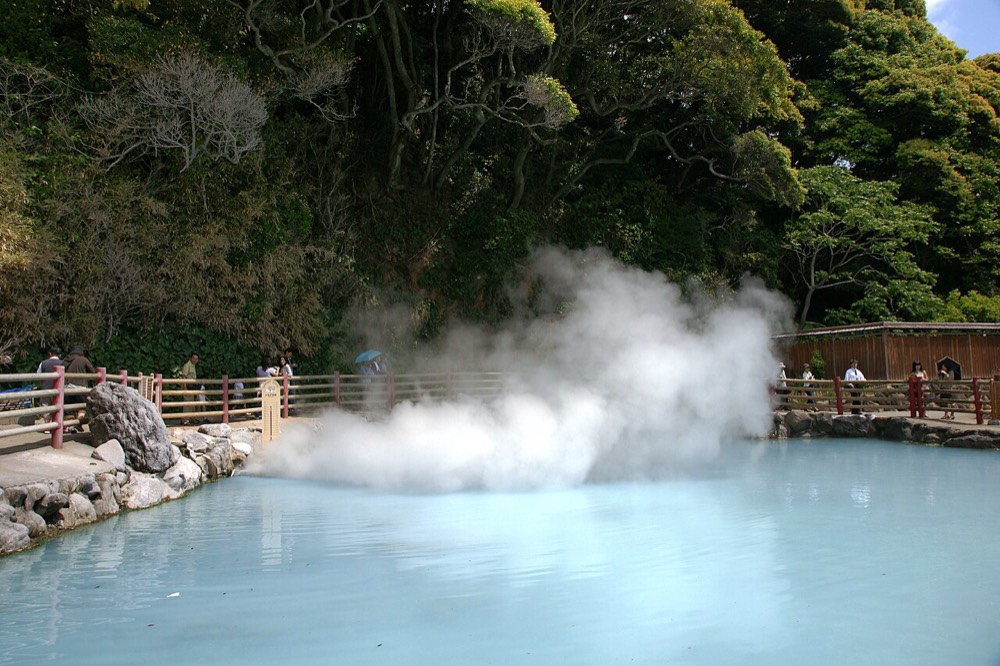
| Umi Jigoku (Sea Hell) | Kannawa | The largest of the seven, a cobalt-blue pool | About 98°C | Yes |
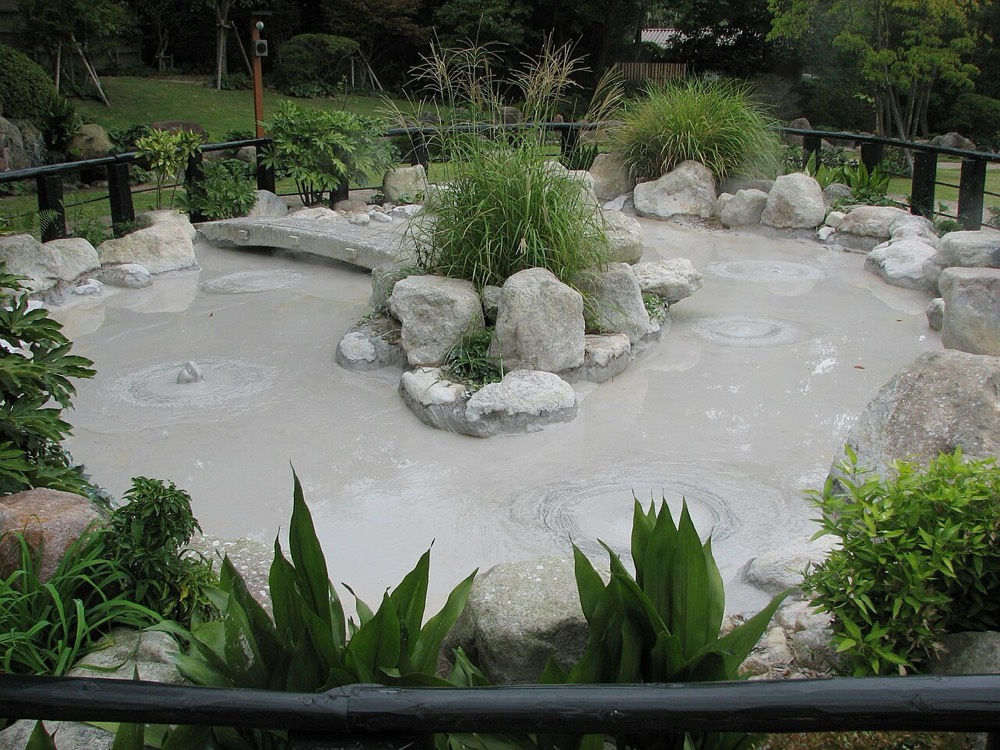
| Oniishi Bozu Jigoku | Kannawa | Grey boiling mud bubbles like shaved heads | About 99°C | No |
| Kamado Jigoku (Cooking Pot Hell) | Kannawa | Ponds of different colors from 1-chome to 6-chome, drinking spring | About 98°C | No |
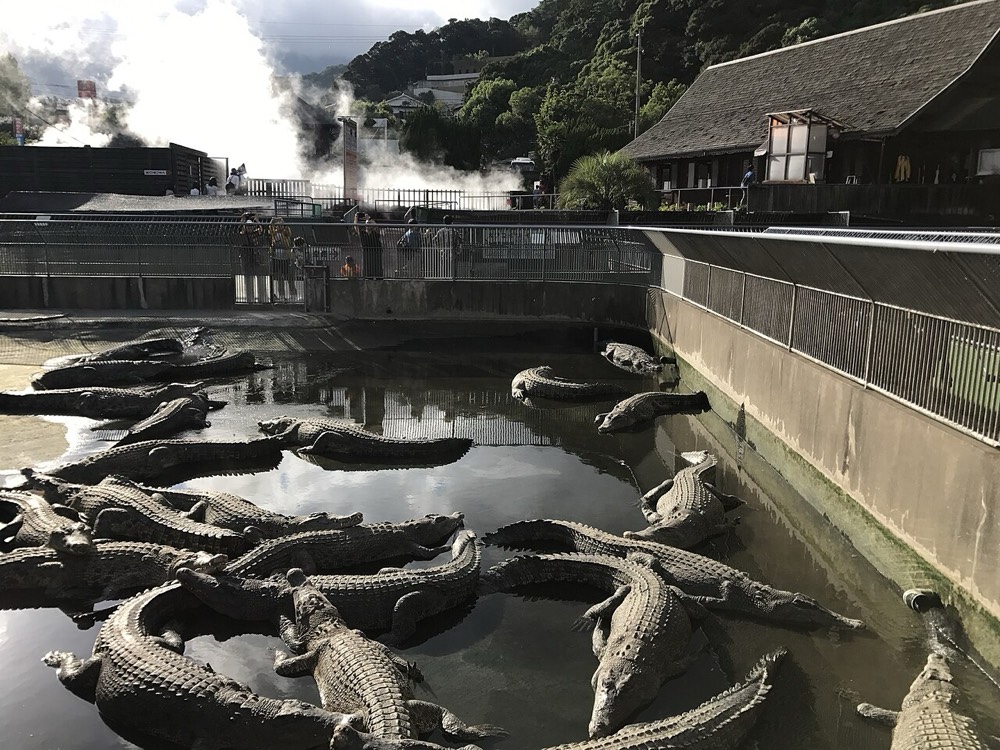
| Oniyama Jigoku | Kannawa | Also called "Crocodile Hell", home to about 70 crocodiles | About 99.1°C | No |
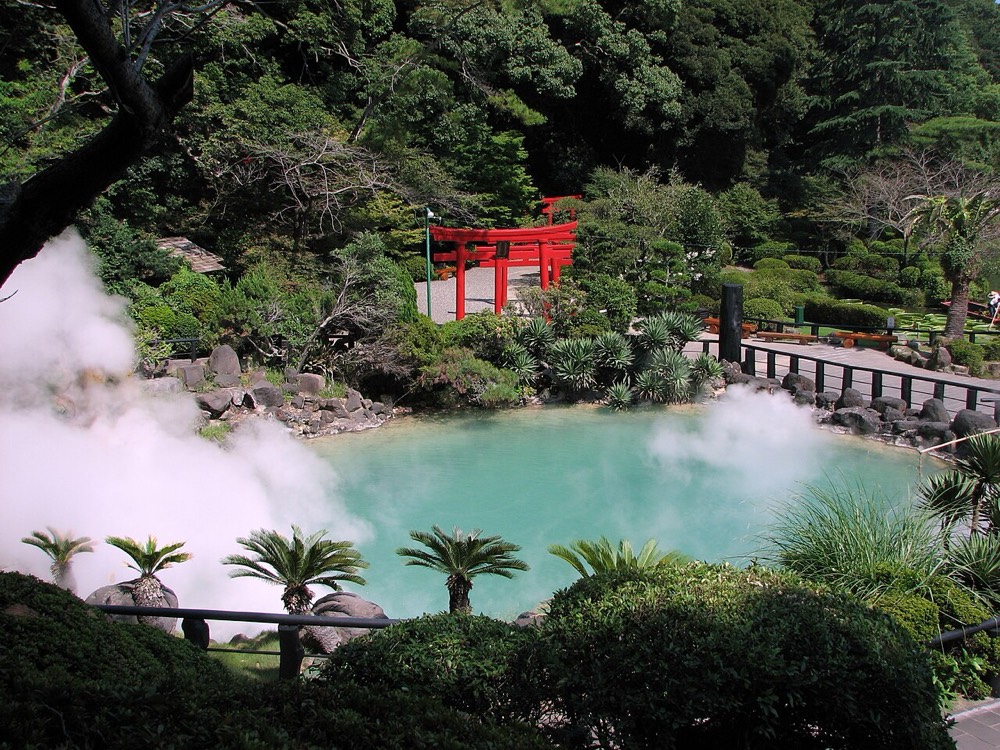
| Shiraike Jigoku (White Pond Hell) | Kannawa | Pale blue-white water in a Japanese garden | About 95°C | Yes |
| Chinoike Jigoku (Blood Pond Hell) | Shibaseki | Japan's oldest natural hell, a pond of red hot mud | About 78°C | Yes |
| Tatsumaki Jigoku (Tornado Hell) | Shibaseki | A geyser that erupts at intervals | About 105°C (steam) | Yes |
With only half a day and a wish to see the most photogenic ones, prioritize Umi, Chinoike and Tatsumaki Jigoku, then add Oniyama and Kamado Jigoku if time allows. For a two-day Yufuin and Beppu plan, see Yufuin and Beppu onsen in 2 days; this guide focuses on the hells themselves.
The 5 Kannawa Hells: Umi, Oniishi Bozu, Kamado, Oniyama and Shiraike
These five are close together. Walking down the slopes, you can see them all in about 2 hours; start at Umi Jigoku.
Umi Jigoku: The Largest, Cobalt-Blue Pool
Umi Jigoku is the biggest of the Beppu Hells, its water a sea-like cobalt blue. The official site explains the color comes from iron sulfate dissolved in the water, which is about 98°C[4]. Hot spring heat is used to grow Amazonian giant water lilies (Victoria) and tropical water lilies, which bloom from early May to early November and look best in the morning[4]. There is also a free footbath, a viewing deck, and a small gallery, Gallery Ao, on Umi Jigoku's history and how the hells form[4].
Oniishi Bozu Jigoku: Bubbling Grey Mud
Right next to Umi Jigoku. Grey hot mud keeps throwing up round bubbles that look like a monk's shaved head, hence the name; the water is about 99°C[10]. There is a free footbath, and at the back is Oniishi no Yu, a separately charged hot spring facility. Regular bathing costs 620 yen for adults, handy if you want a real soak midway through the tour[10].
Kamado Jigoku: Six Kinds of Hot Pools in One
Kamado Jigoku is named after an old tradition of cooking offerings with the hell's steam for the grand festival of the local Hachiman Kamado Shrine[8]. Its ponds are laid out from "1-chome" to "6-chome", each with a different color and character, and staff regularly demonstrate a small experiment that turns the steam suddenly thick. In the hands-on corner you can drink hot spring water of about 80°C and steam your hands and throat[8]. The shop's onsen eggs and puddings make it a popular rest stop.
Oniyama Jigoku: Crocodiles Warmed by Hot Springs
Oniyama Jigoku, nicknamed "Crocodile Hell", says it became the first place in Japan to raise crocodiles using hot spring heat, starting in 1923, and it now keeps about 70[7]. Feeding takes place at 10:00 every Saturday and Sunday, so arrive early if you want to watch.
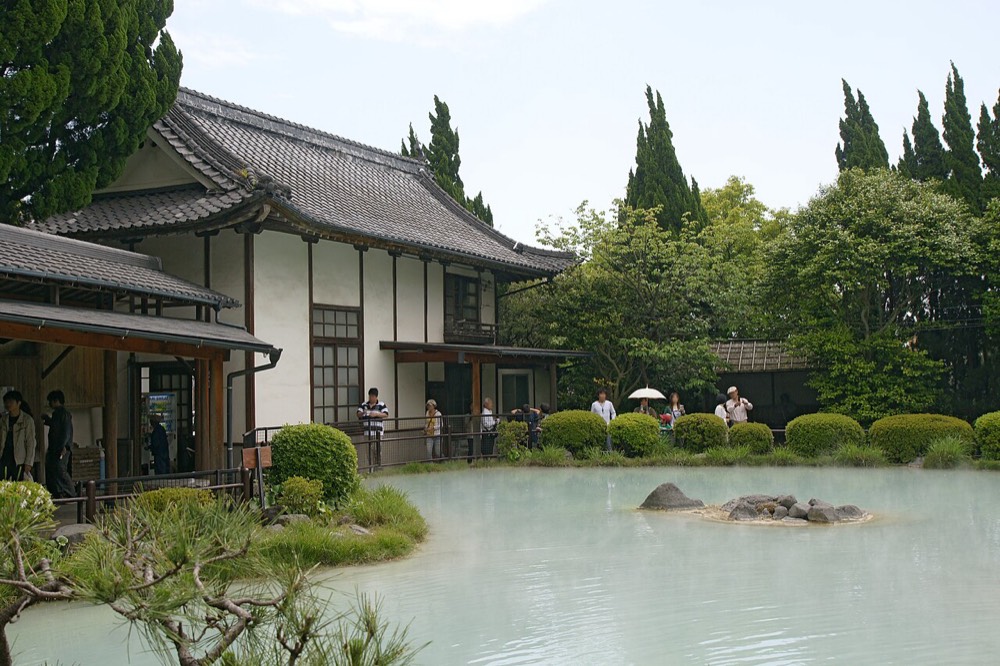
Shiraike Jigoku: Blue-White Water in a Japanese Garden
Shiraike Jigoku's water is clear when it emerges and turns a pale blue-white naturally as its temperature and pressure drop in the pond[9]. The setting is a quiet Japanese garden, with a tropical fish house showing about 20 species including arapaima[9]. It is usually the least crowded of the five, so it makes a relaxed last stop.
Chinoike and Tatsumaki Jigoku: The Two Shibaseki Hells
These two are next to each other, a few minutes apart on foot, and are usually visited after Kannawa.
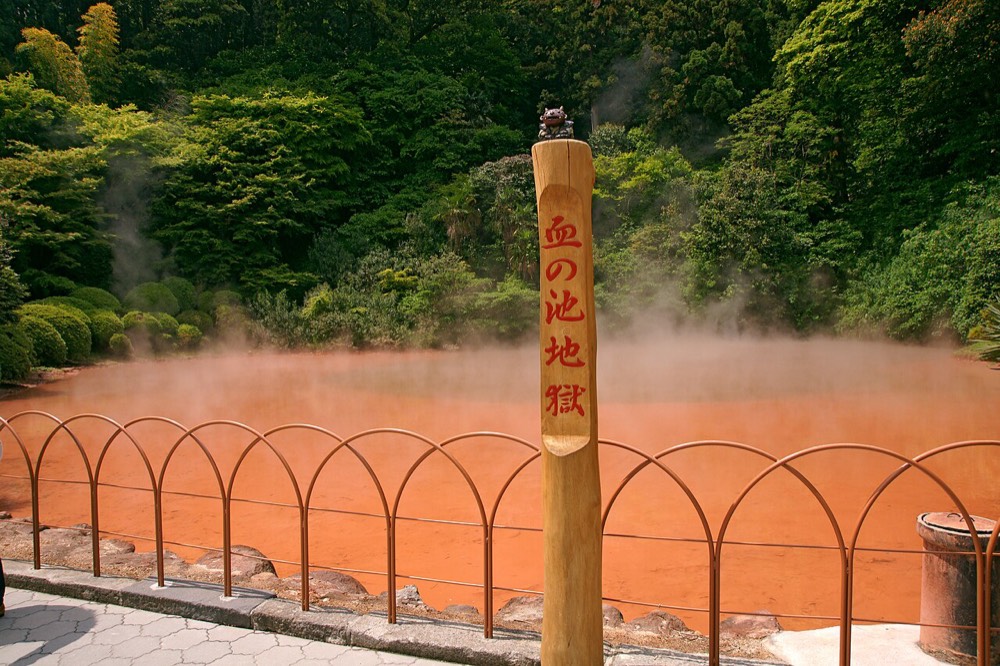
Chinoike Jigoku: Japan's Oldest Natural Hell
Chinoike Jigoku appears as the "red hot spring" in the Bungo no Kuni Fudoki, compiled in the Nara period, and the official site calls it Japan's oldest natural hell, more than 1,300 years old[5]. Iron oxide, magnesium oxide and other compounds formed under high heat and pressure erupt with hot mud and settle, dyeing the whole pond red; it covers about 1,300 square meters and the water is about 78°C[5]. There is a footbath, dogs are welcome, and the shop sells an ointment made from the pond's clay.
Tatsumaki Jigoku: Waiting for the Geyser
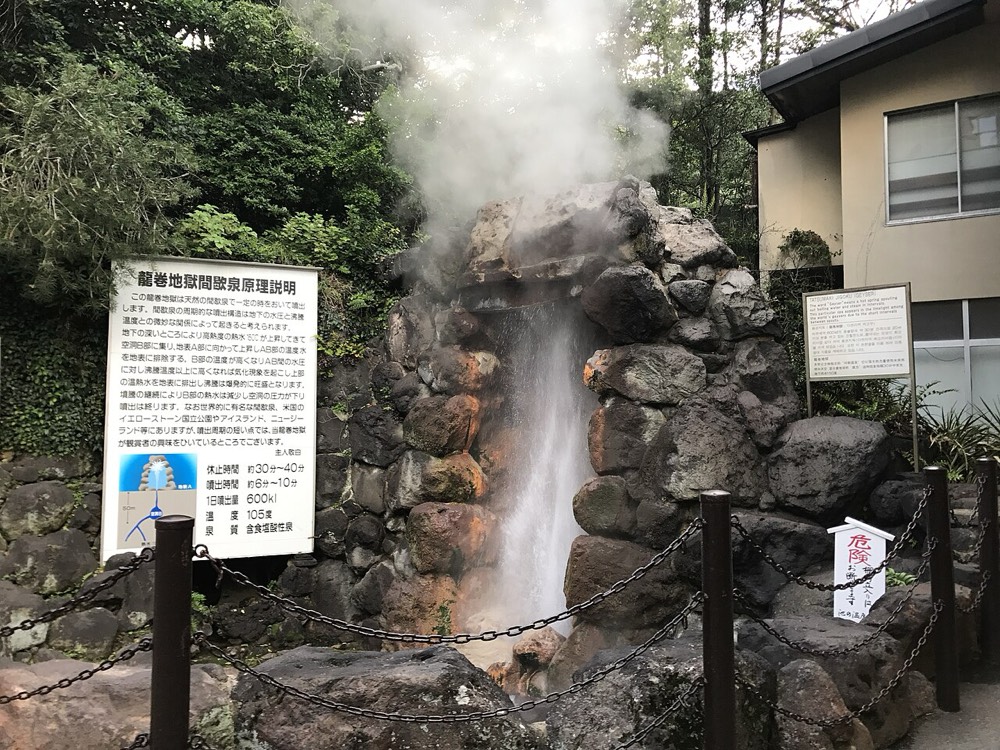
Tatsumaki Jigoku is a geyser designated a natural monument by Beppu City. At intervals it shoots out water and steam at about 105°C; it could reach about 30 meters, but a rock roof now holds it down[6]. The interval varies; the board on site gives a pause of about 30 to 40 minutes and eruptions of about 6 to 10 minutes. A lamp above the entrance sign turns red when an eruption is about to start or under way[6], so check it first; if it is off, see Chinoike Jigoku next door and come back.
How Much Are Beppu Hells Tickets? Common Ticket vs Single Admission
The Beppu Hells common viewing ticket gives one entry to each of the seven hells and can be bought at any ticket office. According to the Beppu Jigoku Association, prices from 1 February 2025 are[1]:
| Ticket | Adult (high school and up) | Elementary and junior high | Covers |
|---|---|---|---|
| Common ticket (individual) | 2,400 yen | 1,200 yen | One entry to each of the seven; valid on the purchase day and the next |
| Common ticket (groups of 20+) | 2,000 yen | 1,000 yen | Group sales only at Umi or Chinoike Jigoku |
| Umi Jigoku single admission | 500 yen | 250 yen | Umi Jigoku only[3] |
Choosing is simple:
- Five hells or more: buy the common ticket; it is the best value and saves queuing at each gate.
- Umi Jigoku plus one or two others: single tickets work out cheaper. Single prices are not listed together officially, so check at each ticket office except Umi Jigoku.
- Over two days: the common ticket is valid on the purchase date and the next day, and the date is stamped on it, so keep it safe[1].
Holders of a disability certificate can buy discounted tickets by showing it. Reselling common tickets is prohibited[1].
Getting to the Beppu Hells: Which Bus from Beppu Station?
In short: take a Kamenoi bus from JR Beppu Station to Kannawa (about 20 minutes), then a bus to Shibaseki after the five hells. By car, every hell has free parking, about 5 minutes from Beppu IC toward Kannawa[2]. For getting around the rest of Kyushu, see the Kyushu transport guide.
| Leg | How | Time and fare (as published) |
|---|---|---|
| Beppu Station → Kannawa (Umi-jigoku-mae) | Kamenoi Bus No. 2, 5, 24, 41 | About 20 minutes[2]; 330 yen one way for adults from the West Exit[13] |
| Kannawa → Chinoike-jigoku-mae | Kamenoi Bus No. 16 | The official site mentions both No. 16 and No. 26; check the timetable before you go[2] |
| Beppu Station → Chinoike-jigoku-mae | Kamenoi Bus No. 26 | About 40 minutes, 390 yen[2] |
| Beppu Station → Kannawa | Taxi | About 15 minutes, about 1,900 yen[2] |
| Beppu Station → Kamegawa Station | JR Nippo Line | About 5 minutes, 200 yen; about 25 minutes' walk from Kamegawa to Tatsumaki Jigoku[2] |
Suggested route by public transport:
- From Beppu Station West Exit, take a bus to Umi-jigoku-mae or Kannawa.
- Walk through Umi, Oniishi Bozu, Kamado, Oniyama and Shiraike Jigoku, stopping in Kannawa for lunch or steam-cooked food.
- Take a bus from Kannawa to Chinoike-jigoku-mae for Chinoike Jigoku and the neighboring Tatsumaki Jigoku.
- Return to Beppu Station on bus No. 26, or go to Kamegawa Station for the JR.
Is a Day Pass Worth It?
Kamenoi Bus's 1-Day Mini Pass costs 1,100 yen for adults and 550 yen for children and gives unlimited rides that day on regular routes within Beppu City and the Guru-supa sightseeing loop bus, but not on express buses, airport buses or scheduled sightseeing tours; the sales page currently lists use from 1 July to 31 December 2026[14]. The hells tour usually means three bus rides, so if you also plan to head to Beppu Station or another onsen area in the evening, the pass is convenient. If you are adding Yufuin, look at the 2-Day Wide Pass, which includes routes toward Yufuin, at 2,800 yen for adults[15].
Steam-Cooked Food and Hell-Steamed Pudding: What to Eat in Kannawa
The must-try in the Beppu Hells area is "jigoku mushi": cooking food directly in high-temperature hot spring steam, a method used in Kannawa since the Edo period[12].
Jigoku Mushi Kobo Kannawa is a public facility where you steam food yourself, along Ideyu-zaka in the Kannawa hot spring town, with free parking. You buy ingredients inside (seafood, vegetable and egg sets; the menu was revised on 1 October 2026), take a number, and when called, put your food in a steam oven of about 100°C, close the lid and time it[12]. Oven fees are[11]:
- Small oven: 400 yen for up to 15 minutes, plus 200 yen per extra 10 minutes
- Large oven: 600 yen for up to 15 minutes, plus 300 yen per extra 10 minutes
- Operating the ovens is for junior high school age and up; entry, the footbath and foot steaming are free; bringing your own food costs a fee
Hours are 10:00 to 19:00 (last oven order 18:00), closed on the third Wednesday of each month (the next day if that is a holiday). Upcoming closures on the official site are 18 November and 16 December 2026, and 20 January, 17 February and 17 March 2027[12]. No reservations are taken, and weekend lunchtimes often mean a wait, so go before 11:00 or after 14:00.
If you would rather not cook, the hells sell ready-made treats:
- Umi Jigoku's hell-steamed baked pudding: steamed in Umi Jigoku's hot spring, made only with eggs, milk and sugar, 400 yen each[4].
- Chinoike Jigoku's Chinoike pudding: 350 yen each, nice to eat while soaking your feet in the footbath[5].
- Onsen eggs and steamed buns: the shops at Umi, Oniishi Bozu and Kamado Jigoku all sell snacks made with hell steam[4][10].
How Long Does It Take? Autumn and Winter Visits and Pairing with Yufuin
Allow half a day (about 4 hours) to see all the Beppu Hells: about 2 hours for the five in Kannawa, 1 to 1.5 hours to get to and see the two in Shibaseki, plus time for steam-cooked food. JNTO's figure of 2 hours or more[16] covers the highlights only. Since the hells close at 17:00, set off around 9:00 to 10:00.
Autumn and winter are especially good for steam. Cold air condenses the vapor into white clouds faster, so Umi Jigoku and Chinoike Jigoku look far steamier in winter than in summer, and the hells' footbaths feel best on cold days. Around November, you can combine the trip with autumn leaf spots such as Kokonoe Yume Grand Suspension Bridge and Yabakei from Kyushu autumn leaves 2026.
Two common ways to extend an onsen trip:
- Beppu + Yufuin: stay in Yufuin the night before, take a morning bus to Kannawa for the hells, then stay in Beppu or return to Fukuoka. Details in Yufuin and Beppu onsen in 2 days.
- Beppu + Kurokawa Onsen: a reservation-only bus runs from Yufuin to Kurokawa Onsen, making a three-day onsen loop. See the Kurokawa Onsen guide.
Before You Go
- You cannot bathe in the hells: all seven are source springs close to 100°C. Stay behind the fences, do not touch the water, and hold children's hands. For a real soak, use Oniishi no Yu or Kannawa's public baths.
- Bring a towel for footbaths: the footbaths are free, but bring your own towel or buy one; Umi Jigoku's shop sells towels from 250 yen[4].
- Wear good walking shoes: Kannawa is a hilly town with stone paving and steps, and steamy spots can be slippery.
- Watch out for moisture on cameras: lenses fog near the pools and the sulfur smell lingers on clothes, so carry a lens cloth.
- Keep your ticket: the common ticket still works the next day, so do not throw away the date-stamped ticket.
- For other ideas around the region, start from the Kyushu travel overview.
FAQ
How much is the Beppu Hells common ticket, and can I use it over two days?
The common viewing ticket costs 2,400 yen for adults (high school age and up) and 1,200 yen for elementary and junior high students, with discounts for groups of 20 or more. The purchase date is stamped on the ticket, and it is valid that day and the next, with one entry to each of the seven hells. You can do Kannawa on day one and Chinoike and Tatsumaki on day two. Every hell's ticket office sells it.
I only want to see Umi Jigoku and Chinoike Jigoku. Do I need the common ticket?
Umi Jigoku's official site lists single admission at 500 yen for adults and 250 yen for children. If you only visit two or three hells, single tickets add up to less than the 2,400-yen common ticket; from five hells upward, the common ticket is better value. Single prices for the other hells are not listed together officially, so check at each ticket office.
How long does the Beppu Hells tour take?
The Japan National Tourism Organization gives about 2 hours or more. In practice, walking the five Kannawa hells takes about 2 hours, and getting to Shibaseki and seeing Chinoike and Tatsumaki takes another 1 to 1.5 hours. Add a steam-cooked meal and half a day is comfortable. The hells close at 17:00, so an afternoon start can feel rushed.
Can children use Jigoku Mushi Kobo, and do I need to book?
Jigoku Mushi Kobo Kannawa takes no reservations; you are called in order by numbered ticket. Its site says operating the steam ovens is for junior high school age and up, while entry, the footbath and foot steaming are free. A small oven costs 400 yen for up to 15 minutes, ingredients are sold inside, and bringing your own costs a fee. Hours are 10:00 to 19:00 (last oven order 18:00), closed the third Wednesday of each month.
How often does Tatsumaki Jigoku erupt?
Tatsumaki Jigoku is a geyser designated a natural monument by Beppu City, and its interval varies. The explanation board on site gives a pause of about 30 to 40 minutes and eruptions of about 6 to 10 minutes. There is a lamp above the entrance sign; when it is red, an eruption is about to start or under way, so check it when you arrive before deciding whether to wait.
Is winter a good time to visit the Beppu Hells?
Yes. Cold air makes the steam condense into thick white clouds, so Umi Jigoku and Chinoike Jigoku look far steamier in winter than in summer, and the footbaths at each hell feel great on a cold day. The downside is the 17:00 closing time and early winter sunsets, so start in the morning.
Sources
- Beppu Jigoku Meguri official site: Hours and fees: Common ticket prices from 1 February 2025, two-day validity, open daily 8:00–17:00
- Beppu Jigoku Meguri official site: Access: Bus routes and times from Beppu Station to Kannawa and Chinoike, approximate taxi fares and free parking
- Umi Jigoku official site: Admission: Umi Jigoku single admission and common ticket prices
- Beppu Jigoku Meguri official site: Umi Jigoku: Water about 98°C, blue color from iron sulfate, giant water lily season, steamed pudding price
- Beppu Jigoku Meguri official site: Chinoike Jigoku: Mention in the Bungo no Kuni Fudoki, water about 78°C, pond area, Chinoike pudding price
- Beppu Jigoku Meguri official site: Tatsumaki Jigoku: Beppu City natural monument geyser, steam about 105°C, entrance lamp
- Beppu Jigoku Meguri official site: Oniyama Jigoku: Crocodiles kept since 1923, about 70 animals, feeding at 10:00 on weekends
- Beppu Jigoku Meguri official site: Kamado Jigoku: Origin of the name, ponds numbered 1-chome to 6-chome, smoke demonstration and drinking spring
- Beppu Jigoku Meguri official site: Shiraike Jigoku: Why the water turns white, tropical fish house, about 95°C
- Beppu Jigoku Meguri official site: Oniishi Bozu Jigoku: Grey boiling mud, about 99°C, Oniishi no Yu bathing fees
- Jigoku Mushi Kobo Kannawa: Menu and prices: Steam oven fees, extension fees, junior high and up rule
- Jigoku Mushi Kobo Kannawa: Official site: Hours, third-Wednesday closures and 2026–27 closing dates, no reservations
- Jigoku Mushi Kobo Kannawa: Access: Bus routes and one-way fare from Beppu Station West Exit to Kannawa
- Kamenoi Bus: 1-Day Mini Pass: Beppu city day pass price, valid 1 July to 31 December 2026, excludes express buses and others
- Kamenoi Bus: 2-Day Wide Pass: Two-day pass price including routes toward Yufuin
- Travel Japan (JNTO): A hell to enjoy at Beppu Onsen: Overview of the seven hells, four national Places of Scenic Beauty, visit time of 2 hours or more
Fares, opening hours and event dates can change. Information checked on 2026.10.30; please confirm with official sources before you go.