Kumamoto Castle Guide 2026: What's Open Now, Tickets, the Main Keep and the Special Viewing Route
Is Kumamoto Castle open? Yes: as of November 2026 the keep and viewing route are open and road restrictions are lifted. Tickets, hours, restoration, Josaien and access.
Quick answer
Kumamoto Castle is open: it closed after the July 28, 2026 earthquake, reopened its main keep and special viewing route on August 13, and lifted the last road restrictions around Kato Shrine on November 18 (checked November 28, 2026). It is open 9:00 to 17:00 (last entry 16:00). Admission is 800 yen for high school students and older and 300 yen for elementary and junior high students. The Wakuwakuza museum and the 850-yen combo ticket return on December 1. Admission is free on December 19 and 20, and the castle is closed on December 29.
Kumamoto Castle is open, but it isn't quite the castle you see in older photos. The earthquake on July 28, 2026 caused about 40 stone walls to collapse or bulge, and the castle reopened on August 13 after 16 days closed[4]. Based on official information as of November 2026, this guide covers what you can see at Kumamoto Castle now, how to buy tickets and combo passes, what to look for along the special viewing route, what's on each floor of the main keep, how far restoration has come, and Sakuranobaba Josaien and transport at the foot of the castle. It ends with a sample half-day plan.
Is Kumamoto Castle Open? Status in November 2026
In short: Kumamoto Castle is open now. The main keep and the special viewing route are open as usual, the restaurants at Josaien are operating, and all post-quake road restrictions around the castle were lifted by November 18. The main exceptions are that the Uto Turret is still under repair and Wakuwakuza won't reopen until December 1. KAB Kumamoto Asahi Broadcasting reported that when the castle reopened on August 13, visitors could tour it as before the earthquake, except for part of the small keep's first floor[4].
| Area / facility | Status in November 2026 | Notes |
|---|---|---|
| Main keep (large and small keeps) | Open | Part of the small keep's first floor was closed at the August reopening |
| Special viewing route | Open | Collapsed and under-repair stone walls are visible along the way |
| Uto Turret | Being dismantled and restored; no entry | Completion expected in 2032 |
| Honmaru Palace | Closed; view from outside only | Restoration planned for completion in fiscal 2032 |
| Roads around Hyakken stone wall | Restrictions lifted September 17 | — |
| Roads around Kato Shrine | Restrictions lifted November 18 | Emergency works completed |
| Sakuranobaba Josaien "Sakura no Koji" | Open as usual | 23 food and souvenir shops |
| Kumamoto Castle Museum Wakuwakuza | Temporarily closed | Reopens Tuesday, December 1 |
The castle's official site announced on September 17 that traffic restrictions around the Hyakken stone wall had been lifted[12], and the one-way traffic restriction around Kato Shrine was lifted at 15:00 on November 18 after emergency works were completed[18]. Kato Shrine is a popular spot for photographing the Uto Turret and the main keep together, and you can now reach it as usual. The castle also notes that aftershocks or safety checks may change the open areas at short notice, so check the official "News" page again the day before you go.
In addition, the castle announced on November 27 that Kumamoto Castle will be open free of charge on Saturday, December 19 and Sunday, December 20, 2026, as part of the "2026 Kumamoto Earthquake Heart Recovery" program. Planned activities include a 360-degree VR experience, branding a Kumamoto Castle design onto a wooden tag, and writing messages on guri-ishi (the rubble stones packed behind the stone walls); details will be announced once finalized[20]. The notice does not say whether Wakuwakuza is also free on those days, so follow on-site and official guidance.
How Much Are Kumamoto Castle Tickets? Single, Combo and Annual Passes Compared
For most visitors an individual ticket is enough: 800 yen for high school students and older and 300 yen for elementary and junior high students. Preschoolers enter free[1]. If you also want to see Wakuwakuza, a combo ticket saves money.
| Ticket | High school and older | Elementary/junior high | Best for |
|---|---|---|---|
| Kumamoto Castle individual ticket | 800 yen | 300 yen | Seeing only the keep and the special viewing route |
| Two-venue combo (castle + Wakuwakuza) | 850 yen | 300 yen | Visitors after December 1 who want to see Wakuwakuza |
| Three-venue combo (+ Kumamoto City Museum) | 1,100 yen | 400 yen | History fans with time to spare |
| Kumamoto Castle annual pass | 1,600 yen | Not sold | Visiting twice or more within a year |
Here is the math: Wakuwakuza alone costs 300 yen for adults[7], so the castle plus Wakuwakuza bought separately comes to 1,100 yen, while the two-venue combo is just 850 yen, saving adults 250 yen. Wakuwakuza is still closed in November 2026, though, and sales of the two- and three-venue combo tickets are suspended; the castle has announced both return on December 1, and online tickets for visits from December 1 are already on sale[19]. Until the end of November, a castle-only ticket is all you need.
There are two ways to buy:
- Online e-ticket in advance: Buy on the official castle website. A QR code is sent by email, and you show it on your phone or as a printout at the entrance. Tickets can't be canceled, changed or refunded[1].
- On site: The Ninomaru ticket counter sells tickets only until 16:00 all year[1].
On December 19 and 20, Kumamoto Castle is open free of charge, so you do not need a castle ticket on those days[20].
Group rates (30 or more people) are 640 yen for high school students and older and 240 yen for elementary and junior high students. Your photo is taken when you buy an annual pass, which is sold only at the Ninomaru ticket counter from 8:45 to 16:00[1].
Kumamoto Castle Opening Hours and the Best Time to Visit
November 2026 falls under the September-to-June hours: 9:00 to 17:00, with last entry at 16:00 and last entry to the main keep at 16:30. In July and August the castle stays open until 19:00 (last entry 18:00)[1]. It is closed every year on December 29 and may close temporarily in bad weather. The extended hours for the 2026 autumn castle festival ended on November 1.
There are entrance rules that first-time visitors often miss:
- Weekdays: Entry is through the south gate only.
- Weekends and public holidays: Either the north or south gate.
- The north gate may close depending on construction progress[1].
When is the best time to go? Aim for a weekday at the 9:00 opening. The route is a one-way elevated walkway, and with fewer people you can stop and look at the stone wall details. If you go in the afternoon, enter by 15:00 at the latest so you have time for both the route and the keep.
It's also worth staying a little after dark. The official castle site says that after the earthquake, to lift people's spirits, the castle is lit up all night for the time being. About 15 minutes after sunset there is a sunset-colored effect, and the whole keep is lit until 23:00[14]. The illumination is visible from outside the castle, so no ticket is needed. On some dates in late November the lighting turns pink for "Kumamoto Hanahaku 2026"; check the illumination calendar on the official site for dates.
How to Tour Kumamoto Castle: From the Special Viewing Route to the Main Keep
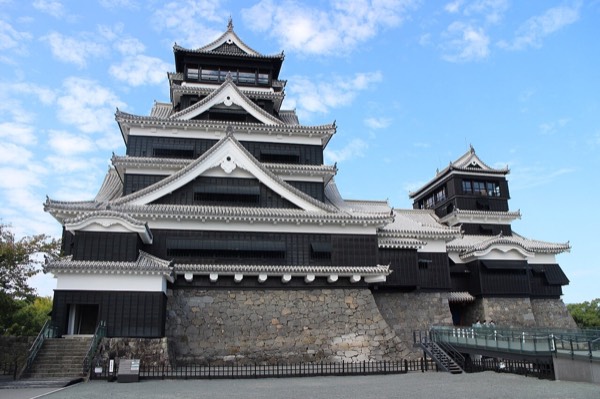
Kumamoto Castle is currently shown "while being restored." Visitors walk along an elevated special viewing route, looking down on the restoration sites, then reach the plaza in front of the keep and climb the main keep. Kumamoto City completed this walkway in March 2020 and opened it to the public in June. The plan is to remove it once restoration of the main area is finished[5].
The basic route:
- Enter through the south gate (weekdays) or the north gate (weekends and holidays).
- Walk up onto the special viewing route, passing through the Iidamaru and Takenomaru areas.
- Reach the plaza in front of the main keep and enter the keep through the entrance in the small keep's basement.
- Work your way up through the exhibits to the sixth-floor observation level.
- Come back down and follow the signs out, then head toward Josaien to eat or shop.
On the official introductory route, the castle itself takes about 90 minutes[16].
What to See Along the Special Viewing Route
The special viewing route lets you see "Kumamoto Castle not yet repaired" up close. Highlights listed on the official site include the stone storage area at Bugyomaru, the stone walls of the Nishi Yagura Gate and Hyakken Turret, the Sukiyamaru two-story hall, the Iidamaru Five-Story Turret, the large camphor tree at Iidamaru, the "Niyo no Ishigaki" double stone walls, the important cultural property turrets at Higashi-Takenomaru, the "Kurayami Tsuro" dark passage leading to the Honmaru, and the exterior of the Honmaru Palace[2].
A few places worth stopping:
- Stone storage area at Bugyomaru: Stones from collapsed walls are numbered and laid out one by one so they can be put back in their original positions. From the route you can see rows of neatly arranged stones.
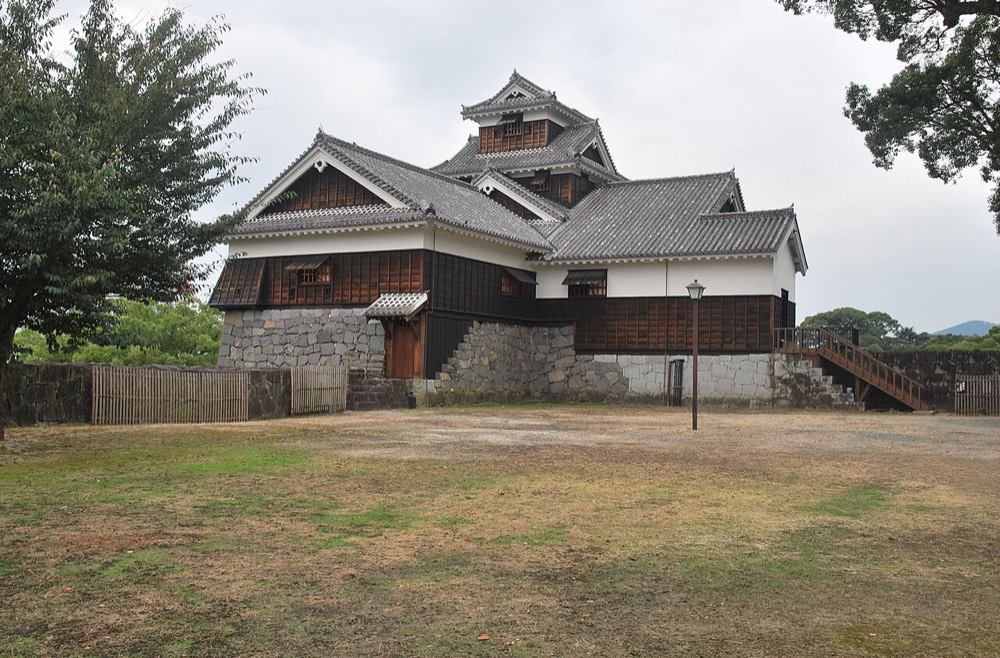
- Iidamaru Five-Story Turret: After the 2016 earthquake, this turret was held up by a single corner of stone wall, which became known as the "miracle single stone wall." According to Kumamoto City, the turret was dismantled and that section of wall was restacked in January 2024[5]. The photo above shows it before the earthquake.
- Niyo no Ishigaki (double stone walls): In one spot you can see stone walls from different periods, built at different slopes, layered together. It's a classic example of Kumamoto Castle's stonework.
- Higashi-Takenomaru turrets: This area has several turrets and gates designated as national important cultural properties. Kumamoto City notes that the castle has 13 nationally designated important cultural property buildings and 973 stone wall faces in total[5].
Main Keep Exhibits by Floor
The main keep was restored after the 2016 earthquake and reopened on April 26, 2021 with all-new exhibits that focus on the history of the keep itself[2]. The floors are as follows:
| Floor | Theme | Highlights |
|---|---|---|
| Basement (small keep) | Entrance | Original stone walls and a well, recreating an Edo-period kitchen space |
| 1F | Kato era | Kato Kiyomasa's castle building and the castle town, a large keep model, theater films |
| 2F | Hosokawa era | Projection-mapped models of the castle and town, the keep as an armory |
| 3F | Modern era | Military control after the Meiji period, the keep burning in the Satsuma Rebellion, the 1960 reconstruction |
| 4F | Present day | Damage from the 2016 Kumamoto earthquake and the keep's restoration, digital plaque of Restoration Castle Lords |
| 6F | Observation floor | Views of the castle under restoration and Kumamoto city |
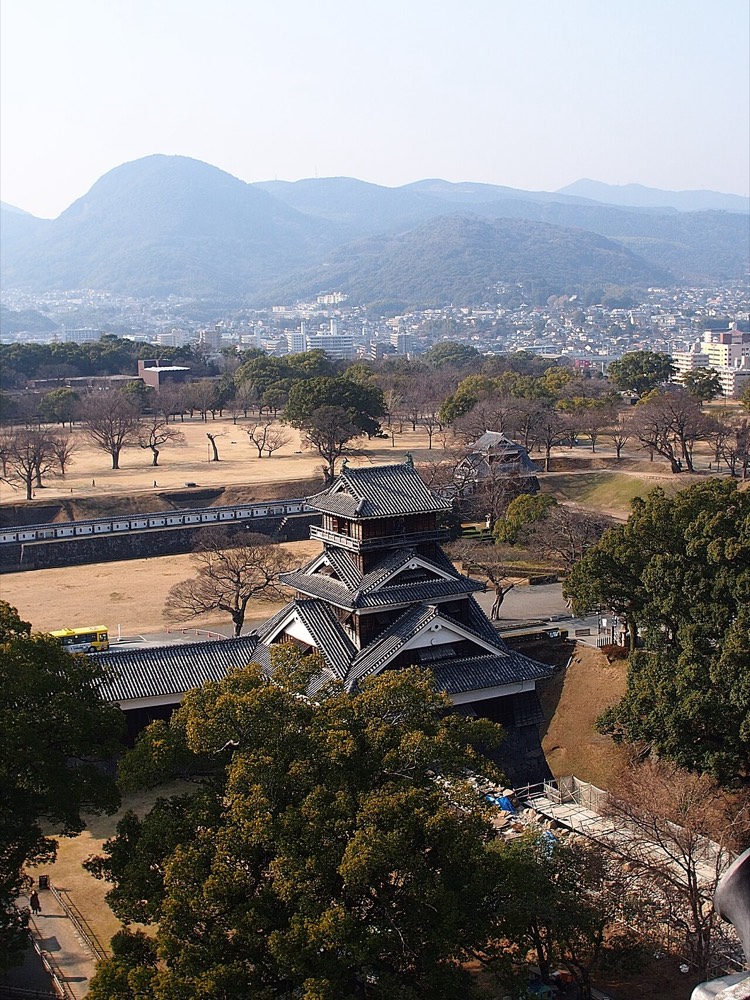
Download the "Kumamoto Castle Official App" first. It offers audio commentary on the exhibits in Japanese, English, Mandarin, Cantonese and Korean, and on the sixth floor its AR feature overlays early Meiji-era photos taken from the top of the keep onto today's view[2]. Free Wi-Fi inside the keep lets you download it there. The 2026 earthquake left uneven spots in the keep's floors[3], so follow on-site directions if the route inside has changed.
Note: There are no coin lockers in the paid area, and wheeled suitcases aren't allowed in the main keep[1]. If you have large luggage, leave it at Kumamoto Station or your hotel first.
Uto Turret: The Only Multi-Story Turret Surviving Since the Castle Was Built
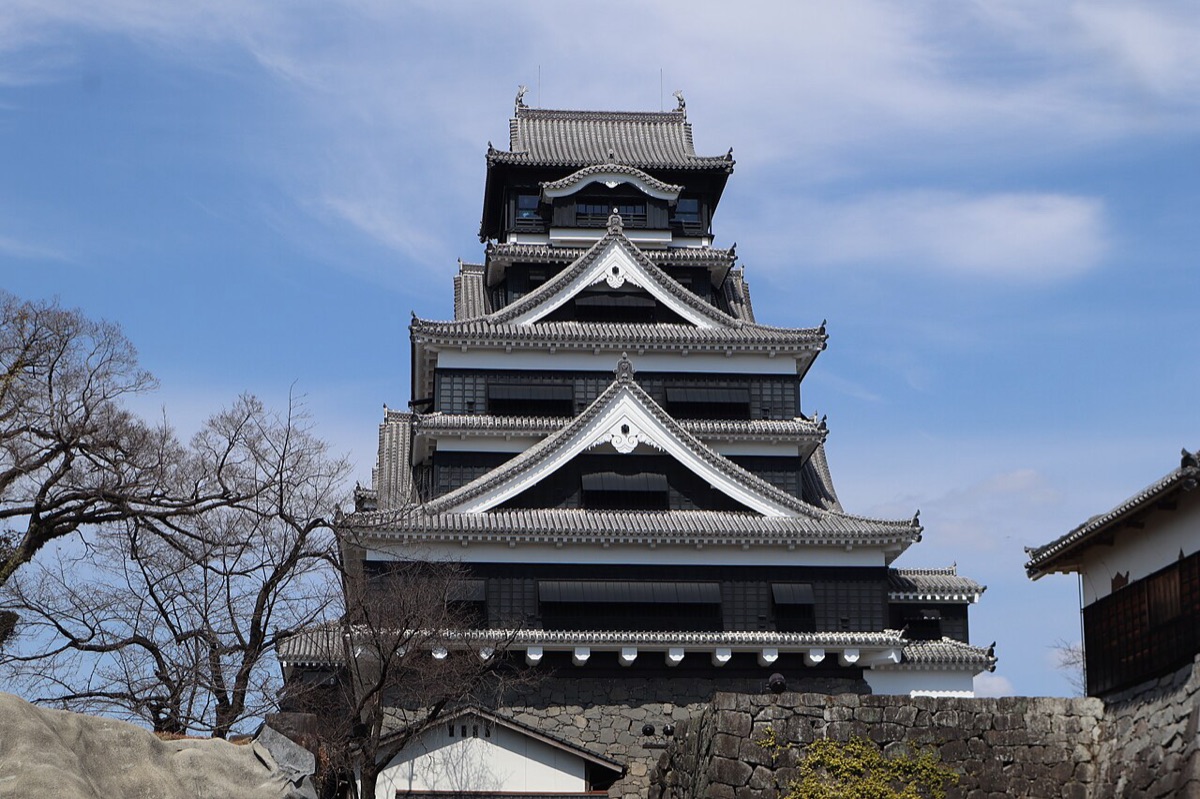
The Uto Turret is the only multi-story turret at Kumamoto Castle that has survived since the castle was built. It has three roofs, five floors above ground and one basement level, and it is a national important cultural property. It partly collapsed in the 2016 earthquake, and full dismantling and restoration began in 2022, with completion expected in 2032[2].
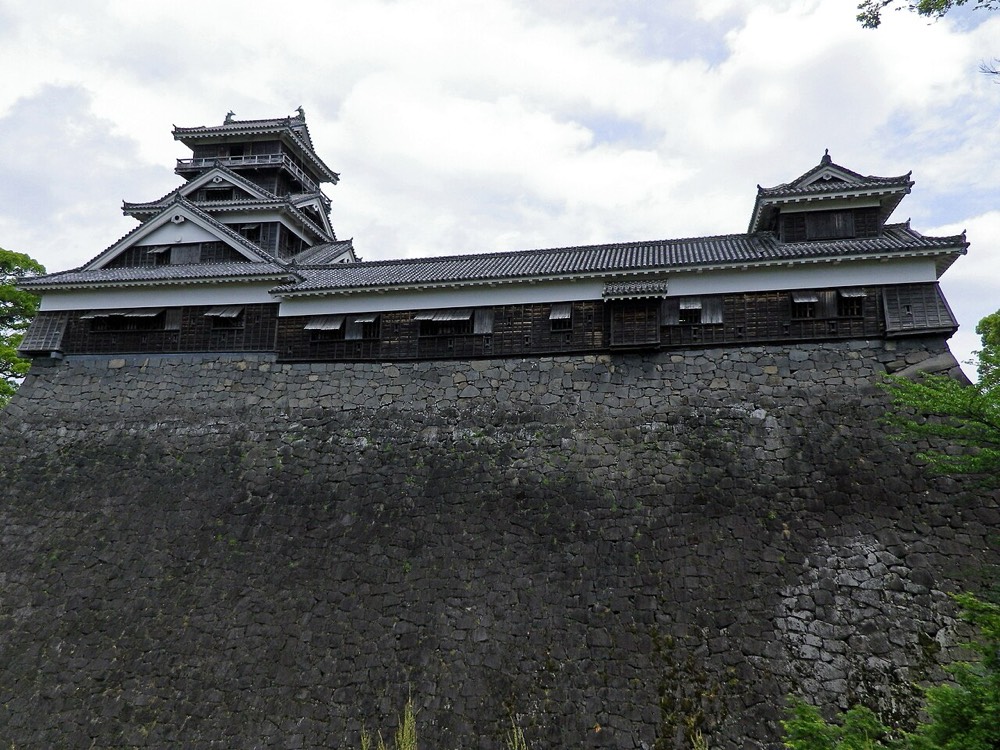
The Uto Turret is under restoration now, so you can't see it as complete as in the photo, and you can't go inside. The official site says it holds occasional "Uto Turret special openings" that let visitors see the work up close[2]. Whether and when these happen depends on announcements on the official site. If nothing is announced, look out toward the west side from the sixth floor of the main keep.
Kumamoto Castle Restoration: What You Can See After the 2016 and 2026 Earthquakes
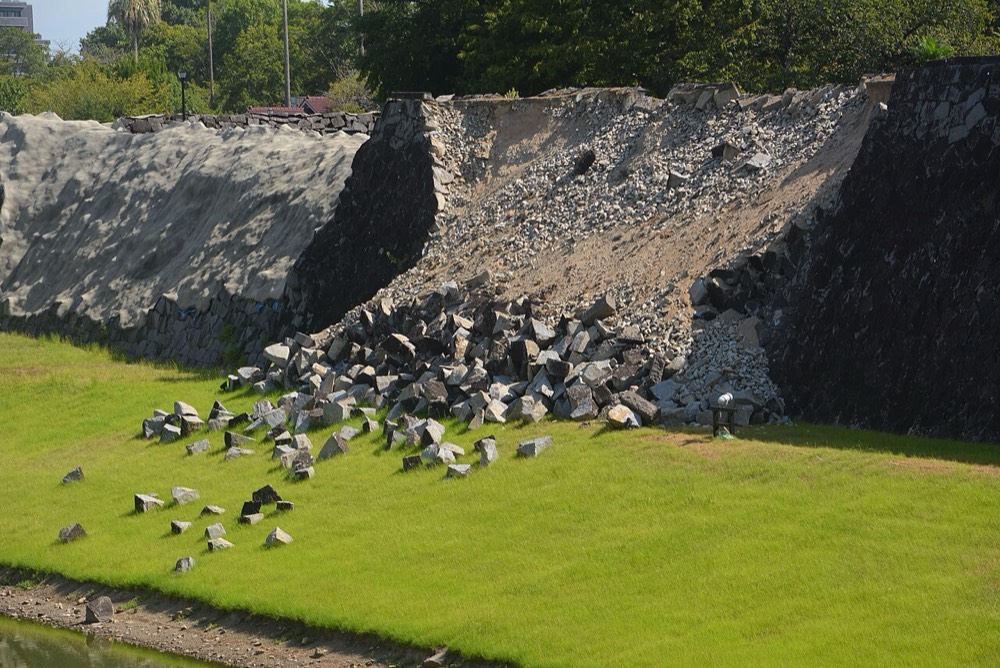
In one sentence: restoration of Kumamoto Castle was originally aimed at completion in fiscal 2052, and the plan is being reviewed after the 2026 earthquake. The 2016 Kumamoto earthquake caused widespread damage, including the collapse of two turrets that were national important cultural properties[3]. The July 28, 2026 earthquake caused about 40 stone walls to collapse or bulge and damaged 11 places, including the main keep[4].
| Date | Event |
|---|---|
| April 2016 | Kumamoto earthquake; widespread damage to the main keep, Uto Turret, stone walls and more |
| March 2020 | Special viewing route completed; opened to the public in June |
| April 26, 2021 | Main keep restoration completed; new exhibits open |
| 2022 | Full dismantling and restoration of the Uto Turret begins |
| July 28, 2026 | Another earthquake; Kumamoto Castle closes |
| August 13, 2026 | Main keep and special viewing route reopen |
| Fiscal 2032 (planned) | Uto Turret and Honmaru Palace restoration completed |
| Fiscal 2042 (planned) | All important cultural property buildings and the main area restored |
| Fiscal 2043–2052 (planned) | Special viewing route removed; work outside the main area |
The planned schedule comes from Kumamoto City's Kumamoto Castle Restoration Basic Plan (revised March 2023)[5], which was drawn up before the 2026 earthquake. KAB reported that the city will re-examine the restoration plan with experts[4], and no new timetable had been published as of November 2026.
For travelers, this means the Kumamoto Castle you see now is "restoration in progress." Collapsed stone walls, turrets wrapped in scaffolding and numbered rows of stones are sights you can only see during this period. If you're hoping for a complete castle landscape, be prepared: many angles currently include construction fences and cranes.
What Is the Restoration Castle Lord Program?
"Restoration Castle Lord" (Fukko Joshu) is a donation program Kumamoto City set up to fund the castle's restoration. Donate 10,000 yen or more at one time and you are registered as a Restoration Castle Lord. You receive a "Castle Lord certificate" and a "Castle Lord commemorative card" with a new design each year, and your name appears on the digital plaque on the fourth floor of the main keep[11].
- On site: At the Restoration Castle Lord desk next to the Ninomaru rest area, 9:00 to 17:00 (except December 29).
- Post office transfer: Use the dedicated transfer form, which you can request from the Kumamoto Castle General Office.
- Online: Through Japanese hometown tax donation (furusato nozei) websites.
Two things to note: the commemorative card can't be used for free admission, and Japanese tax deductions apply only to people who pay tax in Japan[11]. As of the end of March 2026, there had been about 242,000 Restoration Castle Lord donations totaling about 4.3 billion yen.
Sakuranobaba Josaien: What to Eat, and Wakuwakuza Reopening December 1
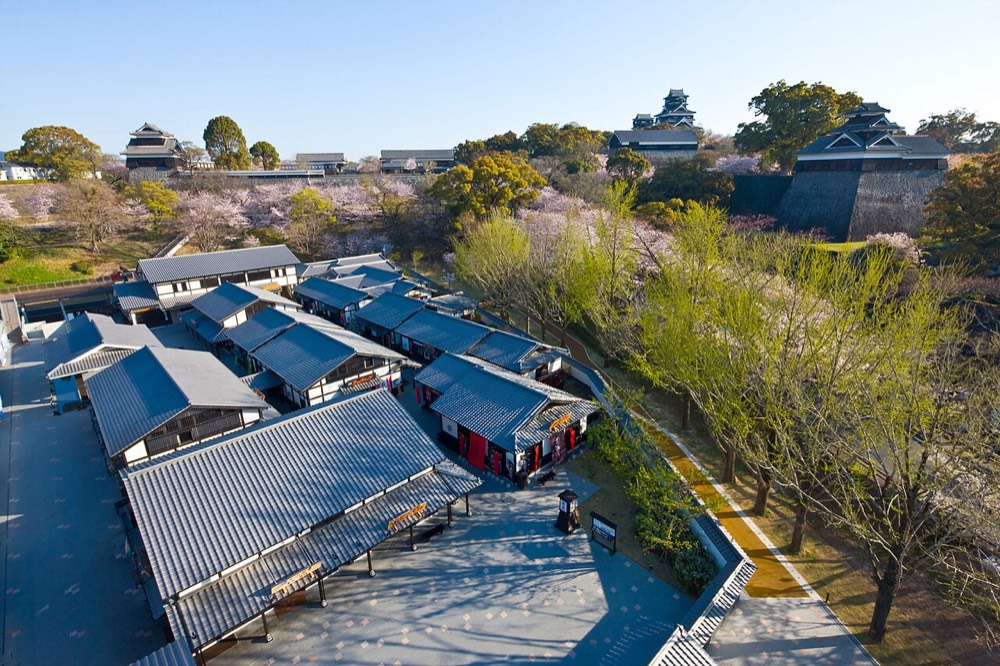
Sakuranobaba Josaien sits right below Kumamoto Castle and is the most convenient place to eat and buy souvenirs before or after your visit. It is made up of the "Sakura no Koji" food and souvenir street, the Kumamoto Castle Museum Wakuwakuza, and a general tourist information center[6].
| Facility | Hours | Cost | Status in November 2026 |
|---|---|---|---|
| Sakura no Koji (souvenirs) | 9:00–18:00 | Free entry | Open as usual |
| Sakura no Koji (restaurants) | 11:00–18:00 | Varies by shop | Open as usual; some shops take an evening break |
| Kumamoto Castle Museum Wakuwakuza | 9:00–17:30 (last entry 17:00) | Adults 300 yen, elementary/junior high 100 yen | Closed; reopens December 1 |
| General tourist information center | 9:00–17:30 | Free | Open as usual |
Sakura no Koji has 23 shops, and hours vary by shop[6]. The Japan Tourism Agency's multilingual commentary notes that the signature Kumamoto foods here are horse meat sashimi (basashi), deep-fried lotus root stuffed with mustard miso (karashi renkon) and sweet potato dumplings (ikinari dango)[15]. If you want to eat on the go, small snacks save more time than sitting down for a set meal.
Wakuwakuza had only just reopened after renovation on April 12, 2026, before closing temporarily because of the July earthquake. It has announced that repair work is finished and it will reopen on Tuesday, December 1[7]. It introduces the castle's history with VR, projection mapping and live commentary, and you can try on period costumes. We suggest seeing Wakuwakuza before going up to the castle. With some background on the castle's history, the main keep makes more sense.
A free shuttle bus runs between Josaien, the south gate area and the Ninomaru parking lot, daily from 9:00 to 17:00[10]. It's handy if you'd rather not climb the slopes or are traveling with older relatives or children.
How to Get to Kumamoto Castle from Kumamoto Station, the Airport and Hakata
The tram is the top choice: the Kumamoto City Tram takes about 17 minutes from Kumamoto-ekimae to Kumamoto-jo/Shiyakusho-mae, then it's about a 7-minute walk to Josaien[7]. The table compares the options:
| Option | Board / get off | Time | Cost | Payment notes |
|---|---|---|---|---|
| Kumamoto City Tram | Kumamoto-ekimae → Kumamoto-jo/Shiyakusho-mae | About 17 min + about 7 min walk | Adults 200 yen | Transit IC cards such as Suica, contactless credit cards, QR code payment accepted |
| Shiromegurin loop bus | Kumamoto-ekimae stop 2 → Sakuranobaba Josaien, Kumamoto-jo Ninomaru parking lot | Per timetable | 200 yen per ride, 500 yen day pass | Nationwide transit IC cards such as Suica not accepted; cash and contactless credit cards OK |
| Walk | Kumamoto Sakuramachi Bus Terminal → Josaien | About 10 min | Free | Airport limousine buses stop here |
| Car | Ninomaru parking lot | – | 400 yen for 2 hours, then 200 yen per hour | Vehicles over 5 m can't park |
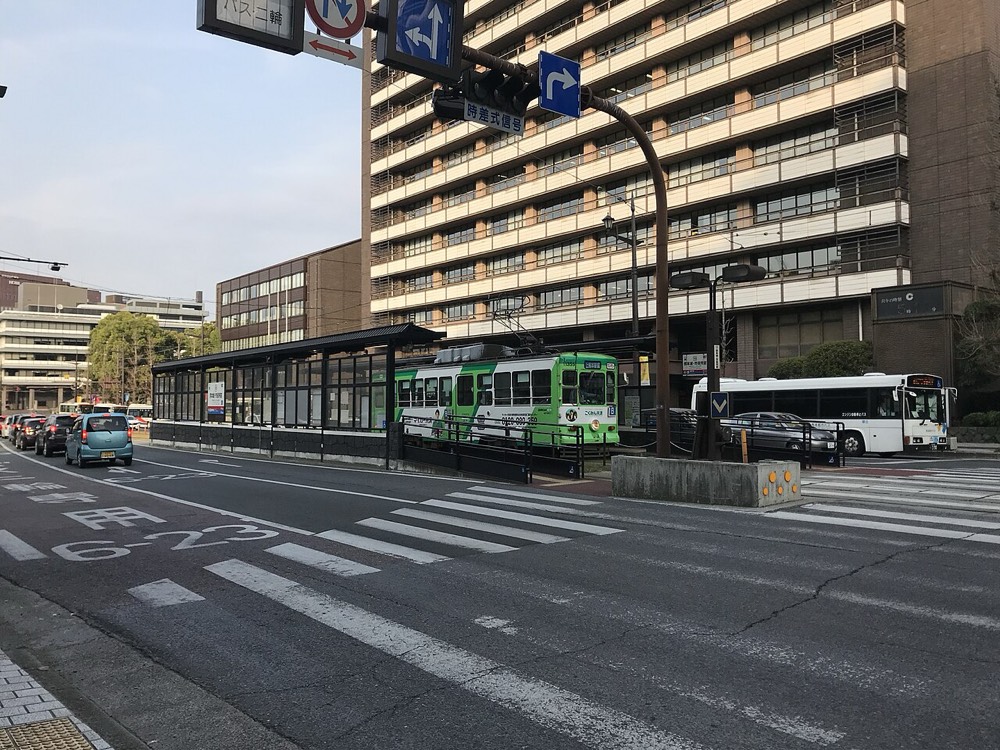
On the tram you pay when you get off. Adults paying 200 yen can just tap a credit card. For child fares or paying for several people, tell the driver first[8]. Cash fares get no change, and on board you can only change 1,000-yen notes[17].
Shiromegurin is a bus that starts at Kumamoto-ekimae and loops around the castle area. A single ride costs 200 yen regardless of distance, and the day pass gives unlimited rides that day plus discount coupons for nearby facilities[9]. Note that it doesn't accept nationwide transit IC cards, including mobile versions[9]. If you only carry Suica, bring cash or a contactless credit card.
- From Aso Kumamoto Airport: Take the limousine bus to Kumamoto Sakuramachi Bus Terminal and walk to Josaien. For schedules and fares, see the airport section of our Kumamoto travel guide.
- From Fukuoka (Hakata): Take the Kyushu Shinkansen to Kumamoto Station and switch to the tram. For ticket options, see our Kyushu transport guide. If you're basing yourself in Fukuoka and visiting Kumamoto as a day trip, see where to stay in Fukuoka. Staying near Hakata Station makes the connection fastest.
Sample Half-Day Kumamoto Castle Plan (Weekday Morning Start)
This example assumes a weekday after December 1, starting from Kumamoto Station. In November, skip the Wakuwakuza part, which shortens the total by about 30 minutes.
| Time | Plan | Notes |
|---|---|---|
| 8:40 | Tram from Kumamoto-ekimae | About 17 minutes to Kumamoto-jo/Shiyakusho-mae |
| 9:05 | Walk to Josaien | About 7 minutes; note the way back while you're at it |
| 9:15–9:45 | Wakuwakuza | Officially recommended stay is about 30 minutes; buy the two-venue combo |
| 9:50 | Free shuttle or walk to the south gate | Weekday entry is through the south gate only |
| 10:00–11:30 | Special viewing route and main keep | Use the app's AR old photos on the sixth floor |
| 11:40–12:30 | Lunch at Josaien | Restaurants open at 11:00; arrive before noon to avoid waiting |
| 12:30–13:00 | Souvenir shopping at Sakura no Koji | Then take the tram back to Kumamoto Station or into the city center |
If you want to combine the castle with hot springs on the same trip, head toward Aso in the afternoon and visit Kurokawa Onsen the next day. Our dedicated guide covers Kurokawa's transport and how to use the bath-hopping pass.
Who Is Kumamoto Castle For, and Who Should Skip It?
Good for:
- People interested in Japanese castles and stonework. Few castles let you look down on restoration sites from an elevated walkway.
- People who want to understand the Kumamoto earthquakes and the recovery. The fourth-floor exhibit in the keep and the collapsed stone walls along the route say more than any explanation.
- Families with children. After December, Wakuwakuza's costumes and interactive exhibits help keep kids interested.
Not ideal, or adjust your expectations:
- People who want photos of a "complete" castle. The Uto Turret is being dismantled and many stone walls are fenced off, so construction equipment shows up in many shots.
- People who are only free in the evening. From September to June the last entry is 16:00, so arriving in the evening means seeing only the illumination from outside.
- People with limited mobility or who'd rather avoid slopes. The grounds are large with many slopes, so use the free shuttle and allow extra time.
How to Plan It Smoothly: Before You Go
- Check official notices the day before: The castle website's "News" page posts temporary closures and changes to restricted areas, which matters especially after the earthquake.
- Enter by the south gate on weekdays: Only the south gate is open on weekdays, so set your navigation to the south gate or Josaien to avoid detouring to the north gate.
- Enter before 16:00: From November to June the last entry is 16:00, and the Ninomaru ticket counter also stops selling at 16:00.
- Leave large luggage elsewhere: There are no lockers in the paid area, and suitcases aren't allowed in the main keep.
- Watch for year-end closures: Admission is free on December 19 and 20, and the castle is closed on December 29. New Year's Day has been free in past years; check Kumamoto City announcements in late December for 2027[13]. For general tips on winter travel at this time of year, see our Japan New Year guide.
- Shiromegurin doesn't take Suica: If you only carry a transit IC card, take the tram instead, or bring cash and a contactless credit card.
FAQ
Is Kumamoto Castle open now?
Yes. Kumamoto Castle closed after the July 28, 2026 earthquake and reopened its main keep and special viewing route on August 13. When it reopened, part of the small keep's first floor was off-limits. Traffic restrictions were lifted around the Hyakken stone wall on September 17 and around Kato Shrine on November 18. The Uto Turret is still being dismantled for repair and cannot be entered. Aftershocks or safety checks can change what's open at short notice, so check the official website before you go.
How much are Kumamoto Castle tickets, and is the combo ticket worth it?
Individual admission is 800 yen for high school students and older and 300 yen for elementary and junior high students. Preschoolers enter free. The two-venue combo ticket with Wakuwakuza is 850 yen for adults, 250 yen less than buying both separately (800 + 300 yen). Wakuwakuza reopens on December 1, 2026, and combo ticket sales resume the same day, so in November a castle-only ticket is enough. The castle is also open free of charge on December 19 and 20, 2026, as part of an earthquake recovery program.
How long do you need at Kumamoto Castle?
Allow about 1.5 hours for the special viewing route and the main keep. The official introductory route, which adds Wakuwakuza, takes about 2 hours. If you also want lunch at Josaien and time to photograph the stone walls, plan a half day. From September to June the last entry is 16:00, so arriving late in the afternoon is rushed.
What is the easiest way to get from Kumamoto Station to Kumamoto Castle?
The simplest option is the Kumamoto City Tram. It takes about 17 minutes from Kumamoto-ekimae to Kumamoto-jo/Shiyakusho-mae, and the adult fare is 200 yen. You can pay with transit IC cards such as Suica or with a contactless credit card. The Shiromegurin loop bus is another option, at 200 yen per ride or 500 yen for a day pass, but it does not accept nationwide transit IC cards such as Suica.
When will Kumamoto Castle be fully restored?
Under Kumamoto City's restoration plan, the Uto Turret and Honmaru Palace are to be finished in fiscal 2032, all important cultural property buildings and the main area in fiscal 2042, and everything by fiscal 2052. The 2026 earthquake caused about 40 more stone wall collapses or bulges. The city says it will review the plan with experts, so the schedule may change.
Is Kumamoto Castle open on New Year's Day?
Past-year reference: On New Year's Day 2026, Kumamoto Castle held a special opening from 9:00 to 17:00 with free admission and New Year events. Plans for New Year's Day 2027 have not been announced, so check the Kumamoto City or castle website in late December. The castle is closed every year on December 29.
Sources
- Kumamoto Castle official site: Visitor information: Admission, combo tickets, annual pass, hours, north/south gate rules
- Kumamoto Castle official site: Highlights of the special opening: Keep exhibits by floor, viewing route highlights, Uto Turret restoration schedule
- Kumamoto Nichinichi Shimbun: Kumamoto Castle reopens (August 13, 2026): Reopening on August 13, stone wall collapses, 2016 damage and fiscal 2052 target
- KAB Kumamoto Asahi Broadcasting: Kumamoto Castle visits resume (August 13, 2026): About 40 stone walls collapsed or bulged, damage at 11 places including the keep, part of the small keep's first floor closed
- Kumamoto City: Kumamoto Castle Restoration Basic Plan (revised March 2023), summary: Fiscal 2032, 2042 and 2052 milestones and the history of the special viewing route
- Sakuranobaba Josaien: About Josaien: The 23 shops of Sakura no Koji and opening hours
- Kumamoto Castle Museum Wakuwakuza: About: Reopening on December 1, admission, combo tickets
- Kumamoto City Transportation Bureau: Payment methods: Adult tram fare and accepted payment methods
- Shiromegurin Kumamoto Castle loop bus official site: Stops, fares, nationwide transit IC cards not accepted
- Kumamoto Castle official site: Access and parking: Free shuttle bus and parking fees
- Kumamoto Castle official site: Restoration Castle Lord: Minimum donation, benefits and how to donate
- Kumamoto Castle official site: Traffic restrictions lifted around Hyakken stone wall: Restrictions lifted September 17
- Kumamoto City: Year-end and New Year opening of Kumamoto Castle (press release): Free special opening on New Year's Day 2026 (past-year reference)
- Kumamoto Castle official site: Today's illumination and annual schedule: All-night illumination for the time being after the quake
- Japan Tourism Agency multilingual commentary database: Sakuranobaba Josaien: Signature local foods at Josaien
- Kumamoto Castle official site: Model route (Wakuwaku course): Recommended time at each stop
- Kumamoto City Transportation Bureau: How to ride: Pay when getting off, no change given, on-board change rules
- Kumamoto Castle official site: Traffic restrictions lifted around Kato Shrine (Nov 18, 2026, Japanese): One-way traffic restriction around Kato Shrine lifted at 15:00 on November 18
- Kumamoto Castle official site: Combo ticket sales resume (Nov 24, 2026, Japanese): Wakuwakuza reopens December 1 and combo tickets go back on sale the same day
- Kumamoto Castle official site: Free admission for the 2026 Kumamoto Earthquake "Heart Recovery" program (Nov 27, 2026, Japanese): Free admission on December 19 and 20 and planned hands-on activities
Fares, opening hours and event dates can change. Information checked on 2026.11.28; please confirm with official sources before you go.