Kumamoto Travel Guide 2026: Kumamoto Castle, Mt. Aso and Kumamon (Latest Status After the Earthquake)
Kumamoto guide for 2026: Kumamoto Castle tickets and extended hours after the July quake, Mt. Aso crater restrictions, Kusasenri, Kumamon Square and airport buses.
Quick answer
Three highlights of Kumamoto: Kumamoto Castle reopened its main keep and special viewing route on August 13 after the July 2026 earthquake. Adult admission is 800 yen, with extended hours to 21:00 from October 2 to November 1. Mt. Aso's Nakadake stayed at eruption alert level 2 as of October 9, with about a 1 km exclusion zone around the crater and no crater viewing, but you can still enjoy the grassland and steam plume at Kusasenri. Kumamon Square is open daily 10:00 to 19:00.
Kumamoto travel comes down to three things: Kumamoto Castle, Mt. Aso and Kumamon. But on July 28, 2026 the "Reiwa 8 Kumamoto earthquake" struck, and many people want to know whether they can still go and what is open. This guide covers the situation as of October 2026: what is open at Kumamoto Castle and its admission, restrictions at the Aso crater, how to enjoy Kusasenri, when you can meet Kumamon, and Kumamoto Airport transport, to help you plan your Kumamoto trip.
Are Kumamoto's sights open after the 2026 earthquake?
In short: the main sights and transport have recovered, but some local restrictions remain, so check again before you leave. The current situation:
| Item | Status in October 2026 | Source |
|---|---|---|
| Kumamoto Castle | Main keep and special viewing route reopened August 13; some areas still closed | Kumamoto Castle site, Kumamoto Nichinichi |
| Kyushu Shinkansen | Fully resumed September 18; Hakata-Kumamoto back to pre-earthquake timetable | JR Kyushu |
| Kagoshima Main Line | Uto-Yatsushiro resumed October 10; whole line open | JR Kyushu |
| Aso Nakadake crater | Eruption alert level 2; about 1 km around the crater closed | JMA |
| Kumamon Square | Open daily 10:00 to 19:00 | Kumamon Square site |
JR Kyushu announced that the Kyushu Shinkansen fully resumed on September 18 and the Kagoshima Main Line returned to its normal timetable on October 10[9]. The Kumamoto prefecture tourism site also lists places to check earthquake-related road, rail and bus information[6], such as the Ministry of Land, Infrastructure, Transport and Tourism's passable roads map and each bus company's site. We could not confirm real-time conditions on branch lines such as the Hohi Main Line (Kumamoto - Aso - Oita), so rely on JR Kyushu's operation information.
Kumamoto Castle: admission, hours and highlights
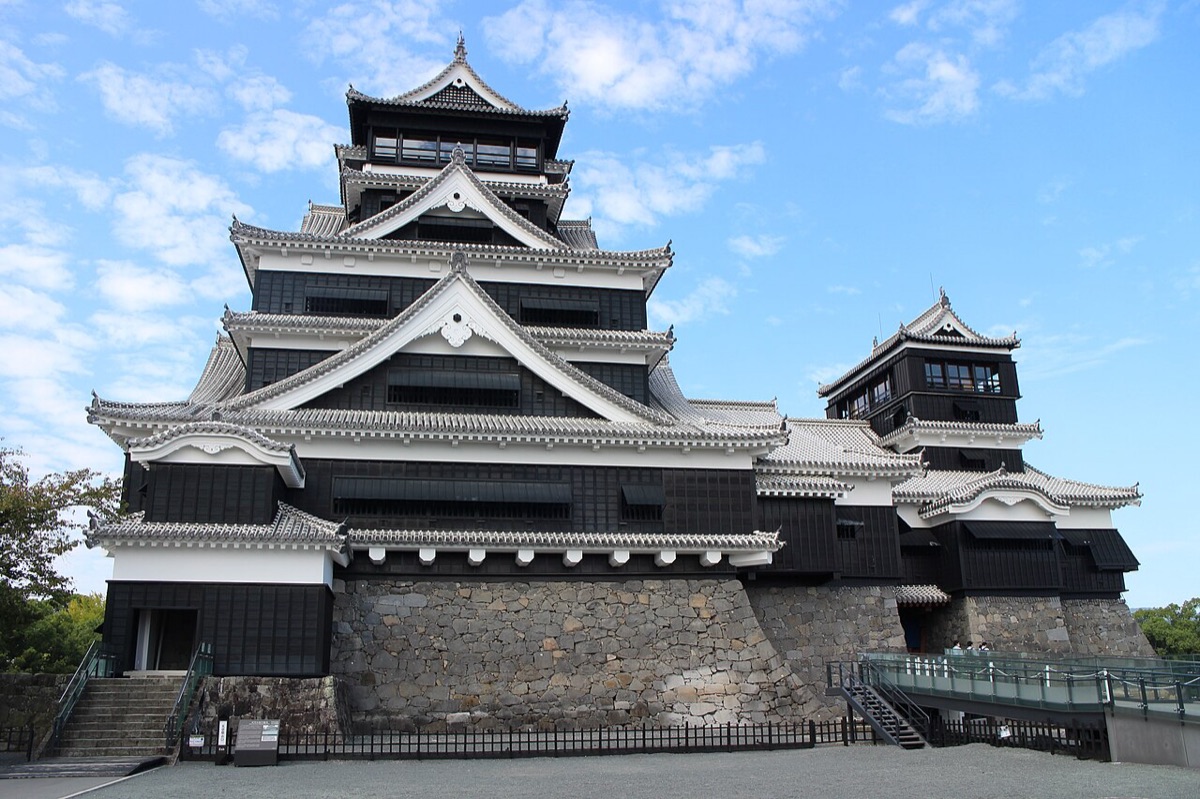
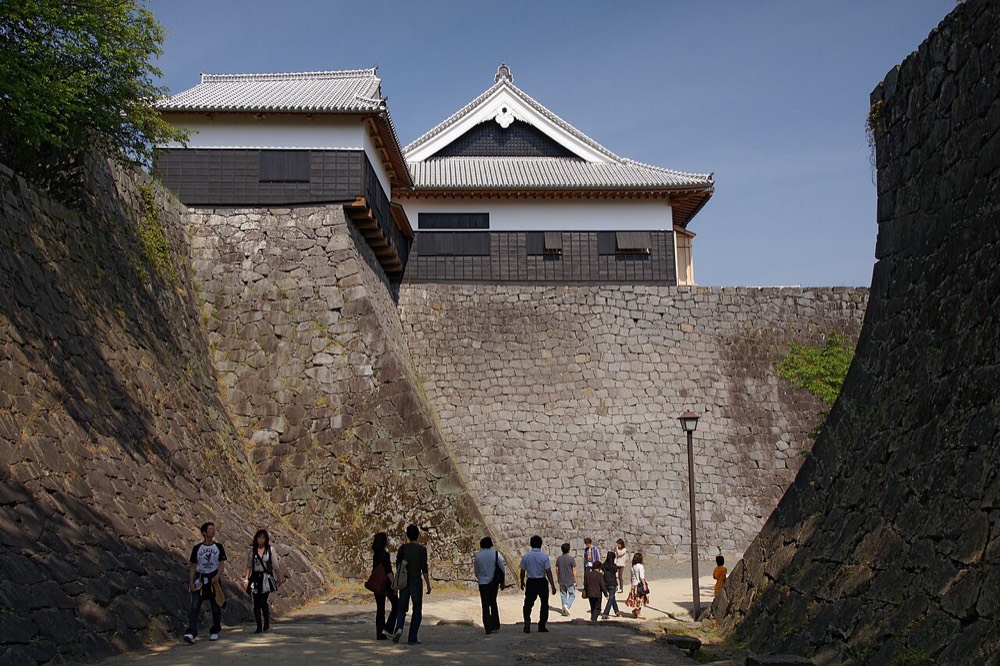
Kumamoto Castle is one of Japan's three great castles, known for its main and small keeps and the steep "Musha-gaeshi" stone walls. It has been under restoration since the 2016 Kumamoto earthquake, and the July 2026 earthquake caused fresh damage: Kyodo News reported about 40 places where stone walls collapsed and uneven floors in the main keep, and the castle was closed for a time. After safety checks the city reopened it on August 13, 2026, and you can walk the special viewing route to the main keep and see the collapsed stone walls along the way[3].
How much is Kumamoto Castle admission?
According to the Kumamoto Castle site[1]:
| Ticket | Individual | Group |
|---|---|---|
| High school students and older | 800 yen | 640 yen |
| Junior high and elementary school students | 300 yen | 240 yen |
- The official site sells e-tickets online (for a fixed date); they cannot be canceled or rescheduled after purchase.
- Closed on December 29; it may also close temporarily in severe weather.
Kumamoto Castle opening hours (including autumn extended hours)
- September to June: 9:00 to 17:00 (last entry 16:00; last entry to the main keep 16:30).
- July and August: 9:00 to 19:00 (last entry 18:00).
- Autumn castle festival 2026: October 2 to November 1, hours extended to 9:00 to 21:00 (last entry 20:00)[2]. A "Shiro Akari" light event runs at the same time, using light and sound to tell the story of ten years of recovery since the 2016 earthquake and prayers for recovery from the 2026 earthquake.
How to tour Kumamoto Castle
- Get off the Kumamoto City Tram at "Kumamoto-jo / Shiyakusho-mae" and walk up the slope to the entrance.
- Take the special viewing route and look at the stone walls and turrets under restoration from the elevated walkway.
- Climb the main keep, which has exhibits on the castle's history and a top floor with views over the city.
- After leaving, go to Sakura-no-baba Johsaien at the foot of the castle for Kumamoto snacks and souvenirs.
Can you see the Aso crater? How to enjoy Kusasenri
Mt. Aso is an active volcano with one of the largest calderas in the world. Its best-known sights are the steaming Nakadake crater and a vast stretch of grassland.
Current restrictions at the Aso Nakadake crater
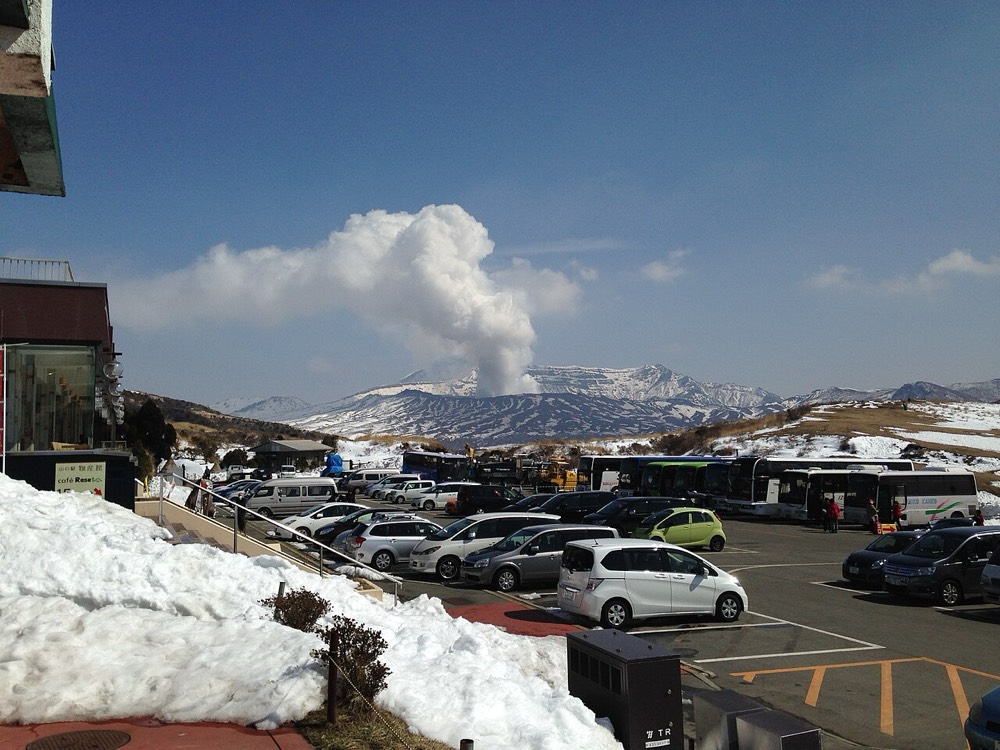
As of October 2026, the Nakadake crater cannot be visited. Commentary from the Fukuoka District Meteorological Observatory on October 9 said Mt. Aso remains under a crater-area warning (eruption alert level 2), with the area within about 1 km of the first Nakadake crater needing caution for large volcanic blocks and pyroclastic flows, and sulfur dioxide emissions also high[4]. Kumamoto Nichinichi Shimbun reported that Aso Nakadake was raised to level 3 on August 14, with the restricted area widened to about 2 km, and lowered back to level 2 on September 1[10]. The Kumamoto prefecture tourism site also states that vehicles currently cannot reach the crater and the crater cannot be viewed[5].
Volcanic conditions change quickly. Even when the alert level drops, whether crater viewing actually opens depends on gas concentrations and on-site controls, so check the JMA and local Aso announcements again on the day you go.
Kusasenri-ga-hama
Kusasenri-ga-hama is in Aso City at an elevation of about 1,100 meters. It is a large grassland of about 785,000 square meters with a rainwater pond in the middle, and on a good day you can see horses grazing and the steam from Nakadake[5].
- What to do: Walk on the grassland, try horse riding at the Kusasenri riding club, visit the Aso Volcano Museum; there are restaurants and souvenir shops around the parking lot.
- Getting there: Take the route bus toward the crater from JR Aso Station for about 30 minutes and get off at "Kusasenri Aso Volcano Museum-mae"; if you drive there is a paid car park.
- Season: The grassland is green in summer and may be white with snow in deep winter; around mid-February, rime ice can be seen when the weather allows[5]. Mountain roads freeze in winter, so if you drive, make sure you have winter tires.
- Etiquette: Do not approach or touch the horses, do not make loud noises, and do not feed them.
How to get to Aso
- Public transport: Take the JR Hohi Main Line from Kumamoto Station to Aso Station, then a bus. Check JR Kyushu for the post-earthquake operating status.
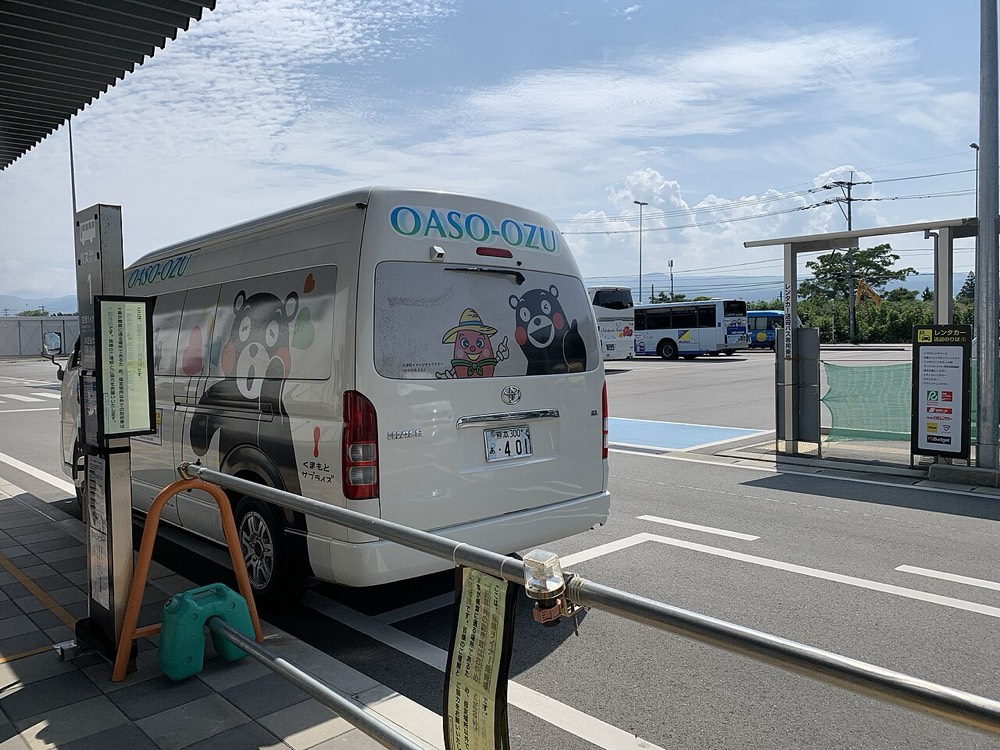
- From the airport: Kumamoto Airport has a shuttle bus to JR Higo-Ozu Station (about 15 minutes, 200 yen), where you can transfer to a train toward Aso[8].
- By car: Public transport is inconvenient around the Aso outer rim and Daikanbo, so driving gives the most freedom. Travelers from Taiwan need a Japanese translation of their Taiwanese driver's license; see the Okinawa car rental license and Japanese translation guide for the process.
Kumamon spots: when to meet Kumamon at Kumamon Square
Kumamon is Kumamoto Prefecture's mascot, and the most reliable place to meet him is Kumamon Square in central Kumamoto. According to the official site[7]:
- Address: 1F TETRIA Kumamoto building, 8-2 Tedori-honmachi, Chuo Ward, Kumamoto.
- Hours: 10:00 to 19:00.
- Appearance times in October 2026: Monday, Wednesday, Thursday and Friday 14:00 to 14:30; Saturday 11:30 to 12:00 and 16:30 to 17:00; Sunday 11:30 to 12:00 and 14:00 to 14:30; no appearances scheduled on Tuesdays this month. Times are announced monthly, so check that month's calendar.
Besides Kumamon Square, many shops, stations and souvenir stores around the city have Kumamon goods and figures, and they are easy to photograph at Johsaien below Kumamoto Castle and at Kumamoto Station.
Kumamoto Airport transport: getting to the city
There are direct flights to Kumamoto from Taiwan; check airline announcements for schedules. According to the Aso Kumamoto Airport site, the limousine buses from August 1, 2026 are as follows[8]:
| Destination | Service | Time | Fare |
|---|---|---|---|
| Kumamoto Sakuramachi Bus Terminal | Express | About 45 min | 1,400 yen |
| Kumamoto Sakuramachi Bus Terminal | Regular | About 55 min | See official site |
| Kumamoto Station | Regular | About 65 min | 1,400 yen |
| JR Higo-Ozu Station | Airport shuttle bus | About 15 min | 200 yen |
Check the Kyushu Sanko Bus site for services and departure times. If you are coming from Fukuoka, the Kyushu Shinkansen from Hakata to Kumamoto takes as little as just over 30 minutes; for ticket options see the Kyushu transport guide.
A 2-day Kumamoto itinerary
- Day 1 (Kumamoto city): Kumamoto Castle in the morning → lunch at Johsaien → Kumamon Square in the afternoon (time it for his appearance) → evening stroll along the Shimotori and Kamitori shopping arcades; during the autumn castle festival you can return to the castle in the evening for "Shiro Akari".
- Day 2 (Aso): Go to Aso by JR or rental car → Kusasenri-ga-hama and the Aso Volcano Museum → around Aso Shrine → back to Kumamoto in the evening, or continue to Beppu or Yufuin.
To link Kumamoto into a wider Kyushu loop, you can head north to the Nagasaki guide or east to the Yufuin and Beppu onsen 2-day trip. For more, see the Kyushu travel overview.
Before you go
- Before departure, check the Kumamoto prefecture tourism site's "earthquake-related transport information" and JR Kyushu operation information; some roads and branch lines may still be adjusted after the earthquake.
- Aso's volcanic conditions change daily. Follow the JMA and local announcements for crater restrictions, and never enter a controlled area.
- Kumamoto Castle's extended hours run until November 1, so schedule your visit in that period if you want to see the night lights.
- Kumamoto is an earthquake-affected area, so spending and staying there helps recovery; respect closed zones and construction areas when you visit.
FAQ
Is it safe to travel to Kumamoto after the 2026 earthquake?
Major transport links and sights are recovering: the Kyushu Shinkansen fully resumed on September 18, the Kagoshima Main Line on October 10, and Kumamoto Castle reopened on August 13. Some roads, branch lines and facilities may still be restricted, so check the Kumamoto prefecture tourism site and JR Kyushu operation information before you go.
How much is admission to Kumamoto Castle, and when is it open?
Individual admission is 800 yen for high school students and older and 300 yen for elementary and junior high school students. Normal hours from September to June are 9:00 to 17:00 (last entry 16:00), and July and August are 9:00 to 19:00. During the autumn castle festival, October 2 to November 1, 2026, hours are extended to 21:00 (last entry 20:00). It is closed on December 29.
Can I see the crater of Mt. Aso right now?
No. According to Japan Meteorological Agency data from October 9, Aso Nakadake remains at eruption alert level 2, with about a 1 km exclusion zone around the first crater, and volcanic gas emissions are also high. Outlying sights such as Kusasenri can be visited depending on conditions, but check the JMA volcano information and the Kumamoto prefecture tourism site before you go.
How do I get from Kumamoto Airport to the city?
The airport limousine bus is the easiest: about 45 minutes by express or 55 minutes by regular service to Kumamoto Sakuramachi Bus Terminal, and about 65 minutes to Kumamoto Station, for 1,400 yen. For Aso, take the airport shuttle bus to JR Higo-Ozu Station (about 15 minutes, 200 yen) and transfer to the JR line. Check the Kyushu Sanko Bus site for timetables.
Where can I meet Kumamon?
Kumamon Square in central Kumamoto is the most reliable place. It is on the first floor of the TETRIA Kumamoto building in Tedori-honmachi, Chuo Ward, open 10:00 to 19:00. Kumamon's appearance times are announced monthly: in October 2026 it is mostly at 14:00 on weekdays, with extra slots such as 11:30 and 16:30 on weekends, and no appearance on some dates.
Sources
- Kumamoto Castle official site: Visitor information: Admission, opening hours and closing days
- Kumamoto Castle official: Opening hours during the autumn Kumamoto Castle Festival (October 8, 2026): Extended hours from October 2 to November 1
- Kumamoto Nichinichi Shimbun (Kyodo News): Kumamoto Castle reopens (August 13, 2026): Earthquake caused about 40 stone wall collapses; reopened August 13
- Japan Meteorological Agency: Aso volcano commentary no. 27 (October 9, 2026): Eruption alert level 2; about 1 km caution zone around the crater
- Kumamoto prefecture tourism site (Kumamotto): Kusasenri-ga-hama: Kusasenri elevation, access and Nakadake crater closure
- Kumamoto prefecture tourism site (Kumamotto): Earthquake-related transport information: Where to check earthquake-related transport information
- Kumamon Square (Kumamon Land): Address, opening hours and Kumamon appearance times
- Aso Kumamoto Airport: Access information: Limousine bus and airport shuttle bus (from August 1, 2026)
- JR Kyushu: Train operation information and notices: Resumption of the Kyushu Shinkansen and Kagoshima Main Line
- Kumamoto Nichinichi Shimbun: Desk column (October 4, 2026): Changes in the Aso Nakadake eruption alert level
Fares, opening hours and event dates can change. Information checked on 2026.10.19; please confirm with official sources before you go.