Where to Stay in Fukuoka: Hakata Station, Tenjin, Nakasu or Nishitetsu Fukuoka?
Where to stay in Fukuoka by itinerary: real airport transfer times, which station to stay near for Kumamoto or Dazaifu, yatai areas, booking mistakes and city tax.
Quick answer
Where to stay in Fukuoka depends on which direction your trips go: for the shinkansen to Kumamoto (as fast as 32 minutes), Kagoshima or JR trips around Kyushu, stay at Hakata Station; for Nishitetsu trains to Dazaifu and Yanagawa (about 50 minutes by limited express), stay near Nishitetsu Fukuoka (Tenjin) Station; to walk to the yatai every night, choose Nakasu-Kawabata. The airport subway reaches Hakata in about 5 minutes and Tenjin in about 10 (260 yen), but the international terminal has no subway, so take the shuttle or a bus. Fukuoka City's accommodation tax is 200 or 500 yen per person per night (checked November 2026).
What sets choosing where to stay in Fukuoka apart from other big cities is that the airport sits right next to downtown: the subway from Fukuoka Airport reaches Hakata in about 5 minutes, so distance from the airport is hardly an issue. What really decides how smooth each day feels comes down to three things: which station you leave the city from (JR's Hakata Station or Nishitetsu's Tenjin), whether you want to walk to the yatai at night, and whether you arrive on a domestic or an international flight. This guide gives the answer first, then compares Hakata Station, Gion, Nakasu, Tenjin and Yakuin by time to the airport and the main stations, and finishes with the most common booking mistakes in Fukuoka and Fukuoka City's accommodation tax.
The short answer: where to stay in Fukuoka depends on which way you leave the city
The short answer: most visitors are fine staying in either Hakata Station or Tenjin for the whole trip without changing hotels; the deciding factor is not the sights in town but whether your day trips use JR or Nishitetsu.
- First trip, mostly sightseeing in the city: either the Hakata exit side of Hakata Station or Tenjin. At Hakata Station you can eat and shop on a rainy day without going outside; Tenjin has the biggest concentration of department stores and the underground mall.
- Shinkansen to Kumamoto or Kagoshima, or JR to Nagasaki or Yufuin: around Hakata Station. You can walk to the train with your luggage in the morning.
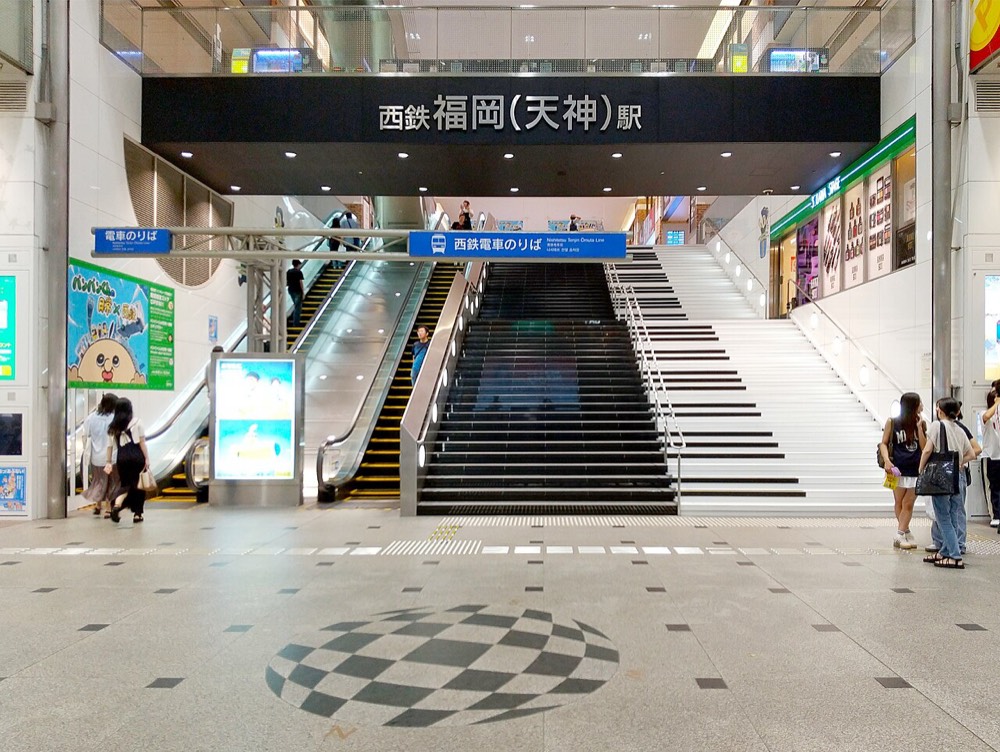
- Dazaifu and Yanagawa: around Nishitetsu Fukuoka (Tenjin) Station in Tenjin, where the Nishitetsu Tenjin Omuta Line starts.
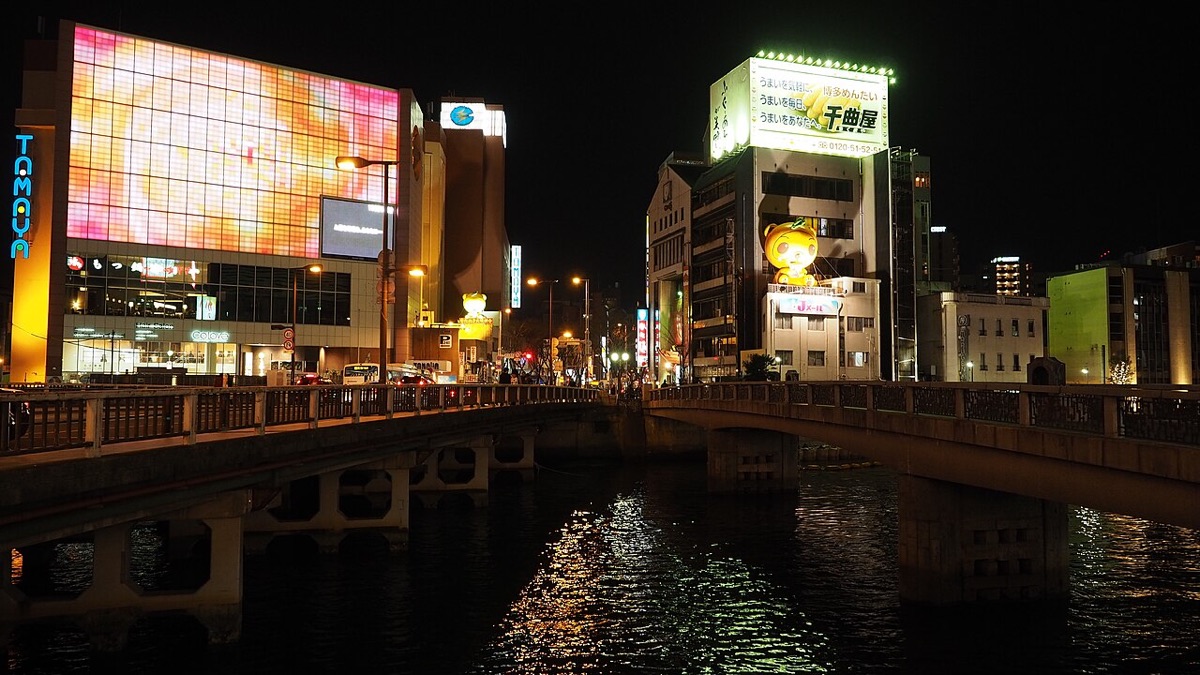
- Walking to the yatai for food and a drink at night: Nakasu-Kawabata, or the Naka River side of Tenjin.
- Traveling with children or older family, or a light sleeper: Gion-Gofukumachi. Hakata Station and Nakasu are both walkable, yet it is much quieter at night.
- Tighter budget, a week or longer, repeat visitors: Yakuin-Watanabedori, with a direct subway to Hakata Station since 2023.
- International flight or late-night arrival: the Chikushi exit side of Hakata Station is easiest, with a direct bus from the international terminal.
- Winter or rainy season, hate getting wet: Hakata Station (connected to the station building) or Tenjin (connected to the Tenjin underground mall); pick a hotel linked by an underground passage.
The airport is in town: domestic and international arrivals call for different bases
The short answer: the domestic terminal has a subway, about 5 minutes to Hakata and about 10 minutes to Tenjin[5]; the international terminal has no subway station, so international arrivals have an easier time staying on the Chikushi side of Hakata Station or in Tenjin, which buses serve directly.
Fukuoka Airport's domestic and international terminals are separate buildings, and Fukuoka Airport subway station on the Kuko Line is only on the domestic side; from the international terminal you first take a free shuttle bus across[5]. Many people read "5 minutes from the airport to Hakata" and expect to be there right after landing, then lose time transferring at the international terminal. Here are the main ways from each terminal to the city center (checked November 2026):
| From | To | How | Time | Adult fare |
|---|---|---|---|---|
| Domestic terminal | Hakata Station | Kuko subway line | About 5 minutes | 260 yen |
| Domestic terminal | Nakasu-Kawabata, Tenjin | Kuko subway line (no change) | About 10 minutes to Tenjin | 260 yen |
| International terminal | Domestic terminal | Free shuttle bus, then subway | Depends on schedule and traffic | Free (subway extra) |
| International terminal | Hakata Station (Chikushi Exit) | Nishitetsu bus (direct) | As fast as about 15 minutes | 400 yen (380 yen by IC card or credit card) |
| International terminal | Nishitetsu Tenjin Highway Bus Terminal | Airport Express bus (non-stop) | Depends on traffic | 500 yen (480 yen by IC card) |
The Fukuoka City Subway charges by distance: 210 yen for adults up to 3 km and 260 yen for 3 to 7 km, about half for children aged 6 to 11, and free for under-6s with an adult[4]; the airport to Hakata and to Tenjin both fall in the 260-yen band. The Nishitetsu bus from the international terminal to Hakata has used Hakata Station's Chikushi Exit since April 2025, and paying on board by transit IC card or credit card saves 20 yen[6]; the Airport Express to Tenjin does not take credit cards, only IC cards, cash or mobile tickets[7].
One tip for late nights: from April 2026 the Fukuoka City Transportation Bureau runs later last trains on all lines Monday to Saturday, with the last Kuko Line train toward Meinohama about 35 minutes later and trains toward Hakata about 10 to 25 minutes later[8]. Taking the subway back to Hakata after a late meal in Nakasu or Tenjin is more relaxed than before; check each station's timetable for exact last trains.
Hakata Station, Tenjin, Nakasu and Yakuin compared: travel times and the feel at night
The short answer: central Fukuoka is divided by the Naka River, with Hakata Station, Gion and Nakasu to the east and Tenjin and Yakuin to the west; as long as you stay along the Kuko or Nanakuma subway lines, any two areas are within about 15 minutes of each other.
The table puts the areas side by side. Times are approximate, by subway or on foot, under normal conditions:
| Area | To Fukuoka Airport (domestic) | To Hakata Station | To Tenjin | Easiest direction out of the city | At night |
|---|---|---|---|---|---|
| Hakata Station, Hakata exit | About 5 minutes by subway | Right in front | About 5 minutes by subway | JR, shinkansen, highway buses | Many station restaurants, moderate crowds |
| Hakata Station, Chikushi exit | About 5 minutes by subway; direct bus to the international terminal | Right behind | About 5 minutes by subway | JR, shinkansen | Mostly offices, quiet at night |
| Gion-Gofukumachi | Direct from Gion Station; change at Nakasu-Kawabata from Gofukumachi | About 10 minutes on foot | A few minutes by subway | Hakata Station, Hakata Port | Temple district, quiet at night |
| Nakasu-Kawabata | Direct by subway, no change | 2 subway stops | 1 subway stop or walk | Both sides are close | Yatai and nightlife, very lively on weekends |
| Tenjin (around Nishitetsu Fukuoka Station) | About 10 minutes by subway | About 5 minutes by subway | You are here | Nishitetsu (Dazaifu, Yanagawa), Tenjin highway buses | Busy shopping district, many bars around Daimyo |
| Yakuin-Watanabedori | Change at Hakata or Tenjin | Direct on the Nanakuma Line, no change | 1 stop by Nishitetsu or subway, or walk | Nishitetsu Yakuin Station, Nanakuma Line | Mostly residential and small shops, quieter |
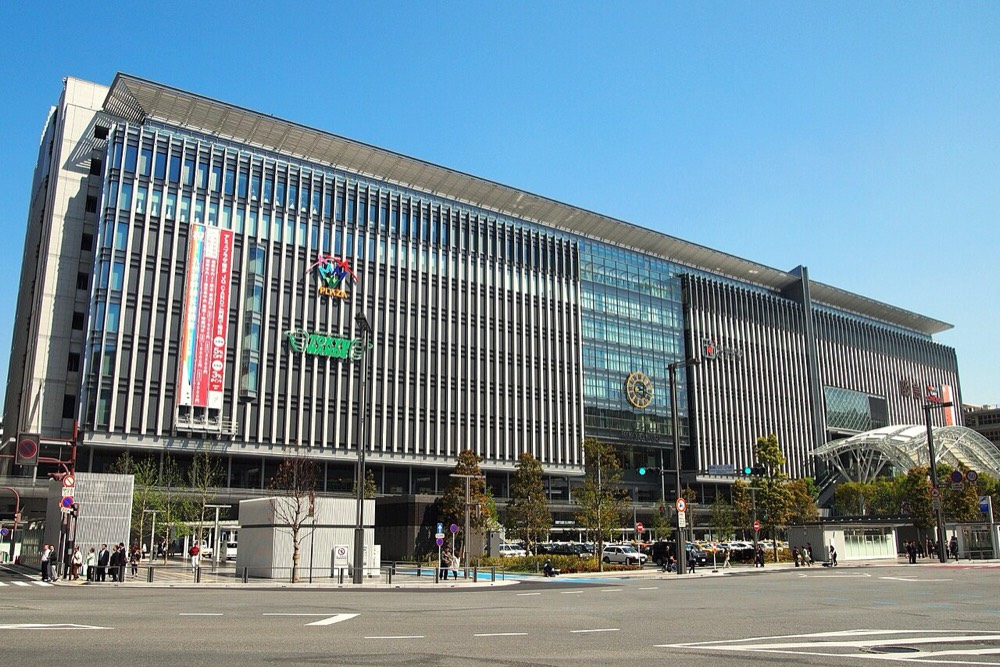
Hakata Station's two sides are very different. The west-side Hakata exit faces Gion and Nakasu, with dense buildings and restaurants; the east-side Chikushi exit is mostly office towers and business hotels with fewer dinner options, but it is where the international terminal bus stops[6]. When booking a hotel "near Hakata Station," checking which exit it is on matters more than the advertised minutes to the station.
Yakuin and Watanabe-dori used to need a transfer to reach Hakata Station, but since the Nanakuma Line extension from Tenjin-Minami to Hakata opened on March 27, 2023[9], you can ride straight to Hakata Station from Yakuin and Watanabe-dori, with no line change on shinkansen mornings.
Using Fukuoka as a base for Kyushu: stay on the side your trains leave from
The short answer: JR and the shinkansen leave from Hakata Station, while Nishitetsu trains leave from Nishitetsu Fukuoka Station in Tenjin; put your hotel on the side most of your day trips go from and you skip a subway ride every day.
Fukuoka makes a great base for traveling around Kyushu, but the two big rail operators start from different places, which is the most practical reason to choose between Hakata and Tenjin. The main routes by direction:
| Destination | Departs from | How | Typical time | Where to stay |
|---|---|---|---|---|
| Kumamoto | Hakata Station | Kyushu Shinkansen | As fast as 32 minutes, more than 50 trains a day each way | Hakata Station |
| Kagoshima, Nagasaki, Yufuin, Beppu | Hakata Station | Shinkansen, JR limited express or highway bus | Depends on route and service | Hakata Station |
| Yanagawa | Nishitetsu Fukuoka (Tenjin) Station | Nishitetsu Tenjin Omuta Line limited express | About 50 minutes, no change | Tenjin, Yakuin |
| Dazaifu | Nishitetsu Fukuoka (Tenjin) Station | Nishitetsu train, change to the Dazaifu Line at Nishitetsu Futsukaichi | Depends on service and connection | Tenjin, Yakuin |
| Kumamoto, Oita and more (bus) | Tenjin Highway Bus Terminal and others | Nishitetsu highway buses | Depends on route | Tenjin or Hakata Station |
According to JR Kyushu, the Kyushu Shinkansen from Hakata to Kumamoto takes as little as 32 minutes, with more than 50 trains a day each way[10], so if you want a day trip to Kumamoto, staying at Hakata Station costs you almost no waiting. Kagoshima, Nagasaki, Yufuin and Beppu have more options, each with shinkansen, limited express and highway bus choices; compare them in our Kyushu transport guide, and for hot springs see the Yufuin and Beppu onsen trip.
Southbound Nishitetsu lines are where Tenjin shines. The Fukuoka Prefecture Tourism Association's Yanagawa feature says the Nishitetsu limited express from Tenjin to Yanagawa takes about 50 minutes[11]; for Dazaifu you change to the Dazaifu Line at Nishitetsu Futsukaichi, with full directions in our Dazaifu day trip and Yanagawa day trip guides. Paper copies of Nishitetsu's Dazaifu & Yanagawa sightseeing ticket are sold only at Nishitetsu Fukuoka (Tenjin) and Yakuin stations; as of June 2026 it costs 3,620 yen for adults digitally or 3,730 yen on paper[12], so if you want the paper ticket, staying near either station is easiest.
Highway buses serve both sides. Many of Nishitetsu's highway buses around Kyushu leave from the Tenjin or Hakata area, such as the Hinokuni service to Kumamoto[14]; boarding points and schedules vary by route, so check which bus terminal you board at when booking, then decide which side to stay on.
Walking to the yatai: where to stay for Nakasu, Tenjin and Nagahama
The short answer: yatai cluster around Nakasu-Kawabata, Tenjin-Yakuin and Nagahama, so a hotel within walking distance of these means no ride home after dinner; but most stalls close on rainy days, so do not bet every dinner of the trip on yatai.
Yokanavi, Fukuoka City's official tourism site, says the city has more than 100 yatai, mainly around Tenjin-Yakuin, Nakasu-Kawabata and the riverside, Ohori-Ropponmatsu and Nagahama; many stalls close in bad weather, and yatai have no toilets[13]. How the areas match up:
- Nakasu-Kawabata: the row of yatai along the Naka River is close to the station exit, so walking back to your hotel is easiest. Nakasu-Kawabata Station is where the Kuko and Hakozaki lines meet, so you can also reach the airport without changing.
- Tenjin: there are yatai along the streets between Tenjin and Yakuin too, so staying in Tenjin covers both shopping and yatai with an evening stroll.
- Nagahama: near Nagahama fishing port and famous for Nagahama ramen; it is some distance from Tenjin, and suits those staying on the northwest side of Tenjin or around Akasaka.
In Nakasu, tell the two parts apart. The north side near Nakasu-Kawabata Station and Hakata Riverain, plus the riverside yatai row, is fine for ordinary travelers at night; central Nakasu is Kyushu's largest entertainment district, dense with hostess clubs and adult venues and plenty of late-night touts. With children, stay on the north side of Nakasu or in Gion, walk over for the yatai and take main roads back. The whole area is louder on weekend nights, so light sleepers can request a high floor not facing a main road. For choosing between the three yatai areas, opening hours and ordering etiquette, see our Fukuoka yatai guide; other local dishes are in our Fukuoka food guide.
Who each area suits, and who it does not
The short answer: there is no perfect area, only the one that fits your itinerary best; here is a quick suits / does not suit check.
Around Hakata Station
- Suits: anyone taking the shinkansen or JR out of the city, international arrivals (Chikushi exit), rainy days without leaving the station, stays of one or two nights.
- Does not suit: those who want old streets to stroll near the hotel; the Chikushi side has fewer dinner options at night.
Gion-Gofukumachi
- Suits: travelers with older family or children, light sleepers, anyone wanting morning walks around Kushida Shrine and Jotenji.
- Does not suit: those who want lots of restaurants downstairs late at night; there are fewer convenience stores and restaurants than at Hakata Station or Tenjin.
Nakasu-Kawabata
- Suits: night owls, anyone wanting yatai and izakaya every night, itineraries that go to both Hakata and Tenjin.
- Does not suit: light sleepers, or families unfamiliar with the area (avoid central Nakasu).
Tenjin (around Nishitetsu Fukuoka Station)
- Suits: shoppers, Dazaifu or Yanagawa trips, anyone wanting a newly opened hotel.
- Does not suit: those taking the shinkansen almost every day; rates are often high on weekends and holidays.
Yakuin-Watanabedori
- Suits: tighter budgets, long stays, repeat visitors who want a neighborhood full of cafes and local shops.
- Does not suit: arrival days with big luggage or international arrivals, because the airport needs a change; consider spending the first night near Hakata Station.
5 common mistakes when booking a hotel in Fukuoka
The short answer: mistakes in Fukuoka are rarely about staying too far away; they are usually about the wrong exit, the wrong terminal, assuming all of "Hakata Ward" is next to the station, or forgetting tax and occupancy rules.
- Assuming the international terminal has a subway: the subway only reaches the domestic terminal, so international arrivals either take the shuttle bus and then the subway, or a bus straight to Hakata Station's Chikushi Exit or Tenjin[5]. Decide how you will arrive when you book.
- Assuming "Hakata" means next to Hakata Station: Hakata Ward is an administrative district and a large one; even Fukuoka Airport is inside it. A hotel with "Hakata" in its name or address is not necessarily walking distance from Hakata Station, so always check the actual walking distance on a map.
- Not checking Hakata exit versus Chikushi exit: the two sides feel different. Pick the Hakata exit for Gion and Nakasu, and the Chikushi exit if you are taking the international terminal bus.
- Assuming there is no accommodation tax outside Fukuoka City: the whole prefecture has one. Kitakyushu charges 50 yen of prefectural tax plus 150 yen of city tax, and other municipalities in the prefecture charge 200 yen per person per night[3], so staying in Yanagawa or Dazaifu is taxed too.
- Groups not working out occupancy and the total: Fukuoka business hotel rooms are small, so groups of three or more can look at apartment hotels or family rooms, but check whether children count toward occupancy and whether cleaning fees are extra; for private rentals, look for a hotel business license or private lodging registration number, and remember the accommodation tax is per person there too[2].
Fukuoka City accommodation tax: how much extra per person per night?
The short answer: in Fukuoka City you pay 200 yen per person per night if the room rate is under 20,000 yen, and 500 yen from 20,000 yen, both including 50 yen of Fukuoka Prefecture tax[1].
| Room rate per person per night (excluding meals) | Fukuoka City tax | Fukuoka Prefecture tax | Total (per person per night) |
|---|---|---|---|
| Under 20,000 yen | 150 yen | 50 yen | 200 yen |
| 20,000 yen or more | 450 yen | 50 yen | 500 yen |
Fukuoka City's accommodation tax has been in force since April 1, 2020, and is paid directly to the property at check-in[1]; when we checked in November 2026, the city's page showed no new rates or date for a change. A few points on how it is calculated[2]:
- What counts as the room rate: the cost of the stay itself, including charges guests cannot opt out of such as cleaning fees; meals are deducted from packages that include them.
- Per-room pricing: divide the total room price by the number of guests, then check the per-person rate against the bands.
- Children: only children charged a lodging fee are taxed; young children with no separate charge are not.
- Private rentals are taxed too: minpaku registered under the Private Lodging Business Act are also subject to the tax.
For example, two people in a double room at 30,000 yen a night (excluding meals) pay 15,000 yen each, which falls in the 200-yen band, so 400 yen for the two of them per night. If the same trip includes Kyoto, its tax bands differ; see Kyoto accommodation tax 2026.
Before you book: put the hotel into your itinerary first
Before booking in Fukuoka, write out each day of your trip and mark which days you leave from Hakata Station, which days you leave from Tenjin, and which nights you want yatai. More JR days means Hakata Station, more Nishitetsu days means Tenjin, and if they are even, choose by where you want to eat at night. If you are flying international, factor in your arrival time and terminal too.
If you are still comparing accommodation in other cities, see our stay guides for area breakdowns elsewhere in Japan; for the rest of Kyushu, start from our Kyushu travel guides.
FAQ
On a first trip to Fukuoka, should I stay in Hakata or Tenjin?
It depends on your day trips. If you plan Kumamoto, Kagoshima, Nagasaki or Yufuin, stay around Hakata Station, with the shinkansen and JR right there. If you plan Dazaifu or Yanagawa, stay in Tenjin, where Nishitetsu Fukuoka (Tenjin) Station is the starting point. The two are only about 5 minutes apart on the Kuko subway line, so one hotel for the whole trip works fine.
What is the fastest way to my hotel after an international flight to Fukuoka?
The international terminal has no subway station. If you are staying on the Chikushi side of Hakata Station, take the Nishitetsu bus straight to Hakata Station (Chikushi Exit), as fast as about 15 minutes for 400 yen. For Tenjin, take the Airport Express bus to the Tenjin Highway Bus Terminal for 500 yen. You can also take the free shuttle bus to the domestic terminal and change to the subway.
How much is Fukuoka City's accommodation tax per night?
200 yen per person per night if the room rate (excluding meals) is under 20,000 yen, and 500 yen from 20,000 yen, both including 50 yen of Fukuoka Prefecture tax. You pay it to the property at check-in, private rentals included; children who are not charged a lodging fee are not taxed. No change was announced on the city's page as of November 2026.
Is it OK to stay in Nakasu with children?
Yes, but choose the location carefully. Central Nakasu is an entertainment district packed with hostess clubs and adult venues, with plenty of touts at night. With children, pick the north side near Nakasu-Kawabata Station and Hakata Riverain, or stay in Gion or Gofukumachi and walk over for the yatai, taking main roads on the way back.
Is Yakuin or Watanabe-dori convenient for Hakata Station?
Much more than before. The Nanakuma subway line was extended to Hakata Station on March 27, 2023, so you can ride from Yakuin and Watanabe-dori to Hakata Station without changing. The downside is that the airport needs a change to the Kuko Line at Hakata, which is tiring with big luggage on arrival day, so consider spending the first night near Hakata Station.
Sources
- Fukuoka City | Overview of the accommodation tax (宿泊税の概要): Tax amounts (200 yen under 20,000 yen, 500 yen from 20,000 yen, including 50 yen prefectural tax); in force since April 1, 2020
- Fukuoka City | Accommodation tax FAQ (宿泊税に関するよくある質問): What counts as the lodging fee, children, private rentals, per-room pricing
- Fukuoka Prefecture | Overview of the accommodation tax (宿泊税の概要について): Rates in Kitakyushu and other municipalities in the prefecture
- Fukuoka City Subway | Regular tickets (普通券): Adult and child single fares by distance
- Fukuoka Airport | To those using Fukuoka Airport for the first time: Subway about 5 minutes to Hakata and about 10 to Tenjin; the subway only serves the domestic terminal, with a free shuttle bus to the international terminal
- Nishitetsu Bus | Hakata Station (Chikushi Exit) to Fukuoka Airport International Terminal: Adult 400 yen, 20 yen less by IC card or credit card; Hakata stop moved to the Chikushi Exit in April 2025
- Nishitetsu Bus | Tenjin to Fukuoka Airport International Terminal (Airport Express): Non-stop between the Tenjin Highway Bus Terminal and the international terminal, adult 500 yen (480 yen by IC card), no credit cards
- Fukuoka City Transportation Bureau | Midnight Train service (ミッドナイト・トレインを運行します): Later last trains on all lines Monday to Saturday from April 2026
- Fukuoka City Transportation Bureau | Subway Line 3 plan report (January 2023): Nanakuma Line extension from Tenjin-Minami to Hakata opened March 27, 2023
- JR Kyushu | Kumamoto to Fukuoka (Hakata): Kyushu Shinkansen as fast as 32 minutes, more than 50 trains a day each way
- Crossroad Fukuoka (Fukuoka Prefecture Tourism Association) | Yanagawa river cruise feature: Tenjin to Yanagawa about 50 minutes by Nishitetsu limited express
- Crossroad Fukuoka | Dazaifu & Yanagawa sightseeing ticket: Prices as of June 2026; paper tickets sold at Nishitetsu Fukuoka (Tenjin) and Yakuin stations
- Yokanavi (official Fukuoka City guide) | Fukuoka yatai: Number of yatai, main areas, closures in bad weather
- Nishitetsu Bus | Fukuoka / Fukuoka Airport to Kumamoto (Hinokuni): Highway bus route from central Fukuoka to Kumamoto
Fares, opening hours and event dates can change. Information checked on 2026.11.02; please confirm with official sources before you go.