Fukuoka Yatai Guide: Nakasu vs Tenjin vs Nagahama, Opening Hours, Prices, Rules and a One-Evening Stall-Hopping Route
First time at Fukuoka yatai? Compare Nakasu, Tenjin and Nagahama, check opening hours and rain closures, real prices, payment, seating rules and a sample evening.
Quick answer
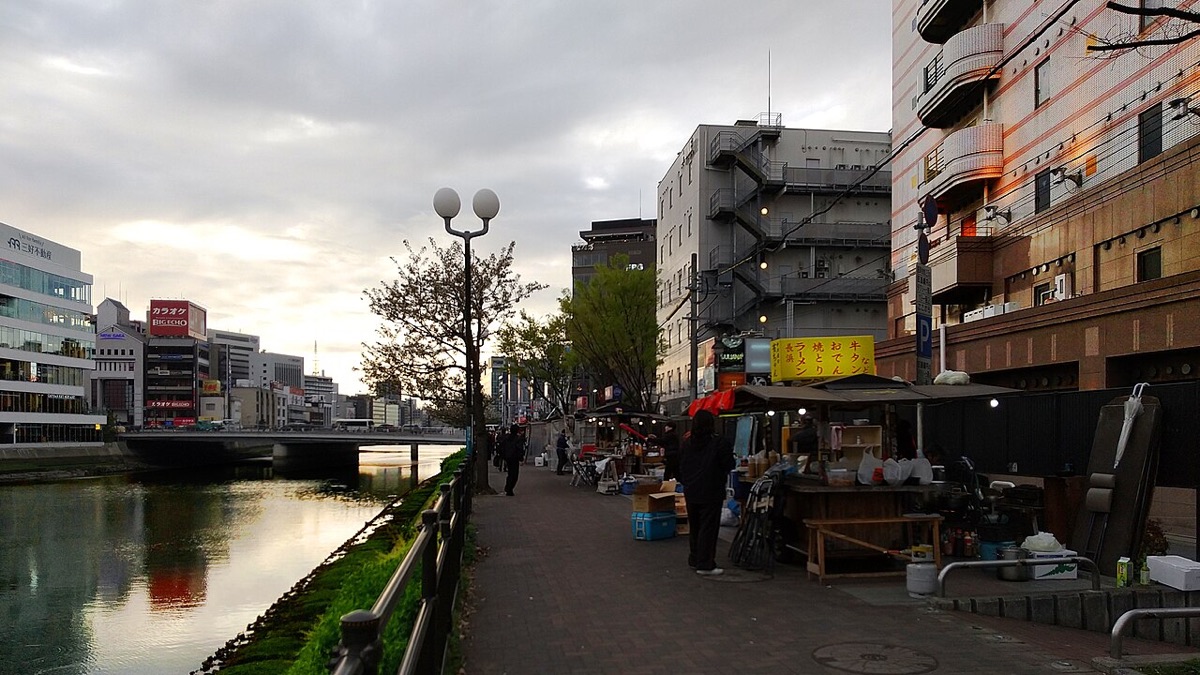
Fukuoka has about 100 yatai food stalls; the city's official tourism site lists 97: 50 in Tenjin, 35 in Nakasu and 6 in Nagahama. Most open between 18:30 and 19:00, and often close without notice in rain or strong wind; check the official LINE account FUKUOKA GUIDE on the day. Ramen costs about 600 to 935 yen and yaki-ramen 820 to 1,078 yen, with a typical spend of 1,500 to 2,500 yen per person per stall; 57 stalls accept cashless payment. By ordinance, prices must be displayed and no raw food is served. The 23 stall spaces in the 6th public recruitment are due to open in April to May 2027.
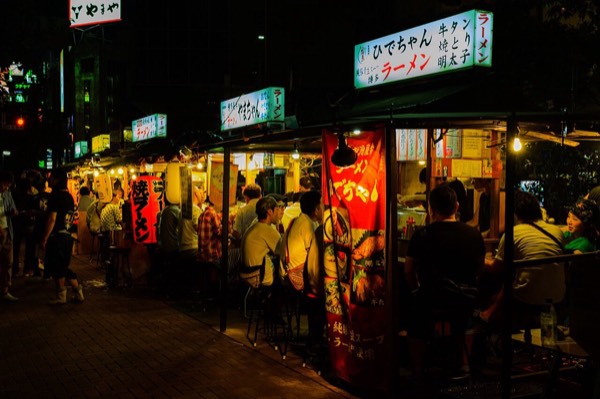
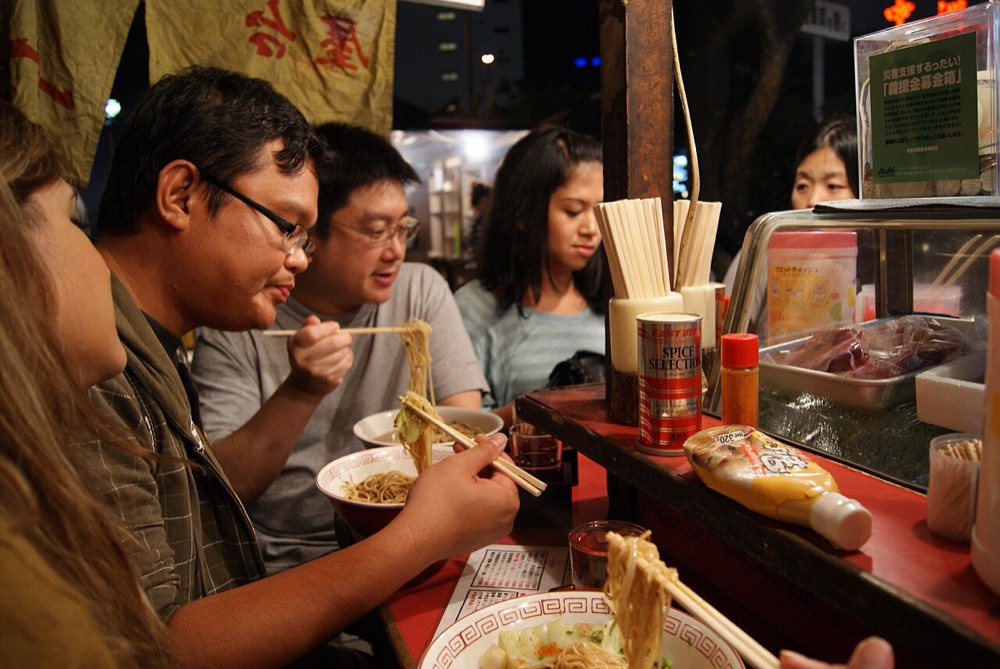
Fukuoka yatai are street stalls that only appear on pavements and riverbanks in the evening. Each has around ten seats, and guests sit shoulder to shoulder over ramen, oden and skewers. First-timers usually get stuck on three things: whether to go to Nakasu, Tenjin or Nagahama, what time to arrive to get a seat, and whether they will be overcharged if prices are not shown. This guide uses information from Fukuoka City and the official tourism site to turn the differences between the three areas, opening hours, real prices and the steps from sitting down to paying into an evening you can simply follow.
How Many Yatai Are There in Fukuoka? Three Numbers to Know First
In short: about 100 across the city, half of them in Tenjin, and every one is governed by the same city ordinance.
- 100 stalls: The number of yatai counted by Fukuoka City peaked at 427 in fiscal 1965 and stands at 100 in fiscal 2026[9]. The yatai list on Yokanavi, the city's official tourism site, currently shows 97: 50 in Tenjin, 35 in Nakasu, 6 in Nagahama and 6 elsewhere (checked November 2026)[1].
- 17:00 to 4:00 the next morning: This is the window in which the city lets yatai occupy a road or park, and it includes bringing the stall in, setting up, packing down and leaving. In the daytime you will only see an empty pavement[6].
- 3 metres wide, 2.5 metres deep: The maximum stall size; food may not be served outside it[6]. The official site describes this as about four and a half tatami mats, and most stalls seat only around 10[5][2].
With these three points in mind, many yatai "rules" make sense: they come from the space and the regulations, not from a fussy owner.
Nakasu, Tenjin or Nagahama? A Three-Area Comparison
In short: choose Nakasu for night views, Tenjin for more choice and easier seating, and Nagahama to avoid crowds if you like ramen.
| Nakasu (Naka River bank, Seiryu Park) | Tenjin (around Showa-dori and Watanabe-dori) | Nagahama Yatai Street | |
|---|---|---|---|
| Stalls on the official list | 35 | 50 | 6 |
| Atmosphere | A full row along the river with neon reflections; the postcard view | Stalls scattered in front of office buildings and department stores; after-work crowd | Near the fish market with a sea breeze; stalls gathered in one place |
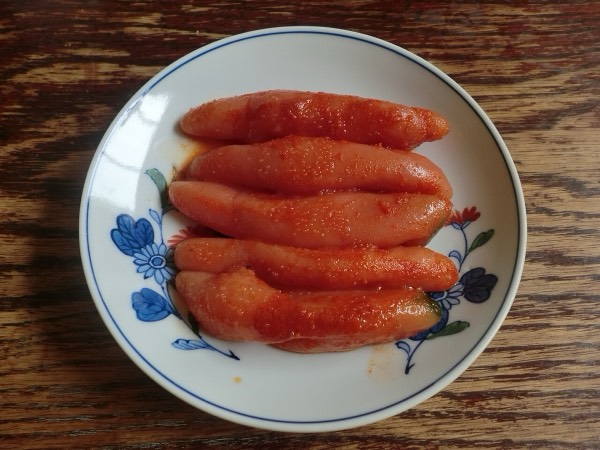
| Typical food | Ramen, yaki-ramen, oden, gyoza | Everything from classics to French, cocktails and coffee | Nagahama ramen, plus newer stalls such as a mentaiko specialist and Chinese food |
| Crowds | Tourists concentrate here; waits are common on weekend nights | Relatively easy to sit around 18:00; popular stalls full after 20:00 | Quieter overall, but popular stalls queue at weekends |
| Nearest station | About 10 minutes on foot from Exit 1 of Nakasu-Kawabata subway station; about 5 minutes for the Ura-Nakasu stalls | 1–5 minutes on foot from Tenjin subway station or Nishitetsu Fukuoka (Tenjin) Station | About 10 minutes on foot from Akasaka subway station |
| From Hakata Station | About 10 minutes on foot to Canal City, with Seiryu Park right beside it; or 2 subway stops to Nakasu-Kawabata | 3 stops on the Airport Line, about 5 minutes | Airport Line to Akasaka Station, then walk |
| Good for | First-timers, photos, staying near Hakata Station or Nakasu | Shorter waits, hopping two or three stalls, staying in Tenjin | Repeat visitors, ramen fans, families who want a bit more room |
Stall counts and walking times from stations come from each stall's entry on the official tourism site[1], and the character of each area from the official beginner's guide[3]. The walking time from Hakata Station to Canal City is from Canal City's website[14].
Nakasu Yatai: River Views and Classic Dishes
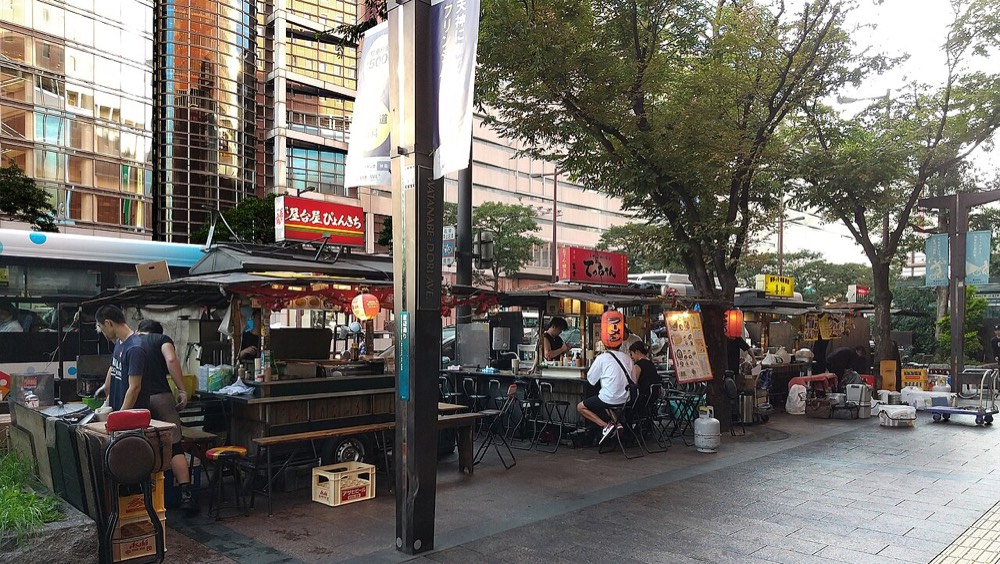
Nakasu's yatai are in two groups: the bank of the Naka River and Seiryu Park beside Canal City, and around ten stalls north of Nakasu-Kawabata Station in the area known as Ura-Nakasu[3]. The riverside is what most people picture as Fukuoka yatai, and the food is mainly ramen, yaki-ramen and oden. Examples currently listed on the official site:
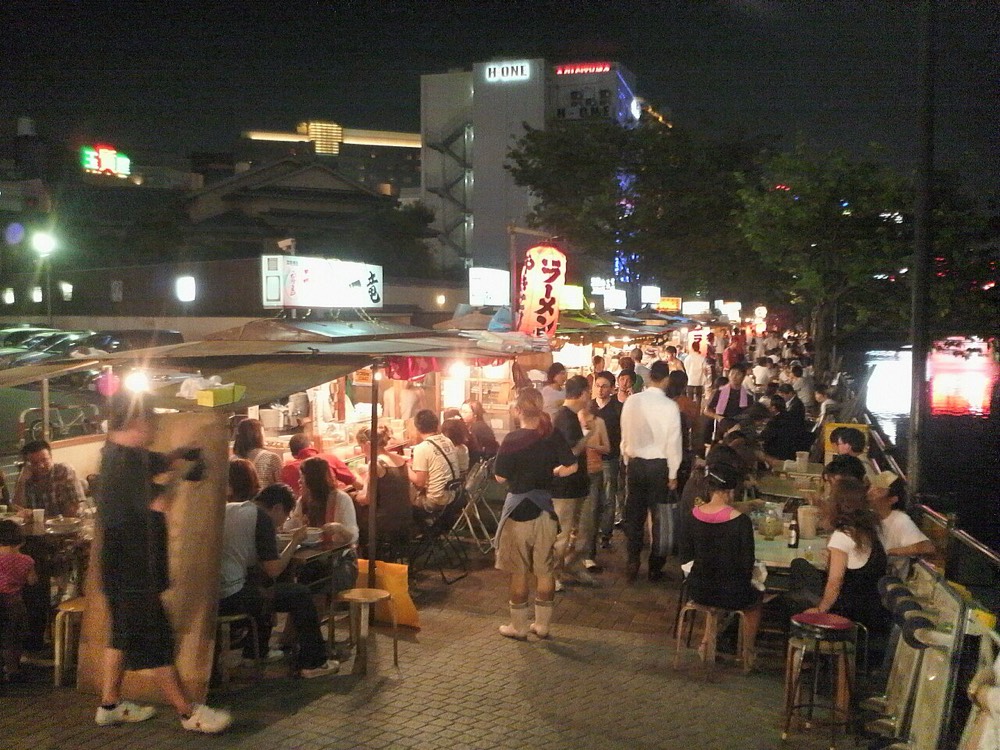
- Shinryu (伸龍): A family-run stall in Nakasu for over 30 years. Signature dishes are mentaiko cheese gyoza at 750 yen and yaki-ramen at 950 yen (December 2023)[1].
- Hakata Yatai Nakasu Juban (中洲十番): Ramen 935 yen, yaki-ramen 1,078 yen (December 2023). Accepts cards, issues receipts, and stays open until 2:30[1].
- Ultra C (ウルトラC): A deep-fried skewer stall in Ura-Nakasu, with aubergine and onion skewers from 200 yen each[4].
Tenjin Yatai: The Most Stalls and the Widest Range
About half of the city's yatai are in Tenjin[3], spread along Showa-dori (in front of the Fukuoka Bank head office and the Bank of Japan Fukuoka Branch), Watanabe-dori (in front of Daimaru and Luz Fukuoka Tenjin) and near Meiji-dori. Because they are scattered, a whole street rarely fills up at once; if one stall is full, the next is two minutes away.
- Kogane-chan (小金ちゃん): Founded in 1968 and known as the originator of yaki-ramen, 820 yen (December 2023). Closed Thursdays and Sundays[1].
- Kiryu (喜柳): Describes itself as having the largest menu of any Fukuoka yatai. Gyoza 750 yen (April 2026); open until 3:00[1].
- Tenichi (天一): A tempura yatai. Tempura platters 1,100–1,400 yen, oden 150 yen a piece (December 2023). Closed Sundays and public holidays[1].
- Remi-san-chi (レミさんち): A French yatai run by a French owner. Quiche 700 yen (April 2026); service in Japanese and English[1].
- Yatai Bar Ebi-chan (屋台バー えびちゃん): A cocktail yatai. The official listing says it is usually full after 20:00 and recommends booking[1].
Nagahama Yatai: The Street That Came Back in 2023
Nagahama is the birthplace of Nagahama ramen. Its yatai street was redeveloped and revived in 2023 at 3-14 Nagahama, Chuo Ward; the stalls stand together and the site has toilets[10]. It is about a 10-minute walk from Akasaka subway station[4].
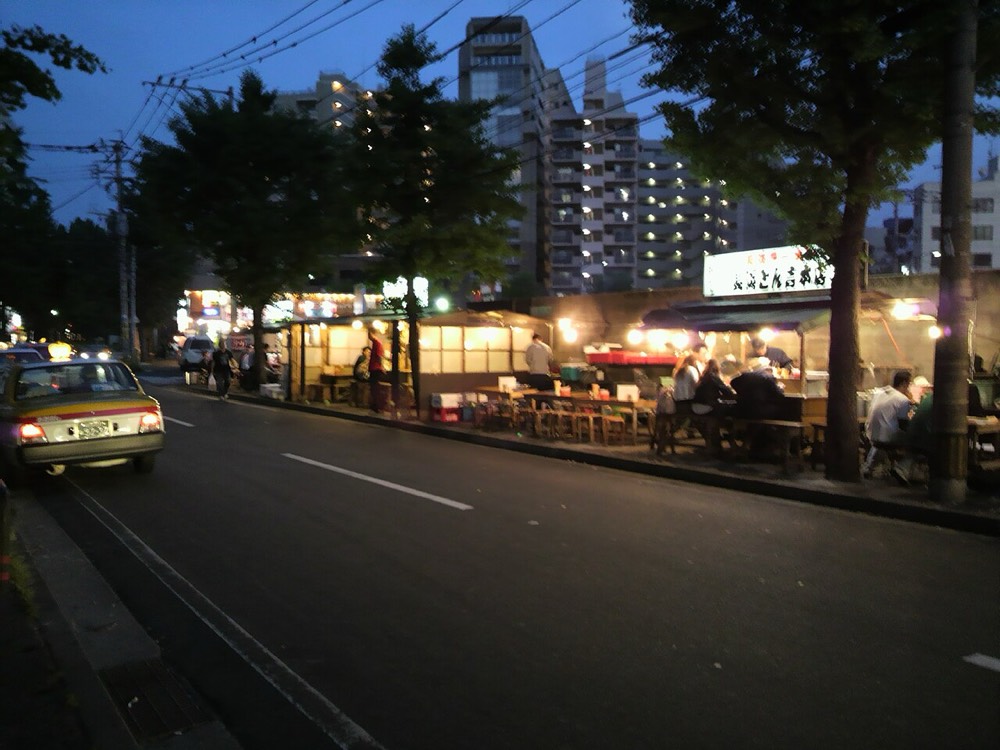
- Yatai no Tama-chan Annex (屋台のたまちゃん別館): Nagahama ramen 750 yen, oden and yakitori from 200 yen (May 2026)[1].
- Mentai Chudoku (明太中毒): Described officially as Fukuoka's only mentaiko-specialist yatai. Mentaiko and grated yam hot pot 1,000 yen (April 2026); queues at weekends[1].
- Nagahama no Hiroshi (長浜のひろし): Specialises in vegetables wrapped in meat. Lettuce roll 900 yen (April 2026)[1].
If you have not booked a hotel yet, see where to stay in Fukuoka for which area is the shortest walk to the yatai.
What Are Fukuoka Yatai Opening Hours? Days Off and Rainy Days
In short: there are no citywide opening hours. Assume stalls open between 18:30 and 19:00 and close around 1:00, and always confirm on the day.
The official beginner's guide says the earliest stalls open around 18:00 and most open between 18:30 and 19:00; days off differ by stall, and stalls may close at short notice in rain or when strong wind is forecast[2]. A typical operator's day published by Fukuoka City is similar: bring the stall in and set up at 17:00, open around 18:30, finish around 1:00 and be gone by 2:30[6]. Looking at the hours each stall has registered on the official site, early ones open at 18:00 and late ones at 19:00; closing ranges from 24:00 to 3:00, and quite a few stalls are closed on Sundays[1].
Ways to confirm on the day, in order of reliability:
- The official LINE account FUKUOKA GUIDE: Fukuoka City has fitted yatai with IoT light bulbs. Once a stall switches on its power, LINE shows it as open that day[12]. Note that the mark only lights up from around 18:00, so a blank in the afternoon does not mean the stall is closed[3].
- The stall's Instagram: Sudden closures and early sell-outs are usually only announced here, and the official guide also advises checking before you go[2].
- The yatai list on the official tourism site: You can filter by day of the week, area and "open now only", which is useful for building a shortlist in advance[1].
Yatai also operate over the year-end and New Year period, though fewer stalls are open than usual[2].
Fukuoka Yatai Prices: How Much Per Person?
In short: with one drink and two or three dishes, the average budget each stall registers on the official site is mostly 1,500 to 2,500 yen. For two stalls in a row, allow 3,000 to 5,000 yen.
The table shows signature dish prices that stalls themselves registered on the official tourism site, with the posting date in brackets[1][4]:
| Item | Actual listed prices | Range |
|---|---|---|
| Ramen | Unzen 600 yen (12/2023), Shinryu 750 yen (12/2023), Tama-chan Annex 750 yen (5/2026), Nakasu Juban 935 yen (12/2023) | 600–935 yen |
| Yaki-ramen | Kogane-chan 820 yen (12/2023), Nagahama no Hiroshi 950 yen (4/2026), Yotchan 1,000 yen (5/2025), Nakasu Juban 1,078 yen (12/2023) | 820–1,078 yen |
| Oden | Tenichi 150 yen each (12/2023), Tama-chan Annex from 200 yen (5/2026) | 150–200 yen and up |
| Yakitori | Tenichi 150 yen a skewer (12/2023), Tama-chan Annex from 200 yen (5/2026) | 150–200 yen and up |
| Gyoza | Kiryu 750 yen (4/2026), Shinryu mentaiko cheese gyoza 750 yen (12/2023) | 750 yen |
| Mentaiko rolled omelette | Kogane-chan 750 yen (12/2023), Yotchan 950 yen (5/2025) | 750–950 yen |
| Cocktails | Ebi-chan 880–1,100 yen (4/2022) | 880–1,100 yen |
Prices for beer, shochu and other drinks vary by stall and there is no official summary, so go by the price board on site. Prices posted in 2023 are now nearly three years old and have quite possibly risen, so read the table as a rough bracket.
Will I Be Overcharged?
Fukuoka City's yatai ordinance requires prices to be displayed where customers can easily see them. Items whose price changes with the day's purchase cost must show that day's price, not just "market price"[8]. The official guide also notes that every stall has a price board, that any seating charge or appetizer charge (otoshi) is written on it, and that nothing extra is added at the bill[4]. Of the 97 stalls on the official site, 74 are marked "no seating or appetizer charge"[1]. The city also has yatai inspectors on patrol and publishes each stall's compliance on its website[8].
Payment: Still Bring Cash
Of the 97 stalls, 57 are marked as accepting cashless payment, 18 as accepting credit cards and only 9 as issuing receipts (checked November 2026)[1]. In other words, about 40% of stalls are not marked as accepting cashless payment and are probably cash only. Giving change is awkward at a yatai, so bring 1,000-yen notes and coins. For how payment methods differ in Japan, see the Japan payment guide.
Your First Yatai: Six Steps from Sitting Down to Paying
In short: read the price board, say how many you are, order one item each, and leave when you finish. The only real differences from an izakaya are that it is cramped and quick.
- Use a toilet and store your luggage first. Yatai have no toilets and no space for bags. Keep a small bag at your feet or on your lap, and leave suitcases in a coin locker or at your hotel[2]. If you really need one, the owner will tell you where a nearby toilet is; the ordinance requires operators to arrange this in advance[8].
- Read the price board from outside. Check whether there is a seating charge and whether each person must order at least one item[2].
- Lift the noren at the front and say how many you are. The phrase suggested officially is "○-nin desu kedo, hairemasu ka?"; when it looks full, regulars often shuffle along to make room[3]. Holding up fingers and asking "OK?" also works.
- Sit down, order drinks first, then food. As a rule, each person orders at least one item[11]. If you do not drink alcohol, order oolong tea or a soft drink.
- Slide along when someone new comes in. The bench is shared; do not hold a seat with your bag or spread out sideways as a group[11].
- Pay and leave when you finish. There is no set time limit, but the official manners guide says clearly not to linger when it is busy; if you want more, move to the next stall[2][11].
These Are Regulations, Not the Owner Being Inflexible
- No sashimi or salad: Yatai may not serve raw food, and every dish must be heated through just before serving; seared and rare preparations are not allowed either[5][6]. For goma saba (sesame mackerel), go to an izakaya.
- No takeout and no delivery[6].
- No tables or chairs outside the stall: Food can only be served within the stall's dimensions[6], so the owner cannot "add a table" when it is busy.
Languages, Children and Wheelchairs
Of the 97 stalls on the official tourism site, 65 are marked as having multilingual menus, 38 as able to serve guests in a foreign language, 78 as welcoming children and 76 as wheelchair accessible (checked November 2026)[1]. The site itself is available in Japanese, English, Korean, and Simplified and Traditional Chinese, so you can filter before you go. With children, the official guide suggests going in the quieter period just after opening and telling the owner when you sit down[2].
Two Areas in One Night: A Yatai-Hopping Timetable and a Rainy-Day Plan
In short: starting in Tenjin at 18:00 and moving to Nakasu around 20:30 gives you the shortest waits and still gets you the riverside night view.
| Time | Plan | Notes |
|---|---|---|
| 17:30 | Drop your things at the hotel, use the toilet | Carry only a small bag and cash |
| 18:00 | Arrive at Tenjin subway station | Tenjin is relatively uncrowded at this hour[3]; some stalls are still setting up, so walk around and read the price boards first |
| 18:15–19:15 | Stall 1: classic dishes | One drink, oden or yakitori, and a yaki-ramen; about 1,500–2,500 yen |
| 19:20–20:15 | Stall 2: a different style | Tempura, French or a cocktail yatai; popular stalls can be booked ahead by phone or Instagram[3] |
| 20:15–20:40 | Move to Nakasu | One subway stop from Tenjin to Nakasu-Kawabata, fares from 210 yen[15], then about 10 minutes on foot to the riverside; or walk east along Kokutai-doro and across Haruyoshi Bridge, roughly 10–15 minutes by the map |
| 20:40–21:40 | Night view along the Nakasu riverside, stall 3 to finish | If you are full, just have a bowl of ramen or one drink; the riverside is at its liveliest now, so allow time to wait |
| After 21:40 | Back to the hotel | To Hakata Station, walk about 10 minutes via Canal City[14], or take the Nanakuma Line from Kushida-jinja-mae Station |
Light eaters can simply drop the second stall. If you want to go to Nagahama, it works better to start there at 18:30 and then come back to Tenjin, because Nagahama is the farthest from a station. If you ride the subway more than three times in a day, contactless credit card fares have a daily cap; details are in the Fukuoka day pass guide.
If you want to head for the yatai straight off the plane, first read Fukuoka Airport to Hakata and Tenjin to check your terminal and where to leave luggage; do not bring a suitcase.
Are Fukuoka Yatai Cold in Winter? Plus What Changes in Spring 2027
In short: from November to February, yatai are wrapped in clear vinyl sheets and are warmer inside than you would expect. A batch of new stalls opens from April 2027.
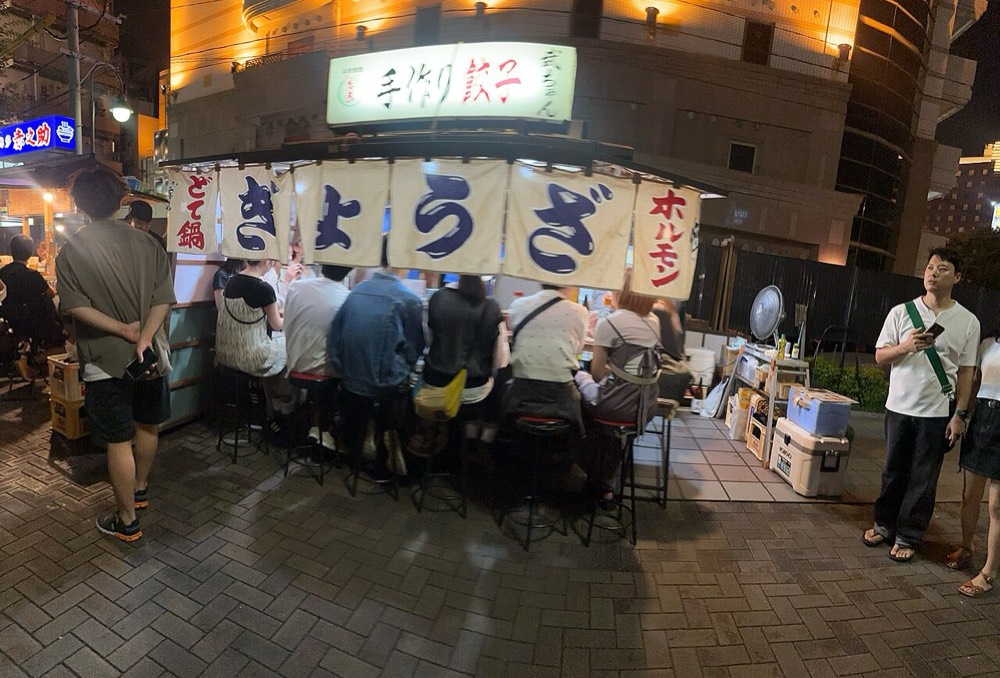
Getting in and out in winter: When it is cold, stalls are enclosed in vinyl sheeting against the wind, and the entrance is hard to spot from outside. The official advice is to find the gap between two sheets and ask "Haitte ii desu ka?"; staff will open it for you[3]. Inside, the soup pot and griddle keep things warm, but you wait for a seat outdoors, so still bring a scarf and coat.
Combine it with the Christmas market: In winter 2026, the Christmas market venue in Tenjin Central Park runs from 12 November to 25 December, and the illuminations around Nakasu are lit from 2 November to 12 January 2027. Both are on the walking route from Tenjin to the Nakasu riverside. Dates and hours for each venue are in the Fukuoka Christmas market 2026 guide; you can have a mulled wine at the market first and then eat properly at a yatai.
New faces in spring 2027: In 2026 Fukuoka City held its 6th public recruitment of yatai operators, offering 23 spaces in total: 4 in Nakasu North, 5 at Seiryu Park, 3 in Tenjin North, 4 in Tenjin Central, 5 in Tenjin South and 2 in Nagahama. There were 102 applicants, about 4.4 per space[7]. According to the city's schedule, operators are due to be chosen in early December 2026 and to start business between 1 April and 31 May 2027, with permits running to the end of March 2030 and renewable up to the end of March 2037[6][7]. Who takes over which spot has not been announced. If you are travelling from spring 2027 onward, rely on the latest yatai list on the official tourism site for stall names and locations[1].
Who Fukuoka Yatai Suit, and Who They Do Not
A good fit:
- Groups of one to three who are happy to sit shoulder to shoulder with strangers and chat a little.
- Anyone who wants to try two or three kinds of Fukuoka street food in one evening, spending under an hour at each stall.
- Solo travellers: a ten-seat counter is easier to walk into than an izakaya on your own.
Not such a good fit:
- Groups of five or more: with about 10 seats per stall, it is hard to sit together unless you book or hire the stall (39 stalls on the official site are marked as taking reservations)[1].
- People who want sashimi or a slow two- to three-hour meal: book an izakaya instead.
- Anyone with large luggage or a pushchair at peak time: drop the luggage first and go at opening time.
- Typhoon or heavy-rain days: most stalls will be closed, so do not force it.
Before You Go: Five Things to Check
- Add the official LINE account FUKUOKA GUIDE on your phone, and after 18:00 confirm that the stall you want shows the open mark.
- Shortlist at least three stalls with different days off (quite a few close on Sundays).
- Carry 1,000-yen notes and coins, even if the stall is marked as accepting cashless payment.
- Use a toilet before you leave and keep your luggage at the hotel.
- Read the price board before sitting down and check the seating charge and minimum order.
For daytime plans, pair this with things to do in Fukuoka: schedule Tenjin or the Hakata Old Town for late afternoon and you will arrive at the yatai just as they open.
FAQ
What time do Fukuoka yatai open, and when is it easiest to get a seat?
Fukuoka City only allows yatai to occupy their spot, including set-up and removal, between 17:00 and 4:00 the next morning. In practice the earliest stalls open around 18:00 and most open between 18:30 and 19:00. The official tourism site notes that Tenjin is less crowded around 18:00, so arrive at opening time; popular stalls are often full after 20:00.
Do Fukuoka yatai open when it rains? How do I check on the day?
Not always. The official guide says stalls may close at short notice in rain or when strong wind is forecast, and each stall has its own days off. Before heading out, check the "open today" mark on the official LINE account FUKUOKA GUIDE (it only lights up from around 18:00) or the stall's Instagram. If it is closed, switch to an indoor ramen shop.
Can I pay by card or mobile payment at Fukuoka yatai?
More and more stalls accept it, but not all. Of the 97 yatai listed on Fukuoka City's official tourism site, 57 are marked as accepting cashless payment and 18 as accepting credit cards (checked November 2026). The rest are likely cash only, so carry 1,000-yen notes and coins.
Is it awkward to go to a Fukuoka yatai alone?
No. The official beginner's guide says solo guests are welcome and often end up chatting with the owner and the people next to them. Lift the noren curtain at the front, show the number of people with your fingers and ask if you can sit. If you are shy, go at opening time or pick a stall with a multilingual menu.
Nakasu or Tenjin: which yatai area is better for a first visit?
For river views and the classic row of stalls, choose the Naka River bank and Seiryu Park in Nakasu. For shorter waits and more choice, choose Tenjin, where about half of the city's yatai are, one to five minutes from a subway exit. With enough time, start in Tenjin and finish in Nakasu; both fit in one evening.
Do Fukuoka yatai show prices? Will I be overcharged?
Prices are displayed. Fukuoka City's yatai ordinance requires prices to be shown where customers can see them, and items whose price changes with the day's market must show that day's price rather than just "market price". Any seating or appetizer charge must also be listed. Read the price board before sitting down and ask if anything is unclear.
Sources
- Yokanavi (Fukuoka City official tourism site) | Yatai list: 97 yatai listed, number per area, filters such as multilingual menu and cashless payment, plus each stall's hours, days off, signature dish prices and average budget (checked November 2026)
- Yokanavi | Yatai basics: Opening times, no fixed day off, sudden closures in bad weather, about 10 seats, toilets and luggage, visiting with children or alone
- Yokanavi | Six things first-timers get wrong at Fukuoka Hakata yatai (part 1): Character of the three main areas, about half in Tenjin, the situation around 18:00, LINE open-status mark, how to enter, winter vinyl sheets, no takeout
- Yokanavi | Six things first-timers get wrong at Fukuoka Hakata yatai (part 2): Mandatory price boards and the ban on "market price", dishes and prices at Nagahama and Ura-Nakasu stalls, about 10 minutes on foot from Akasaka Station to Nagahama
- Yokanavi | Why yatai are safe to eat at: Water and sewerage, food storage, ban on sashimi, salads and seared dishes, stall size of about four and a half tatami mats
- Fukuoka City | Public recruitment of yatai operators: 23 stall spaces in the 6th recruitment, operating period, hours of 17:00 to 4:00, stall dimensions, rules such as no raw food and no takeout
- Fukuoka City | Applications for the yatai operator recruitment (12 June 2026): 102 applicants, spaces per district, selection in early December, business to start 1 April to 31 May 2027 (planned)
- Fukuoka City | Q&A on yatai policy: Price display duty, "market price" alone not allowed, operators must secure a toilet they can direct guests to, patrols by yatai inspectors
- Fukuoka City | Number of yatai over time: Peak of 427 stalls in fiscal 1965; 100 stalls in fiscal 2026
- Yokanavi | Stall-hopping on Nagahama Yatai Street: Address of Nagahama Yatai Street, 2023 revival, each stall's signature dishes and Instagram
- Yokanavi | Yatai manners: At least one order per person, do not linger, make room for others, store your luggage
- Fukuoka City | Yatai DX upgrade: IoT light bulbs that detect whether a stall is open, the official LINE account FUKUOKA GUIDE, AI recommendations
- Canal City Hakata | Ramen Stadium: Center Walk 5F, eight ramen shops, open 11:00–23:00
- Canal City Hakata | Access: About 10 minutes on foot from Hakata Station, about 3 minutes from Kushida-jinja-mae Station
- Fukuoka City Subway | Regular tickets: Subway fares are zoned by distance, from 210 yen for adults
Fares, opening hours and event dates can change. Information checked on 2026.11.12; please confirm with official sources before you go.