Yanagawa Day Trip: Canal Boat Ride (Winter Kotatsu Boats), Steamed Eel and Getting There from Fukuoka
How to do the Yanagawa canal boat ride from Fukuoka: Nishitetsu trains, operator fares and hours, winter kotatsu boats, steamed eel, Ohana and the Dazaifu ticket.
Quick answer
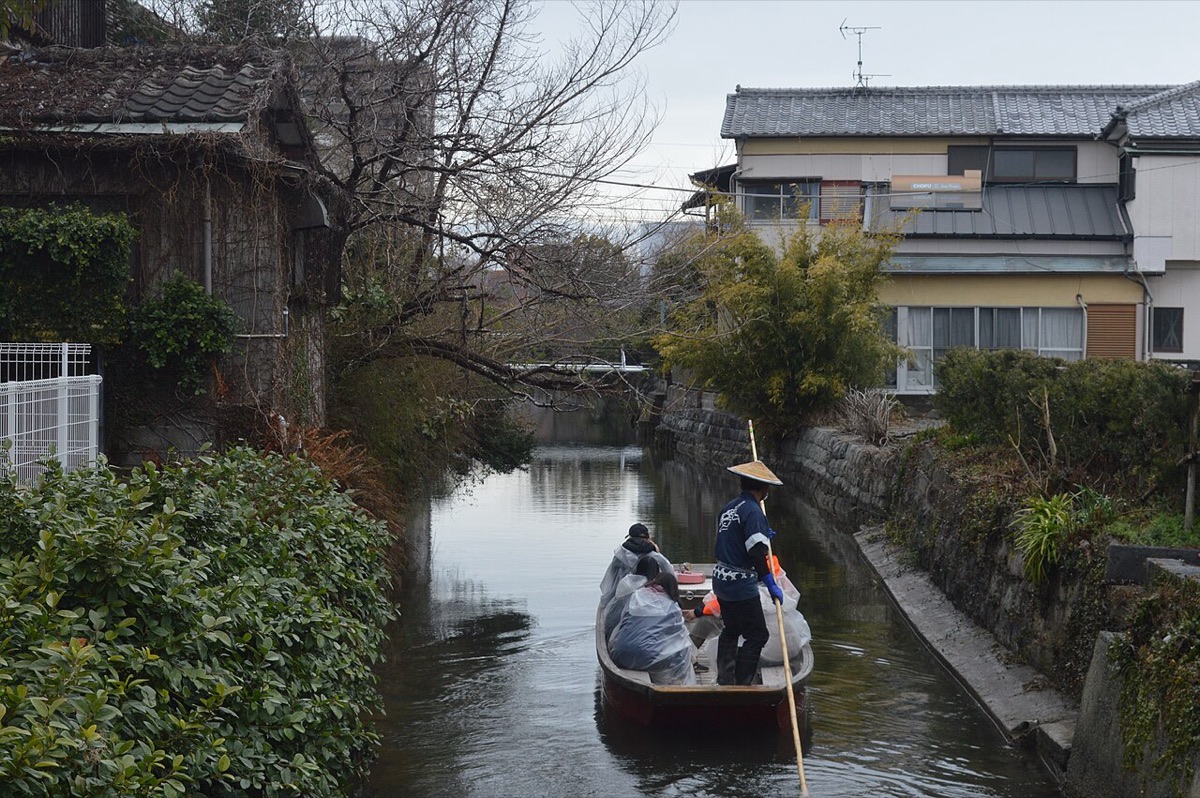
The Yanagawa canal boat ride (kawakudari) circles the old castle-town moats for about 60–70 minutes in a donko-bune poled by a boatman. From Tenjin in Fukuoka, the Nishitetsu limited express reaches Nishitetsu Yanagawa Station in about 50 minutes, and the boarding docks are a 5–10 minute walk away. Standard routes cost about 2,000–2,200 yen for adults, depending on the operator. From December to February boats carry kotatsu heated by braziers (2026–27 dates not yet announced; in past years December 1 to the end of February). Afterwards, eat steamed eel, see Ohana, or use the Dazaifu-Yanagawa sightseeing ticket (3,620 yen adult digital, June 2026) to combine with Dazaifu over two days.
The Yanagawa canal boat ride (kawakudari) is one of the classic day trips from Fukuoka: you sit in a wooden boat while a boatman poles along, singing and joking, past willows, white-walled storehouses and stone bridges along moats left from the Edo period. This guide covers getting there from Fukuoka, fares and reception hours for each boat operator, the winter-only kotatsu boats, Yanagawa's famous steamed eel, Ohana (the Tachibana residence and garden), and the ticket that lets you combine Yanagawa with Dazaifu, so you can plan your Yanagawa day trip in one go.
What is the Yanagawa boat ride? How long does it take and how much is it?
In short: standard routes take about 60–70 minutes and cost about 2,000–2,200 yen for adults, depending on the operator. Short courses of 30–40 minutes start from about 1,000 yen.
Yanagawa is a former castle town in southern Fukuoka Prefecture, laced with a network of waterways called horiwari. The flat-bottomed wooden boats are called donko-bune, pushed along with bamboo poles. The route passes the Meiji-era red-brick storehouses known as Namikura, sights linked to poet Kitahara Hakushu, and bridges so low that passengers have to duck. According to the Fukuoka Prefecture Tourist Association, the ride covers about 4 km in about an hour, runs year-round, and starts from 1,800 yen, with actual fares set by each operator[1].
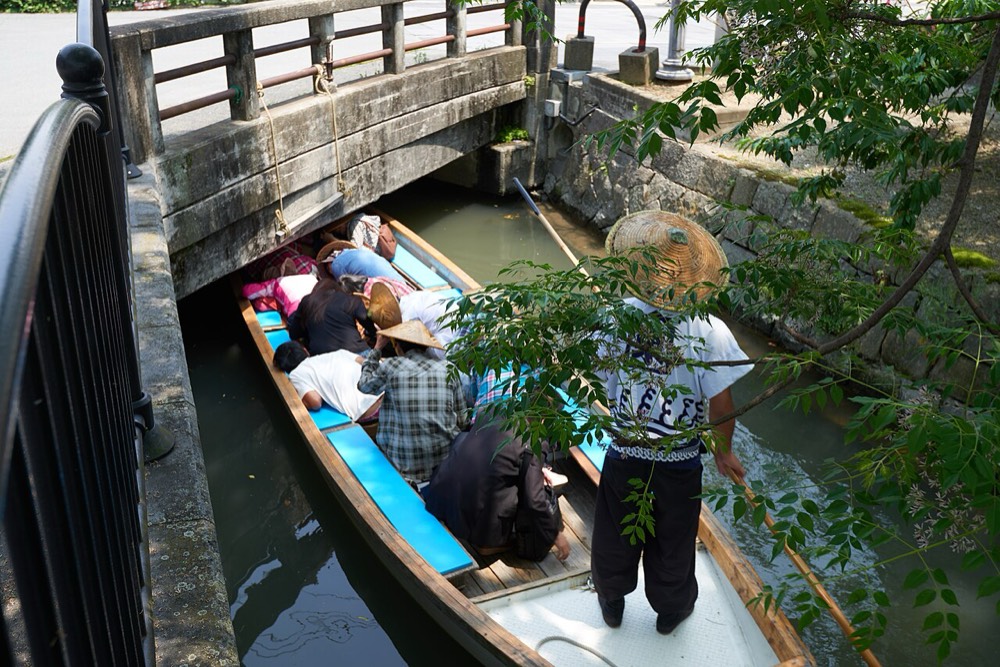
The Yanagawa City Tourism Association splits rides into two types: the standard route starts near Nishitetsu Yanagawa Station and takes about 60 minutes, while short courses loop around the Okinohata and Ohana area in about 30–40 minutes[2]. The table lists the main operators on the association's site (checked November 2026):
| Operator | Route | Adult / child | Reception hours | Notes |
|---|---|---|---|---|
| Yanagawa Kanko Kaihatsu | Standard | 2,200 / 1,100 yen | 9:30–15:00 | Departs Shogetsu dock, about 60 minutes to Ohana |
| Daito Enterprise | Standard | 2,000 / 1,000 yen | Mar–Nov 10:00–17:00; Dec–Feb 10:00–16:00 | About 70 minutes; 30-minute short course too |
| Suigo Yanagawa Kanko | Standard | 2,000 / 1,000 yen | 9:10–15:30 | — |
| Hakushu Kanko | Short loop | 2,200 / 1,100 yen | 9:00–21:00 | Reservation required |
| Yanagawa River Kanko, Marue Kanko | Short loop | 1,000 / 500 yen | Varies | Okinohata area |
Child age bands differ by operator, and special fares may apply on holidays or in cherry blossom season[3]. The times shown are reception hours, and the last boats usually go a little after 3 p.m., so for the standard route, try to reach the dock by about 2 p.m.
When can you ride a Yanagawa kotatsu boat?
In short: in winter (December to February) operators set kotatsu on their boats at the same price as a regular ride. Official dates for the 2026–27 season have not been announced; the details below are from past years.
A kotatsu boat is a donko-bune fitted with a low table heated by a brazier. Passengers tuck their legs under the quilt and stay warm while taking in the winter canal scenery. The Fukuoka Prefecture Tourist Association notes that in rain the kotatsu is not set up and a regular boat runs instead[1].
In winter, watch out for the draining period in mid-February: each year Yanagawa drains the inner moat for about 10 days of cleaning, the inner moat is closed to boats, and operators switch to shorter routes. Yanagawa Kanko Kaihatsu, for example, runs a loop between Shogetsu dock, the Shirobori water gate and Mihashira Shrine (about 40 minutes) for 1,700 yen per adult during this time[3]. In 2026 the route change ran from February 16 to 25[5]; 2027 dates will be announced by the operators. If you are coming specifically for the full standard route, avoid mid-to-late February.
Kotatsu boats have heaters, but the boats are open and the wind over the water is cold. Bring a hat, scarf, gloves and disposable heat packs; the back of the boat catches the most wind.
How do you get from Fukuoka to Yanagawa?
In short: from Nishitetsu Fukuoka (Tenjin) Station, take the Tenjin-Omuta Line limited express with no transfer to Nishitetsu Yanagawa Station in about 50 minutes, then walk 5–10 minutes to the docks.
- Train: board a limited express bound for Omuta at Nishitetsu Fukuoka (Tenjin) Station; the Fukuoka Prefecture Tourist Association's Yanagawa feature puts the ride at about 50 minutes[6]. Local and express trains take longer, so pick a limited express when checking times.
- Fare: check the single fare on the Nishitetsu website or a route planner. You can tap an IC card (SUGOCA, nimoca, Suica and other transport IC cards work). If you are also going to Dazaifu, consider the ticket in the next section.
- To the docks: several operators' docks are around Nishitetsu Yanagawa Station, a 5–10 minute walk away[1].
- Returning: standard routes are one way and end around Okinohata, near Ohana and the eel restaurants. Take a bus back to the station or walk.
By car, it is about 15 minutes from Miyama-Yanagawa IC on the Kyushu Expressway, with parking near the docks[1]. If you are staying near Hakata Station, take the subway to Tenjin and change to Nishitetsu; for more rail and bus options around Kyushu, see our Kyushu transport guide.
How does the Dazaifu-Yanagawa ticket work? Is it worth it?
In short: if you want to visit both Dazaifu and Yanagawa on one trip, Nishitetsu's Dazaifu-Yanagawa Sightseeing Ticket (Dazaifu Yanagawa Kanko Kippu) bundles round-trip trains and a Yanagawa boat ticket and is the simplest option.
According to Fukuoka Prefecture Tourist Association information from June 2026[4]:
| Item | Details |
|---|---|
| Price (from Tenjin or Yakuin) | Digital: 3,620 yen adult, 1,810 yen child; paper: 3,730 yen adult, 1,870 yen child |
| Includes | Nishitetsu round-trip trains (Dazaifu and Yanagawa), Yanagawa boat ticket, local discount coupons |
| Boat restriction | Valid only on Yanagawa Kanko Kaihatsu boats |
| Validity | 2 days from first use; stopovers only at Dazaifu Station and Nishitetsu Yanagawa Station |
| Where to buy | Digital via the "my route" app or web; paper at Nishitetsu Fukuoka (Tenjin) and Yakuin stations |
The ticket price has changed before, so check the Nishitetsu website before buying. Because the boat ticket works with only one operator, go to Yanagawa Kanko Kaihatsu's Shogetsu dock rather than boarding any boat you see.
To do both in a day: leave Tenjin a little after 8 a.m. for Dazaifu, head back around 11 a.m. and change at Futsukaichi to the southbound Tenjin-Omuta Line, reach Yanagawa for an eel lunch, board a boat around 1 p.m., and return to Tenjin in the evening. It is a tight schedule; for a relaxed pace, stay a night in Yanagawa. For transport and highlights at Dazaifu, see our Dazaifu day trip guide.
Yanagawa eel: how to eat unagi no seiro mushi
In short: the dish to have in Yanagawa is steamed eel over rice (unagi no seiro mushi), and the Okinohata area where the boat ride ends has the biggest cluster of eel restaurants.
For Yanagawa's seiro mushi, rice is mixed with sauce, topped with grilled eel and shredded egg, and steamed in a bamboo steamer[6]. The steamed rice absorbs the aroma of the eel and sauce and is moister than a typical unaju, and the yellow egg makes the steamer look festive.
- Timing: lunchtime is busy and popular places may have lines. Eat before 11 a.m., or ride first and eat after 2 p.m.
- Price: varies widely by restaurant and eel portion, so no figure is given here; check the menu. The restaurant at Ohana also serves seiro mushi[7].
- Other local dishes: Yanagawa nabe (loach, burdock and egg simmered in a pot) and Ariake Sea specialties such as mudskipper are also worth trying[6].
For motsunabe, tonkotsu ramen and yatai stalls in the city, see our Fukuoka food guide.
Ohana and other sights around Yanagawa
In short: Ohana (the Yanagawa Domain Lord Tachibana Residence) is right on the way after the boat ride; add Kitahara Hakushu's birthplace and Mihashira Shrine and you can see it all in half a day.
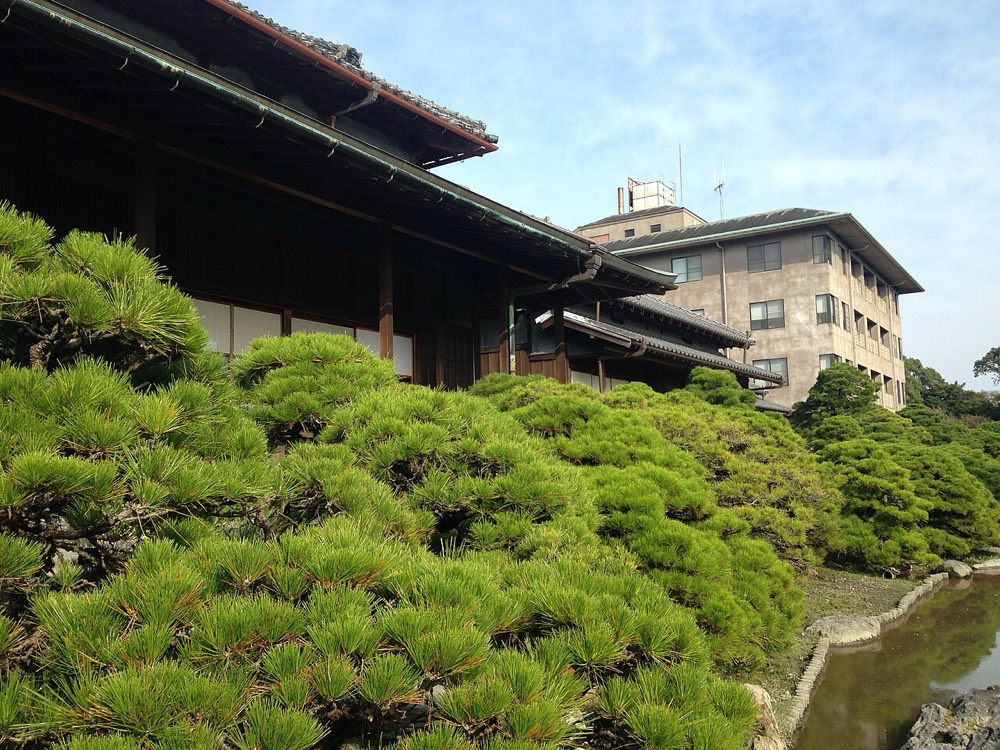
Ohana (Yanagawa Domain Lord Tachibana Residence): the residence of the Tachibana family, lords of the Yanagawa domain; its roughly 7,000-tsubo grounds are a nationally designated scenic site. Highlights include the Western-style building and the great hall of about 100 tatami mats, both completed in 1910, and the pine garden Shotoen. The adjacent Tachibana Museum holds about 30,000 items. According to the Fukuoka Prefecture Tourist Association's facility listing, general admission is 1,200 yen and visiting hours are 10:00–16:00; check the official site for closing days[7].
Kitahara Hakushu Birthplace and Memorial Museum: the reconstructed family home of modern poet Kitahara Hakushu, in the Okinohata area; boatmen often mention his poems along the way.
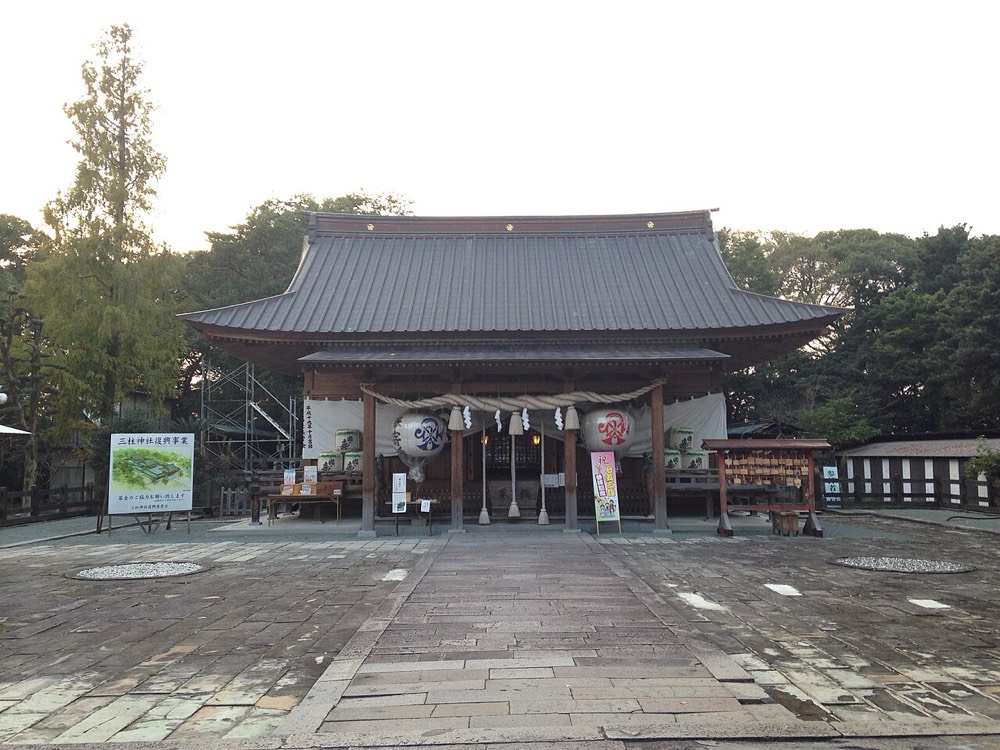
Mihashira Shrine: enshrines Tachibana Muneshige, the first lord of Yanagawa, among others; the surrounding Takahata Park is a cherry blossom spot[6]. The February draining-period loop also passes this area.
Seasonal events: in spring there is a hina doll water parade with dolls aboard boats; in summer there are evening akari-bune lantern boats (reservations required); and every November 1–3 the Hakushu Festival water parade fills the canals with lantern-lit boats[6]. Routes or docks may change on these days, so check operator notices before you go.
How to plan a Yanagawa day trip
In short: leave in the morning, eat eel at noon, ride the boat and visit Ohana in the afternoon; this is the least rushed plan for most travelers.
| Time | Plan |
|---|---|
| 9:30 | Limited express from Nishitetsu Fukuoka (Tenjin) Station |
| 10:30 | Arrive at Nishitetsu Yanagawa Station, walk to the dock |
| 10:45–11:45 | Yanagawa boat ride (standard route, about 60 minutes) |
| 12:00 | Steamed eel lunch around Okinohata |
| 13:30 | Ohana, Shotoen Garden and the Tachibana Museum |
| 15:00 | Walk to Kitahara Hakushu's birthplace, bus back to the station |
| 16:30 | Limited express back to Tenjin |
Before you go:
- Boat reception mostly ends a little after 3 p.m., so if you start late, ride first and eat afterwards.
- The boats have no cover: protect yourself from the sun in summer and dress warmly in winter; in rain, kotatsu boats may switch to regular seated boats.
- Mid-to-late February is the draining period, with shorter routes.
- For annual dates of seasonal boats such as kotatsu boats and akari-bune, follow the Yanagawa City Tourism Association and operator announcements.
FAQ
Do I need to book the Yanagawa boat ride in advance?
Shared boats for individual travelers usually need no booking: buy a ticket at the dock and wait your turn. Private group boats, the summer night akari-bune and some operators' short courses do require reservations. On holidays and in cherry blossom season, arrive in the morning to avoid the rush before afternoon cut-off.
When do Yanagawa kotatsu boats run, and do they cost extra?
In past years they ran from December 1 to the end of February, with brazier-heated kotatsu set on the boats at the same price as a regular ride. Dates for winter 2026–27 have not been announced yet, so check the Yanagawa City Tourism Association or operator websites before you go. In rain, a regular boat with seats may be used instead.
How long does it take from Fukuoka to Yanagawa, and which ticket is best?
The Nishitetsu Tenjin-Omuta Line limited express from Nishitetsu Fukuoka (Tenjin) Station reaches Nishitetsu Yanagawa Station in about 50 minutes with no transfer. For Yanagawa alone, just tap an IC card or buy a single ticket. If you are also visiting Dazaifu, Nishitetsu's Dazaifu-Yanagawa sightseeing ticket bundles round-trip trains and a boat ticket and is usually cheaper than buying separately.
How is Yanagawa's eel dish different from regular unagi rice?
Yanagawa's specialty is unagi no seiro mushi: rice mixed with sauce is topped with grilled eel and shredded egg, then steamed in a bamboo steamer. The rice soaks up the eel flavor and stays moist, unlike unaju, where grilled eel is simply laid on plain rice. Prices vary by restaurant and portion.
Where does the Yanagawa boat ride end, and how do I get back to the station?
Standard routes are mostly one way, starting near Nishitetsu Yanagawa Station and ending around Okinohata, near Ohana and the eel restaurants. You can take a Nishitetsu bus back to Nishitetsu Yanagawa Station; ask the boatman or operator about the bus stop and times when you get off.
Sources
- Crossroad Fukuoka (Fukuoka Prefecture Tourist Association) | Yanagawa Kawakudari: About 1 hour, about 4 km, fares from 1,800 yen, kotatsu boats and akari-bune
- Yanagawa City Tourism Association | River cruise (Ohori-meguri) guide: Operator fares, reception hours, standard and short courses, February draining period
- Yanagawa Kanko Kaihatsu official website: Shogetsu dock, shared-boat fares, reception hours, kotatsu boats, loop route during draining
- Crossroad Fukuoka | Dazaifu-Yanagawa Sightseeing Ticket: Ticket prices, validity and purchase as of June 2026
- Fukuoka Now | Yanagawa Kotatsu Bune: 2025–26 kotatsu boat dates, fare range, route change during February canal cleaning
- Crossroad Fukuoka | Yanagawa Kawakudari feature: About 50 minutes from Tenjin by limited express, seasonal boats, steamed eel, nearby sights
- Crossroad Fukuoka | Ohana (Yanagawa Domain Lord Tachibana Residence): Admission, visiting hours, national scenic site, access
Fares, opening hours and event dates can change. Information checked on 2026.11.01; please confirm with official sources before you go.