Strawberry Picking in Japan: Season, Prices, All-You-Can-Eat Rules and Farms You Can Reach by Train from Tokyo and Osaka
Strawberry picking in Japan: season (Dec–May), monthly prices, all-you-can-eat rules, booking tips and farms by train from Tokyo, Osaka and Fukuoka.
Quick answer
Strawberry picking (ichigo-gari) in Japan runs roughly from December to May. Kanto and Kyushu farms start around December, most Kansai farms open in early January, prices peak from January to March and drop in stages from April. In spring 2026, a 30-minute all-you-can-eat session around Tokyo and Osaka typically cost ¥2,000–3,000, while JA Hagano Mashiko in Tochigi offered 60 minutes for ¥2,000 from January to March. Most farms have not yet announced 2026–27 dates or prices, so book reservation-only farms early via their official sites.
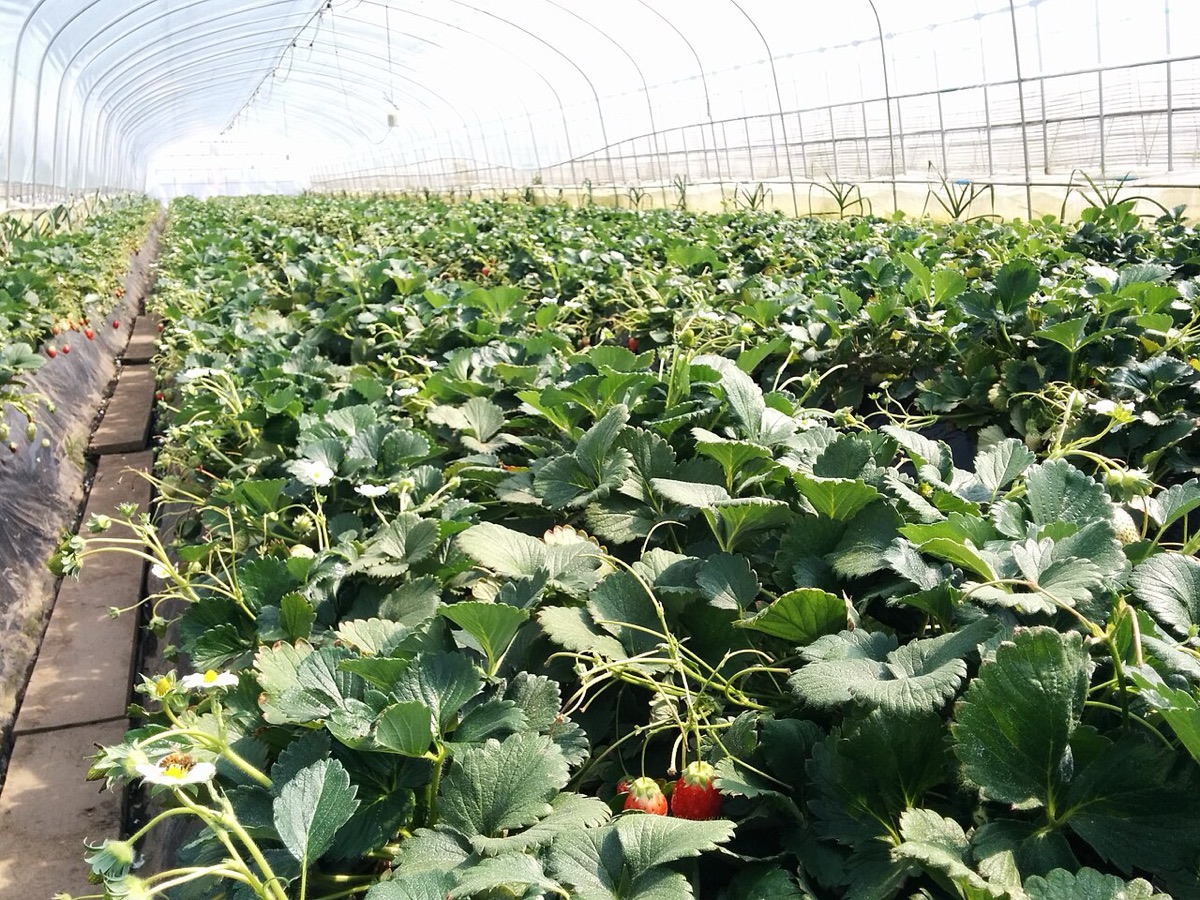
Strawberry picking in Japan (ichigo-gari, いちご狩り) is an easy half-day add-on for winter and spring trips: between December and May, you eat as many strawberries as you like inside a greenhouse within a time limit, usually for ¥2,000 to ¥3,000. This guide covers the season and how prices change by month, the all-you-can-eat rules, which farms need a booking, a comparison of farms you can reach by train from Tokyo, Osaka and Fukuoka, and a sample itinerary. Most prices here are actual spring 2026 (last season) figures; most farms have not yet announced the 2026–27 season, so treat them as a budget guide.
When is strawberry picking season in Japan?
In short: strawberry picking season in Japan runs from December to May, peaking from January to March. Most tourist strawberry farms grow in greenhouses, so you can pick even in winter.
JR East's travel site summarizes the rough seasons by region[1]:
| Region | Season (approx.) | Notes |
|---|---|---|
| Kanto (Tokyo, Kanagawa, Chiba, Saitama) | December–May | Many farms in Tochigi and Chiba open in early January |
| Kansai | January–May | Most farms open in early January |
| Kyushu & Okinawa | December–May | Some Fukuoka farms start in late November |
| Tohoku, Hokuriku, Koshinetsu | January–May/June | Tohoku can run into June |
| Hokkaido | June–August | Summer is the picking season |
How to choose a month:
- December: only some farms are open, supply is still limited, and special year-end and New Year prices are common.
- January–March: the widest choice of varieties and the steadiest supply, but also the highest prices and the hardest weekends to book. For January and February trip planning, see the Japan January travel guide and Japan February travel guide.
- April–early May: most farms lower prices; crowds return from late April through Golden Week.
- After mid-May: farms close one by one, some early, so always check that the farm is open on the day.
How much does strawberry picking in Japan cost?
In short: at the same farm, January to March is the most expensive, prices drop in stages from April, and after mid-May they are lowest; the gap can be close to half. These are actual spring 2026 prices[2][6]:
| Farm (area) | Time | Jan–Mar | Apr–early May | After mid-May |
|---|---|---|---|---|
| Ā-to Bēre (Chiba City) | 40 min | ¥2,700 | ¥2,100 | ¥1,400 |
| Strawberry House Ebina (Ebina, Kanagawa) | 30 min | ¥2,900 | ¥2,500 | ¥2,100 |
| JA Hagano Mashiko Strawberry Farm Complex (Tochigi) | 60 min | ¥2,000 | ¥1,500 | Closes May 6 |
| Chikushino Strawberry Farm (Fukuoka) | 40 min | ¥2,900 | ¥2,500 | ¥1,700 |
Prices are for adults (usually elementary school age and up). The date each farm cuts prices varies: Ā-to Bēre on March 30 and Chikushino on April 6, not a uniform April 1.
A realistic budget for one outing (two adults from Tokyo to Kanagawa):
| Item | Per person | Notes |
|---|---|---|
| 30-minute all-you-can-eat (Jan–Mar) | ¥2,500 | Tsukuihama Tourist Farm, 2026 season, condensed milk included |
| Round-trip train | Depends on departure station | Check with a route app; an IC transit card is easiest |
| Takeaway berries or souvenirs | ¥0–1,000 | Many all-you-can-eat plans don't allow takeaway, so buy separately |
What are the rules for all-you-can-eat strawberry picking?
In short: the most common setup is "30 minutes, eat in the greenhouse, no takeaway," but time limits range from 30 minutes to unlimited and rules vary a lot between farms.
Japanese strawberry farms charge in two main ways:
- Timed all-you-can-eat (tabehodai): the most common, usually 30 minutes, sometimes 40, 45 or 60 minutes. Yokamon Ichigo in Ukiha, Fukuoka, has no time limit but runs morning and afternoon sessions[6].
- Pay by weight (hakari-uri): pick only what you want to take home and pay by weight. Some farms offer both; Shin-Sanda Farm Inaoka, for example, charges ¥240 per 100 g for takeaway on top of its all-you-can-eat plan (2026 season)[5].
Other common rules:
- No takeaway: all-you-can-eat is mostly eat-in only. Tsukuihama Tourist Farm and GrandBerry both state that takeaway is not allowed[3][5].
- Condensed milk: many farms provide it; at Tsukuihama it is included in the entry fee with no refills[3].
- Closes when sold out: many farms end early once the day's strawberries are gone. This is especially true of no-booking farms, so a weekend afternoon visit may find them closed.
- Child pricing: age bands differ by farm; commonly elementary school age and up pays the adult price, and children under 3 or under 2 are free.
- Growing method: "kosetsu" (raised-bed) cultivation puts plants at waist height, so you don't need to crouch and strollers or wheelchairs get around more easily; ground-level beds mean bending down. If this matters, check the farm's site for 高設.
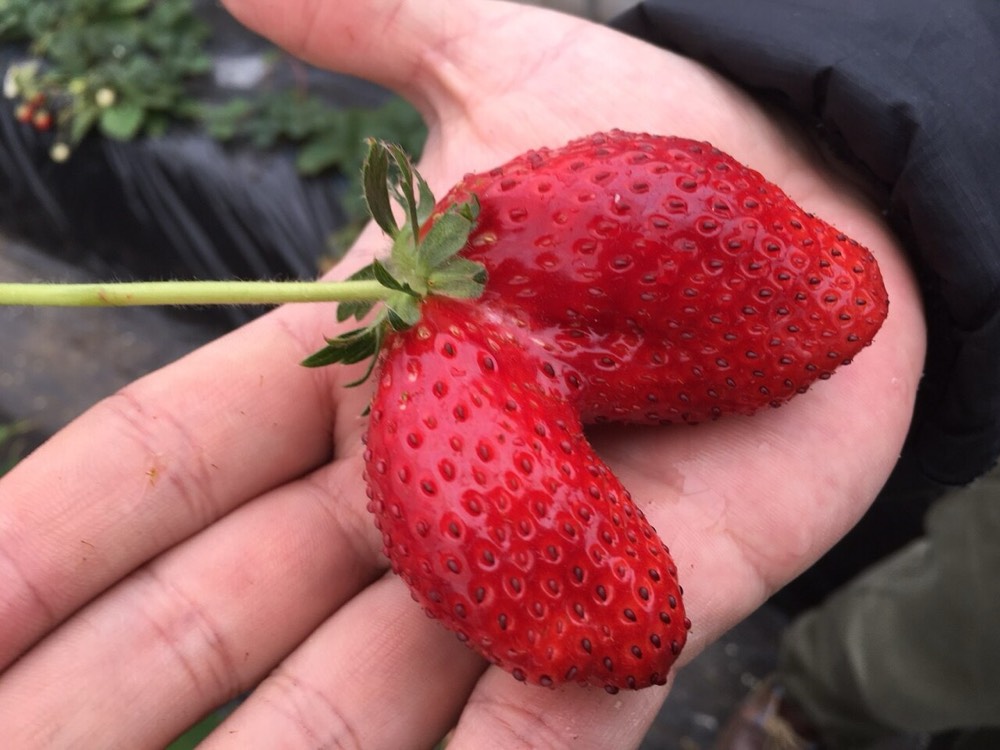
Japanese strawberry varieties: Tochiotome, Amaou, Benihoppe
In short: varieties depend on the region. Tochigi grows mostly Tochiotome, Fukuoka is known for Amaou, and Benihoppe and Akihime are common in Kanto and Kansai. If you want a specific variety, choose the right area.
| Variety | Main area / feature | Peak (approx.) |
|---|---|---|
| Tochiotome | Tochigi's signature variety | November–June |
| Tochiaika | Newer Tochigi variety; heart-shaped when cut lengthwise | January–April |
| Skyberry | Large premium Tochigi variety | February–April |
| Amaou | Fukuoka's brand strawberry | December–April |
| Benihoppe | Bred in Shizuoka; common in Kanto and Kansai | December–May |
| Akihime | Long and sweet | February–April |
Peak periods follow JR East's travel site[1]. Many farms grow several varieties; Strawberry House Ebina had 10 in the 2026 season[2], so you can compare flavors in one greenhouse. Note that Amaou is a Fukuoka brand and is rare at tourist farms in Kanto and Kansai; to pick Amaou, go to Fukuoka.
Strawberry picking near Tokyo by train
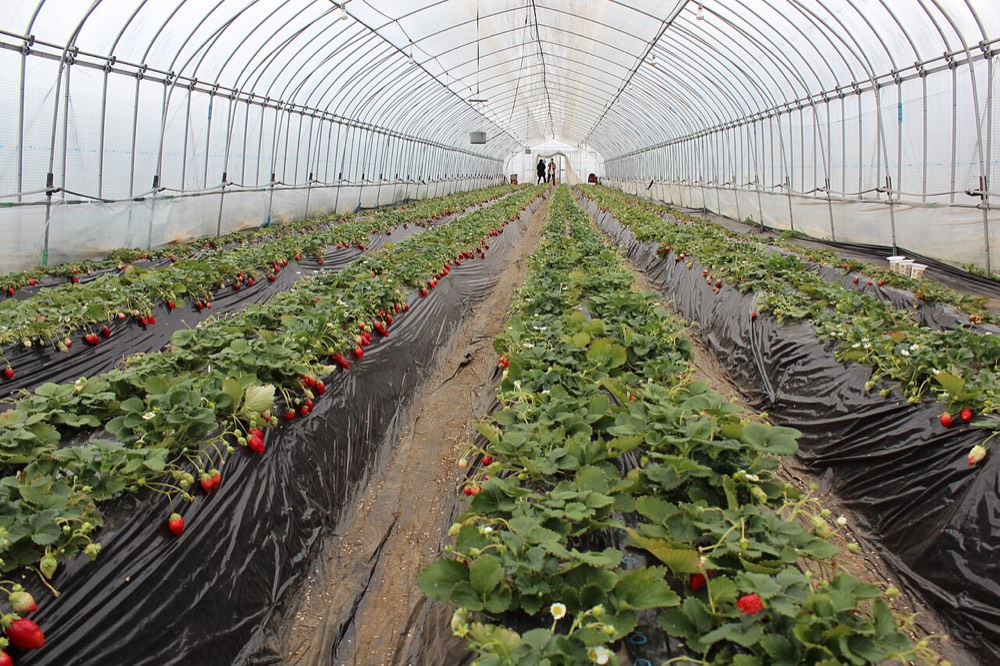
In short: without a car, the easiest options from Tokyo are Tsukuihama in Kanagawa (Keikyu Line) and the area around Kitayama Station on Tochigi's Moka Railway; neither requires a booking for individuals.
| Farm | Nearest station | 2026 price (adult) | Time | Booking |
|---|---|---|---|---|
| Tsukuihama Tourist Farm (Yokosuka, Kanagawa) | Keikyu Tsukuihama Station, about 20 min walk | Jan 1–Apr 5: ¥2,500; Apr 6–May 5: ¥2,000 | 30 min | Not needed (groups of 25+ must book) |
| JA Hagano Mashiko Strawberry Farm Complex (Mashiko, Tochigi) | Moka Railway Kitayama Station, about 5 min walk | Jan–Mar: ¥2,000; Apr 1–May 6: ¥1,500 | 60 min | Not needed (groups of 20+ must book) |
| Yoshimura Farm (Mashiko, Tochigi) | Moka Railway Kitayama Station, about 7 min walk | ¥2,500; ¥2,200 from May | Unlimited | See official site |
| Strawberry House Ebina (Ebina, Kanagawa) | Check official site for access | Jan 10–Apr 5: ¥2,900 | 30 min | Required (official site) |
Sources: Tsukuihama[3], Kitayama area[4], Ebina[2].
Tsukuihama Tourist Farm ran from January 1 to May 5 in the 2026 season, growing Benihoppe and Yayoihime, open 9:00 to 15:00 and closing early when the strawberries run out[3]. It is about a 20-minute walk from the station, and you can pay and enter at the counter without speaking Japanese.
Around Kitayama Station is JA Hagano Mashiko Strawberry Farm Complex, which JR East describes as having about 90 greenhouses; varieties are Tochiotome and Tochiaika, and 60 minutes of all-you-can-eat is long by Kanto standards[4]. The same article puts Mashiko Station about 2 hours 30 minutes from Tokyo by Shinkansen, the JR Mito Line and the Moka Railway; Kitayama is near Mashiko Station. Moka Railway trains are infrequent, so check return times in advance. For rail passes from Tokyo, compare the coverage of the JR Tokyo Wide Pass; for getting around central Tokyo, see the Tokyo transport guide.
Strawberry picking near Osaka and Kansai by train
In short: Kansai has several farms within a 10-minute walk of a station, but most require a booking. These are 2026 season figures[5]:
| Farm | Nearest station | 2026 price (adult) | Time | Booking |
|---|---|---|---|---|
| GrandBerry (Yao, Osaka) | Kintetsu Onji Station, about 10 min walk | ¥2,500 | 30 min | Reservation only |
| Shin-Sanda Farm Inaoka (Sanda, Hyogo) | JR Shin-Sanda Station, about 5 min walk | ¥3,000 | 30 min | Required (official site) |
| Asuka Strawberry Picking Park (Asuka, Nara) | Kintetsu Asuka Station, 2–40 min walk depending on the plot | ¥2,500; ¥2,000 from May 7 | 30 min | Required |
| Masami Farm (Maibara, Shiga) | JR Maibara Station west exit, about 10 min walk | Jan–Apr 9: ¥2,400; then ¥2,000 | 45 min | Inquire |
| Sakura Farm (Kinokawa, Wakayama) | Wakayama Electric Railway Kanrojimae Station, about 10 min walk | ¥2,500 | 45 min | Not needed (first come, first served) |
How to choose:
- Staying in central Osaka with only half a day: GrandBerry in Yao is a 10-minute walk from Onji Station on the Kintetsu Line, the closest to central Osaka in this table.
- Want to combine sightseeing: Asuka Strawberry Picking Park in the Asuka area grows Nara's "Asuka Ruby" variety, and pairs well with walks to burial mounds and temples. Plots vary a lot in distance from the station, so confirm which one when booking.
- Couldn't get a booking: Sakura Farm needs no reservation, but in the 2026 season it opened only on Sundays in January[5].
- Want berries to take back to the hotel: Shin-Sanda Farm Inaoka and Asuka Strawberry Picking Park sell by weight.
Maibara is a Shinkansen stop and not far from Kyoto; for moving around the Kyoto–Osaka–Kobe area, see the Osaka to Kyoto transport comparison.
Strawberry picking in Fukuoka: plan transport if you want Amaou
In short: Fukuoka is the top choice for Amaou, but tourist farms are mostly in the suburbs and few are walkable from a station; without a car, expect a bus plus a walk, or a taxi.
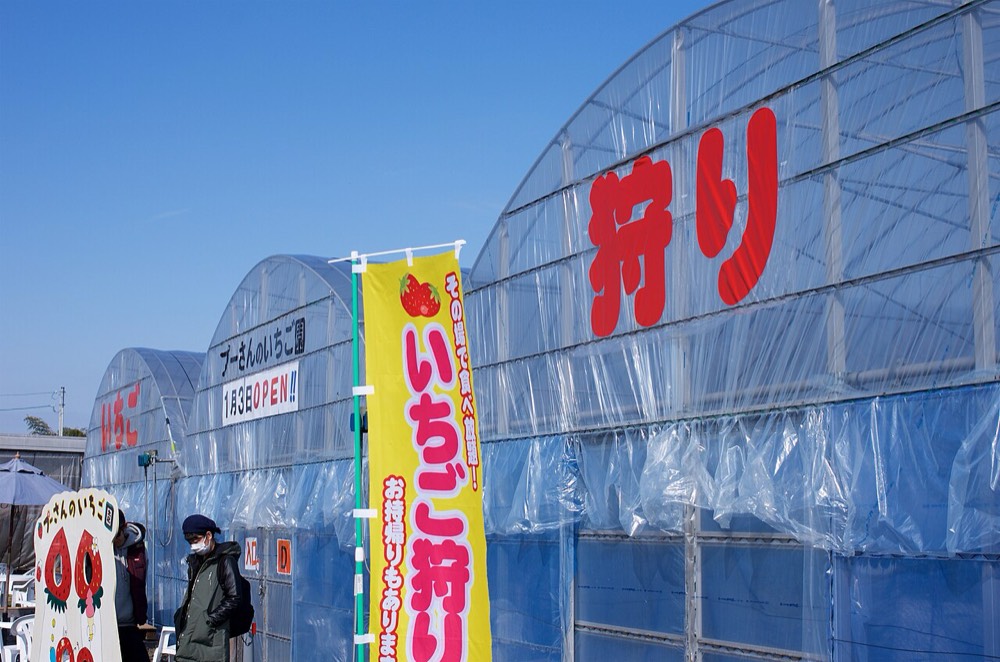
2026 season reference[6]:
- Chikushino Strawberry Farm (Chikushino): the earliest to open, from November 23, 2025; 40 minutes, ¥2,900 for adults from January 4 to April 5; reservation only; closed Mondays. Varieties center on Kaorino, Saga Honoka and Koi Minori rather than Amaou.
- Genkai Strawberry Farm (Munakata): grows Amaou and Sachinoka; 60 minutes for ¥2,700 (before tax) for elementary school age and up from January to March; booking required. It is about 5 minutes by car from Munakata Taisha.
- Ukiha area: several farms including Kajiwara Fruit and Yokamon Ichigo, with many varieties including Amaou; all require booking. Ukiha is a fruit-growing area that works well as a day trip.
For choosing rail and bus passes in Kyushu, see the Kyushu transport guide. If you have no car but must taste Amaou, you can also find Amaou desserts in supermarkets, department stores and convenience stores in central Fukuoka; for seasonal sweets at Japanese convenience stores, see Japan convenience store food.
How to book ichigo-gari: steps and timing
In short: reservation-only farms usually open bookings around opening day, and popular weekends fill quickly; check availability 2 to 4 weeks before your trip.
- Decide the date and group size: weekends and Japanese holiday periods (Coming of Age Day in January, National Foundation Day in February, spring break in March, Golden Week in May) are hardest to book; weekdays are easier.
- Check the farm's "いちご狩り" or "予約" page: see whether booking is by web form, phone or LINE, and when bookings open. Many farms also post same-day availability on Instagram.
- Make the booking: you usually enter the date, time slot, numbers of adults and children, phone number and email. For phone-only farms, ask your hotel front desk for help if you don't speak Japanese, or choose a farm with web booking.
- Confirm the day's rules: payment methods (many farms are cash only), meeting time, whether late arrival cancels your slot, and parking or walking directions from the station.
- Arrive early: at no-booking farms, arriving at opening time is safest; at reservation farms, aim to reach the counter 10 minutes early.
Who is strawberry picking in Japan for?
Good for:
- Families with children: it's warm in the greenhouse, the rules are simple, and raised-bed farms take strollers. For more family ideas, see Tokyo family attractions.
- Winter and spring visitors who want a half-day trip out of the city.
- People who like comparing fruit varieties and want to try several Japanese strawberries at once.
Not for:
- Travelers with tight schedules who can spare only 1 to 2 hours: the round trip to the countryside alone takes half a day.
- People who don't want to book and can only go on weekend afternoons: you may find it full or sold out.
- Anyone who simply wants to "eat lots of strawberries": you can't eat that many in 30 minutes, and at ¥2,500, several packs from a supermarket may be better value. The point of picking is the experience itself.
Sample half-day strawberry picking plan from Tokyo
Using Tsukuihama Tourist Farm (no booking needed) on a weekday in January:
| Time | Plan |
|---|---|
| Before leaving | Check Keikyu trains to Tsukuihama Station in a route app and confirm the farm is open that day |
| Around 8:40 | Arrive at Keikyu Tsukuihama Station and walk about 20 minutes to the farm |
| 9:00 | Opening; pay at the counter (¥2,500 in January of the 2026 season) and get condensed milk |
| 9:10–9:40 | 30 minutes of all-you-can-eat |
| Around 10:00 | Walk back to the station and take the Keikyu Line toward Yokosuka or the Miura Peninsula |
| Afternoon | Return to central Tokyo and carry on with other plans |
Arriving in the morning means you won't miss out if strawberries run out, and you still have the afternoon free. Farms near Kitayama Station take about 5 hours round trip, so they work better as a full-day outing.
Before you go
- Prices and dates here are spring 2026 references; 2026–27 prices may change, so follow each farm's official site.
- Greenhouses are warmer than outside, so wear a jacket you can take off; the ground can be muddy, so avoid white shoes.
- Most all-you-can-eat plans don't allow takeaway; to bring berries back to your hotel, choose a farm with by-weight takeaway or a farm shop.
- Some farms accept cash only, so carry yen.
- Late in the season (after mid-May) farms may close early on any day, so the later you go, the more important it is to check first.
FAQ
What is the best month for strawberry picking in Japan?
January to March is the safest bet for variety and supply, but it is also the most expensive period. On a budget, wait until April, when most farms cut prices in stages; Tsukuihama Tourist Farm, for example, dropped from ¥2,500 to ¥2,000 on April 6 in the 2026 season. Many farms close from mid-to-late May, and only some open in December.
Do I need to book strawberry picking in Japan?
It depends on the farm. Shin-Sanda Farm Inaoka, GrandBerry and Strawberry House Ebina take reservations only, and weekends fill up early. Tsukuihama Tourist Farm and JA Hagano Mashiko don't require bookings for individuals, but they close early once the day's strawberries are gone. Check the farm's official booking page before you go.
Can I take strawberries home from an all-you-can-eat session?
Usually not. Most all-you-can-eat plans are eat-in only; Tsukuihama, JA Hagano Mashiko and GrandBerry all prohibit takeaway. Some farms sell picked berries by weight, such as Shin-Sanda Farm Inaoka at ¥240 per 100 g (2026 season), and others sell packs at their farm shop.
Can I go strawberry picking in Japan without speaking Japanese?
Yes. On the day it's simple: pay at the counter, get a small cup of condensed milk and follow the staff into the greenhouse. Booking is the hard part, since some farms only take Japanese web forms or phone calls. Use your browser's translation for web forms, or pick a farm that doesn't need a booking and arrive at opening time.
Has the 2026–27 strawberry season started?
As of November 10, 2026, most farms have not announced 2026–27 opening dates or prices. In past years, Kanto farms opened from late December to early January, most Kansai farms in early January, and some Kyushu farms in late November. The prices here are spring 2026 figures for reference; follow each farm's latest notice.
Sources
- JR East Travel & Life: When is strawberry picking season? By region and variety: Regional seasons and variety peak periods (updated January 2026)
- Rurubu & more.: Kanto strawberry picking ranking (2026 edition): 2026 prices for Ā-to Bēre, Kamakura Kanko Ichigo-en, Strawberry House Ebina, JA Hagano Mashiko and others
- Rurubu & more.: Tsukuihama Tourist Farm strawberry picking: 2026 season dates, prices, 30-minute limit, no booking required, walking time from the station
- JR East Travel & Life: Strawberry picking along the Moka Railway: JA Hagano Mashiko and Yoshimura Farm near Kitayama Station
- Rurubu Kids: Kansai strawberry farms near stations: Nearest stations, 2026 prices and booking rules for Kansai farms (published December 29, 2025)
- Rurubu & more.: Fukuoka strawberry picking ranking (2026 edition): 2026 prices for Chikushino Strawberry Farm, Genkai Strawberry Farm and others
- Rurubu & more.: Ichigo-gari Park & Ichigo Cafe Kunoya: Prices and bus access from Shizuoka Station in the Kuno area
Fares, opening hours and event dates can change. Information checked on 2026.11.10; please confirm with official sources before you go.