Best Japanese Convenience Store Food: What to Buy at 7-Eleven, FamilyMart and LAWSON, Plus Payment and Tax-Free Tips
What to buy at 7-Eleven, FamilyMart and LAWSON in Japan: signature fried chicken and sweets, plus 8% vs 10% eat-in tax, card payment, ATMs and tax-free rules.
Quick answer
Start with each big chain's signature items: 7-Eleven's rice balls, Seven Premium house brand and Seven Café coffee; FamilyMart's Famichiki fried chicken (248 yen on the official site in October 2026); and LAWSON's Karaage-kun (288 yen for 5 pieces) and Premium Roll Cake (214 yen). In autumn and winter, oden and steamed buns appear by the counter. Takeout food is taxed at 8%, eating in the store at 10%, and most stores accept credit cards and transit IC cards.
Almost everyone traveling in Japan ends up in a convenience store several times a day: rice balls for breakfast, coffee when your feet are tired, fried chicken and dessert before heading back to the hotel. This guide to the best Japanese convenience store food goes chain by chain through 7-Eleven (セブン-イレブン), FamilyMart (ファミリーマート) and LAWSON (ローソン), covering their signature foods and autumn-winter seasonal items, then adds how heating and eating in work, the difference between 8% and 10% tax, card and mobile payments, ATMs, the new tax-free system, and how to read allergy and vegetarian labels, so you can shop with confidence.
Best Japanese convenience store food: signature items at the big three
The best things to buy at a Japanese convenience store are each chain's own hot snacks, rice balls, bento and desserts; the same type of product tastes different at each one. Here is a quick table of signature items:
| Chain | Signature items | Reference price (official sites, October 2026) | Highlights |
|---|---|---|---|
| 7-Eleven (セブン-イレブン) | Rice balls, bento, Seven Café, Seven Premium | Varies by item | Wide range of fresh food, freshly brewed coffee[1] |
| FamilyMart (ファミリーマート) | Famichiki (fried chicken) | 248 yen | Large selection of counter hot snacks[4] |
| LAWSON (ローソン) | Karaage-kun (5 pieces) | 288 yen | Long-selling fried chicken bites launched in 1986[13][3] |
| LAWSON (ローソン) | Premium Roll Cake | 214 yen | Flagship of the Uchi Café dessert line[2] |
These are long-time best sellers, and each chain also adds new products almost every week. Labels such as 新発売 (new release) or 期間限定 (limited time) on the shelves are a good cue to try something new.
What to buy at 7-Eleven: rice balls, bento and Seven Café
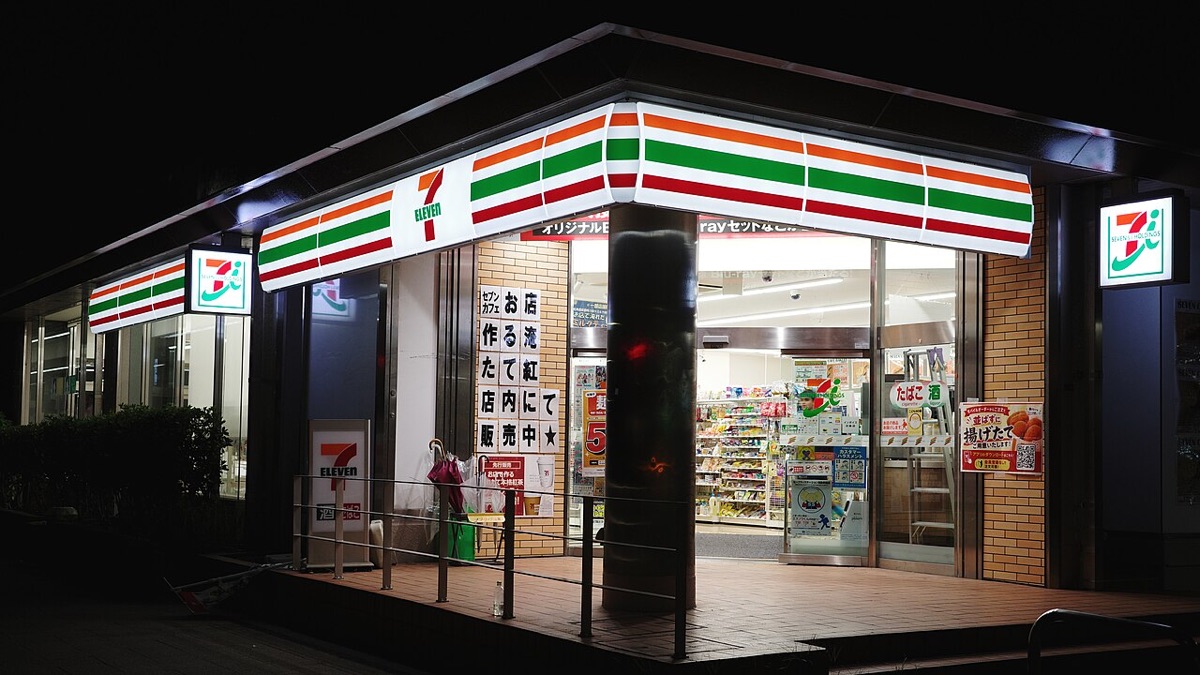
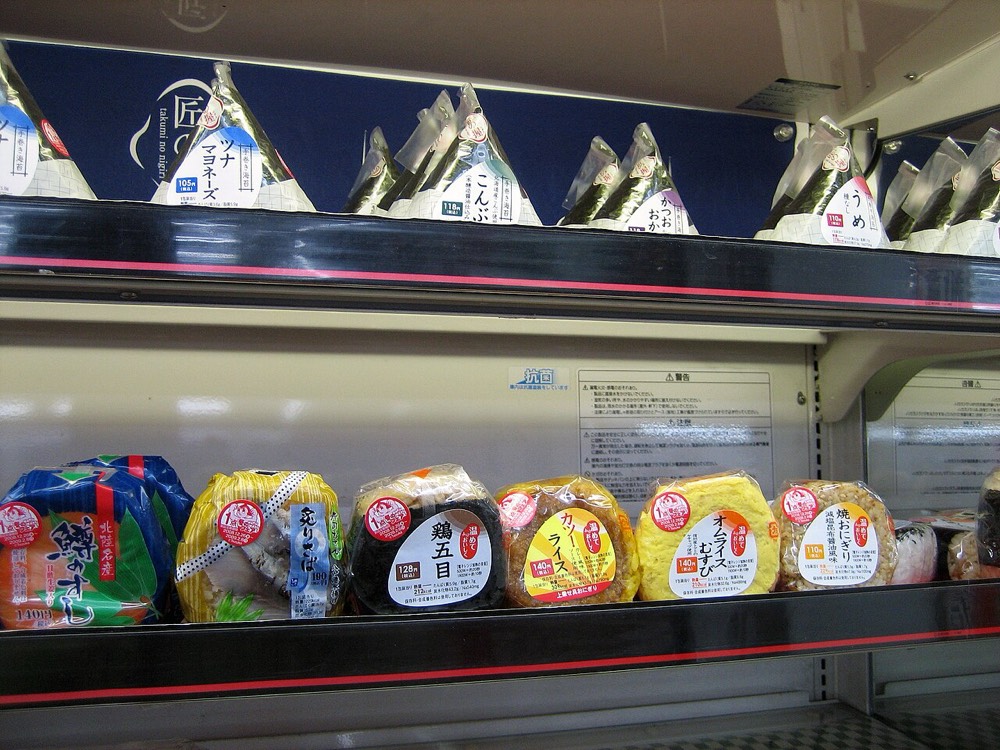
7-Eleven's strength is its wide range of fresh food. The official product categories run from rice balls, sushi, bento, sandwiches, bread, soba and udon, pasta, gratin, deli dishes, salads, desserts and ice cream to fried foods, oden, steamed buns and frozen food[1].
How to shop:
- Rice balls (おにぎり): Salmon, tuna mayo, mentaiko and kombu are the basics. Open triangle rice balls by following the numbered tabs (①②③) so the seaweed wraps the rice and stays crisp.
- Bento and noodles: Ask staff to microwave them if you want them hot; cold noodles and salads are eaten as is.
- Seven Café: Buy a cup at the register, then brew it yourself at the coffee machine, hot or iced; the official site also lists freshly blended smoothies[1].
- Seven Premium: The 7-Eleven group's house brand, covering snacks, side dishes, ready meals and frozen food, handy for late-night snacks at the hotel or as souvenirs[1].
What to buy at FamilyMart: Famichiki and hot snacks
FamilyMart is best known for Famichiki, a boneless, crispy fried chicken cutlet from the hot snack case by the register. According to FamilyMart's official site, in October 2026 Famichiki costs 248 yen and the spicy Famichiki (Red) 258 yen[4].
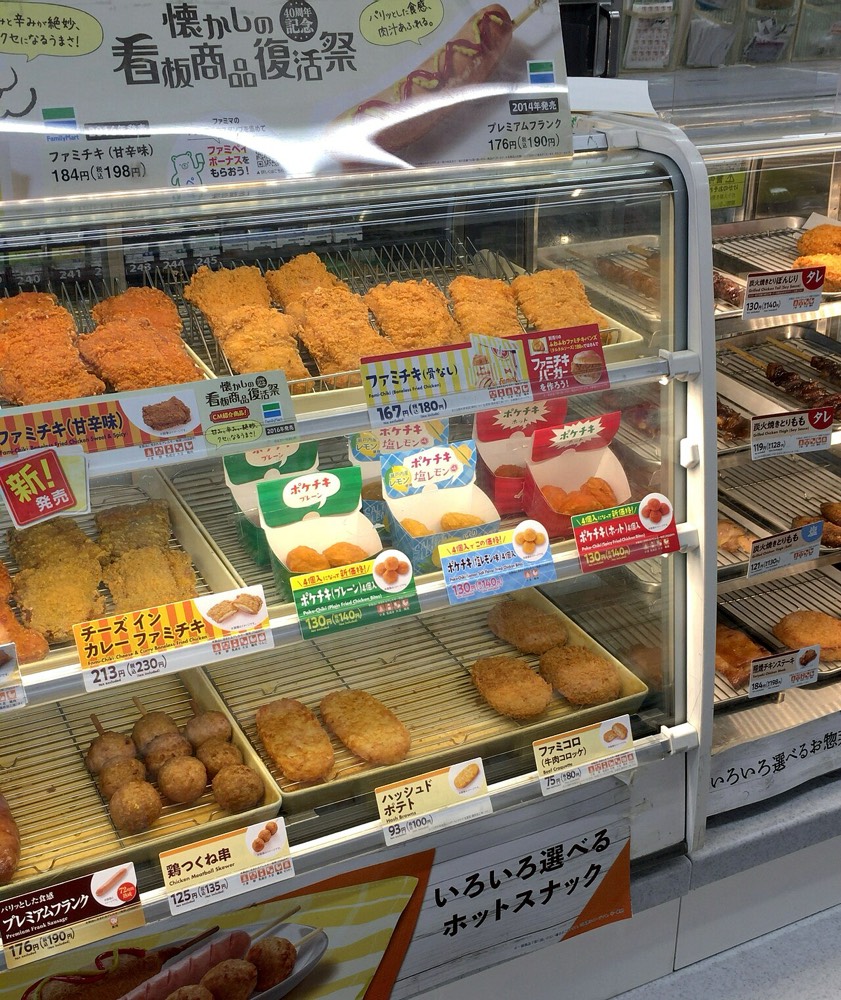
The same case has plenty of other options[4]:
- Spicy Chicken, Crispy Chicken, and Famikara fried chicken sold by the piece.
- Famikoro (beef croquette), hash browns and American dogs (corn dogs).
- Chicken yakitori skewers (sauce or salt).
- In autumn and winter, look for yaki-imo (roasted sweet potato), listed at 298 yen on the official site and not sold in Okinawa.
Order hot snacks at the register by pointing or saying the name, for example "Famichiki hitotsu kudasai" (one Famichiki, please). FamilyMart also has its own house brand, Famimaru (ファミマル), with its own category on the official site.
What to buy at LAWSON: Karaage-kun and Premium Roll Cake
LAWSON's two big draws are Karaage-kun and desserts. Karaage-kun are bite-sized fried chicken pieces, first sold on April 15, 1986, and a snack many Japanese people have eaten since childhood[13].
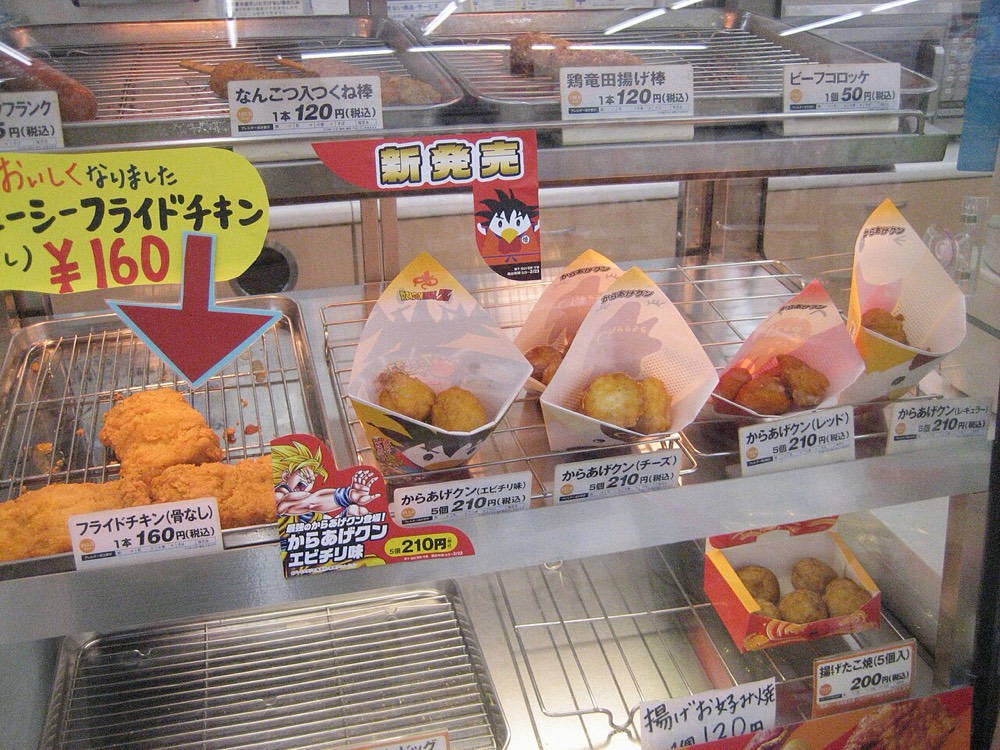
According to LAWSON's official site, in October 2026 Karaage-kun comes in boxes of 5, with Regular, Red (spicy), Hokkaido Cheese, Lemon and Dashi Soy Sauce flavors all at 288 yen[3]. The same case also has fried chicken such as L-Chiki (248 yen)[3].
For dessert, the Premium Roll Cake is LAWSON's most iconic product, a sponge roll filled with fresh cream, listed at 214 yen on the official site[2]. Many LAWSON desserts carry the "Uchi Café" name, and in October 2026 the official site shows collaborations with GODIVA, Milk and Morihan, plus autumn chestnut items such as the Premium Roll Cake with chestnut powder (275 yen) and chestnut Mont Blanc cakes[2]. If you're after Japanese convenience store pudding, cream puffs or crepes, all three chains have well-stocked chilled dessert shelves, so pick from the seasonal new arrivals.
Autumn and winter specials: oden and steamed buns
When the weather cools, oden (おでん) and steamed buns (中華まん) appear beside the register at Japanese convenience stores. Both 7-Eleven's and LAWSON's official product categories include them[1], with sales periods and items varying by store.
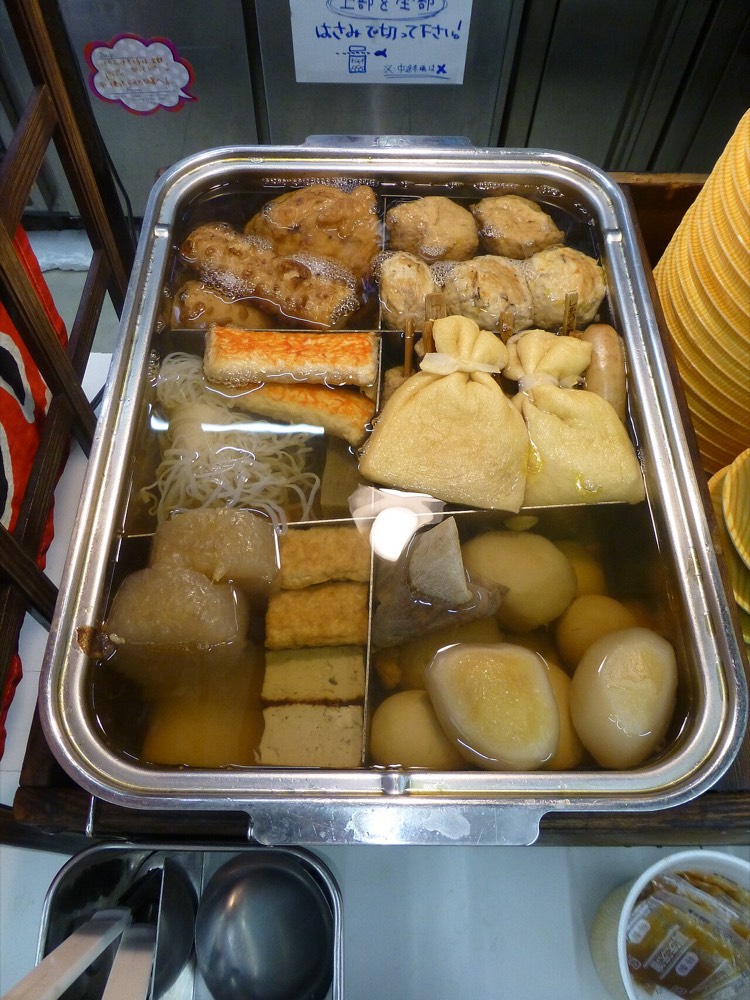
- Oden: Daikon radish, egg, konjac, chikuwa and tofu-pouch kinchaku are popular. At some stores staff serve it, at others you help yourself by the counter; if unsure, just tell staff which items you want. You can ask for extra broth.
- Steamed buns: Pork buns (肉まん), red bean buns (あんまん) and pizza buns (ピザまん) are the basics; just point to the one you want.
- Winter desserts and Christmas or New Year pre-orders: In October 2026, 7-Eleven's official site is already promoting pre-orders for 2026 Christmas cakes and 2027 New Year osechi[1]. These must be reserved in advance in store or online, so travelers rarely use them.
How to eat: heating, eat-in areas and 8% vs 10% tax
When you buy bento or noodles at a Japanese convenience store, staff often ask "Atatamemasu ka?" (Shall I heat it?). Say "Hai, onegaishimasu" for yes or "Daijoubu desu" for no. Some stores also have self-service microwaves.
Watch the tax rate if you eat in. Japan's standard consumption tax rate is 10%, and takeout food and drinks get the reduced 8% rate[7]. According to the National Tax Agency, at convenience stores with an eat-in area (イートイン), items that can be eaten in or taken out, such as hot snacks or bento, are taxed based on whether the customer eats in the store; stores may use a sign such as "please tell us if you use the eat-in area" instead of asking everyone[8]. So if you plan to sit and eat in the store, say "Eat-in de" at the register, and you'll be charged 10%; takeout is 8%. Alcohol is not covered by the reduced rate and is 10% either way[8].
In a Cabinet decision on September 15, 2026, the Japanese government outlined a plan to temporarily cut the consumption tax on food to 1% for two years from April 1, 2027, but the National Tax Agency notes this will only take effect if a bill is submitted to and passed by the Diet[9], and eat-in dining and alcohol are excluded. Check later official announcements for whether it goes ahead.
| Situation | Tax rate (October 2026) |
|---|---|
| Food and drinks to take out | 8% |
| Eating in the store's eat-in area | 10% |
| Alcohol (eat-in or takeout) | 10% |
| Daily goods, cosmetics, etc. | 10% |
Credit cards, mobile payments and ATMs at Japanese convenience stores
Japan's three big convenience store chains generally accept credit cards, transit IC cards and many mobile payments, so you don't need much cash for everyday shopping. FamilyMart's official site, for example, lists Visa, Mastercard, JCB, American Express, Diners Club, Discover and UnionPay among accepted cards (all except UnionPay also work by tap), single payment only, with a PIN required for 10,000 yen or more; stamps, bill payments and e-money top-ups cannot be paid by card[5]. It also accepts Alipay+ and WeChat Pay barcode payments[6].
Checkout tips:
- Say your payment method first: For barcode payments, tell staff which service you're using, then show the app screen for them to scan.
- Transit IC cards: Tap Suica, ICOCA and similar cards to pay, and you can top them up at the register.
- Exceptions: Stamps, bill payments and some tickets have limited payment options and may be cash or specific e-money only.
When you need cash, Seven Bank ATMs in 7-Eleven stores accept international cards including Visa, Mastercard, JCB, American Express, UnionPay, Plus and Cirrus, with over 28,000 nationwide according to the official site; some cards with these marks may still not be accepted[11]. Your bank will usually charge an overseas withdrawal fee, so confirm international withdrawals are enabled before you go. For a fuller comparison of currency exchange and payments, see our Japan money and payment guide.
Can you get a tax refund at Japanese convenience stores? The November 2026 rules
In general, convenience store food does not get a tax refund. Most convenience store branches are not tax-free shops, and from November 1, 2026 Japan switched to a "refund method": you pay the tax-inclusive price at a tax-free shop, and the consumption tax is refunded only after customs confirms the goods at the airport when you leave[10].
Under the new system, the threshold is 5,000 yen before tax at the same store on the same day, and the goods must be taken out of Japan; consumables such as food and cosmetics used or eaten in Japan don't qualify. Rice balls and desserts bought to eat right away naturally don't apply. If you want to buy lots of snacks as souvenirs, try drugstores or department stores with tax-free service. For the full process, see our Japan tax-free refund 2026 guide.
Allergy and vegetarian labels, trash and etiquette
Packaged food in Japan must by law label specified allergens. According to Yamanashi Prefecture, from April 1, 2026 nine allergens must be labeled: shrimp, crab, walnut, wheat, buckwheat, egg, milk, peanut and cashew (cashew has a transition period, and products made before March 31, 2028 may use the old labeling)[12].
How to read the labels:
- In the 原材料名 (ingredients) section on the back of the package, allergens are usually listed in brackets, for example "(一部に小麦・卵・乳成分を含む)".
- Japanese terms: えび (shrimp), かに (crab), くるみ (walnut), 小麦 (wheat), そば (buckwheat), 卵 (egg), 乳成分 (milk), 落花生 (peanut), カシューナッツ (cashew).
- Vegetarians should watch for meat extracts such as ポークエキス (pork extract), チキンエキス (chicken extract), ゼラチン (gelatin) and 魚介エキス (seafood extract). Japanese convenience stores have no unified vegetarian label, so if you have strict needs, check each ingredient with a translation app.
On trash and etiquette: there are few public trash cans on Japanese streets, and convenience store bins are meant for items bought in the store. Some stores have moved their bins inside, and you shouldn't dump household trash from your lodging in them. Eating while walking outside the store is not really encouraged either, so enjoy hot snacks in the eat-in area or back at your hotel. For more everyday manners when traveling in Japan, see our Japan travel etiquette guide.
Before you go: how to make the most of it
Convenience stores are best for breakfast, late-night snacks and gaps in your itinerary; save proper meals for local restaurants, and if you want to dig into Tokyo's food scene, pair this with our Tokyo food guide. At the register, say clearly whether you want things heated and whether you're eating in; cards and transit IC cards are easy to use, and the in-store ATM covers you if cash runs low. Before departure, run through payment, internet and documents with our Japan trip checklist, and you'll be ready to eat your way through all three big chains.
FAQ
What should I buy at a Japanese convenience store?
On a first visit, try each chain's signature hot snacks and sweets: FamilyMart's Famichiki, LAWSON's Karaage-kun and Premium Roll Cake, and 7-Eleven's rice balls, bento and fresh-brewed Seven Café coffee. In autumn and winter, add oden and steamed buns from the counter. New items arrive almost every week, so labels like 新発売 (new) or 期間限定 (limited time) are worth a look.
Can I use a credit card at Japanese convenience stores?
Yes. The three big chains generally accept international credit cards, transit IC cards like Suica, Apple Pay and many barcode payments. FamilyMart's official site, for example, lists Visa, Mastercard, JCB, American Express, UnionPay and more, and also accepts Alipay+ and WeChat Pay. A few services, such as bill payments, are limited to cash or specific e-money.
Can I get a tax refund on convenience store purchases?
Most convenience store branches are not tax-free shops. Even at those that are, the new system from November 1, 2026 requires at least 5,000 yen before tax at the same store on the same day, plus customs confirmation when you leave Japan, and food eaten in Japan does not qualify. Everyday konbini meals you eat the same day essentially never get a refund.
Is eating in a convenience store the same price as takeout?
No. Takeout food and drinks in Japan are taxed at the reduced 8% rate, while eating in the store's eat-in area counts as dining out at 10%. Staff may ask whether you're eating in, or a sign may ask you to tell them, so speak up if you plan to sit down. Alcohol is 10% either way.
Can I withdraw cash with an overseas card at convenience store ATMs?
Seven Bank ATMs at 7-Eleven accept international cards including Visa, Mastercard, JCB, American Express, UnionPay, Plus and Cirrus, and the official site says there are over 28,000 nationwide. Some cards with these marks may still not work, and your bank may charge overseas withdrawal fees, so confirm international withdrawals are enabled before you go.
Sources
- Seven-Eleven Japan: Products: Product categories, oden, steamed buns, Seven Café, Seven Premium
- LAWSON: Desserts: Premium Roll Cake, Uchi Café, chestnut dessert prices
- LAWSON: Fried foods: Karaage-kun flavors and prices
- FamilyMart: Hot snacks and deli: Famichiki and other hot snack prices
- FamilyMart: Credit cards: Accepted card brands, PIN required for 10,000 yen or more
- FamilyMart: Barcode payments (Alipay+ and WeChat Pay): Overseas barcode payments
- National Tax Agency: No.6102 Reduced consumption tax rate: Standard rate 10%, reduced rate 8%
- National Tax Agency: Q&A on the reduced tax rate (individual cases): Eat-in vs takeout at convenience stores; alcohol excluded from the reduced rate
- National Tax Agency: Q&A on the two-year consumption tax cut on food: Temporary food tax cut outlined in a September 15, 2026 Cabinet decision, subject to passage by the Diet
- Japan Tourism Agency: What is the refund method?: New tax-free system from November 1, 2026
- Seven Bank: International Card Services: Accepted international card brands, number of ATMs
- Yamanashi Prefecture: Food allergy labeling (specified ingredients): Nine specified allergens; cashew added April 1, 2026
- All About News: Karaage-kun trivia: Karaage-kun launched April 15, 1986
Fares, opening hours and event dates can change. Information checked on 2026.10.27; please confirm with official sources before you go.