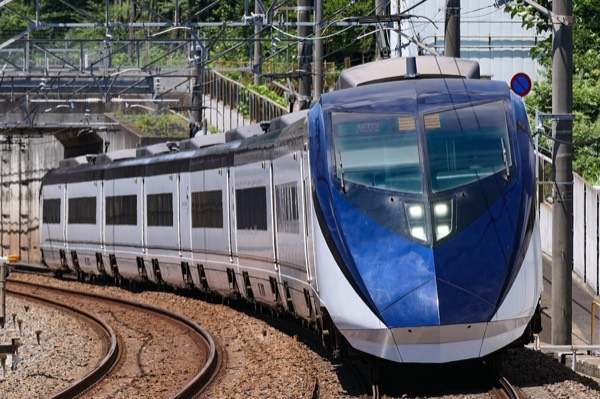
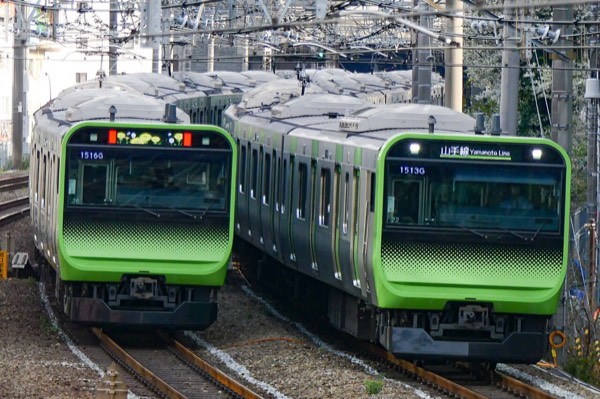
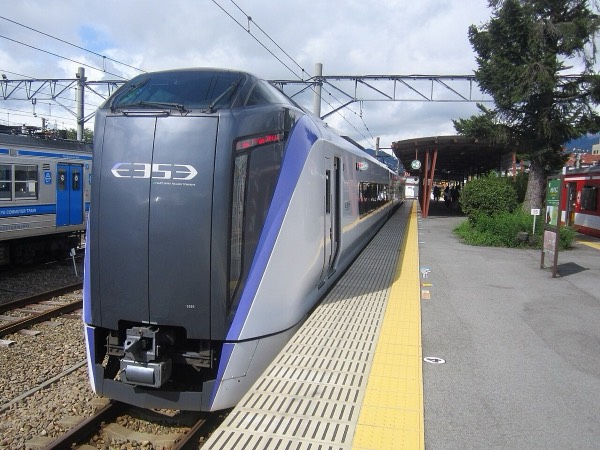
Haneda Airport to Tokyo: Keikyu, Tokyo Monorail and Limousine Bus Compared for Shinjuku, Ueno, Ikebukuro and Ginza
Haneda Airport to Tokyo by destination: Keikyu, Tokyo Monorail, Limousine Bus and flat-fare taxi fares, times and transfers, plus last trains and late-night buses.
Quick answer
For most parts of Tokyo, the Keikyu Line is the best value from Haneda Airport: about 12 minutes from Terminal 3 to Shinagawa for 327 yen by IC card, then JR to Shinjuku (about 41 minutes, 580 yen) or Ueno (about 39 minutes, 580 yen). Asakusa and Higashi-Ginza are direct. The Tokyo Monorail reaches Hamamatsucho in as little as 13 minutes for 519 yen and Tokyo Station in about 23 minutes with one JR transfer; on weekends and holidays a 590-yen discount ticket covers any Yamanote Line station. With heavy luggage, the Limousine Bus to Shinjuku costs 1,400 yen. Last trains leave around midnight, after which late-night buses run from 0:20 to 2:20 for 2,800 yen.
Haneda Airport to Tokyo is only about 15 kilometers, and the Keikyu Line, Tokyo Monorail, Limousine Bus and taxis all get you downtown within an hour. The real difference is how many transfers it takes to reach the station you are staying at, and how far you have to drag your luggage. Rather than describing each mode of transport in turn, this guide works by destination: what to take to Shinjuku, Shibuya, Ikebukuro, Ueno, Asakusa, Ginza, Tokyo Station, Shinagawa and Yokohama, what it costs and how long it takes, and what is left if you arrive late at night. Fares and timetables were checked in November 2026.
If you are landing at Narita instead, the routes are completely different; see Narita Airport to Tokyo transport compared. For how to use the subway and JR once you are in the city, see the Tokyo transport guide.
Haneda Airport to Tokyo: which route for which destination?
The short answer: for Shinagawa, Shinjuku, Shibuya, Ikebukuro, Ueno, Asakusa and Ginza, take Keikyu; for Tokyo Station, Hamamatsucho and Shimbashi, take the Tokyo Monorail; with a lot of luggage and a hotel in Shinjuku or Ikebukuro, take the Limousine Bus.
The table below starts from Terminal 3, where most international flights arrive. Train fares are IC card fares, and times are actual weekday daytime search results including transfers[1].
| Destination | Recommended route | Transfers | Time (approx.) | IC card fare |
|---|---|---|---|---|
| Shinagawa | Keikyu Limited Express (Kaitoku) or Airport Limited Express | 0 | 12–19 min | 327 yen |
| Shinjuku | Keikyu → change at Shinagawa to JR Yamanote Line | 1 | 41 min | 580 yen |
| Shibuya | Keikyu → change at Shinagawa to JR Yamanote Line | 1 | 34 min | 536 yen |
| Ikebukuro | Keikyu → change at Shinagawa to JR Yamanote Line | 1 | 49 min | 668 yen |
| Ueno | Keikyu → change at Shinagawa to JR Keihin-Tohoku Line or Ueno-Tokyo Line | 1 | 39 min | 580 yen |
| Asakusa | Keikyu through service onto the Toei Asakusa Line | 0 | 35–44 min | 599 yen |
| Oshiage (Tokyo Skytree) | Keikyu through service onto the Toei Asakusa Line | 0 | 39–48 min | 599 yen |
| Ginza (Higashi-Ginza Station) | Keikyu through service onto the Toei Asakusa Line | 0 | 26–32 min | 547 yen |
| Tokyo Station | Monorail → change at Hamamatsucho to JR | 1 | 23 min | 718 yen |
| Tokyo Station (cheaper) | Keikyu → change at Shinagawa to JR | 1 | 32 min | 536 yen |
| Yokohama | Keikyu Express (bound for Zushi·Hayama) | 0 | 25 min | 363 yen |
A few points that are easy to miss:
- Keikyu and JR share a transfer gate at Shinagawa Station on the same floor, which makes it one of the easier transfers in Tokyo.
- "Direct" to Asakusa, Oshiage and Higashi-Ginza means the Keikyu train itself runs onto the Toei Asakusa Line. Not every train does, so check the destination on the platform display before boarding.
- If you have not booked a hotel yet, staying in Shinagawa, Hamamatsucho or along the Asakusa Line is the simplest for Haneda flights; for an area-by-area comparison see where to stay in Tokyo.
Keikyu vs Tokyo Monorail: what is the difference?
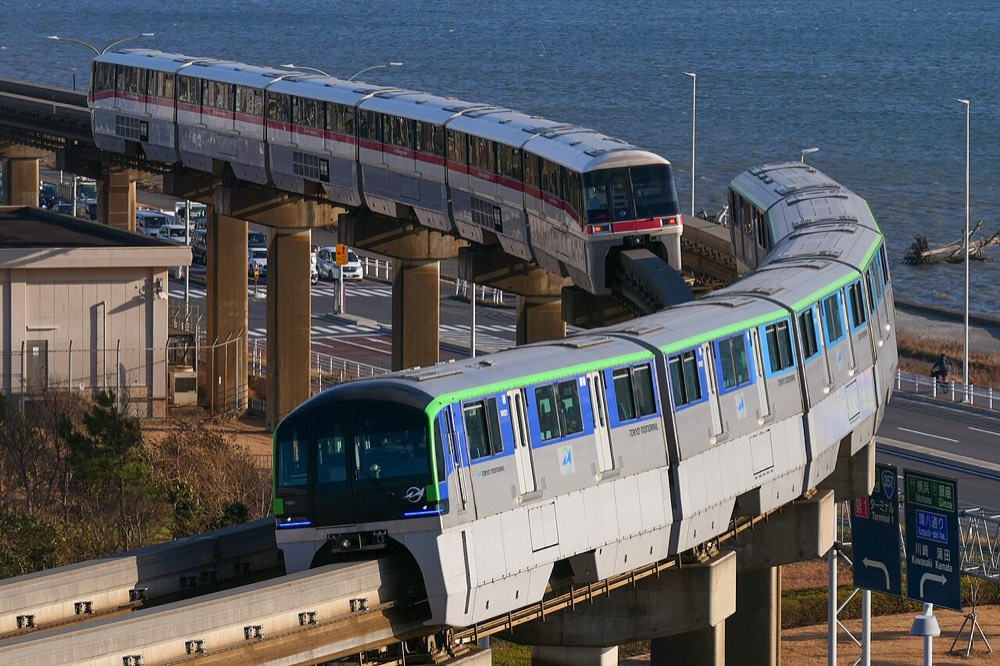
Both are railways you board directly from the terminal. The difference is where they end: Keikyu goes to Shinagawa (the southwest side of the Yamanote Line), and the monorail goes to Hamamatsucho (the southeast side). Take whichever is on your side of the loop.
| Item | Keikyu | Tokyo Monorail |
|---|---|---|
| Main city-side station | Shinagawa (through trains continue on the Asakusa Line to Higashi-Ginza, Asakusa and Oshiage) | Hamamatsucho |
| Fastest from Terminal 3 | Shinagawa in about 12 min | Hamamatsucho in about 13 min (Haneda Express) |
| IC card fare | 327 yen to Shinagawa | 519 yen to Hamamatsucho |
| Paper ticket | 330 yen to Shinagawa | 520 yen to Hamamatsucho |
| First train (weekdays) | 5:26 | 5:09 |
| Last train into the city (weekdays) | 0:08 to Shinagawa | 0:10 to Hamamatsucho |
| Discount tickets | Set ticket for overseas visitors (with a subway pass) | 590 yen to any Yamanote Line station on weekends and holidays |
Keikyu fares and first/last trains are from a November 2026 weekday timetable search[1]; monorail fares are from the official fare table[2].
Keikyu: 12 minutes to Shinagawa, no transfer to Asakusa or Ginza
Keikyu's biggest advantage is price, and some of its trains run via Sengakuji onto the Toei Asakusa Line, so Shimbashi, Higashi-Ginza, Nihombashi, Asakusa and Oshiage can all be reached on one train. Limited Express (Kaitoku) and Airport Limited Express trains stop only at Keikyu Kamata on the way and reach Shinagawa in 12 to 13 minutes; Limited Express (Tokkyu) and Express trains make more stops and take about 19 to 20 minutes[1].
Platform 2 at Terminal 3 Station serves both trains toward Shinagawa and central Tokyo and trains toward Yokohama[1]. For central Tokyo, board trains bound for Shinagawa, Sengakuji, Aoto, Keisei-Takasago, Imba Nihon-Idai or Narita Airport. Trains bound for Zushi·Hayama turn toward Yokohama at Keikyu Kamata, and you will have to double back if you take one by mistake.
Tokyo Monorail: fastest to Tokyo Station, 590-yen ticket on holidays
The monorail's Haneda Express takes just 13 minutes from Terminal 3 to Hamamatsucho, and local trains take about 20 minutes[1]. From Hamamatsucho, Tokyo Station is two stops away on the JR Yamanote or Keihin-Tohoku Line, about 23 minutes in total, which makes this the fastest way to Tokyo Station, Yurakucho and Shimbashi.
On weekdays it costs more than Keikyu: 718 yen by IC card to Tokyo Station, against 536 yen by Keikyu via Shinagawa[1]. But the monorail sells the "Monorail & Yamanote Line Discount Ticket" (モノレール&山手線内割引きっぷ), a flat 590 yen (290 yen for children) from the airport to any JR station inside the Yamanote Line[3]. Compared with regular paper tickets:
| Station you get off at | Regular ticket | Discount ticket | Saving |
|---|---|---|---|
| Ikebukuro, Mejiro, Takadanobaba | 870 yen | 590 yen | 280 yen |
| Shinjuku, Shibuya, Harajuku, Yoyogi | 780 yen | 590 yen | 190 yen |
| Ueno, Okachimachi, Nippori, Ebisu, Meguro | 730 yen | 590 yen | 140 yen |
| Tokyo, Kanda, Akihabara, Shinagawa | 720 yen | 590 yen | 130 yen |
| Yurakucho, Shimbashi, Tamachi | 680 yen | 590 yen | 90 yen |
Note the conditions[3]:
- It is sold only on Saturdays, Sundays, public holidays and designated periods. For fiscal 2026 the designated periods include December 26 to January 3, 2027, February 5 to 14, 2027, February 20 to 23, and March 20 to 31.
- It is sold only at the ticket machines of the three monorail stations at Haneda Airport, for use on the day of purchase; it cannot be bought in advance.
- It is valid for one one-way trip with no stopovers; travel beyond the Yamanote Line area requires an extra fare.
In other words, on a holiday the 590-yen monorail ticket to Ikebukuro beats Keikyu's 668 yen; to Shinjuku it is about the same as Keikyu's 580 yen, so pick whichever transfer suits you.
Haneda Airport to Shinjuku, Shibuya and Ikebukuro: one train transfer or a direct bus?
Trains are faster and cheaper. The value of the bus is that the driver takes your luggage and you get off at your hotel. With one person and one suitcase, Keikyu to Shinagawa and the Yamanote Line is fine; with two large cases, or with older relatives or children, the bus is much easier.
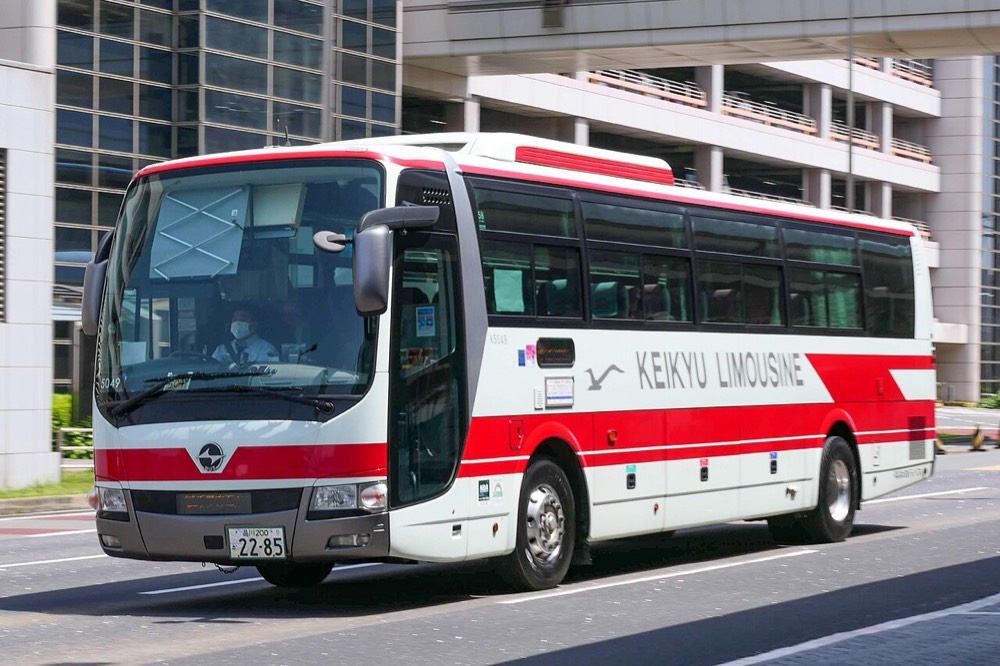
Shinjuku: The Limousine Bus (Airport Transport Service) stops at Shinjuku Station West Exit and Busta Shinjuku, and at hotels including the Keio Plaza, Hilton, Park Hyatt and Shinjuku Washington, for 1,400 yen per adult and 700 yen per child[4]. On the November 2026 timetable, the ride from Terminal 3 to Shinjuku Station West Exit takes about 40 minutes early in the morning and about 55 minutes in the morning commuter period; the first bus leaves Terminal 3 at 6:15 and the last at the daytime fare at 23:40[4]. Board at stop 3 at Terminal 3[5].
Shibuya: Operated jointly by Keikyu Bus, Tokyu Bus and Airport Transport Service, stopping at Shibuya Station (Mark City). The official guide gives about 40 minutes, from stop 4 at Terminal 3[5]. Check the operators' websites for the fare. By train it is Keikyu to Shinagawa and the Yamanote Line, 34 minutes and 536 yen[1].
Ikebukuro: The Limousine Bus takes about 55 minutes to Ikebukuro West Exit, from stop 2 at Terminal 3[5]; check the Airport Transport Service website for the fare. By train, Keikyu plus the Yamanote Line takes about 49 minutes and costs 668 yen[1]; the Yamanote Line runs half the loop from Shinagawa to Ikebukuro, so it is a long ride and hard work with big luggage at peak times.
How to take the bus:
- After clearing customs, buy a ticket at a bus ticket machine or counter in the arrivals hall. Terminals 1 and 2 have machines only; Terminal 3 has both[5].
- At Terminal 3, go down from the 2nd floor to the bus boarding area on the 1st floor and line up at your stop number[5].
- Hand large luggage to the staff to load underneath, keep your luggage tag and board.
- Limousine Bus seats can also be reserved on the official website, where the timetable page shows departures for about the next two months[4].
Haneda Airport to Ueno, Asakusa, Ginza, Tokyo Station, Shinagawa and Yokohama
For these destinations the train beats the bus, because it is direct or needs only one transfer and is not affected by traffic.
- Ueno: Keikyu to Shinagawa, then the JR Keihin-Tohoku Line or Ueno-Tokyo Line, about 39 minutes and 580 yen[1]. The fare to Ueno is the same on both lines, so take whichever comes first.
- Asakusa, Oshiage: Keikyu through service onto the Toei Asakusa Line, 35 to 48 minutes and 599 yen[1]. Asakusa Station exits right by Kaminarimon; for how to plan the visit see the Senso-ji guide.
- Ginza: Keikyu runs direct to Higashi-Ginza Station in 26 to 32 minutes for 547 yen[1]. Higashi-Ginza Station is beneath the Kabuki-za theater, about 5 minutes on foot from the Ginza 4-chome crossing. The Haneda Airport website currently lists the bus to Ginza as suspended[5], so take the train.
- Tokyo Station: If you are in a hurry, take the monorail and JR, about 23 minutes and 718 yen; to save money take Keikyu and JR, about 32 minutes and 536 yen[1]. The bus to Tokyo Station leaves from stop 1 at Terminal 3 and officially takes about 35 minutes[5]; it suits travelers staying near the Yaesu side who do not want to carry luggage up and down stairs.
- Shinagawa: Keikyu is direct, and there is no need to consider anything else. If you are connecting to the Tokaido Shinkansen for Kyoto or Osaka, change at Shinagawa Station; you do not need to go to Tokyo Station.
- Yokohama: The Keikyu Express is direct in about 25 minutes for 363 yen[1]; the bus to Yokohama Station (YCAT) leaves from stop 7 and takes about 30 minutes[5]. For Minato Mirai and Chinatown see the Yokohama day trip guide.
Where to board at Terminals 1, 2 and 3, and how long from landing to the train?
Most international flights use Terminal 3, and some airlines' international flights use Terminal 2. All three terminals have both a Keikyu and a monorail station, unlike Narita's Terminal 3, where you have to walk to another terminal.
| Terminal | Keikyu | Tokyo Monorail | Bus | Taxi |
|---|---|---|---|---|
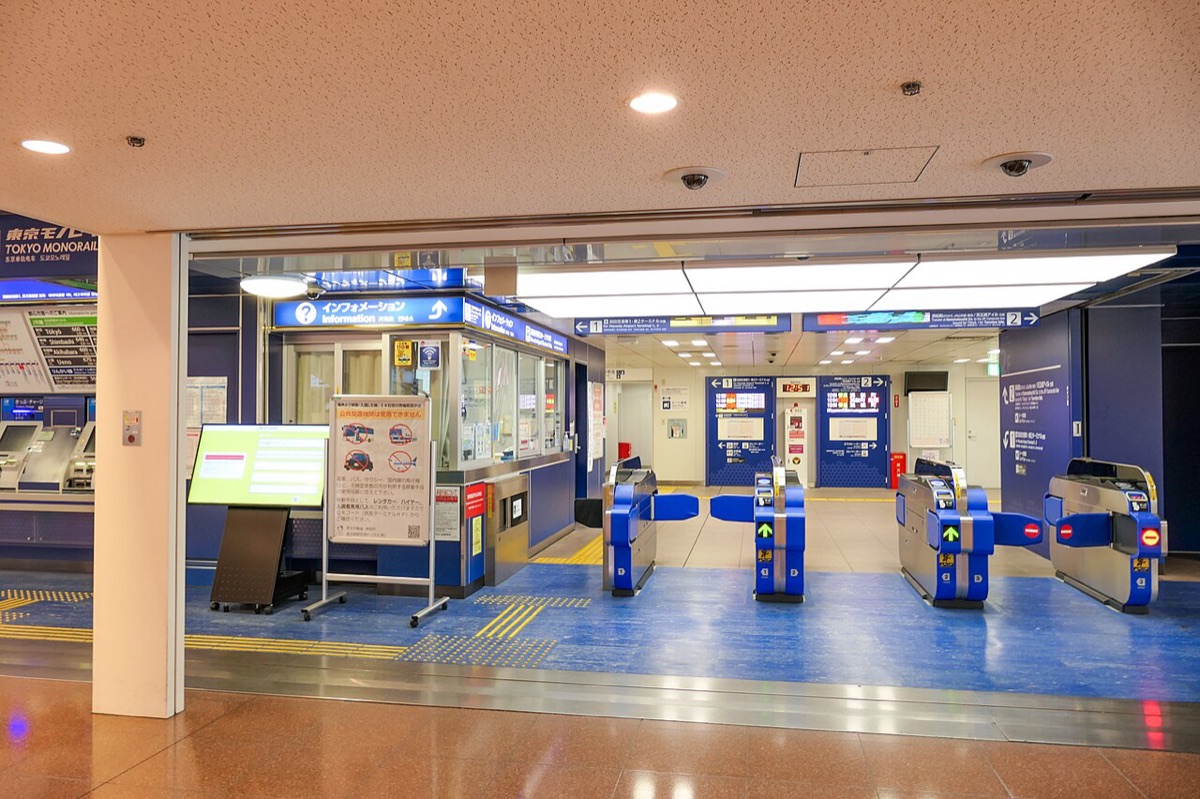
| Terminal 3 | Ticket gate in the 2F arrivals lobby (for central Tokyo and Yokohama) | Ticket gates in the 2F arrivals lobby and the 3F departures lobby | 1F, stops 1–11 | 1F, stand 21 |
| Terminal 1 | B1F (Terminal 1·2 Station) | B1F | 1F | 1F, stands 2 and 18 for Tokyo |
| Terminal 2 | B1F (Terminal 1·2 Station) | B1F | 1F | 1F, stands 3 and 19 for Tokyo |
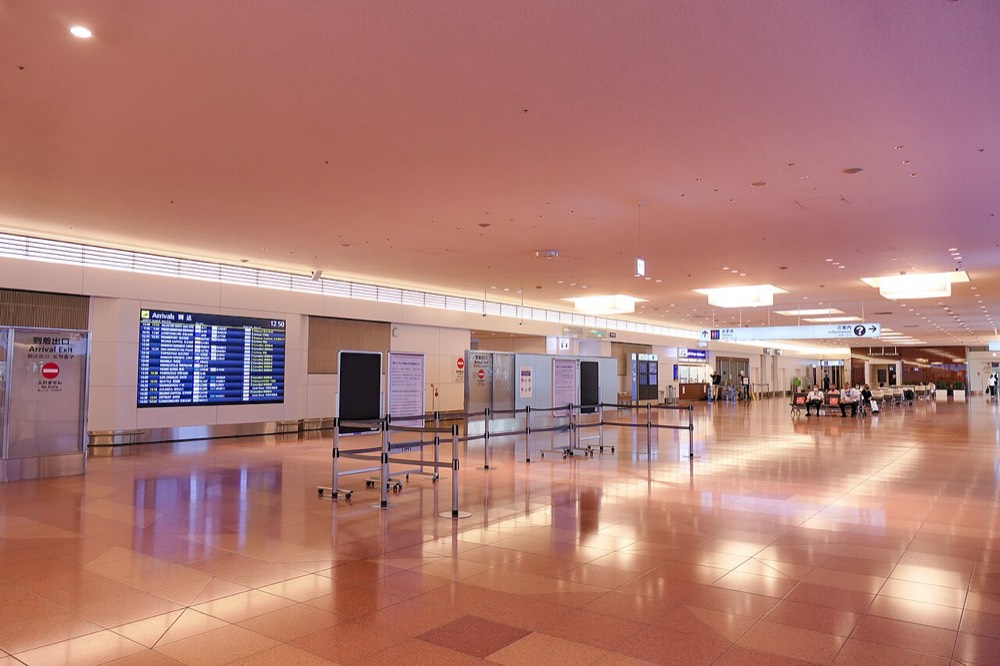
Gate and stand locations are from the Haneda Airport website[6][7]. At Terminal 3 the Keikyu and monorail gates are on the same floor as the arrivals lobby; walk straight ahead after customs and you will see them, with no stairs or escalators.
Differences in time and fare: Keikyu's Terminal 1·2 Station is one stop beyond Terminal 3 Station, so Shinagawa takes 3 to 4 minutes longer, and the paper ticket is the same 330 yen[1]. Monorail fares to Yamanote Line stations are the same from all three terminals[3].
How long should you allow from landing to boarding? There is no official average, so treat the following as conservative planning figures, not guarantees. From the aircraft parking, getting off, immigration, baggage claim and customs take about 30 to 45 minutes when things go smoothly; when several international flights arrive together or during holiday periods, allow 60 to 90 minutes. Add 10 minutes to buy a ticket or set up an IC card. Filling in Visit Japan Web beforehand saves time on forms at the airport. If you are booking a restaurant, a shuttle or a same-day Shinkansen, a sensible rule is to treat "scheduled arrival plus 2 hours" as the time you can leave the airport.
Late-night and early-morning arrivals at Haneda: last trains, night buses and taxis
The key time is 11:30 pm: if you are on a train before then, almost every connection still works; after midnight only late-night buses and taxis remain.
On the November 2026 weekday timetable, the latest departures from Terminal 3 that still get you there the same night are as follows[1]:
| Destination | Latest departure (approx.) | Arrival (approx.) | Route |
|---|---|---|---|
| Shinagawa | 0:08 | 0:20 | Keikyu Limited Express (Kaitoku) |
| Hamamatsucho | 0:10 | 0:26 | Tokyo Monorail |
| Ueno | 0:08 | 0:51 | Keikyu → change at Shinagawa to JR Keihin-Tohoku Line |
| Shinjuku | 23:51 | 0:44 | Keikyu → change at Shinagawa to JR Yamanote Line |
| Ikebukuro | 23:51 | 0:54 | Keikyu → change at Shinagawa to JR Yamanote Line |
| Asakusa | 23:37 | 0:23 | Keikyu → change at Keikyu Kamata, then through onto the Asakusa Line |
Weekend and holiday timetables differ, and late-night services can change with timetable revisions, so search again in a transit app on the day you travel.
Late-night and early-morning buses: 0:20 to 2:20 to Shinjuku and Ikebukuro
Once the trains have gone, the most useful option is the late-night/early-morning bus toward Shinjuku and Ikebukuro. Departures from Terminal 3 are at 0:20, 1:00, 1:40 and 2:20, with one bus each from Terminal 1 at 0:10 and Terminal 2 at 0:05; at Terminal 3, board at stop 3 or 7[5]. The fare is double the daytime fare: 2,800 yen per adult and 1,400 yen per child to Shinjuku Station West Exit, Busta Shinjuku or Ikebukuro Station East Exit. The bus leaving Terminal 3 at 1:00 reaches Shinjuku Station West Exit at about 1:38 and Ikebukuro Station East Exit at about 2:05[4].
There is also a late-night bus toward Yokohama Station (YCAT) and Sakuragicho leaving Terminal 3 at 1:20[5]. These services are adjusted to flight schedules, and the official site advises confirming with the operator before you travel.
Taking a taxi late at night, or staying at the airport
Taxis run around the clock, and late-night/early-morning flat fares or surcharges apply from 22:00 to 5:00[9]. If you clear customs after 2:30 am, or are traveling alone and do not want to pay for a taxi, consider staying at the airport: GO TOKYO lists options such as a capsule hotel in Terminal 1 and a hotel directly connected to Terminal 3, and some nearby hotels run free shuttles[9]. The first Keikyu and monorail trains leave shortly after 5 am[1].
How much is a flat-fare taxi from Haneda, and how many people make it worthwhile?
With three or four people and large luggage, a flat-fare taxi costs about the same in total as the bus and is worth considering; for one or two people the train is clearly better value.
Nihon Kotsu's published Haneda Airport flat fares are as follows (per taxi, one way, tolls extra)[8]:
| Destination ward | Regular (5:00–22:00) | Late night/early morning (22:00–5:00) | Main places in the ward |
|---|---|---|---|
| Chiyoda | 7,600 yen | 9,000 yen | Tokyo Station, Akihabara |
| Shibuya | 8,500 yen | 10,000 yen | Shibuya, Harajuku, Ebisu |
| Shinjuku | 9,000 yen | 10,700 yen | Shinjuku, Shin-Okubo |
| Taito | 9,100 yen | 10,800 yen | Ueno, Asakusa |
| Sumida | 9,100 yen | 10,700 yen | Oshiage, Kinshicho |
| Toshima | 11,200 yen | 13,200 yen | Ikebukuro |
Rules to know before you use one:
- Minato, Chuo, Shinagawa, Ota, Koto and Meguro wards have no flat fare and are charged by the meter[8]. Ginza and Nihombashi (Chuo Ward) and Roppongi and Hamamatsucho (Minato Ward) fall into this group, and the fare depends on traffic at the time.
- Flat fares assume use of the Shuto Expressway, and passengers pay the tolls separately[7][8].
- Nihon Kotsu's flat fare is by reservation, made at least 1 hour before pick-up; changing the destination or route cancels the flat fare[8]. Rules differ between companies and ride-hailing apps, and at Terminal 3 the pick-up point for app-dispatched and reserved taxis is the P5 parking building, not the regular taxi stand[7].
- How to sign up for ride-hailing apps, whether you can pay by card and whether your luggage will fit are covered in the Japan taxi guide.
What it actually costs to get to Shinjuku
| Group and situation | Keikyu + JR | Limousine Bus | Flat-fare taxi |
|---|---|---|---|
| 1 person, daytime | 580 yen | 1,400 yen | 9,000 yen + tolls |
| 2 people, daytime | 1,160 yen | 2,800 yen | 9,000 yen + tolls |
| 4 people, daytime | 2,320 yen | 5,600 yen | 9,000 yen + tolls (from about 2,250 yen each) |
| 4 people, 1 am | No service | 11,200 yen (late-night bus) | 10,700 yen + tolls |
The figures use the fares given earlier in this article[1][4][8]. In the daytime the train is far cheaper however many of you there are; but for four people late at night, the taxi flat fare is on a par with the total for the late-night bus, and it takes you to the door. A standard taxi will not fit four large suitcases, so groups with a lot of luggage should reserve a larger vehicle; whether that costs extra depends on the company.
Suica or a ticket? Tickets you can buy at Haneda Airport
The short answer: for most people, tapping a transit IC card is simplest, and the fare is a few yen cheaper than a paper ticket. You only need a separate ticket if you are taking the monorail on a holiday or plan to use the subway heavily.
- Suica, PASMO and other transit IC cards: Accepted on Keikyu, the monorail, JR and the subways. iPhone users can add Suica to Apple Wallet before departure; the Welcome Suica card for short-term visitors has no deposit, is valid for 28 days, and the balance cannot be refunded. The differences between the cards and how to top up are in the Suica guide.
- 590-yen monorail discount ticket: Only on weekends, holidays and designated periods, from the ticket machines at the monorail stations[3]. If you arrive on a weekday you can ignore it.
- Keikyu "Welcome! Tokyo Subway Ticket": A set ticket for overseas visitors, combining a one-way or round trip on the Keikyu Line between Haneda Airport and Sengakuji with a 24-, 48- or 72-hour Tokyo subway pass, sold at the Keikyu Tourist Information Center at Terminal 3 Station on presentation of a passport[10]. Subway pass prices went up in March 2026; for the current price of the set, check the Keikyu Haneda Airport access guide. The Keikyu portion only goes as far as Sengakuji, so it is most useful for travelers heading along the Asakusa Line or staying next to a subway station; those staying in Shinjuku or Shibuya and mainly using JR usually do not need it.
- Tokyo Subway Ticket on its own: 1,000 yen for 24 hours, 1,500 yen for 48 hours and 2,000 yen for 72 hours, not valid on JR, Keikyu or the monorail. For how to work out whether it pays off, see Tokyo Subway Ticket 2026.
For the Limousine Bus from the airport you must buy a ticket before boarding; you cannot tap a card on board as you would on a city bus[5].
Who is each option for, and who is it not for?
Keikyu: Suits most people, especially those staying in Shinagawa, Shinjuku, Shibuya, Ueno, Asakusa or Ginza. Not ideal with two or more large suitcases if you would have to squeeze onto the Yamanote Line in the evening rush.
Tokyo Monorail: Suits travelers going to Tokyo Station, Yurakucho, Shimbashi or Hamamatsucho, and those arriving on weekends or holidays who can buy the 590-yen ticket; the views of Tokyo Bay and the canals along the way are a bonus for first-time visitors. Not ideal on weekdays for Shinjuku or Ikebukuro if you are watching the fare.
Limousine Bus and Keikyu Bus: Suit travelers staying at a hotel on the route or in front of Shinjuku, Ikebukuro or Shibuya stations, with a lot of luggage, children or older relatives. Not ideal if you are in a hurry or arriving in the weekday morning or evening rush.
Flat-fare taxi: Suits groups of three or four, late-night arrivals and travelers with limited mobility. Not ideal for one or two people in the daytime, when it costs more than ten times the train fare.
Before you go
- Find out which line your hotel's nearest station is on first, then go back to the first table in this article; do not just look at "how long to Tokyo".
- Keikyu platforms serve trains for both Tokyo and Yokohama, so check the destination before boarding.
- If your flight is scheduled to land after 10 pm, note the four late-night buses at 0:20, 1:00, 1:40 and 2:20, and budget for a taxi.
- Sale dates and prices of the monorail discount ticket and set tickets are revised each fiscal year, so check the official sites before buying.
- Allow the same time for the return trip from the city to Haneda, but the Yamanote Line and Shinagawa Station are very crowded in the morning commute, so add 20 minutes if you have large luggage.
FAQ
What is the fastest and cheapest way from Haneda Airport to Shinjuku?
Take the Keikyu Line to Shinagawa and change to the JR Yamanote Line. On a weekday daytime it takes about 41 minutes from Terminal 3 and costs 580 yen by IC card, with one transfer. To avoid transferring, the Limousine Bus runs direct to Shinjuku Station West Exit, Busta Shinjuku and nearby hotels for 1,400 yen; the timetable shows about 40 to 55 minutes, longer in rush-hour traffic.
Keikyu or Tokyo Monorail: which is better?
It depends on where you are going. For Shinagawa, Shinjuku, Shibuya, Ikebukuro, Ueno, Asakusa and Ginza, Keikyu is cheaper and needs fewer transfers. For Tokyo Station, Hamamatsucho, Shimbashi and Yurakucho, the monorail is faster, about 23 minutes to Tokyo Station. On weekends and holidays the monorail's 590-yen discount ticket makes it cheaper than Keikyu to Ikebukuro.
Is there any transport from Haneda Airport after midnight?
Trains have mostly finished: the last Keikyu train to Shinagawa leaves at about 0:08 and the last monorail to Hamamatsucho at about 0:10 on the weekday timetable. After that, late-night buses leave Terminal 3 at 0:20, 1:00, 1:40 and 2:20 for Shinjuku and Ikebukuro, 2,800 yen per adult. Taxis are also available; late-night flat fares apply from 22:00 to 5:00.
Do I need to transfer between Haneda Airport and Asakusa?
Usually not. Keikyu trains run through onto the Toei Asakusa Line, so you can ride from Terminal 3 to Asakusa in about 35 to 44 minutes for 599 yen by IC card; Oshiage (Tokyo Skytree) is also 599 yen. Check the destination before boarding, because trains that end at Shinagawa or head toward Yokohama do not reach Asakusa.
How much is a taxi from Haneda Airport to central Tokyo?
With a pre-booked flat-fare taxi, Nihon Kotsu's published daytime fares are 7,600 yen to Chiyoda Ward, 8,500 yen to Shibuya Ward, 9,000 yen to Shinjuku Ward, 9,100 yen to Taito Ward and 11,200 yen to Toshima Ward, plus expressway tolls. Higher late-night flat fares apply from 22:00 to 5:00. Six wards, including Minato and Chuo, have no flat fare and are charged by the meter.
Can I use Suica from Haneda Airport into the city?
Yes. Keikyu, the Tokyo Monorail, JR and the subways all accept Suica, PASMO and other transit IC cards, and IC fares are a few yen cheaper than paper tickets. For the Limousine Bus from the airport you need to buy a ticket at a machine or counter before boarding. Mobile Suica or a Welcome Suica card both work; setting one up before you land saves the most time.
Sources
- Yahoo! Japan Transit (route search): Searches on the Wednesday, November 18, 2026 timetable: IC fares, travel times, transfer stations and first/last trains for Keikyu and the monorail
- Tokyo Monorail: fare table for Haneda Airport Terminal 3 Station: Fare to Hamamatsucho: 520 yen by ticket, 519 yen by IC card
- Tokyo Monorail: Monorail & Yamanote Line Discount Ticket: Sale dates, where to buy and conditions of the 590-yen ticket, and regular ticket fares to Yamanote Line stations
- Airport Transport Service (Limousine Bus): Haneda Airport to Shinjuku area timetable: Adult fare of 1,400 yen to the Shinjuku area, 2,800 yen late-night/early-morning fare, departure times by terminal and stops
- Haneda Airport Passenger Terminal official site: Bus: Bus stop numbers by route, travel times, suspended routes, late-night/early-morning bus departures, how to buy tickets
- Haneda Airport Passenger Terminal official site: Train and Monorail: Location of the Keikyu and monorail ticket gates in each terminal
- Haneda Airport Passenger Terminal official site: Taxi: Taxi stands in each terminal and pick-up points for app-dispatched and reserved taxis
- Nihon Kotsu: Haneda Airport flat-fare taxi: Flat fares by ward (regular and late-night/early-morning), booking rules, tolls charged separately
- GO TOKYO official Tokyo travel guide: Access from Haneda Airport: Travel times by Keikyu, monorail and bus, late-night taxi surcharge hours, hotels in and near the airport
- Tokyo Metro: Airport - Downtown Tokyo Routes and Tickets: What Keikyu's Welcome! Tokyo Subway Ticket includes and where it is sold
Fares, opening hours and event dates can change. Information checked on 2026.11.12; please confirm with official sources before you go.