Taxis in Japan: How to Use GO and Uber, Fares, Card Payment and Luggage Tips
How to get a taxi in Japan: using the GO and Uber apps, Tokyo's 2026 flag fare, late-night surcharge, airport flat fares, card payment and luggage space.
Quick answer
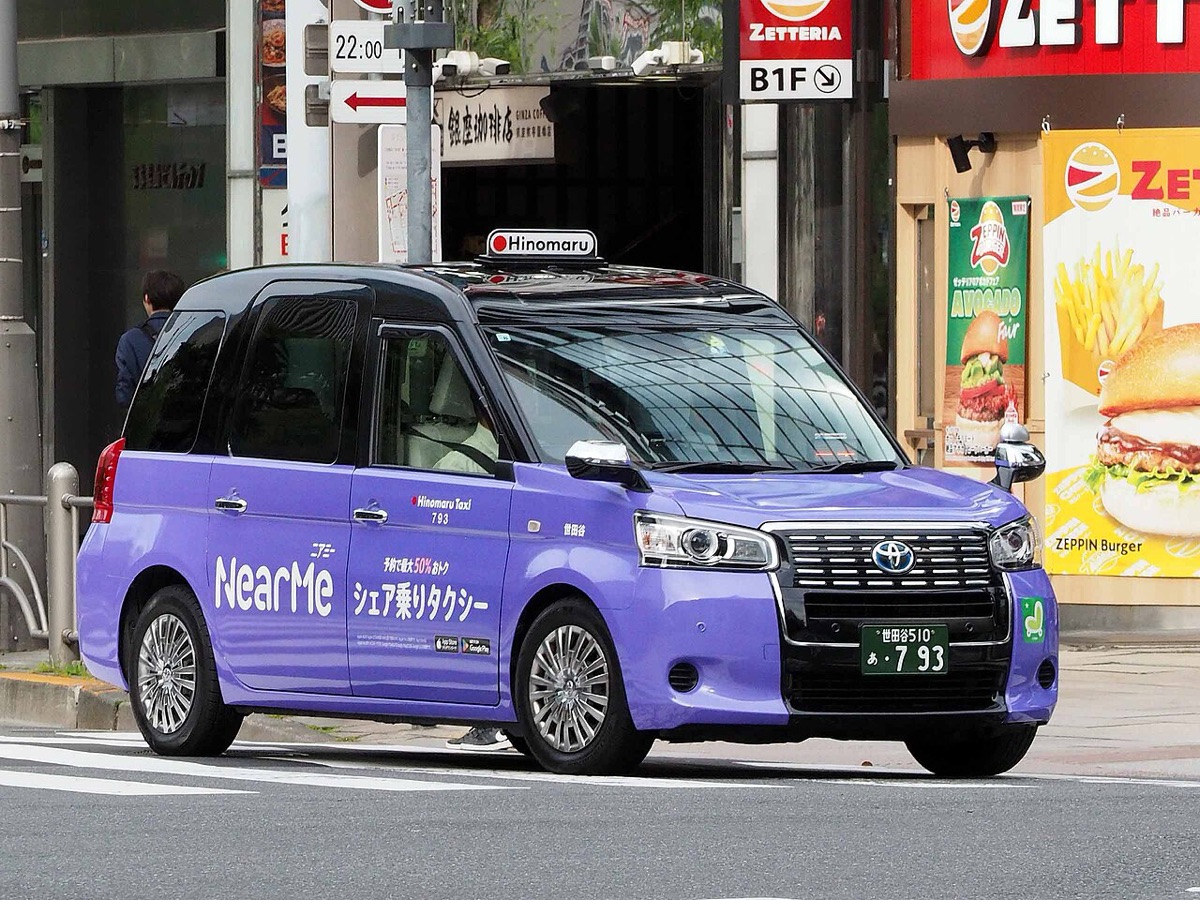
The easiest way to hail a taxi in Japan by app is GO or Uber. GO's official site says it works in all 47 prefectures, accepts international credit cards and Apple Pay, and allows registration with overseas phone numbers; Uber in Japan dispatches licensed taxis. Since April 20, 2026, the flag fare in Tokyo's 23 wards is 500 yen for the first 1.0 km, with a 20% surcharge from 22:00 to 5:00. Most big-city taxis take cards, doors open automatically, and no tip is needed.
Trains will get you to most sights in Japan, but when the last train has gone, it's pouring with rain, three or four of you are dragging luggage, or you're heading somewhere with few buses, a taxi is often the easiest choice. This Japan taxi app guide covers how to register and pay with apps such as GO and Uber, Tokyo's new 2026 fares and late-night surcharge, airport flat fares, card payment and luggage space, plus the small details of getting in and out, so you know how to get a ride and roughly what it will cost before you go.
How do taxis work in Japan? From hailing to paying
You can hail a taxi on the street, queue at a station or hotel taxi stand, or book through an app, and the process is simple. According to the Japan National Tourism Organization (JNTO), a red light on the front of the car means it is vacant and can pick you up, while green means it already has passengers[2]. The sign is in Japanese, so just remember the colors.
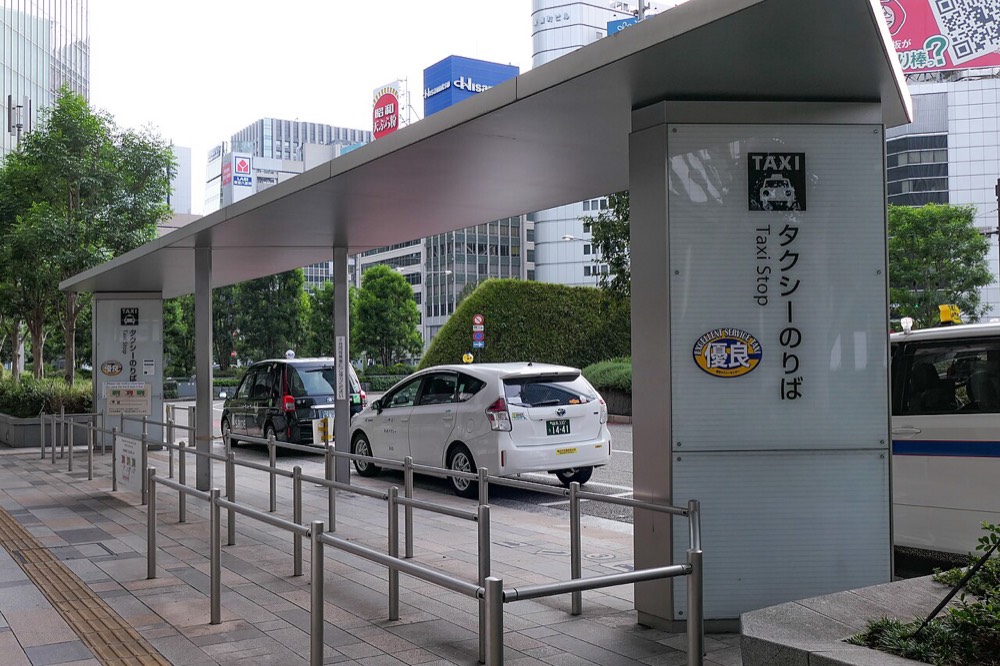
A typical ride goes like this:
- Queue at a taxi stand (タクシーのりば), or raise your hand to a vacant taxi on the street. Cars may not be allowed to stop at busy intersections or bus stops, so the driver might pull over a little farther ahead.
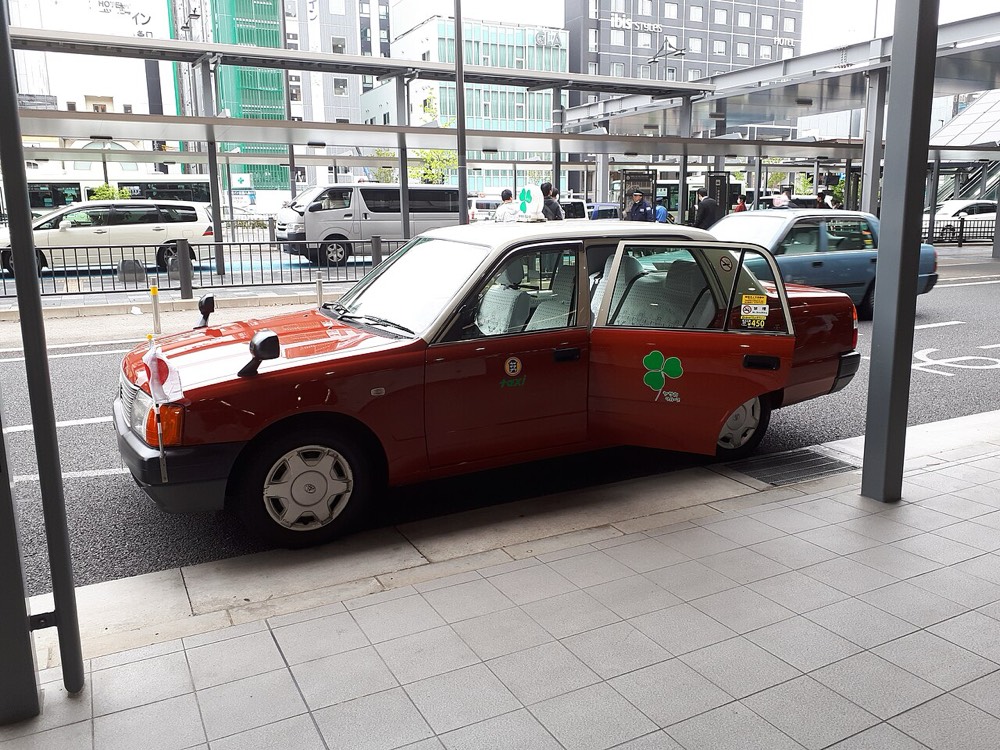
- The rear door is automatic and operated by the driver. Don't pull it open or shut it yourself; wait for it to open, and let the driver close it when you get out[2].
- Tell the driver your destination. If a place name is hard to pronounce, showing the Japanese address, hotel name or a map app screen is the most reliable.
- Fasten your seat belt in the back seat too.
- On arrival, check the meter and pay by card, transit IC card or cash (depending on the car). Ask for a receipt with "Reshiito kudasai."
Big cities have plenty of taxis, usually waiting in front of stations. In regional cities and the countryside, taxis tend to gather at stations, and sometimes you can only call one in advance[2]. When visiting hot spring towns or suburban sights, you may not find one for the return trip, so ask your hotel or check an app for nearby cars first.
How much does a taxi cost in Japan? 2026 flag fares and late-night surcharge
Most Japanese taxis charge by distance plus time spent at low speed. The flag fare and meter increments are set separately for each region, so Tokyo, Osaka and Kyoto all differ.
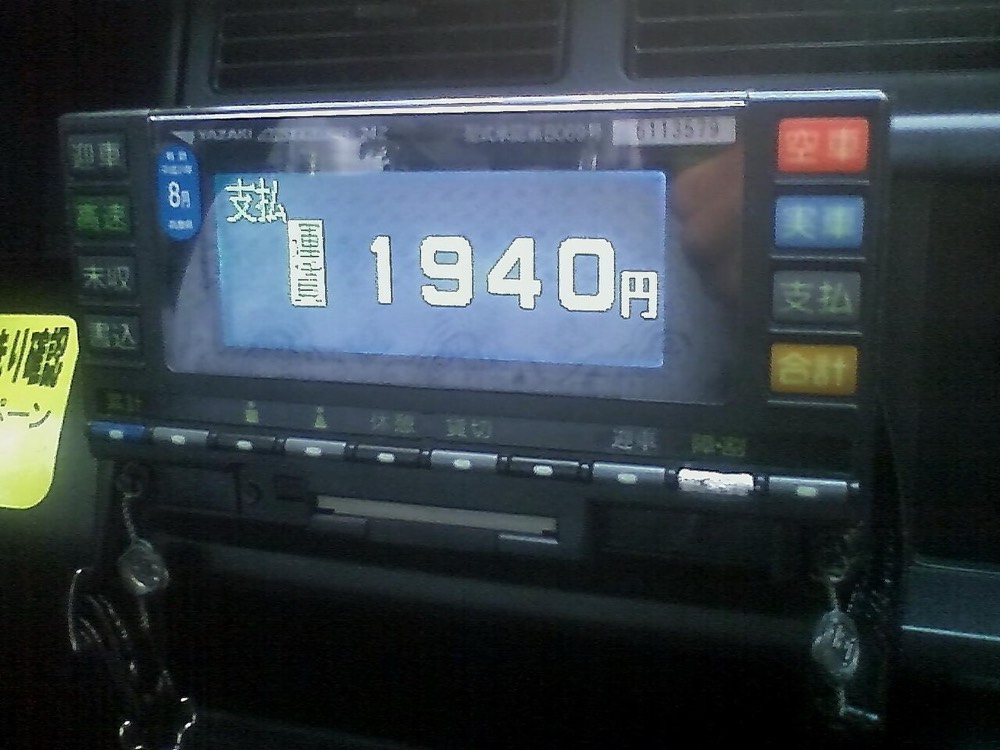
Taking Tokyo as an example, the Consumer Affairs Agency's record of public utility charges shows that Tokyo's 23 wards plus Musashino and Mitaka revised fares on April 20, 2026, with a standard taxi changing from "500 yen for 1.096 km" to "500 yen for 1.0 km"[1]. The starting amount is unchanged, but the distance it covers is shorter, and later meter increments are shorter too, raising overall fares by roughly 10%. According to a Japanese price information site, the meter now adds 100 yen about every 232 m, but this is not an official notice, so go by the meter in the car[7].
Other regions have revised fares as well. The Osaka area, for example, has started at 600 yen for 1.2 km since November 5, 2025[1]. Kyoto, Sapporo, Fukuoka and others have also changed fares in the past two years, so check local taxi company websites or an app's fare estimate before you ride.
| Item | Tokyo 23 wards (checked October 2026) | Notes |
|---|---|---|
| Standard flag fare | 500 yen for 1.0 km | From April 20, 2026[1] |
| Meter increments | 100 yen about every 232 m | Unofficial summary; follow the meter[7] |
| Slow traffic | Time-based charge | The meter runs in traffic jams |
| Late-night/early-morning surcharge | 20% extra, 22:00–5:00 | Same hours in most regions[2] |
| Tolls | Paid by the passenger | Extra when using expressways[2] |
| Pickup and reservation fees | Depend on the company and app | Shown on the booking screen |
So what will you actually pay? JNTO's reference is that a daytime ride of about 7 km and 25 minutes in Tokyo costs roughly 2,500 to 3,000 yen[2]. A short ride of around 3 km works out to roughly 1,400 yen using the table above, and more in traffic or late at night. Most apps show an estimated fare before you confirm, so you can compare first.
Best taxi apps in Japan: GO, Uber, DiDi or S.RIDE?
If you want to hail a taxi by app in Japan, install GO first and Uber second; both have the clearest support for overseas visitors. DiDi and S.RIDE also operate in Japan and work as backups.
| App | Vehicles | Availability for overseas visitors (checked October 2026) | Best for |
|---|---|---|---|
| GO | Partner taxi companies | Official site says available in all 47 prefectures; accepts international credit cards and Apple Pay[3] | First choice anywhere in Japan |
| Uber | Licensed taxis | Uber Japan's site lists Sapporo, Sendai, Tokyo, Kyoto, Osaka, Hiroshima, Fukuoka, Okinawa and more; reservations up to 90 days ahead[4] | Existing Uber users, advance bookings |
| DiDi | Partner taxi companies | Check in the app whether overseas numbers and cards are supported | Backup |
| S.RIDE | Mainly Tokyo taxis | Overseas number support not officially confirmed; check in the app | Backup in central Tokyo |
GO: Japan's most widely used taxi app
GO is a Japanese ride-hailing app. Its official English page says it is "available in all 47 prefectures across Japan," accepts international credit cards, and lets you pay with Apple Pay without registering a card[3]. The site comes in English, Korean, and Simplified and Traditional Chinese.
To register, you enter a phone number to receive a verification code. The site indicates overseas numbers can be verified, but the new-user coupon is only offered to users with Japanese numbers[3]. If you only use a data-only eSIM in Japan, you may not receive the SMS code, so register with your home number before departure and switch networks once you arrive (see our Japan eSIM guide). After booking, the app shows the plate and a dispatch number to check before you get in. In some areas you can also reserve a car for a set time.
Uber: in Japan, it calls a taxi
When you open Uber in Japan, you will mostly get a licensed taxi, with fares based on taxi rules rather than the private-car ridesharing common in other countries. Uber Japan's site has taxi pages for cities including Sapporo, Sendai, Tokyo, Kyoto, Osaka, Hiroshima, Fukuoka and Okinawa. Besides regular taxis there are premium cars and large wagons, and you can choose "Reserve" in the app to book up to 90 days ahead[4]. If you already use Uber elsewhere with a card on file, you can use the same account in Japan.
What is Japan's version of ridesharing?
Since April 2024, Japan has run "Japanese-style ridesharing" (自家用車活用事業), managed by existing taxi companies. In areas, days and hours when taxis are short, ordinary drivers can carry passengers in their own cars. The first areas opened included Tokyo's 23 wards with Musashino and Mitaka, plus the Keihin, Nagoya and Kyoto city areas[8]. Unlike freelance ridesharing abroad, it is limited by area and time, so you may not encounter it in the app; if you do, you pay through the app as usual.
Can you pay by card in a Japanese taxi? Payment options
Taxis in big cities such as Tokyo, Osaka and Kyoto generally accept credit cards, but rural taxis may take cash only[2]. Many cars have a payment terminal in the back seat for cards, transit IC cards or mobile payment QR codes; accepted brands are usually shown on stickers on the window or seat back.
How to prepare:
- Register a card in an app: Book with GO or Uber and link a credit card or Apple Pay, and you won't need to pay when you get out.
- Street hails: Check the window stickers before getting in, or ask "Kaado de haraemasu ka?" (Can I pay by card?).
- Transit IC cards: Suica, ICOCA and similar cards work in many taxis, but not every car.
- Carry some cash: In regional cities or late at night, a few 1,000-yen notes are reassuring; drivers may struggle to change a 10,000-yen note for a short ride.
For more on cards, mobile payments and how much cash to bring, see our Japan money and payment guide.
Will suitcases fit? Passengers and luggage
A standard small taxi carries up to four passengers, with large bags in the trunk; the driver usually gets out to help. Sedan-type cars have limited trunk space, about one or two large suitcases. The high-roof JPN Taxi now common in Tokyo is roomier, but four people with one big suitcase each may still not fit in one car.
Practical options:
- Book a larger vehicle for groups or lots of luggage: Uber has a large wagon option[4], and local taxi companies offer jumbo taxis (ジャンボタクシー) by reservation.
- Send luggage ahead: When changing hotels or heading to the airport, ship big bags by courier and ride light; see our Japan luggage delivery guide.
- Strollers and wheelchairs: Folded, they usually fit in the trunk; for an accessible vehicle, book with a taxi company.
Airport taxis: Haneda and Narita flat fares
From Haneda or Narita to central Tokyo, many areas can be reached at a flat fare, which stays the same regardless of traffic. JNTO notes that at Narita and Haneda you can ask for a fixed fare to many central Tokyo zones when you get in[2].
Key points from Haneda Airport's official site[5]:
- Flat-fare taxis run between Haneda and Tokyo and Kanagawa, but some routes and areas are excluded and charged by the meter.
- The flat fare assumes use of the Shuto Expressway, and expressway tolls are paid separately.
- Flat fares are approved by Japan's Ministry of Land, Infrastructure, Transport and Tourism.
- Since October 22, 2025, app-booked and reserved taxis pick up on the 2nd floor departure level: near Exit 7 on 2F at Terminal 1, near Exit 2 on 2F at Terminal 2, and on the 8th floor of the P5 car park at Terminal 3. Locations may change with congestion, so follow the app before boarding.
Flat-fare amounts by area, and late-night amounts, change often, and the airport site suggests asking taxi companies or the Tokyo and Kanagawa taxi associations, so this article does not list specific figures. When you get in, say "Teigaku de onegaishimasu" (flat fare, please) and confirm your destination is in a flat-fare zone. For solo travelers, airport buses or trains are usually much cheaper; for three or four people, lots of luggage or a late-night arrival, a flat-fare taxi is well worth considering.
When is a taxi better value than the train?
In general, for one or two people moving around a city, trains and subways are cheapest. But in the situations below, a taxi can be the better option. JNTO also notes that taxis can be quite economical for groups of three or four[2].
| Situation | Why a taxi makes sense |
|---|---|
| Short rides for 3–4 people | Split the fare and it's close to everyone buying train tickets, with door-to-door service |
| After the last train | No trains run late at night; even with the 20% surcharge it's the main option |
| Heavy rain, traveling with elderly people or children | Fewer transfers and less walking |
| Moving big luggage | No hauling suitcases up and down station stairs |
| Suburbs, hot spring towns, infrequent buses | Sometimes the only way to get there |
For how to use trains within the city and which passes are best value, read it alongside our Tokyo transport guide.
Useful Japanese phrases and taxi etiquette
No tipping is needed in Japanese taxis; JNTO states that drivers do not expect or accept tips[6]. Some big-city drivers speak English, but don't count on it; having the address in Japanese is the most reliable[2].
| English | Japanese | Pronunciation |
|---|---|---|
| Please take me here | ここまでお願いします | koko made onegaishimasu |
| Flat fare, please | 定額でお願いします | teigaku de onegaishimasu |
| Can I pay by card? | カードで払えますか? | kaado de haraemasu ka? |
| Please stop here | ここで止めてください | koko de tomete kudasai |
| Could you open the trunk? | トランクを開けてもらえますか? | toranku o akete moraemasu ka? |
| A receipt, please | レシートください | reshiito kudasai |
Other courtesies: no smoking in the car; avoid eating strong-smelling food; and check you have your phone and bags when getting out. The receipt shows the company and car number, which helps if you leave something behind. For more on manners when traveling in Japan, see our Japan travel etiquette guide.
Before you go: how to make it smooth
Before leaving home, download GO (or Uber), register with your home phone number and add a credit card; once in Japan, you can both hail on the street and book by app. Flag fares differ outside Tokyo, so go by the app's estimate or the meter. A 20% surcharge applies after 22:00, airport-to-city rides can use flat fares with tolls extra, and for groups or lots of luggage, book a larger car in advance or send bags ahead by courier to make the ride much easier.
FAQ
Can foreign tourists use the GO taxi app?
Yes. GO's official English page says it accepts international credit cards and Apple Pay, and you register with a phone number that receives a verification code. Overseas numbers can register, but the new-user coupon is only for Japanese numbers. A data-only eSIM may not receive the SMS, so register with your home number before you fly.
Is there Uber in Japan, and does it work the same way?
Yes, but in Japan the Uber app mainly dispatches licensed taxis, with fares based on taxi rules rather than private-car ridesharing. Uber Japan's site lists taxi pages for cities such as Sapporo, Sendai, Tokyo, Kyoto, Osaka, Hiroshima, Fukuoka and Okinawa, and rides can be reserved up to 90 days ahead.
How much is the taxi flag fare in Tokyo?
Tokyo's 23 wards plus Musashino and Mitaka revised fares on April 20, 2026. A standard taxi now starts at 500 yen for the first 1.0 km (previously 1.096 km), then the meter rises by distance and slow-traffic time. A 20% surcharge applies from 22:00 to 5:00. Other regions differ; the Osaka area, for example, starts at 600 yen for 1.2 km.
Can I pay for a taxi in Japan by credit card?
Taxis in big cities generally accept credit cards, and many also take transit IC cards or mobile payments; stickers on the window or inside show what is accepted. Rural taxis may be cash only, so check the stickers or ask the driver. If you book by app with a registered payment method, there is nothing to pay when you get out.
Do you tip taxi drivers in Japan?
No. Japan's official tourism website states that taxi drivers do not expect or accept tips. The metered fare plus any tolls is the full amount, and you simply take your change.
Will large suitcases fit in a Japanese taxi?
A sedan-type taxi trunk typically holds one or two large suitcases, while high-roof cars like the JPN Taxi have more room. Four people with one large suitcase each may not fit in one car, so book a larger vehicle (Uber offers a large wagon option) or send luggage ahead by courier.
Sources
- Consumer Affairs Agency: Revisions to Public Utility Charges: Tokyo special wards and Musashino/Mitaka fare revision on April 20, 2026; Osaka area flag fare
- JNTO: Taxis in Japan: Vacancy lights, automatic doors, cards, late-night surcharge, fare reference, airport flat fares
- GO official website (English): 47 prefectures, international credit cards, Apple Pay, overseas numbers and coupon limits
- Uber Japan official website: Taxi dispatch cities, vehicle types, reservations up to 90 days ahead
- Haneda Airport official website: Taxi: Flat-fare taxis, app pickup locations, taxi stands
- JNTO: Tipping in Japan: No tipping in Japan
- pricey: List of taxi fare increases: Meter increments after the Tokyo 23-ward revision (unofficial summary, for reference only)
- Dai-ichi Life Research Institute: Japanese-style ridesharing: Rideshare managed by taxi companies, launched in Tokyo and other areas in April 2024
Fares, opening hours and event dates can change. Information checked on 2026.10.27; please confirm with official sources before you go.