Senso-ji Temple Guide: Kaminarimon, Nakamise, Omikuji Fortunes, Opening Hours and Night Illumination
Senso-ji guide: main hall 6:00-17:00 (from 6:30 Oct-Mar), lit up until about 23:00. Kaminarimon, Nakamise, 100-yen omikuji, bad fortunes, charms and events.
Quick answer
Senso-ji is Tokyo's oldest temple, said to have been founded in 628, and it is free to visit. The main hall is open 6:00-17:00, opening at 6:30 from October to March. Kaminarimon, Hozomon, the five-storied pagoda and the main hall are lit up every day from sunset until about 23:00. Nakamise, about 250 m long, runs from Kaminarimon to Hozomon. The omikuji fortune slips are the traditional Kannon Hyakusen, 100 yen per draw, and bad fortunes can be tied at a designated spot. The Hagoita Market is held December 17-19, and a free projection mapping show runs October 30 to November 3, 2026.
Senso-ji (せんそうじ) is Tokyo's most famous temple and also its oldest, and it is on almost every first-time Tokyo itinerary. This guide covers Senso-ji opening hours, how to explore Kaminarimon and Nakamise, how to draw an omikuji fortune, what to do with a bad fortune, charms and goshuin, and the night illumination, plus the events worth a special trip, so you know when to go for the best photos and the smallest crowds.
Senso-ji opening hours and basic information
The short answer: Senso-ji is free to visit, and the main hall is open 6:00-17:00, opening at 6:30 from October to March[1]. For the other halls, the official site says to contact the temple.
Senso-ji is said to have been founded in 628, in the 36th year of Empress Suiko, making it Tokyo's oldest temple[8]. According to the temple, two fishermen brothers pulled a statue of Kannon from the Sumida River, and enshrining it was the origin of the main hall. The current main hall was rebuilt in 1958 after being destroyed in the Tokyo air raids. The temple belongs to the Sho-Kannon sect, and the name is read "Sensoji", not "Asakusa-dera"[2].
| Item | Details |
|---|---|
| Japanese name | 金龍山 浅草寺 (Kinryuzan Senso-ji) |
| Address | 2-3-1 Asakusa, Taito-ku, Tokyo |
| Main hall | 6:00-17:00 (opens 6:30 October-March) |
| Night illumination | Sunset to about 23:00 (Kaminarimon, Hozomon, five-storied pagoda, main hall) |
| Admission | Free |
| Access | About 5 min walk from Asakusa Station (Tobu, Ginza Line, Tsukuba Express; Toei Asakusa Line Exit A4) |
| Phone | 03-3842-0181 (Mon-Sat 9:00-16:30, closed Sundays and holidays) |
There is no parking on the grounds[1]. There is an elevator on the left side of the main hall and multipurpose toilets to the right of Hozomon and behind the main hall, so wheelchair and stroller users can visit[2]. For where to stay nearby, see where to stay in Tokyo.
Kaminarimon: Senso-ji's outer gate and giant lantern
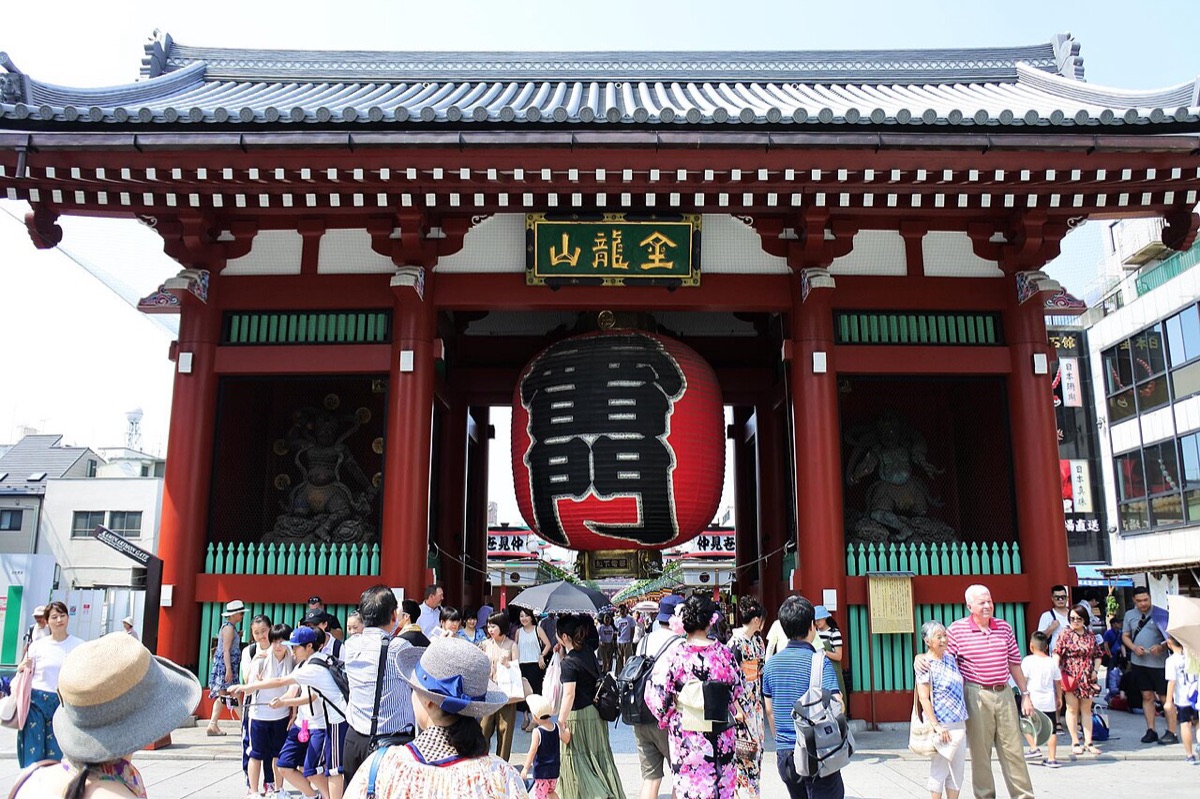
The short answer: Kaminarimon is the main outer gate of Senso-ji, and its official name is Furaijinmon (Wind and Thunder Gods Gate). The red lantern hanging in the gate, reading "Kaminarimon", is Asakusa's classic photo spot[3].
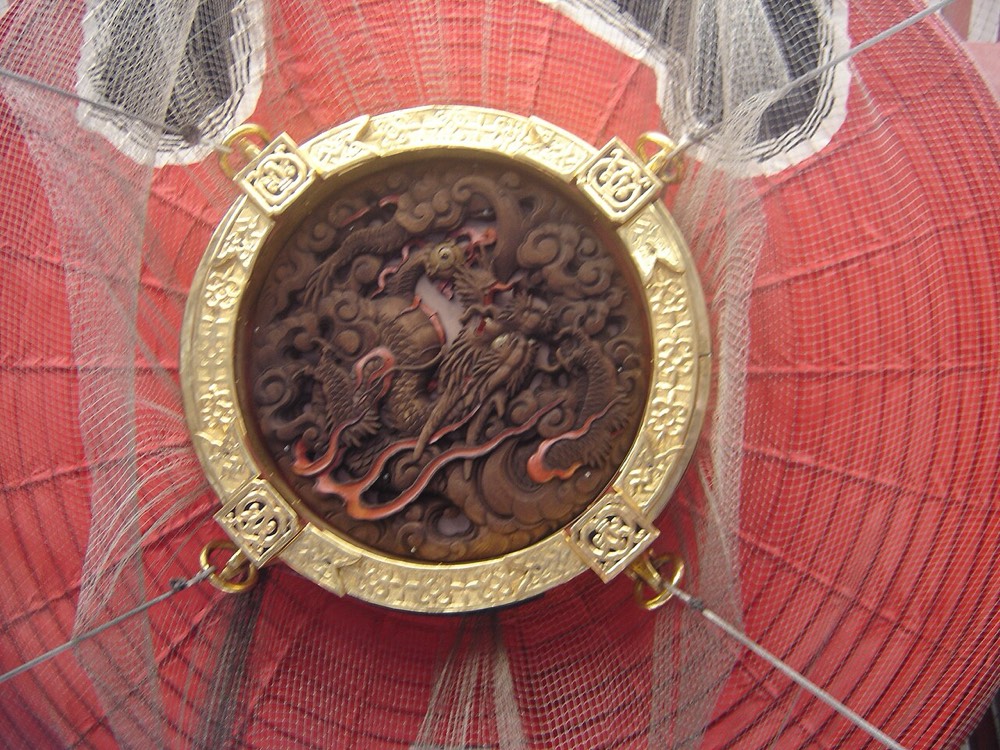
According to the official Senso-ji site, the giant Kaminarimon lantern is 3.9 m tall, 3.3 m wide and weighs about 700 kg, and there is a dragon carving on its base, so remember to look up[3]. Statues of Fujin (god of wind) and Raijin (god of thunder) stand on either side to ward off storms and floods, which gives the gate its official name.
Kaminarimon burned down several times in the Edo period. After a fire in 1865 it was not rebuilt for 95 years, until Konosuke Matsushita, founder of Matsushita Electric (now Panasonic), personally donated the gate you see today in 1960[3].
Photo tips:
- The busiest time is 10:00-16:00. For a Kaminarimon shot with few people, come before 7:00 or after the lights come on in the evening.
- The Asakusa Culture Tourist Information Center directly opposite Kaminarimon has a free rooftop observation deck, good for shooting Kaminarimon and Nakamise from above.
- Rickshaw drivers often wait in front of Kaminarimon, so do not block the road when taking photos.
How to explore Nakamise: what to eat and what to know
The short answer: Nakamise is the shopping street on the temple approach, about 250 m from Kaminarimon to Hozomon, with around 90 shops selling Japanese crafts, souvenirs and freshly made snacks[4][8].
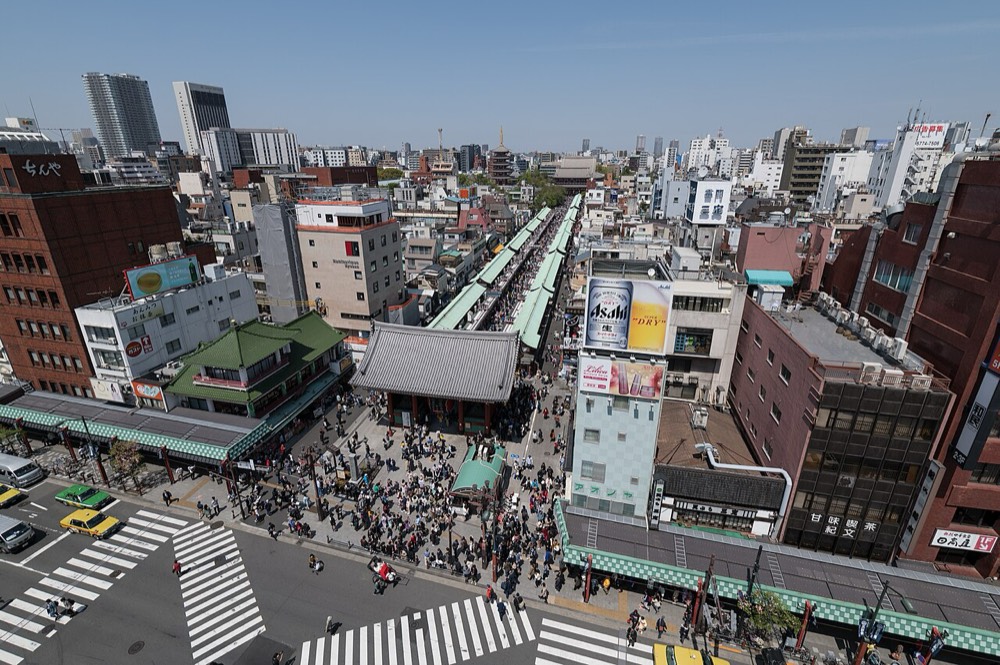
Nakamise is one of Japan's oldest shopping streets. According to the temple, around 1685 Senso-ji let local residents set up stalls along the approach in return for cleaning the grounds, which was the start of Nakamise[4]. The current vermilion shops were rebuilt after the Great Kanto Earthquake and repaired after World War II.
Tips for Nakamise:
- Common snacks: ningyo-yaki cakes, fried manju (揚げまんじゅう), kaminari-okoshi puffed-rice crackers, senbei, kibi dango and matcha sweets. GO TOKYO also recommends mochi, senbei and matcha-flavored treats[8].
- Souvenirs: folding fans, tenugui cloths, Japanese accessories, geta sandals and more.
- Crowds: weekends and holidays around midday are the busiest, with people shuffling shoulder to shoulder.
- Shops close early: most pull down their shutters in the early evening, so shop in the afternoon; at night you can photograph the paintings on the shop shutters.
- Eating etiquette: eating while walking in a crowd can stain other people's clothes, so finish your food in front of the shop and take your rubbish with you or use the shop's bin. For more basic etiquette in Japan, see Japan travel etiquette.
At the end of Nakamise is Hozomon. The large lantern in the center of Hozomon is 3.75 m tall and weighs about 450 kg, Nio guardian statues stand on either side, and the upper floor stores the Gempan Issaikyo sutras, an Important Cultural Property.
How to pray at the Senso-ji main hall
The short answer: before entering the main hall, let the smoke from the incense burner drift over you and wash your hands at the water basin, then put your palms together and say "Namu Kanzeon Bosatsu". Unlike at a shrine, you do not clap at a temple[2].
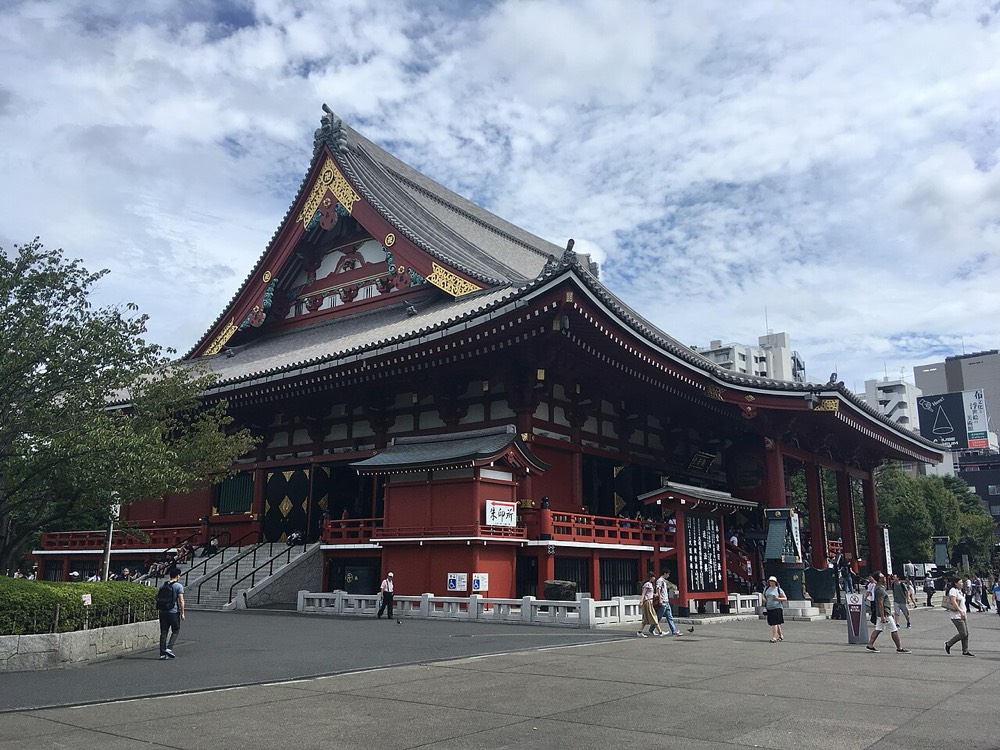
Steps:
- Jokoro incense burner: the large burner just past Hozomon. You can buy incense sticks, light them and place them in it, then waft the smoke over yourself; GO TOKYO says this is believed to bring good health[8].
- Omizuya (water basin): use the ladle to rinse your left hand, then your right hand, then pour water into your left hand to rinse your mouth.
- Main hall: make an offering, put your palms together and silently say "Namu Kanzeon Bosatsu". Do not clap at a temple; this is different from a shrine.
The principal image enshrined in the main hall, Sho-Kannon Bosatsu, is a hidden Buddha that is never shown. Only the Omaedachi Honzon (the stand-in image) can be seen, once a year at the unveiling service at 14:00 on December 13[2]. To the right of the main hall is Asakusa Shrine, which enshrines the brothers who found the Kannon statue and the man who enshrined it. The shrine building was donated by Tokugawa Iemitsu in 1649 and is an Important Cultural Property, and the Sanja Matsuri held every May is this shrine's festival.
The five-storied pagoda, southwest of the main hall, stands about 53 m including its base. It was rebuilt in 1973, and its top level holds Buddha relics brought from Sri Lanka. It is not open for climbing.
How to draw an omikuji at Senso-ji, and what to do with a bad fortune
The short answer: Senso-ji's fortunes are called Kannon Hyakusen. One draw costs 100 yen; you shake the canister yourself and take a slip from the drawer with the matching number. If you get a bad fortune, tie it on the designated rack on the grounds[2][9].
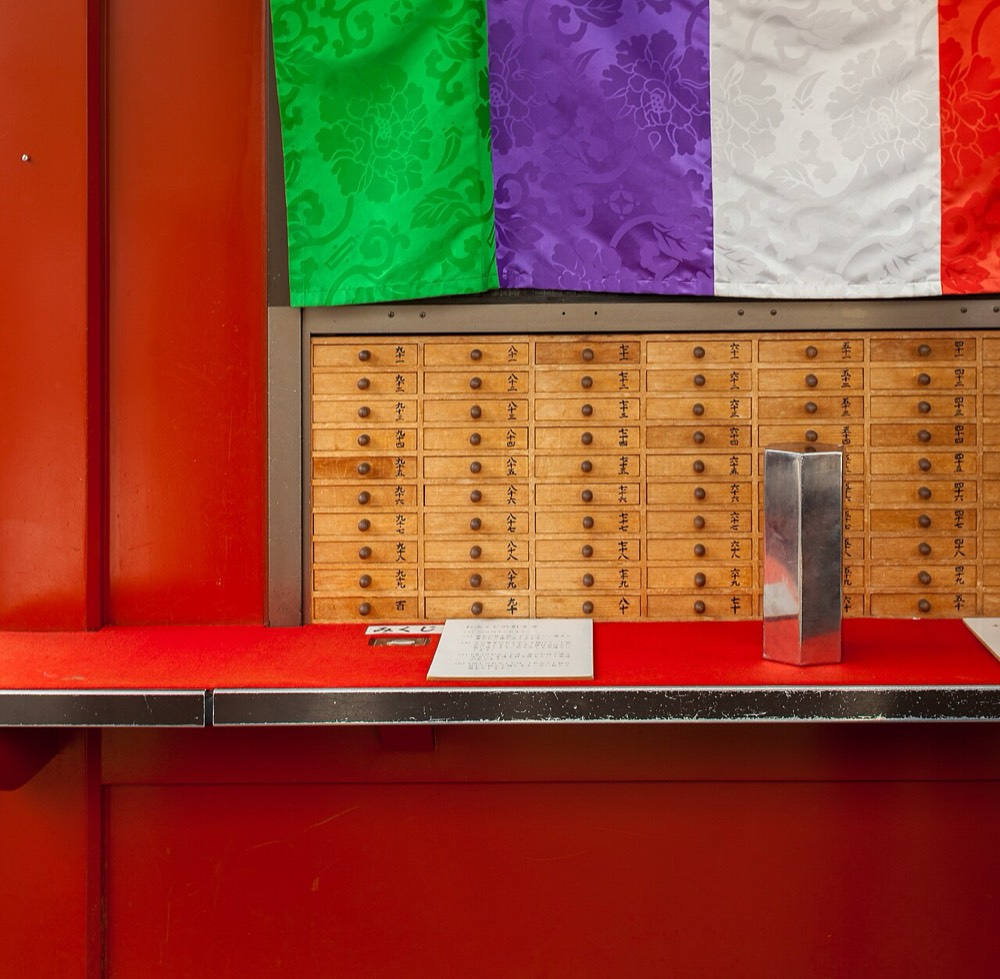
How to draw[9]:
- Go to the omikuji (おみくじ) stand at the main hall and put 100 yen in the box on the counter.
- Pick up the hexagonal metal canister, think of your question and shake it until a stick falls out of the small hole.
- Read the number on the stick (in kanji numerals), open the drawer with the same number and take one slip.
- Put the stick back in the canister; the temple specifically asks you to return it[2].
The slips include an English translation alongside the Japanese, and there are seven grades: daikichi (great blessing), kichi, hankichi, shokichi, suekichi, sueshokichi and kyo (bad fortune).
Are bad fortunes really more common at Senso-ji?
People often say "you get a lot of bad fortunes at Senso-ji". The temple's explanation is that its fortunes are the Kannon Hyakusen handed down from the Heian period, unchanged, and that it has not raised the share of bad fortunes[2]. Japan-based news site SoraNews24 drew 100 times and got 26 kyo, 37 kichi and 14 daikichi[9]. Bad fortunes do come up more than at many shrines, but more than half of the results were good.
If you get a bad fortune:
- Tie it on the designated metal rack: the temple suggests that people who draw a bad fortune tie the slip at the designated spot on the grounds, asking for Kannon's protection and forming a good connection[2].
- Do not tie it on trees: use the special racks, not tree branches or buildings.
- Mindset: the temple says a bad fortune is nothing to fear; live patiently and sincerely and it will turn good[2].
- Good fortunes: you can take them home and keep them as a charm.
Senso-ji omamori charms and goshuin
The short answer: buy Senso-ji charms at the counters by the main hall and along the approach, and get your goshuin at the Yogodo hall on the west side of the grounds[2].
The charms listed on the official Senso-ji website are grouped by location. The main hall and approach counters offer the Honzon charm, Migawari (substitute) charm, Yakuyoke (warding off misfortune), traffic safety, study, Kaminarimon exam-success, safe childbirth, good-match and Kinrin charms, among others; Yogodo has zodiac and Daikokuten charms; and Zenizuka Jizo Hall has a money-luck charm[1]. The site does not publish prices, and you can ask at the counters about each charm's blessings. The temple also offers mail order (senso-ji.online), but does not take phone orders.
As for goshuin, Senso-ji is temple No. 13 of the Bando 33 Kannon pilgrimage and No. 1 of the Edo 33 Kannon pilgrimage. The goshuin office is at Yogodo, which also sells goshuin books[2]. The official site does not state the fee or hours, so follow the notices on site.
Senso-ji night illumination and projection mapping
The short answer: Senso-ji is lit up every day from sunset until about 23:00, illuminating Kaminarimon, Hozomon, the five-storied pagoda and the main hall. Although the main hall closes at 17:00, you can still walk the grounds and take night photos[5].
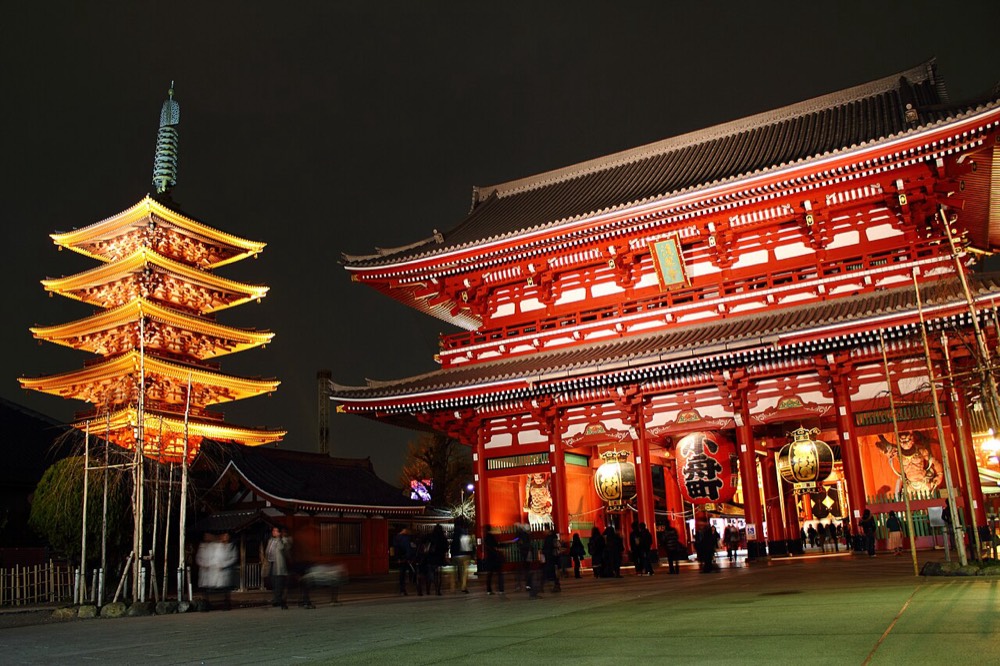
The illumination began in October 2003 as a project marking 400 years since the founding of Edo, proposed by local businesses[5]. There are far fewer people at night than in the daytime, and once the Nakamise shutters are down it is the best time to photograph Hozomon and the pagoda together.
Senso-ji projection mapping: ASAKUSA CULTURE & LIGHTS 2026
Many people searching for a "Senso-ji light show" mean the autumn-only ASAKUSA CULTURE & LIGHTS event. Details for 2026[7]:
| Item | Details |
|---|---|
| Dates | Fri, October 30 – Tue, November 3, 2026 (Culture Day) |
| Projection mapping | 18:00-21:30 on the main hall and Hozomon; two videos of about 6 minutes alternate |
| Fee | Projection mapping free, no reservation |
| Denboin Garden special viewing | 9:00-21:00 (last entry 20:30); garden illumination from 17:00 |
| Ema-do hall | 9:00-16:00 (last entry 15:30) |
| Special viewing price (adult) | 2,300 yen advance, 2,500 yen on the day |
The organizer warns that the 18:00 start is the most crowded and recommends coming a little later, since the audience turns over about every 6 minutes[7]. Denboin Garden is normally closed to the public. Advance tickets ended on October 29, so only same-day tickets remain during the event, while they last. This is a limited-time event; from November 4 only the regular illumination remains. Whether it returns next year depends on an official announcement.
Senso-ji annual events: Hagoita Market, New Year's Eve and New Year visits
The short answer: the Hagoita Market on December 17-19, the New Year's Eve bell and hatsumode (first visits of the year) from January 1 into early January are when Senso-ji is busiest and most atmospheric[6][10].
| Event | Date | Details |
|---|---|---|
| Shushoe (New Year service) | December 31 – January 6 | New Year prayer services in the main hall |
| Joya no Kane (New Year's Eve bell) | Late night, December 31 | Bell rung at Bentenyama from 0:00; 108 strikes take about 40 minutes |
| Setsubun-e | Setsubun in February | Bean-throwing at the main hall |
| Golden Dragon Dance | March 18, October 18 | Golden dragon dance offering |
| White Heron Dance | Second Sunday of April, November 3 | One of the Senso-ji temple dances, performed on the grounds |
| Shimanrokusen-nichi and Hozuki Market | July 9-10 | A visit on this day is said to equal 46,000 days of visits |
| Omaedachi Honzon unveiling | 14:00, December 13 | The one day a year the stand-in image can be seen |
| Osame no Kannon Ennichi and Hagoita Market | December 17-19 (Ennichi on the 18th) | Dozens of decorative battledore stalls on the grounds |
The Hagoita Market grew out of Edo-period year-end markets. Today dozens of hagoita (decorative battledore) stalls line the grounds every December 17-19, and when someone buys one, the sellers lead a rhythmic sanbon-jime hand clap, a real year-end atmosphere[6]. For another year-end Asakusa tradition in November, visit Tokyo Tori-no-Ichi 2026 at the nearby Otori Shrine.
New Year's Eve and New Year visits: the New Year's Eve bell is rung by members of the temple's "Hyakuhachi-kai" group, and ordinary visitors listen nearby[10]. January 1-3 brings the biggest hatsumode crowds; expect queues at Kaminarimon and possible entry controls. If you want to visit right after the countdown, check the all-night trains in Tokyo New Year Countdown 2026-2027.
Nearby Asakusa sights: Tokyo Skytree and the Sumida River
The short answer: after Senso-ji, cross the Sumida River to reach Tokyo Skytree, and you can cover Asakusa and Oshiage in one afternoon.
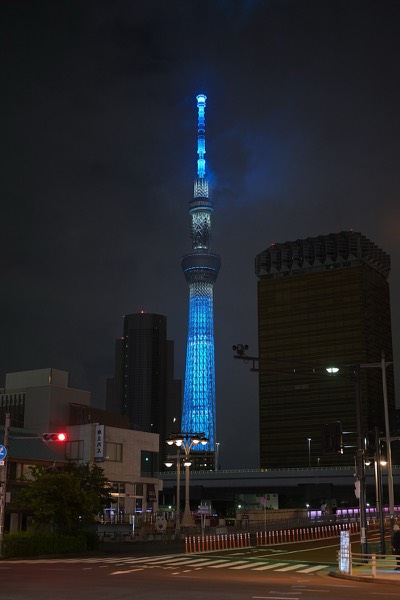
- Tokyo Skytree: one stop on the Tobu Skytree Line from Asakusa to Tokyo Skytree Station, or walk across Azuma Bridge. For tickets and time slots, see the Tokyo Skytree tickets guide.
- Sumida River: the Azuma Bridge area lets you frame Skytree with the river.
- Kappabashi Kitchen Street: walk west to the kitchenware street, good for knives and plastic food samples.
- Asakusa Culture Tourist Information Center: directly opposite Kaminarimon, with a free rooftop observation deck, good for a rest and photos.
For other must-see spots across Tokyo, see Tokyo attractions 2026 to plan your itinerary.
Suggested plan: Kaminarimon before 7:00 for empty-street photos → pray at the main hall and draw an omikuji → stroll Nakamise and snack once the shops open in the morning → after lunch, cross the river to Skytree → back to Asakusa in the evening for the illumination. For transfers from other areas, see the Tokyo transport guide.
Before you go
- Mornings and evenings are best for photos: crowds peak 10:00-16:00, so get up early or come at night for empty shots.
- The main hall closes at 17:00: to enter the main hall, draw an omikuji or buy charms, arriving before 16:00 is safest.
- Bring coins: 100-yen coins come in handy for offerings, incense and omikuji.
- Avoid peak times at New Year: late on December 31 and daytime January 1-3 are the most crowded; if you can, visit after mid-January instead.
- Check limited-time events with the official source: dates for projection mapping, the Hagoita Market and other events may change from year to year, so check the official Senso-ji site again before you go.
FAQ
What time does Senso-ji open? Can I go at night?
The main hall is open 6:00 to 17:00, opening at 6:30 from October to March; for the other halls, contact the temple. After 17:00 the main hall closes, but Kaminarimon, Hozomon, the five-storied pagoda and the outside of the main hall are lit up every day from sunset until about 23:00, so you can still walk the grounds and photograph the night views. You just cannot enter the main hall, and most shops are closed.
Is there an entrance fee for Senso-ji?
No. Visiting Senso-ji is free, and you can walk freely through Kaminarimon, Nakamise, Hozomon and the main hall. You pay only for omikuji (100 yen), charms, goshuin and offerings. The exceptions are special events, such as the separately ticketed Denboin Garden viewing during the autumn ASAKUSA CULTURE & LIGHTS event.
Is it true you often get a bad fortune at Senso-ji?
Senso-ji uses the traditional Kannon Hyakusen fortunes, and people often say bad fortunes are common. The temple explains that it keeps the ancient fortunes unchanged rather than raising the share on purpose. A Japan-based news site drew 100 times and got 26 bad fortunes. The temple says not to fear a bad fortune: live patiently and sincerely and it turns good. You can tie the slip at the designated spot.
Where do I get a goshuin at Senso-ji?
The official FAQ says the goshuin office is at the Yogodo hall on the west side of the grounds. Senso-ji is temple No. 13 of the Bando 33 Kannon pilgrimage and No. 1 of the Edo 33 Kannon pilgrimage. Goshuin books are also sold at Yogodo. The official site does not publish the fee or hours, so follow the notices on site; expect queues around New Year.
When is the Senso-ji projection mapping show?
ASAKUSA CULTURE & LIGHTS 2026 runs October 30 to November 3, with projections on the main hall and Hozomon every evening from 18:00 to 21:30. Two videos of about 6 minutes alternate, and it is free with no reservation. It is a limited-time event, not a daily one; from November 4 only the regular night illumination remains.
Sources
- Kinryuzan Senso-ji official website: Main hall hours, access and list of annual events
- Senso-ji: Frequently asked questions: Kannon Hyakusen fortunes and bad fortunes, goshuin office location, Omaedachi Honzon unveiling date, accessibility
- Senso-ji: Precinct guide (Kaminarimon): Official name of Kaminarimon, size and weight of the lantern, 1960 rebuilding
- Senso-ji: Precinct guide (Nakamise): Nakamise length of about 250 m and its origins
- Senso-ji: Illumination notice: Night illumination hours and buildings lit
- Senso-ji: Osame no Kannon Ennichi and Hagoita Market: Hagoita Market on December 17-19
- ASAKUSA CULTURE & LIGHTS 2026 official website: Projection mapping dates, hours, free entry and Denboin Garden special viewing prices
- GO TOKYO: Senso-ji: Founding date, about 90 Nakamise shops, access and facilities
- SoraNews24: Sensoji omikuji 100-draw test: 100-yen omikuji price, how to draw and results of 100 draws
- Senso-ji: Annual events: Dates of the New Year service, New Year's Eve bell, Shimanrokusen-nichi, temple dances and other annual events
Fares, opening hours and event dates can change. Information checked on 2026.10.31; please confirm with official sources before you go.