Tori no Ichi 2026: Dates at Asakusa Otori Shrine and Hanazono Shrine, How to Buy a Kumade and Tips for the Fair
Tori no Ichi 2026: Nov 7 is over; the last day is Nov 19, with no third day. Hours at Asakusa's Otori Shrine, kumade buying etiquette, Hanazono and Fuchu fairs, access.
Quick answer
Tori no Ichi 2026 runs on just two days: Ichi-no-Tori on Saturday, November 7 has already taken place, and Ni-no-Tori follows on Thursday, November 19. There is no third rooster day this year. At Otori Shrine in Asakusa, where the fair began, Ni-no-Tori starts with the first drum at midnight and run for 24 hours, with about 150 kumade stalls; the nearest station is Iriya on the Tokyo Metro Hibiya Line (about 7 minutes from Exit 3). Hanazono Shrine in Shinjuku and Okunitama Shrine in Fuchu hold fairs on the same days, and Hanazono traditionally adds an eve festival. Kumade rakes range from about 1,000 yen for small ones to several hundred thousand yen.
Tori no Ichi 2026 runs on just two days: Ichi-no-Tori on Saturday, November 7 has already ended, and Ni-no-Tori follows on Thursday, November 19, with no third rooster day this year. Tori no Ichi is Tokyo's most Edo-flavored November tradition: shrine grounds fill with stalls selling kumade rakes decorated with golden beckoning cats, sea bream and rice bales, and every sale ends with staff loudly clapping to wish the buyer luck. This guide covers the 2026 dates and access for three venues, Otori Shrine in Asakusa, Hanazono Shrine in Shinjuku and Okunitama Shrine in Fuchu, plus how to choose a kumade, how haggling works and what to do during the hand-clap, so first-timers can enjoy the fair with confidence.
Tori no Ichi 2026 Dates: Ichi-no-Tori on November 7, Ni-no-Tori on November 19
The short answer: Tori no Ichi 2026 takes place on Saturday, November 7 and Thursday, November 19, and Otori Shrine in Asakusa, where the fair began, states on its website that this year's fair ends with Ni-no-Tori[1]. Ichi-no-Tori is over, so if you haven't been yet, Ni-no-Tori on November 19 is your only chance this year.
Tori no Ichi is always held on November's rooster days. Japan labels days with the twelve zodiac signs, so a rooster day comes around every 12 days, and November has either two or three of them. The first is Ichi-no-Tori, the second Ni-no-Tori, and only in years with three is there a San-no-Tori. In 2026, November 7 is the first rooster day, the next is 12 days later on the 19th, and the one after that is December 1, so there is no San-no-Tori this year.
There is a popular belief that years with a third rooster day bring more fires. The Japan Tourism Agency's multilingual commentary mentions this too, noting that special fire-warding talismans are offered in those years[3]. With no third day in 2026, that is one thing you don't need to think about.
| Venue | 2026 dates | Hours | Nearest station |
|---|---|---|---|
| Otori Shrine (Asakusa) | Nov 7 (Sat, ended), Nov 19 (Thu) | 0:00 to 24:00 each day[1] | Iriya, about 7 min on foot |
| Hanazono Shrine (Shinjuku) | Main days Nov 7 (ended) and 19; eve festival traditionally the night before (Nov 18) | Lanterns traditionally go out around midnight | Shinjuku-sanchome, about 3 min on foot |
| Okunitama Shrine (Fuchu) | Nov 7 (Sat, ended), Nov 19 (Thu) | See shrine notices | Fuchu (Keio Line), about 5 min on foot |
We could not read Hanazono Shrine's 2026 notice directly on its website when checking this article, so its dates are based on the usual pattern of a main day on the rooster day and an eve festival the night before. Check the Hanazono Shrine website before you go. To plan Tori no Ichi alongside other November events, see the Japan November travel guide.
What Is Tori no Ichi? Kumade, Kakkome and the Asakusa Origins
The short answer: Tori no Ichi is a shrine festival where people pray for business success and family safety in the coming year. Its signature item is the kumade, a decorated bamboo rake meant to "rake in" good fortune and wealth.
According to the Japan Tourism Agency's commentary, Tori no Ichi took shape in the Edo period and is said to have started at Chokokuji Temple and Otori Shrine in Asakusa before spreading across Japan[3]. nippon.com explains that, according to legend, Yamato Takeru prayed for victory at Otori Shrine before his eastern campaign and returned on a rooster day to give thanks, which became the festival date. It was first called "Tori no Matsuri" and was renamed "Tori no Ichi" (rooster market) as more and more stalls gathered[4].
At Otori Shrine, it helps to know the two kinds of kumade:
- Kumade omamori (kakkome): a small bamboo-rake amulet the shrine gives out, received at the shrine's amulet office after praying.
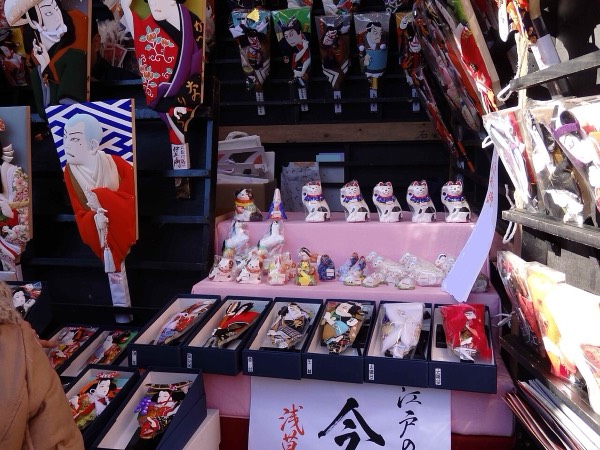
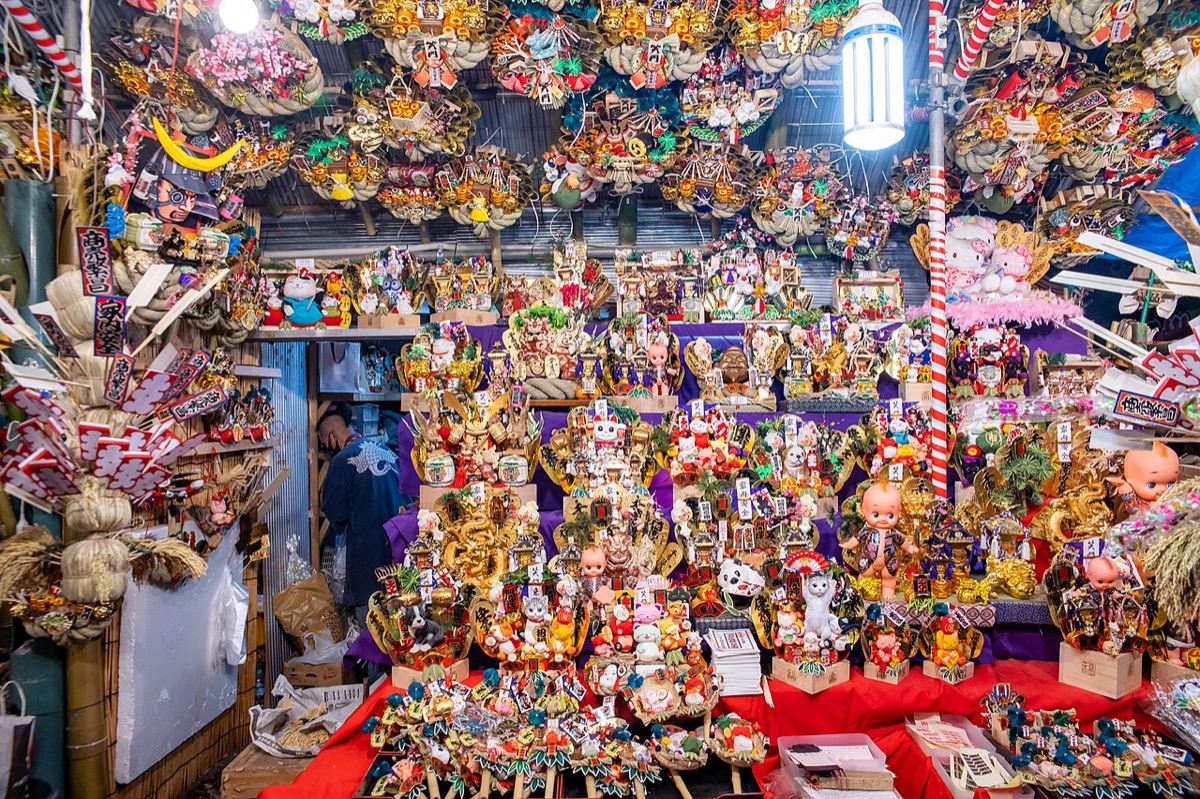
- Engi kumade (decorative kumade): decorated rakes sold by stalls on the grounds, covered with lucky symbols such as Okame masks, beckoning cats, sea bream, treasure chests and rice bales, in a huge range of sizes and prices.
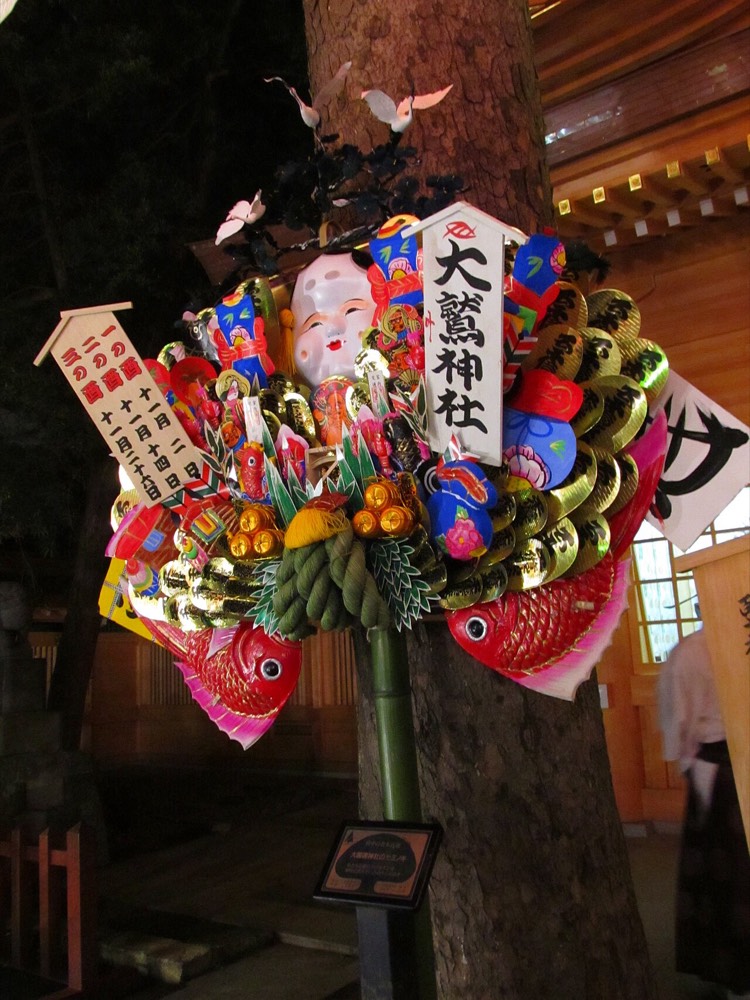
nippon.com reports that about 150 kumade stalls line the area around Otori Shrine and that roughly 700,000 to 800,000 people visit each year[4]. For many Japanese businesses, buying a kumade is an annual ritual: the custom is to bring last year's kumade back to the shrine or temple where it was bought, give thanks, and then buy a new one[3]. Many people buy a slightly bigger one each year, symbolizing a business that keeps growing.
How to Buy a Kumade: Prices, Haggling and the Hand-Clap
The short answer: choose a size and design first, then ask the price. Haggling is a traditional bit of fun but not a rule, and once a sale is made the stall staff lead a "tejime" hand-clap to bless you.
According to nippon.com, prices range from about 1,000 yen for a small kumade to several hundred thousand yen, with mid-sized pieces at 20,000 to 50,000 yen selling best[4]. Travelers buying a souvenir usually pick a palm-sized one that fits in a suitcase. Prices vary from stall to stall, so go by what the stall quotes on the day.
The traditional way to buy goes roughly like this:
- Look first, then ask: browse at the stall, pick the size and decorations you like, then ask for a price.
- Haggle (optional): if you want to follow tradition, bargain a little. When the seller says "makketa, makketa" ("I lose"), the deal is done[4].
- Leave the difference as a tip: the old-school way is to pay the original price anyway and leave the amount you bargained off as a celebratory tip (go-shugi). The stall gets its full price and the buyer looks generous, so everyone is happy[4]. The Japan Tourism Agency's commentary also mentions the custom of leaving the change to the seller[3].
- Join the hand-clap: after the sale, the staff shout a call and lead a rhythmic clap such as the "sanbon-jime" to bless you, sometimes offering a cup of sake too[3][4]. If you are the buyer, just stand at the stall and clap along.
A few practical tips:
- Not buying is fine: most stalls welcome onlookers, but leave the space right in front clear for customers who are choosing, and ask before taking close-ups.
- Bring cash: kumade stalls mostly deal in cash, so have coins and 1,000-yen notes ready. For payment habits in Japan, see the Japan cash and card payment guide.
- Carrying it home: MATCHA notes that some people hold their kumade high overhead as a sign of rising fortune[6], but be careful not to bump anyone in the crowds.
- Large kumade: if you are flying home, a big kumade is hard to take on board, so think about how you will carry it before you buy.
For basic etiquette at temples and shrines, read Japan travel etiquette first.
Tori no Ichi at Asakusa's Otori Shrine: 24-Hour Fair, Ceremony Times and Access
The short answer: Otori Shrine is where Tori no Ichi began, and in 2026 both days start with the first drum at midnight and run until midnight[1]; Ichi-no-Tori is over, and Ni-no-Tori is on November 19.
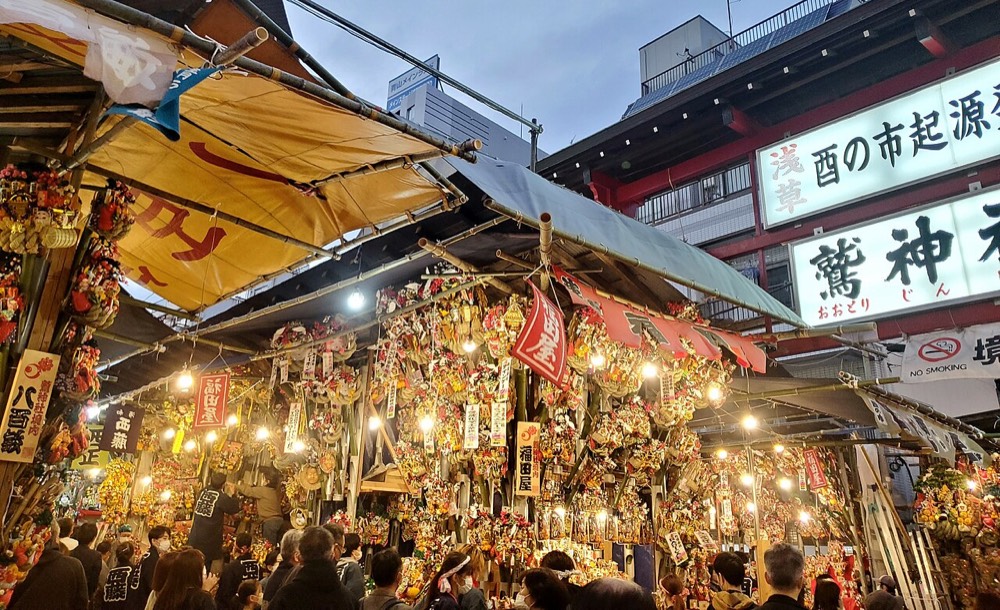
Otori Shrine's official 2026 schedule[1]:
| Event | Date | Time |
|---|---|---|
| Eve festival (Yoimiya Kaiun Fukuju-sai) | Nov 6 (Fri, ended), Nov 18 (Wed) | From 23:15 each day (reservation required to attend) |
| Tori no Ichi fair | Nov 7 (Sat, ended), Nov 19 (Thu) | 0:00 to 24:00 |
| Special Otori festival rite | Nov 7 (ended), Nov 19 | From 13:00 each day (reservation required to attend) |
| Tori no Ichi prayer service | Fair days | Anytime, offering from 5,000 yen, up to 5 people per group |
The shrine also says each kumade stall prepares one charity kumade, sold first-come, first-served from the first drum, with part of the proceeds donated to Taito City for disaster relief and other uses[1].
Otori Shrine is at 3-18-7 Senzoku, Taito City[2]:
- Iriya Station on the Tokyo Metro Hibiya Line, North Exit 3: about 7 minutes on foot (closest).
- Asakusa Station on the Tsukuba Express: about 8 minutes on foot.
- Tawaramachi Station on the Ginza Line: about 15 minutes on foot; JR Uguisudani Station, South Exit: about 20 minutes on foot.
- Asakusa Station on the Tobu, Toei Asakusa and Ginza lines: about 15 minutes.
It takes about 15 minutes to walk from the Sensoji and Kaminarimon area, so you can see Sensoji during the day and walk to Otori Shrine in the evening. Roads and sidewalks around the shrine are very crowded on fair days, so the train is the easiest option. For getting around on Tokyo's subways, see the Tokyo transport guide.
Tori no Ichi at Hanazono Shrine: Eve Festival, Night Stalls and the Sideshow Tent
The short answer: Hanazono Shrine's Otori Festival is Tori no Ichi in the middle of Shinjuku's nightlife district. The main festival is on the rooster day, with an eve festival the night before, and both nights are lively. Based on the usual pattern, that means November 6 to 7 (already over) and November 18 to 19 in 2026.
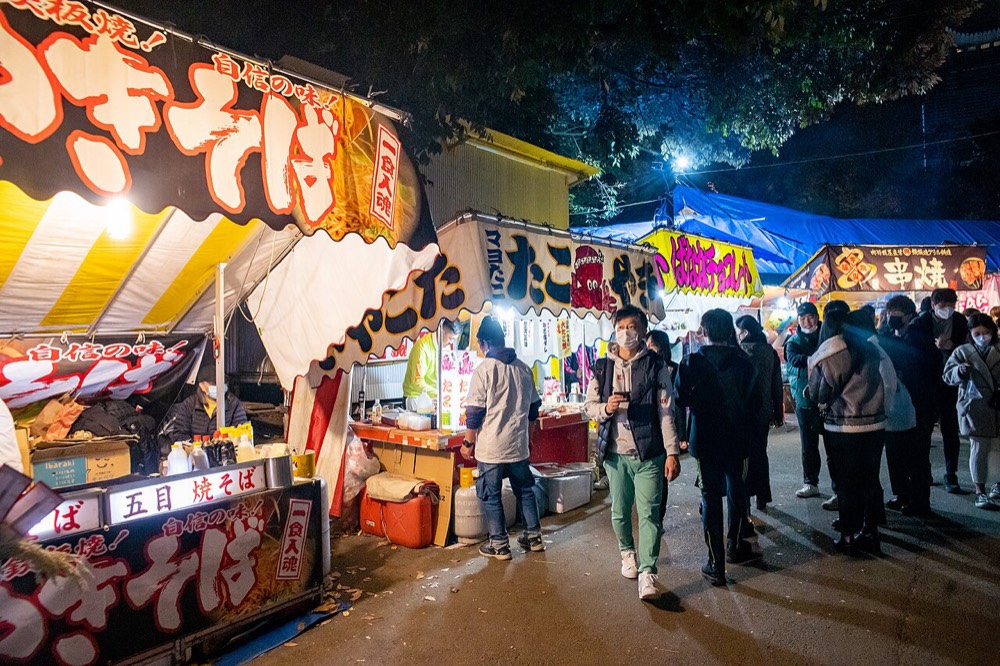
Rurubu & more's 2025 listing says the shrine grounds fill with kumade stalls, the approach lanterns go out around midnight on both the eve and main nights, entry to the grounds may be restricted when crowded (after 18:00), and the shrine's famous "misemono-goya" sideshow tent performs[5]. Treat this as past-year reference and check the official notice for 2026 times.
Access: Shinjuku-sanchome Station (Tokyo Metro and Toei Subway), about 3 minutes on foot; Shinjuku Station East Exit (JR, Odakyu, Keio), about 7 minutes on foot. The shrine has no parking[5]. Hanazono Shrine is right next to Kabukicho, so you can head straight out for a late meal in Shinjuku. For where to stay, see where to stay in Tokyo.
Okunitama Shrine in Fuchu and Other Tori no Ichi Fairs in Tokyo
The short answer: to avoid central Tokyo crowds, go to Okunitama Shrine in Fuchu, which also holds its fair on November 7 (ended) and 19 in 2026, centered on the Otori Shrine within its grounds[6].
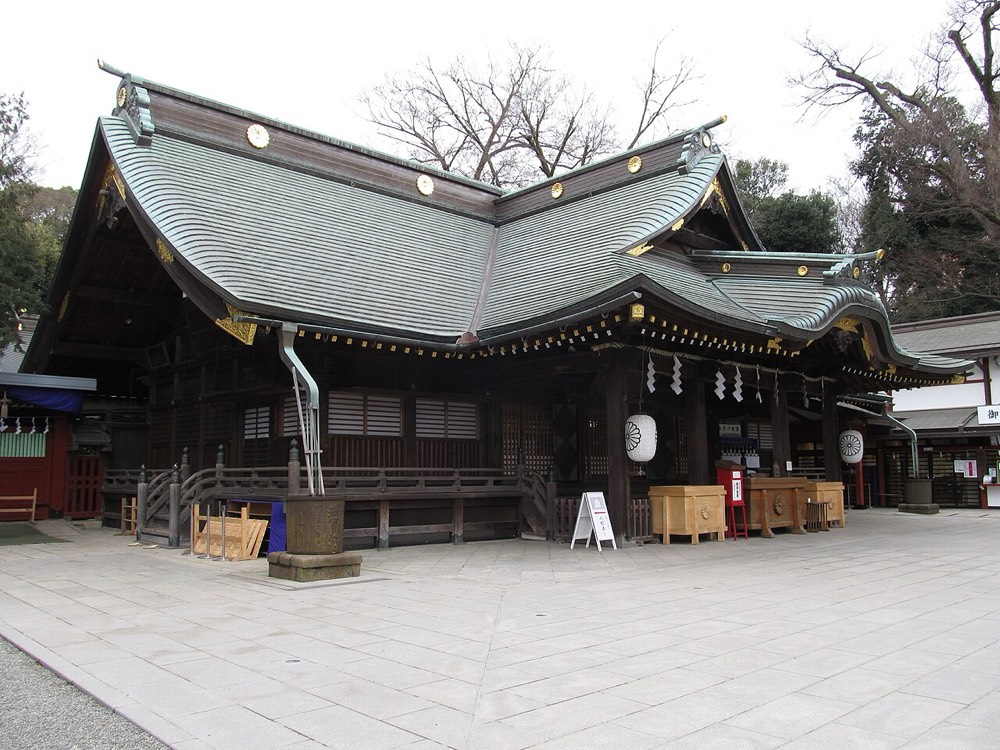
MATCHA notes that Okunitama Shrine is often listed with Asakusa's Otori Shrine and Shinjuku's Hanazono Shrine as one of the "three great Tori no Ichi of the Kanto region." It is about 5 minutes on foot from the South Exit of Fuchu Station on the Keio Line and about 5 minutes from Fuchu-Hommachi Station on the JR Nambu and Musashino lines, and a Keio Line express from Shinjuku takes about 25 to 30 minutes[6]. The shrine gives out a talisman kumade on the day; see the Okunitama Shrine website for times and offering amounts[7].
Beyond these three, many shrines across Tokyo dedicated to "Otori" hold smaller fairs on November's rooster days, such as Otori Shrine in Meguro (about 8 minutes on foot from JR Meguro Station), where a kumade market sets up on the grounds. Dates usually follow the rooster days as well, but check each shrine's own notices.
| Venue | Atmosphere | Best for |
|---|---|---|
| Otori Shrine, Asakusa | The original, biggest, open 24 hours | Those wanting the most traditional kumade market alongside Asakusa sightseeing |
| Hanazono Shrine, Shinjuku | Night festival in the city, many stalls | Those free only in the evening or staying in Shinjuku |
| Okunitama Shrine, Fuchu | Crowds more spread out, large grounds | Those who want to browse slowly and don't mind 30 extra minutes on the train |
How to Avoid Crowds at Tori no Ichi: Best Times and Final Tips
The short answer: for a quiet look at the kumade, go on a weekday morning or afternoon; for the buzz and the sound of hand-clapping, go from dusk into the night. The remaining day in 2026, Ni-no-Tori, falls on a Thursday, so daytime crowds should be lighter than on a weekend.
- Ni-no-Tori (Nov 19) is a Thursday: daytime on a weekday is a little quieter than the Saturday Ichi-no-Tori, but Asakusa and Shinjuku still get very crowded from after-work hours into the night, and you may have to queue to pray.
- Midnight opening: Otori Shrine opens with the first drum at midnight. To experience it, arrive late on November 18 and keep an eye on last-train times for the trip back.
- Wear comfortable shoes: the ground is uneven and movement is slow in crowds. Carry large bags and backpacks on your front.
- Dress warmly: Tokyo nights in November are chilly, so bring a jacket for evening browsing.
- Take your trash with you: dispose of food-stall waste in designated bins or carry it out.
November in Tokyo is also a good time for autumn leaves. For garden foliage in the city center, see Tokyo autumn leaves 2026; more Tokyo sights and seasonal events are in Tokyo travel and seasonal events.
FAQ
What are the Tori no Ichi dates in 2026? Is there a third rooster day?
November 2026 has only two rooster days: Ichi-no-Tori on Saturday, November 7 (already over) and Ni-no-Tori on Thursday, November 19, which is the only one left. Rooster days come every 12 days, and the next one falls on December 1, so there is no San-no-Tori this year. Otori Shrine in Asakusa also states on its website that this year's fair ends with Ni-no-Tori.
What time does Tori no Ichi at Asakusa's Otori Shrine start? Are stalls still open at night?
According to the shrine's official notice, each fair day runs from midnight to midnight, so the fair is open all day, and Ni-no-Tori on November 19 is the same. Kumade and food stalls are busiest in the evening and plenty of people are still there late at night, but individual stall hours vary. If you want to browse kumade at a relaxed pace, go before dusk.
How much does a first kumade cost? Do I have to haggle?
Kumade range from palm-sized entry models at about 1,000 yen to huge shoulder-carried pieces costing several hundred thousand yen. Haggling is a traditional bit of fun, not a rule, and many stalls show prices. If you do bargain, the custom is to pay the original price anyway and leave the difference as a celebratory tip for the stall.
When is Tori no Ichi at Hanazono Shrine in 2026?
Hanazono Shrine's Otori Festival follows the rooster days, so in 2026 Ichi-no-Tori (eve festival November 6, main day November 7) is already over, and Ni-no-Tori should follow the usual pattern with the eve festival on November 18 and the main day on November 19. As of November 8, we still could not confirm the 2026 notice directly on the shrine's website, so check it again before you go.
Can I visit Tori no Ichi without buying a kumade?
Yes. Most travelers go to pray, look at the kumade stalls and eat festival food, and buying a kumade is entirely optional. Just leave space in front of stalls for customers who are choosing or closing a deal, ask before taking close-up photos of kumade, and feel free to join in the clapping when a sale is sealed.
How do I get to Otori Shrine in Asakusa? Is it far from Sensoji?
The nearest station is Iriya on the Tokyo Metro Hibiya Line, about 7 minutes on foot from North Exit 3. Asakusa Station on the Tsukuba Express is about 8 minutes away, and it takes about 15 minutes from the Asakusa stations near Sensoji. The shrine is in Senzoku, north of Sensoji, so both fit easily into the same day.
Sources
- Otori Shrine: This Year's Tori no Ichi: 2026 Ichi-no-Tori and Ni-no-Tori dates, hours, eve rite (reservation required) and special rites, prayer fee (rechecked November 8, 2026)
- Otori Shrine: Access: Address and walking times from each station
- Japan Tourism Agency Multilingual Commentary Database: Tori no Ichi: Origins, the third rooster day belief, kumade haggling and returning old rakes
- nippon.com: Tori no Ichi: Kumade price range, haggling and tips, hand-clapping, stall numbers and crowds
- Rurubu & more: Hanazono Shrine Otori Festival (Tori no Ichi): Eve and main festival format, entry restrictions, access (2025 information)
- MATCHA: Okunitama Shrine Tori no Ichi 2026: 2026 dates and access for Okunitama Shrine in Fuchu
- Okunitama Shrine: Tori no Ichi: Talisman kumade and day-of notices
- Hanazono Shrine official website: Otori Festival notices
Fares, opening hours and event dates can change. Information checked on 2026.11.08; please confirm with official sources before you go.