Tokyo December Events 2026: Day-by-Day Calendar, Hagoita-ichi, Setagaya Boro-ichi, Gishisai, Weather and Year-End Closures
Tokyo December 2026 events by date: Odaiba fireworks every Saturday, Sengakuji Gishisai, Setagaya Boro-ichi, Hagoita-ichi and winter solstice yuzu baths, plus weather.
Quick answer
Tokyo in December 2026: Odaiba Rainbow Fireworks on December 5, 12, 19 and 26 at 19:00 for about 5 minutes, free; Sengakuji Gishisai on December 12–14, with the costumed procession arriving around 15:30 on the 14th; Setagaya Boro-ichi on December 15–16, 9:00–20:00; Sensoji Hagoita-ichi on December 17–19; and yuzu baths at public bathhouses on the winter solstice, December 22. Tokyo averages 7.7°C in December, normal snowfall is 0 cm, and the sun sets around 16:30.
Tokyo December events go well beyond Christmas lights. In December 2026, fireworks light up Odaiba every Saturday night, and mid-month brings a run of three year-end fairs and festivals handed down from the Edo period: Sengakuji Gishisai, Setagaya Boro-ichi and Sensoji Hagoita-ichi. On the winter solstice, December 22, you can soak in a yuzu bath at a public bathhouse. This guide lays out Tokyo's December events by date with admission, hours and access, then covers December weather, the chance of snow, sunset times and how to plan early, mid and late December, so you can check your travel dates and see exactly what you will catch.
Tokyo December events calendar: 2026 day by day
Tokyo's regular December events fall between December 5 and 22, and the end of the month switches to year-end shopping and New Year's Eve. The table below is in date order; free events need no reservation.
| Date (2026) | Event | Location | Hours | Cost |
|---|---|---|---|---|
| Nov 25–Dec 6 | Rikugien night autumn-leaf illumination | Komagome, Bunkyo | 18:00–20:30 | Night ticket 1,000 yen in advance |
| Dec 5 (Sat) | Odaiba Rainbow Fireworks, show 1 | Odaiba Seaside Park | From 19:00, about 5 min | Free |
| Dec 12 (Sat) | Odaiba Rainbow Fireworks, show 2 | Odaiba Seaside Park | From 19:00, about 5 min | Free |
| Dec 12–14 (Sat–Mon) | Sengakuji Winter Gishisai | Takanawa, Minato | Temple 7:00–20:00 | Temple free; museum 500 yen |
| Dec 14 (Mon) | Gishi procession arrives at Sengakuji | Takanawa, Minato | Around 15:30 (may shift) | Free |
| Dec 15–16 (Tue–Wed) | Setagaya Boro-ichi | Setagaya 1-chome | 9:00–20:00 | Free |
| Dec 17–19 (Thu–Sat) | Sensoji Hagoita-ichi | Asakusa, Taito | 9:00–19:30 (until 19:00 on the 19th) | Free entry |
| Dec 19 (Sat) | Odaiba Rainbow Fireworks, show 3 (music fireworks) | Odaiba Seaside Park | From 19:00, about 5 min | Free |
| Dec 22 (Tue) | Winter solstice: yuzu baths, Sensoji star memorial | Bathhouses across Tokyo, Sensoji | Varies by bathhouse | Bathhouse adult 600 yen |
| Dec 24–26 | Beach projection mapping | Odaiba Seaside Park | See official announcement | See official announcement |
| Dec 25 | Last day of most Christmas markets | Shiba Park, Azabudai Hills and others | Varies by market | Varies by market |
| Dec 26 (Sat) | Odaiba Rainbow Fireworks, show 4 | Odaiba Seaside Park | From 19:00, about 5 min | Free |
| Dec 28–31 | Year-end shopping crowds at Ameyoko | Ueno | Varies by shop | — |
| From Dec 29 | Government offices, many museums and small shops close for the holidays | All of Tokyo | — | — |
| Dec 31 (Thu) | Temple bells, Odaiba New Year fireworks and drone show | Temples, Odaiba | See each organizer | — |
Sources: Hagoita-ichi[1], Boro-ichi[3], Gishisai[4], Odaiba fireworks[5], Odaiba year-end events[7], winter solstice[8]. Prices are in Japanese yen.
If you only remember one thing: December 14 to 19, six days in a row, is the densest stretch of traditional events in Tokyo, with something on every single day.
Sensoji Hagoita-ichi (December 17–19): Edo's liveliest year-end market
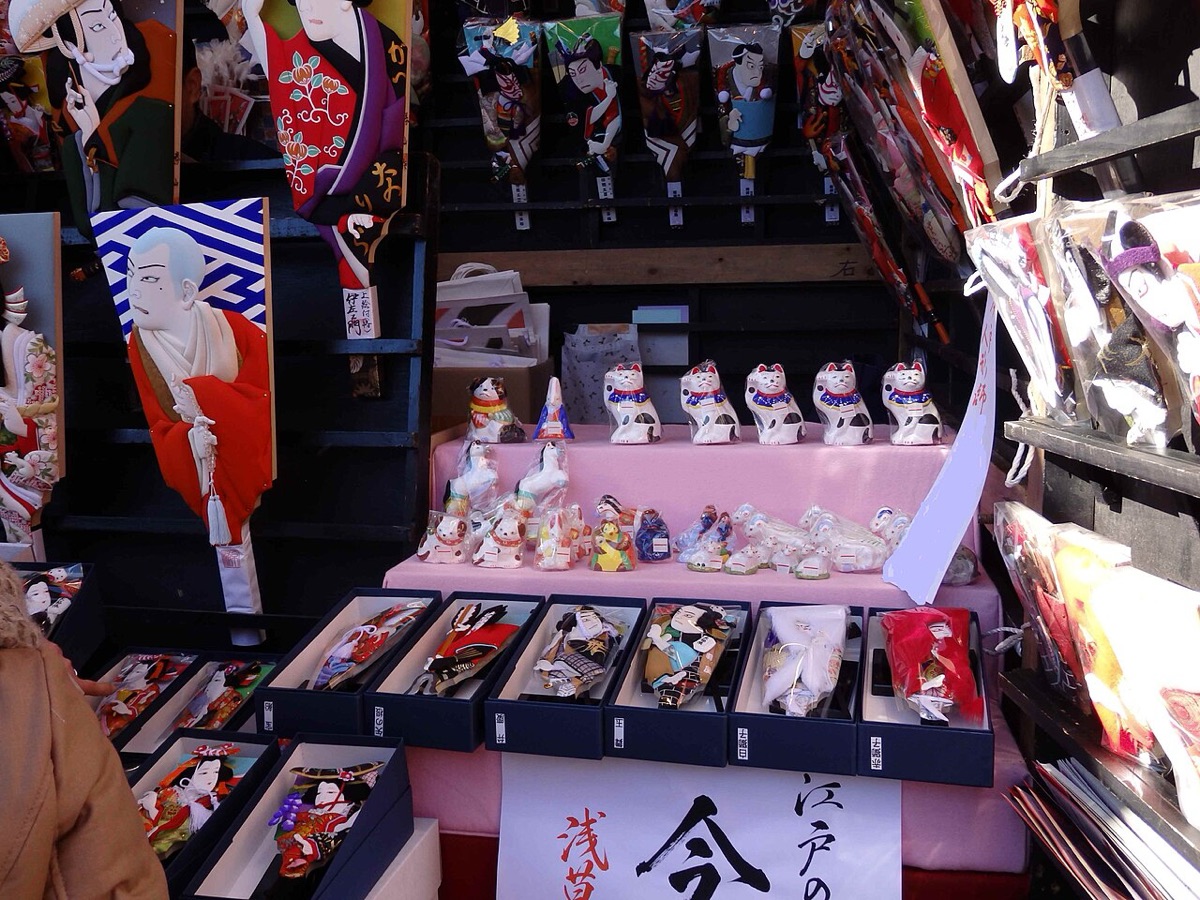
Hagoita-ichi is Sensoji's year-end market, held every December 17 to 19. In 2026 it runs 9:00–19:30, closing at 19:00 on the final day[1]. Entry is free, and dozens of battledore stalls fill the temple grounds, so you can browse without buying.
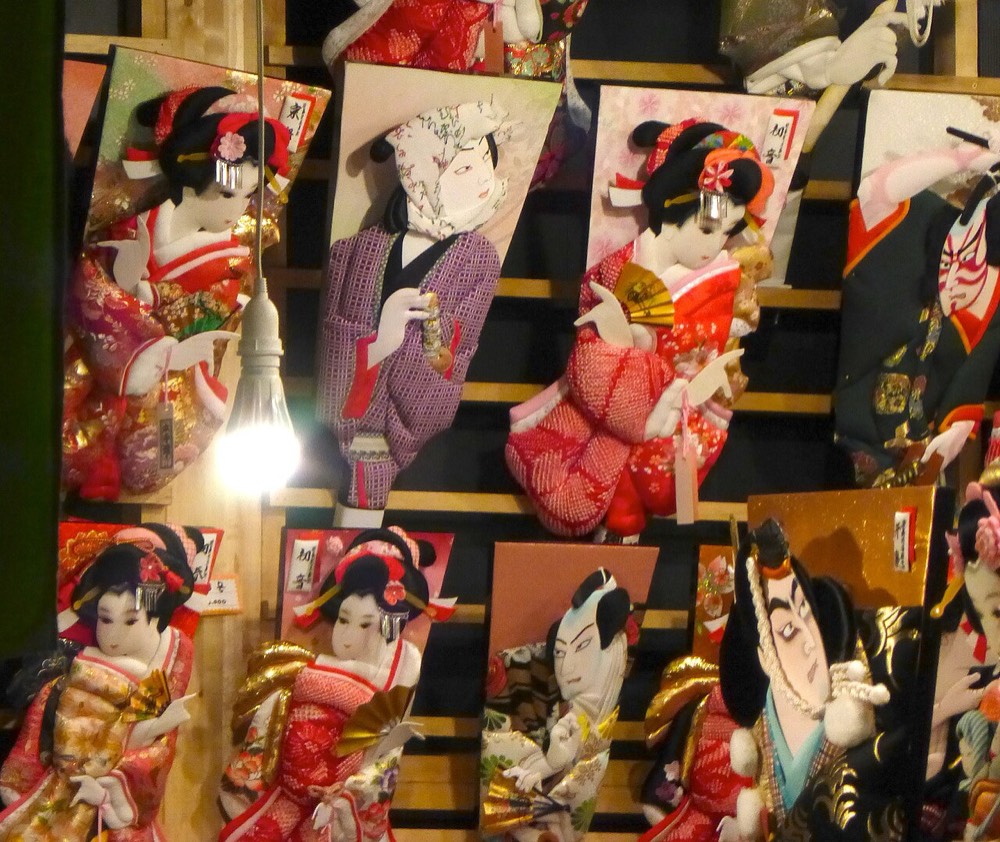
According to Sensoji, the 18th of each month is Kannon's fair day, and December 18 is called "Osame no Kannon," the last fair day of the year. In the Edo period, merchants counting on the crowds of the 17th and 18th set up stalls of New Year goods in the grounds, creating a "year-end market." Late in the Edo period, the custom of giving a battledore to ward off evil when a daughter was born spread, battledore stalls multiplied, and the market became today's Hagoita-ichi[2].
What to look for:
- Oshie battledores: fabric and cotton padding form three-dimensional kabuki actors and geisha. Large ones are hung in an entrance hall; small ones make good souvenirs. Prices vary widely by size and craftsmanship, so ask before you decide.
- Sanbon-jime clapping: after a sale, the stallholder leads the buyer in a rhythmic celebratory clap, which is fun to watch even from the side.
- Battledore memorial service: old battledores can be brought in for a memorial service, accepted 10:00–17:00 (until 14:30 on the last day)[1].
- Osame no Kannon: the temple notes that December 18 draws especially large numbers of visitors. For fewer people, go on the morning of the 17th.
Get off at Asakusa Station on the Ginza Line, Toei Asakusa Line, Tobu Line or Tsukuba Express. For how to explore the temple, Kaminarimon and Nakamise, see the Sensoji Asakusa guide.
Setagaya Boro-ichi (December 15–16): a flea market with over 440 years of history
Setagaya Boro-ichi is an open-air market held for two days twice a year, December 15–16 and January 15–16, along "Boro-ichi Street" in Setagaya 1-chome, from 9:00 to 20:00, with free entry[3]. In 2026 the December dates fall on a Tuesday and Wednesday; the next market is January 15 (Fri) and 16 (Sat), 2027.
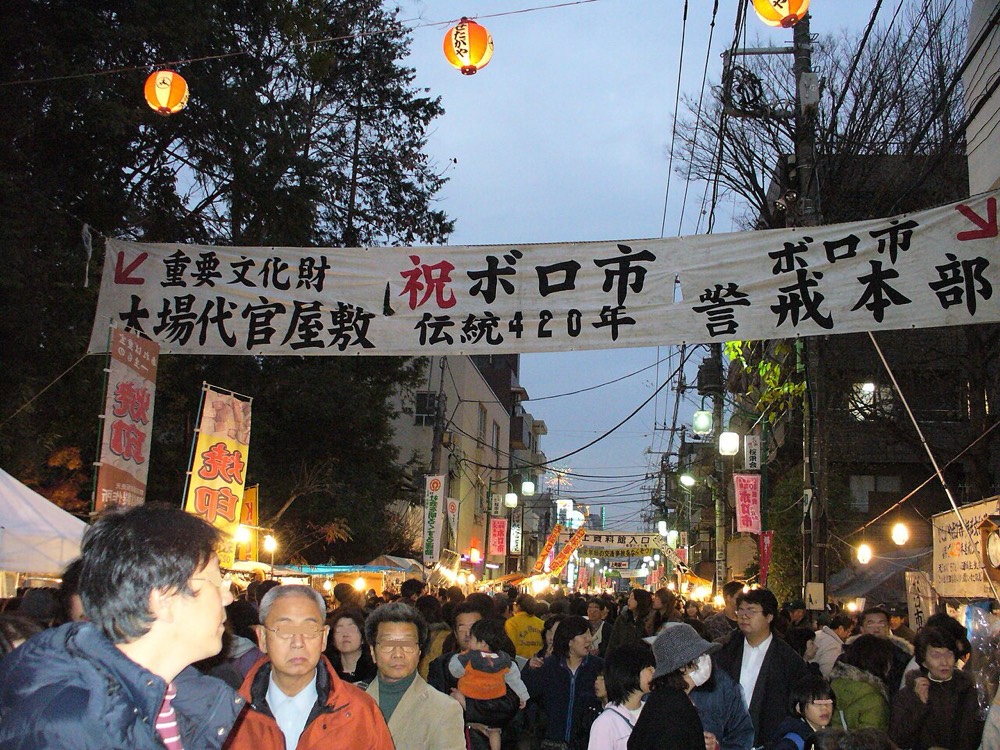
Setagaya City traces the market back to a "free market" opened in Setagaya-shinjuku by Hojo Ujimasa in 1578 (Tensho 6), which later became a year-end fair; today about 200,000 people visit each day[3]. Stalls sell antiques, second-hand kimono, old tools, pottery and plants, along with plenty of food stalls. It feels like a local year-end market rather than a tourist market.
Before you go:
- Access: take the Tokyu Setagaya Line to Kamimachi or Setagaya Station, about a 3-minute walk. From Shibuya, take the Tokyu Den-en-toshi Line to Sangen-jaya and change to the Setagaya Line. There is no parking.
- Timing: mornings after opening are quieter and better for browsing; the after-work evening hours are the most crowded. Vehicle restrictions apply around the venue from 7:00 to 22:00.
- Rules: the city asks visitors to avoid eating while walking where possible and not to eat on private property; there are no rubbish bins, so take your rubbish with you[3].
- Weather: hours may be shortened or the market cancelled in bad weather, which the city announces on its website and on the Setagaya General Branch Office's X account.
Sengakuji Gishisai (December 12–14): the anniversary of the 47 ronin
Sengakuji holds the graves of Asano Naganori, lord of the Ako domain, and his 47 loyal retainers, and every year around December 14 it holds Gishisai to mark the retainers' night raid on Kira's mansion on the 14th day of the 12th month of Genroku 15 (old calendar). The 2026 Winter Gishisai runs from December 12 (Sat) to 14 (Mon); the temple is open 7:00–20:00 on all three days and the Ako Gishi Memorial Museum 9:00–18:00[4].
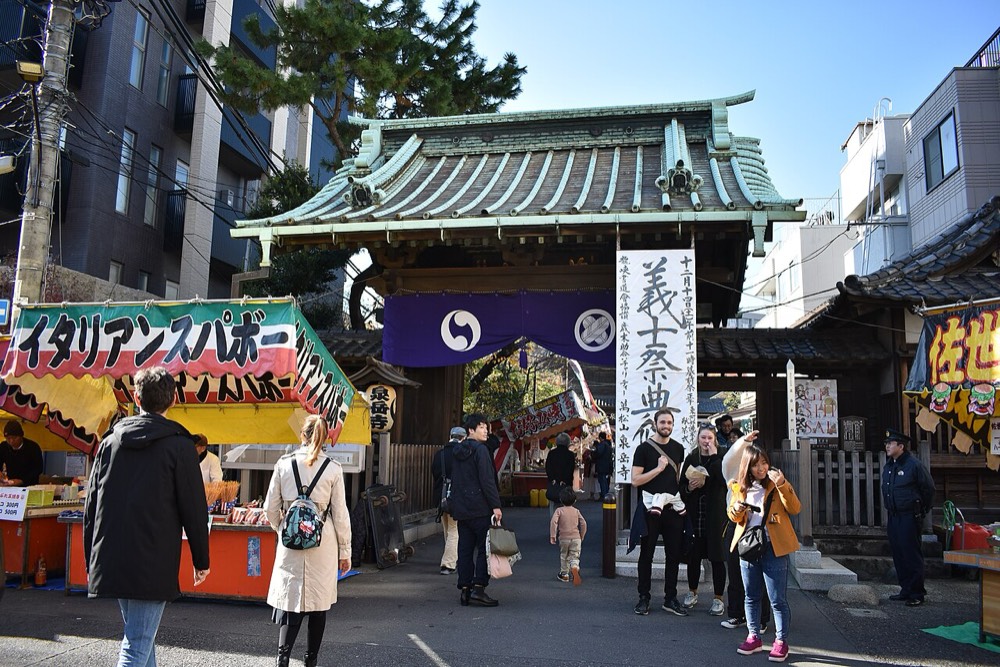
Highlights during Gishisai:
- Incense at the graves of the 47: a bundle of incense costs 500 yen; buy it at the temple and offer it at the graves[4].
- Ako Gishi Memorial Museum: 500 yen for adults, displaying materials related to the retainers.
- Gishi procession: Sengakuji announces that a procession dressed as the retainers, organized by Zaikai Nisei Gakuin, is expected to arrive at the temple around 15:30 on December 14; the time may shift[4].
Sengakuji is in Takanawa, Minato. The nearest station is Sengakuji Station on the Toei Asakusa and Keikyu lines, and the temple is a short walk from there. Ako City in Hyogo Prefecture holds its own "Ako Gishisai" on the same day; it is a separate event, so do not mix them up when looking things up.
Winter solstice yuzu baths (December 22): a Tokyo bathhouse for 600 yen
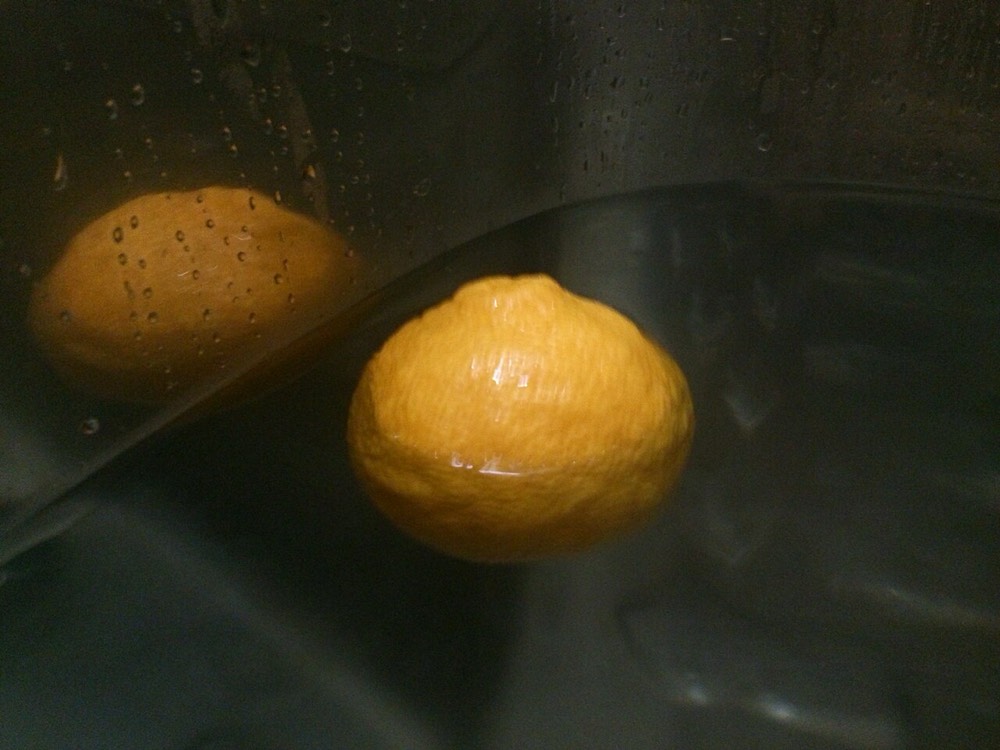
The 2026 winter solstice falls on December 22 (Tue); the National Astronomical Observatory of Japan gives the moment of the solstice as 5:50 a.m.[8] Japanese custom is to take a "yuzu bath" on the solstice, and many Tokyo public bathhouses (sento) float whole yuzu citrus fruits in their baths that day. The scent is strong, and it is a solstice tradition any traveler can join.
Costs and how to do it:
| Item | Price | Notes |
|---|---|---|
| Bathhouse admission (adults, 12 and over) | 600 yen | Tokyo's set maximum, raised from 550 yen on August 1, 2026[9] |
| Nerima bathhouses' yuzu bath on December 22 | 480 yen | Discounted price on seasonal-bath days in Nerima; other wards may not offer this[9] |
| Towel, shampoo | Varies by bathhouse | Many bathhouses rent or sell them; bringing your own is cheapest |
- Check the "yuzu-yu" dates on the bathhouse's website or the notice at its entrance; some bathhouses add yuzu for two or three days around the solstice.
- Take off your shoes at the entrance and put them in a shoe locker, then pay at the counter or ticket machine.
- Wash thoroughly at the washing area before getting into the bath, and keep your towel out of the water.
- If you have tattoos, rules vary by bathhouse, so ask at the counter.
On the same day, Sensoji holds the "Hoshi Kuyo-e" star memorial service in the main hall to pray for protection from misfortune in the coming year; those wanting a star memorial amulet can apply at the main hall until 2 p.m. that day[12]. If you prefer a large hot-spring facility to a sento, see the Tokyo day onsen guide.
Odaiba Rainbow Fireworks (Saturdays in December): Tokyo's only winter fireworks in the city
In 2026 the "Odaiba Rainbow Fireworks" take place on four Saturdays, December 5, 12, 19 and 26, starting at 19:00 and lasting about 5 minutes each time. They launch off the Statue of Liberty replica in Odaiba and are free to watch[5][6]. The December 19 show is set to music, making it the pick of the four.
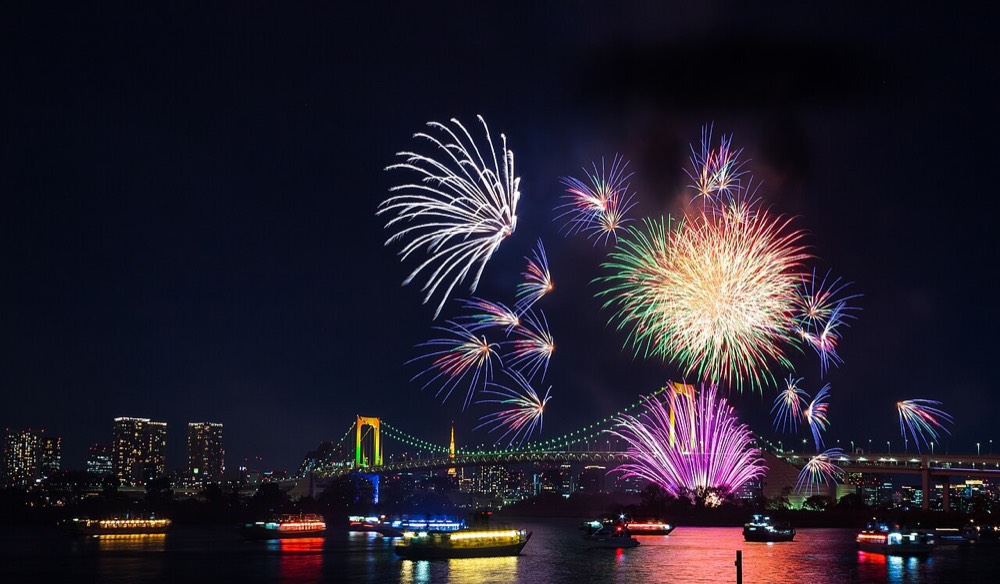
- Access: Yurikamome to Odaiba-kaihinkoen or Daiba Station, or the Rinkai Line to Tokyo Teleport Station. There is no dedicated parking, and organizers ask visitors to use public transport.
- Where to watch: the beach and promenades of Odaiba Seaside Park are the most direct; you can also see the show from the sea-facing side of the shopping malls. There is no official viewing area.
- Only 5 minutes: being in place by 18:45 is enough. Crowds surge to the stations right after, so you may prefer to have dinner nearby first and leave later.
- Cancellation: the show is called off in bad weather, possibly on the day itself; check the official X account (@odaiba_rainbow) before you head out[6].
The Tokyo Metropolitan Government has also announced beach projection mapping at Odaiba Seaside Park on December 24–26 and 31, and on December 31 "TOKYO NEW YEAR'S EVE '26/27" with fireworks, a drone show and a fountain show; organizers said times and viewing details would be announced in late November[7]. For other Odaiba sights and transport, see the Odaiba guide.
December events with their own guides: Christmas, ginkgo and autumn leaves, Ameyoko and New Year's Eve
The following events have dedicated guides on this site; here are just the key dates:
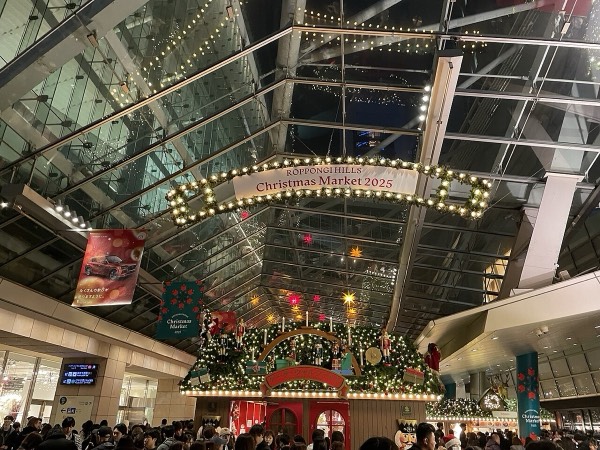
- Christmas markets: markets at Shiba Park, Shin-Toyosu, Azabudai Hills, Roppongi Hills and elsewhere mostly run until December 25, and some charge admission. For dates and prices, see Tokyo Christmas Markets 2026.
- Christmas illuminations: most displays run until December 25, with some lasting into January. The new walk-through light show in Yoyogi Park, debuting in 2026, runs until January 11, 2027 with timed tickets; see Yoyogi Forest of Lights 2026, and for a comparison across cities see Japan Christmas Illuminations 2026.
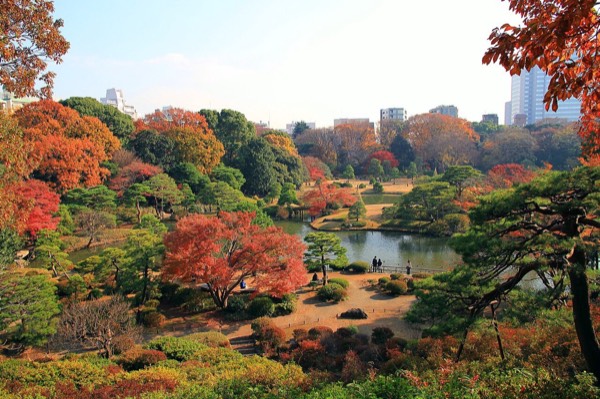
- Ginkgo and autumn leaves: autumn 2026 was warm, so autumn colors in central Tokyo gardens have been pushed into early-to-mid December, and Rikugien's night illumination runs until December 6[13]. For the latest peak timing, see Tokyo Autumn Leaves 2026 and Meiji Jingu Gaien ginkgo.
- Year-end shopping at Ameyoko: December 28 to 31 is peak time for buying New Year food, and at its busiest it is hard even to walk. For timing tips, see the Ueno Ameyoko guide.
- New Year's Eve: temple bells at Zojoji and Sensoji, first shrine visits at Meiji Jingu and overnight trains are covered in Tokyo New Year Countdown 2026–2027.
Tokyo December weather: temperatures, chance of snow, sunset and what to wear
Tokyo in December is mostly sunny and dry, around 12°C in the day and 4°C in the early morning, with almost no snow in the city. Below are the Japan Meteorological Agency's 1991–2020 normals and the National Astronomical Observatory's 2026 sunset times[10][11].
| Item | Tokyo, December | Compare: Tokyo, January |
|---|---|---|
| Mean temperature | 7.7°C | 5.4°C |
| Mean daily high | 12.0°C | 9.8°C |
| Mean daily low | 3.8°C | 1.2°C |
| Precipitation | 57.9 mm | 59.7 mm |
| Sunshine | 174.4 hours | 192.6 hours |
| Total snowfall | 0 cm | 4 cm |
| Sunset (2026) | 16:28 on Dec 1–13, 16:37 on Dec 31 | — |
Does it snow in Tokyo in December?
In the normals, Tokyo's December snowfall and maximum snow depth are both 0 cm, while January and February each see about 4 cm[10]. In other words, snow in the city in December is unusual, and even when flakes fall they rarely settle. To see snow in December, head toward Hokkaido, Tohoku or Niigata; for where to go, see the Japan December travel guide.
Early sunsets: how to plan your day
In early December the sun sets in Tokyo at 16:28, the earliest of the year[11]. Schedule outdoor temples and gardens before 15:00, then move on to illuminations, fireworks or Christmas markets in the evening so no time is wasted.
What to wear in Tokyo in December
- Daytime in the city: a thermal base layer plus a sweater or fleece, with a windproof coat on top.
- Evenings at fireworks or illuminations: standing by the sea or in a park for 30 minutes or more gets cold, so add a scarf and gloves; a hat helps too. Heat packs are sold at convenience stores and drugstores.
- Indoors: trains and department stores are heated strongly, so choose a front-opening coat that is easy to take off.
For layering advice and a full packing list, see the Japan winter clothing guide.
Early, mid or late December: which to choose and who each suits
If you can only pick one stretch, December 14 to 19 offers the most: six straight days with a Tokyo-only traditional event each day, before Christmas week and the year-end hotel rush.
| Period | Events you can catch | Pros | Watch out for |
|---|---|---|---|
| Early (1–10) | Late autumn leaves and ginkgo, Rikugien illumination (until the 6th), Christmas markets, Odaiba fireworks (5th) | Autumn colors and Christmas at the same time; hotels relatively easy to book | Traditional festivals haven't started; leaf timing varies each year |
| Mid (11–20) | Gishisai, Boro-ichi, Hagoita-ichi, Odaiba fireworks (12th, 19th), Christmas lights | Densest run of events; on the 19th you can do Hagoita-ichi and the music fireworks in one day | Boro-ichi and the Gishi procession fall on weekdays, so plan around the dates |
| Late (21–28) | Winter solstice yuzu baths, Christmas Eve, Odaiba projection mapping and fireworks (26th), Ameyoko year-end crowds | Peak Christmas atmosphere | Illumination tickets are priciest and busiest on the 23rd–25th; shops start closing from the 28th |
| Year-end (29–31) | Year-end shopping, temple bells, New Year's Eve events | See how Japanese people spend the year's end | Museums, small shops and government offices closed; transport and hotels at their most expensive |
Who it suits, and who it doesn't
- Suits: anyone curious about how Japan celebrates the end of the year, fans of markets and antiques, repeat visitors to Tokyo who want to skip the usual sights, and travelers on a budget (most events here are free).
- Less suited: those who only want snow (Tokyo almost never sees it in December), anyone who hates crowds on December 29–31, and travelers who want to visit museums or galleries after the 29th.
Sample itinerary: Saturday, December 19, Hagoita-ichi plus Odaiba music fireworks
December 19 is the last day of Hagoita-ichi and also the night of the Odaiba music fireworks, so both fit into one day:
| Time | Plan | Cost guide |
|---|---|---|
| 9:30 | Visit Sensoji and browse Hagoita-ichi (crowds build after noon) | Free entry |
| 11:30 | Lunch in Asakusa | Depends on restaurant |
| 13:00 | Subway to Ueno and stroll Ameyoko (before the year-end peak, still walkable) | — |
| 15:30 | Head to Odaiba, explore the seaside park and malls | Fare depends on route |
| 16:30 | Watch the sunset and Rainbow Bridge from Odaiba Seaside Park | Free |
| 17:30 | Dinner in Odaiba | Depends on restaurant |
| 18:45 | Find a spot on the Odaiba Seaside Park beach | — |
| 19:00 | Music fireworks (about 5 minutes) | Free |
Another combination (December 14–15): on the morning of the 14th, offer incense at Sengakuji and visit the museum (1,000 yen in total), then return to the temple before 15:30 to wait for the Gishi procession; early on the 15th, take the Setagaya Line to Boro-ichi, finish browsing before noon and head back into the city. The event costs for both days come to under 2,000 yen; most of your spending will be on transport and meals.
Before you go: check late-December opening hours
- From December 29: Japanese government offices close December 29 to January 3, and many museums, galleries and independently run ramen shops and restaurants close from late December into the New Year, with dates varying by venue. Ueno Zoo, for example, is closed December 29 to January 1[14]. For bank, post office and shop closing patterns, see the Japan New Year guide.
- Big markets on weekdays: in 2026 Boro-ichi falls on a Tuesday and Wednesday, and the Gishi procession on a Monday, so match your dates before booking time off or planning your days.
- Cash: market stalls may not take cards or e-money, so carrying some coins and 1,000-yen notes is the safe choice.
- Weather cancellations: the Odaiba fireworks and Boro-ichi may be cancelled or shortened on the day in bad weather, so check official announcements before setting out.
FAQ
What festivals are on in Tokyo in December 2026, and on which dates?
Tokyo's traditional December events cluster mid-month: Sengakuji Gishisai on December 12–14 (with the costumed procession on the afternoon of the 14th), Setagaya Boro-ichi on December 15–16 and Sensoji Hagoita-ichi on December 17–19. Odaiba Rainbow Fireworks go off at 19:00 on four Saturdays, December 5, 12, 19 and 26, and public bathhouses offer yuzu baths on the winter solstice, December 22.
Does it snow in Tokyo in December?
Rarely. In the Japan Meteorological Agency's 1991–2020 normals, Tokyo's December snowfall and maximum snow depth are both 0 cm; January and February each average about 4 cm of snowfall. Seeing snow in central Tokyo in December is a matter of luck, so head to Hokkaido, Tohoku or Niigata if snow is the goal.
How cold is Tokyo in December, and what should I wear?
Tokyo averages 7.7°C in December, with daytime highs around 12°C and early-morning lows around 4°C. Most days are sunny and dry. Wear a thermal base layer with a sweater or fleece and a windproof coat; for fireworks or illuminations you will stand outside for a while, so add a scarf, gloves and heat packs.
Are the Odaiba fireworks in December free, and what time do they start?
Yes, they are free and need no reservation. In 2026 the Odaiba Rainbow Fireworks launch off Odaiba Seaside Park on December 5, 12, 19 and 26 (all Saturdays) at 19:00 and last about 5 minutes; the December 19 show is set to music. They can be cancelled on the day in bad weather, so check the official X account before heading out.
What closes in Tokyo in late December?
Japanese government offices close from December 29 to January 3, and many museums, galleries and independently run restaurants close from late December into the New Year; Ueno Zoo, for example, is closed December 29 to January 1. Department stores and convenience stores mostly stay open, though often with shorter hours, so check official sites or Google Maps.
Sources
- GO TOKYO: Hagoita-ichi: December 17–19, 2026, 9:00–19:30 (until 19:00 on the last day), hours for the battledore memorial service (checked November 28, 2026)
- Sensoji: Osame no Kannon Ennichi / Hagoita-ichi: Origins of the year-end market, how battledores became central, number of stalls and items offered
- Setagaya City: Setagaya Boro-ichi: December 15–16 and January 15–16, 9:00–20:00, venue, access, traffic restrictions and rules (page updated October 29, 2026)
- Sengakuji: Ako Gishisai: Winter Gishisai December 12–14, 2026, temple and museum hours, museum 500 yen, incense 500 yen, procession arriving around 15:30 on the 14th
- GO TOKYO: Odaiba Rainbow Fireworks 2026: Four Saturdays in December, free, music fireworks on the 19th, venue and access
- Odaiba Rainbow Fireworks 2026 official site: Starts 19:00 for about 5 minutes, bad-weather cancellation and same-day announcements
- Tokyo Metropolitan Government press release (October 26, 2026): Odaiba Seaside Park projection mapping on December 24–26 and 31, and TOKYO NEW YEAR'S EVE '26/27
- National Astronomical Observatory of Japan: 2026 calendar, 24 solar terms: Winter solstice 2026 on December 22 at 5:50
- Nerima City: public bath fees and seasonal baths: Tokyo adult bathhouse fee 600 yen from August 1, 2026; December 22 yuzu bath and discounted price in Nerima
- Japan Meteorological Agency: Tokyo climate normals (1991–2020): December mean, high and low temperatures, precipitation, sunshine and snowfall
- National Astronomical Observatory of Japan: Tokyo sunrise and sunset, December 2026: December sunset 16:28–16:37
- Sensoji: Hoshi Kuyo-e: Star memorial service on the winter solstice and how to apply
- Tokyo Metropolitan Park Association: Rikugien night autumn-leaf viewing: 2026 illumination dates and ticket prices
- Ueno Zoo: hours, closing days and admission: Closed December 29 to January 1
Fares, opening hours and event dates can change. Information checked on 2026.11.28; please confirm with official sources before you go.