Tokyo Ginkgo 2026: Meiji Jingu Gaien Ginkgo Avenue Peak, Festival and Other Ginkgo Spots
Tokyo ginkgo 2026: peak forecast and access for the Meiji Jingu Gaien ginkgo avenue, plus Showa Kinen Park, Hachioji, UTokyo Hongo and Koishikawa.
Quick answer
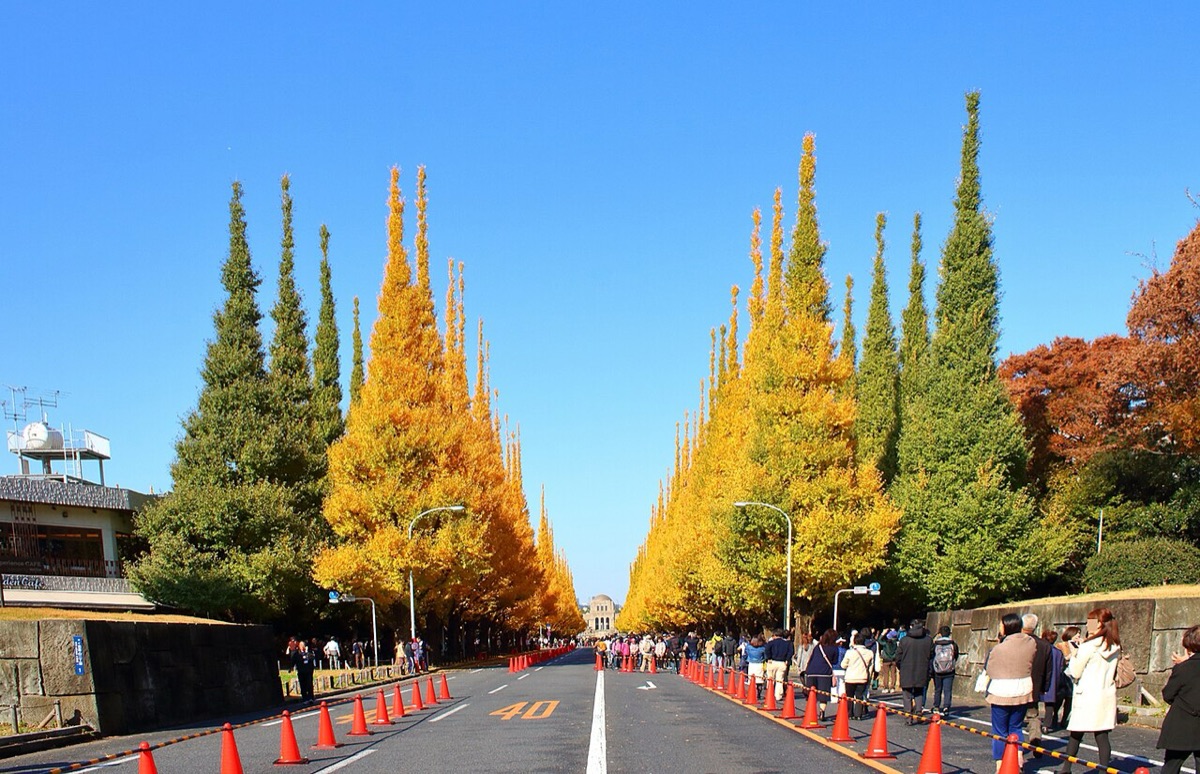
Tokyo's signature ginkgo spot is the Meiji Jingu Gaien ginkgo avenue: about 300 m from the Aoyama-dori entrance to the circular road, with 146 ginkgo trees in four rows, usually at their yellowest from late November to early December. Weathernews forecasts the 2026 peak at Gaien from around November 29, with leaves starting to fall around December 13. As of October 22, the 2026 ginkgo festival and light-up have not been announced. Alternatives include Showa Kinen Park (autumn leaves festival and night light-up, October 29 to November 29) and the Hachioji Ginkgo Festival (November 21 to 22).
If you want to see Tokyo ginkgo trees, the top pick is easy: the ginkgo avenue (Icho Namiki) at Meiji Jingu Gaien. Every late autumn, 146 ginkgo trees beside Aoyama-dori turn yellow at the same time, forming a straight golden tunnel. This guide covers the 2026 peak forecast for the Meiji Jingu Gaien ginkgo avenue, how to get there, when to go to avoid crowds and the latest on the ginkgo festival. It also compares other Tokyo ginkgo spots, including Showa Kinen Park, Hachioji, the University of Tokyo's Hongo campus and Koishikawa Botanical Garden, so you can pick one or link several into a ginkgo route.
When is Tokyo's ginkgo peak in 2026?
In short: ginkgo trees in central Tokyo are usually at their yellowest from late November to early December; suburbs such as Tachikawa and Hachioji are a little earlier, around mid to late November. Weathernews forecasts the 2026 peak at the Meiji Jingu Gaien ginkgo avenue from around November 29, with leaves starting to fall around December 13[2]. Walkerplus lists the usual peak at Gaien as mid-November to early December, with color starting in mid-November[3].
The two differ on which day counts as the peak. In practice:
- Mid-November: leaves turn from green to yellow-green, starting at the treetops. Good for avoiding crowds and photographing gradients.
- Late November to the first week of December: most trees are golden. This is the busiest period, and weekends are very crowded.
- Mid-December: leaves fall in large numbers and carpet the ground. The "ginkgo carpet" is photogenic, but the trees thin out.
GO TOKYO also notes that Tokyo's foliage shifts by one to two weeks each year depending on temperature[5]. A field report on October 19 described Gaien as starting to color slightly, and one on October 21 said the color change had begun[2], so it is still in the early stage. Check live foliage updates on Weathernews or tenki.jp about a week before you go. To combine ginkgo and maple viewing, see Japan autumn leaves 2026 by region.
What makes the Meiji Jingu Gaien ginkgo avenue special? The design of 146 trees
In short: the Gaien ginkgo avenue is a deliberately designed landscape boulevard running from the Aoyama-dori entrance to the circular road around the central plaza. It is about 300 m long, with 146 ginkgo trees planted in four rows at 9 m intervals[1].
According to Minato City, the trees were raised from 1908 and planting was completed in 1923. The ground and trees are higher at the Aoyama-dori end and gradually lower toward the gallery, using perspective so the Meiji Memorial Picture Gallery at the far end appears framed right in the middle of the avenue[1]. The classic shot is taken near the Aoyama-dori entrance, looking toward the gallery.
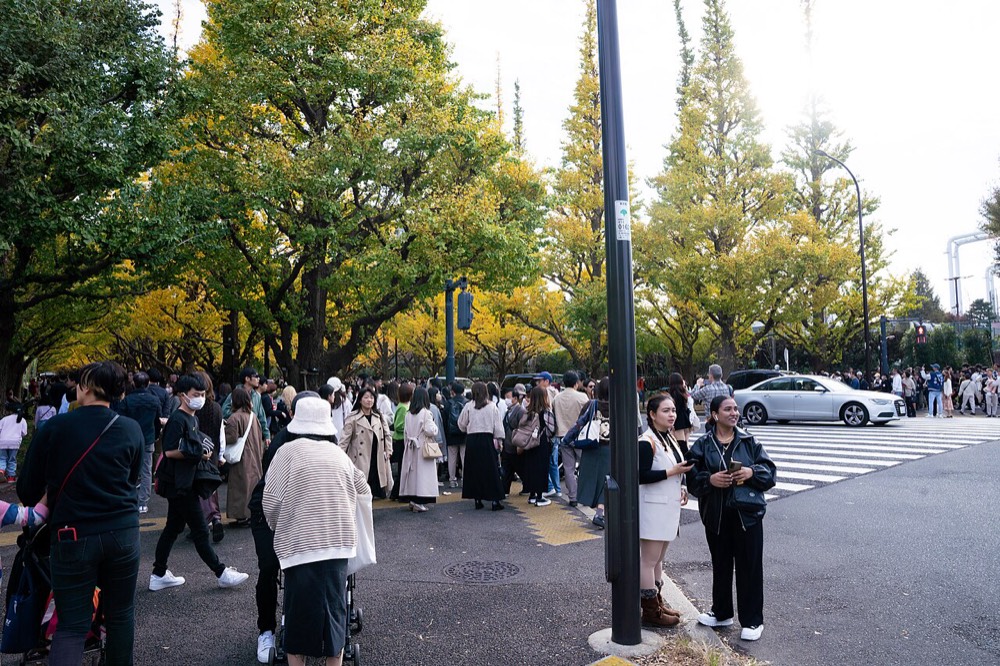
One thing to note for 2026: the Meiji Memorial Picture Gallery is undergoing seismic reinforcement and conservation work, with scaffolding on the outside until around the end of May 2027[2]. The view down the avenue will look different from past postcards this year. For "ginkgo only" photos, try close-ups of the canopy, fallen leaves on the sidewalk, or shots toward the sides from the middle of the avenue.
The Jingu Gaien area also has a redevelopment plan, and the official Meiji Jingu Gaien website has a dedicated information page[4]. For visitors, the ginkgo avenue itself is free with no opening-hour limits[2], but construction fences and walking routes nearby may change at any time, so follow the on-site signs.
Is there a Meiji Jingu Gaien Ginkgo Festival in 2026? Dates and light-up
In short: as of October 22, 2026, the dates for the 2026 Meiji Jingu Gaien Icho Matsuri (ginkgo festival) and the evening light-up of the avenue had not been officially announced[4]. Weathernews also lists the light-up as "undecided"[2].
Even without a festival, you can walk the avenue and take photos freely. For travelers, the festival mainly adds places to eat, and weekend crowds become even more concentrated.
How to get to the Meiji Jingu Gaien ginkgo avenue: access and best photo times
In short: take the Tokyo Metro Ginza Line to Gaienmae Station, the closest stop, and walk a few minutes toward Aoyama-itchome to reach the avenue entrance[5]. You can also walk from Aoyama-itchome Station.
| Item | Details |
|---|---|
| Location | Meiji Jingu Gaien Icho Namiki (Aoyama-dori entrance to the circular road) |
| Nearest station | Gaienmae (Tokyo Metro Ginza Line); Aoyama-itchome (Ginza, Hanzomon and Toei Oedo lines) is also walkable |
| Cost | Free |
| Hours | No entry-time limits (festival stalls and light-up have their own hours) |
| Usual peak | Late November to early December |
| 2026 forecast | Peak from around November 29, leaves start falling around December 13 (Weathernews, checked October 22) |
| Contact | Meiji Jingu Gaien 03-3401-0312 |
If you are new to the Tokyo subway, read the Tokyo transport guide first; Suica or PASMO is the easiest way to ride.
Tips for photos and avoiding crowds:
- 7 to 9 a.m.: fewest people, with side light coming into the avenue and the most saturated gold.
- Weekdays first: weekend afternoons are shoulder to shoulder, and setting up a tripod is very hard.
- Don't linger at the crossing: the crosswalk at the Aoyama-dori entrance is the most popular photo spot, but traffic is constant. Shoot from the sidewalk and never stand in the roadway.
- Combine nearby: Gaienmae is close to Omotesando and Aoyama. After the ginkgo, walk to Omotesando for lunch and shopping, then add other sights from top Tokyo attractions in the afternoon.
Best Tokyo ginkgo spots: where else to go besides Gaien?
In short: for larger golden areas and reflections, go to Showa Kinen Park; to combine with a festival, go to the Hachioji Ginkgo Festival; if you are staying central, choose the University of Tokyo's Hongo campus or Koishikawa Botanical Garden.
| Spot | Usual peak | 2026 events | Cost | Nearest station |
|---|---|---|---|---|
| Meiji Jingu Gaien ginkgo avenue | Late Nov to early Dec | Festival and light-up not yet announced | Free | Gaienmae |
| Showa Kinen Park | Mid to late Nov (varies by year) | Autumn leaves festival & Autumn Night Walk, Oct 29 to Nov 29 | Adult admission 450 yen | JR Nishi-Tachikawa |
| Koshu-kaido ginkgo avenue, Hachioji | Mid to late Nov | Hachioji Ginkgo Festival, Nov 21 to 22 | Free | JR Nishi-Hachioji, Takao |
| University of Tokyo Hongo campus | Late Nov to early Dec | None (Ginkgo Festival held Oct 17) | Free | Hongo-sanchome, Todaimae |
| Koishikawa Botanical Garden | Around late Nov | No special events | Adults 500 yen | Hakusan, Myogadani |
Showa Kinen Park: canal reflections and night light-up
Showa Kinen Park in Tachikawa is one of the most popular ginkgo spots in suburban Tokyo; GO TOKYO describes it as about a 30-minute trip from central Tokyo[5]. It has two signature ginkgo avenues: trees along both sides of the canal (Canal) reflect on the water, while the Katarai ginkgo avenue (Katarai no Icho Namiki) forms a golden tunnel.
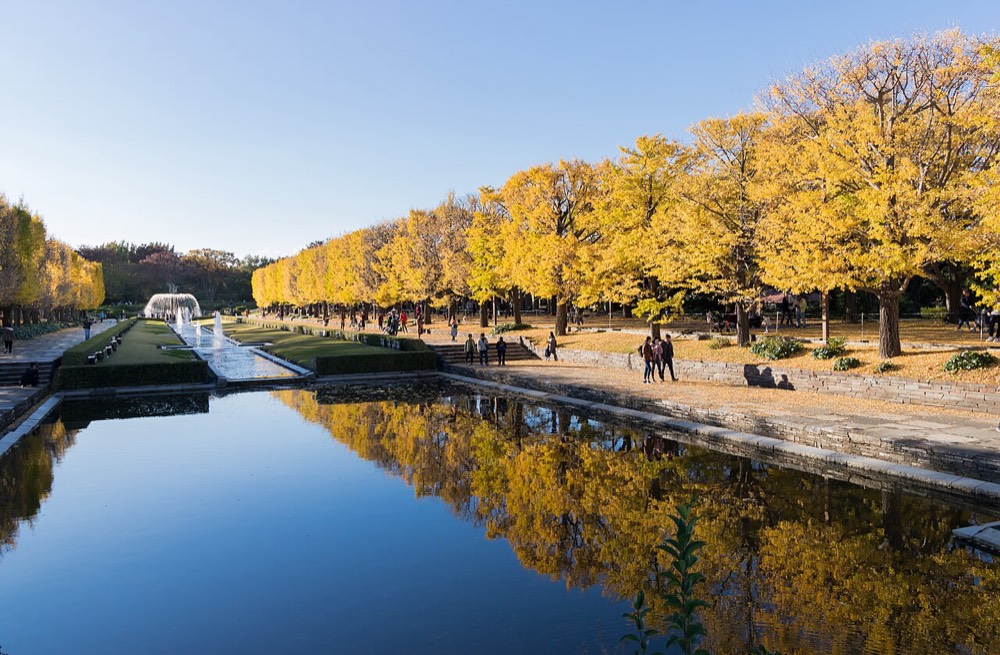
The 2026 autumn leaves festival and Autumn Night Walk runs from October 29 to November 29. The lit areas include the Katarai ginkgo avenue, the Japanese Garden and the canal. Lights are on from 16:30 to 20:30, last entry is 20:30 and the park closes at 21:00; at night, use the Nishi-Tachikawa and Tachikawa gates[6].
- Admission: adults 450 yen, age 65 and over 210 yen, junior high school students and younger free[6].
- The Japanese Garden at night requires a separate viewing ticket: advance adults 1,200 yen, elementary and junior high students 600 yen; same-day window adults 1,300 yen, students 700 yen. On October 29 and 30, park admission alone covers the Japanese Garden[6].
- Access: about 2 minutes on foot from Nishi-Tachikawa Station (JR Ome Line) to the Nishi-Tachikawa gate; from Tachikawa Station (JR Chuo Line), change to the Ome Line for one stop[6].
Hachioji Ginkgo Festival: the old ginkgo avenue on Koshu-kaido
Ginkgo trees line both sides of the Koshu-kaido road in Hachioji. They were planted between 1927 and 1929 to commemorate the construction of Emperor Taisho's mausoleum[7]. The 2026 Hachioji Ginkgo Festival is on Saturday November 21 and Sunday November 22, from the Oiwakecho intersection to around the Kobotoke checkpoint ruins, with a market, a parade and stage shows. Admission is free; the wooden "tsuko tegata" transit pass for the checkpoint orienteering event costs 700 yen[7]. Hours are 9:00 to 16:30 on the 21st and 9:00 to 16:00 on the 22nd, and the nearest stations are JR Nishi-Hachioji and Takao[7].
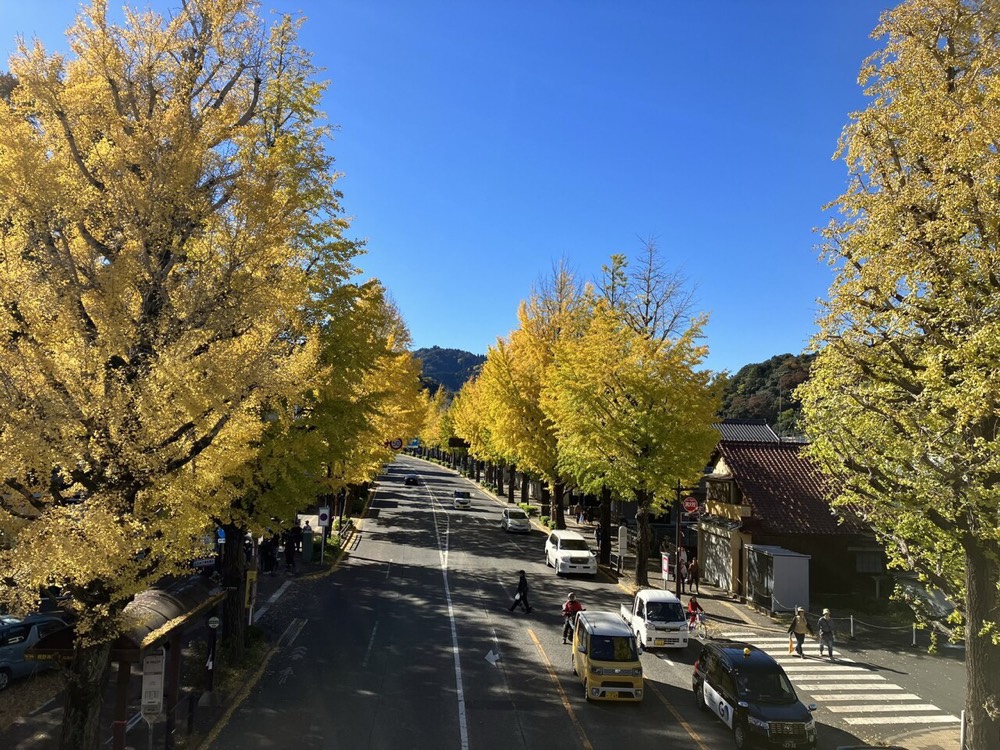
Since the route ends near Takao, you can hike in the morning and see the ginkgo in the afternoon on the same weekend. See the Mt. Takao day trip guide.
University of Tokyo Hongo campus: the ginkgo avenue to Yasuda Auditorium
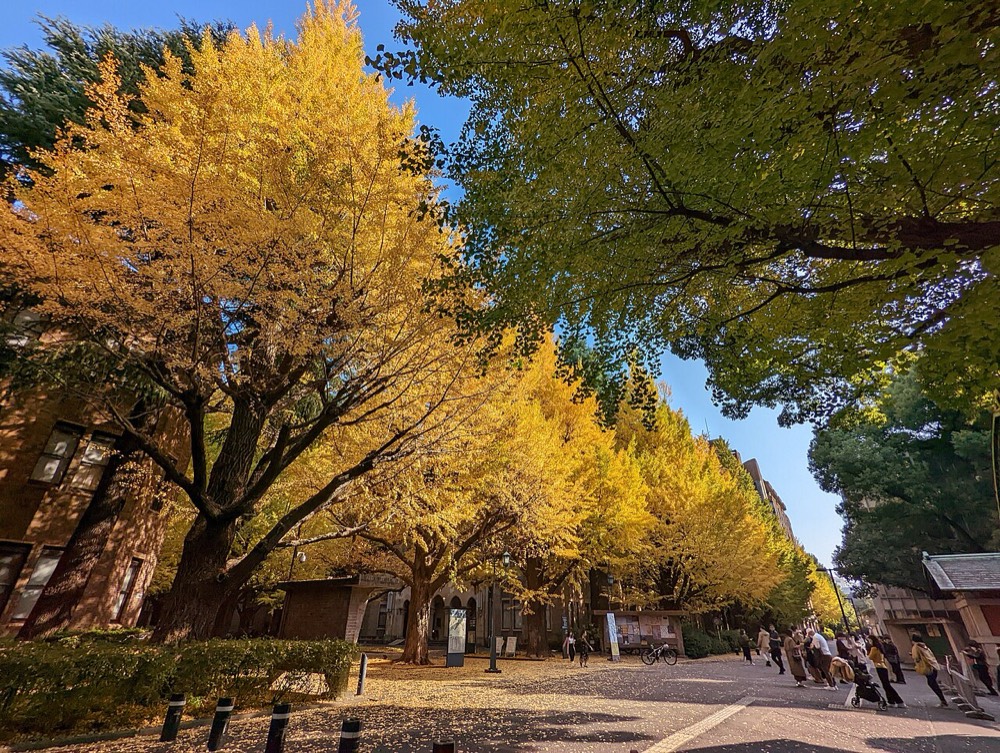
The ginkgo is the symbol of the University of Tokyo, and the road from the main gate to Yasuda Auditorium on the Hongo campus is lined with ginkgo trees. Travel media usually give the peak as late November to early December. The university's October alumni event is itself called the "Ginkgo Festival"; in 2026 it was held on October 17, with the ginkgo avenue as one of the venues[8]. Otherwise it is a working university campus, so remember that students and staff are studying there: don't wander into buildings or block paths, and access may be restricted during exams or special periods.
Koishikawa Botanical Garden: a historic tree
Koishikawa Botanical Garden (the University of Tokyo's botanical garden) has the "ginkgo of the sperm discovery," the tree on which a Japanese researcher discovered ginkgo sperm at the end of the 19th century, making it a famous tree in the history of botany. It is open 9:00 to 16:30; admission is 500 yen for adults and 150 yen for children[9]. Check the official website for closed days and how to buy tickets.
Tips for viewing ginkgo in Tokyo
In short: ginkgo trees are beautiful, but watch out for smell, slipping and crowds.
- The smell of ginkgo nuts: fruit dropped by female trees smells strong when crushed, and it sticks to your shoes and follows you onto the train. Watch your step on sidewalks under ginkgo trees.
- Fallen leaves are slippery: wet ginkgo leaves after rain are as slippery as soap. Take extra care with older travelers or strollers.
- Don't pick up and eat the nuts: ginkgo nuts must be prepared before eating, and the raw fruit pulp can irritate skin.
- Clothing: late November in Tokyo is around 10°C in the morning and evening, so bring an extra layer for evening light-ups.
- Route planning: suburban ginkgo (Showa Kinen Park, Hachioji) usually turns yellow a little earlier than central Tokyo, so go to the suburbs first and the city later. If you want to fit a half-day of ginkgo into a five-day trip, see the Tokyo 5-day itinerary and put Gaien on your Omotesando day.
The easiest plan: a one-day Tokyo ginkgo route
If you have one day in late November, try this:
- 7:30 a.m.: exit Gaienmae Station and photograph the Meiji Jingu Gaien ginkgo avenue while it is quiet.
- 10:00 a.m.: walk to Omotesando or Aoyama for coffee.
- Noon: take the JR Chuo Line to Tachikawa and change to the Ome Line for one stop to Nishi-Tachikawa.
- Afternoon to evening: see the canal ginkgo at Showa Kinen Park and wait for the light-up at 16:30 before heading back (the light-up runs only until November 29).
If you visit after December, the Showa Kinen Park event will be over. Save the evening for Christmas illuminations in central Tokyo instead; dates are in Japan Christmas illuminations 2026.
FAQ
When is the Meiji Jingu Gaien ginkgo avenue at its best in 2026?
The usual peak is late November to early December. Weathernews forecasts the 2026 peak from around November 29, with leaves starting to fall around December 13, so the last week of November to the first week of December is your best chance of a fully golden avenue. Check live foliage reports a few days before you go.
When is the 2026 Jingu Gaien Ginkgo Festival?
As of October 22, 2026, the official Meiji Jingu Gaien website had not announced dates for the 2026 ginkgo festival (Icho Matsuri) or the evening light-up. In past years it usually ran from mid or late November into early December, but dates and content vary each year, so follow the official announcements.
Is there an entrance fee for the Meiji Jingu Gaien ginkgo avenue? What are the hours?
There is no fee. The avenue is a public road with sidewalks and has no opening hours, so you can visit early in the morning or in the evening. Festival stalls and light-ups have their own hours, and walking routes may change because of events or traffic control.
How do I get to the Meiji Jingu Gaien ginkgo avenue?
The nearest station is Gaienmae on the Tokyo Metro Ginza Line. From the exit, walk a few minutes along Aoyama-dori toward Aoyama-itchome to reach the avenue entrance. You can also walk from Aoyama-itchome Station (Ginza, Hanzomon and Toei Oedo lines). The avenue runs between Aoyama-dori and the circular road, with the entrance on the Aoyama-dori side.
Where else in Tokyo can I see ginkgo trees besides Jingu Gaien?
Good options are Showa Kinen Park (the canal and the Katarai ginkgo avenue, with an autumn night light-up), the Koshu-kaido ginkgo avenue in Hachioji (Ginkgo Festival on November 21 to 22), the ginkgo avenue from the main gate to Yasuda Auditorium at the University of Tokyo's Hongo campus, and Koishikawa Botanical Garden. UTokyo is easiest from central Tokyo; Showa Kinen Park is best for wide golden views and reflections.
Sources
- Minato City: Minato Then and Now, "The Ginkgo Avenue of Jingu Gaien": 146 trees, four rows, about 300 m and landscape history
- Weathernews autumn leaves: Meiji Jingu Gaien Ginkgo Avenue: 2026 peak and leaf-fall forecast, picture gallery works
- Walkerplus autumn leaves: Meiji Jingu Gaien: Usual color change and peak period
- Meiji Jingu Gaien official website: Event notices and redevelopment information
- GO TOKYO autumn leaves guide: Tokyo foliage season and access
- Showa Kinen Park: Autumn Night Walk 2026: Event dates, light-up hours, admission and Japanese Garden tickets
- GO TOKYO: Hachioji Ginkgo Festival: 2026 dates, location and transit pass fee
- University of Tokyo: Homecoming Day "Ginkgo Festival": Hongo campus ginkgo avenue as an event venue
- Koishikawa Botanical Garden (University of Tokyo): Opening hours and admission
Fares, opening hours and event dates can change. Information checked on 2026.10.22; please confirm with official sources before you go.