Ibusuki Sand Bath Guide: Sunamushi Experience, Getting There, the Ibusuki no Tamatebako Train and a Day-Trip Itinerary
Compare Ibusuki's sand baths (Saraku, Yamakawa Sayuri, Hakusuikan) by price, hours and closures, plus Ibusuki no Tamatebako times and a day trip from Kagoshima-Chuo.
Quick answer
For an Ibusuki sand bath, Sand Bath Hall Saraku is the easiest pick: ¥1,500 for adults including a yukata, open 8:30–21:00 (last entry 20:00), with a roofed sand area for rain and high tide. For sea views of Mt. Kaimondake, Yamakawa's Sayuri costs ¥1,100, open 8:30–17:00, closed Wednesdays. Hakusuikan takes day visitors only 15:00–18:00 at ¥4,940 (Genroku bath plus sand bath). From Kagoshima-Chuo the Ibusuki no Tamatebako takes 51 minutes for ¥2,950; local trains take about 1 hour 12 minutes for ¥1,170 (checked November 2026).
The Ibusuki sand bath (sunamushi, すなむし) is Kagoshima's signature hot-spring experience: you lie in a yukata in black sand heated by the hot spring, buried up to the neck, and after about 10 minutes you are sweating all over. This guide compares Ibusuki's three kinds of sand bath — Sand Bath Hall Saraku, Sayuri in Yamakawa and the hotel sand bath at Hakusuikan — by price, hours and closures, sets out the Ibusuki no Tamatebako and local train times, and gives a minute-by-minute day trip from Kagoshima-Chuo with a cost breakdown, so you can decide between a same-day return and an overnight stay.
What is the Ibusuki sand bath? How it works and how long it takes
The short answer: from buying a ticket, changing into a yukata, being buried, showering and soaking in the indoor bath, allow an hour in total; the time actually under the sand is about 10 minutes.
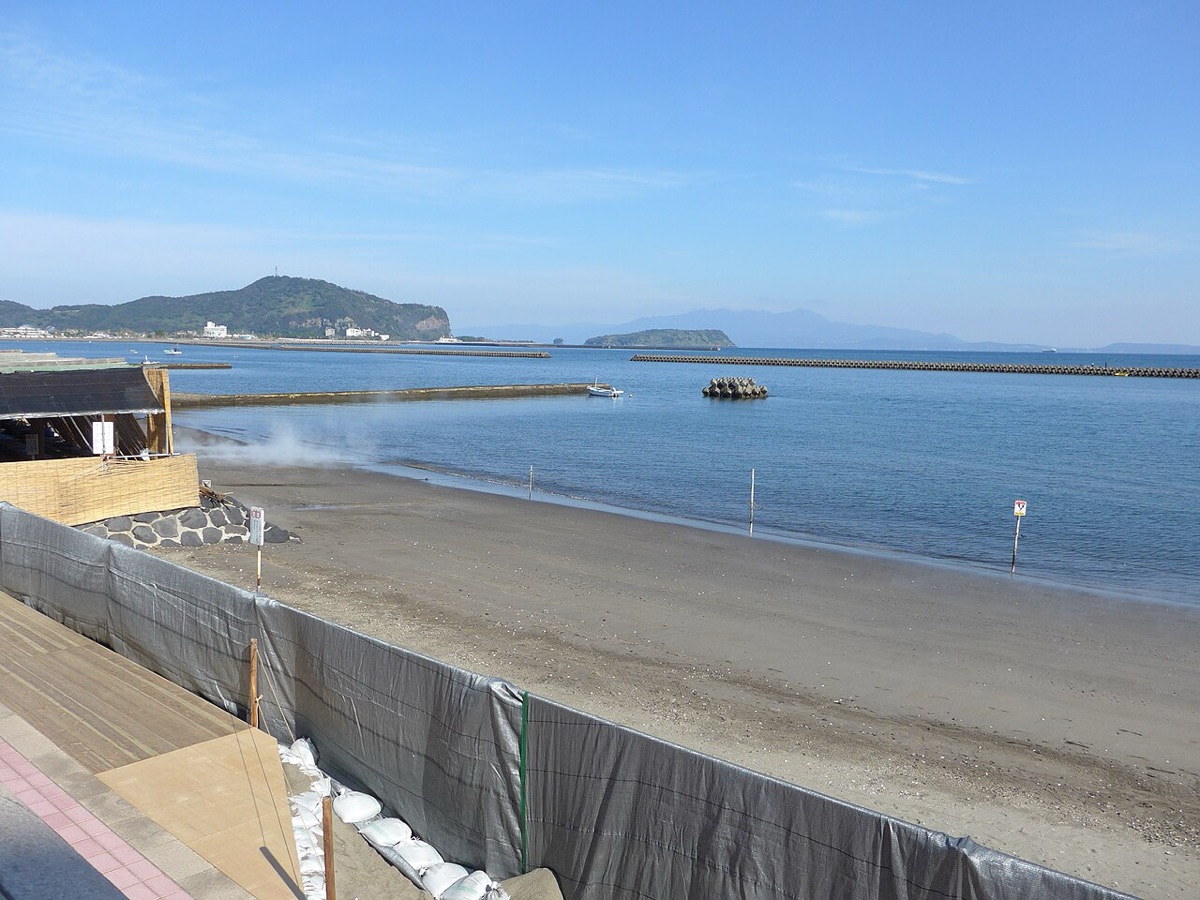
Ibusuki (いぶすき) sits at the southern tip of the Satsuma Peninsula. Hot springs rise beneath the shore and heat the black beach sand to about 50–55°C[4]. Staff dig a shallow hollow, you lie down with a towel protecting your face, and they shovel hot sand over you up to the neck[4]. At first it simply feels warm; after 3–5 minutes the weight and heat of the sand make your heart beat noticeably faster, and then you start to sweat all over.
Taking Saraku as an example, the process runs roughly like this:
- Buy a ticket at the ground-floor counter or ticket machine: the yukata is included in the fee; bring your own towel or rent one[1].
- Change into the yukata in the changing room: staff explain how to wear it; usually nothing is worn underneath. Put valuables in a locker and tie up long hair.
- Walk down to the sand area on the beach: staff show you to a spot and bury you. If you want photos, ask a companion to take them on their phone; don't take your own phone into the sand.
- Get up after about 10 minutes: shake off the sand and drop the yukata in the return bin.
- Shower and soak in the indoor bath: sand gets into hair and ears, so wash your hair; then enjoy the main bath.
Rules on tattoos in the indoor baths differ by facility; see the guide to tattoos at Japanese onsen and ask on site. For basic bathing etiquette, see Japan travel etiquette.
Which Ibusuki sand bath is best? Saraku vs Sayuri vs Hakusuikan
For convenience in town and evening access, choose Saraku; to look out at Mt. Kaimondake and the East China Sea while buried, choose Sayuri in Yamakawa; consider Hakusuikan only if you are staying there or want an upscale ryokan setting. The table below was checked in November 2026:
| Item | Sand Bath Hall Saraku | Yamakawa Sand Bath Sayuri | Ibusuki Hakusuikan (day visitors) |
|---|---|---|---|
| Adult fee | ¥1,500; bath only ¥800 | ¥1,100; bath only ¥200 | ¥4,940, Genroku bath plus sand bath; sand bath alone not available |
| Elementary age and under | ¥800 | ¥600 | ¥2,200 |
| Special periods | Adults ¥2,000 | Adults ¥1,500 | 8–16 August, adults ¥6,040 |
| Hours | 8:30–21:00, last entry 20:00; on weekdays no admission 12:00–13:00 | 8:30–17:00, last entry 16:30 (around 16:00 when busy) | 15:00–18:00 |
| Closures | Open year-round, with maintenance closures in July and December | Wednesdays (next day if Wednesday is a holiday); may close in bad weather | Some dates closed to day visitors |
| Setting | Town beachfront, roofed all-weather sand area | Open-air beach sand baths facing Mt. Kaimondake and the East China Sea | In-hotel sand bath and Edo-style main bath |
| Access | About 5 minutes by bus from JR Ibusuki Station, or about 20 minutes on foot | About 10 minutes by car or 20 minutes by bus from JR Yamakawa Station | Taxi from Ibusuki Station is easiest |
Sources: Saraku[1], Sayuri[2], Hakusuikan[3]. All three include the yukata; bath towels are extra (¥300 rental at Saraku and Sayuri)[1][2].
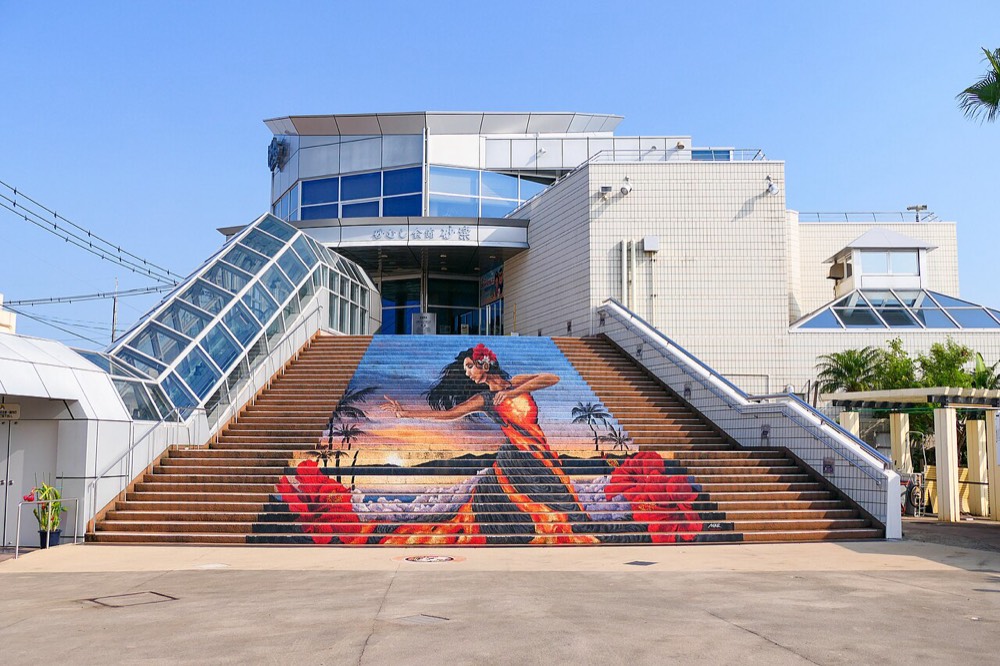
Saraku: the safest choice for a first visit
Saraku is the public sand bath in the Ibusuki onsen district, on the coast east of Ibusuki Station. Its big advantages are long hours and little weather risk: the beach has a roofed sand area, so you can still go at high tide or in the rain. It accepts credit cards, transit IC cards and QR-code payments[1]; if you use an IC card, see how to set up and top up Suica.
Two things to note. First, on weekdays there is no admission from 12:00 to 13:00, so if you arrive on a morning train, aim to go in before 11:30. Second, the FY2026 special periods include the New Year from 29 December 2026 to 3 January 2027, when the adult fee rises to ¥2,000[1]; there are also maintenance closures in July and December, so check the official notice for closure dates before a winter trip.
Sayuri: a beach sand bath facing Mt. Kaimondake
Sayuri is in Yamakawa, south of central Ibusuki. The sand baths are on the beach itself, and while lying there you can see the cone of Mt. Kaimondake, the "Satsuma Fuji", and the sea. It is cheaper than Saraku but has more limits: it closes at 17:00, shuts on Wednesdays and may close at short notice in bad weather; it can handle only about 30 people an hour, after which numbered tickets are issued[2]. Soap and shampoo are not allowed, so be prepared if you like to wash your hair[2].
A combined ticket with the nearby open-air bath Tamatebako Onsen costs ¥2,000 (not sold in special periods; includes one drink, towels extra)[2], worth considering if you want both. It is about 10 minutes by car or 20 minutes by bus from JR Yamakawa Station[2]; without a car, the round trip is hard to time, so a taxi or a rental-car itinerary works better.
Hakusuikan: a hotel sand bath that pays off mainly for guests
Hakusuikan is a long-established large ryokan in Ibusuki with its own sand bath and the Genroku bath, a recreation of an Edo-period bathhouse. Hotel guests pay ¥1,540 per adult per sand bath, 6:00–8:30 and 15:30–22:00; non-guests can use the Genroku bath plus sand bath only from 15:00 to 18:00 for ¥4,940 (including bathing tax), cannot buy the sand bath alone, and need no booking, though some dates are closed to day visitors[3]. If you just want to try a sand bath once, Saraku or Sayuri is far better value.
Getting to Ibusuki: Ibusuki no Tamatebako, local trains and buses
From Kagoshima-Chuo to Ibusuki, take the Limited Express Ibusuki no Tamatebako if you want speed and a sightseeing feel; take a local train if budget comes first or you miss the service. Sights around Ibusuki are spread out, so apart from Nishi-Oyama, use buses, taxis or a rental car.
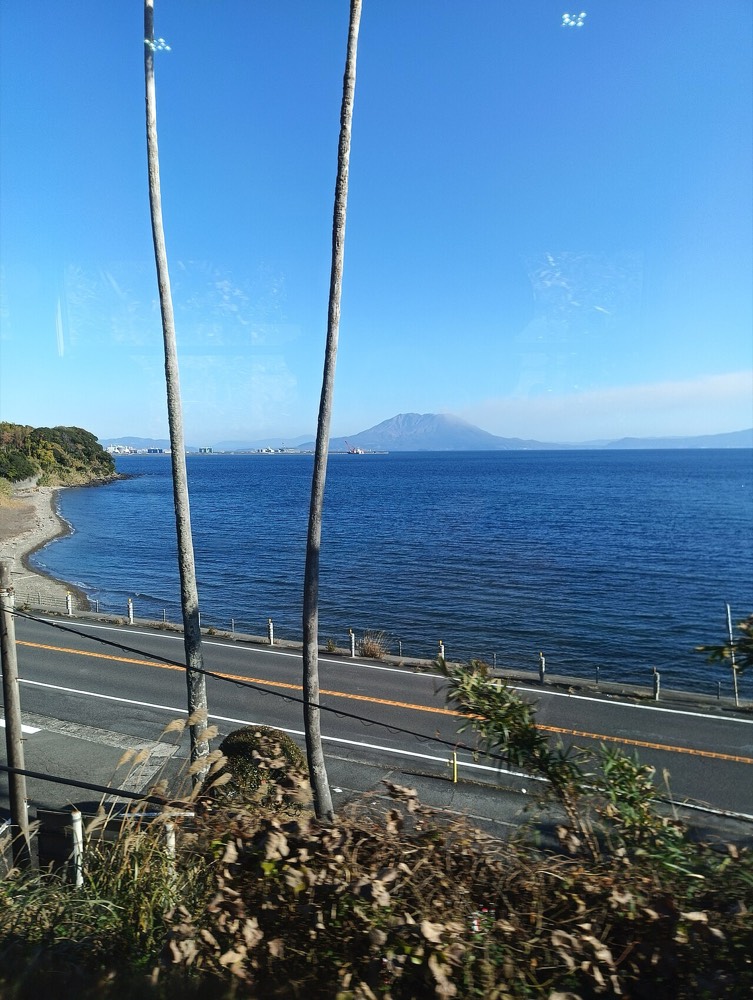
Ibusuki no Tamatebako times and fares
The Limited Express "Ibusuki no Tamatebako" (nicknamed Ibutama) runs on the following timetable from 14 March 2026; all seats are reserved[5]:
| Train | Dep. Kagoshima-Chuo | Arr. Ibusuki | Train | Dep. Ibusuki | Arr. Kagoshima-Chuo |
|---|---|---|---|---|---|
| No. 1 | 9:56 | 10:47 | No. 2 | 10:56 | 11:48 |
| No. 3 | 11:56 | 12:48 | No. 4 | 12:57 | 13:48 |
| No. 5 | 13:56 | 14:49 | No. 6 | 15:07 | 16:00 |
The adult one-way fare is ¥2,950, the basic fare plus the regular-period reserved limited express charge; the express charge varies by date[5]. It does not run every day, so check the operating calendar on the official site; calendars are out through February 2027, the train will keep running after March, and detailed dates are due around mid-January 2027[5]. To book online you need a free JR Kyushu Web membership, and seats go on sale at 10:00 one month before the travel date[5]. How to choose seats and which car has the sea-facing counter seats is covered in detail in Kyushu sightseeing trains, so it isn't repeated here.
If you are connecting from the Kyushu Shinkansen, note that on 31 August 2026 JR Kyushu announced transfer arrangements at Kagoshima-Chuo between the Tamatebako and the Shinkansen due to the Kumamoto earthquake[5]; check the latest notice before you travel.
Local trains and the Rapid Nanohana
Without the sightseeing train, a JR Ibusuki-Makurazaki Line local train takes about 1 hour 12 minutes from Kagoshima-Chuo to Ibusuki for ¥1,170 one way, on an ordinary ticket with no seat reservation. Afternoon departures from Ibusuki back to Kagoshima-Chuo are roughly 12:06, 13:35, 14:25 and 15:53, plus the 16:39 Rapid "Nanohana" (November 2026 timetable)[7]. Local trains are not frequent, so check your return before setting out.
Can you use the JR Kyushu Rail Pass?
Ibusuki no Tamatebako is covered by the All Kyushu and Southern Kyushu passes but not the Northern Kyushu pass. The Southern Kyushu 3-day pass is ¥12,000 for adults and the All Kyushu 3-day pass starts at ¥22,000; only foreign passport holders entering as temporary visitors can buy them[6]. With a pass you reserve seats at a station counter; the Southern Kyushu pass includes up to 6 free seat reservations. If you reserve a sightseeing-train seat in advance through the Rail Pass online booking system, there is an extra ¥1,500 per section[6]. For which pass to choose and whether it pays off, see the Kyushu transport guide.
Local buses and taxis in Ibusuki
Kagoshima Kotsu sells a sightseeing bus ticket, "Nottari Oritari My Plan": ¥1,500 for an adult one-day pass and ¥3,000 for two days, linking Ibusuki Station, Tosenkyo, Lake Ikeda, Cape Nagasakibana and more[8]. Buses are often more than an hour apart, though, so check times at the tourist information centre inside JR Ibusuki Station. For two or three people with limited time, a chartered taxi or a rental car driven down from Kagoshima lets you cover several more spots in a day.
Things to do in Ibusuki: Nishi-Oyama Station, Lake Ikeda, Cape Nagasakibana and Tosenkyo
Beyond the sand bath, the top pick is Nishi-Oyama, the southernmost JR station in Japan, which you can reach by train. Lake Ikeda, Cape Nagasakibana and Tosenkyo are best combined by car or chartered taxi.
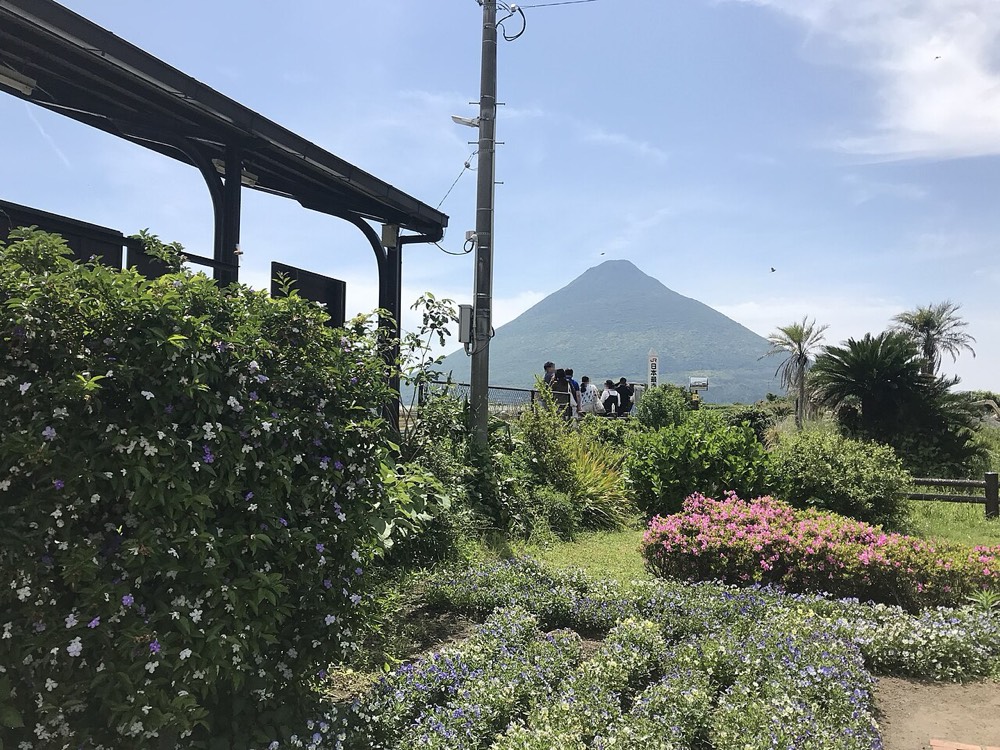
- Nishi-Oyama Station (にしおおやま): an unstaffed small station with Mt. Kaimondake straight ahead of the platform. A yellow "happiness" postbox stands by the station and really does take mail; the neighbouring shop Kaimon Ichiba Kyutaro sells a "southernmost JR station arrival certificate" (¥110)[11]. Only a handful of trains stop each day, so plan your return before you go by train.
- Lake Ikeda: Kyushu's largest caldera lake, about 15 km around and 233 m deep, with Mt. Kaimondake across the water; it is also home to the legendary lake monster "Issie"[10]. There are lakeside places to eat and rest.
- Cape Nagasakibana: a cape on the Satsuma Peninsula, said to be where Urashima Taro set off for the Dragon Palace; the nearby Ryugu Shrine enshrines Princess Otohime. On a clear day you can see Mt. Kaimondake and the cape together.
- Tosenkyo Somen Nagashi (唐船峡そうめん流し): a city-run flowing-noodle restaurant where spring water spins somen around round tables. From November to March it opens 11:00–15:30 (last order 15:00), and from April to October from 10:00[9]; there are hot dishes in winter too. About 25 minutes by car from Ibusuki Station.
These sights are not far from one another, but none is near Ibusuki Station. Mt. Kaimondake itself can be climbed, but the round trip takes most of a day, so on a day trip most people just admire it from the car window or from Nishi-Oyama Station.
Ibusuki food: Ontamaran-don, Kurobuta pork and bonito
For lunch in Ibusuki, the most local choice is "Ontamaran-don" (温たまらん丼): each shop makes its own rice bowl from Ibusuki ingredients, with the shared rule that it is topped with an egg cooked in hot-spring water. Several participating shops are within a 1–5 minute walk of Ibusuki Station[8], with bowls ranging from Kagoshima Kurobuta black pork to local seafood and vegetables; prices vary by shop, and the quickest way to choose is to pick up a map at the tourist information centre in the station.
The other two keywords are black pork and bonito. Kagoshima Kurobuta is easy to find at set-meal restaurants and izakaya around Ibusuki Station; Yamakawa port is a well-known bonito port and katsuobushi producer, so look for bonito dishes or buy katsuobushi as a souvenir around Yamakawa. If you plan to catch the 14:34 train back from Nishi-Oyama, have lunch near Ibusuki Station so timing stays under control.
Ibusuki day trip from Kagoshima-Chuo (with times)
This plan uses only trains plus one short bus or taxi ride, suiting travellers without a car who want to return to Kagoshima city the same day. Times are based on the timetables checked on 13 November 2026; please confirm before you go[5][7].
| Time | Plan | Notes |
|---|---|---|
| 9:56 → 10:47 | Ibusuki no Tamatebako No. 1 from Kagoshima-Chuo to Ibusuki | All seats reserved; runs on calendar dates |
| 10:55 → 11:05 | Bus or taxi to Saraku | Walking takes about 20 minutes |
| 11:05 → 12:15 | Sand bath, shower and soak at Saraku | No weekday admission 12:00–13:00, so go in before noon |
| 12:30 → 13:15 | Back near Ibusuki Station for Ontamaran-don | Participating shops within walking distance |
| 13:27 → 13:47 | Local train (for Makurazaki) from Ibusuki to Nishi-Oyama | Not running 16–20 Nov, 16 Dec, 12–15 Jan, 17 Feb |
| 13:47 → 14:34 | Photos of Mt. Kaimondake at Nishi-Oyama, buy the arrival certificate | About 45 minutes |
| 14:34 → about 14:55 | Local train from Nishi-Oyama back to Ibusuki | Same non-operating days |
| 15:07 → 16:00 | Ibusuki no Tamatebako No. 6 back to Kagoshima-Chuo | About 10 minutes to transfer; if missed, take the 15:53 local or 16:39 rapid |
On the non-operating days above, go to Nishi-Oyama and back by taxi instead, or simply spend the afternoon in Saraku's indoor bath and walking by the sea. Back at Kagoshima-Chuo in the late afternoon, there is time for dinner in Tenmonkan; for planning the city, see the Kagoshima sightseeing guide.
Day-trip cost breakdown
| Item | Cost (adult) | Notes |
|---|---|---|
| Ibusuki no Tamatebako round trip | ¥5,900 | ¥2,340 round trip by local train |
| Saraku sand bath plus towel rental | ¥1,800 | Save ¥300 by bringing your own towel |
| Ibusuki–Nishi-Oyama local train round trip | JR fare | Short section; check a route planner before boarding |
| Ibusuki Station–Saraku bus or taxi | Depends on mode | Free if you walk |
| Ontamaran-don lunch | Depends on shop | Prices vary by shop |
Counting only transport and the sand bath, the whole day starts from about ¥7,700 with the Tamatebako both ways, or about ¥4,140 by local train. With a Southern Kyushu pass, the Tamatebako is free within your reservation allowance, and the next day's Shinkansen can be covered too.
Who is an Ibusuki sand bath day trip for, and who should skip it?
Good for:
- Travellers based in Kagoshima city with a free day or half day who want something more unusual than an ordinary onsen.
- Winter visitors to Kyushu: southern Kyushu is milder, and hot sand feels especially good on a cold day.
- Holders of the Southern Kyushu or All Kyushu pass who want to fit a sightseeing train into the trip.
- Rail photographers who want a shot at the southernmost JR station.
Less suited to:
- People who are pregnant, have heart disease or high blood pressure, dislike heat or panic when pinned down; bathe only, or ask a doctor first.
- Anyone who can only reach Yamakawa on a Wednesday: Sayuri is closed.
- December travellers who haven't checked dates: Saraku has a maintenance closure in December that you might hit.
- Anyone hoping to cover Lake Ikeda, Cape Nagasakibana, Tosenkyo and Nishi-Oyama in one day without a car: with few buses it won't fit, so stay a night in Ibusuki or hire a taxi.
For more Kyushu onsen, head north to Kurokawa Onsen or Yufuin and Beppu; for more destinations see the Kyushu travel overview.
Before you go
- Check the Ibusuki no Tamatebako operating calendar first, then book at 10:00 one month ahead once you know it runs; if it's full, take a local train, which is only about 20 minutes slower.
- Saraku takes no weekday admissions 12:00–13:00, and Sayuri closes at 17:00 and on Wednesdays, so plan backwards from those times.
- Over the New Year (29 December 2026 to 3 January 2027), both sand baths charge special-period prices.
- Bring a towel, a plastic bag, water and a hair tie; leave phones and jewellery in a locker.
- Non-operating days for the Nishi-Oyama trains fall in mid-November, on 16 December, in mid-January and on 17 February; use a taxi or rental car on those days.
FAQ
How long do you stay buried in an Ibusuki sand bath? Can I stay longer?
About 10 minutes is the usual guideline, and tourism materials describe it the same way. The sand is around 50–55°C. First-timers, older visitors and anyone sensitive to heat should sit up as soon as they feel dizzy or their heart races; there is no need to last the full time. Staying in too long makes dehydration more likely, so drink water afterwards.
Do I need to book an Ibusuki sand bath?
Saraku and Sayuri both work on a walk-in queue and do not take ordinary individual bookings. Sayuri handles only about 30 people an hour, issues numbered tickets when busy and may stop taking guests early on busy afternoons. Hakusuikan's day-visitor bathing needs no booking either, but some dates are closed to day visitors, so calling ahead is safest.
What should I bring for a sand bath?
The yukata is included; towels you bring yourself or rent (bath towel rental is ¥300 at both Saraku and Sayuri). Also bring a bag for damp clothes, a bottle of water and a hair tie for long hair. Saraku accepts credit cards, transit IC cards and QR-code payments.
Is staying in Kagoshima city enough for Ibusuki, or should I stay overnight in Ibusuki?
If you only want the sand bath and Nishi-Oyama Station, a same-day round trip from Kagoshima-Chuo works fine; it is about an hour each way. If you want a slow evening soak, a bus loop around Lake Ikeda and Cape Nagasakibana the next day, or a hotel sand bath like Hakusuikan's, one night in Ibusuki is more relaxed.
Is an Ibusuki sand bath cold in winter?
The sand is heated by the hot spring, so lying in it is not cold at all; winter is arguably the most pleasant season. The few minutes walking to the beach in a yukata feel chilly, and Saraku has a roofed sand area for rain or high tide. Note that Saraku closes for maintenance for a period every December; check the dates on its official notice.
Sources
- Ibusuki Tourism Association: Sand Bath Hall Saraku: Fees, FY2026 special periods, hours, closures and access
- Ibusuki Tourism Association: Yamakawa Sand Bath Sayuri: Fees, hours, Wednesday closure, hourly capacity and combined ticket
- Ibusuki Hakusuikan: Sand bath: Hours and fees for hotel guests and day visitors
- Visit Kyushu: Ibusuki Onsen: Sand temperature and how the bath works
- JR Kyushu: Limited Express Ibusuki no Tamatebako: Timetable from 14 March 2026, fare, seats, booking and operating calendar
- JR Kyushu: JR KYUSHU RAIL PASS: Pass prices, coverage and the online-booking surcharge for sightseeing trains
- Ekitan: Nishi-Oyama Station, JR Ibusuki-Makurazaki Line timetable: Departures from Nishi-Oyama and non-operating days as of 13 November 2026
- Ibusuki Tourism Association: Ibusuki area 2-day course by public transport: Bus day-pass prices, Ontamaran-don shop locations and transfers between sights
- Kagoshima mytabi: Municipal Tosenkyo Somen Nagashi: Seasonal opening hours of Tosenkyo flowing noodles
- Ibusuki Tourism Association: Lake Ikeda: Size of Lake Ikeda and lakeside facilities
- Ibusuki Tourism Association: JR Nishi-Oyama Station: Southernmost JR station, yellow postbox and arrival certificate
Fares, opening hours and event dates can change. Information checked on 2026.11.13; please confirm with official sources before you go.