Kirishima Onsen Guide: Which Hot Spring Area to Stay In, Lodging Types, Kagoshima Airport Access, Kirishima Jingu and Shinmoedake Volcano Status
Where to stay in Kirishima Onsen: Maruo vs Kirishima Jingu, Myoken and Hinatayama, plus the airport bus timetable, 1,500-yen day pass and Shinmoedake alert level 2.
Quick answer
Kirishima Onsen is the umbrella name for several hot spring areas in the mountains of Kirishima City, Kagoshima. The main place to stay is the Kirishima Onsen-kyo cluster (Maruo, Hayashida, Iodani and others) at about 600–850 m, known mainly for sulfur springs. The Kirishima Jingu Access Bus reaches Maruo from Kagoshima Airport in about 30 minutes; the fare is a 1,500-yen adult day pass, with departures daily at 9:30, 12:30 and 14:30 plus 17:20 on weekends and holidays. As of 20 November 2026 Shinmoedake remains at volcanic alert level 2, with restrictions within about 2 km of the crater.
Kirishima Onsen (霧島温泉) is not a single hot spring town but the umbrella name for several hot spring areas in the mountains of Kirishima City, Kagoshima, and the question most first-timers get stuck on is which area to book. This guide compares Kirishima Onsen-kyo, the Kirishima Jingu area, Myoken and Hinatayama, and adds the actual bus times and fares from Kagoshima Airport, a two-day plan, and what Shinmoedake's volcanic alert level 2 means for visitors (information checked on 20 November 2026).
Where to stay in Kirishima Onsen: four areas compared
If you want the classic Kirishima experience of strong sulfur and wide mountain views, stay around Maruo in Kirishima Onsen-kyo; if you want to move around less or have an early or late flight, look at Myoken or Hinatayama near the airport. Kirishima Onsen-kyo sits at about 600–850 m, with mainly sulfur, simple and bicarbonate springs[7]; Myoken and Anraku line the gorge of the Amori River (天降川) at a much lower elevation[8].
| Area | Atmosphere | From Kagoshima Airport | Water | Best for |
|---|---|---|---|---|
| Kirishima Onsen-kyo (Maruo, Hayashida, Iodani) | Mountain hot spring area with large hotels and inns; Maruo is the bus transfer hub | About 30 minutes to Maruo by access bus | Mainly sulfur, milky water and steam vents everywhere | First-time visitors combining Kirishima Jingu and mountain sights |
| Kirishima Jingu area | Small settlement at the shrine gate, very quiet at night | About 45 minutes to Kirishima Jingu by access bus | Varies by inn; check each property | People who want to visit the shrine early before the crowds |
| Myoken and Anraku (Shinkawa Gorge onsen area) | Small inns and toji (long-stay) lodgings beside the gorge | Myoken Onsen Line from airport stop 10, a short ride | Mainly bicarbonate springs | Early arrivals and late departures, people who want a quiet riverside inn |
| Hinatayama (ひなたやま) | Public baths and inns in a flat residential area | Near Hayato; easier by car or JR | Varies by facility | Budget travelers and road-trippers using Kirishima as a stopover |
Myoken and Hinatayama generally work on the basis that you come for the baths and travel to the sights; without a car there is little to do in the evening. Kirishima Onsen-kyo and Kirishima Jingu are linked by the same bus route, so they are easier on public transport.
Kirishima Onsen-kyo: Maruo, Hayashida and Iodani
Maruo is the transport hub of Kirishima Onsen-kyo: the airport bus and local buses toward Kirishima Jingu and Kokubu all stop here, so staying within walking distance of Maruo is the safest choice on a first visit. Hayashida sits higher up and looks out toward Sakurajima on clear days; Iodani is known for the large baths at Kirishima Hotel. If you stay anywhere other than Maruo, check how far the inn is from the nearest bus stop and whether it offers pickup before you book.
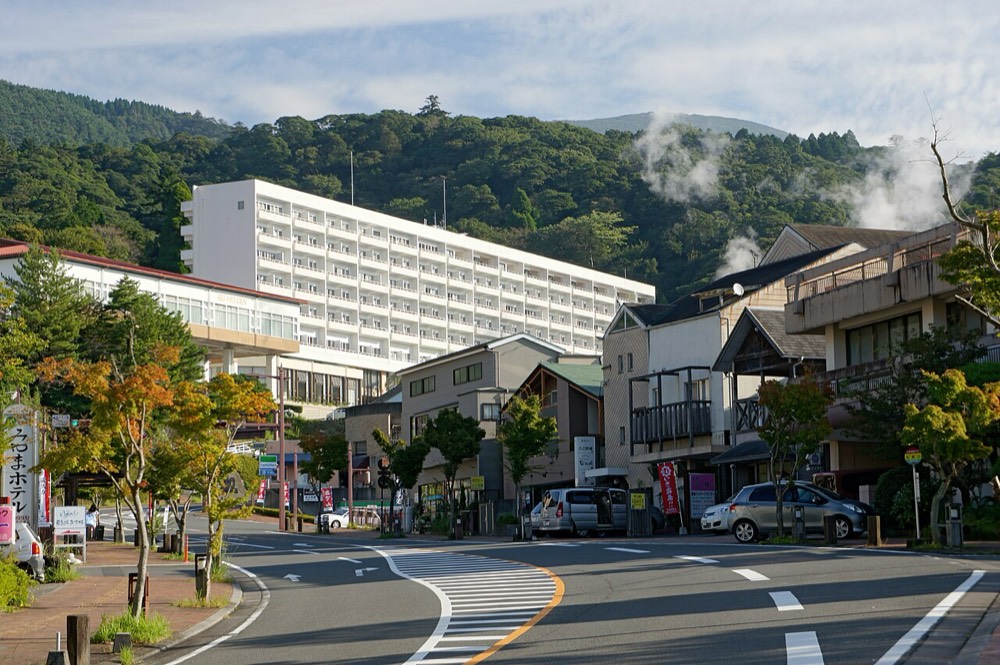
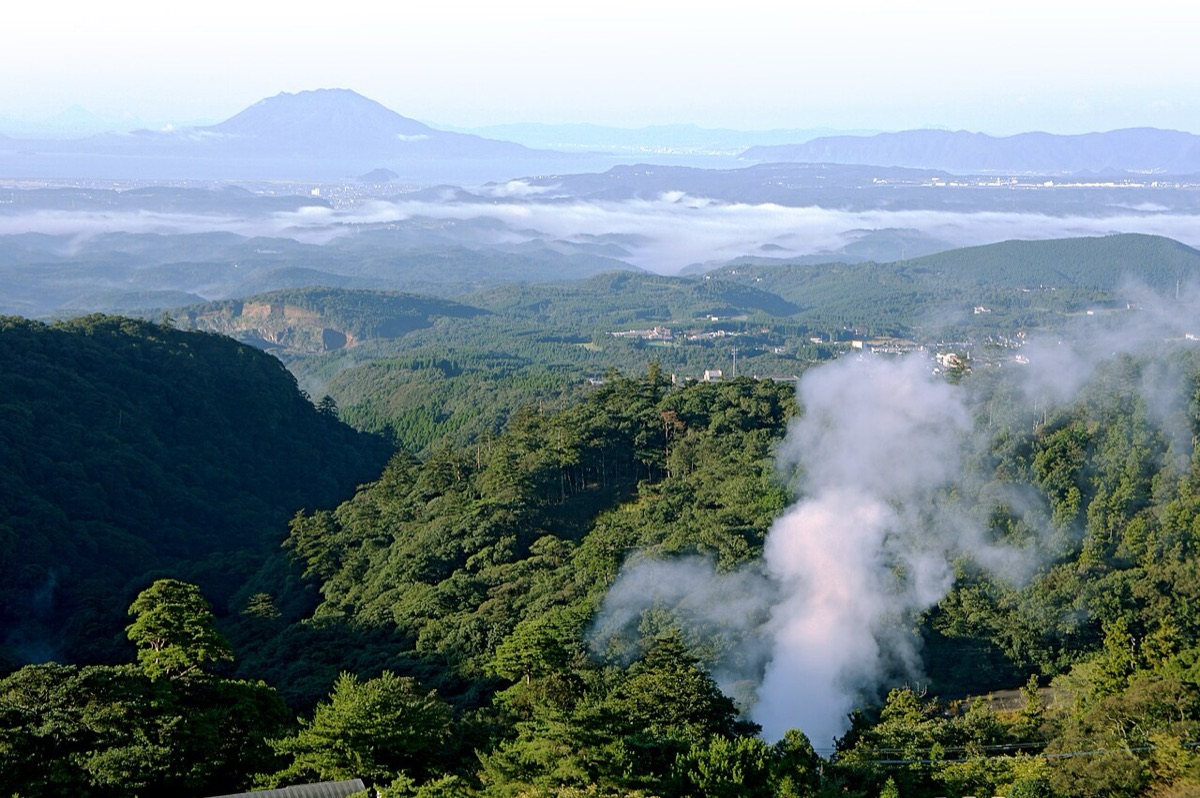
White steam rises from fumaroles all over the area and the air smells of sulfur, the image most people associate with Kirishima. Properties vary a lot in size, from hotels with hundreds of rooms to toji lodgings offering room only, so prices within the same area span a wide range.
Kirishima Jingu area: shrine visit and stay in one
Kirishima Jingu is Kirishima's most important sight. Its main sanctuary, offering hall and worship hall are designated National Treasures of Japan[6], and the vermilion buildings tucked into the cedar forest feel completely different from the onsen area up the mountain. Staying near the shrine lets you walk the approach before tour groups and buses arrive.
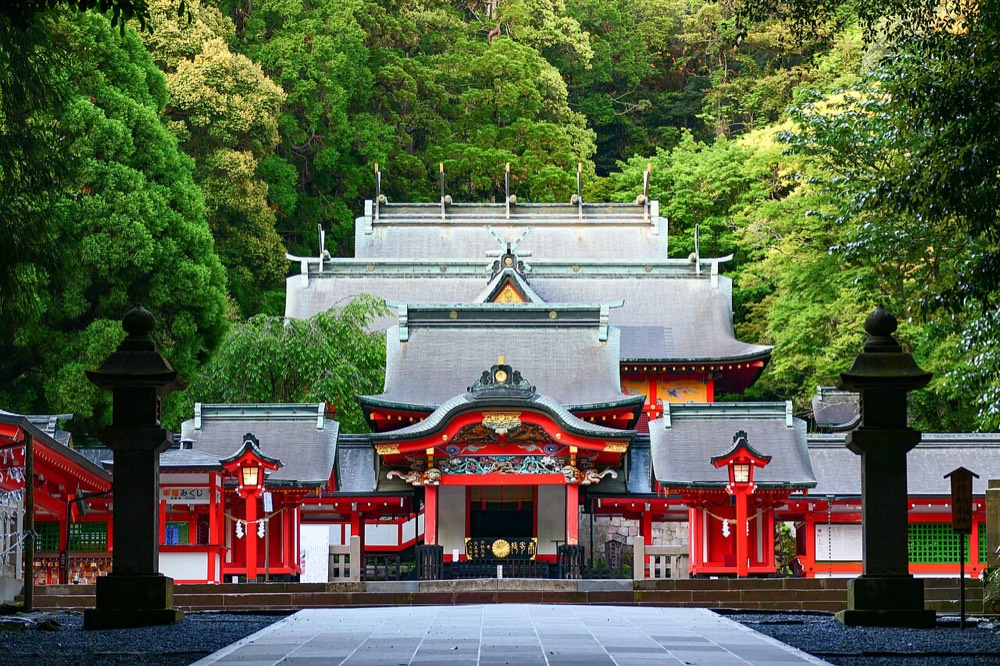
There are fewer places to stay near the shrine than in the onsen area, and dinner usually means eating at your inn. If bathing is your main goal, stay in Maruo and take the bus to the shrine; the ride from Maruo to Kirishima Jingu is about 15 minutes[3].
Lodging types in Kirishima Onsen: half-board ryokan, hotels, toji inns or day bathing?
Lodging in Kirishima falls into roughly four types, and the right one depends on whether you care most about dinner, budget or freedom. For check-in routines and how half-board (ippaku nishoku) works, see our guide to choosing a Japanese ryokan.
| Type | What it is | Good for | Not ideal for |
|---|---|---|---|
| Half-board onsen ryokan | Dinner and breakfast included; dinner is usually a kaiseki-style meal using local ingredients | People who want a proper dinner at the inn and don't want to hunt for food at night | Late arrivals (after 19:00) or people who want to choose their own dinner |
| Large onsen hotel | Big baths, many room types, often buffet restaurants | Families, groups, people who want to try several baths | People looking for quiet and privacy |
| Toji inn / room only | No meals, low prices, some with simple kitchens | Tight budgets and multi-night stays | People who don't want to sort out their own meals (few places to eat in the mountains at night) |
| Day bathing | Pay to use a ryokan or hotel bath without staying | People based in Kagoshima city or with only half a day | People who want night-time outdoor baths or the evening views |
Take Kirishima Hotel in Iodani as an example of day bathing: hours are 11:00–17:00, adults 1,200 yen and children 600 yen, rising to 1,500 yen for adults over New Year, Golden Week and Obon; every Wednesday the main bath is closed for maintenance and only the smaller indoor baths "Tono-yu" and "Hime-yu" are open[5]. The water includes sulfur, alum and other spring types, and there is a mixed-gender bathing area (information as of July 2026).
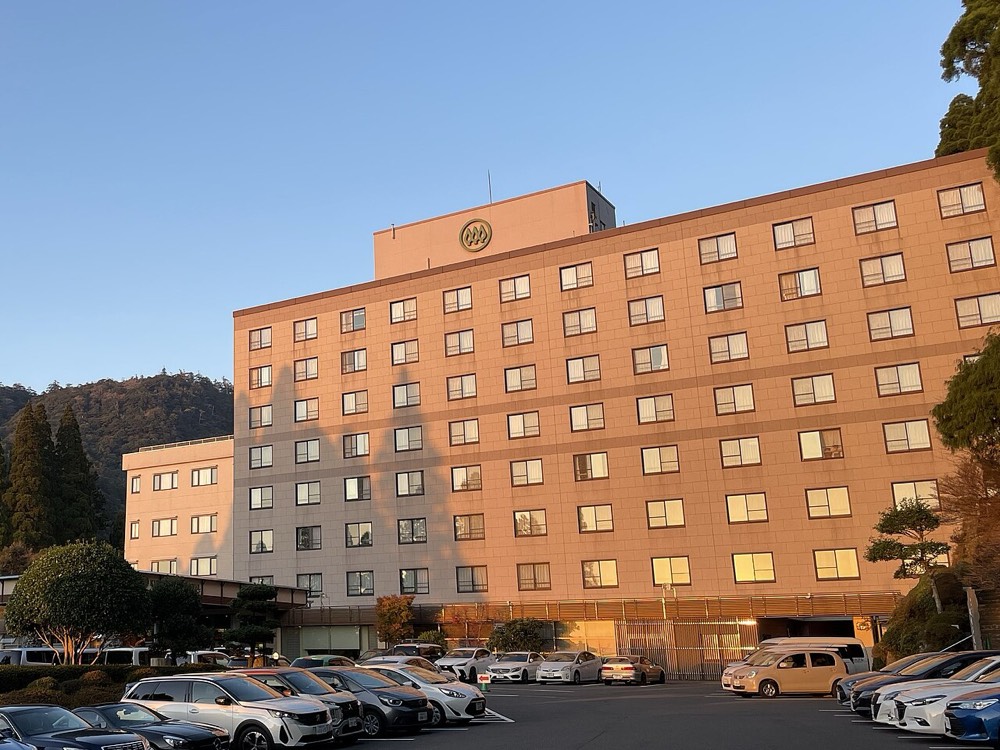
Travelers with tattoos will often face restrictions in shared baths. Look for rooms with a private outdoor bath or a reservable private bath; the rules and workarounds are covered in our guide to tattoos and onsen in Japan.
A few practical points when choosing:
- Without a car: pick an inn within walking distance of the Maruo bus stop or one that offers pickup; calling a taxi in the mountains is not always easy.
- Late flight arrival: the last access bus leaves the airport at 14:30 (17:20 on weekends and holidays). After that you need a taxi or inn pickup, so onsen areas near the airport such as Myoken are simpler.
- Only one night: half-board is the best value, because options for eating out in Kirishima Onsen-kyo at night are limited.
Kagoshima Airport to Kirishima Onsen: bus times, fares and JR
Kagoshima Airport is close to Kirishima Onsen. The Kirishima Jingu Access Bus (霧島神宮アクセスバス), run by Kirishima City and operated by Kagoshima Kotsu, goes to Maruo and Kirishima Jingu without changes[3]. It leaves from stop 9 at the airport[4].
| Dep. Kagoshima Airport | Kareigawa | Maruo | Kirishima Jingu | Kirishima-Jingu Station | Runs |
|---|---|---|---|---|---|
| 9:30 | 9:37 | 10:00 | 10:15 | 10:28 | Daily |
| 12:30 | 12:37 | 13:00 | 13:15 | 13:28 | Daily |
| 14:30 | 14:37 | 15:00 | 15:15 | 15:28 | Daily |
| 17:20 | 17:27 | 17:50 | 18:05 | 18:18 | Weekends and holidays |
Back to the airport: a daily bus leaves Kirishima-Jingu Station at 16:10, calling at Kirishima Jingu 16:21 and Maruo 16:36, and reaches the airport at 17:06; on weekends and holidays an early bus leaves Kirishima-Jingu Station at 7:35, Maruo 8:01, arriving 8:31. There are also direct buses from Kirishima-Jingu Station to the airport at 10:42 and 13:38, arriving 11:17 and 14:13[3] (timetable updated 4 November 2026).
How to ride and pay:
- Outside the terminal, go to stop 9 and check that the bus is the "Kirishima Jingu Access Bus". Kagoshima Kotsu's Kirishima Line also uses the same stop[4].
- On board, buy the Kirishima "Nottari Oritari My Plan" one-day bus pass: 1,500 yen for adults and 750 yen for elementary school children. This pass is the fare[3].
- You can also tap a Visa, Mastercard, JCB, AMEX, UnionPay or other contactless card on the dedicated reader on board, which issues the day pass[3].
- The pass is valid for the day, so you can go from Maruo to Kirishima Jingu and back on the same day; if you return the next day, buy another one.
From Kagoshima-Chuo Station: take the JR Nippo Line to Kirishima-Jingu Station, about 48 minutes by the limited express Kirishima or about 1 hour by local train[9], then change to the access bus above or the local bus toward Kirishima Iwasaki Hotel to go up the mountain. Limited express services are infrequent; for JR passes and transport options across Kyushu see our Kyushu transport guide.
Driving: buses between Kirishima Onsen-kyo, Kirishima Jingu and Myoken are infrequent, so a car gives far more flexibility if you want to cover several places in a day; read the winter notes below for mountain roads.
Shinmoedake volcano status: what does alert level 2 mean for visitors?
As checked on 20 November 2026, the Japan Meteorological Agency (JMA) still has a "Near-crater Warning (Volcanic Alert Level 2, Do not approach the crater)" in place for Kirishimayama (Shinmoedake), and the latest commentary is No. 46, issued on 13 November[1]. The level was lowered to 2 from level 3 (do not approach the volcano) on 17 October 2025[2].
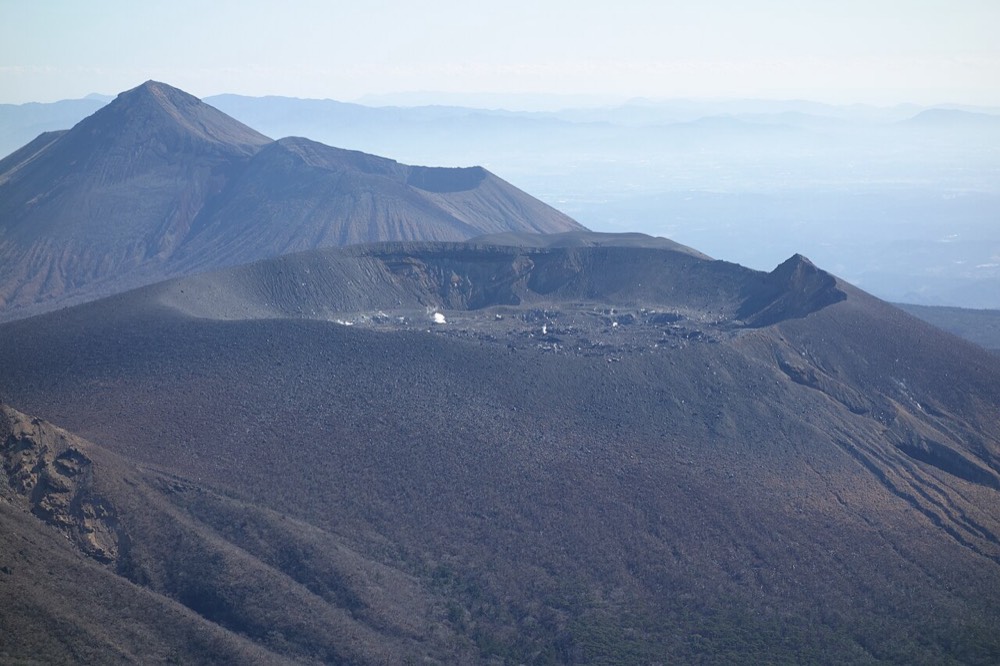
Key points from commentary No. 46[1]:
- No eruption has been observed at the Shinmoedake crater since 8 September 2025.
- Volcanic earthquakes directly beneath the crater increased from 7 November and have remained frequent since.
- White plumes reached up to about 500 m above the crater rim.
- In an eruption, large ballistic rocks could reach about 2 km from the crater and pyroclastic flows about 1 km, so caution is urged within about 2 km of the crater.
What it means for visitors: level 2 restrictions apply to the area around the crater and mainly affect hiking routes near Shinmoedake; under JMA's definitions this level does not call for residents at the foot of the mountain to evacuate. Whether ryokan and Kirishima Jingu are open is a matter for each facility's own announcements, and which trails are open is decided by Kagoshima and Miyazaki prefectures and the municipalities under their local disaster plans. If you plan to climb Karakunidake, Takachihonomine or other peaks, check the latest trail information before you set out.
Volcanic conditions can change within days. JMA currently issues a commentary roughly once a week and publishes extra bulletins when anything changes, so check the JMA Kirishimayama activity page the day before and the morning you travel[2]. Ash from an eruption could affect nearby roads and flights, so leave a buffer on the day you fly home.
Kirishima Onsen two-day plan: in and out via the airport
This plan uses only the access bus and suits first-time visitors who are not driving. To combine it with Kagoshima city or Ibusuki, attach day two to our Kagoshima and Sakurajima guide or Ibusuki sand bath guide.
| Time | Day 1 |
|---|---|
| 12:30 | Take the access bus from Kagoshima Airport stop 9 and buy the day pass on board |
| 13:00 | Get off at Maruo and leave your bags at the inn |
| 13:30–15:00 | Stroll around Maruo; Maruo Falls is about 10 minutes' walk from the Maruo bus stop |
| 15:00 | Check in and take a first soak in the main bath |
| 18:00 | Half-board dinner at the inn, then the outdoor bath at night |
| Time | Day 2 |
|---|---|
| Morning | Breakfast and one more soak before checkout |
| 10:00 | Take the access bus from Maruo (the 9:30 departure from the airport), arriving at Kirishima Jingu at 10:15 |
| 10:15–13:15 | Visit Kirishima Jingu, walk the approach and have lunch |
| 13:15 | Bus from Kirishima Jingu, arriving at Kirishima-Jingu Station at 13:28 |
| 13:38 | Direct bus from Kirishima-Jingu Station to the airport, arriving at Kagoshima Airport at 14:13; or take JR to Kagoshima-Chuo instead |
On day two you need to buy a new day pass for the buses. If your flight is in the evening, take the daily 16:21 bus from Kirishima Jingu, which reaches the airport at 17:06, and spend longer at the shrine. Buses are infrequent and missing one can mean a two- or three-hour wait, so allow spare time for every leg.
What to know about visiting Kirishima Onsen in winter
Kirishima Onsen-kyo sits at about 600–850 m and is noticeably colder than Kagoshima city in winter; during cold snaps the mountain roads can get snow or ice.
- Driving: ask your rental company whether the car has winter tires or chains available, and avoid driving in the mountains at night when snow is forecast.
- Bus: snow or icy roads can delay or suspend buses; for the latest service status contact Kagoshima Kotsu's Kokubu office.
- Clothing: it is easy to get chilled walking outside after a bath; a hat and gloves are more useful than a heavier coat.
- Bathing: winter is the best season for outdoor baths, and the steam from the sulfur springs stands out in the cold air.
How to plan it smoothly
- Decide how you will get around before choosing an area: without a car, stay in Maruo or near Kirishima Jingu; if driving or arriving late, consider Myoken or Hinatayama.
- If your flight lands after 14:30 on a weekday, confirm pickup with your inn first or book an onsen area closer to the airport.
- Half-board dinners usually have fixed start times, so match your bus arrival to the inn's rules.
- Check the JMA bulletin on Shinmoedake again before you go, and if you plan to hike, check which trails are open.
- If you want to take a sightseeing train to Ibusuki or elsewhere in Kyushu, see our Kyushu sightseeing trains guide and put Kirishima on the first or last night of your trip.
FAQ
Is it safe to visit Kirishima Onsen now? What about Shinmoedake?
As of 20 November 2026, Shinmoedake remains at volcanic alert level 2, with warnings for an area of about 2 km around the crater, which is hiking terrain on the mountain. Level 2 restricts access near the crater and does not call for residents at the foot of the mountain to evacuate. Volcanic earthquakes have increased since 7 November, so check the latest JMA bulletin before you go.
What is the easiest way from Kagoshima Airport to Kirishima Onsen?
The Kirishima Jingu Access Bus run by Kirishima City is the most direct. Board at stop 9 at the airport; it takes about 30 minutes to Maruo and about 45 minutes to Kirishima Jingu. Departures are daily at 9:30, 12:30 and 14:30, plus 17:20 on weekends and holidays. The fare is a day pass bought on board: 1,500 yen for adults and 750 yen for children, payable by contactless card.
Can I visit Kirishima Onsen as a day trip? How much does bathing cost?
Yes. At Kirishima Hotel in Iodani, for example, day bathing runs 11:00–17:00 and costs 1,200 yen for adults and 600 yen for children, rising to 1,500 yen for adults over New Year, Golden Week and Obon. On Wednesdays the main bath is closed for maintenance and only the smaller indoor baths open (information as of July 2026). Other inns set their own day-bathing hours, so check their websites.
What is the difference between Kirishima Onsen and Myoken Onsen?
Kirishima Onsen-kyo is up in the mountains, mostly sulfur springs and cooler air, and fits well with Kirishima Jingu and highland scenery. Myoken Onsen sits much lower along the Amori River gorge, with mainly bicarbonate springs, close to Kagoshima Airport and dominated by quiet riverside inns. Choose Kirishima Onsen-kyo for the sulfur smell and mountain views, Myoken if you want to move around less.
Do I need snow tires to visit Kirishima Onsen in winter?
Kirishima Onsen-kyo sits at about 600–850 m, and mountain roads can get snow or ice during cold snaps. If you drive, ask your rental company whether the car has winter tires, and check road conditions before setting out. Buses run according to the operator's announcements and can be delayed or suspended by snow, so leave extra time on the day you fly out.
Sources
- Japan Meteorological Agency: Kirishimayama (Shinmoedake) volcanic activity commentary No. 46: Issued 13 November 2026: alert level 2, about 2 km around the crater, plume height and increase in volcanic earthquakes
- Japan Meteorological Agency: Kirishimayama (Shinmoedake) activity status: Current warnings and latest bulletins; lowered from level 3 to level 2 on 17 October 2025
- Kirishima City: Kirishima Jingu Access Bus: Kagoshima Airport–Maruo–Kirishima Jingu–Kirishima-Jingu Station route, timetable and day-pass fare (updated 4 November 2026)
- Kagoshima Airport: Bus information: Airport bus stops: Kirishima Line and Kirishima Jingu Access Bus at stop 9, Myoken Onsen Line at stop 10
- Walkerplus: Kirishima Hotel day bathing: Day-bathing prices, hours, Wednesday maintenance and spring types (as of July 2026)
- Kirishima Jingu official website: Main sanctuary, offering hall and worship hall designated National Treasures; address and visitor information
- Kinki Nippon Tourist: Kirishima Onsen-kyo: Elevation of 600–850 m and main spring types
- Rurubu&more: Myoken and Anraku Onsen area: Hot springs along the Shinkawa gorge of the Amori River and their spring types
- Ekitan: Kirishima-Jingu Station route search: Travel times by limited express and local train between Kirishima-Jingu and Kagoshima-Chuo
Fares, opening hours and event dates can change. Information checked on 2026.11.20; please confirm with official sources before you go.