Kinugawa Onsen 2-Day Trip from Tokyo: Trains, Sights and Where to Stay
How to get to Kinugawa Onsen from Tokyo: SPACIA X vs Kinu/Revaty vs JR trains from Shinjuku and NIKKO PASS, a 2-day Nikko itinerary, winter closures and ryokan tips.
Quick answer
Kinugawa Onsen is about 2 hours from Asakusa by Tobu limited express: the Kinu or Revaty costs 3,240 yen one way in the regular season, and SPACIA X standard seats cost 3,530 yen (only 2 direct trains a day). JR Tokyo Wide Pass holders can ride the through train from Shinjuku, about 2 hours 5 minutes. Foreign visitors can buy the NIKKO PASS world heritage area (2 days, 3,000 yen), which covers the Asakusa round trip. The Kinugawa river boat ride is closed in winter, and the 2027 Yunishigawa Onsen Kamakura Festival runs January 29 to February 28.
Kinugawa Onsen (きぬがわおんせん) is a hot spring town in Nikko, Tochigi Prefecture, about 2 hours from Asakusa by limited express, which makes it one of the easiest overnight onsen trips from Tokyo. This guide first compares SPACIA X, the Kinu and Revaty, the JR through train from Shinjuku and the NIKKO PASS by time and cost in one table, then gives two 2-day plans (one combined with Nikko, and a winter version with the Yunishigawa Onsen Kamakura Festival). It ends with what closes in winter, what the hot spring town is like today, and what to check when choosing a ryokan.
Getting to Kinugawa Onsen: which train from Tokyo is best value?
The short answer: from Asakusa, the Kinu or Revaty limited express is the most flexible at 3,240 yen one way in the regular season. Foreign visitors save more by adding the NIKKO PASS, and JR Tokyo Wide Pass holders should take the JR through train from Shinjuku.
Kinugawa-Onsen Station is on the Tobu Kinugawa Line, which branches north from Shimo-Imaichi, the gateway to Nikko. There are two main starting points in Tokyo: Tobu's Asakusa Station (trains also stop at Tokyo Skytree and Kita-Senju), and JR Shinjuku, Ikebukuro and Omiya (through limited expresses running from JR onto Tobu tracks). The table shows one-way adult reserved-seat fares:
| Option | Departs from | Travel time | One-way fare (regular season) | Best for |
|---|---|---|---|---|
| Limited Express Kinu / Revaty Kinu | Asakusa, Tokyo Skytree, Kita-Senju | About 2 hours | 3,240 yen | Most travelers; more departures |
| SPACIA X (direct trains) | Asakusa, Tokyo Skytree, Kita-Senju | About 2 hours 2–4 minutes | 3,530 yen (standard seat) | Riding the new flagship train when times fit |
| JR through Limited Express Kinugawa | JR Shinjuku, Ikebukuro, Omiya | About 2 hours 5 minutes | About 4,140 yen | Staying in Shinjuku or Ikebukuro, JR Tokyo Wide Pass holders |
| NIKKO PASS + Tobu limited express | Asakusa, Tokyo Skytree | Same as Tobu expresses | 3,000 yen pass + express fee | Foreign visitors combining Kinugawa and Nikko |
Fares are calculated from Tobu's express fee and fare tables: the Asakusa to Kinugawa Onsen base fare is 1,590 yen, and the regular-season express fee for the Kinu and Revaty is 1,650 yen[2]. The SPACIA X standard-seat express fee is 1,940 yen[1].
Tobu limited expresses: Kinu, Revaty or SPACIA X
All Tobu limited express seats are reserved, and the price is "base fare + express fee". The express fee has three seasonal levels: 200 yen more in the busy season and 200 yen less in the off-peak season[3]. For the Kinu and Revaty:
| Season | Express fee | Total with base fare |
|---|---|---|
| Regular | 1,650 yen | 3,240 yen |
| Busy | 1,850 yen | 3,440 yen |
| Off-peak | 1,450 yen | 3,040 yen |
Tobu's busy dates for the Nikko Line include November 28–29, 2026, weekends in December and December 26–31, January 1–4, 2027, and weekends in mid-to-late February. Some weekdays between January 5 and 28 and February 1–4 are off-peak[3]. Weekday departures in winter are the cheapest.
SPACIA X is Tobu's newest flagship train, but note that according to Tobu's timetable only two trains a day, at 12:30 (No. 7) and 14:00 (No. 9), run directly from Asakusa to Kinugawa Onsen; all others terminate at Tobu-Nikko. Only 2 trains run back from Kinugawa Onsen as well[1]. If you want to arrive in the morning, the Kinu or Revaty is more practical.
JR through trains from Shinjuku
The Kinugawa limited express runs from JR Shinjuku onto Tobu tracks. For example, No. 3 leaves at 10:31 and reaches Kinugawa Onsen around 12:36, and No. 2 leaves Kinugawa Onsen at 14:55 and arrives in Shinjuku at 17:09[5]. According to Tobu's JR through-train fare table, Shinjuku to Kinugawa Onsen costs 2,100 yen in express fees and 2,040 yen in base fare[4]. Some trains run only on weekends and in busy periods, so check the JR East timetable before you go.
With the JR Tokyo Wide Pass, you can ride these through trains that start on JR lines, but you must reserve a seat; Tobu expresses from Asakusa are not covered[16]. Tobu local trains between Shimo-Imaichi and Kinugawa Onsen are also covered, so riding from Shinjuku to Tobu-Nikko, sightseeing, and then taking a local train to Kinugawa also works with the pass.
NIKKO PASS: Kinugawa is included
The NIKKO PASS is a Tobu pass for foreign visitors (Japanese travelers accompanying them can also buy it). The world heritage area version costs 3,000 yen for adults and is valid for 2 days. It includes one round trip between Asakusa and Shimo-Imaichi, plus unlimited rides on Tobu lines from Shimo-Imaichi to Tobu-Nikko and Shin-Fujiwara[6]. Kinugawa-Onsen, Kinugawa-Koen and Tobu World Square stations are all on the Shimo-Imaichi to Shin-Fujiwara section, so they are covered.
Is it worth it? The Asakusa to Kinugawa Onsen base fare alone is 3,180 yen round trip, more than the pass, so buying the pass saves 180 yen straight away and lets you ride Tobu trains to central Nikko for 2 days. Express fees are extra. The ALL AREA version (4 days, 8,000 yen) adds all Tobu buses in the Nikko area plus discounts at Tobu World Square, Edo Wonderland and the Kinugawa Onsen Ropeway[7]; it only makes sense if you are also heading up to Lake Chuzenji.
Things to do in Kinugawa Onsen: what fits in an afternoon?
The short answer: on a one-night stay, the Kinu Tateiwa Otsuribashi Bridge (free) plus one theme park or Ryuokyo is enough. The river boat ride is closed in winter, so leave it out.
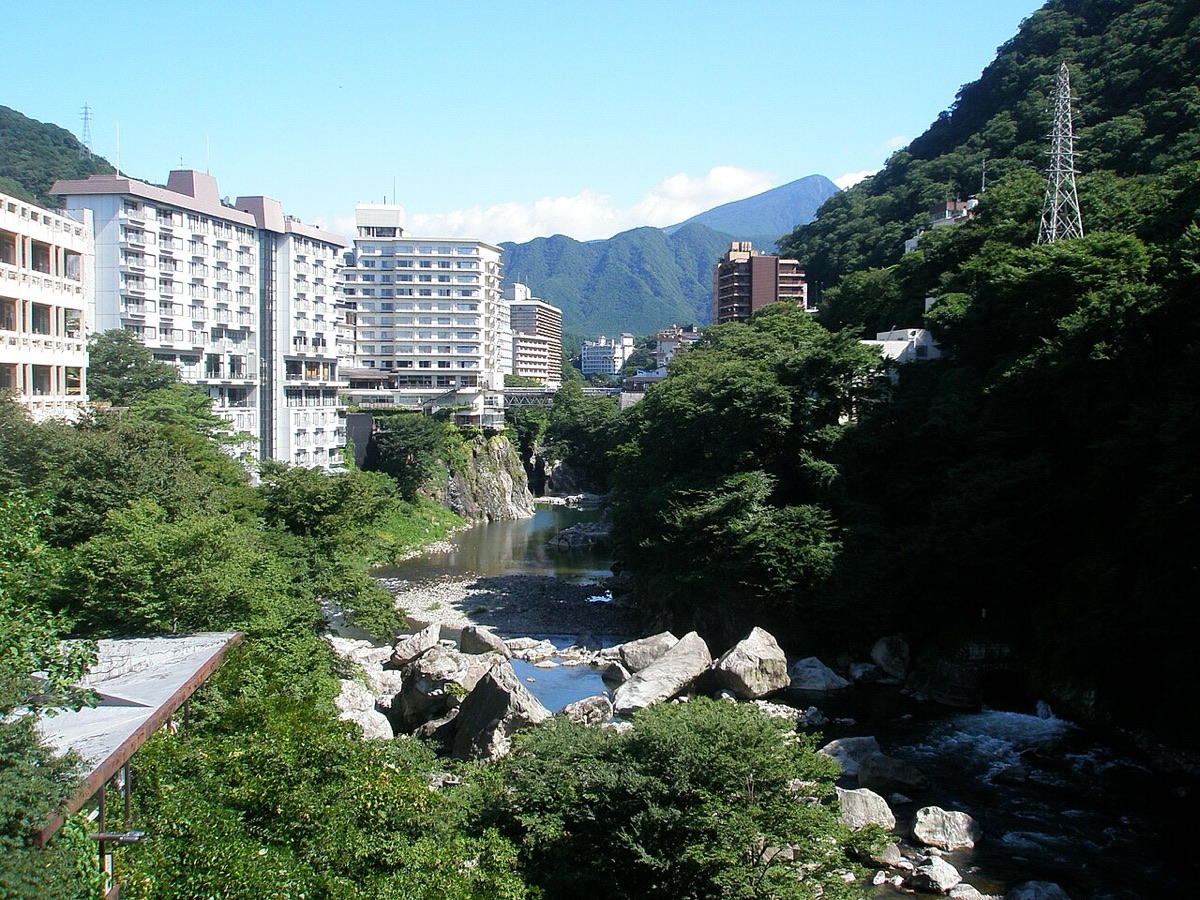
Kinugawa Onsen stretches north to south along the Kinugawa gorge, and the town itself is small. Sights fall into three groups: gorge walks within walking distance, theme parks a station or two away, and Ryuokyo further north.
Kinu Tateiwa Otsuribashi Bridge: a walk from the hot spring town
The Kinu Tateiwa Otsuribashi Bridge (きぬたていわおおつりばし) is a pedestrian suspension bridge about 140 meters long, about 12 minutes' walk from Kinugawa-Onsen Station[8]. The deck is about 37 meters above the river, and across it stands Tateiwa, a rock face about 100 meters high. After crossing, a trail climbs to an observation deck and loops back to the town.
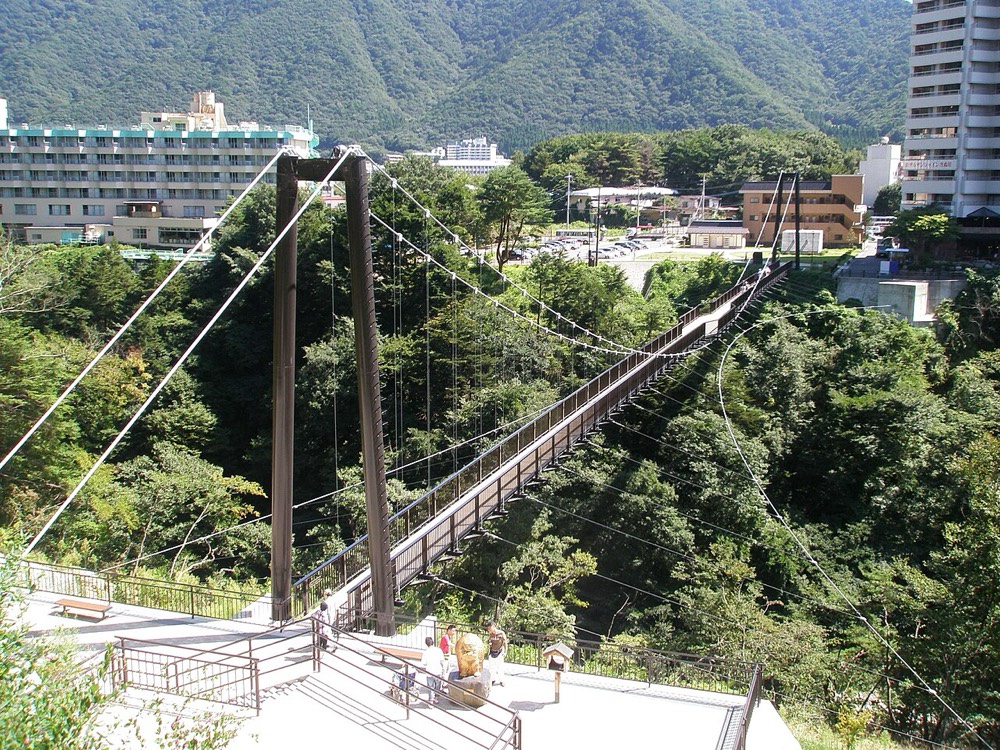
This is the best option for your arrival day or after checkout: no ticket needed, and about an hour including photos. The station square has a free foot bath, Kinuta no Yu, where you can soak your feet before your train.
Ryuokyo: a gorge trail upstream on the Kinugawa
Ryuokyo (りゅうおうきょう) is a gorge about 3 kilometers long between Kawaji Onsen and Kinugawa Onsen. Its cliffs are volcanic rock from activity 22 million years ago, carved out by the Kinugawa river[9]. Take the Yagan Railway to Ryuokyo Station; the entrance is about 3 minutes' walk, and Nijimi Falls is about 12 minutes[9].
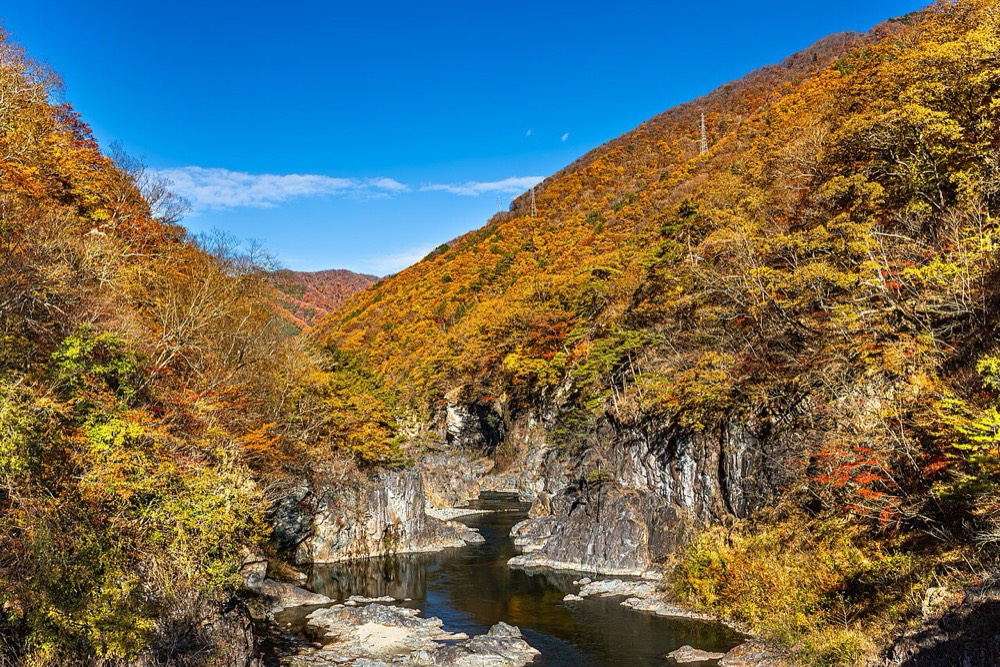
The Musasabi Bridge loop introduced by the Nikko City Tourism Association is about 2 kilometers and 60 minutes, and fit walkers can hike all the way from Kawaji Onsen, about 7 kilometers (3 to 4 hours)[9]. The trail has many steps and can ice over in winter, so non-slip shoes are safer. Late October to early November, the autumn leaf season, is the busiest time.
Tobu World Square: miniatures of world landmarks
Tobu World Square (東武ワールドスクウェア) recreates famous buildings from around the world as 1/25-scale models, with a miniature Tokyo Skytree right by the entrance. Same-day tickets cost 2,800 yen for adults (junior high and above) and 1,400 yen for children (age 4 and up)[10].
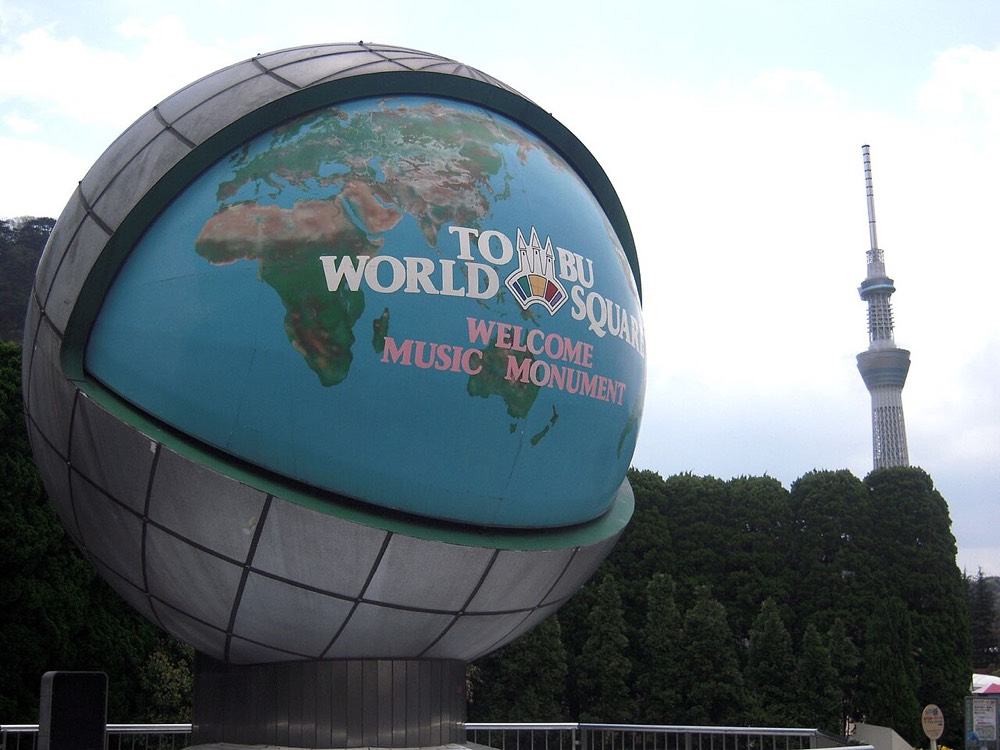
The park is next to Tobu World Square Station, where SPACIA X also stops[1]. The official hours page shows 9:30 to 16:00 in December 2026, with last entry one hour before closing, and a closure from January 18 to 24, 2027[10]. Everything is outdoors and winter afternoons get cold and windy, so go in the morning.
Edo Wonderland Nikko Edomura: an Edo-period theme park
Edo Wonderland Nikko Edomura (江戸ワンダーランド日光江戸村) recreates Edo-period streets, with ninja and oiran performances and costume rentals. It celebrates its 40th anniversary in 2026[11].
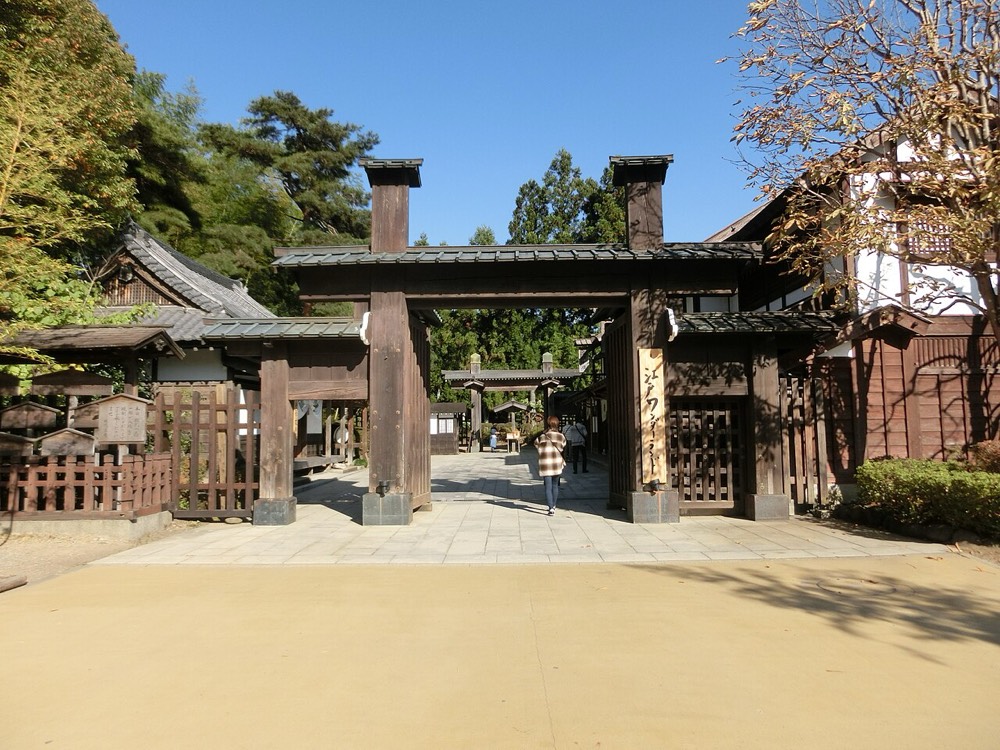
Edomura is not next to a station; take a bus from Kinugawa-Onsen Station. For admission, operating days and winter closures, follow the official calendar[11]. There are frequent irregular closing days, so always check before you go. The NIKKO PASS ALL AREA covers the Nikko Edomura loop bus, but Tobu notes it currently runs only on Saturdays and holidays[7].
Nikko and Kinugawa 2-day itinerary examples
The short answer: first-timers should choose Plan A (Nikko + Kinugawa). If you want to see the snow huts from late January to February, choose Plan B (Kinugawa + Yunishigawa) and put Yunishigawa on a Friday to Sunday.
Plan A: Nikko World Heritage + Kinugawa Onsen
| Time | Day 1 |
|---|---|
| Around 8:00 | Tobu limited express from Asakusa to Tobu-Nikko (with NIKKO PASS, pay only the express fee) |
| 10:00–14:30 | Nikko Toshogu and the Shinkyo Bridge area; yuba lunch |
| Around 15:00 | Train from Tobu-Nikko, changing at Shimo-Imaichi for Kinugawa Onsen |
| 16:00 | Check in; walk to the foot bath by Kinugawa-Onsen Station at dusk |
| From 18:00 | Dinner at the ryokan and a soak |
| Time | Day 2 |
|---|---|
| 9:00–10:00 | Kinu Tateiwa Otsuribashi Bridge and the Tateiwa observation deck |
| 10:30–13:30 | Tobu World Square (or the Ryuokyo trail) |
| 14:00–15:00 | Lunch and souvenirs back at Kinugawa-Onsen Station |
| From 15:00 | Limited express back to Asakusa or Shinjuku (for example the JR through Kinugawa No. 2 at 14:55, arriving in Shinjuku at 17:09) |
Nikko Toshogu closes at 16:00 in winter, so leave time on the afternoon of Day 1. For Toshogu tickets, hours and Nikko transport details, see the Nikko day trip guide.
Plan B: Kinugawa Onsen + Yunishigawa Kamakura Festival (January 29 – February 28, 2027)
| Time | Plan |
|---|---|
| Day 1 morning | Limited express from Asakusa to Kinugawa Onsen; leave luggage |
| Day 1 afternoon | Kinu Tateiwa Otsuribashi Bridge or Ryuokyo (pick one); stay at Kinugawa Onsen |
| Day 2 morning | Tobu World Square or a walk around the town |
| Day 2 from 14:00 | Train to Yunishigawa-Onsen Station, then a bus for about 25 minutes to Yunishigawa Onsen |
| Day 2 17:30–19:30 | Snow hut lights at Heike no Sato and Sawaguchi riverbed (the riverbed is lit only Friday to Sunday) |
| Day 2 night | Stay at Yunishigawa Onsen, or confirm the last trains before heading back |
Yunishigawa is far from Tokyo, and returning to the city after the lights is a rush. A more realistic option is to spend the second night in Yunishigawa, making it two nights; if you only want one night, book your ryokan in Yunishigawa itself.
Kinugawa Onsen today: where it's lively and what to check when booking
The short answer: many ryokan in Kinugawa Onsen still operate normally, but some large buildings along the gorge have been closed for years. Check the room view, renovation date and distance from the station before booking, and you will avoid most surprises.
During the bubble economy, Kinugawa Onsen's annual overnight guests topped 3 million, and many large hotels were built along both sides of the gorge. Visitor numbers later fell and some hotels closed. A 2022 Japanese media report noted that closed buildings are visible along the gorge about 10 minutes' walk from the station area, and a Nikko City official said that the owners of many properties are unknown, and that the buildings sit on riverside cliffs with narrow roads, making it hard for heavy machinery to get in for demolition[15]. The "Kinugawa ruins" people often search for online are mostly these buildings seen from bridges or the gorge.
Visitor activity centers on the square in front of Kinugawa-Onsen Station, with the Kinuta no Yu foot bath, souvenir shops and restaurants. Following the main road north takes you to the Kinu Tateiwa Otsuribashi Bridge. Overall, the stretch from the station to the bridge sees the most foot traffic; few shops are open in the evening, and most guests eat dinner at their ryokan.
When choosing a ryokan, check the following:
- The view from the room: gorge-view rooms have the best outlook, but a few rooms face closed buildings. Guest photos on booking sites show the real view better than official photos.
- The most recent renovation: most large hotels were built decades ago, and renovated rooms and baths make a big difference.
- Distance from the station and pickup service: the town stretches along the gorge, and some ryokan are up a slope from Kinugawa-Onsen Station. If you have heavy luggage, check whether they offer a station pickup.
- Half board or room only: evening dining options are limited, so a plan with dinner included is easier on a first visit.
If you are unsure whether to choose a large hotel or a traditional inn, read the Japanese ryokan guide first for the basics of half board, yukata and shared baths.
Visiting Kinugawa Onsen in winter: what's closed and how to prepare
The short answer: the biggest winter differences are that the Kinugawa river boat ride is closed, theme parks have shorter hours, and you need to prepare for icy conditions toward Yunishigawa.
Kinugawa Line Kudari (the Kinugawa river boat ride) is the town's best-known activity, about 30 minutes and 3,500 yen for adults, but it operates from mid-April to late November and is closed in winter; it may also be suspended at short notice after heavy rain or changes in river levels[12]. If you visit between December and mid-March, leave it out.
Other winter notes:
| Item | Winter status | What to do |
|---|---|---|
| Kinugawa river boat ride | Operates mid-April to late November; closed in winter[12] | Walk the suspension bridge or the Ryuokyo trail instead |
| Tobu World Square | 9:30–16:00 in December; closed January 18–24, 2027[10] | Go in the morning; avoid the closure week |
| Edomura | Irregular closing days[11] | Check the calendar before going |
| Ryuokyo trail | Steps may be icy | Non-slip shoes; leave before dark |
| Roads toward Yunishigawa | Winter tires required for drivers[13] | Use trains and buses where possible |
| Tobu limited expresses | New Year period and February weekends are busy season[3] | Weekday departures are cheaper and easier to book |
Kinugawa Onsen's water is a mild alkaline simple spring, very comfortable for a winter soak. For a different kind of hot spring town, the strongly acidic waters in the Kusatsu Onsen guide offer a contrast; if you just want a soak in Tokyo without staying overnight, see Tokyo day-trip onsen.
Yunishigawa Onsen Kamakura Festival 2027: dates, venues and access
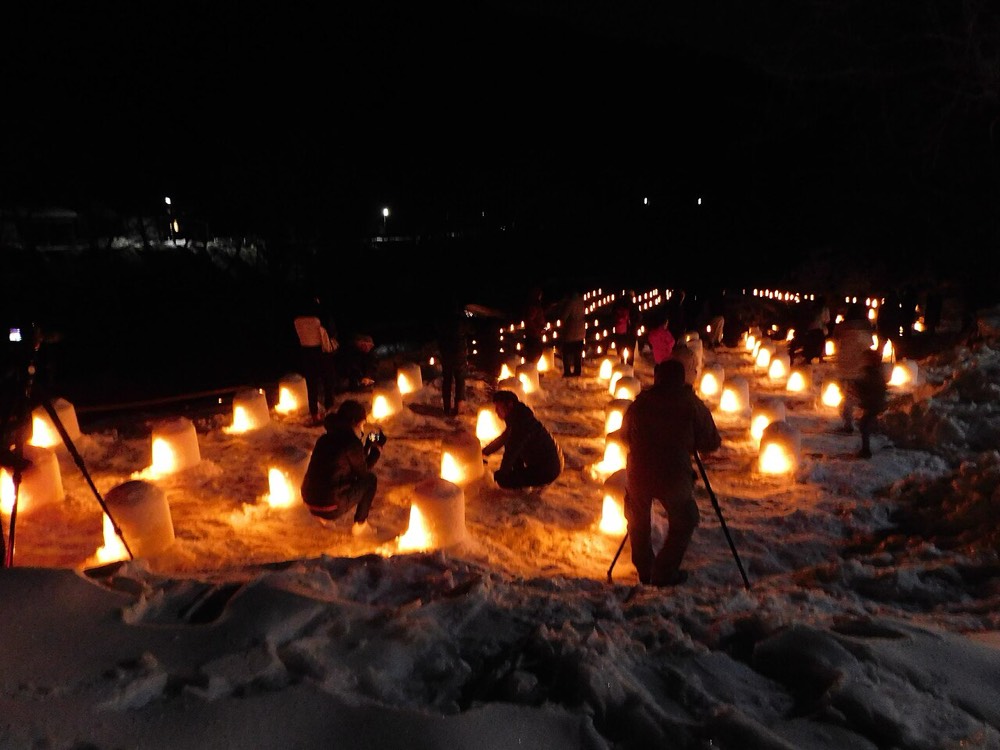
The short answer: the Nikko City Tourism Association has announced the 2027 Yunishigawa Onsen Kamakura Festival for January 29 to February 28. The famous riverbed mini snow huts are lit only Friday to Sunday, 17:30 to 21:00, and entry is free[13].
Yunishigawa Onsen (ゆにしがわおんせん) lies in a mountain valley upstream on the Kinugawa and is said to be a village where defeated Heike warriors hid. Each winter the festival fills the riverbanks and village with snow huts (kamakura) of all sizes, lit by candles at night, making it Nikko's signature winter night scene.
| Venue | Hours | Fee | Notes |
|---|---|---|---|
| Sawaguchi riverbed | Lit 17:30–21:00 | Free | Lit Friday, Saturday and Sunday only |
| Heike no Sato | 9:00–21:00 (last entry 20:45), lit from 17:30 | Adults 700 yen, elementary and junior high students 300 yen | Open daily; re-entry allowed |
| Yunishigawa Mizunosato Snow Park | 10:00–15:00 (last entry 14:00) | Adults 1,500 yen, elementary students 800 yen | Includes sledding and hot spring; closed Wednesdays |
Based on the Nikko City Tourism Association's 2027 event page and feature[13][14]. Plans may change or be cancelled due to weather.
Getting there:
- From Kinugawa-Onsen Station, take a train toward Aizu (the Tobu Kinugawa Line runs through onto the Yagan Railway; the Revaty Aizu also stops) to Yunishigawa-Onsen Station. According to Tobu's fare table, the fare from Kinugawa Onsen to Yunishigawa Onsen is 680 yen[2].
- At Yunishigawa-Onsen Station, take the local bus bound for "Yunishigawa Onsen", about 25 minutes to the terminal[14]. Heike no Sato is right by the terminal, and Sawaguchi riverbed is about 5 minutes' walk.
- Check the last bus and train before you go. Friday to Sunday is the busiest, and the tourism association recommends trains and local buses rather than driving[13].
Before you go
- Reserve limited express seats early: Tobu expresses and JR through trains are all reserved, and popular trains on weekends and busy days sell out.
- Direct SPACIA X trains are rare: only 2 a day run directly to Kinugawa, so check the timetable first, or change at Tobu-Nikko or Shimo-Imaichi.
- The NIKKO PASS does not cover the Yagan Railway: pay the extra fare north of Shin-Fujiwara for Ryuokyo and Yunishigawa.
- No river boat in winter: the Kinugawa river boat ride is closed from late November to mid-April.
- Check the day of the week for the Kamakura Festival: the riverbed mini snow huts are lit only Friday to Sunday; on weekdays you can only see Heike no Sato.
FAQ
How long does it take from Tokyo to Kinugawa Onsen, and what is the cheapest way?
The Tobu limited express from Asakusa takes about 2 hours. The Kinu or Revaty costs 3,240 yen one way in the regular season and 3,040 yen in the off-peak season. Foreign visitors who buy the NIKKO PASS world heritage area (3,000 yen) get the Asakusa round-trip fare covered and only pay the express fee, which is usually the cheapest combination.
Does SPACIA X go directly to Kinugawa Onsen?
Yes, but rarely. According to Tobu's timetable, only two SPACIA X trains a day run directly from Asakusa to Kinugawa Onsen, at 12:30 and 14:00, taking about 2 hours 2 to 4 minutes. The rest terminate at Tobu-Nikko. For a morning start, take the Kinu or Revaty, or change at Shimo-Imaichi.
Can I use the JR Tokyo Wide Pass to get to Kinugawa Onsen?
Yes, but only on through limited expresses that start from JR Shinjuku, Ikebukuro or Omiya and continue onto Tobu tracks (such as the Kinugawa), and you must reserve a seat. Tobu expresses from Asakusa are not covered. Direct Kinugawa trains from Shinjuku are few, and some run only on weekends and in busy periods.
Is Kinugawa Onsen full of abandoned hotels? Is it still worth visiting?
Some large hotels along the gorge have been closed for years, and Japanese media have reported on unclear ownership and the difficulty of demolishing buildings on the cliffs. But many ryokan are still operating, and the station area has a foot bath and shops. Checking the room view and the last renovation date when booking avoids most disappointments.
What should I know about visiting Kinugawa Onsen in winter?
The Kinugawa river boat ride (Line Kudari) runs from mid-April to late November and is closed in winter. Tobu World Square is closed January 18 to 24, 2027. Winter tires are required if you drive toward Yunishigawa, and the Ryuokyo trail can be icy, so wear non-slip shoes and use trains and local buses where possible.
When is the 2027 Yunishigawa Onsen Kamakura Festival and how do I get there?
The Nikko City Tourism Association lists the 2027 Yunishigawa Onsen Kamakura Festival as January 29 to February 28. The mini snow huts at Sawaguchi riverbed are lit only Friday to Sunday, 17:30 to 21:00, with free entry. Take the train from Kinugawa Onsen to Yunishigawa-Onsen Station, then a bus for about 25 minutes to the Yunishigawa Onsen terminal.
Sources
- Tobu Railway SPACIA X boarding guide: SPACIA X timetable, stops and an example standard-seat express fee
- Tobu Railway Kegon, Kinu and Revaty fare table: Asakusa to Kinugawa Onsen base fare and regular-season express fee; Kinugawa Onsen to Yunishigawa Onsen fare
- Tobu Railway seasonal limited express fee calendar: Busy and off-peak dates and surcharge rules (as of September 1, 2026)
- Tobu Railway JR through limited express fare table: JR Shinjuku to Kinugawa Onsen express fee and base fare
- JR East timetable: Limited Express Kinugawa No. 2: Kinugawa Onsen to Shinjuku departure and arrival times
- Tobu Railway NIKKO PASS world heritage area: Price, validity, rail coverage and eligibility
- Tobu Railway NIKKO PASS ALL AREA: Price, bus coverage and Kinugawa attraction discounts
- Nikko City Tourism Association: Kinu Tateiwa Otsuribashi Bridge: Length, height and walking time from the station
- Nikko City Tourism Association: Ryuokyo: Access, trail distances and walking times
- Tobu World Square tickets and hours: Same-day ticket prices; hours and closure dates on the official hours page
- Edo Wonderland Nikko Edomura official site: Park overview and events
- Kinugawa Line Kudari official site: Operating season, ride time and fares
- Nikko City Tourism Association: Yunishigawa Onsen Kamakura Festival: 2027 dates, venue hours, fees and access
- Nikko City Tourism Association: Yunishigawa Onsen Kamakura Festival 2027 feature: Heike no Sato and Mizunosato Snow Park fees and bus times
- Bunshun Online: Kinugawa Onsen's abandoned hotels (2022): Background on closed hotels along the gorge and comments from Nikko City
- JR East JR TOKYO Wide Pass terms: Rules for JR through trains onto Tobu lines
Fares, opening hours and event dates can change. Information checked on 2026.11.25; please confirm with official sources before you go.