Karuizawa Day Trip from Tokyo: Getting There, Kyu-Karuizawa, Kumoba Pond, the Prince Outlet and Winter Plans
Plan a Karuizawa day trip from Tokyo: shinkansen vs bus fares and times, local buses, Kyu-Karuizawa, Kumoba Pond, the outlet, two itineraries and winter tips.
Quick answer
The fastest Karuizawa day trip is the Hokuriku Shinkansen: about 1 hour from Tokyo, and on a November 2026 weekday a one-way ticket costs 5,600 yen non-reserved or 5,930 yen reserved. Seibu highway buses from Ikebukuro and Shinjuku cost 2,400–2,900 yen but take about 3 hours. The Prince Shopping Plaza outlet is right outside the station's south exit and closes at 19:00 from November 10. Kyu-Karuizawa and Kumoba Pond are walkable or a short bus ride away; Shiraito Falls is about 25 minutes by Kusakaru bus. Kumoba Pond's leaves peaked on October 30, with leaf fall forecast from around November 11.
A Karuizawa day trip is one of the easiest highland escapes from Tokyo: the Hokuriku Shinkansen gets you there in about an hour, a large outlet mall sits right outside the station's south exit, and to the north are the century-old Kyu-Karuizawa Ginza shopping street, Kumoba Pond and the forested Hoshino area. This guide compares the shinkansen and highway bus on time and cost, explains how to get around once you arrive in Karuizawa (かるいざわ), gives two timed itineraries (shopping and nature), and covers what to expect from the end of the November foliage into winter.
Who is a Karuizawa day trip for, and who should skip it?
In short: it suits people who want shopping plus easy walks in one day without many transfers; if you want hot springs, snow scenery or skiing, a Karuizawa day trip will feel limited.
Karuizawa sits in eastern Nagano Prefecture at about 1,000 meters above sea level. From the Meiji era it was a summer retreat for foreign missionaries and Tokyo's upper class, which is why the town has many churches, Western-style wooden buildings and cafés. Sights fall into three areas: around the station (the outlet), Kyu-Karuizawa about 2 km north of the station (the old Ginza street, churches, Kumoba Pond), and the Hoshino area near Naka-Karuizawa to the west. Shiraito Falls is farther north in the mountains.
| You are… | Good fit? | Why |
|---|---|---|
| Shopping for outdoor or sports brands at the outlet | Great | The outlet is next to the station, so the shinkansen saves the most time |
| A first-timer after autumn leaves or a Western-style old town | Good | Kyu-Karuizawa and Kumoba Pond are walkable or a short bus ride |
| Traveling with older relatives or kids | Good | Short travel time; the outlet has a food court and places to rest |
| Looking for hot springs and an onsen town | So-so | The Hoshino area has a day-use bath, but for an onsen town try Kusatsu Onsen |
| On a tight budget and bus-only | Not ideal | About 3 hours each way leaves only 4–5 hours on the ground |
| Hoping for snow scenery or skiing in Dec–Feb | Not ideal | Town may not have snow cover, and some shops close for winter |
If you are weighing this against a Hakone day trip or a Nikko day trip: choose Hakone for hot springs, Nikko for World Heritage shrines, and Karuizawa for shopping plus highland walks.
Getting to Karuizawa: shinkansen or highway bus?
In short: for a day trip, take the Hokuriku Shinkansen, about 1 hour from Tokyo. Highway buses cost less than half, but take about 3 hours each way and suit people staying overnight.
| Option | Where to board | Travel time | One-way adult fare | Best for |
|---|---|---|---|---|
| Hokuriku Shinkansen, non-reserved | Tokyo, Ueno, Omiya | About 1 hr 2–6 min | 5,600 yen | Weekdays, if you don't mind standing |
| Hokuriku Shinkansen, reserved | Same | Same | 5,930 yen (weekday, November 2026) | Weekends, peak seasons, luggage |
| Seibu highway bus (Chikuma Line) | Busta Shinjuku, Ikebukuro Station East Exit, etc. | About 3 hr from Ikebukuro | 2,400–2,900 yen | Budget travelers staying in Ikebukuro or Shinjuku |
Hokuriku Shinkansen: non-reserved vs reserved
According to Yahoo! Route Search for weekday trains on November 10, 2026, the base fare from Tokyo to Karuizawa is 2,750 yen and the non-reserved express fee is 2,850 yen, for a total of 5,600 yen; the reserved express fee is 3,180 yen, for a total of 5,930 yen[2]. Reserved seats cost a little more in peak periods, so go by the price shown when you book.
- Every "Asama" stops at Karuizawa and some "Hakutaka" trains do; both have non-reserved cars. The "Kagayaki" is all-reserved and does not stop at Karuizawa.
- Weekend morning trains to Karuizawa and evening trains back to Tokyo often sell out, so reserve ahead in the foliage season and over New Year. For how to book, see our shinkansen booking guide.
- With the JR Tokyo Wide Pass, you can reserve Hokuriku Shinkansen seats between Tokyo and Karuizawa at no extra charge[1]. The pass costs 16,000 yen for 3 consecutive days, so one Karuizawa round trip of about 12,000 yen does not pay it off; combine it with Kawaguchiko or Nikko.
Highway bus: the Karuizawa day trip bus from Ikebukuro and Shinjuku
The Karuizawa Tourist Association lists these highway buses from the Tokyo area: Seibu Bus's Chikuma Line (Ikebukuro, Shinjuku), the Karuizawa–Kusatsu Line (Shibuya), Chikuma Bus's Tachikawa Line, and a Tokyu Bus route from Yokohama[4]. Its list has no route from Tokyo Station's Yaesu side, so if you are staying near Tokyo Station the shinkansen is the practical choice.
The most used Chikuma Line runs from Busta Shinjuku via Ikebukuro Station East Exit to Karuizawa, Saku and Ueda. In November–December 2026 the Karuizawa service has 6 departures a day, the first leaving its starting point at 6:45; some run on weekdays only or only on weekends and specific dates[3]. Fares follow an A/B/C calendar: for the Karuizawa–Saku–Komoro area, adults pay 2,900, 2,600 or 2,400 yen, 50–60 yen less when paying online through Hassha Orai Net; booking opens one month before travel[3]. For example, the bus leaving Ikebukuro at 8:40 reaches Karuizawa Station at 11:42, about 3 hours[2].
Day trip cost breakdown
Below is an estimate for one adult from Tokyo following the "nature route" (Shiraito Falls + Kyu-Karuizawa + Hoshino area), transport and admission only, excluding food and shopping.
| Item | Shinkansen (reserved) plan | Highway bus plan |
|---|---|---|
| Tokyo⇄Karuizawa round trip | 11,860 yen | 4,800–5,800 yen |
| Karuizawa Station→Shiraito Falls (Kusakaru) | 720 yen | 720 yen |
| Shiraito Falls→Kyu-Karuizawa (Kusakaru) | 650 yen | 650 yen |
| Former Mikasa Hotel admission (optional) | 1,000 yen | 1,000 yen |
| Hoshino area round trip (Seibu Kanko Bus) | See official fares | See official fares |
| Total (excluding Hoshino bus) | About 14,230 yen | About 7,170–8,170 yen |
Kusakaru fares come from the company's fare table (October 2019 revision)[5]; the fare chart on board is final. Non-reserved shinkansen seats save another 660 yen on the round trip.
Getting around Karuizawa: walking, bikes and buses
In short: the Kusakaru bus is the easiest link between the station and Kyu-Karuizawa, about 4–7 minutes; you can walk from the station to Kumoba Pond; the Hoshino area and Shiraito Falls need a bus or taxi.
- Walking: About 15–20 minutes from the station to Kumoba Pond, then another 20–25 minutes to Kyu-Karuizawa Ginza. Walking straight from the station to the old Ginza street is about 2 km, mostly a gentle uphill.
- Kusakaru Kotsu: Buses leave from Karuizawa Station's north exit. From November 1 to 30 an extra shuttle runs to Kyu-Karuizawa; on the November 2026 timetable the 9:40 departure reaches Kyu-Karuizawa at 9:44, and service may thin out from December. Buses toward Shiraito Falls and Kusatsu Onsen also stop at Kyu-Karuizawa, St. Paul's Church and Mikasa[5]. These buses can't be reserved; you board in queue order and may need to wait for the next one if it's full.
- Seibu Kanko Bus: About 20 minutes to the Hoshino area ("Hoshino Onsen Tombo-no-yu" stop)[11]. The Hoshino area has no coin lockers, so leave luggage at Karuizawa or Naka-Karuizawa Station[11].
- Town loop bus: Karuizawa town runs the East/South, North and West routes, which reach the Rokuhontsuji–Kumoba Pond area; the red bus to the Miharashidai lookout runs only from spring to autumn and is suspended in winter[4].
- Bicycles: Kyu-Karuizawa has plenty of flat roads and is great for cycling from spring to autumn. But many shops are seasonal; for example, some rent only until mid-December, and one hotel's rental service pauses from late November[14]. In winter, check the tourist association's list of rental shops first.
- Taxis: You can book through the GO app, but the tourist association notes that cars are limited and you may wait in busy seasons[4].
Things to do in Karuizawa: from the outlet to Shiraito Falls
In short: for a first visit, the outlet by the station + Kyu-Karuizawa + Kumoba Pond is the easiest combination; add the Hoshino area or Shiraito Falls if you have time.
Karuizawa Prince Shopping Plaza (Karuizawa outlet)
Karuizawa Prince Shopping Plaza is right outside the south exit of JR Karuizawa Station. It is spread over several zones around lawns and a pond, with international luxury, outdoor, sports and Japanese brands. From November 1 to 9, 2026 it is open 10:00–20:00, and from November 10 it closes at 19:00[6]. The English site lists tax-free shops and coin lockers.
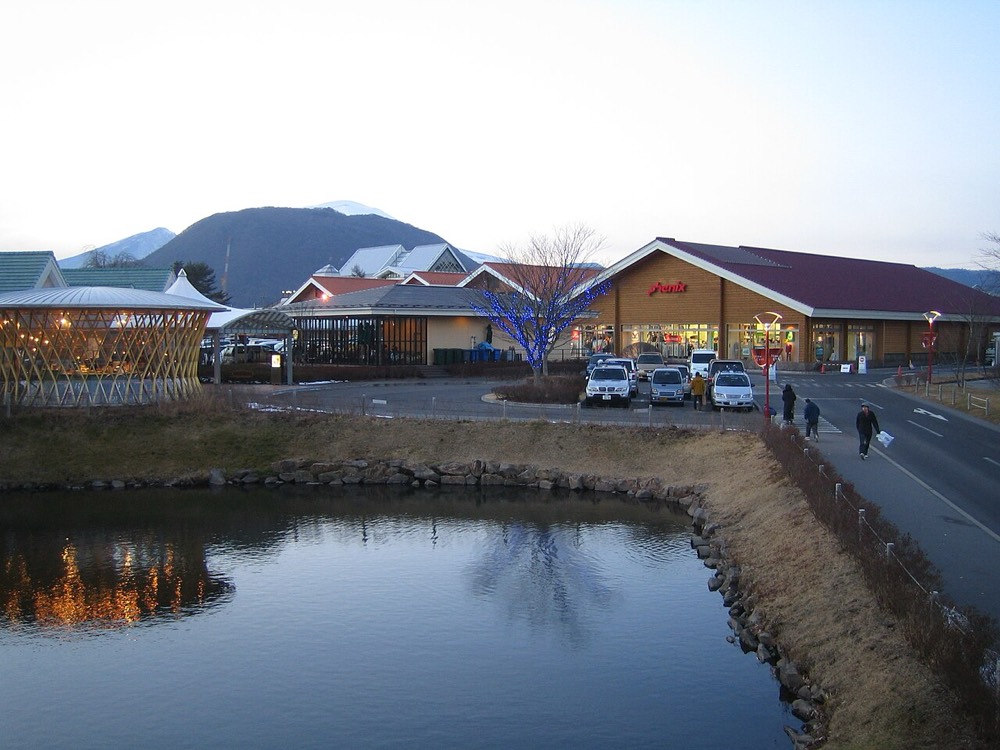
Since November 1, 2026, Japan uses a "pay tax first, get a refund when you leave" system, so at the outlet you pay the tax-inclusive price and claim the refund on departure. See Japan's new tax-free refund system for the steps.
Kyu-Karuizawa Ginza and St. Paul's Church
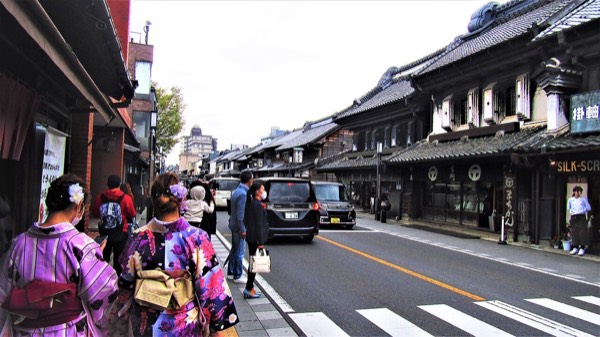
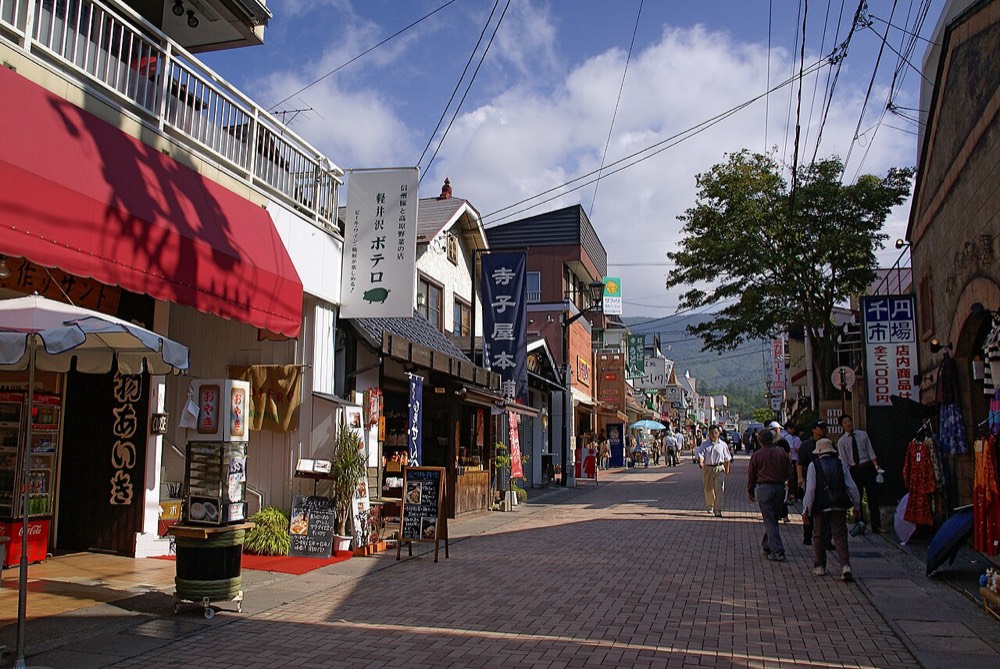
Kyu-Karuizawa Ginza is the main old street of Kyu-Karuizawa, lined with jam shops, bakeries, cafés and souvenir shops, and on summer weekends it can be hard to move through the crowds.
Down a lane off the street, St. Paul's Catholic Church Karuizawa is a wooden church designed by the American architect Antonin Raymond, easy to spot by its spire and steep roof. It is open to visitors roughly 9:00–16:00 for free, but you can't enter during Mass or weddings[12].
Kumoba Pond
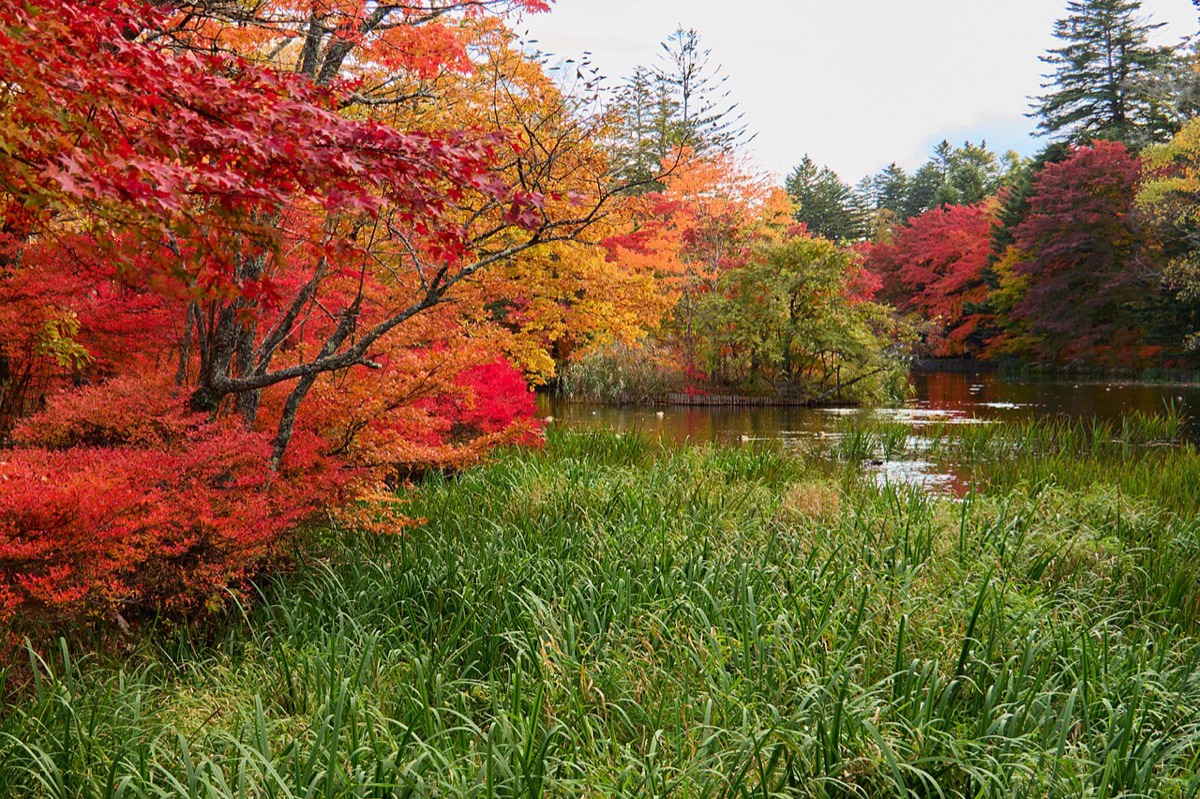
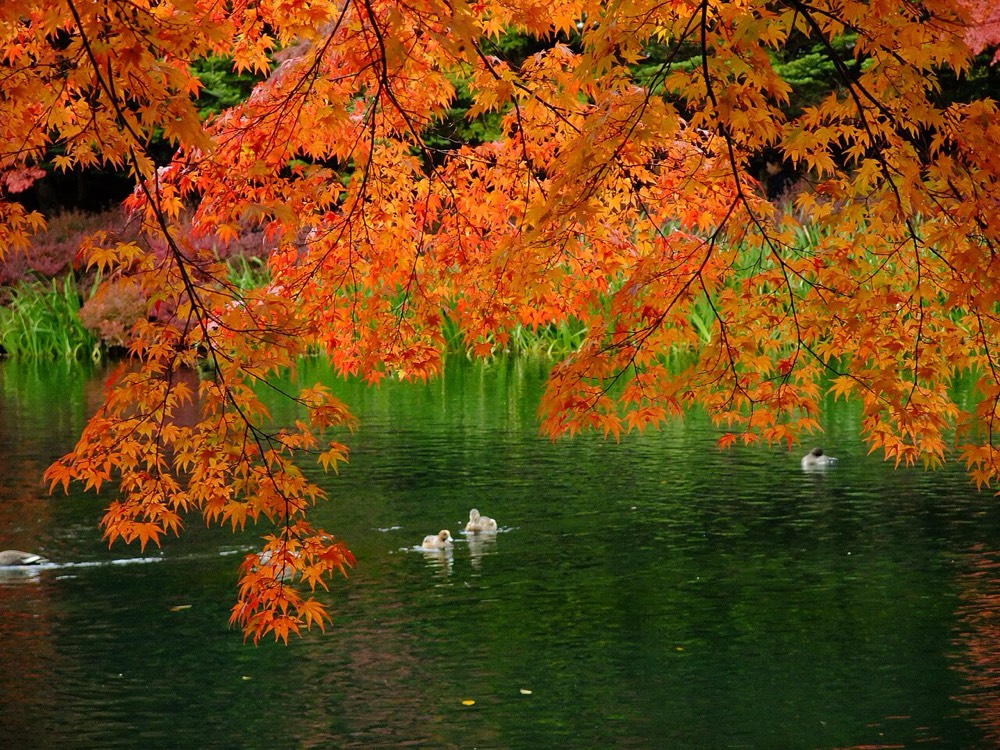
Kumoba Pond (くもばいけ) is a long, narrow pond ringed by trees; a loop takes about 20–30 minutes, and in autumn the red leaves reflected on the water make it Karuizawa's signature foliage spot. On October 30, 2026 it was at peak (about 70–80% colored), with leaf fall forecast from around November 11[10]; in past years the peak has run from mid-October to early November. There is no parking by the pond, so walk or use public transport in the foliage season.
Former Mikasa Hotel
The Former Mikasa Hotel (旧三笠ホテル) is a fully Western-style wooden hotel that opened in 1906. After about five and a half years of preservation work, it reopened on October 1, 2025[9].
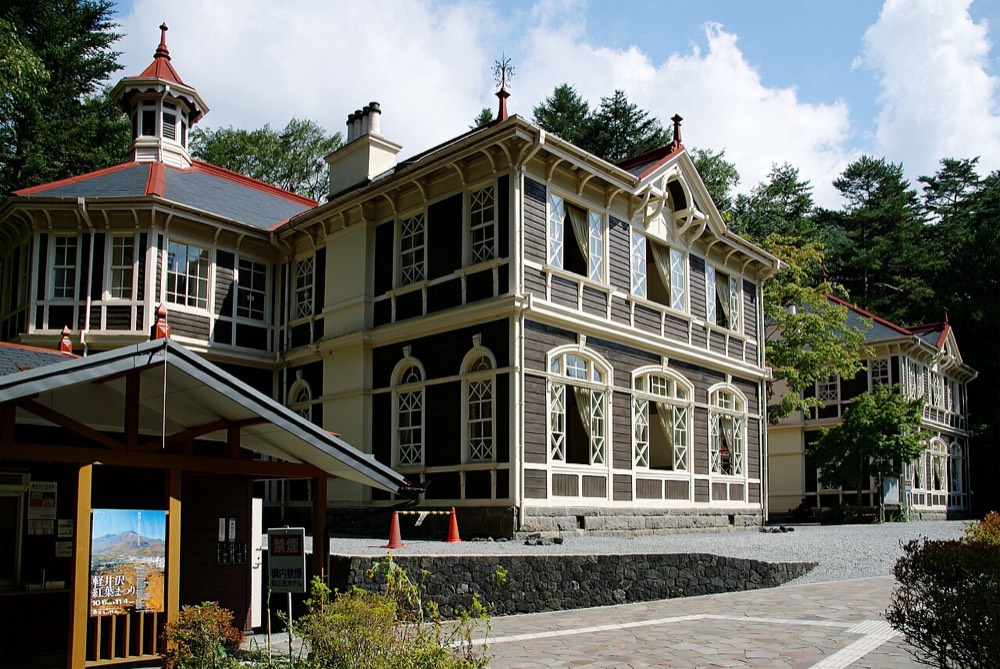
It is open 9:00–17:00 (last entry 16:30); admission is 1,000 yen for adults and 500 yen for elementary and junior high students. It closes on Wednesdays (except July 15 to October 31; if Wednesday is a holiday, the next weekday instead) and from December 28 to January 3[9]. A new café operates inside. From Kyu-Karuizawa, take a Kusakaru bus toward Shiraito Falls and get off at the "Mikasa" stop.
Hoshino area: Harunire Terrace and the Stone Church
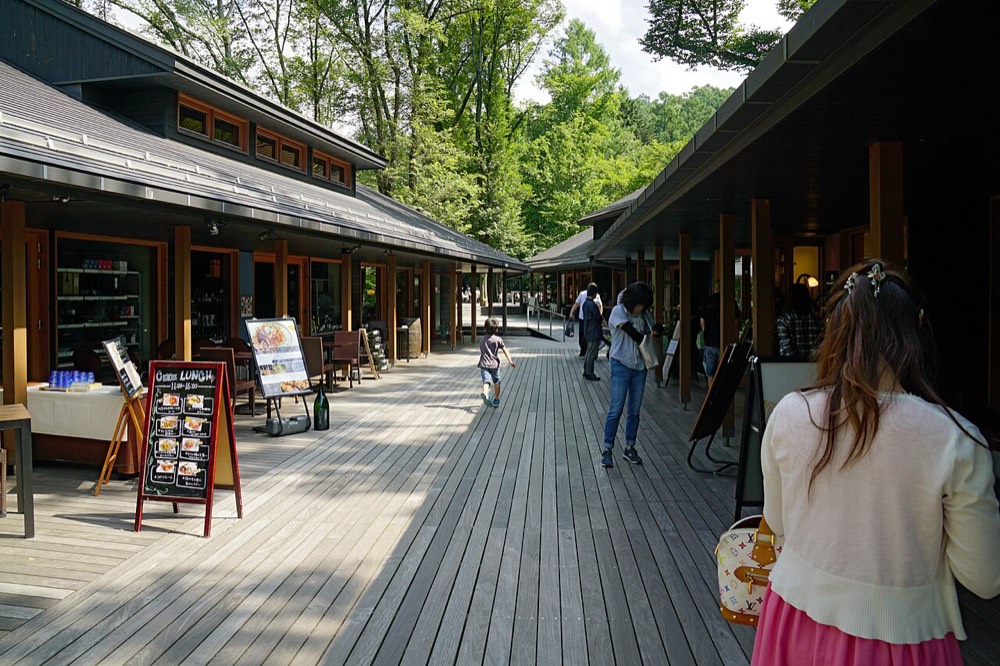
The Hoshino area near Naka-Karuizawa centers on Harunire Terrace (ハルニレテラス), where boardwalks along a stream link shops and restaurants. Nearby are the day-use bath Hoshino Onsen Tombo-no-yu and the Stone Church, Uchimura Kanzo Memorial, built of stone arches and glass. The Stone Church is also a wedding venue, so check visiting times on the Hoshino Area website. In autumn 2026 the area hosts the "Karuizawa Autumn Leaves Library" event (October 10 to November 15), and in winter a skating rink opens in the forest once the pond freezes, with dates depending on the weather.
Shiraito Falls
Shiraito Falls (白糸の滝) is not tall, but groundwater pours down a curved rock wall in many thin white threads, and it is the best-known natural sight in northern Karuizawa.
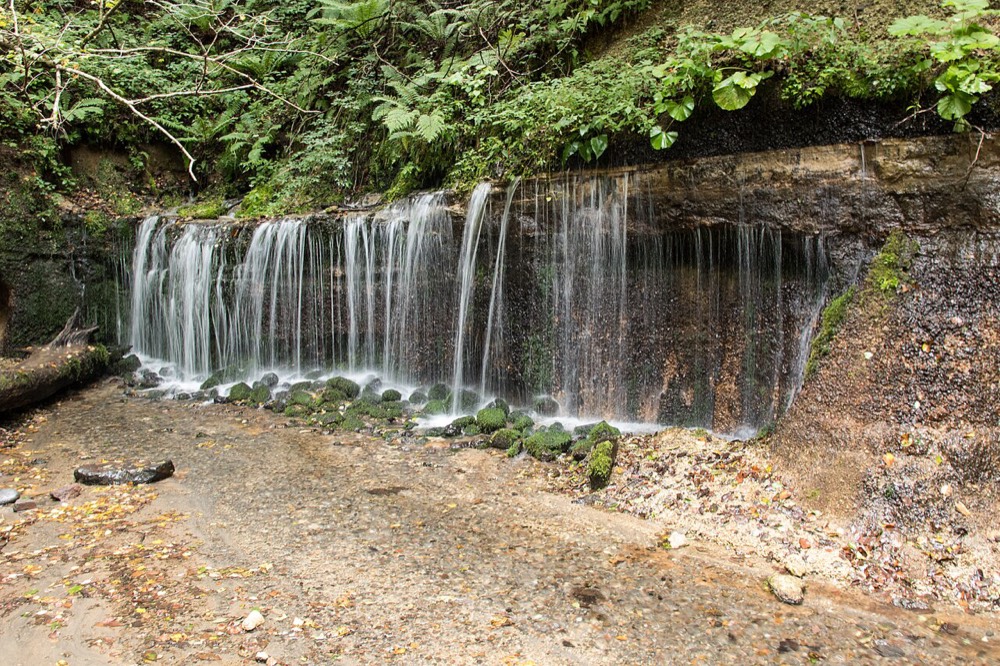
From stop 2 at Karuizawa Station's north exit, a Kusakaru bus takes about 25 minutes, then it's about a 5-minute walk. The timetable from November 1, 2026 has daily buses toward Shiraito Falls and Kusatsu Onsen[5], but only 1–2 an hour, so snap a photo of the return timetable when you get off.
Karuizawa day trip itineraries: shopping route and nature route
In short: shoppers should put the outlet in the afternoon until closing, since it's next to the station and you won't miss your train; nature lovers should head to Shiraito Falls first thing, before afternoon buses thin out.
Plan A: Kumoba Pond + Kyu-Karuizawa + outlet (shopping route)
| Time | Plan | Notes |
|---|---|---|
| 08:41 | Hokuriku Shinkansen from Tokyo Station | e.g. a "Hakutaka", about 1 hour |
| 09:45 | Arrive at Karuizawa Station | Put large bags in station lockers |
| 10:00–11:00 | Walk to Kumoba Pond and loop it | About 20 minutes on foot from the station |
| 11:00–13:30 | Walk to Kyu-Karuizawa Ginza, St. Paul's Church, lunch | About 20–25 minutes from the pond |
| 13:30 | Kusakaru bus back to Karuizawa Station | About 4–7 minutes |
| 13:45–18:30 | Karuizawa Prince Shopping Plaza | Closes at 19:00 from November 10 |
| Around 18:30 | Dinner at the outlet food court or the station | In winter, see the illuminations |
| 19:00–20:00 | Shinkansen back to Tokyo | Reserve the return train in advance |
Plan B: Shiraito Falls + Former Mikasa Hotel + Hoshino area (nature route)
| Time | Plan | Notes |
|---|---|---|
| 08:41 | Hokuriku Shinkansen from Tokyo Station | About 1 hour |
| Around 10:00 | Kusakaru bus to Shiraito Falls from the north exit | About 25 minutes; check that day's timetable |
| 10:30–11:30 | Shiraito Falls | About 40 minutes for the path and photos |
| 11:30–12:00 | Bus to "Mikasa" for the Former Mikasa Hotel | Avoid Wednesdays (closed) |
| 12:30–14:00 | Bus to Kyu-Karuizawa for lunch and the old street | A few minutes by bus from Mikasa |
| 14:15–14:45 | Back to Karuizawa Station, change to the Seibu Kanko Bus | About 20 minutes to the Hoshino area |
| 15:00–17:30 | Harunire Terrace, Stone Church, Tombo-no-yu | It gets dark early in winter; light fades after 16:30 |
| Around 18:00 | Back to Karuizawa Station and shinkansen to Tokyo | With time to spare, add an hour at the outlet |
These times are estimates based on the November 2026 timetables. Buses are infrequent and can be delayed, so recheck the Kusakaru and Seibu Kanko Bus timetables before you go[5].
Karuizawa in November and winter: leaves, cold, closures and illuminations
In short: early November still catches the end of the foliage, and from mid-November the town turns to winter; a winter Karuizawa day trip should focus on the outlet, illuminations and indoor sights, with warm clothing.
November: the last of the leaves and shorter hours
Kumoba Pond reached peak on October 30, with more leaves falling from mid-November[10]. After the maples, the larches around Kyu-Karuizawa and the Hoshino area turn golden, which is still worth seeing in early November. The outlet closes an hour earlier from November 10[6], so shopping time in Plan A gets tighter.
Winter: cold, seasonal closures and roads
- Temperatures: Karuizawa is high up, and from December to February mornings and evenings are often below freezing. Icy pavements are more common than deep snow, so wear non-slip shoes.
- Shop closures: Shops on Kyu-Karuizawa Ginza set their own seasonal schedules; some close for the whole winter, others switch to irregular days off, and there is no single closing date. If you want a specific shop in winter, check its website or social media first.
- Tourist information: The Karuizawa Tourist Information Hall in Kyu-Karuizawa closes December 28 to January 4[4]; the Former Mikasa Hotel closes December 28 to January 3[9].
- Buses: Kusakaru warns that road conditions can delay buses, so leave a buffer before your shinkansen[5].
Winter illuminations and the Karuizawa Winter Festival
- Outlet illuminations: The Karuizawa Prince Shopping Plaza website currently shows "KARUIZAWA PRINCE SHOPPING PLAZA ILLUMINATION", lit 17:00–22:00 on the lawns of the Garden Mall and Tree Mall and along the East Area trees, but the season dates are not stated[7]. For reference, the 2024–2025 season ran from November 1, 2024 to March 31, 2025[8]. The lights stay on after shops close at 19:00, so you can see them after dinner.
- Karuizawa Winter Festival: The 2026 "Karuizawa Winter Festival" starts on Saturday, November 21, with illuminations and events around the station and town[13]. The end date for this season has not been announced; for reference, last season ended on February 28.
Making it work: tips before you go
- Decide whether you're a shopper or a nature person, then choose transport. For just the outlet and Kyu-Karuizawa, a non-reserved shinkansen seat is enough; for Shiraito Falls and the Hoshino area, take a train leaving before 9:00.
- Reserve your return train on weekends and in the foliage season; evening trains to Tokyo fill up first.
- Leave large luggage at Karuizawa Station; the Hoshino area has no lockers.
- Local buses can't be reserved and board in queue order; payment methods vary by operator, so carry some small change and check return times in advance.
- For a multi-day trip, pair Karuizawa with Kawaguchiko or Nikko on the JR Tokyo Wide Pass; if you want hot springs, buses also run directly from Karuizawa Station to Kusatsu Onsen.
FAQ
Is the shinkansen or the bus better for a Karuizawa day trip from Tokyo?
If time matters, take the shinkansen: about 1 hour from Tokyo and 5,600 yen one way non-reserved, which gives you 3–4 more hours in Karuizawa. If budget comes first and you stay near Ikebukuro or Shinjuku, the Seibu highway bus costs 2,400–2,900 yen one way, but each leg takes about 3 hours and weekend traffic can make a day trip rushed.
How far is the Karuizawa outlet from the station, and what are its hours?
Karuizawa Prince Shopping Plaza is right outside the south exit of JR Karuizawa Station. From November 1 to 9, 2026, shops are open 10:00–20:00; from November 10 they close at 19:00, and the food court follows the same hours. Winter hours vary by month, so check the official hours page before you go.
Is a Karuizawa day trip worth it in winter?
Yes, with adjusted expectations. From December to March it is cold and often below freezing in the morning, some shops in Kyu-Karuizawa close for the season or open irregularly, and most bike rentals pause. The outlet stays open with evening illuminations, and with the Former Mikasa Hotel and the Hoshino area you can still fill a day. Wear shoes with good grip.
Does the JR Tokyo Wide Pass cover Karuizawa?
Yes. The Hokuriku Shinkansen between Tokyo and Karuizawa is within the JR Tokyo Wide Pass area, and you can reserve seats. But the pass costs 16,000 yen for 3 consecutive days, so a single Karuizawa round trip of about 12,000 yen does not pay it off; add a long trip such as Kawaguchiko or Nikko.
How do I get to Shiraito Falls in Karuizawa, and can I go in winter?
From stop 2 at Karuizawa Station's north exit, take a Kusakaru bus toward Shiraito Falls or Kusatsu Onsen, about 25 minutes, then walk about 5 minutes. The timetable from November 1, 2026 still has daily buses past the falls, but winter road conditions can cause delays, so leave extra time for the return.
Sources
- JR East | JR TOKYO Wide Pass: Pass price, validity and Hokuriku Shinkansen coverage
- Yahoo! Route Search (Yahoo!路線情報): Tokyo→Karuizawa shinkansen fare, non-reserved and reserved express fees, and an Ikebukuro bus example for weekday November 10, 2026 (checked November 3, 2026)
- Seibu Bus | Chikuma Line highway bus: Ikebukuro/Shinjuku⇄Karuizawa departures (Nov–Dec 2026), A/B/C fares, web discount and booking rules
- Karuizawa Tourist Association | Access: Highway buses from the Tokyo area, town loop bus routes, tourist information office hours
- Kusakaru Kotsu | Local buses: Timetable from November 1, 2026, Kyu-Karuizawa shuttle, fare table (October 2019 revision)
- Karuizawa Prince Shopping Plaza | Opening hours: November 2026 opening hours
- Karuizawa Prince Shopping Plaza | KARUIZAWA PRINCE SHOPPING PLAZA ILLUMINATION: Illumination hours 17:00–22:00 and locations (season dates not stated)
- Walkerplus | Karuizawa Prince Shopping Plaza illumination: 2024–2025 illumination period (past-year reference)
- Travel Watch | Former Mikasa Hotel reopens October 1, 2025: Reopening date, hours, closing days, admission
- Weathernews | Kumoba Pond autumn leaves: Peak status on October 30, 2026, leaf-fall forecast, usual peak period
- Hoshino Area | Access: About 20 minutes by Seibu Kanko Bus from Karuizawa Station; no coin lockers
- Rurubu&more | St. Paul's Catholic Church Karuizawa: Visiting hours and etiquette
- Karuizawa Winter Story (Karuizawa Winter Festival): 2026 winter festival starts November 21
- Nap Magazine | Karuizawa bike rentals: Typical rental prices and examples of winter closures
Fares, opening hours and event dates can change. Information checked on 2026.11.03; please confirm with official sources before you go.