Enoshima Illumination 2026-27 (Shonan no Hoseki): Sea Candle Light-Up Dec 1–Feb 28, Hours, Tickets, Access and a Kamakura Combo
Enoshima's Shonan no Hoseki 2026-27 illumination runs Dec 1 to Feb 28: lighting hours, night garden and Sea Candle tickets, set passes, and access from Shinjuku.
Quick answer
Enoshima's winter illumination, Shonan no Hoseki 2026-2027, runs from December 1, 2026 to February 28, 2027 at the Samuel Cocking Garden and the Enoshima Sea Candle. Lights are on 17:00–20:00 on weekdays and Dec 31–Jan 3, and until 21:00 on weekends, holidays and Dec 19–30; from January 16 lighting starts at 17:30. Garden entry after 17:00 is 500 yen for adults and 250 yen for children, with the Sea Candle an extra 800/400 yen (checked November 2026).
When does the Enoshima illumination start this year, what time do the lights come on, how much are tickets, and what's the cheapest way to get there from Tokyo? The winter light event on Enoshima island in Fujisawa, Kanagawa, "Shonan no Hoseki" (Jewels of Shonan) 2026-2027, runs from December 1, 2026 to February 28, 2027. Its main venue is the Enoshima Samuel Cocking Garden at the top of the island and the Enoshima Sea Candle observation lighthouse[1]. This guide covers the lighting hours for each period, night garden and Sea Candle tickets and set passes, three routes from Shinjuku and whether the free pass is worth it, and a timetable that fits Kamakura, sunset, Mt. Fuji and the illumination into one afternoon.
Shonan no Hoseki 2026-27 dates and lighting hours
The short answer: the lights are on every day of the event, until 20:00 on weekdays and 21:00 on weekends and holidays, and every day until 21:00 from December 19 to 30. From January 16, 2027, the light-up moves to 17:30[1].
The Enoshima illumination hours are split into several periods, and the year-end and New Year dates are the easiest to get wrong: Dec 19–30 runs to 21:00 regardless of the day of the week, but Dec 31–Jan 3 goes back to a 20:00 finish. Last entry to the Sea Candle observation deck is 30 minutes before closing[1].
| Period | Lighting hours | Sea Candle last entry |
|---|---|---|
| Dec 1–18, weekdays | 17:00–20:00 | 19:30 |
| Dec 1–18, weekends and holidays | 17:00–21:00 | 20:30 |
| Dec 19–30, every day | 17:00–21:00 | 20:30 |
| Dec 31–Jan 3 | 17:00–20:00 | 19:30 |
| Jan 4–15 | Weekdays 17:00–20:00, weekends and holidays 17:00–21:00 | 19:30 / 20:30 |
| Jan 16–Feb 28 | Weekdays 17:30–20:00, weekends and holidays 17:30–21:00 | 19:30 / 20:30 |
From January 16 the official site only states that the light-up moves to 17:30; the end times follow the usual 20:00 weekday and 21:00 weekend and holiday pattern. The news summary on the official home page and the event page have shown the dates differently, so check the event page again before you go[1]. On opening day, December 1, a lighting ceremony is held in the garden at 16:45[1].
The event page lists no closing days but notes that the program may change with the weather[1]. Winters on the Shonan coast are windy, and on days with strong wind or rain the observation deck and outdoor zones may be affected, so check on the day before heading out.
What to see at Shonan no Hoseki
The short answer: the star is the whole Sea Candle tower and the "great space of light" around it, plus lights at the garden entrance and forest area, and the Shonan night view from the observation deck[1].
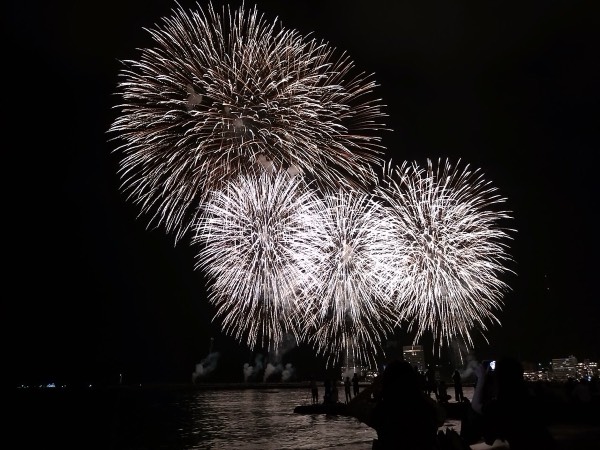
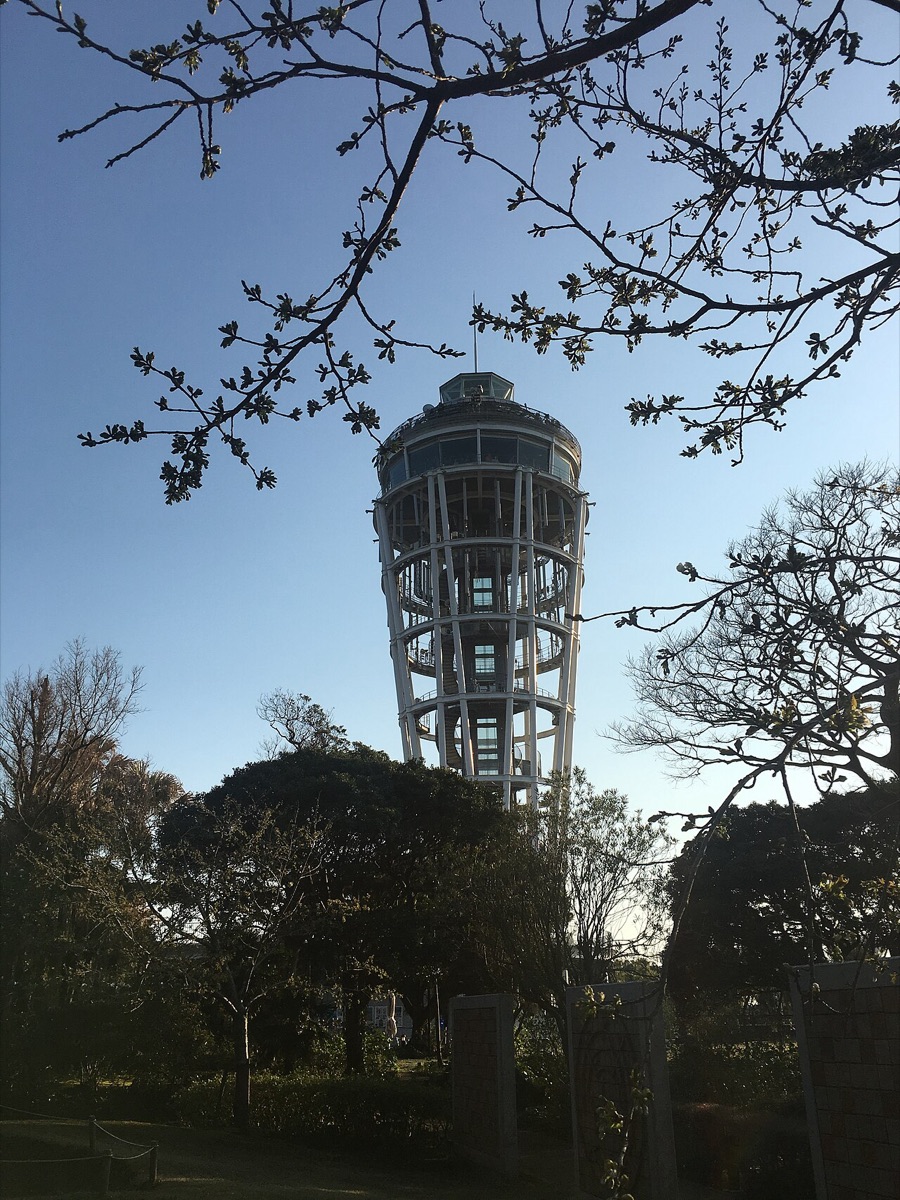
The Enoshima Samuel Cocking Garden is a garden at the top of the island, on the site of a botanical garden built in the Meiji era by British merchant Samuel Cocking, and the Sea Candle stands inside it. During the illumination, lights cascade down from the top of the tower to form a space full of light. The garden also has the "Shonan Chandelier", a starry-sky display at the "Shonan no Hoseki Entrance", and a forest display called "Hoseki FOREST"[1].
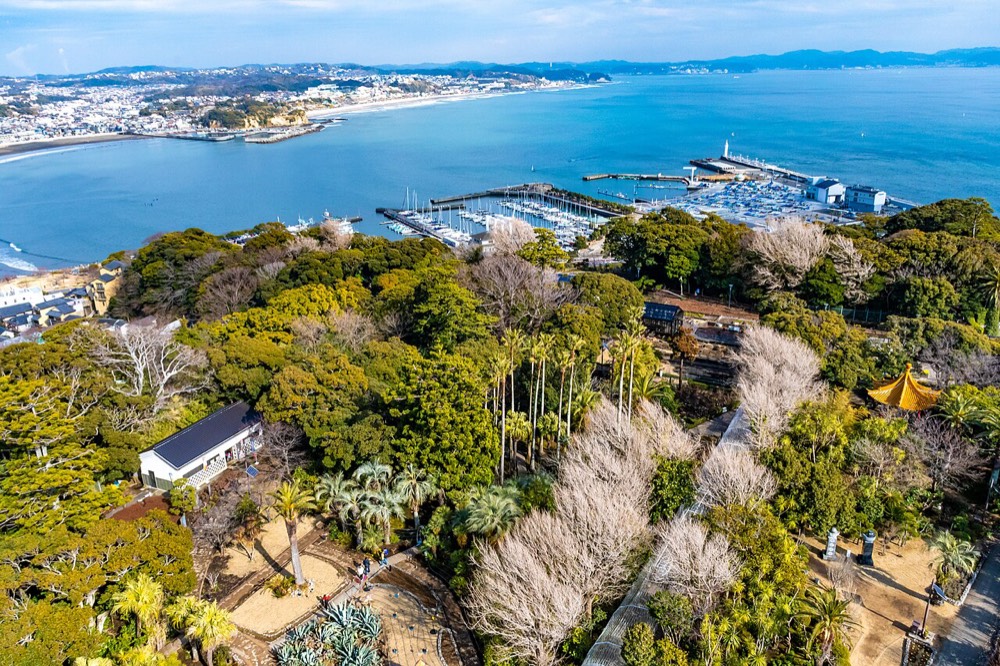
Two things are new for the 2026-27 season: new works by the art collective MIRRORBOWLER, and "Seasonal Jewel Lights", which switch to limited-edition colors around Christmas, Valentine's Day and other occasions[1][5]. The official site notes that the event was certified in 2025 as one of Japan's "three great illuminations"[1].
The lights aren't limited to the top of the island. The Lovers' Bell (Ryuren no Kane), the Iwaya Caves area and parts of the Katase coast across the water are also lit, but the Iwaya Caves themselves are open only 9:00–17:00 and can't be entered at night[1].
To compare with winter illuminations in central Tokyo and other regions, see Japan Christmas illuminations 2026.
Enoshima illumination tickets: prices and which set to buy
The short answer: if you're in the Samuel Cocking Garden after 17:00 you pay the night admission. For just the lights, 500 yen is enough; if you want the Sea Candle and to ride the Escar up, a night set ticket is cheapest[2].
The official age categories are: adult = junior high school and older, child = elementary school; children below elementary school age are free[2][9]. Basic prices:
| Item | Adult | Child | Notes |
|---|---|---|---|
| Samuel Cocking Garden 9:00–17:00 | Free | Free | Also free before 17:00 during the event |
| Samuel Cocking Garden after 17:00 | 500 yen | 250 yen | Night admission during the illumination |
| Enoshima Sea Candle | 800 yen | 400 yen | Inside the garden; night garden fee also applies |
| Enoshima Escar (all 3 sections) | 500 yen | 250 yen | Outdoor paid escalator, uphill only |
Note that, according to the official site, on event days anyone leaving the garden after 17:00 pays the night fee, even if they entered for free during the day, unless they hold a ticket that includes "+Night"[2]. If you plan to enter in the late afternoon and stay for the lights, buying a ticket with night admission is simplest.
Night set tickets sold only on event days (prices published on the official site)[2]:
| Set ticket | Includes | Adult | Child | Best for |
|---|---|---|---|---|
| Sea Candle & Cocking Garden Set Ticket + Night | Sea Candle + night garden | 1,100 yen | 550 yen | Walking up the stairs, visiting the deck |
| Cocking Garden Set Ticket + Night | Escar + night garden | 850 yen | 400 yen | Riding the escalator, skipping the deck |
| Enoshima Sea Candle Set Ticket + Night | Escar + Sea Candle + night garden | 1,550 yen | 750 yen | The standard choice for most visitors |
| Enoshima 1day + Night | All of the above + Iwaya Caves and more | 1,950 yen | 900 yen | Exploring the caves during the day first |
For an adult, buying the Escar, night garden entry and Sea Candle separately costs 500 + 500 + 800 = 1,800 yen, so the standard set saves 250 yen. The official site also lists the "Enoshima Enosui Area Passport + Night", which adds the Enoshima Aquarium, at 4,370 yen for adults, for those who want to visit the aquarium during the day[2].
Where to buy: on site, set tickets are sold at the boarding point of Escar section 1; online, through asoview or EMot. On-site payment accepts cash, credit cards, transit IC cards and PayPay[2]. Night set tickets are sold only on event days; prices follow the official announcement for the season. Odakyu also sells a Sea Candle night set with an Odakyu train ticket on EMot; check the EMot page for details and prices[1].
The Escar escalator and getting around the island
The short answer: from the island entrance to the Samuel Cocking Garden at the top is a climb of slopes and stairs. The Escar saves the effort, but it only goes up and runs until 19:05, so everyone walks down the stairs on the way back[3].
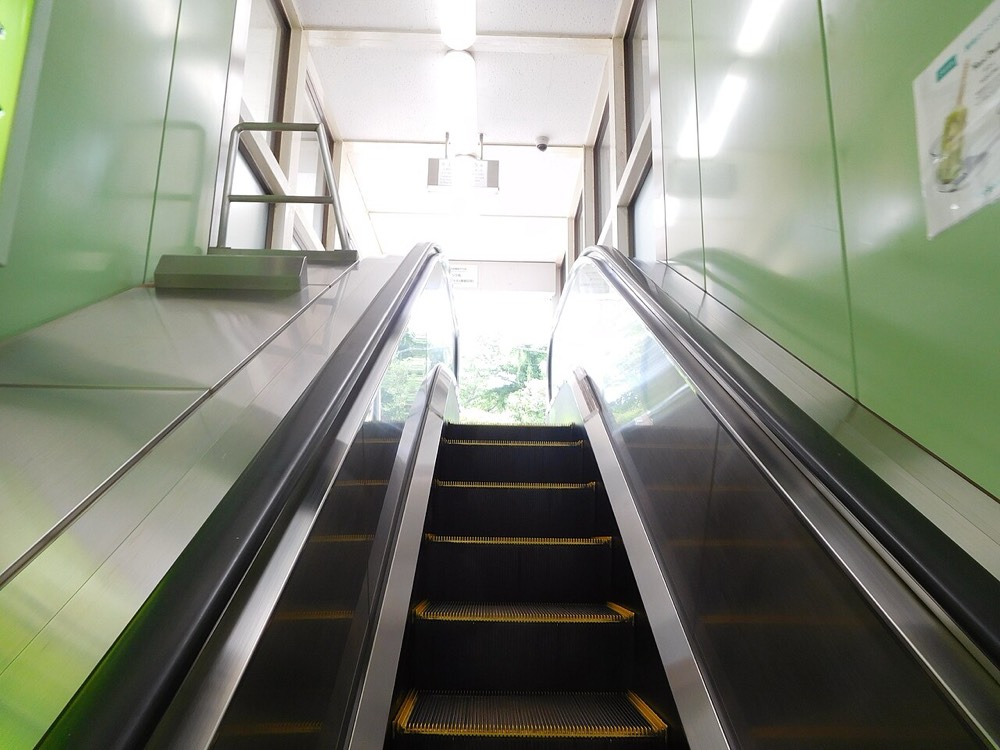
The Enoshima Escar has 3 sections, passing Enoshima Shrine and the island summit area before ending at the Samuel Cocking Garden entrance[2][3]. With older travelers, children or uncomfortable shoes, 500 yen for the ride is well worth it; if you're fit, the stairs are fine too and pass several of Enoshima Shrine's halls.
Walking from Enoden Enoshima Station to the Samuel Cocking Garden takes about 25 minutes, including the climb[5]. Going down the stairs is quicker than going up, but the paths are darker after the light-up and crowds leave at the same time, so allow a 15–20 minute buffer.
How to get to Enoshima from Shinjuku or Tokyo: three routes compared
The short answer: from Shinjuku the cheapest and most direct option is Odakyu to Katase-Enoshima Station, about 1 hour 10 minutes and 650 yen. If you're visiting Kamakura first, JR to Kamakura and then the Enoden works better[7].
There are three stations near Enoshima, each on a different line: Odakyu's Katase-Enoshima, the Enoden's Enoshima, and the Shonan Monorail's Shonan-Enoshima[5].
| Route | From | Time and fare (adult) | Best for |
|---|---|---|---|
| Odakyu Enoshima Line → Katase-Enoshima Station | Shinjuku | Rapid Express about 1 hour 8 minutes, changing at Sagami-Ono or Fujisawa depending on the train; 650 yen (649 yen by IC)[7] | Staying around Shinjuku, visiting only Enoshima |
| JR → Kamakura, then Enoden → Enoshima Station | Tokyo, Shinagawa, Shinjuku | Depends on departure station and transfers; JR fares changed in March 2026, so check a route app | Visiting Kamakura first |
| JR → Ofuna, then Shonan Monorail → Shonan-Enoshima Station | Tokyo, Yokohama direction | Ofuna to Shonan-Enoshima about 14 minutes, 340 yen (route search reference) | Staying in Yokohama, wanting to ride the suspended monorail |
From Shinjuku you can also take the Odakyu Romancecar limited express, which is all reserved seats and needs a separate limited express ticket; see the Odakyu website for prices and timetables. IC cards such as Suica and PASMO work on all three routes; for how to use transit cards in central Tokyo, see the Tokyo transport guide.
Is the Enoshima-Kamakura Free Pass worth it?
Odakyu's Enoshima-Kamakura Free Pass costs 1,640 yen for adults and 430 yen for children from Shinjuku. It includes one Odakyu trip each way between your departure station and Fujisawa, plus unlimited rides for one day on the Odakyu line between Fujisawa and Katase-Enoshima and on the entire Enoden. It can be bought up to one month ahead on EMot or at Odakyu stations; ticket machines sell same-day tickets only[6].
The rule of thumb is simple: if you only visit Enoshima and skip Kamakura, the 1,300 yen Odakyu round trip between Shinjuku and Katase-Enoshima is cheaper than the pass, so just tap your IC card[7]. If you'll ride the Enoden for two or more legs the same day, for example Fujisawa → Kamakura and Kamakura → Enoshima (260 yen one way)[10], the total exceeds the pass price and the pass is the better deal. A detailed comparison of the pass and the Enoden one-day ticket is in the Kamakura day trip guide, so it isn't repeated here.
How to see the sunset, Mt. Fuji and the illumination in one go
The short answer: December is the best month. Sunset comes about 30 minutes before the light-up, so you can watch the sunset and Mt. Fuji's silhouette from the Sea Candle deck first and then see the lights come on[8].
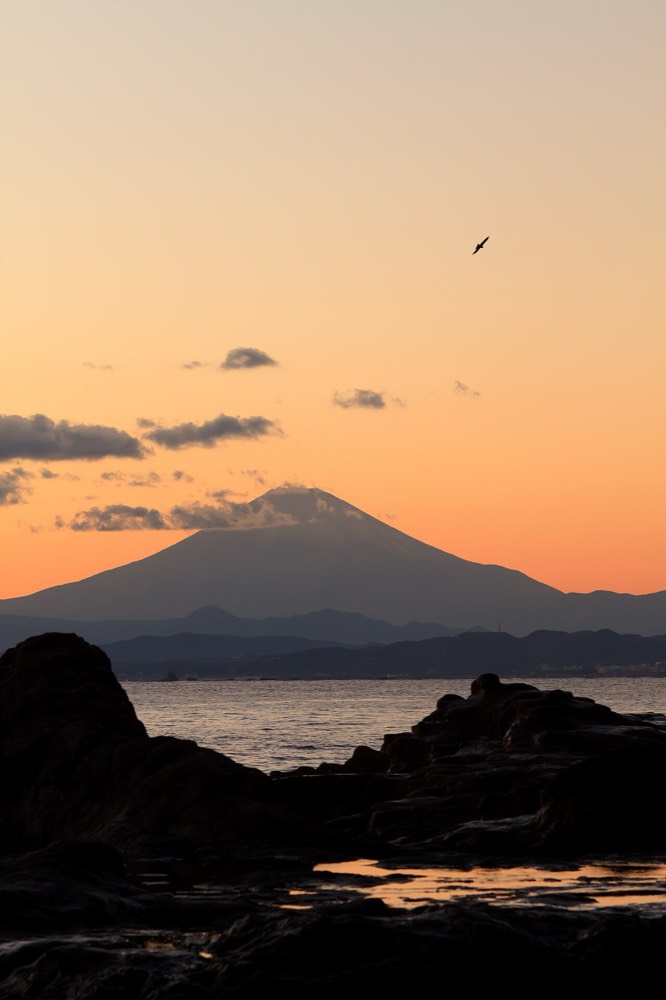
The Sea Candle's glass observation room is about 101.5 m above sea level, with an outdoor deck above it. The official site says that in good conditions you can see Mt. Fuji and the Tanzawa mountains, and even from the Miura Peninsula to the Izu Peninsula[4]. Winter's dry air makes it one of the better seasons for seeing Fuji, but it disappears behind cloud easily, so it isn't guaranteed every day.
Using the Yokohama sunset times published by the National Astronomical Observatory of Japan as a reference (Enoshima is southwest of Yokohama, so the difference is only a few minutes)[8]:
| Date | Yokohama sunset | Light-up | Gap |
|---|---|---|---|
| December 1 | 16:29 | 17:00 | Lights come on about 30 minutes after sunset |
| December 31 | 16:38 | 17:00 | About 20 minutes |
| January 16 | 16:52 | 17:30 | About 40 minutes |
| February 1 | 17:09 | 17:30 | About 20 minutes |
| February 28 | 17:35 | 17:30 | Not fully dark when the lights come on |
Arriving at the deck 30 minutes before sunset is ideal, when the color changes in the western sky and Fuji's silhouette are clearest. If you'd rather watch the sunset by the sea, the rocky shore at the southwestern tip of Enoshima is an option, but it's another walk up and down from there, so getting back to the Samuel Cocking Garden afterwards will be a little rushed.
Kamakura → Enoshima: a sample afternoon-to-evening plan
The short answer: spend the morning to midday in Kamakura, take the Enoden toward Enoshima around 14:30, reach the top of the island by 16:00, and after the sunset and light-up take the Odakyu back to Shinjuku from Katase-Enoshima, arriving in the city before 21:00[1][3].
The example below assumes a December weekday, starting from Shinjuku with the Enoshima-Kamakura Free Pass:
| Time | Plan | Transport and notes |
|---|---|---|
| 9:30 | Leave Shinjuku | Odakyu to Fujisawa, then Enoden to Kamakura |
| 11:15–14:15 | Central Kamakura or Hase | Tsurugaoka Hachimangu and Komachi-dori, or Hasedera and the Great Buddha; pick one area |
| 14:30 | Enoden toward Enoshima | Shorter ride if leaving from Hase |
| 15:15 | Cross Benten Bridge onto the island, Enoshima Shrine | Ride the Escar up (runs until 19:05) |
| 16:00 | Reach the Samuel Cocking Garden, go up the Sea Candle | With a night set ticket, no extra fee after 17:00 |
| 16:30 | Sunset and Mt. Fuji from the deck | Weather permitting |
| 17:00 | Light-up | Watch the lights come on from the deck, then explore the garden |
| 18:15 | Walk down the stairs, dinner around Benten Bridge | Allow time for the descent |
| 19:30 | Katase-Enoshima Station back to Shinjuku | About 1 hour 10 minutes |
Pick just one area of Kamakura; afternoon time is limited, and trying to fit both Tsurugaoka Hachimangu and Hase easily makes you late. For opening hours and admission fees of each sight, see the Kamakura day trip guide.
Ticket costs for this day (adult): Enoshima-Kamakura Free Pass 1,640 yen + Enoshima Sea Candle Set Ticket + Night 1,550 yen = 3,190 yen, plus temple admissions and meals in Kamakura[2][6]. The cheapest option if you skip Kamakura and just see the lights is an Odakyu IC round trip of about 1,298 yen + 500 yen night garden entry, around 1,800 yen.
From January 16 the light-up moves to 17:30, so shift the whole plan 30 minutes later. On weekends, holidays and Dec 19–30 the lights stay on until 21:00, so you can go down for dinner first and come back up for the quieter later part of the evening.
Crowds, cold and year-end/New Year tips
The short answer: it's busiest on weekends, around Christmas and in late December. For easier photos choose a weekday, and expect the first hour after the light-up to be the most crowded.
- Crowds: The extended Dec 19–30 period and the days around Christmas are the liveliest. Right after the light-up everyone heads for the observation deck, so explore the garden first and go up a little later. Over New Year, Enoshima Shrine also draws worshippers, so the paths up and down move more slowly.
- Cold: Enoshima is surrounded by sea and the garden sits high up, so after dark the sea wind makes it feel noticeably colder than central Tokyo. A hat, gloves and a windproof jacket help more than a thick sweater; for December weather and what to wear overall, see the Japan December travel guide.
- Nearby facilities: Enoshima Aquarium is open until 21:00 from December 1 to 25 (until 18:00 on December 25), so you can pair it with the illumination on the same evening[1]. The island's hot spring facility, Enoshima Island Spa, closes its bathing facilities for renovation from January 12, 2027 to late March, while some dining continues[1].
- Night observation deck: Last entry to the Sea Candle at night is 30 minutes before closing, so on weekdays you can't go up after 19:30[1].
Who it suits, and who it doesn't
- Suits: Travelers who want a "sea view + sunset + lights" afternoon near Tokyo, those already planning Kamakura who want to add it on the way, and anyone who prefers a moderately sized illumination without long queues.
- Doesn't suit: Those who only want a huge, spectacular light show and don't want to climb; or those with only an evening free who'd rather see a night view close by in the city, who can try the Tokyo night view guide instead.
Before you go
- Check the official event page for lighting hours and weather notices before you set out, especially around the mid-January time change[1].
- If you'll leave the Samuel Cocking Garden after 17:00, buy a ticket that includes "+Night" so you don't have to pay at the exit[2].
- The Escar only goes up and stops at 19:05; everyone walks down the stairs, so wear comfortable shoes[3].
- From Shinjuku, if you're only visiting Enoshima, just use an IC card; consider the Free Pass if you'll also ride the Enoden to and from Kamakura the same day[6].
FAQ
What time does the Enoshima illumination start in 2026, and how late does it run?
From December 1, 2026 to January 15, 2027 the lights come on at 17:00; from January 16 they come on at 17:30. They stay on until 20:00 on weekdays and Dec 31–Jan 3, and until 21:00 on weekends, national holidays and Dec 19–30. Last entry to the Sea Candle is 30 minutes before closing: 19:30 on weekdays, 20:30 on weekends and holidays.
Do you need a ticket for Shonan no Hoseki?
Yes. The Samuel Cocking Garden is free during the day, but during the event a night admission applies after 17:00: 500 yen for adults (junior high and up) and 250 yen for children (elementary school), free for preschoolers. The Sea Candle observation deck costs an extra 800 yen for adults and 400 yen for children. If you enter before 17:00 and leave after, you still pay the night fee.
Which Enoshima illumination set ticket is the best value?
If you'll ride the Escar escalator up and visit the Sea Candle, the Enoshima Sea Candle Set Ticket + Night costs 1,550 yen for adults, versus 1,800 yen bought separately. If you walk up the stairs, the Sea Candle & Cocking Garden Set Ticket + Night at 1,100 yen is cheaper. Night set tickets are sold only on event days.
How long does it take from Shinjuku to Enoshima, and should I buy the Enoshima-Kamakura Free Pass?
Odakyu from Shinjuku to Katase-Enoshima takes about 1 hour 10 minutes and costs 650 yen (649 yen by IC card). If you only visit Enoshima, the 1,300 yen round trip is cheaper than the 1,640 yen pass. If you'll also ride the Enoden to and from Kamakura for two or more legs the same day, the pass usually pays off.
Can I see the sunset, Mt. Fuji and the illumination at Enoshima in one visit?
Yes, and December is the easiest month. Sunset around Yokohama is about 16:30 in December, roughly half an hour before the 17:00 light-up, so on a clear day you can watch the sunset and Fuji's silhouette from the Sea Candle deck and then wait for the lights. From late January sunset is around 17:10–17:35, overlapping with the lighting time.
Sources
- Enoshima Sea Candle | Shonan no Hoseki 2026-2027: Event dates, lighting hours by period, Sea Candle night hours and last entry, lighting ceremony, main zones, nearby facility hours (checked November 2026)
- Enoshima Sea Candle | Tickets and prices: Night garden fee, Sea Candle and Escar prices, night set tickets, where to buy and payment methods
- Enoshima Sea Candle | Enoshima Escar: Escar operating hours, uphill only
- Enoshima Sea Candle | Enoshima Sea Candle (tower): Observation deck height and views including Mt. Fuji
- Let's Enjoy Tokyo | Shonan no Hoseki 2026-2027: Event overview, nearest stations, new MIRRORBOWLER works
- Odakyu Electric Railway | Enoshima-Kamakura Free Pass prices and sales points: Price from Shinjuku, coverage, where to buy
- Ekitan | Shinjuku to Katase-Enoshima route search: Travel times and fares via Odakyu and JR
- National Astronomical Observatory of Japan | Sunrise and sunset, Yokohama (December 2026): Yokohama sunset times, plus the same site's January and February 2027 pages
- Enoshima Electric Railway | Price revision for Enoshima Escar and Enoshima Sea Candle (September 16, 2025): Prices revised from October 1, 2025; preschool children free
- Enoshima Electric Railway | Fares and commuter passes: Enoden fares between stations
Fares, opening hours and event dates can change. Information checked on 2026.11.20; please confirm with official sources before you go.