Okinawa Whale Watching 2027: Humpback Season, Kerama vs Naha Tours, Seasickness and Refunds
Okinawa whale watching runs January to March: season dates, Zamami tour prices from ¥7,700, ferries from Naha, seasickness tips and no-sighting policies.
Quick answer
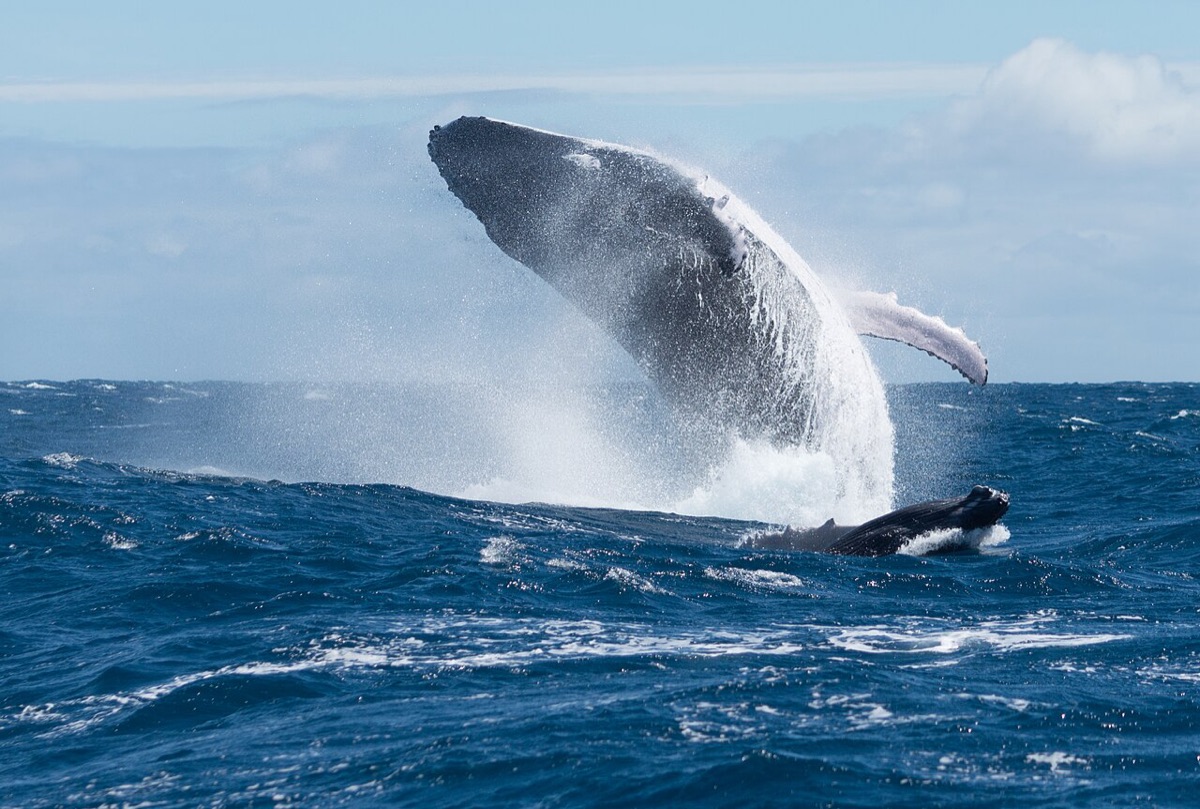
Okinawa whale watching means seeing the humpback whales that return to the Kerama Islands each winter to breed and raise calves. The season runs roughly January to March; in 2026 the Zamami Village Whale Watching Association operated from January 8 to March 25 (2027 dates not yet announced). Tours from Zamami Island last about 1–2 hours, with a standard adult price of ¥7,700 plus a ¥600 whale-spotting fee. The high-speed boat from Naha to Zamami takes about 50 minutes.
Okinawa whale watching is one of the best reasons to visit Okinawa in winter. Every January to March, humpback whales return to the Kerama Islands (Kerama Shoto) west of Naha to breed and give birth, and from a boat you can watch them blow, slap their tails and, with luck, leap clear of the water. This guide covers the Okinawa whale watching season, how to plan for 2027, the difference between leaving from Naha or Zamami, boats and prices, and common questions such as seasickness and what happens if you see no whales.
When is whale watching season in Okinawa? Planning for 2027
Bottom line: the Okinawa whale watching season runs roughly January to March, with mid-season around February. The Zamami Village Whale Watching Association operated from January 8 to March 25 in 2026[1]. The 2027 dates have not been announced yet; based on past years, expect a similar window from early January to late March.
According to the association, humpbacks return to the waters around Okinawa, including the Kerama Islands, from around December each year. They court and give birth here, then head north in spring with their grown calves[4]. The Japan National Tourism Organization (JNTO) and Okinawa's official tourism site, Visit Okinawa Japan, both give the season as January to March[8][9].
| Period | Conditions | Advice |
|---|---|---|
| December | Whales start arriving; most tour boats not yet operating | Not worth a dedicated trip |
| Early to mid-January | Season starts; the cherry blossoms at Yaedake in Motobu also bloom | Combine with cherry blossom viewing |
| Late January to early March | Mid-season, with the most departures and tour options | The best time to go |
| Mid to late March | End of season; some whales begin heading north | Fine to go, but keep a spare day |
What are humpback whales like? The association describes them as about 12–14 meters long and 30–40 tons, about the size of the Zamami tour boats, with pectoral fins about a third of their body length[4]. Since its founding in 1991 the association has identified individual whales by the patterns on the underside of their tail flukes and has now catalogued more than 1,800[4], so you will often hear the captain say a whale is "an old friend".
Kerama whale watching: why leave from Zamami or Tokashiki?
Bottom line: if you have the time, leaving from Zamami Island is the best option. The inner waters of the Kerama Islands are sheltered by islands and calmer, making them a favored nursery area for mothers and calves[4]. The viewing areas are close to port, and the association notes that the short distance lowers the risk of seasickness[12].
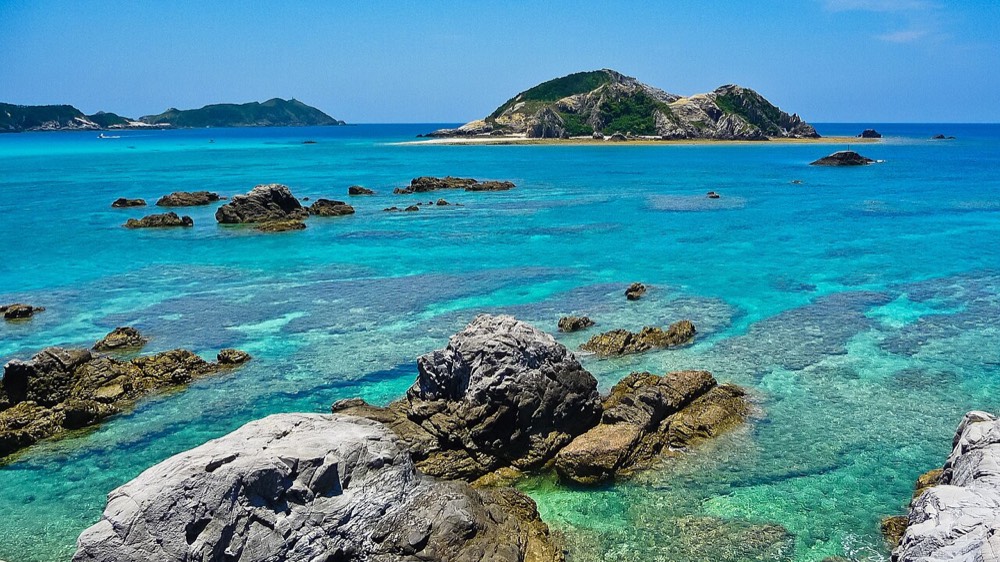
Zamami's whale watching has a distinctive feature: whale spotters at hilltop lookouts on the island search with binoculars and radio the whales' positions to the captains, so the boats spread out and disturb the whales less[12]. Here are the tour details published by the association[2]:
| Item | Details |
|---|---|
| Association standard price | Adults ¥7,700, children ¥3,850, tax included |
| Additional fee | Whale-spotting service fee (conservation and research contribution) ¥600 |
| Tour length | About 1–2 hours, with morning and afternoon departures |
| How to book | Individuals and small groups book directly with a member boat (shop); booking by the day before is recommended |
| Meeting point | As specified by the shop, for example in front of the counter in the Zamami Port terminal |
Note that member boats may charge prices different from the standard price, so confirm when booking. Also, if only a mother and calf are found that day, the tour may be shortened to about an hour to protect the calf[2].
Tokashiki Island also has whale watching tours, and the whale watching associations of the two villages drew up the viewing rules together. However, Tokashiki has no single published price or season, so contact local operators or the Tokashiki Village office directly.
How to get from Naha to Zamami or Tokashiki: boats and fares
Bottom line: from Naha's Tomari Port (Tomarin), Zamami Village's high-speed boat Queen Zamami reaches Zamami Island in about 50 minutes, and the Ferry Zamami takes about 2 hours (stopping at Aka Island)[6].
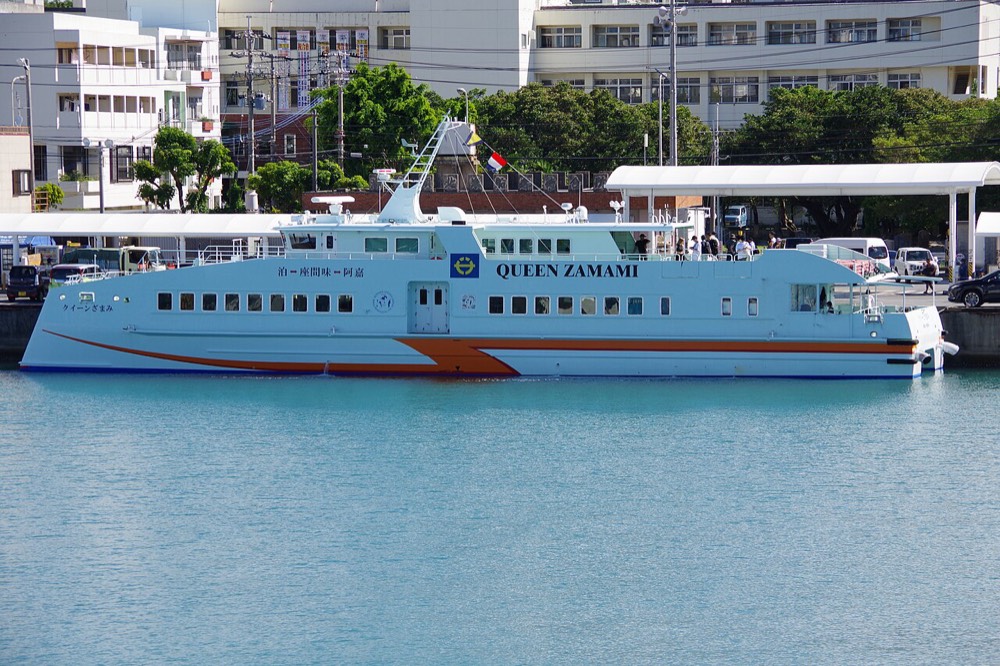
Naha–Zamami fares (adults, from January 1, 2026)[5]
| Boat | One way | Round trip from Naha | Boarding point |
|---|---|---|---|
| High-speed boat Queen Zamami | ¥3,950 | ¥7,510 | Tomari Port north side |
| Ferry Zamami | ¥2,900 | ¥5,510 | Tomari Port south side (in front of Tomarin) |
Visitors to Zamami Village also pay an island entry tax (Churashima tax) of ¥100 per person; junior high school students and younger are exempt[5].
January 2027 timetable (for reference)[6]
| Boat | Leaves Naha | Arrives Zamami | Leaves Zamami | Arrives Naha |
|---|---|---|---|---|
| High-speed boat, 1st | 09:00 | 09:50 | 10:00 | 11:10 (via Aka) |
| High-speed boat, 2nd | 15:00 | 16:10 (via Aka) | 16:20 | 17:10 |
| Ferry | 10:00 | 12:00 (via Aka) | 14:00 | 16:00 |
The order of stops differs on some dates, so check the monthly timetable on the Zamami Village website before you go. As the table shows, for a day trip you can take the 9:00 high-speed boat, join a morning or midday whale watching tour, then return on the 14:00 ferry or the 16:20 high-speed boat.
Booking tips:
- Phone reservations open one month ahead, and online reservations open 55 days before sailing; you collect and pay for tickets at the counter on the day[5].
- The high-speed boat pier is about a 10-minute walk from Tomarin; if you take a taxi, ask for "Tomari-ko Hokugan" (Tomari Port north side)[5].
- Winter wind and waves can cancel sailings: the high-speed boat is often suspended on strong monsoon days, so don't book a tight flight on your return day.
To reach Tokashiki Island, take Tokashiki Village's high-speed Marine Liner Tokashiki, about 40 minutes, or the Ferry Tokashiki, about 1 hour 10 minutes (December 2026 timetable)[7]. Fares on the Tokashiki route were revised on October 1, 2026; check the Tokashiki Village website for current prices.
If you are not renting a car, you can reach Tomari Port by taxi or bus from central Naha; see getting around Okinawa without a car for local transport.
Who should choose a whale watching tour from Naha?
Bottom line: if you only have a day, don't want to take a ferry first, or are staying in central or northern Okinawa Island, a tour from Naha or elsewhere on the main island is more convenient. Visit Okinawa Japan lists departure points including Naha, Yomitan and Onna, with some tours leaving directly from the Kerama Islands[8].
Here is how departures from Naha and from Zamami compare:
| Comparison | From Naha / main island | From Zamami Island |
|---|---|---|
| Getting there | Most meet at ports around Naha; some offer pickup | Take a boat to Zamami first |
| Time at sea | Must first travel out to the Kerama waters, so longer | Viewing area is close to port |
| Seasickness risk | Higher in rough open water | Relatively lower |
| Price | Varies by operator; compare before booking | Association standard ¥7,700 + ¥600 |
| Best for | Short on time, want a half-day trip | Want to stay on an outer island, see the stars, keep a spare day |
Tours from Naha are mostly run by private operators, and prices, times and refund rules differ; this guide does not recommend any specific company. You can compare on operators' websites or on platforms such as KKday and Klook, and check the conditions under "What if you see no whales?" below before booking.
What if you see no whales? Refunds and free re-rides
Bottom line: whale watching comes with no 100 percent guarantee, but the odds are high. JNTO's English site says tours around Zamami and Tokashiki have almost a 98 percent chance of seeing whales[9]. Still, the number of whales returning varies from year to year, so don't pin your whole trip on a single outing.
Many operators offer one of these assurances; common approaches include:
- A free re-ride: if you see no whales, you can join another tour free within a set period.
- A full or partial refund: some or all of the fee is returned if no whales are seen.
- A full refund for weather cancellations: if the sea is too rough and the boat doesn't go out, you usually get a full refund or can reschedule.
Ask before you book:
- What counts as "seeing" a whale? For some operators, a distant blow counts as a sighting and the guarantee does not apply.
- How long the re-ride is valid, and whether it is limited to the same season or departure point.
- Whether refunds apply only on certain dates; some operators offer the guarantee only during part of mid-season.
- How refunds work and when you will be notified if the trip is cancelled for weather.
If you are in Okinawa for only 3–4 days, schedule whale watching early in the trip so you have room to rebook if the boat is cancelled or you see nothing.
Seasickness and clothing: what to bring on a winter boat trip
Bottom line: Okinawa winters aren't cold, but they are windy, and it feels much cooler on deck than on land. Seasickness medication and a windproof jacket are the two essentials.
According to the Japan Meteorological Agency's 1991–2020 normals, Naha averages 17.3°C in January (average high 19.8°C, low 14.9°C), 17.5°C in February and 19.1°C in March, with average winter wind speeds above 5 meters per second[10]. The wind is stronger at sea, and spray can soak your clothes.
Preventing seasickness:
- Take seasickness medication 30 minutes to an hour before departure (follow the product directions). Sleep well the night before and don't board on an empty or overly full stomach.
- On board, find a breezy spot and look at the horizon rather than down at your phone or camera screen[8].
- On rough days, choose a tour from Zamami with a shorter ride; boats may also cancel if conditions are poor.
What to wear and bring:
- A long-sleeved top with a windproof, water-resistant jacket; bring a light down layer or scarf if you feel the cold.
- Comfortable sneakers; avoid skirts and high heels[8].
- A towel, hat, sunglasses and sunscreen: UV is still strong in winter[8].
- A waterproof pouch or strap for your camera and phone so they don't end up in the sea.
Whale watching rules: why don't the boats get closer?
Bottom line: whale watching boats in the Kerama Islands follow voluntary rules set jointly by the Zamami and Tokashiki whale watching associations to protect breeding humpbacks, so captains deliberately keep their distance. That is normal.
The key rules are[3]:
| Rule | Details |
|---|---|
| Area covered | Within 10 nautical miles (18 km) of the coasts of Zamami Village's islands and within 7 km of Tokashiki Village's islands |
| Slow-down zone | Within 300 m of a whale, boats must slow down and must not block its path |
| Restricted zone | Within 100 m of a whale, boats must not approach; if a whale approaches, the boat stops until it leaves |
| Time limit | In principle, no more than 2 hours watching a single whale or group; for mothers and calves, no more than 1 hour each morning and afternoon across all boats combined |
| Mother-and-calf sanctuary | Whale watching by any boat is banned in parts of the inner waters of Zamami and Tokashiki islands |
| Prohibited | No swimming, diving or snorkeling with the whales, and underwater photography is generally banned |
The rules also apply to non-powered craft such as sailboats, kayaks and SUPs. If another boat seems "closer", it is usually because a whale swam over on its own, and the captain will stop and wait.
What else can you do in Okinawa in winter?
Bottom line: winter in Okinawa is quieter and accommodation is easier to book. Besides whale watching, you can see early cherry blossoms, visit the aquarium and castles, or take a road trip up north.
- Kanhi cherry blossoms: Okinawa's cherry blossoms are the deep pink Ryukyu kanhi-zakura, which bloom in January. Yaedake Sakura no Mori Park in Motobu holds a cherry blossom festival every year; the 48th festival ran from January 17 to February 1, 2026, with free admission[11]. The 2027 dates have not been announced; in past years it has opened in mid to late January.
- Indoor sights: on bad-weather days, indoor attractions such as the Churaumi Aquarium work well in winter; see Okinawa attractions.
- Northern road trip: cherry blossoms, the Churaumi Aquarium and Kouri Island make a one-day northern route; for car rental and license rules, see the Okinawa driving guide.
- Warming food: try a bowl of Okinawa soba or a set meal at a local shokudo; see the Okinawa food guide.
Before you go: how to plan a winter whale watching trip in Okinawa
The most reliable plan is "2 nights in Naha + 1 night on Zamami": arrive in Naha on day 1; on day 2 take the morning high-speed boat to Zamami, go whale watching in the afternoon and spend the night on the island under the stars; on day 3 go out again in the morning (or use a re-ride if you saw nothing), then take the afternoon boat back to Naha. If you only have one day, choose a tour from Naha, or take the 9:00 high-speed boat to Zamami and return the same day. Whichever you choose, remember that winter seas can cancel boats, so leave at least half a day of buffer before your flight home. Season dates, prices and boat timetables are subject to the latest announcements from Zamami Village, Tokashiki Village and each operator.
FAQ
What is the best month for whale watching in Okinawa?
Humpbacks start returning to the Kerama area around December, and most whale watching boats operate from early January to late March; in 2026 the Zamami association ran from January 8 to March 25. Around February is mid-season, with more departures and relatively stable conditions. Go then and keep a spare day if you can.
Am I guaranteed to see whales in Okinawa?
No, they are wild animals. The Japan National Tourism Organization's English site says tours around Zamami and Tokashiki have almost a 98 percent chance of seeing whales, but numbers vary from year to year. Many operators offer a free re-ride or a refund if you see none; conditions differ, so ask when you book.
Should I leave from Naha or from Zamami?
If you are short on time and don't want to take a ferry first, choose a tour from Naha, but the boat has to travel farther to the Kerama waters, and the longer ride makes seasickness more likely in rough seas. If you have time, take the boat to Zamami Island: the viewing area is close to port, the association notes the short distance lowers seasickness risk, and you can stay a night for the stars.
How much does whale watching in Okinawa cost?
The Zamami Village Whale Watching Association's standard price is ¥7,700 for adults and ¥3,850 for children, plus a ¥600 whale-spotting fee; actual prices depend on each member boat. Getting to Zamami adds the boat fare (high-speed round trip ¥7,510, ferry round trip ¥5,510 for adults) and a ¥100 island entry tax. Prices for tours from Naha vary by operator.
What should I wear for whale watching in Okinawa in winter?
Naha averages about 17°C in January and February, with lows around 15°C, but the sea wind on deck makes it feel much colder than on land. Wear long sleeves with a windproof, water-resistant jacket, bring a towel, hat and sunglasses, and wear sneakers rather than skirts or heels. If you get seasick, take medication before departure.
Sources
- Zamami Village Whale Watching Association: 2026 operating period
- Zamami Village Whale Watching Association: Tours: Standard prices, whale-spotting fee, tour length, how to book
- Zamami Village Whale Watching Association: Voluntary rules: Slow-down zone, restricted zone, time limits, mother-and-calf sanctuary
- Zamami Village Whale Watching Association: About humpback whales: When humpbacks return to the Kerama Islands, photo identification
- Zamami Village: Ship fares: Ferry and high-speed boat fares, island tax, reservations
- Zamami Village: Ship timetable (January 2027): Ferry Zamami and Queen Zamami timetables
- Tokashiki Village: Ship information: High-speed boat and ferry timetables, October 2026 fare revision
- Visit Okinawa Japan: Whale Watching in Okinawa: Season, departure points, seasickness and clothing tips
- JNTO: Whale Watching in the Kerama Islands: Season and sighting probability
- Japan Meteorological Agency: Naha climate normals: Monthly average temperatures and wind speed, 1991–2020
- Rurubu & more: 48th Motobu Yaedake Cherry Blossom Festival: 2026 festival dates and venue
- Zamami Village Whale Watching Association: Whale watching: Whale spotter system, short travel distance and seasickness risk
Fares, opening hours and event dates can change. Information checked on 2026.10.21; please confirm with official sources before you go.