Okinawa Food Guide: Okinawa Soba, Taco Rice, Blue Seal Ice Cream, A&W and Local Diners
Okinawa food guide: Okinawa soba and how to eat it, taco rice's birthplace, Blue Seal's Makiminato flagship, A&W root beer, Makishi Public Market and Kokusai-dori eats.
Quick answer
Okinawa's must-eat list: Okinawa soba (made with 100% wheat flour in a pork bone and bonito broth), taco rice (born in Kin Town in 1984), Blue Seal ice cream (founded in 1948 on a US military base), A&W (a US fast-food chain found only in Okinawa in Japan) and the Daiichi Makishi Public Market, which reopened in March 2023. In Naha you can eat your way along Kokusai-dori and the market, and in the north you can stop by a century-old soba shop in Motobu.
Okinawan food is very different from the Japanese mainland, blending influences from the Ryukyu Kingdom, Southeast Asia and postwar American military culture. On a first trip, start your must-eat list with Okinawa soba, taco rice, Blue Seal ice cream and A&W burgers and root beer, then have a seafood meal cooked for you at Daiichi Makishi Public Market. This guide covers the origin and way to eat each Okinawan dish, where to try it, and a food route around Kokusai-dori, so you can eat authentically in Naha or the north.
Okinawa Must-Eat List: One Table
If you only have 3 to 4 days, start with these. All can be found in Naha, and some birthplace shops are in the north or central areas, which you can visit on the way during your trip.
| Food | What it is | Where to eat |
|---|---|---|
| Okinawa soba (沖縄そば) | 100% wheat noodles in a pork bone and bonito broth | City diners, century-old shops in Motobu in the north |
| Taco rice (タコライス) | Taco meat, lettuce and cheese over white rice | Birthplace in Kin Town, chain shops in the city |
| Blue Seal ice cream | American-style ice cream born in Okinawa | Makiminato Main Store, Kokusai-dori shops |
| A&W | US fast food found only in Okinawa in Japan | Makiminato in Urasoe and others |
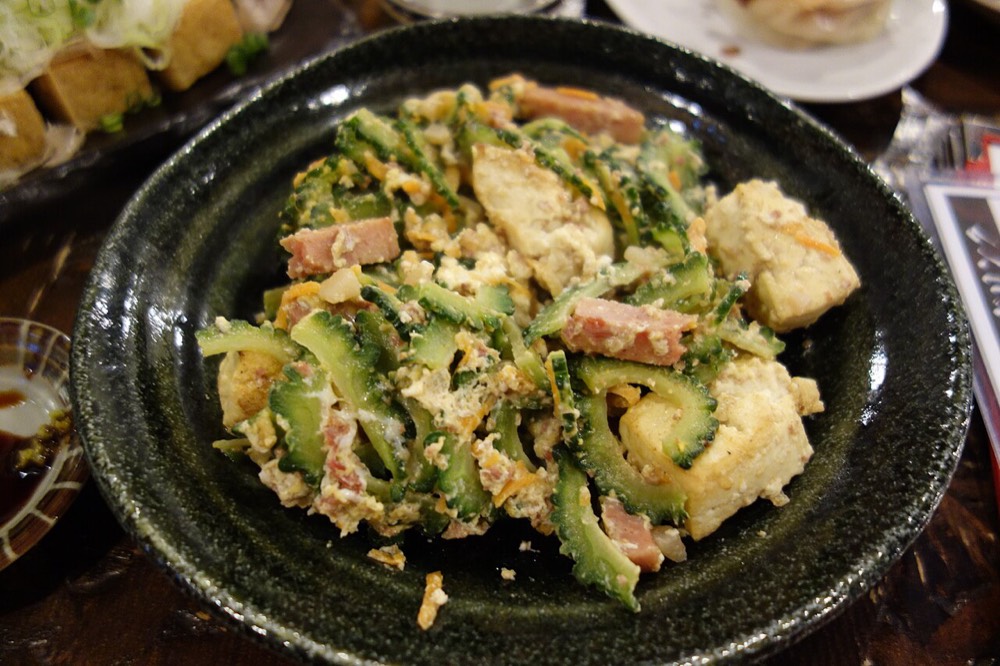
| Goya champuru (ゴーヤーチャンプルー) | Stir-fry of bitter melon, tofu, egg and pork | Diners, izakaya |
| Rafute (ラフテー) | Pork belly slow-simmered in awamori and soy sauce | Izakaya, Okinawan restaurants |
| Umibudou (海ぶどう) | Sea grapes, seaweed that looks like tiny grapes | Izakaya, public market |
| Pork egg onigiri (ポークたまごおにぎり) | Spam and fried egg with rice | Around Makishi market, airport |
| Sata andagi (サーターアンダギー) | Crisp outside, dense inside fried dough balls | Markets, souvenir shops |
How to Eat Okinawa Soba: Origins, Types and Old Shops
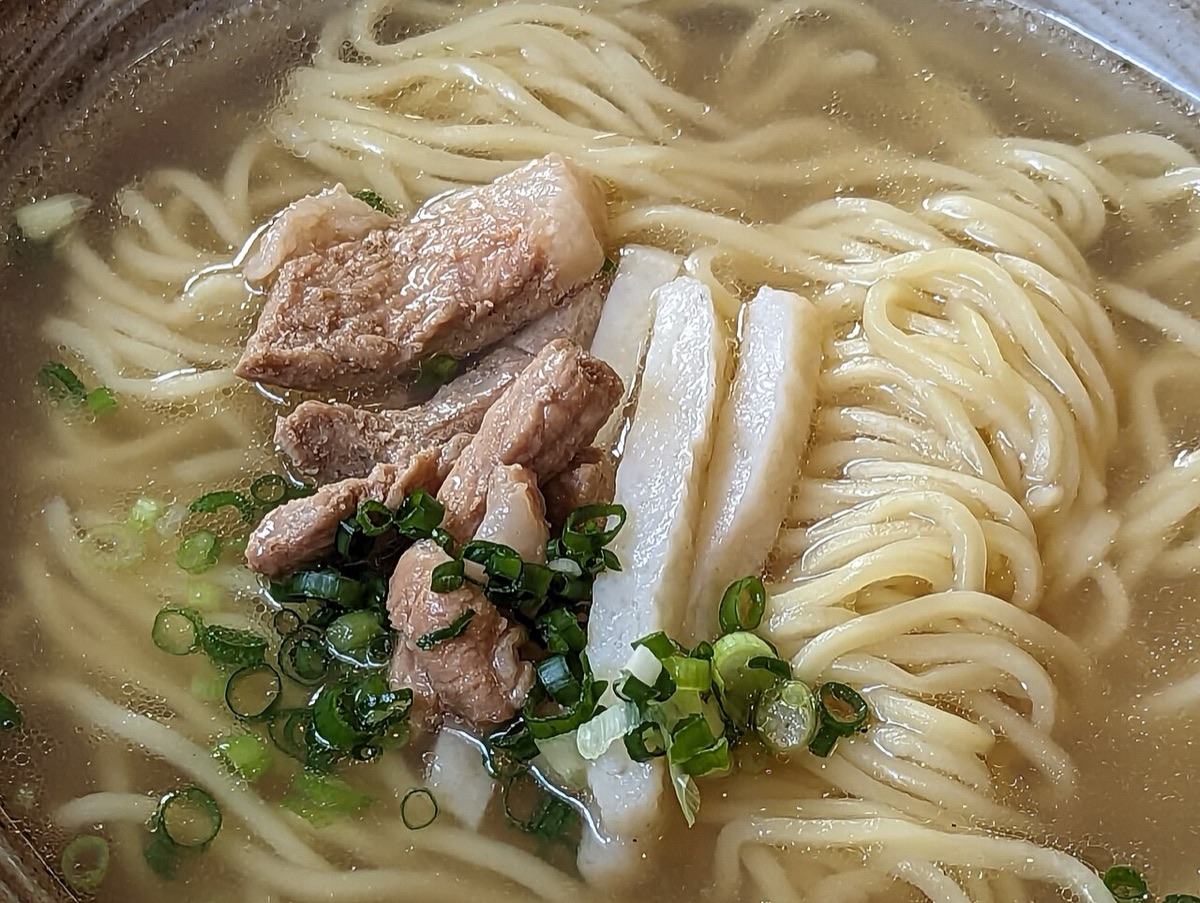
Okinawa soba (沖縄そば) is the everyday bowl of noodles for Okinawans. Though called "soba," it uses no buckwheat flour at all and is made from 100% wheat flour. In 2013 it became the first noodle in Japan to receive the "Honba no Honmono" (authentic) certification, with 12 criteria from ingredients and aging to noodle thickness, and missing even one means it cannot be called Okinawa soba[1].
What Is in a Bowl of Okinawa Soba
According to Okinawa Story, the basic components of Okinawa soba are[1]:
- Broth: Simmered from pork bones and bonito.
- Toppings: Pork belly (sanmainiku) simmered in sugar and soy sauce, or bone-in spare ribs (soki); the version with soki is called "soki soba."
- Others: Red pickled ginger or shredded ginger, fragrant and slightly bitter island scallions, and fried fish cake.
On the table you will often find a bottle of awamori steeped with chili peppers called "koregusu." A few drops add spiciness to the broth, the local way to eat it.
Regional Differences
Okinawa soba differs clearly by region[1]:
| Area | Noodles | Broth |
|---|---|---|
| Northern main island | Wide, flat noodles similar to Nagoya's kishimen | Stronger bonito flavor |
| Central and southern main island | 3 to 4 mm wide, slightly wavy | Clear broth |
| Yaeyama | Thinner round noodles, toppings cut into thin strips | Slightly sweet, good with island pepper |
| Miyako Island | Thin straight noodles | Light; traditionally the toppings are hidden under the noodles |
Okinawa Soba Day and Old Shops
October 17 each year is "Okinawa Soba Day." In 1976 the Japan Fair Trade Commission ruled that noodles without buckwheat flour could not be labeled "soba." After Okinawan makers pushed back, they were officially allowed to use the name "Okinawa soba" on October 17, 1978, and in 1997 the Okinawa Fresh Noodle Cooperative made that day a commemoration[1].
For a century-old shop, Kishimoto Shokudo (きしもと食堂) in Motobu in the north is said by various travel media to have been founded in 1905, and is known for its traditional method of making noodles with wood-ash lye. It is not far from Churaumi Aquarium, so it fits as lunch on a northern itinerary. Check the shop's announcements for hours and prices.
Taco Rice: Okinawan Flavor Born in Kin Town in 1984
Taco rice (タコライス) puts the seasoned ground meat, lettuce, tomato and cheese of a Mexican taco directly on white rice. It is cheap and filling, and one of Okinawa's national foods[6].
According to an interview by Rurubu &more, taco rice was invented in 1984 by Matsuzo Gibo, founder of Parlor Senri in Kin Town[2]. His shop was near a US military facility, with mostly American customers, and he noticed they picked the vegetables out of their tacos, so he came up with putting the taco meat on rice[2]. The current King Tacos Kin Main Branch (キングタコス金武本店) is regarded as the birthplace of taco rice[2], and there are branches around Okinawa.
When ordering you will often see combinations like "タコライスチーズ野菜," meaning with cheese and lettuce. Portions are usually large, and it is normal for two people to share one.
Blue Seal Ice Cream and A&W: Tastes of Postwar American Culture
Okinawa was under US administration for a long time (1945 to 1972), which left many American foods. Blue Seal ice cream and A&W are two of the most iconic brands.
Blue Seal (ブルーシール) Ice Cream
Blue Seal was founded in 1948 on a US military base in Okinawa to supply dairy products to the troops[3]. The brand says it starts from an American recipe and adjusts it to a light texture that suits Okinawa's humid climate[3]. Signature flavors include Okinawan ones such as purple sweet potato, salted chinsuko (shio chinsuko) and sugarcane, and each shop's lineup differs slightly.
The Blue Seal Makiminato Main Store (ブルーシール牧港本店) in Urasoe reopened on July 23, 2024 after a rebuild, adding the brand's first drive-through, with an exhibit on its founding history on the second floor[3]. There are also shops on Kokusai-dori, which are the easiest to enjoy while shopping.
A&W: Found Only in Okinawa in Japan
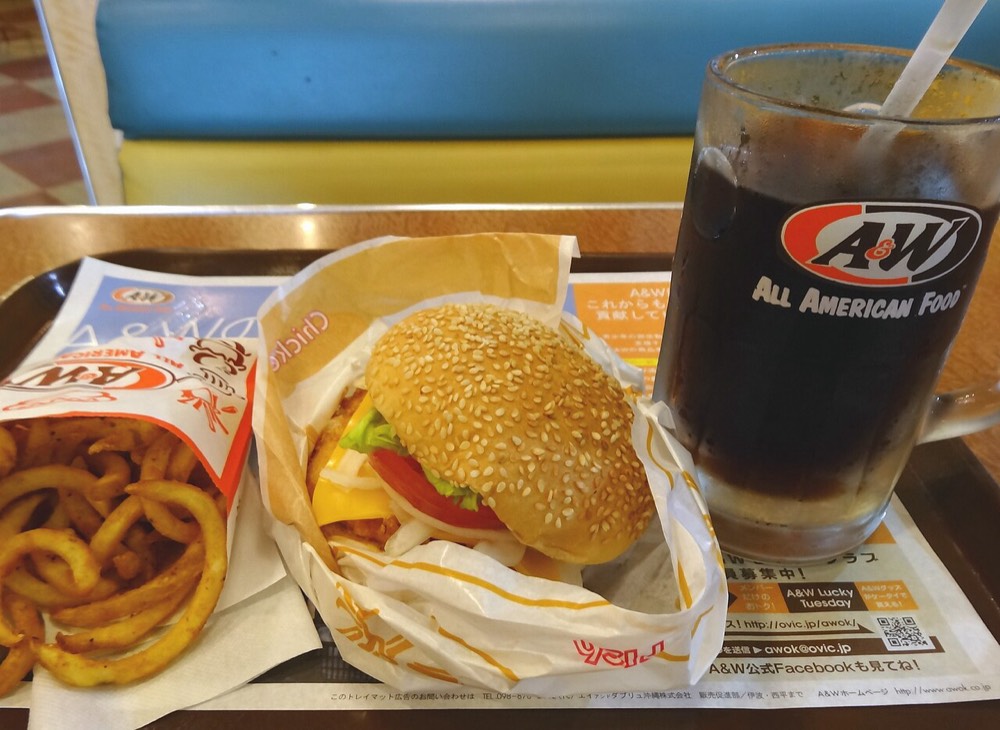
In Okinawa, A&W is nicknamed "Endā" (エンダー). The Agency for Cultural Affairs' survey of modern architecture records that A&W's first Japanese store, the Yagibaru store, opened in 1963, and the Makiminato store in Urasoe, the second, opened on August 25, 1969, in a "car hop" drive-in format where you order and eat in your car[4].
The must-order is A&W's signature root beer (ルートビア), which has an herbal aroma and divides opinion; with a burger, fries or curly fries it feels like an American roadside diner.
Kokusai-dori Food and Daiichi Makishi Public Market: How to Eat
In central Naha, Kokusai-dori and the neighboring Daiichi Makishi Public Market have most of Okinawa's food, and are the focus of eating for travelers without a car.
Daiichi Makishi Public Market: Buy Seafood, Have It Cooked Upstairs
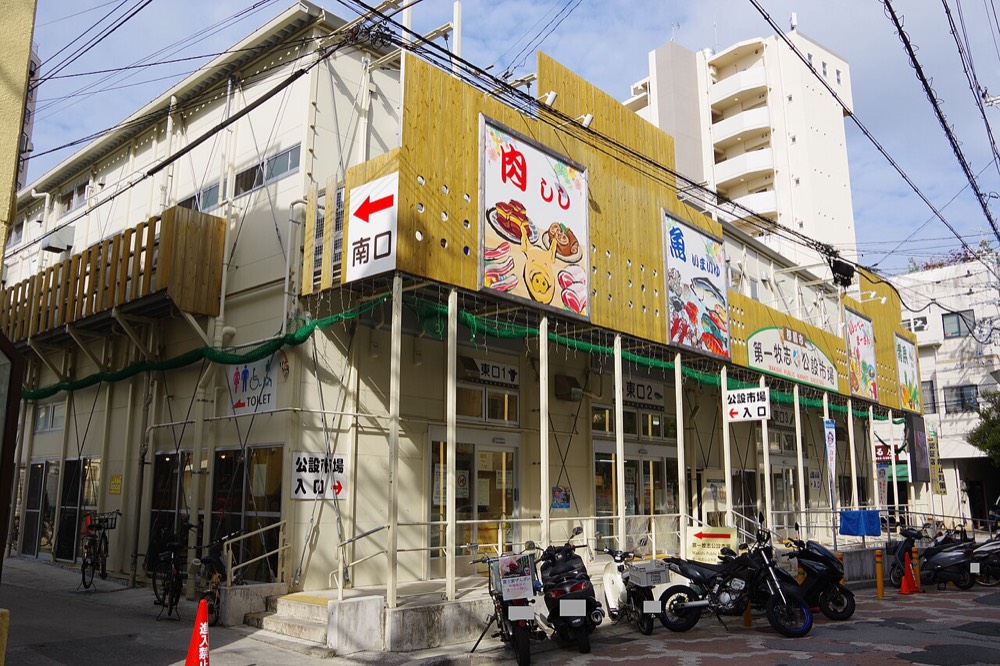
Known as "Naha's kitchen," Daiichi Makishi Public Market operated in a temporary market for several years during its rebuild, and the new building reopened on March 19, 2023[5]. The new market is a three-story building with about 88 shops including butchers, fishmongers and eateries[5].
The market's famous way to eat is "mochiage" (持ち上げ, having your seafood cooked for you):
- On the first floor, choose seafood such as lobster, turban shell and brightly colored tropical fish from a fishmonger.
- Tell the shop how you want it, such as sashimi, butter-fried, deep-fried or in soup.
- Take it upstairs to a partner eatery and pay a cooking fee, based on the number of people, to enjoy it.
Other Options Around Kokusai-dori
- Pork egg onigiri: Spam and fried egg in rice, with specialist shops around Makishi market, good for breakfast.
- Okinawan izakaya: Order goya champuru, rafute, sea grapes and island tofu together, with a glass of Orion beer or awamori.
- Sweets: Blue Seal ice cream, sata andagi and purple sweet potato tarts.
Awamori, Okinawa's distilled spirit, is the island's best-known drink[7]. It is strong, so for a first taste, add water or ice. If you are driving the next day, remember that Japan has zero tolerance for drunk driving; see the Okinawa driving guide for the rules.
How to Order at Local Diners: Common Problems for First-Timers
Okinawa's street-side "shokudo" (食堂, diners) are where locals have lunch, with big portions and menus mostly in Japanese. A few points will help:
- Ticket machines: Some diners have a ticket machine at the entrance; buy a ticket first and hand it to the staff. Take a photo of the menu and look it up in a translation app.
- "Soba" is not necessarily buckwheat noodles: Ordering "soba" in Okinawa almost always gets you Okinawa soba.
- "Champon" is not Nagasaki champon: At Okinawan diners, champon is often vegetables, meat and egg stir-fried and served over white rice, completely different from Nagasaki's noodle soup.
- Payment: Old diners often take cash only, so carry some small change to be safe.
- Short hours: Many shops serve only at lunchtime or close when sold out, so go early to the shop you want.
How to Plan the Smoothest Okinawa Food Route
- A day in Naha: Pork egg onigiri in the morning, Okinawa soba at noon, Blue Seal on Kokusai-dori in the afternoon, then public market seafood cooked for you or an izakaya in the evening.
- A day in the north: Churaumi Aquarium in the morning, Okinawa soba in Motobu at noon, taco rice in Kin Town on the way back.
- Half a day in the central area: A&W and the Blue Seal main store in Makiminato, Urasoe, then American Village in Chatan for the sunset and dinner.
For how to arrange the northern and central sights, see Okinawa attractions, and for getting around without a car see Okinawa without a car. Food guides for other cities are collected under Japan food topics.
FAQ
Is Okinawa soba made from buckwheat?
No. Okinawa soba uses no buckwheat flour at all. The noodles are made from 100% wheat flour and are closer to thick ramen or udon in texture. The broth is based on pork bones and bonito, topped with simmered pork, fish cake and green onions; the version with bone-in spare ribs is called soki soba.
Where was taco rice invented?
Taco rice is said to have been born in 1984 in Kin Town in northern Okinawa, created by Matsuzo Gibo, founder of Parlor Senri, who put taco meat, lettuce and cheese over white rice. The current King Tacos Kin Main Branch is regarded as its birthplace.
Where is the best place to have Blue Seal ice cream?
There are Blue Seal shops all over Okinawa, including on Kokusai-dori. To see the brand's history, visit the Makiminato Main Store in Urasoe, which was rebuilt and reopened in July 2024 with a drive-through and an exhibit on its founding.
What food do you recommend around Kokusai-dori?
Daiichi Makishi Public Market is the top pick: buy seafood on the 1st floor and have it cooked at a second-floor eatery. The nearby alleys have Okinawa soba, pork egg onigiri, Blue Seal ice cream and izakaya, where Orion beer or awamori makes for the most Okinawan evening.
What Okinawan food souvenirs can travelers from Taiwan bring home?
Common choices are Okinawan brown sugar, purple sweet potato tarts, chinsuko cookies, dried or instant Okinawa soba and awamori. Meat products cannot be brought into Taiwan, so check Taiwan's quarantine rules before buying retort pouches or cans that contain meat. Travelers from other countries should check their own customs rules.
Sources
- Okinawa Story: Okinawa soba feature: Definition of Okinawa soba, regional differences and Okinawa Soba Day
- Rurubu &more: King Tacos, birthplace of taco rice: Birthplace, year and founder of taco rice
- Ryukyu Shimpo (PR TIMES): Blue Seal Makiminato Main Store reopens: Blue Seal's history and the reopening of the Makiminato Main Store
- Agency for Cultural Affairs: Modern architecture of Okinawa Prefecture, A&W Makiminato: A&W's first store and the opening year of the Makiminato store
- Ryukyu Shimpo: Daiichi Makishi Public Market to reopen on the 19th: Market reopening date and scale
- OIST: Okinawan Food: Introduction to champuru and taco rice
- Visit Okinawa Japan: Food and Longevity: Okinawan food culture and awamori
Fares, opening hours and event dates can change. Information checked on 2026.10.19; please confirm with official sources before you go.