Okinawa Without a Car: Monorail, Buses, Day Tours and a 4-Day Itinerary
Visit Okinawa without a car: Yui Rail monorail fares and 1-day pass, the 3-day local bus pass, buses to Churaumi Aquarium, day tours and a 4-day, 3-night plan.
Quick answer
To see Okinawa without a car, stay along the Yui Rail monorail in Naha: use the train for the city and Shuri Castle, and take an express bus or a day tour to Churaumi Aquarium and Kouri Island in the north. Yui Rail runs from Naha Airport to the terminus Tedako-Uranishi in 37 minutes for 390 yen. The 1-day pass costs 1,000 yen (24 hours) and the 2-day pass 1,800 yen (48 hours). The 3-day bus pass for four main-island bus companies is 5,800 yen for adults but excludes express buses 111 and 117 (checked October 2026).
Can you do Okinawa without a car? Yes, as long as you split the trip into two parts: Naha and Shuri by monorail, and the north (Churaumi Aquarium, Kouri Island) by express bus or day tour. Many travelers from Taiwan have no driving licence valid in Japan or do not want to drive on the left, and on a 3-4 day trip skipping the car also saves you the pick-up queue and the hunt for parking. This guide covers monorail fares and the 1-day pass, the local bus pass, how to reach the north by bus, day tour options, and a ready-to-use car-free itinerary.
Is Okinawa Without a Car Realistic? Check Whether It Suits You
In short: if you base yourself in Naha and mainly want the city, Shuri Castle and Kokusai-dori, plus a day or two in the north, you do not need a car at all. The only rail transport on the main island is the monorail in Naha. Everywhere else relies on buses, taxis or tours[7].
| Your trip style | Suitability without a car | Suggested transport |
|---|---|---|
| 3-4 days, mostly Naha shopping and food | Very suitable | Monorail and walking |
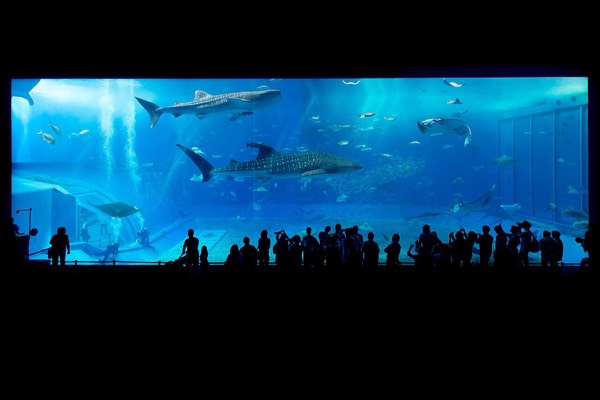
| Churaumi Aquarium and Kouri Island once each | Suitable | Day tour or express bus |
| Relaxing at a resort in Onna Village | Suitable | Airport limousine bus direct to the hotel |
| Exploring the Yanbaru forest and small southern coastal spots | Less suitable | Consider driving |
| Traveling with seniors or small children, lots of luggage | Depends | Monorail plus taxis; private charter or day tour in the north |
If you decide to rent a car after all, see the Okinawa driving guide, which covers the Japanese translation of a Taiwanese driving licence and the rental process for travelers from Taiwan.
How to Ride the Okinawa Monorail (Yui Rail): Fares, 1-Day Pass and IC Cards
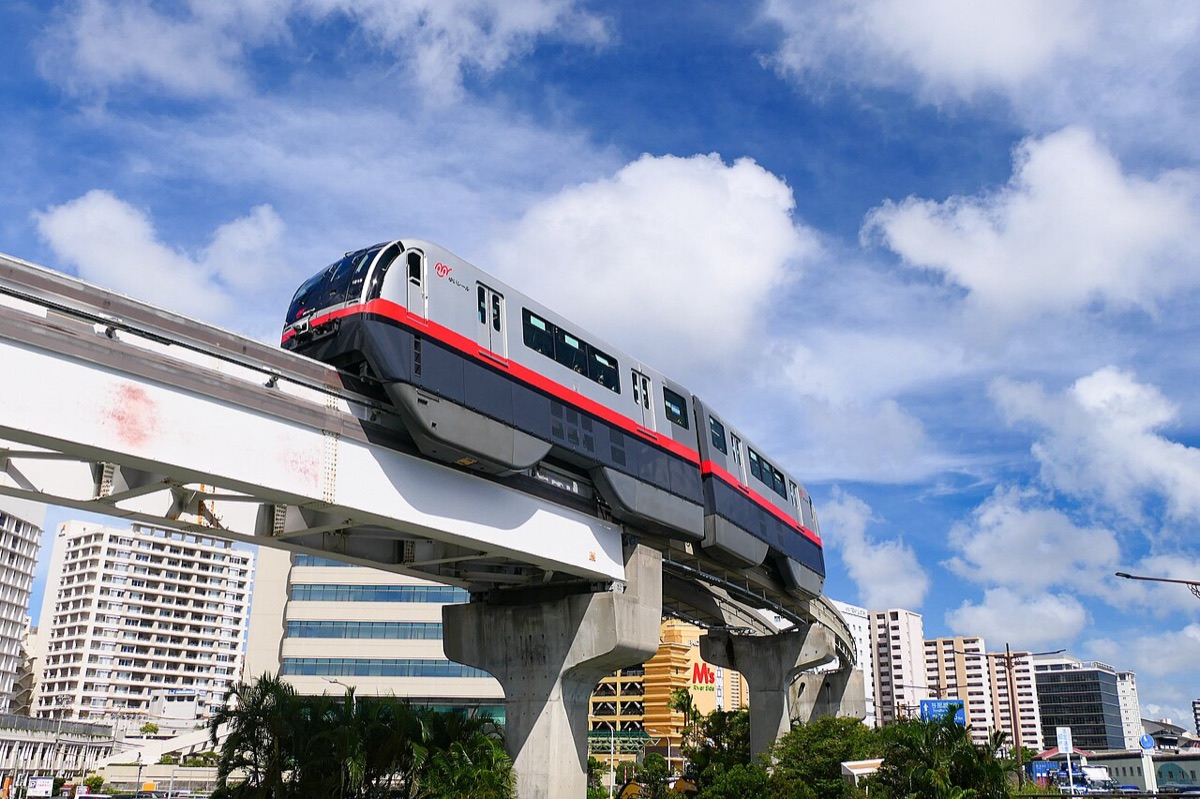
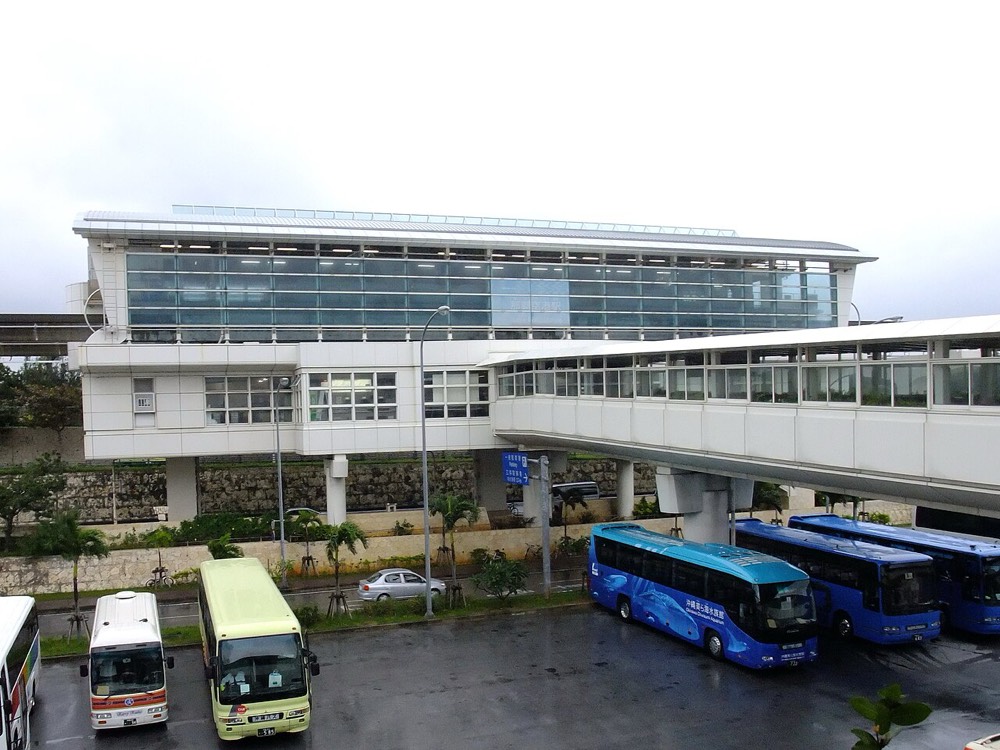
Yui Rail (the Okinawa Urban Monorail) is the most important transport for visitors without a car. It runs through Naha and Shuri from Naha Airport Station to the terminus Tedako-Uranishi, 19 stations in all[7].
Fares and Travel Times from Naha Airport
According to the Yui Rail website, adult fares and travel times from Naha Airport Station are as follows[2]:
| Station | Nearby sights | Adult fare | Travel time |
|---|---|---|---|
| Kencho-mae (県庁前) | Kokusai-dori entrance, Naha city hotels | 290 yen | 13 min |
| Miebashi (美栄橋) | Middle of Kokusai-dori | 320 yen | 14 min |
| Makishi (牧志) | Kokusai-dori, Daiichi Makishi Public Market | 320 yen | 16 min |
| Omoromachi (おもろまち) | DFS, large shopping malls | 320 yen | 19 min |
| Shuri (首里) | Shuri Castle Park | 360 yen | 27 min |
| Tedako-Uranishi (てだこ浦西) | Terminus, bus connections to the north | 390 yen | 37 min |
Are the 1-Day and 2-Day Passes Worth It?
The Yui Rail 1-day pass costs 1,000 yen for adults and 500 yen for children and is valid for 24 hours from purchase. The 2-day pass costs 1,800 yen for adults and 900 yen for children and is valid for 48 hours[1]. Note that it is a 24-hour pass, not valid until the last train of that day, so a 1-day pass bought in the afternoon still works until noon the next day. The website recommends buying it just before you board.
With the airport-to-Shuri single fare at 360 yen, three or more rides in a day pay for the pass. Showing it also gets you group-rate admission at Shuri Castle, Shikinaen Garden, the Former Japanese Navy Underground Headquarters and Tamaudun[1]. For example, Shuri Castle admission is only 320 yen for adults while the pass is valid[1]. From 23 November 2026, the standard adult admission to Shuri Castle rises to 1,000 yen[8], so the discount amount may change. Check the official site before you buy.
Can I Use Suica or a Credit Card?
Yes. The Yui Rail website lists the local OKICA card and transport IC cards such as Suica, and it also accepts contactless credit and debit cards[3]. A mobile Suica on your phone works at the gates; for setup, see the Suica on iPhone and Android guide. OKICA can also be used on regular route buses on the main island (not sightseeing buses or airport limousine buses)[3].
How to Ride Buses in Okinawa: Route Buses, Bus Pass and Express Buses
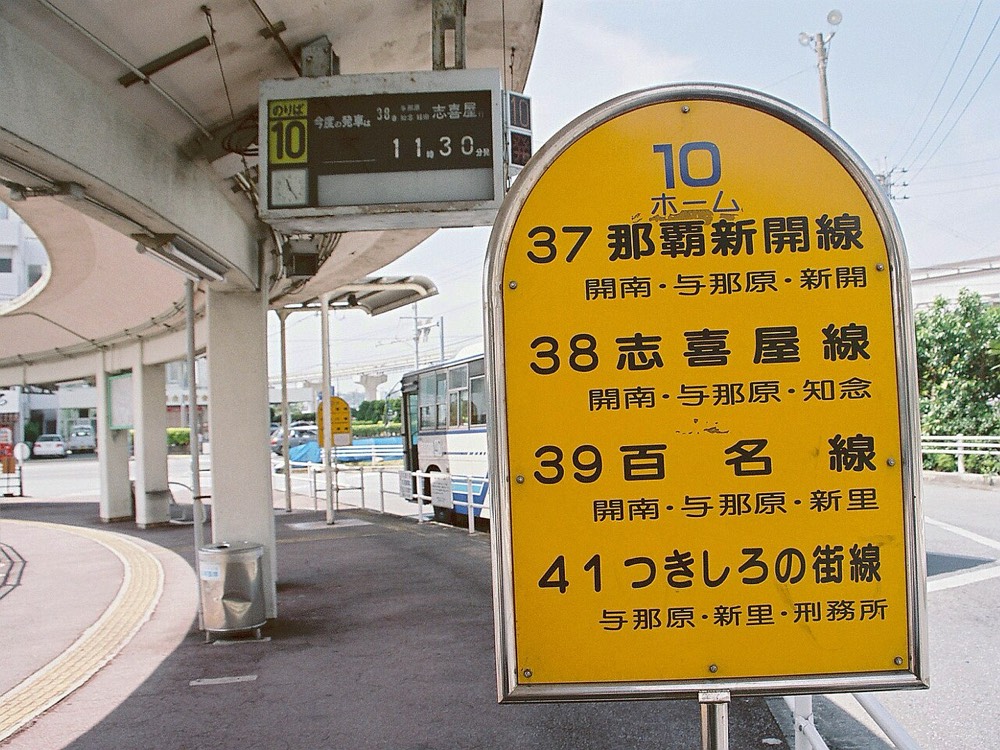
Okinawa buses fall into three types: regular route buses across the main island, express buses that use the expressway to the north, and airport limousine buses that run direct to resort hotels[7].
Okinawa Route Bus Excursion Pass (3-Day Pass)
Since January 2026, the "Okinawa Route Bus Excursion Pass (3-day pass)" can be bought in the Okinawa area of the my route app. It costs 5,800 yen for adults and 2,900 yen for children, and gives unlimited rides for three days on regular main-island route buses of four companies: Ryukyu Bus Kotsu, Okinawa Bus, Naha Bus and Toyo Bus[4].
Things to know before using it:
- Express buses 111 and 117 that use the expressway, the airport limousine buses and the regular sightseeing buses are not valid[4].
- You must register as a member and link a payment method, and one phone can buy up to five passes[4].
- An unused pass can be refunded for a fee, but not once you have started using it[4].
Because the north-bound express buses most visitors use are not covered, this pass suits people who want to take regular route buses slowly and explore the central west coast stop by stop. If you only go north once, buying single tickets is usually simpler.
Buses to Churaumi Aquarium
From Naha Airport to the Churaumi Aquarium on the Motobu Peninsula in the north, there are three main options[5]:
- Okinawa Airport Shuttle (沖縄エアポートシャトル) and Yanbaru Express Bus (やんばる急行バス): board at stop 1 at Naha Airport.
- Express buses 111 and 117: board at stop 2 at Naha Airport. Buses 111 and 117 can also be taken from Nago Bus Terminal to the aquarium.
- Get off at Kinen-koen-mae and walk about 10 minutes to the aquarium entrance. The whole trip takes about 2 hours 30 minutes[5].
The Yanbaru Express Bus does not take reservations; just wait at the stop before departure, and you can pay the fare with a contactless card[6]. Fares and timetables change, so check the bus companies' websites for the latest schedule before you go.
Using Google Maps for Buses
Okinawa route bus data is available in Google Maps, so entering your start and destination shows transfers and times. It is the most useful tool for visitors without a car. Board through the front or middle door, press the bell before your stop, and pay in cash or with an IC card when you get off. Details vary slightly by company and route, so follow the on-board instructions.
How to Choose an Okinawa Day Tour: The Easiest Way to See the North
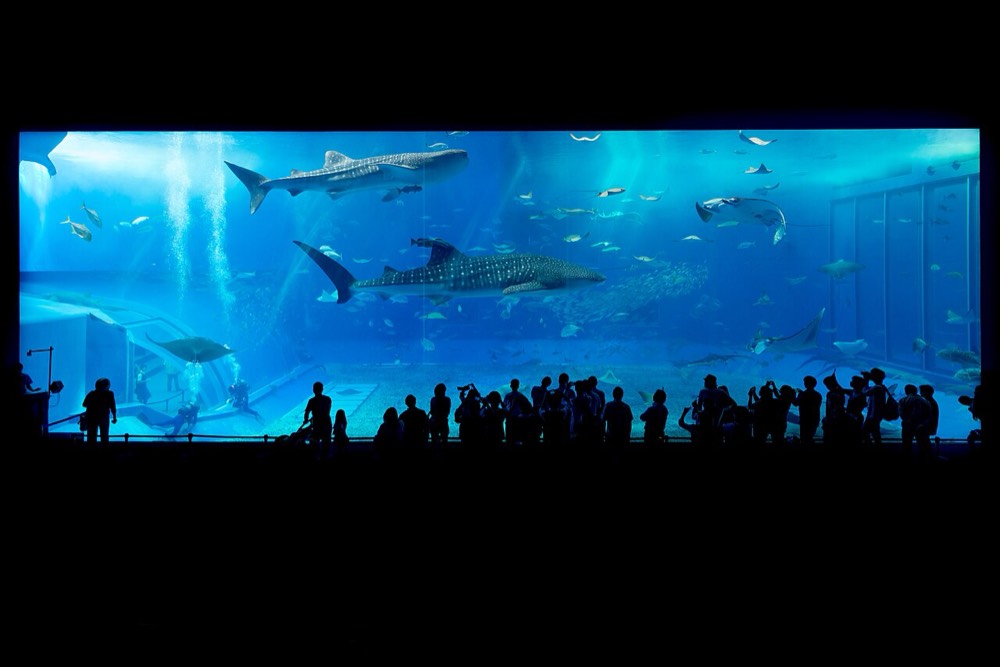
If you want Churaumi Aquarium, Kouri Island, Cape Manzamo and other northern highlights in a single day, a bus day tour is the most efficient option without a car. Day tours from Naha usually link these sights along one route, with a guide and fixed meeting times.
Common choices:
- Regular sightseeing buses: run by local Okinawa bus companies on fixed routes from Naha.
- Day tours on travel platforms: platforms such as KKday and Klook offer guided northern day tours, mostly with meeting points in central Naha.
- Sightseeing taxi or private charter: Visit Okinawa Japan notes that guided sightseeing taxis are available[7]. They suit families or groups of 3-4, and the route can be adjusted freely.
Before booking, confirm the meeting place and time, whether aquarium admission is included, how long you stay at each stop, and the typhoon cancellation policy. Churaumi Aquarium admission is 2,180 yen for adults and you pay it yourself if the tour does not include it. For what each sight offers, see the Okinawa attractions guide.
Other Ways to Get Around Without a Car
- Ferries: Okinawa has a ferry network to the outlying islands, and some routes have high-speed boats, but they are affected by the weather[7].
- Bike sharing: Naha has the CHURACHARI bike-share service[7], handy for short trips in the city.
- Taxis: There are plenty of taxis in the city, convenient for short distances or when you are in a hurry. Taxis are limited on the outlying islands[7].
A Car-Free Okinawa Itinerary: 4 Days, 3 Nights
Here is a car-free Okinawa itinerary based in Naha, with accommodation near a monorail station.
| Day | Plan | Transport |
|---|---|---|
| Day 1 | Arrive at Naha Airport, drop bags at the hotel, dinner on Kokusai-dori and at Daiichi Makishi Public Market | Monorail |
| Day 2 | Shuri Castle Park, stroll the Shuri Kinjo-cho stone-paved road, return to the city for Omoromachi | Monorail 1-day pass |
| Day 3 | Northern day tour: Churaumi Aquarium, Kouri Island and more | Day tour bus or express bus |
| Day 4 | Morning in the city and souvenir shopping, then monorail to the airport | Monorail |
Scheduling tips:
- Buy the 1-day pass on Day 2. It is valid for 24 hours, so you can also use it on the morning of Day 3 to reach the tour meeting point.
- The main hall of Shuri Castle opens to visitors from noon on 23 November 2026. Entry requires an advance reservation and numbers are limited, and the park is temporarily closed all day on 22 November and on the morning of the 23rd, so keep this in mind if you visit in late November.
- If you take the bus to the north yourself on Day 3, catch an early one and watch the last bus back.
- If you want more beach time, replace Day 4 with a night at a resort in Onna Village and use the airport limousine bus both ways[7].
Choosing where to stay: Kencho-mae, Miebashi and Makishi are close to Kokusai-dori and best for eating and shopping. Asahibashi Station is right next to the Naha Bus Terminal, so buses to the north and south are easy.
Before You Go: 5 Tips for Okinawa Without a Car
- Set up Suica on your phone in advance or bring an OKICA card; both work on the monorail and city buses.
- Meeting times for northern buses and day tours are early, so do not stay out too late the night before.
- In typhoon season (roughly July to October), buses and ferries may stop running, so keep your plans flexible.
- Check the last bus back from the north before you leave.
- With lots of luggage, use taxis or hotel luggage storage on check-in and check-out days.
For what to eat, see the Okinawa food guide. More Okinawa articles are collected under Okinawa travel.
FAQ
Is Okinawa inconvenient without a car?
In Naha and around Shuri the monorail is very convenient. The north is farther away and buses are infrequent, so allow extra time. If you only want popular spots such as Churaumi Aquarium and Kouri Island, a day tour is the most efficient option. If you want to explore many remote beaches and small sights, driving still gives you more freedom.
Can I use a Suica card on the Okinawa monorail?
Yes. The Yui Rail website lists Suica and other transport IC cards as well as the local OKICA card, and it also accepts contactless credit and debit cards. Suica on an iPhone or Android phone can be tapped directly as well.
How do I get from Naha Airport to Churaumi Aquarium by bus?
In front of the Naha Airport domestic terminal, take the Okinawa Airport Shuttle or the Yanbaru Express Bus (stop 1), or express bus 111 or 117 (stop 2). Get off at Kinen-koen-mae and walk about 10 minutes. The ride takes about 2.5 hours. The Yanbaru Express Bus does not require a reservation.
Is the Yui Rail 1-day pass valid for the calendar day or for 24 hours?
According to the official site, the 1-day pass is valid for 24 hours from purchase and costs 1,000 yen for adults. The 2-day pass is valid for 48 hours and costs 1,800 yen for adults. The site recommends buying it just before you board, and showing the pass also gets you admission discounts at places such as Shuri Castle.
Where should I stay in Okinawa if I am not driving?
Choose a hotel within walking distance of a monorail station, such as Kencho-mae, Miebashi or Makishi, which are close to Kokusai-dori. Or stay around Asahibashi Station, right next to the Naha Bus Terminal, which makes buses to the north and south easy.
Sources
- Yui Rail official site: Free passes (フリー乗車券): 1-day and 2-day pass prices, validity and facility discounts
- Yui Rail official site: Naha Airport Station fares: Fares and travel times from Naha Airport Station to each station
- Yui Rail official site: Ticket information (乗車券のご案内): Riding with IC cards and contactless credit cards
- Toyota Financial Services: Okinawa Route Bus Excursion Pass (3-day pass) now on sale: 3-day pass price, eligible routes and purchase conditions
- Okinawa Churaumi Aquarium: Access: Bus stops and times from Naha Airport to the aquarium
- Yanbaru Express Bus official site: No reservation needed, contactless card payment
- Visit Okinawa Japan: Getting Around Okinawa: Overview of the monorail, buses, taxis, ferries and bike sharing
- Shuri Castle Park: Admission fees: New admission fee from 23 November 2026
Fares, opening hours and event dates can change. Information checked on 2026.10.19; please confirm with official sources before you go.