Ishigaki Island Travel Guide: Getting There, Airport Bus, Car Rental, Ferries, Kabira Bay and Weather
Plan an Ishigaki trip: airport bus and taxi, Azuma Bus passes, car rental, ferry fares to Taketomi and Iriomote, Kabira Bay, weather by month and a 3–4 day itinerary.
Quick answer
Getting around Ishigaki: the Azuma Bus from New Ishigaki Airport to the Remote Island Terminal costs 550 yen one way (1,000 yen return ticket); a taxi takes about 25 minutes and roughly 3,500 yen. A 1-day all-line bus pass is 1,000 yen, but the buses do not take transit IC cards. Island-hopping ferries leave from the Remote Island Terminal: Taketomi 970 yen one way, Iriomote Ohara 2,520 yen, Kohama 1,720 yen. Swimming is banned in Kabira Bay, so see it by glass-bottom boat. January averages about 19°C, and northeasterly winds often cancel the Iriomote Uehara route in winter.
On an Ishigaki Island trip, what trips people up is usually not the sights but the logistics: how to get from the airport to town, whether to rent a car, how the ferries to Taketomi and Iriomote work, and whether boats stop running in winter. This guide covers the airport bus and taxi from New Ishigaki Airport, Azuma Bus day passes, what you need to rent a car, fares and schedules from the Ishigaki Port Remote Island Terminal, the must-see spots such as Kabira Bay, Tamatorizaki and Cape Hirakubo, weather by month, and a 3–4 day sample itinerary.
How to get to Ishigaki: domestic flights, international flights and the airport transfer
The short answer: most travelers fly into New Ishigaki Airport (南ぬ島 石垣空港) and take a bus of a little over half an hour to the Ishigaki Port Remote Island Terminal in town. According to the airport's website, domestic routes serve Tokyo (Haneda, Narita), Nagoya (Chubu), Osaka (Kansai), Fukuoka, Naha and Miyako, among others, while international routes serve Taipei (Taoyuan), Kaohsiung, Hong Kong and Seoul[5].
| From | Airlines (as listed by the airport) | Notes |
|---|---|---|
| Naha | JTA, RAC, ANA, Solaseed Air | About 1 hour; most frequent |
| Tokyo Haneda | JAL, ANA | Nonstop |
| Tokyo Narita, Fukuoka | Peach | Nonstop |
| Osaka Kansai | JTA, ANA, Peach and others | Nonstop |
| Taipei (Taoyuan), Kaohsiung | Tigerair Taiwan | International; check the airline for winter schedules |
| Hong Kong / Seoul (Incheon) | HK Express / Jin Air | International |
For travelers departing from Taiwan, Tigerair Taiwan flies to Ishigaki from both Taoyuan and Kaohsiung[5]; the Kaohsiung route launched in September 2026, reported at twice weekly when it opened[10]. Airlines adjust which days and months they fly in winter, so check the airline's website before booking. From places other than Taiwan, Hong Kong or Korea, you will usually connect via Tokyo, Osaka or Naha, with Naha the easiest; for ideas on the Okinawa main island, see Okinawa in winter.
New Ishigaki Airport to town: bus 550 yen, taxi about 3,500 yen
There are three ways from the airport to the Remote Island Terminal (in town)[6]:
- Azuma Bus airport lines: Route 4 (via Hirae, Ohama, Shiraho) and Route 10 (via ANA InterContinental and Art Hotel) both stop at the Remote Island Terminal and the bus terminal. One way is 550 yen, and an airport–terminal return ticket is 1,000 yen, sold on airport-line buses[4].
- Karry Kanko (カリー観光) direct bus: another operator running straight to town; check the operator for times and fares[6].
- Taxi: about 25 minutes to the Remote Island Terminal, about 3,500 yen for a standard car[6], not bad split among three or four people.
The most common pitfall is payment: Azuma Bus accepts only cash and contactless credit cards; Suica, ICOCA and other transit IC cards and e-money do not work, and the fare box gives no change, so use the changer on board[3].
Getting around Ishigaki: bus passes, rental cars and taxis
Ishigaki is bigger than it looks; driving from town to Cape Hirakubo at the northern tip takes over an hour. Your choice depends on whether you are going north: for town plus island-hopping you do not need a car; for Kabira Bay and beyond, Tamatorizaki and Cape Hirakubo, a rental car gives the most freedom.
| Option | Cost (checked Nov 2026) | Best for |
|---|---|---|
| Azuma Bus single fare | Distance-based; airport–town 550 yen[4] | Just airport and town |
| Azuma Bus 1-day pass (24 hours) | Adult 1,000 yen, child 500 yen[4] | A bus day to Kabira or the north |
| Azuma Bus "Michikusa" 3-day pass | Adult 2,000 yen, child 1,000 yen[4] | Car-free stays of 3+ days |
| Rental car | Varies by car and season; ask the rental company | The north, families or groups |
| Taxi / scheduled sightseeing bus | By distance or tour | Short hops, or if you do not want to plan routes |
Azuma Bus routes: few departures to Kabira Bay and the north
Azuma Bus (Azuma Unyu) routes start from the city bus terminal: Route 9 Kabira Resort Line and Route 11 Yonehara Campground Line go to Kabira Bay, Route 2 (west loop) and Route 3 (east loop) circle the island, and Routes 5 and 6 Hirano Line head north toward Hirakubo[3]. Two things to remember:
- Airport direct to Kabira Bay: Route 11 Yonehara Campground Line runs straight from the airport to Kabira Park, with only two departures a day, at 12:15 and 15:00[3], taking about 40 minutes[7].
- The 1-day and 3-day passes do not cover scheduled sightseeing buses, only regular route buses; the 1-day pass is sold at the bus terminal window or on any route bus[4].
Northern routes run only a few times a day, so plan both your outbound and return buses before heading north, or you may be stuck waiting at Tamatorizaki or Hirakubo.
What do you need to rent a car on Ishigaki?
Rental companies cluster around the airport and town, and many offer airport pickup. Travelers from Taiwan need their original Taiwan driver's license + an official Japanese translation + passport; an International Driving Permit issued in Taiwan is not valid in Japan. Travelers from other countries or regions should check whether their license is used in Japan with an International Driving Permit (1949 Geneva Convention) or a Japanese translation. For details and road rules, see the Okinawa self-drive guide.
Driving tips: most roads are one lane each way, with few streetlights outside town; there are many farms in the north and you may meet cattle or wildlife, so slow down at night. The Ishigaki City Tourism Association's website lists car, scooter and bicycle rental operators[8].
How do Ishigaki ferries work? Fares and schedules to Taketomi, Iriomote and Kohama
All island-hopping ferries leave from the Ishigaki Port Remote Island Terminal (石垣港離島ターミナル) in town, run by two main operators, Yaeyama Kanko Ferry (八重山観光フェリー) and Anei Kanko (安栄観光). Fares on the main routes are the same at both, seating is unreserved, you can buy tickets at the terminal, and booking online gets a web discount[1][2].
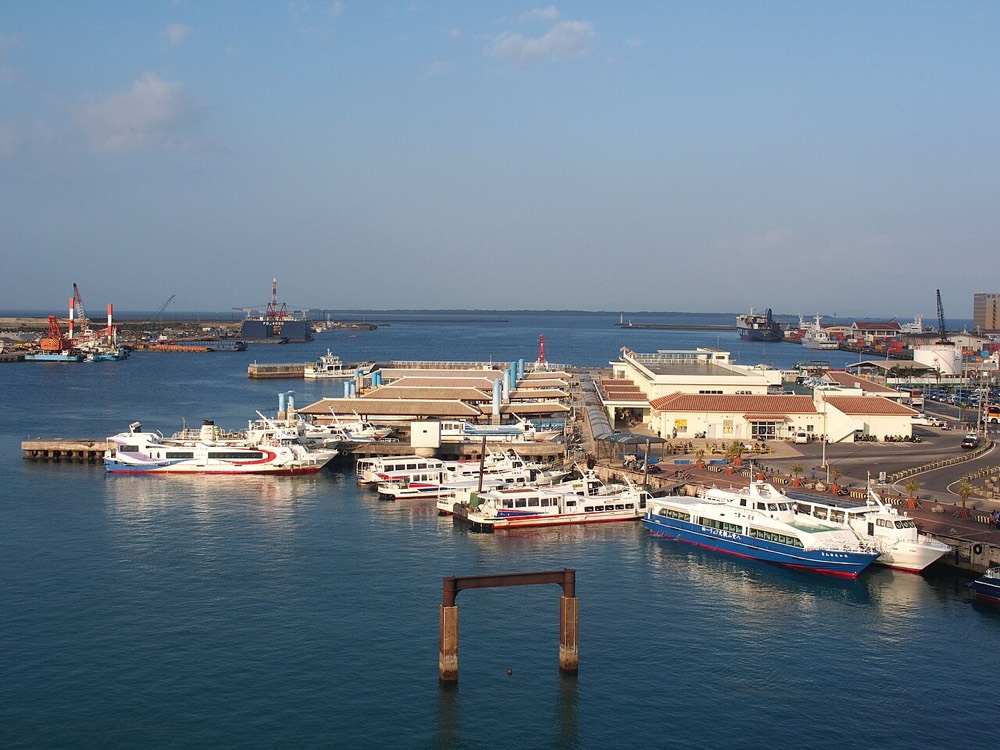
| Route (from Ishigaki) | Adult one way | Adult return | Child one way |
|---|---|---|---|
| Taketomi | 970 yen | 1,880 yen | 510 yen |
| Kohama | 1,720 yen | 3,340 yen | 870 yen |
| Kuroshima | 1,850 yen | 3,590 yen | 950 yen |
| Iriomote Ohara Port | 2,520 yen | 4,880 yen | 1,290 yen |
| Iriomote Uehara Port | 3,290 yen | 6,370 yen | 1,650 yen |
| Hateruma (Anei Kanko) | 4,990 yen | 9,670 yen | 2,500 yen |
(Fares include the fuel surcharge; checked on both operators' sites in November 2026[1][2])
Practical details:
- Adults are junior-high age and up; children are elementary-school age, and each adult can bring one preschooler free on their lap[1].
- Taketomi has the most sailings: on Yaeyama Kanko Ferry's October 2026–February 2027 timetable, departures from Ishigaki run from 7:30 to 17:30, roughly hourly[1], so a day trip is easy.
- Iriomote has two ports, Ohara and Uehara: Uehara is on the north side, near the Urauchi River and Hoshizuna Beach; Ohara is in the southeast, near Yubu Island. In winter the Uehara route is the most often cancelled (see the next section).
- Payment: Ishigaki Port takes cash, credit cards and many e-payment methods, but small ports such as Taketomi and Kuroshima take cash only[2], so buy a return ticket in Ishigaki.
Ishigaki weather: monthly temperatures, winter northeasterlies and cancellations
Ishigaki is warm year-round; by Japan Meteorological Agency normals for 1991–2020, the annual mean is about 24.5°C, the coldest month, January, still averages 18.9°C, and the hottest, July, has an average high of 32.2°C[9].
| Month | Avg. high | Avg. temp | Avg. low | Rainfall |
|---|---|---|---|---|
| January | 21.5°C | 18.9°C | 16.7°C | 135 mm |
| March | 23.7°C | 20.9°C | 18.6°C | 134 mm |
| May | 28.7°C | 25.9°C | 23.9°C | 191 mm |
| July | 32.2°C | 29.6°C | 27.7°C | 142 mm |
| September | 31.0°C | 28.2°C | 26.0°C | 260 mm |
| November | 26.2°C | 23.6°C | 21.5°C | 138 mm |
| December | 23.0°C | 20.5°C | 18.4°C | 155 mm |
(Data: JMA normals, compiled[9])
In winter (December–February) the issue is wind, not cold. When the northeasterly monsoon blows, it feels cooler than the thermometer says and the sea gets rough, and the first routes affected are those to Iriomote's Uehara Port and Hatoma Island. On November 2, 2026, for example, both Yaeyama Kanko Ferry and Anei Kanko announced that all Uehara and Hatoma sailings were cancelled due to rough seas while other routes ran as normal[1][2]. When the Uehara route is cancelled, the ferry companies sail to Ohara instead and run shuttle buses to the Uehara area[1], so if you are staying in northern Iriomote, keep your plans flexible.
In summer and autumn (roughly July–October) watch for typhoons; the Ishigaki City Tourism Association posts typhoon notices on flights and ferries[8]. For other winter ideas and what to pack, see Okinawa in winter; if you want to see humpback whales in winter, the main-island options are in the Okinawa whale watching guide.
Things to do in Ishigaki: Kabira Bay, Tamatorizaki, Cape Hirakubo, Banna Park and the city
Sights on Ishigaki itself fall into three areas: the city (around the Remote Island Terminal), Kabira Bay in the northwest, and Tamatorizaki and the Hirakubo Peninsula in the northeast. By car you can loop the north in a day; without one, pick one or two spots reachable by bus.
Kabira Bay: no swimming, take a glass-bottom boat
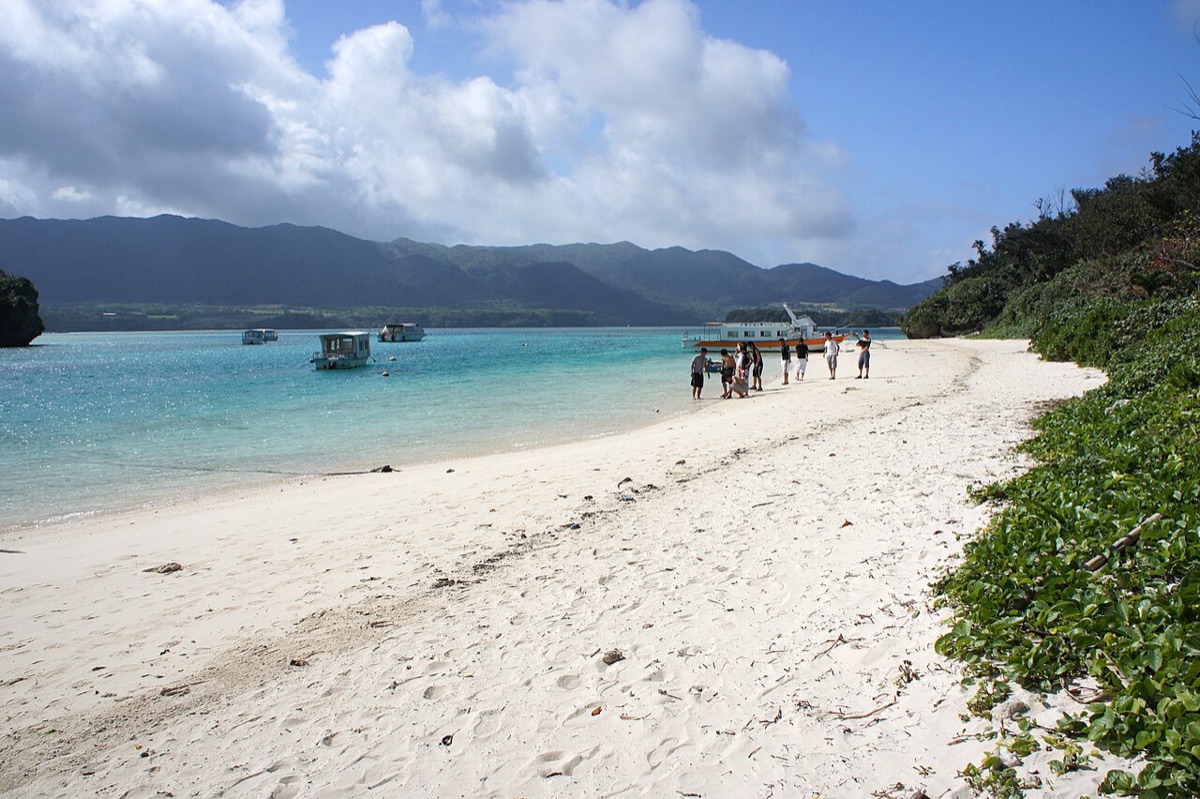
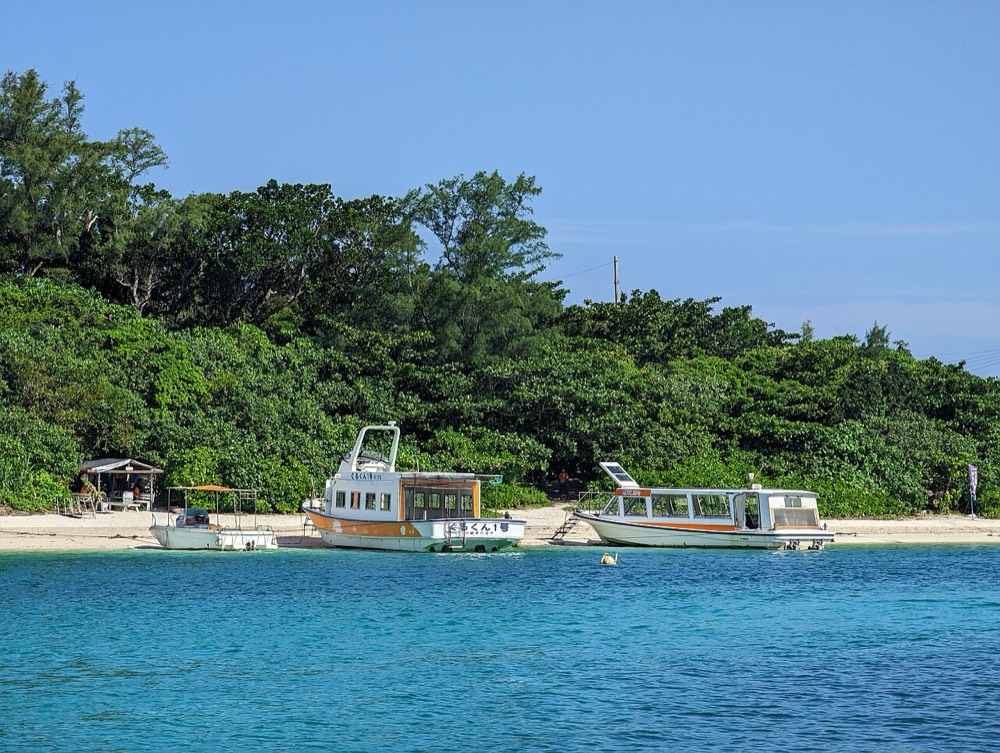
Kabira Bay (川平湾) is Ishigaki's most famous view, with white sand, emerald water and layered islets. Know this first: swimming is banned in the bay; JNTO explains it is because of black pearl farming there[7]. To see the coral and tropical fish, buy a ticket at the shops near the parking lot and ride a glass-bottom boat (グラスボート), which departs on a fixed schedule with no reservation needed[7]. It is about 30 minutes by car from the airport, or take the Route 11 bus mentioned above[7][3].
Tamatorizaki Observatory and Cape Hirakubo: northern sea views
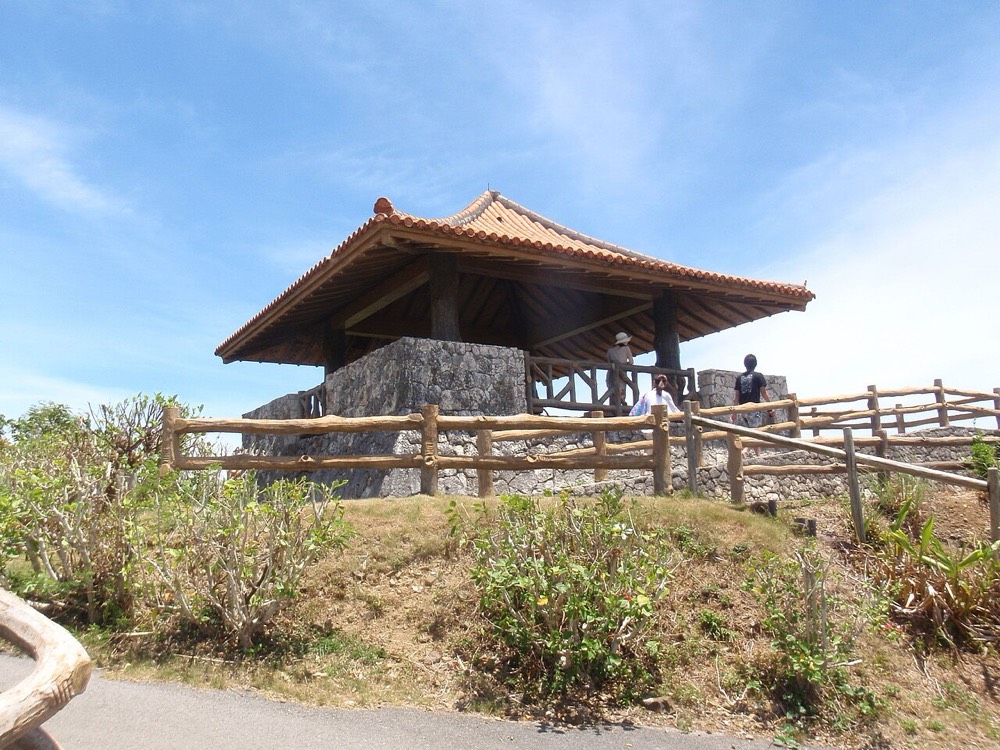
Tamatorizaki Observatory sits on the road toward the northern peninsula and looks out over both the Pacific and the East China Sea; the lookout is a red-tiled pavilion.
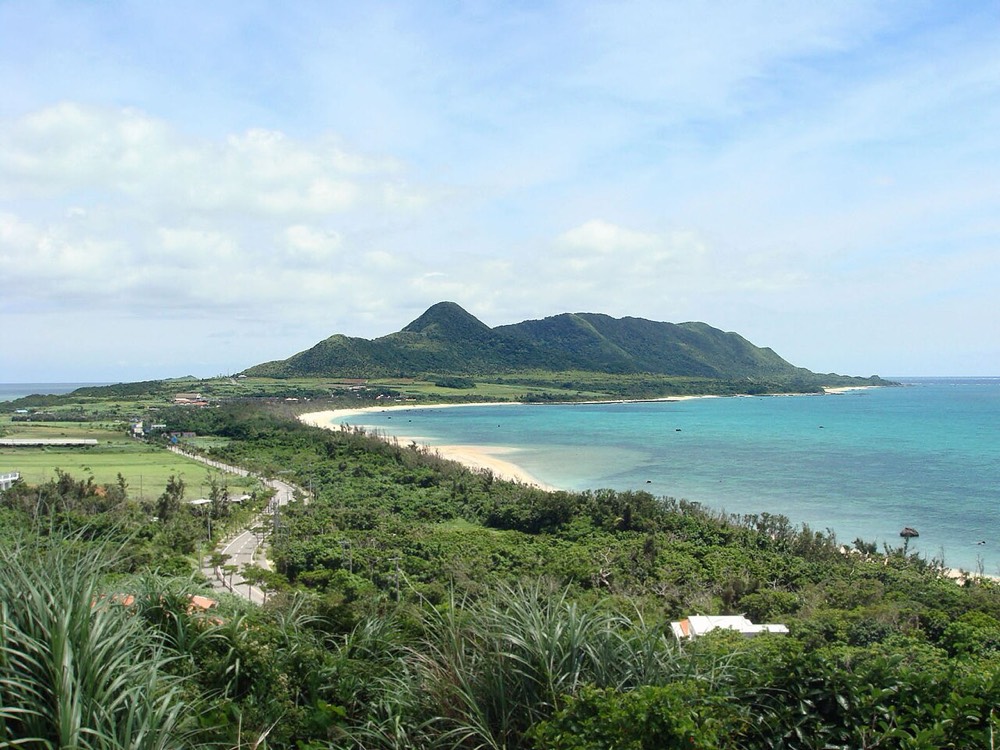
Drive farther north and you reach the Hirakubo Peninsula; Cape Hirakubo at the very tip has a white lighthouse, the landmark of Ishigaki's northern end. Shops and gas stations are scarce here, so fill up before you set off and bring water.
Banna Park and the city: rainy-day or last-day backups
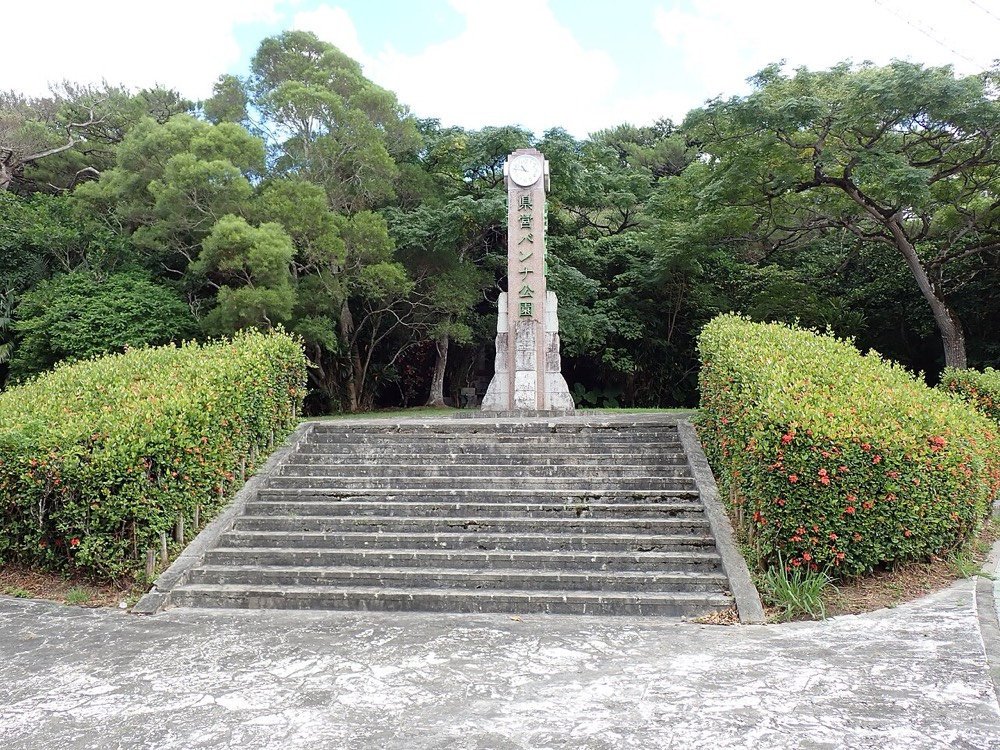
Prefectural Banna Park (バンナ公園) sits on the hills north of the city, with observation decks over the sea and town and walking trails, an easy stop by car or taxi. In town, the Ishigaki City Public Market and the surrounding Euglena Mall (ユーグレナモール, formerly Ayapani Mall) shopping street gather Yaeyama specialties, souvenirs and snacks, handy on a rainy day or before you fly out. For more on the Okinawa main island, see Okinawa attractions.
How to plan a 3–4 day Ishigaki itinerary
The smoothest 3–4 day plan is "stay in the city, centered on the Remote Island Terminal": one day on Taketomi, one day on Iriomote, one day looping northern Ishigaki, and a final half day in town. The table puts Iriomote, the most weather-sensitive leg, in the middle so it can shift later if sailings are cancelled.
| Day | Morning | Afternoon | Notes |
|---|---|---|---|
| Day 1 | Arrive at New Ishigaki Airport, bus to town | Half day on Taketomi (water-buffalo cart, star-sand beach) | Frequent Taketomi sailings; back to Ishigaki before evening |
| Day 2 | Ferry to Iriomote Ohara Port | Yubu Island, mangrove cruise or other local tours | In winter prefer Ohara Port, which is cancelled less often |
| Day 3 | Car or bus to Kabira Bay for a glass-bottom boat | Tamatorizaki Observatory, Cape Hirakubo | Without a car, use the Azuma Bus 1-day pass |
| Day 4 | Banna Park or the city market | To the airport | Be at the airport at least 1.5 hours before departure |
With only 3 days, fold Day 4's city time into the evening of Day 1. With 5 days or more, add Kohama or Kuroshima, or spend a night on Iriomote. If you are still deciding how to split days between the Okinawa main island and the outer islands, see the Okinawa 4-day itinerary.
Before you go: the most common Ishigaki mistakes
- Assuming buses take IC cards: Azuma Bus does not accept Suica or other transit IC cards; carry coins or a contactless credit card[3].
- Swimming in Kabira Bay: swimming is banned in the bay; go to an open beach or join a snorkel tour.
- Putting Iriomote on your last day: winter northeasterlies and summer–autumn typhoons can cancel sailings, so do not schedule island-hopping for the day before you fly home or later.
- Small ports are cash only: Taketomi, Kuroshima and other small ports take cash only[2], so keep some on you.
- Underestimating northern distances: north of Kabira Bay there are few shops, gas stations or buses, so fill up if driving and plan your return bus if not.
For more ways to explore Okinawa, start from the Okinawa travel overview.
FAQ
Can I visit Ishigaki without renting a car?
Yes, if you accept infrequent buses. Buses between the city, the Remote Island Terminal and the airport run fairly often, and all island-hopping ferries leave from the terminal, so 'stay in the city + ferry day trips' is easy without a car. Kabira Bay, Tamatorizaki and Cape Hirakubo are in the north with only a few buses a day; use an Azuma Bus 1-day or 3-day pass, or join a scheduled sightseeing bus or local day tour.
How do I get from Ishigaki Airport to the city, and how long does it take?
Azuma Bus routes 4 and 10 and Karry Kanko's direct bus run from New Ishigaki Airport to the Remote Island Terminal. The Azuma Bus fare is 550 yen one way, and an airport–terminal return ticket is 1,000 yen, sold on board. A taxi takes about 25 minutes and costs about 3,500 yen. The buses take only cash and contactless credit cards, not transit IC cards such as Suica.
How much is the ferry from Ishigaki to Taketomi? Do I need to book?
Yaeyama Kanko Ferry and Anei Kanko charge the same: Ishigaki–Taketomi is 970 yen one way and 1,880 yen return for adults, with elementary-school children about half price (checked November 2026, fuel surcharge included). Seating is unreserved and you can buy tickets at the terminal; booking online gets a web discount. The Taketomi route runs roughly hourly from 7:30 to the early evening.
Can you swim in Kabira Bay?
No. Swimming is banned throughout Kabira Bay; the Japan National Tourism Organization explains it is due to black pearl farming in the bay, and locals also warn the currents are faster than they look. To see the coral and fish, take a glass-bottom boat from the shops near the parking lot, no reservation needed; to swim, go to a beach that allows it.
Is Ishigaki cold in winter? Can you still go in the water?
Not cold, but cool. By JMA normals, January averages about 18.9°C with an average low of about 16.7°C, like a mild early spring, though strong northeasterly winds make it feel cooler. The sea is chilly in winter, so wear a wetsuit; snorkel tours usually provide one. Keep a backup plan in case ferries are cancelled by wind and waves.
Are there direct flights to Ishigaki from Taiwan?
New Ishigaki Airport lists international routes including Tigerair Taiwan from Taipei (Taoyuan) and Kaohsiung, plus HK Express from Hong Kong and Jin Air from Seoul. Winter weekly frequencies change, so check the airline's timetable before booking. From elsewhere, most travelers connect via Tokyo, Osaka or Naha on a domestic flight.
Sources
- Yaeyama Kanko Ferry | Regular routes (status, timetable, fares): October 2026–February 2027 timetable, fares by route (fuel surcharge included), Uehara route cancellation on November 2, 2026
- Anei Kanko | Timetable and fares: Adult and child fares by route, Hateruma route, payment methods at each port
- Azuma Unyu (Azuma Bus) | Route bus guide: Airport lines, Kabira and northern routes, payment methods (no transit IC cards), direct airport–Kabira departures
- Azuma Unyu (Azuma Bus) | Tickets and passes: 1-day pass, 3-day pass and airport–terminal return ticket prices
- New Ishigaki Airport | Routes: Domestic and international destinations and airlines
- New Ishigaki Airport | Bus and taxi: Bus routes to the city, taxi time and fare
- Japan National Tourism Organization (JNTO) | Kabira Bay: Reason for the swimming ban, glass-bottom boats, direct airport bus and driving time
- Ishigaki City Tourism Association | Transportation: Airlines, ferries, buses, taxis, rental operators and typhoon information
- Toki no Kensaku | Ishigakijima climate (JMA normals 1991–2020): Monthly mean temperatures and precipitation on Ishigaki
- Aviation Wire | Ishigaki Airport news: Tigerair Taiwan Kaohsiung–Ishigaki launch in September 2026
Fares, opening hours and event dates can change. Information checked on 2026.11.02; please confirm with official sources before you go.