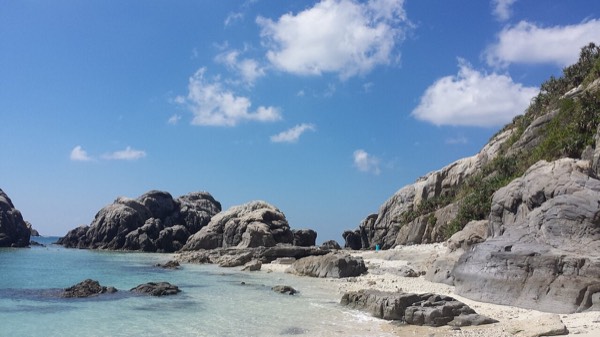
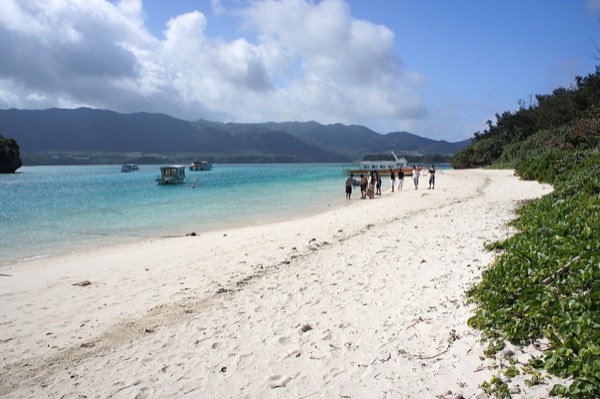
Miyakojima Travel Guide: Which Airport, Do You Need a Car, How Many Days, the Three Bridges and Beaches
Plan a Miyakojima trip: Miyako vs Shimojishima airport, direct flights, car rental vs bus, 2–4 day itineraries, the three sea bridges, top beaches and winter swimming.
Quick answer
Miyakojima has two airports. Miyako Airport, close to central Hirara, serves Haneda, Kansai, Chubu, Naha and Ishigaki. Shimojishima Airport, next to Irabu Island, has Starlux to Taipei (3 a week) and Taichung, Jin Air to Seoul and Busan, and Skymark to Haneda, Kobe and Naha in the winter 2026 schedule. Buses are infrequent, so rent a car to cover the three bridges and beaches; 3 days suits a first visit. January averages about 18°C, and you need a wetsuit to get in the water.
Planning a Miyakojima trip comes down to three decisions: which airport to fly into, whether to rent a car, and how many days to stay. Miyakojima actually has two airports, and every international direct flight lands at Shimojishima Airport next to Irabu Island. Buses on the island are sparse, so getting around without a car is much harder than on Okinawa's main island. Using official schedules and transport data, this guide compares the flight options, gives an honest look at renting a car versus going car-free, lays out 2-, 3- and 4-day sample itineraries, and covers the three sea bridges, the main beaches and whether you can swim in winter.
Miyakojima has become much busier in recent years. According to the Ryukyu Shimpo, Miyakojima City counted 1,263,397 visitors in fiscal 2025, about 1.7 times the fiscal 2022 figure of 736,990[1]. Hotel choices are growing too: Canopy by Hilton Okinawa Miyako Island Resort, in the Turibaa district just north of Hirara Port, was reported to open on 1 April 2026 with 306 rooms, next to Hilton Okinawa Miyako Island Resort, which opened in 2023[2]. The practical effect of the crowds: book rental cars and popular hotels earlier than you used to in peak season.
How to get to Miyakojima: Miyako Airport or Shimojishima Airport?
The short answer: if you connect from within Japan, you will usually fly into Miyako Airport; direct flights from Taipei, Taichung, Seoul and Busan use Shimojishima Airport. Both airports are in Miyakojima City, but they are far apart. Miyako Airport sits in the middle of the main island, about 15 minutes by car from central Hirara. Shimojishima Airport is on Shimoji Island across Irabu Bridge; a taxi to the city takes about 25 minutes and costs about 4,000 yen, depending on traffic[5].
Shimojishima Airport's winter 2026 schedule (25 October 2026 to 27 March 2027) lists 4 international and 3 domestic routes[3]:
| Destination | Airline | Winter frequency (25 Oct 2026 – 27 Mar 2027) | Flight time |
|---|---|---|---|
| Taipei (Taoyuan) | Starlux | Mon, Wed, Sat (3 a week) | About 1 hr 05 min (outbound to Miyako) |
| Taichung | Starlux | Wed, Sat (2 a week) | About 1 hr 15 min |
| Seoul (Incheon) | Jin Air | Daily (not operating on some dates: 29 and 31 Dec, 1 and 3 Jan) | About 2 hr 35 min |
| Busan | Jin Air | Thu, Sun (2 a week) | About 2 hr 10–20 min |
| Tokyo (Haneda) | Skymark | Daily | About 3 hr 25 min (outbound to Miyako) |
| Kobe | Skymark | Daily | About 2 hr 35 min (outbound to Miyako) |
| Naha | Skymark | Twice daily | About 50–55 min |
For travelers flying from Taiwan, the winter Starlux Taipei flight leaves Taoyuan at 10:55 and lands at Shimojishima at 13:00; the return leaves at 14:00 and reaches Taoyuan at 14:10 (local times; Miyakojima is one hour ahead of Taiwan)[3]. That means you can still sightsee on the afternoon you arrive and the morning you leave, but with only three flights a week, a 3- or 4-night trip has to fit the days of operation.
Miyako Airport has domestic flights to Haneda, Kansai, Chubu, Naha and Ishigaki[4], operated by JAL group and ANA group airlines. We found no scheduled international flights at Miyako Airport when checking; from Hong Kong or elsewhere, you would normally fly to Tokyo, Osaka or Naha first and connect. To combine the trip with Ishigaki, see the Ishigaki Island travel guide; domestic flights link the two islands.
Getting from the airports to the city and hotels
- Miyako Airport: Taxis wait at the terminal's front entrance. Miyako Kyoei Bus Route 4 (Yonaha–Kadekaru Line) stops at Miyako Airport, Yonaha and Kurima, with adult fares of 140–480 yen depending on distance[7]. Some large hotels run free shuttles: both Hilton hotels have shuttles to and from Miyako Airport, and the Miyakojima Tokyu Hotel shuttle must be booked 3 days in advance[4].
- Shimojishima Airport: The airport website lists two buses, Chuo Kotsu's direct Miyako Shimojishima Airport Liner and Miyako Kyoei Bus's Miyako Shimojishima Airport Resort Line, both via Hirara Port[6]. They run to match flight times; check each operator's website for fares and times. You can also book taxis through the DiDi or Miyakojima TAXI apps, and booking ahead is wise in case the waiting cabs have all left[5].
Do you need a car in Miyakojima? Rental car, bus, taxi and car-free travel
The short answer: for a first visit where you want to see all three bridges and several beaches, a rental car is the realistic choice. You can do it without a car, but only if you stay in one area and move around on tours with pickup. Miyakojima's sights are spread across the north and south ends of the main island plus Irabu, Ikema and Kurima islands, mostly 20 to 40 minutes apart by car, and buses cannot link them well.
| Option | Pros | Limits | Best for |
|---|---|---|---|
| Rental car | Plan the bridges, beaches and viewpoints yourself; sunset on your own schedule | Car shortages and higher prices in peak season; you need a licence valid for driving in Japan | First-timers who want to see a lot |
| Route bus | Cheap, usually a few hundred yen per ride | Four operators; outlying routes often run every 2–3 hours or only a few times a day[4] | Travelers based in Hirara visiting one or two spots |
| Taxi / charter | No parking hassle; app booking available | Long rides are expensive, e.g. about 4,000 yen from Shimojishima Airport to the city[5] | Groups splitting the fare, visiting few spots |
| Tours with pickup | Snorkeling, diving and SUP tours often collect you at your hotel | Fixed schedules | Car-free travelers focused on the sea |
| Bicycle / e-bike | Workable around Hirara and Irabu Island | Strong sun, long distances; Irabu Bridge is a tiring climb | Fit travelers staying in the city |
Car-free reality: Four bus companies operate on Miyakojima (Miyako Kyoei Bus, Yachiyo Bus, Kyowa Bus and Chuo Kotsu), but suburban routes are infrequent, so check return times in advance[4]. The Miyakojima Loop Bus, which used to link sights, ended its fiscal 2025 service on 28 February 2026, and the operator said a fiscal 2026 service was undecided[8]. If you are not driving, plan it like this:
- Stay in central Hirara or at a large hotel with an airport shuttle, so arrival and departure need no transfers.
- For time in the water, book snorkeling or diving tours with pickup instead of taking buses to Aragusuku or Yoshino beaches.
- To see Irabu Bridge and Ikema Bridge, a half-day taxi charter or an island sightseeing tour beats waiting for buses.
- Do not count on paying with Suica or other transit IC cards; carry coins, and check each bus company's payment notice.
Renting a car in Miyakojima: Cars run short and prices rise in peak season, so book your car together with flights and accommodation; most rental firms have offices near the airport and run shuttles[4]. Licence documents, insurance and road rules are the same as on Okinawa's main island; see the Okinawa car rental and licence guide rather than repeating them here (it includes the Japanese translation route for travelers with a Taiwan licence). When crossing Irabu Bridge, use the parking areas or viewpoints at either end for photos instead of stopping on the bridge.
Miyakojima's three sea bridges: Irabu, Ikema and Kurima
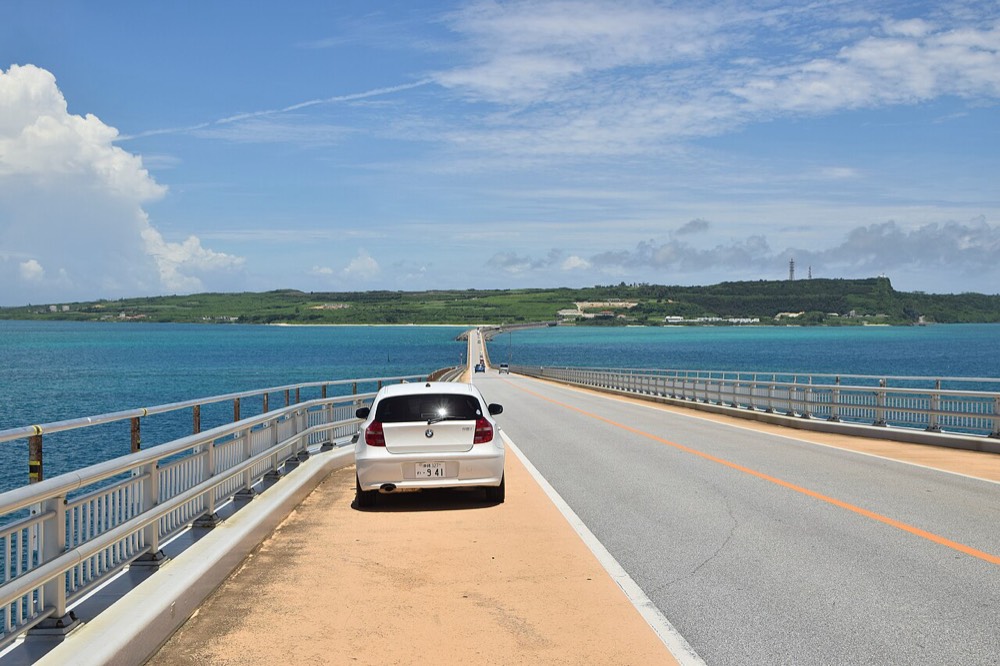
The short answer: the three bridges lie to the west, north and southwest of the island, so they fit best on separate days rather than all in one. All three are free to cross.
| Bridge | Connects | Length | Opened | Nearby stops |
|---|---|---|---|---|
| Irabu Bridge (Irabu Ohashi) | Miyakojima – Irabu Island | 3,540 m | 2015 | Makiyama Observatory, Toguchi Beach, Sawada Beach, 17END on Shimoji Island, Tori-ike ponds |
| Ikema Bridge (Ikema Ohashi) | Miyakojima – Ikema Island | 1,425 m | 1992 | Cape Nishi-Hennazaki, a loop of Ikema Island, Sunayama Beach on the way back |
| Kurima Bridge (Kurima Ohashi) | Miyakojima – Kurima Island | 1,690 m | 1995 | Yonaha Maehama Beach, Ryugujo Observatory on Kurima |
Irabu Bridge is the longest toll-free bridge in Japan[9]. The deck rises and falls, and the sea on both sides looks best near the high point in the middle. Irabu and Shimoji islands beyond it make a half-day to full-day trip; 17END, at the end of Shimojishima Airport's runway, is known for its shallow turquoise water, and more sand is exposed at low tide.
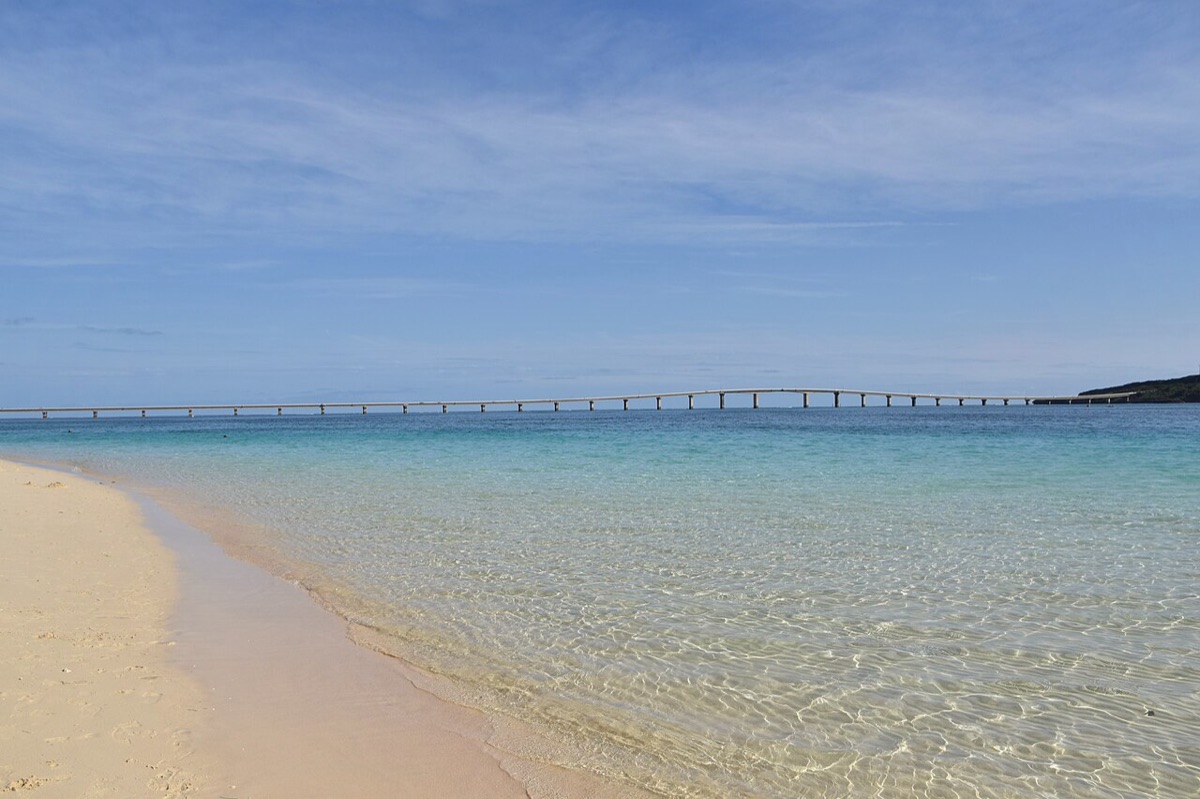
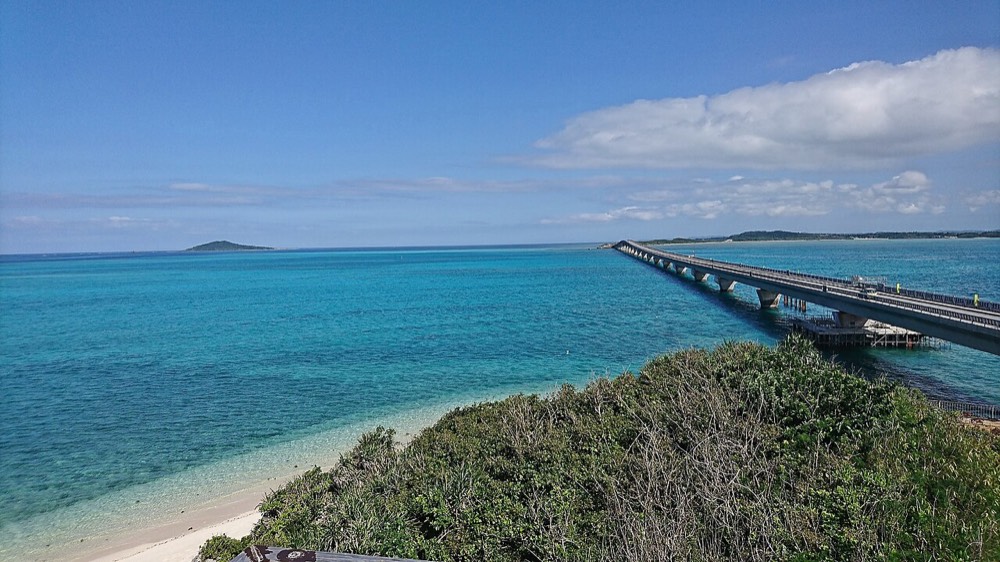
Ikema Bridge is at the island's northern tip and crosses shallows that turn a very pale blue-green on sunny days; from the end of the bridge you can see Ogami Island. Kurima Bridge is the shortest and usually pairs with Maehama: from the sand at Maehama you can see the whole bridge stretched across the sea.
Which Miyakojima beach? Maehama, Sunayama, Aragusuku and Yoshino
The short answer: go to Maehama and Sunayama for scenery, and Aragusuku and Yoshino for snorkeling. Miyakojima City warns, however, that many natural shores on the island are not designated swimming beaches, that you swim at your own risk, and that you should watch for dangerous marine life, sudden changes in depth and currents[10]. At beaches without lifeguards, join a snorkeling tour or at least go with others and wear a life jacket.
| Beach | Location | Highlights | Best for |
|---|---|---|---|
| Yonaha Maehama | Southwest, by Kurima Bridge | About 7 km of white sand with views of Kurima Island, often called the finest beach in East Asia[11] | Walks, photos, sunset |
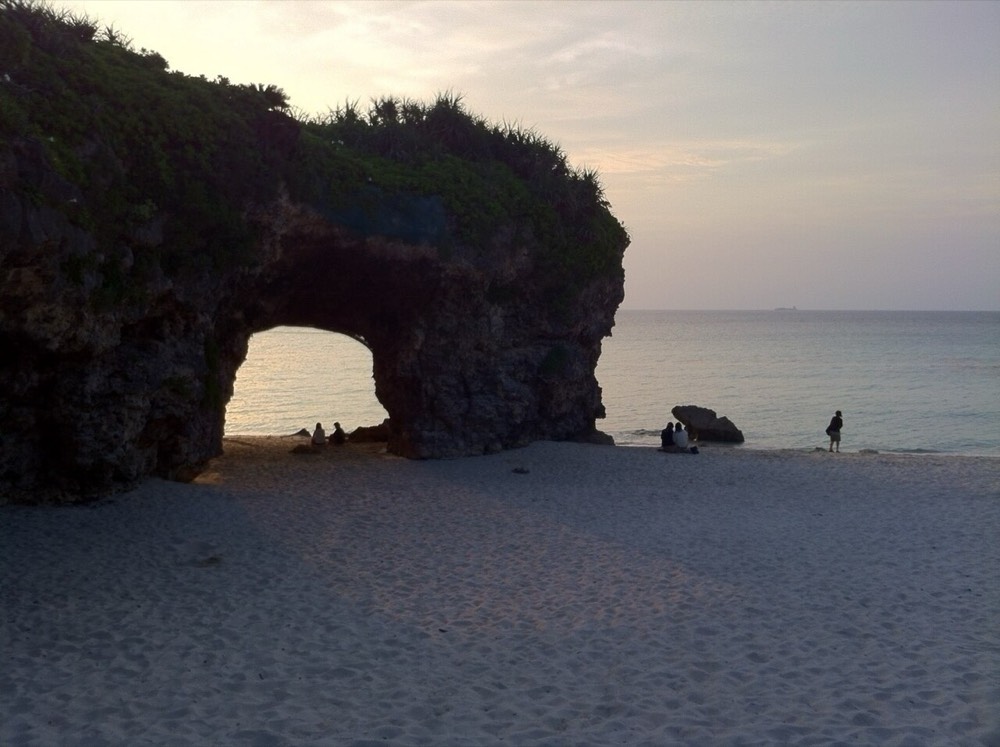
| Sunayama Beach | North of central Hirara | Reached over a sand dune; famous for its sea-eroded rock arch[10] | Photos, evening walks |
| Aragusuku Beach | Southeast | Coral and tropical fish visible in shallow water near shore[10] | Beginner snorkeling |
| Yoshino Beach | Southeast | A large reef lagoon; the city describes it as having some of the most tropical fish species and numbers on the island[10] | Snorkeling |
| Toguchi Beach | Irabu Island | Fine white sand, usually quiet[10] | A stop on an Irabu Island day |
| Painagama Beach | Near central Hirara | About 5 minutes by car from the city, popular with locals[10] | City stays with little time |
Parking and gear rental at Aragusuku and Yoshino beaches are mostly run by local businesses with their own pricing, so follow the notices on site. Cape Higashi-Hennazaki, at Miyakojima's southeastern tip, is not a beach but a long, narrow cape reaching into the sea, and fits on the same day as Yoshino Beach.
How many days in Miyakojima? 2-, 3- and 4-day itineraries
The short answer: 3 days and 2 nights is ideal for a first visit, with a day each for Irabu Island, Ikema Island in the north and the southern beaches. With only 2 days you have to choose; for diving or a weather buffer, plan 4 days. The examples below assume a rental car and a hotel in Hirara. All times are approximate and will shift with sea conditions and traffic.
3 days, 2 nights (recommended)
| Time | Day 1: Arrival + southwest | Day 2: Irabu and Shimoji islands | Day 3: North + departure |
|---|---|---|---|
| Morning | Land, pick up the car | 9:00 cross Irabu Bridge, Makiyama Observatory | 9:00 drive to Ikema Bridge, loop Ikema Island |
| Midday | Lunch in Hirara, drop bags at the hotel | Lunch on Irabu Island | Lunch in Hirara |
| Afternoon | Cross Kurima Bridge, Ryugujo Observatory | 17END, Tori-ike, Toguchi Beach | Sunayama Beach, then return the car and head to the airport |
| Evening | Sunset at Yonaha Maehama | Sunset at Sawada Beach, back to the city | — |
2 days, 1 night: On the afternoon of day 1, do Kurima Bridge and Maehama. On the morning of day 2, cross Irabu Bridge to 17END and be back in the city by noon; decide on Sunayama in the afternoon depending on your flight. You will have to choose between Ikema Island and snorkeling in the south.
4 days, 3 nights: Use the 3-day plan and add a day in the southeast: a snorkeling tour at Aragusuku or Yoshino Beach in the morning, then Cape Higashi-Hennazaki in the afternoon. This day also works as a weather buffer; swap it with another day if heavy rain or strong wind hits.
For travelers flying Starlux from Taiwan, day 1 starts with a landing at Shimojishima Airport around 13:00, so pick up the car and start with Irabu Island on the way; on the last day, be back near Shimojishima Airport before noon[3].
Miyakojima weather: temperatures by month, typhoons and winter swimming
The short answer: April to October is the season for the water, but the rainy season runs from mid-May to late June, and August and September have the most rain and the highest typhoon risk. November to March is not cold, but the sea is cool and windy days are common, so it suits sea views plus snorkeling tours rather than whole days in the water. According to the Miyakojima Local Meteorological Office, the rainy season normally starts around 10 May and ends around 21 June, and strong typhoons are most likely to approach around September[12].
| Month | Mean temp | Mean high / low | Rainfall | Water tips |
|---|---|---|---|---|
| Jan | 18.3°C | 20.6 / 16.3°C | 138.8 mm | Wetsuit needed; mostly for sea views |
| Feb | 18.6°C | 21.1 / 16.6°C | 119.8 mm | Wetsuit needed; mostly for sea views |
| Mar | 20.1°C | 22.8 / 17.9°C | 138.7 mm | Wetsuit recommended for snorkeling |
| Apr | 22.5°C | 25.1 / 20.4°C | 148.7 mm | Water season starts |
| May | 25.0°C | 27.7 / 23.0°C | 222.3 mm | Rainy season; have a rain plan |
| Jun | 27.7°C | 30.3 / 25.7°C | 194.7 mm | Midsummer after the rainy season ends |
| Jul | 28.9°C | 31.7 / 26.8°C | 151.6 mm | Peak water season; watch for sunburn |
| Aug | 28.6°C | 31.3 / 26.5°C | 257.4 mm | Typhoon season; buy changeable tickets |
| Sep | 27.6°C | 30.1 / 25.6°C | 259.3 mm | Typhoon peak; keep a backup plan |
| Oct | 25.5°C | 27.8 / 23.8°C | 157.9 mm | Still fine for the water, fewer crowds |
| Nov | 23.1°C | 25.3 / 21.3°C | 139.8 mm | Snorkeling on sunny days, a bit cool |
| Dec | 20.0°C | 22.2 / 18.2°C | 147.2 mm | Wetsuit needed; mostly for sea views |
Data are Japan Meteorological Agency normals for 1991–2020[13].
Is Miyakojima worth visiting in winter? Yes, with adjusted expectations. January and February are the coldest months, with average lows of about 16°C[12]; long sleeves and a light jacket are enough by day. A tour operator puts sea temperatures at about 23–25°C in November–December and about 21–22°C in January–February[14]; these are reference figures, not official observations. Snorkeling and trial dives still run in winter, usually with wetsuits provided. On days with strong northeasterly winds the north coast gets rough and tours may move to the sheltered side or be cancelled, so leave a spare day. For winter clothing and seasonal events across Okinawa, see Okinawa in winter.
Where to stay in Miyakojima: Hirara, Irabu Island, Maehama and southern resorts
The short answer: car-free travelers and first-timers are best off in central Hirara; with a rental car and a wish for quiet sea views, try Irabu or Shimoji Island; to stay right on white sand, choose a resort around Maehama.
| Area | Access | Pros | Cons | Best for |
|---|---|---|---|---|
| Central Hirara (incl. Turibaa) | Close to Miyako Airport; most buses start in the city | Plenty of restaurants and supermarkets, places to eat at night | Need a car to reach Maehama or Aragusuku | Car-free travelers, first-timers |
| Irabu / Shimoji islands | Close to Shimojishima Airport | Great sea views, quiet nights | Few restaurants; longer drive to southern beaches | Direct-flight arrivals with a car |
| Maehama and Kurima area | Car or hotel shuttle needed | Walk to white sand and sunsets | Few dinner options; mostly eat at the hotel | Resort stays, families |
| South (Ueno, Shigira area) | Car or hotel shuttle needed | Large resorts with full facilities, close to snorkeling spots | Far from Ikema Island in the north | Water-focused trips |
In 2026 the Turibaa district north of Hirara Port gained Canopy by Hilton and the Yard miyakojima shopping complex, which opened the same day; both Hilton hotels run free shuttles to and from Miyako Airport[2]. To compare areas on Okinawa's main island, or for the Okinawa accommodation tax starting in February 2027 (Miyakojima City is on the list), see where to stay in Okinawa.
Who is Miyakojima for? Final tips
Good fit: Travelers who want clearer water than on Okinawa's main island, are happy to drive between sights and like quiet islands; travelers departing from Taipei, Taichung, Seoul or Busan who want to reach an outer island on a single direct flight.
Not a great fit: Travelers who will not drive but want to see many places in a day; people who mainly want to spend hours in the water but can only go in January or February; budget travelers stuck with the summer peak season.
Before you go, check these points:
- Book flights first, then the car and hotel: Rental cars often run short in peak season, so handle all three together[4].
- Know which airport you are using: Direct flights land at, and depart from, Shimojishima Airport, so plan where you return the car.
- Do not swim alone at unmanaged beaches: Many natural shores are not designated swimming beaches[10]; snorkel on a tour or with others.
- In typhoon season, buy changeable tickets: August and September are the wettest months, and strong typhoons are most likely around September[12].
FAQ
Are there direct international flights to Miyakojima?
Yes, but they land at Shimojishima Airport, not Miyako Airport. The Shimojishima schedule for 25 October 2026 to 27 March 2027 lists Starlux to Taipei (Taoyuan) on Monday, Wednesday and Saturday, and to Taichung on Wednesday and Saturday, plus Jin Air to Seoul Incheon daily and to Busan twice a week. From elsewhere, most travelers connect via Tokyo, Osaka or Naha.
Can you visit Miyakojima without a car?
Yes, but only if you stay in one area and book tours with hotel pickup. Four bus companies run on the island, and outlying routes often have a bus only every two to three hours. The sightseeing loop bus ended its 2025 season in late February 2026, and a 2026 season was undecided. To cover Irabu Bridge, Ikema Bridge and the southern beaches, taxis add up fast; a rental car saves the most time.
How many days do you need in Miyakojima?
For a first visit, plan 3 days and 2 nights: one day for Irabu and Shimoji islands, one for Ikema Island and Sunayama Beach in the north, and one for Maehama, snorkeling at Aragusuku Beach or Cape Higashi-Hennazaki. With 2 days you must choose; 4 days leaves room for diving, SUP or a spare day for typhoons and winter winds.
Can you swim in Miyakojima in winter?
You can get in, but it is not summer swimming. Japan Meteorological Agency normals give January an average of about 18.3°C and a low of about 16.3°C, and a tour operator puts January–February sea temperatures at about 21–22°C. Wear a wetsuit for snorkeling; most tours lend one. On days with strong northeasterly winds the north coast gets rough, so switch to a sheltered beach or another day.
How do you get from Shimojishima Airport to Hirara?
The airport website lists two buses: Chuo Kotsu's direct Miyako Shimojishima Airport Liner and Miyako Kyoei Bus's airport resort line, both via Hirara Port and timed to flights; check each operator's site for fares. A taxi to the city takes about 25 minutes and costs about 4,000 yen, depending on traffic.
Sources
- Ryukyu Shimpo | Miyakojima City visitor arrivals, FY2025: 1,263,397 visitors in FY2025; 736,990 in FY2022
- Have a Good Holiday | Canopy by Hilton Okinawa Miyako Island Resort Opens on April 1, 2026: Opening date, room count, Turibaa location, airport shuttle
- Miyako Shimojishima Airport Terminal | Flight schedule, 25 Oct 2026 – 27 Mar 2027: 4 international and 3 domestic routes, days of operation and times
- Lawson Ticket Travel | Miyakojima transport guide (updated 18 June 2026): Miyako Airport routes, bus frequency, peak-season rental car shortages, hotel shuttles
- Miyako Shimojishima Airport Terminal | Taxi: About 25 minutes and 4,000 yen to the city; ride-hailing apps
- Miyako Shimojishima Airport Terminal | Bus: Chuo Kotsu and Miyako Kyoei Bus airport routes, stops and payment
- Miyako Kyoei Bus | Route 4 Yonaha–Kadekaru fare table (revised 20 August 2022): Route via Miyako Airport, Yonaha and Kurima; adult fares 140–480 yen
- Miyakojima Loop Bus | Notices: FY2025 service ended 28 February 2026; FY2026 undecided
- Tabi-mag | Okinawa's 20 best sea bridges: Lengths and opening years of Irabu, Ikema and Kurima bridges
- Miyakojima City | Beaches and marine leisure: Beach descriptions and the warning that many shores are not designated swimming beaches
- Miyakojima Tourist Association | Yonaha Maehama Beach: About 7 km of white sand, views of Kurima Island
- Miyakojima Local Meteorological Office | Climate of the Miyako region: Normal rainy season dates, typhoons, January–February lows
- Toki no Kensaku | Miyakojima climate (JMA normals 1991–2020): Monthly mean, high, low temperature and rainfall
- VELTRA YOKKA | Activities for a winter trip to Miyakojima: Reference winter sea temperatures
Fares, opening hours and event dates can change. Information checked on 2026.11.03; please confirm with official sources before you go.