Takachiho Gorge Day Trip: Rowboat Reservations, Manai Falls, Takachiho Shrine Night Kagura and Getting There
Takachiho Gorge rowboats cost 4,100–5,100 yen per 30 minutes, booked online from 2 weeks ahead. Plus Manai Falls, night kagura, Amano-Iwato Shrine and bus routes.
Quick answer
Rowboats at Takachiho Gorge (Takachiho, Miyazaki) cost 4,100 or 5,100 yen per boat for 30 minutes depending on the date, 8:30–17:00. Online booking opens at 9:00 two weeks before and closes at 9:00 two days before; phone bookings are not accepted. Takachiho Shrine's night kagura runs nightly 20:00–21:00 for 1,000 yen per adult. Express buses take about 3 hours from Kumamoto Station and about 3.5 hours from Fukuoka, with few runs and reservations required. Autumn leaves are forecast to peak from November 16, 2026.
Takachiho Gorge (高千穂峡, Takachiho-kyo) lies in Takachiho Town in northern Miyazaki Prefecture, a gorge cut by the Gokase River through lava from the Aso volcano. With its columnar basalt cliffs and Manai Falls, it is one of Kyushu's most iconic natural sights. This day-trip guide covers how to book a Takachiho Gorge rowboat and what it costs, how to fit in Manai Falls, the Takachiho Shrine night kagura, Amano-Iwato Shrine and Amano-Yasukawara, and how to get there from Kumamoto, Fukuoka and Nobeoka, so you can enjoy a full day in a mountain area with few transport connections.
What is Takachiho Gorge? Manai Falls and the gorge trail
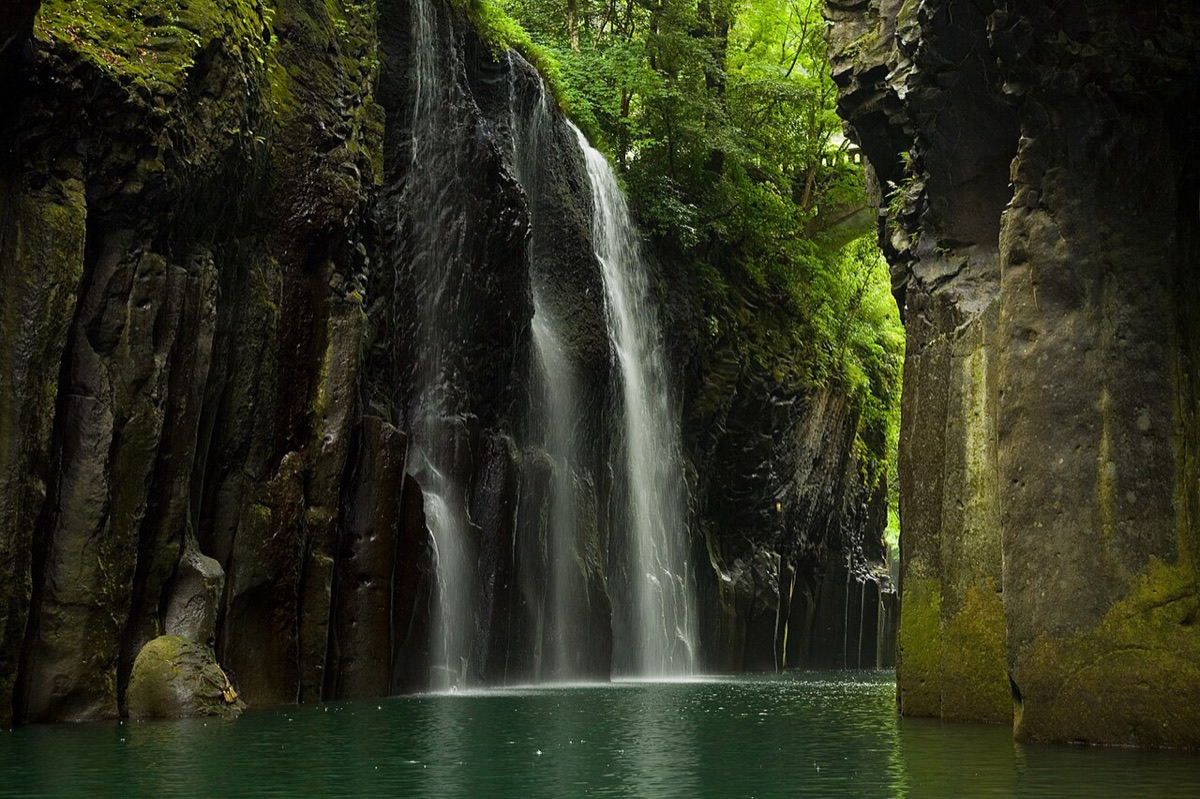
Bottom line: Takachiho Gorge is a gorge about 7 km long from east to west, with cliffs up to about 100 m high (about 80 m on average). Its most famous view is Manai Falls (真名井の滝), about 17 m high, pouring from the cliff into the river[4].
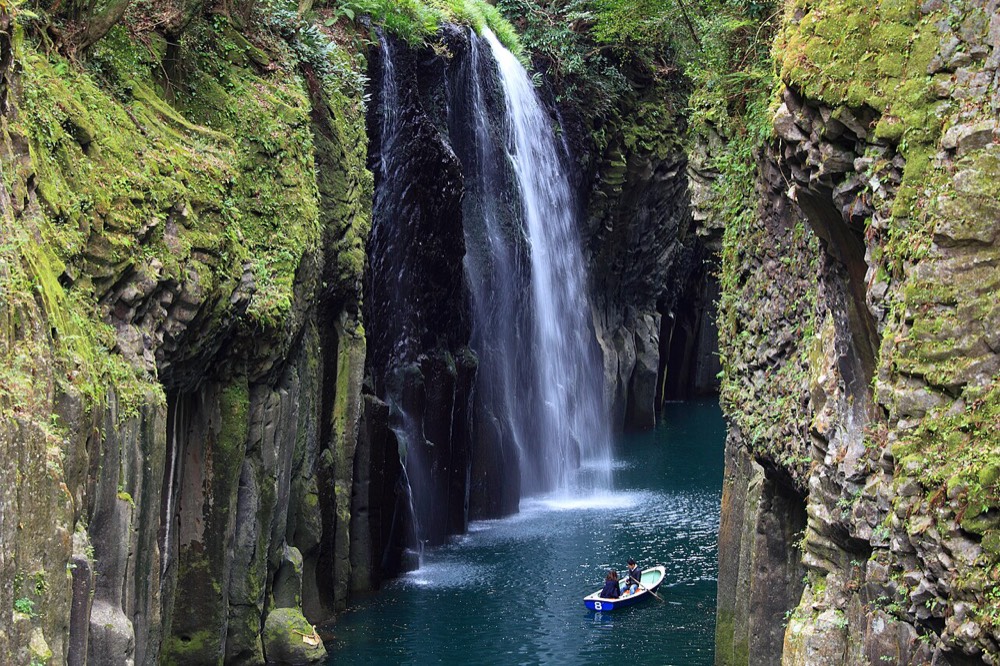
According to the Takachiho Tourist Association[4]:
- Geology: pyroclastic flows from the Aso volcano cooled into columnar joints, which the river then eroded into a deep V-shaped valley. The cliff called "Sennin no Byobu-iwa" (仙人の屏風岩) is made of columnar joints.
- Status: designated a national Place of Scenic Beauty and Natural Monument in 1934 under the name Gokase River Gorge, and made part of Sobo-Katamuki Quasi-National Park in 1965. Manai Falls is one of Japan's Top 100 Waterfalls.
- Trail: a walking trail of about 1 km runs along the gorge, with views down to the boating area and the falls. The official site has posted notices about partial trail closures, so check the latest notice before you go.
You can see Manai Falls from the trail without boating, but to look up at the falls and cliffs from the water, a rowboat is the most direct way. Autumn is also popular: the Japan Weather Association's second forecast on October 14, 2026 puts the start of peak foliage at Takachiho Gorge on November 16, earlier than last year (November 26)[12]. For other foliage spots in Kyushu, see Kyushu autumn leaves 2026.
Takachiho Gorge rowboats: fees, hours and rules
Bottom line: each boat costs 4,100 or 5,100 yen for 30 minutes, depending on the date. Hours are 8:30–17:00, with last boarding at 16:30[2].
| Item | Details |
|---|---|
| Fee | 4,100 or 5,100 yen per boat for 30 minutes, per the official calendar; overtime 1,000 yen per 10 minutes |
| Price pattern | In October 2026, mostly 4,100 yen Tuesday–Thursday and 5,100 yen Friday–Monday, with exceptions |
| Capacity | 3 per boat; up to 4 with a preschool child; no switching boats |
| Hours | 8:30–17:00, last boarding 16:30; may close early if queues build |
| Who can row | Junior high school students and older only |
| Payment | Online bookings by credit card only |
Rules and closure conditions listed by the operator[2]:
- Closures: high river levels, scheduled safety inspections (every January, April, July and October), emergency inspections, and after any earthquake of seismic intensity 3 or higher in Takachiho.
- Not allowed on board: standing, swapping rowers, drinking and smoking; no pets or large luggage.
- Life jackets: wear them as instructed. If yours inflates near Manai Falls, there is a 3,000 yen fee to replace the gas canister.
- No refunds for lateness: if you miss your slot, you cannot change it or get a refund.
- Rain gear: raincoats are sold on site (L size only, 200 yen).
The boating area sits right below the falls and the spray is heavy up close, so waterproof your camera and phone.
How to reserve a Takachiho Gorge rowboat: same-day tickets and reservation-only days
Bottom line: online booking opens at 9:00 two weeks before your boating date and closes at 9:00 two days before. Phone bookings are not accepted and there is no waitlist[3].
Booking steps:
- From the boat page on the Takachiho Tourist Association site, go to the "高千穂峡貸しボート予約サイト" (rowboat reservation site)[3].
- When booking opens at 9:00 two weeks ahead, choose your date and time slot (for weekends and foliage season, book as soon as it opens).
- Pay by credit card and keep the confirmation email.
- Arrive early on the day; late arrivals are not held and slots cannot be changed[2].
Without a booking, same-day tickets are sold on site until they run out[2]. Note that the operator designates reservation-only days: in October 2026, Saturdays, Sundays and holidays; in November, some weekdays as well as weekends and holidays; in December, weekends, holidays and December 28–31[2]. On foliage-season weekends, a booking is effectively essential.
Parking is another key point. There are five lots around the gorge. No. 1 Oshioi (1,000 yen) is closest to the boats but not reserved for boat users; No. 3 Ohashi (800 yen) and No. 4 Oshikata (500 yen) are free for the first 60 minutes, with fees charged 8:00–17:00[4]. In 2026, an extra gorge-area shuttle bus runs on holiday and foliage-season dates (November 1–3, 7, 8, 14, 15 and 21–23), 8:30–17:00 every 20–30 minutes, for 300 yen for junior high students and older, cash only[9].
Takachiho Shrine night kagura: times, fees and booking
Bottom line: Takachiho Shrine performs night kagura in its kagura hall every night from 20:00 to 21:00, for 1,000 yen per adult, with elementary school children and younger free. The only nights without a performance are December 31, January 1 and November 22–23[5].
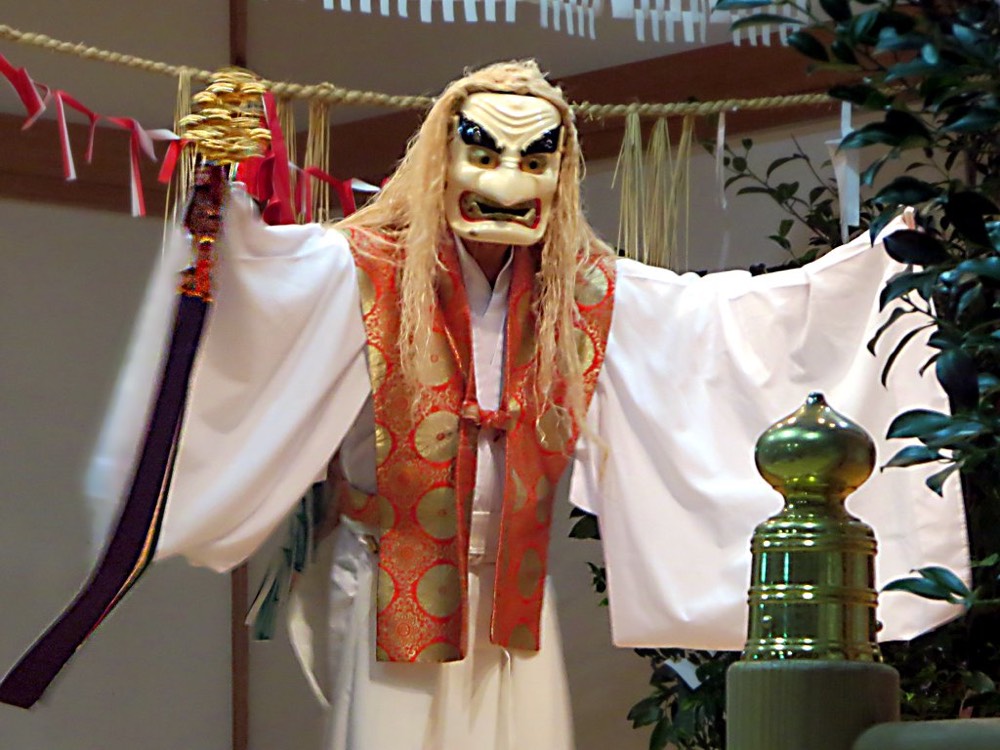
Takachiho night kagura is a nationally designated Important Intangible Folk Cultural Property, originally a cycle of 33 dances offered through the night in villages in winter. The shrine's "Takachiho Kagura" presents four representative dances, performed in rotation by preservation groups from different villages: Tajikarao, Uzume, Totori and Goshintai[5]. These dances relate to the myth of the sun goddess Amaterasu hiding in the Amano-Iwato cave, so seeing them first makes a visit to Amano-Iwato Shrine more meaningful.
| Item | Details |
|---|---|
| Time | Nightly 20:00–21:00 |
| Venue | Kagura hall inside Takachiho Shrine (tatami seating, no chairs) |
| Fee | Adults 1,000 yen; elementary school children and younger free |
| Online booking | Opens at 10:00 thirty days ahead, closes at 17:00 on the day; card only |
| On-site tickets | From 19:30 at the kagura hall window |
| Capacity | About 300 (about 230 online, 50–60 on the day) |
| Cancellation fees | 10% until 2 days before, 50% the day before, 100% on the day |
Online bookers check in from 19:00 with the QR code in their confirmation email[5]. Seating is first come, first served, and you may bring a cushion. Takachiho Shrine is worth a daytime visit too: its main hall and a pair of iron guardian dogs are national Important Cultural Properties[15].
Traditional village night kagura (mid-November to February)
In winter, each village chooses a night to dance from evening until the next morning in a private home or community hall serving as the "kagura lodging." As of October, the official 2026–2027 schedule has not been updated, so the following is for reference from past seasons: in 2025–2026, night kagura ran from November 15, 2025 to February 7, 2026 in villages including Oshikata, Kamino, Shimono, Iwato, Mukoyama, Mitai, Kawachi and Kamitabaru[6]. Visitors customarily bring "hatsuho-ryo" as an offering of thanks, and some villages share "furumai" food; the association stresses that the offering is not payment for a meal[6]. Ask the Takachiho Tourist Association about dates and whether visitors can attend.
Amano-Iwato Shrine and Amano-Yasukawara: a walk through myth
Bottom line: Amano-Iwato Shrine (あまのいわとじんじゃ) is about 15 minutes by car from Takachiho Bus Center. At the West Shrine you can pay respects to the sacred Amano-Iwato cave, then walk about 10 minutes along the Iwato River to Amano-Yasukawara[7].
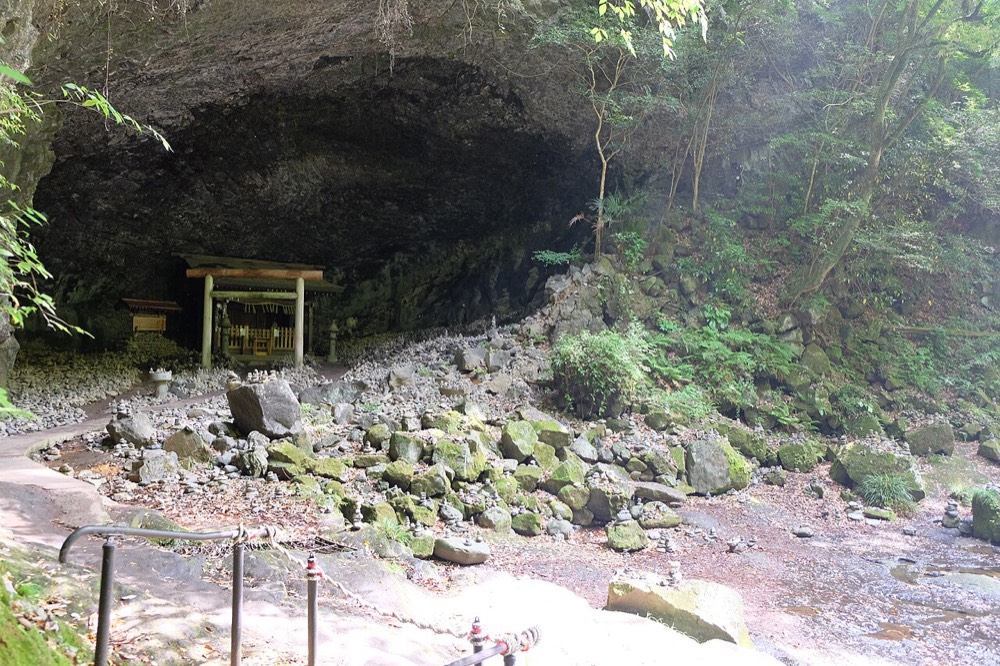
Key points from the tourist association[7]:
- West Shrine (Nishi Hongu): its sacred object is Amano-Iwato, the cave where Amaterasu hid, and it enshrines Ohirume-no-mikoto. Priests lead visitors to view the cave at set times; follow the schedule the shrine publishes.
- East Shrine (Higashi Hongu): across the Iwato River, about 10 minutes' walk from the West Shrine, enshrining Amaterasu; its sacred tree is a seven-trunk cedar.
- Amano-Yasukawara: the large cave where the gods are said to have gathered to plan how to lure Amaterasu out, its riverbank covered with small stone towers stacked by visitors, about 10 minutes' walk along the river from the West Shrine.
The association page does not list guided-viewing times, fees or photography rules; call Amano-Iwato Shrine (0982-74-8239) or check the shrine's website. Mornings are quieter with softer light, a good time for Amano-Yasukawara.
Takachiho Amaterasu Railway: the Grand Super Cart onto a 105 m bridge
Bottom line: the Takachiho Amaterasu Railway (高千穂あまてらす鉄道) runs the "Grand Super Cart" sightseeing vehicle on the abandoned Takachiho Railway line. From April 2026 it costs 2,300 yen for adults, 1,500 yen for children and 800 yen for preschoolers, and advance reservations are not accepted[10].
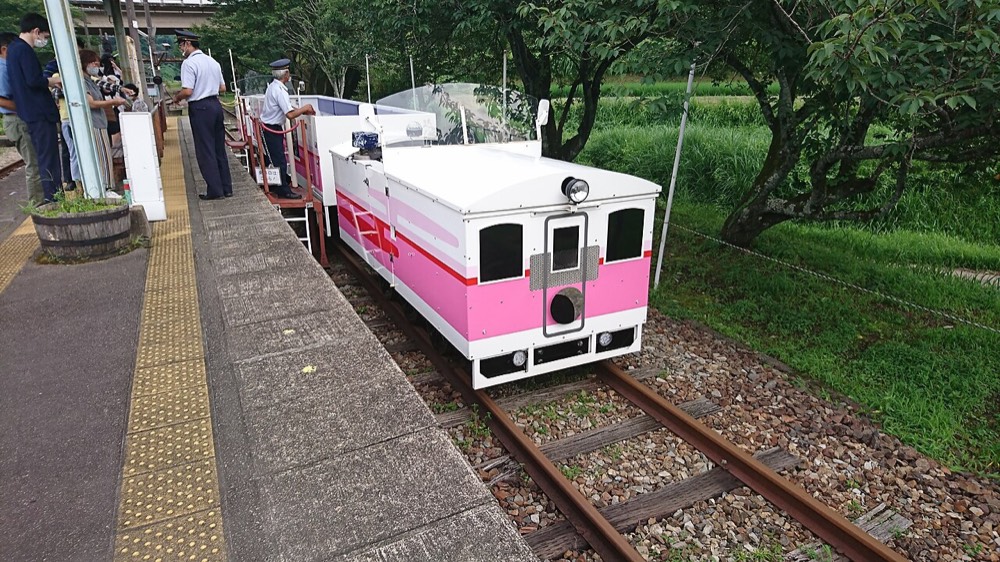
- Route: from the former Takachiho Station through tunnels to the Takachiho railway bridge and back, about 30 minutes round trip; the bridge is about 105 m high and the cart stops on it so passengers can take in the view[11].
- Tickets: tickets for all of the day's departures go on sale at the Takachiho Station window at opening, first come, first served, and cannot be changed or refunded[10].
- Hours: the park opens at 8:40, first departure 9:00; the site also mentions the third Thursday of each month as a closed day[10].
- Weather: services may stop in rain or strong wind, and in strong wind the cart may not go onto the bridge[11].
Because tickets are first come, first served on the day, in foliage season head to Takachiho Station first thing to buy tickets, then go to the gorge.
Getting to Takachiho: from Kumamoto, Fukuoka and Nobeoka
Bottom line: Takachiho has no railway, so public transport means buses only, with very few runs a day and most requiring reservations; renting a car gives the most freedom[8].
| From | How | Time | Notes |
|---|---|---|---|
| Kumamoto Station | Express bus "Aso / Takachiho" | About 3 hours | Tourist association lists 1 run a day, reservation required |
| Aso Station | Sanko Bus "Asochiho" | About 2 hours 10 minutes | Sanko Bus page: 3 round trips daily on weekdays and holidays, seat-limited |
| Fukuoka (Hakata) | Nishitetsu highway bus "Gokase" | About 3 hours 30 minutes | 4 runs a day, reservation required |
| Nobeoka Station | Local bus | About 1 hour 30 minutes | Timetable on the tourist association site |
| Kumamoto Airport (drive) | Rental car | About 2 hours | — |
| Kurokawa Onsen (drive) | Prefectural Route 11, National Route 325 | About 1 hour 30 minutes | — |
Times and runs come from the tourist association's access page and Sanko Bus's official site[8][14]; the two sites describe the Asochiho's runs and travel time differently, so rely on the operator's site and booking page. Bus fares are set and revised by each operator, so they are not listed here; confirm when you book.
Planning tips:
- SUNQ Pass: in the SUNQ route table, the Aso–Takachiho route is valid with the "All Kyushu" and "Southern Kyushu" passes and requires a seat reservation; it also lists Kumamoto–Nobeoka (All Kyushu, Southern Kyushu) and Fukuoka–Nobeoka (All Kyushu only) routes[13]. Before buying, ask SUNQ whether you can board or alight at Takachiho on those routes.
- Rental car: it is about 2 hours from Kumamoto Airport and about 1.5 hours from Kurokawa Onsen, so you can pair the trip with Kurokawa Onsen or Kumamoto and Aso the day before or after. Mountain roads are winding, and fog can form on autumn and winter mornings.
- Once in Takachiho: most buses stop at Takachiho Bus Center; to reach the gorge and Amano-Iwato Shrine, take a taxi, the town community bus or a rental e-bike[8].
For a comparison of rail, buses and passes across Kyushu, see the Kyushu transport guide.
Takachiho day-trip itinerary: the gorge by day, kagura by night
Bottom line: ideally, stay one night in Takachiho, with the gorge and shrines by day and the 20:00 night kagura in the evening; on a same-day round trip you will need to skip the kagura or confirm return buses.
| Time | Plan | Notes |
|---|---|---|
| 8:40 | Buy Takachiho Amaterasu Railway tickets | Secure a departure for the day |
| 9:00–10:30 | Takachiho Gorge rowboat and trail | Fewer people in the morning; book ahead |
| 11:00–12:30 | Amano-Iwato Shrine, Amano-Yasukawara | About 15 minutes by car |
| 12:30–13:30 | Lunch | Central Takachiho or near the gorge |
| 14:00–15:00 | Grand Super Cart | Adjust to the departure you bought |
| 15:30 | Visit Takachiho Shrine | See the main hall and guardian dogs |
| 20:00–21:00 | Takachiho Shrine night kagura | Book online in advance |
If you have time the next morning, drive up to Kunimigaoka (国見ヶ丘), a 513 m lookout where clear, calm, cold autumn mornings can bring a sea of clouds[15].
Before you go
- After typhoons or heavy rain, boats often stop for water-level and safety checks; on October 25 and 26, 2026 they were closed all day because of a typhoon, so check the official operating status before you go.
- Boat bookings open at 9:00 two weeks ahead, and foliage-season weekends go fast; without a booking, check whether your day is reservation-only.
- On November 22 and 23, Takachiho Shrine's kagura hall has no performance because the night kagura festival is held instead.
- The 2026–2027 village night kagura schedule has not been announced yet; ask the tourist association.
- Buses are infrequent, so confirm return runs and reservations in advance; rent a car for more freedom.
- For more Kyushu trips, start from the Kyushu travel overview.
FAQ
Do I have to book a Takachiho Gorge rowboat in advance?
Not always, but book for busy days. Online booking opens at 9:00 two weeks before and closes at 9:00 two days before, card payment only, with no phone bookings or waitlist. Without a booking you can buy same-day tickets until they sell out, but some days are reservation-only, such as October weekends and holidays, many November days and December 28–31.
How much does a Takachiho Gorge rowboat cost, and how many people fit?
Each boat is 4,100 or 5,100 yen for 30 minutes depending on the date (Tuesday to Thursday is mostly cheaper), with overtime at 1,000 yen per 10 minutes. Boats hold 3 people, or up to 4 with a preschool child. Only junior high school students and older may row. Hours are 8:30–17:00, last boarding 16:30.
What time is the Takachiho Shrine night kagura? Do I need to book?
It starts at 20:00 every night and lasts about an hour in the kagura hall at Takachiho Shrine; adults pay 1,000 yen and elementary school children and younger are free. Book online from 10:00 thirty days ahead (card only), or buy at the kagura hall window from 19:30 on the day. There is no performance on December 31, January 1 or during the November 22–23 kagura festival.
How do I get to Takachiho without a car?
An express bus runs from Kumamoto Station to Takachiho in about 3 hours, with very few runs and reservations required; Nishitetsu's Gokase highway bus from Hakata, Fukuoka takes about 3.5 hours; Sanko Bus's Asochiho runs from Aso Station; and a local bus from Nobeoka Station takes about 1.5 hours. From Takachiho, use taxis or rent an e-bike to reach the gorge and Amano-Iwato Shrine.
When is the best time to visit Takachiho Gorge?
Autumn foliage season is the most popular; the Japan Weather Association's October 14, 2026 forecast puts the start of peak color at Takachiho Gorge on November 16. Early-summer greenery with strong water flow is also beautiful. From mid-November to early February, villages hold traditional night kagura. Boats often stop after typhoons or heavy rain, so watch official notices.
Sources
- Takachiho Tourist Association official site: Boat operating status, typhoon closure notice, links
- Takachiho Tourist Association: Takachiho Gorge rowboats, status and fees: Boat fees, capacity, hours, closure conditions and reservation-only days
- Takachiho Tourist Association: Takachiho Gorge rowboats: Online booking open and close times; no phone bookings or waitlist
- Takachiho Tourist Association: Takachiho Gorge: Gorge dimensions, Manai Falls, trail length, designations and parking
- Takachiho Tourist Association: Takachiho Kagura (night kagura) information and booking: Takachiho Shrine night kagura times, fees, booking, dances and non-performance days
- Takachiho Tourist Association: Night kagura schedule: 2025–2026 village night kagura season and viewing notes
- Takachiho Tourist Association: Amano-Iwato Shrine: West and East shrines, distance to Amano-Yasukawara and access
- Takachiho Tourist Association: Access: Bus and driving times from Kumamoto, Fukuoka, Nobeoka and Miyazaki
- Takachiho Tourist Association: 2026 Takachiho Gorge area shuttle bus: 2026 shuttle operating days, fares and parking
- Takachiho Amaterasu Railway official site: Fares from April 2026, first departure, ticket sales
- GAZOO: Super cart on a scenic line in the land of the heavenly descent: Grand Super Cart round trip of about 30 minutes, height of the Takachiho railway bridge
- tenki.jp 2026 autumn foliage forecast (Japan Weather Association): Second forecast, October 14, 2026: Takachiho Gorge peak from November 16
- SUNQ Pass: Available areas: Pass types valid on Aso–Takachiho, Kumamoto–Nobeoka and Fukuoka–Nobeoka routes (as of April 1, 2026)
- Kyushu Sanko Bus: Aso–Takachiho line: Asochiho runs per day, travel time and seat-limited system
- Takachiho Tourist Association: Sightseeing spots: Takachiho Shrine, Kunimigaoka and Amano-Yasukawara
Fares, opening hours and event dates can change. Information checked on 2026.10.25; please confirm with official sources before you go.