Rurikoin Autumn 2026 Special Viewing: Opening Hours, Reservations, Admission and Getting to Yase
Rurikoin autumn 2026: open Oct 1–Dec 13, reservations only Nov 13–Dec 6, ¥2,000 entry, desk reflection photo rules, foliage timing and the Eizan Railway to Yase.
Quick answer
Rurikoin's 2026 autumn special viewing runs October 1 to December 13. On regular days it opens 10:00–17:00 (last entry 16:30), and admission is ¥2,000, or ¥1,000 for junior high students and older with a student ID. From November 13 to December 6 only visitors with an advance reservation may enter; Japanese travel media report that this year used a return-postcard lottery that closed in August. The leaves usually peak from mid-November to early December. Take the Eizan Railway about 14 minutes from Demachiyanagi to Yase-Hieizanguchi, then walk about 10 minutes.
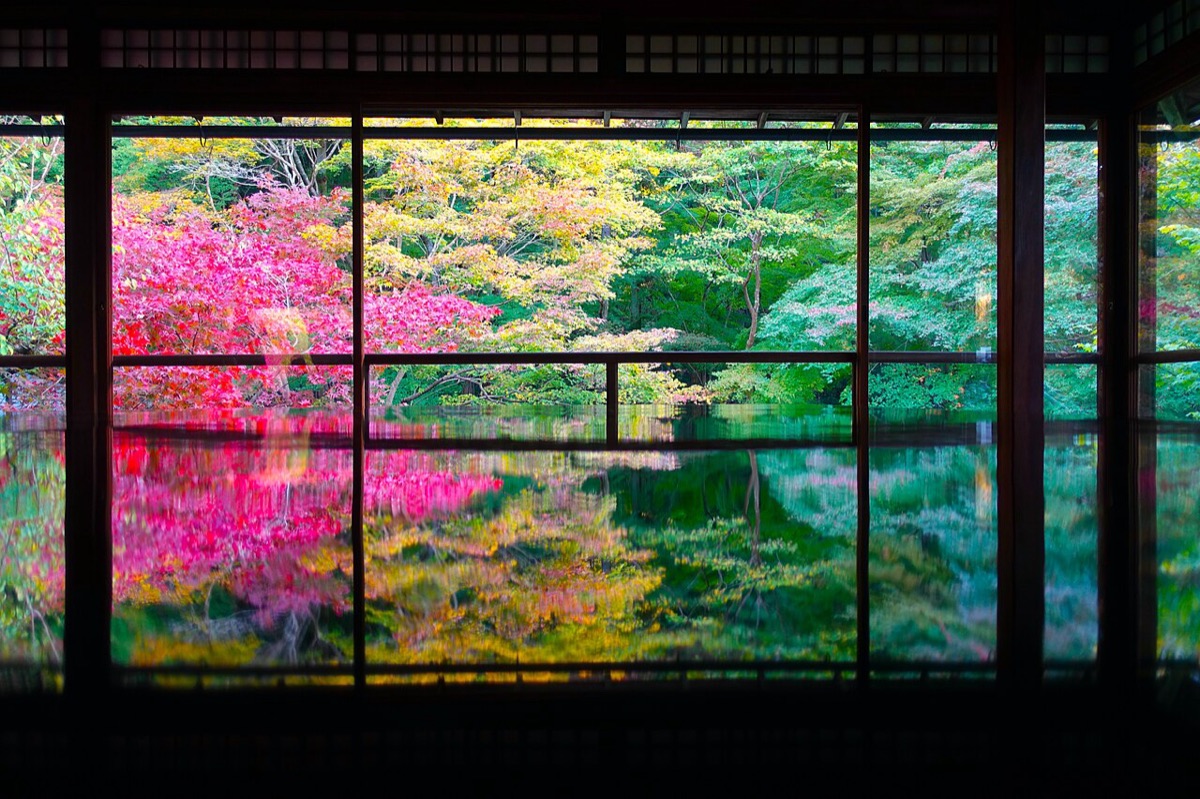
Rurikoin (Ruriko-in) is in Yase, in the northern part of Kyoto. Its most famous image is the "reflected autumn leaves" on the black desk in the upstairs study, where the whole canopy of maples is mirrored in the polished surface. The temple opens only during set periods in spring, summer and autumn. Its 2026 autumn special viewing runs from October 1 to December 13, and from November 13 to December 6, the peak foliage period, only visitors with an advance reservation may enter[1][2]. This guide covers this year's hours and admission, how reservations work, what to do if you don't have one, the photography rules for the desk reflection, getting there on the Eizan Railway, and how to combine Rurikoin with Yase, Kibune and Kurama in one day.
Rurikoin Autumn 2026 Special Viewing: Dates and Opening Hours
In short: the autumn special viewing runs from Thursday, October 1 to Sunday, December 13. Regular hours are 10:00–17:00 with last entry at 16:30, November 13 to December 6 is reservation-only, and the temple is closed outside the viewing period[1][2].
| Item | Autumn 2026 |
|---|---|
| Special viewing period | Thu Oct 1 – Sun Dec 13[1] |
| Regular hours | 10:00–17:00, last entry 16:30[1] |
| Reservation-only period | Fri Nov 13 – Sun Dec 6, reservation holders only[1][2] |
| Hours during reservation period | Reported as 9:00–18:00 (last entry 17:30); check the official site[4] |
| Temple light-up | None[1] |
| Usual peak | Mid-November to early December[2] |
Rurikoin is normally closed to the public and opens only for its spring, summer and autumn special viewings[2]. This year's reservation period starts a few days later than in 2025 (November 8 to December 7) and is slightly shorter[5]. Many older articles online still show last year's dates, so check the year when you read up.
How Do Rurikoin Reservations Work? 2026 Rules and Visiting Without One
In short: you must reserve in advance for November 13 to December 6. Japanese travel media report that this year used a return-postcard lottery with a deadline of August 20 (by postmark) and results sent in late September. If you are only planning now, choose days that do not need a reservation[4].
Based on 2026 reports, the reservation process works like this[4]:
- In summer, check the official site for the lottery notice and how to apply.
- Send an application on an "ofuku hagaki" (a Japanese return postcard), stating your preferred date, group size and so on.
- The deadline is August 20 by postmark.
- Replies arrive around September 25, and winners enter with the reply card.
- The official Q&A says same-day reservations are not accepted.
This process is not easy for overseas visitors, because return postcards must be sent from within Japan and the reply also goes to a Japanese address. In 2025 there were several rounds of lottery, including a "third lottery"[5], and the method may change from year to year, so if you want to go next year, start watching the official site in summer.
If you missed the lottery or only decided to go this year, the practical choice is late October to November 12, or December 7 to 13. These periods need no reservation; just queue on site[1]. In early November the leaves have usually only partly turned, but the mix of red, green and yellow photographs beautifully, and in early December you may see fallen leaves scattered over the moss garden. Another option is JR Central's night special viewing (see the next section), but that also needs a booking and places are limited.
Rurikoin Admission and How to Join the Night Special Viewing
In short: admission for autumn 2026 is ¥2,000 per person, or ¥1,000 for junior high students and older with a student ID[1].
| Ticket | Price |
|---|---|
| General | ¥2,000[1] |
| Junior high and older (with student ID) | ¥1,000[1] |
| Elementary age and younger | Reported as one free child per adult, ¥1,000 from the second child[4] |
Several Japanese sites note that the reception accepts cash only[4], so bring yen notes. Tour groups are not accepted[4].
At night, the temple usually does not hold an illumination[1]. However, JR Central's 2026 autumn "Souda Kyoto, Ikou" campaign lists Rurikoin as one of its "night special viewing" temples. You must first register for "Express Yoyaku" or "Smart EX", then buy through "EX Tabisaki Yoyaku", and places are limited[3]. Glos Travel reports that the night package runs on November 14 and 15 and from November 20 to December 6 in two time slots, costing ¥6,000 including an Eizan Railway one-day pass and a round trip on the Eizan cable car and ropeway[4]. These details could not be checked item by item on JR Central's page, so confirm on the campaign page before booking.
How to Photograph the Desk Reflection: Rules and Avoiding Crowds
In short: the reflection is on the second floor of the study; aim at the desk and the maples outside the window. Tripods are banned throughout, and when it is busy you take turns and give up your spot when done[4][5].
On the second floor of the study stands a highly polished black lacquer desk, and the colours of the maples outside are mirrored in its surface, creating a symmetrical image that appears on most posters of Rurikoin. According to JR Central, the area behind the desk is off-limits, so nobody blocks the front of the view[5], but the space in front of the desk is often packed. The photography rules are[4]:
- No tripods or monopods: handheld shooting only.
- No photo shoots or unauthorized commercial photography: portrait shoots in special costumes are also inappropriate.
- Take turns and keep it short: when crowded, staff direct visitors, so take a few shots and let the next person in.
- Shoes off inside the study: wear shoes that slip on and off easily, and bring thick socks in winter.
A shooting tip: the reflection on the desk is darker than the view outside, so on a phone, lowering the exposure or using HDR helps keep the colour on the desk. Holding the phone low and close to the desk captures more of the reflection.
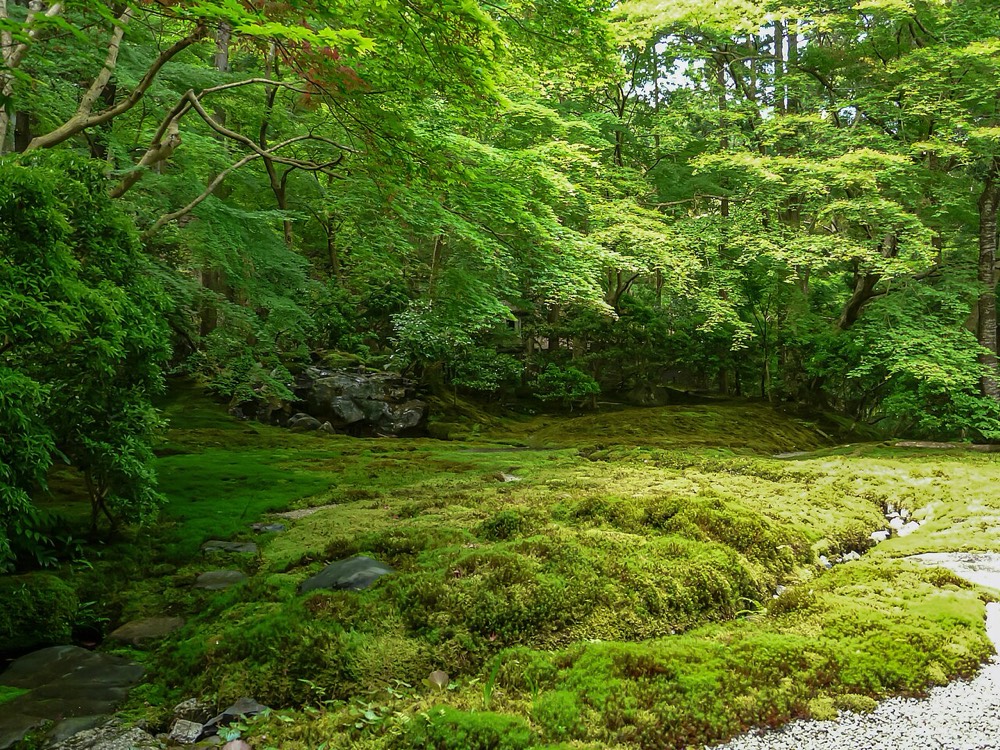
Besides the desk reflection, the grounds have three gardens: the "Sanroji Garden" near the entrance, where maples and moss intertwine; the "Ruri Garden", named for the lapis-blue (ruri) sheen of its moss in the light; and the "Garyu Garden", which uses rocks and water to depict a dragon[5]. The site was originally the villa of Meiji-era businessman Tanaka Gentaro, and the court noble Sanjo Sanetomi named it "Kikakutei". It later became a ryotei inn, and in 2005 Komyoji temple of Gifu took it over as a temple. The sukiya-style study is said to be the work of master carpenter Nakamura Sotoji[9]. The grounds also keep a traditional Yase "kamaburo" (steam-bath kiln), linked by legend to Emperor Tenmu healing his wounds[9].
When Are Rurikoin's Autumn Leaves Best? Yase Foliage Timetable
In short: the Yase maples usually start turning in early October and peak from mid-November to early December; Weathernews gives the usual peak as around November 20[1][2][8].
Yase lies at the foot of Mt. Hiei, higher and slightly cooler than central Kyoto, so the leaves turn at about the same time as the city or a little earlier. This year's forecasts generally expect Kyoto to be later than usual; for the overall picture, see the Kyoto autumn leaves 2026 guide. By what you want to see:
| What you want to see | Best timing | Reservation needed? |
|---|---|---|
| Mixed green, yellow and red, fewer people | Late October – November 12 | No |
| Full red reflection | Mid-November – early December | Yes, Nov 13–Dec 6 |
| Fallen leaves on the moss garden | December 7–13 | No |
On no-reservation days the queue starts before opening. The safest plan is to queue at the gate before 9:30, head straight upstairs when the doors open, photograph the desk reflection first, then take your time in the gardens. Around midday is usually the busiest time.
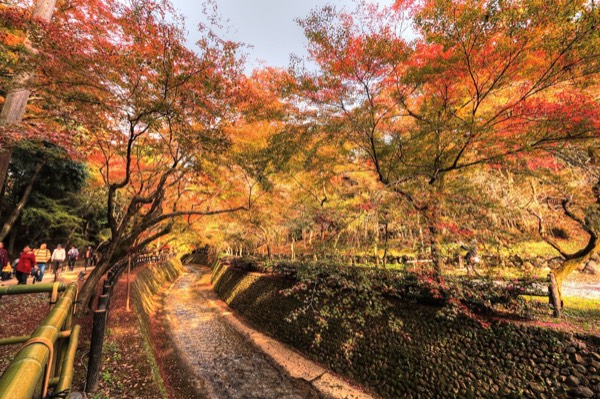
About 300 m from Rurikoin is the "Yase Momiji no Komichi" maple path, which also peaks from mid-November to early December[1][2]. It is free, so you can walk part of it before or after queuing.
Getting to Rurikoin: Eizan Railway to Yase-Hieizanguchi
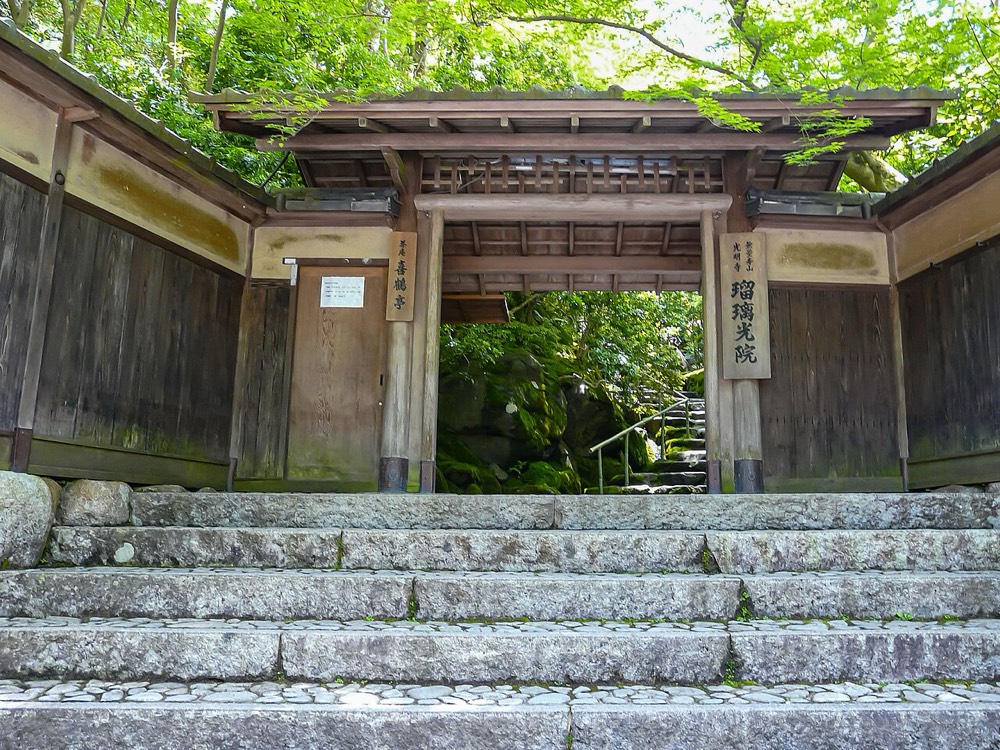
In short: get to Demachiyanagi, ride the Eizan Railway main line about 14 minutes to the Yase-Hieizanguchi terminus, then walk about 10–13 minutes[6][5].
| From | Route | Notes |
|---|---|---|
| Kyoto Station | JR Nara Line → change at Tofukuji to the Keihan Line → change at Demachiyanagi to the Eizan Railway → Yase-Hieizanguchi | JR Central also recommends this route[5] |
| Gion-Shijo, Sanjo | Keihan Line north to Demachiyanagi → Eizan Railway | Most direct |
| Demachiyanagi Station | Eizan Railway main line, about 14 minutes[6] | Get off at the terminus |
| Central Kyoto (bus) | Kyoto Bus toward Yase, get off at Yase-ekimae and walk about 7 minutes[5] | Roads often jam in foliage season |
Common questions:
- Fares: Eizan Railway fares depend on distance; check the Eizan Railway official site or the fare chart at the station. Transport IC cards such as ICOCA can also be used.
- Driving: Rurikoin has no parking, and both the temple and media recommend public transport[2].
- Eizan Railway in foliage season: on weekends the platform at Demachiyanagi often has long queues, so if you want to be there for opening, leave 30 minutes earlier.
For how to use Kyoto's transport passes, buses and subway, see the Kyoto transport guide.
How to Combine Yase, Kibune and Kurama in One Day
In short: Rurikoin, Kibune and Kurama are all on the Eizan Railway, so Rurikoin in the morning and Kibune or Kurama in the afternoon makes the smoothest day trip.
After leaving Demachiyanagi, the Eizan Railway splits at Takaragaike into two lines: the main line to Yase-Hieizanguchi and the Kurama Line to Kibuneguchi and Kurama. On the way back from Yase, change at Takaragaike for the Kurama Line instead of going back to Demachiyanagi. A suggested plan:
- 9:30 Arrive at Rurikoin and queue; enter at 10:00.
- 11:30 Walk the Yase maple path and return to Yase-Hieizanguchi Station.
- 12:15 Take the Eizan Railway to Takaragaike, change to the Kurama Line for Kibuneguchi.
- 13:00 Visit Kibune Shrine and have lunch.
- 15:00 If you have the energy, hike the Kibune–Kurama mountain trail, or take the train to Kurama.
For the Kibune and Kurama routes, trails and timings, see the Kibune and Kurama day trip guide. If you are short on time, you can stay around Yase: the Eizan Cable Car's Yase station is next to Yase-Hieizanguchi, and you can ride up Mt. Hiei for views over the Kyoto basin and Lake Biwa. The cable car sometimes runs special services in foliage season, so check the operating notices before you go.
Before You Go
- Check which period your date falls in: from November 13 to December 6 you cannot enter without a reservation; on other days you can queue on site.
- Bring yen in cash: admission is ¥2,000, and the reception is reported to accept cash only.
- Leave the tripod behind: handheld shooting only, and shoes come off inside the study.
- It closes after December 13: once the autumn viewing ends, you have to wait until next spring or summer.
- Plan it separately from central sights: Yase is a fair distance from Higashiyama and Arashiyama, so adding another major sight on the same day will be rushed. To fit Rurikoin into a wider Kyoto foliage trip, use the area-by-area plans in the Kyoto autumn leaves 2026 guide.
FAQ
Do I need a reservation for Rurikoin in autumn 2026?
Only from Friday, November 13 to Sunday, December 6, when you cannot enter without one. From October 1 to November 12 and December 7 to 13, no reservation is needed; just queue and buy a ticket on site. Japanese travel media report that this year's reservations used a return-postcard lottery that closed on August 20. Check Rurikoin's official site for the official rules.
How much is Rurikoin admission, and can I pay by card?
Admission for the 2026 autumn special viewing is ¥2,000 per person, or ¥1,000 for junior high students and older with a student ID. Several Japanese travel sites note that the reception desk accepts cash only, so bring yen notes. Tickets are sold at the reception in front of the gate.
When are Rurikoin's autumn leaves at their best in 2026?
Yase sits slightly higher than central Kyoto. The leaves usually start turning in early October and peak from mid-November to early December; Weathernews gives the usual peak as around November 20. Forecasts for this year are generally later than usual, so late November is the safer bet. Check the foliage reports a week before you go.
Can I bring a tripod to photograph the desk reflection at Rurikoin?
No. Tripods and monopods are banned on the grounds, as are photo shoots and unauthorized commercial photography, so shoot handheld only. The desk reflection is on the second floor of the study, the area behind the desk is off-limits, and when it is crowded you should take turns and keep your time short.
Does Rurikoin have a night illumination?
The temple's regular autumn special viewing is daytime only. JR Central's 2026 autumn 'Souda Kyoto, Ikou' campaign lists Rurikoin among its night special viewings, sold through JR Central's booking service with limited places. Check the campaign page for dates, time slots and prices.
How do I get to Rurikoin from Kyoto Station?
From Kyoto Station, take the JR Nara Line to Tofukuji, change to the Keihan Line to the Demachiyanagi terminus, then ride the Eizan Railway main line about 14 minutes to the Yase-Hieizanguchi terminus and walk about 10–13 minutes. There is no parking, so use public transport.
Sources
- Walkerplus autumn leaves | Rurikoin foliage peak and light-up info: 2026 autumn special viewing period, hours, admission, reservation-only period Nov 13–Dec 6, no light-up (data as of September 2026)
- Jorudan autumn leaves | Yase Rurikoin: 2026 period and reservation dates, usual peak, address, no parking, walking distance from Yase-Hieizanguchi Station
- Walkerplus | 'Souda Kyoto, Ikou' 2026 autumn special viewings and light-ups: JR Central 2026 autumn night special viewings include Rurikoin; EX members only; limited places
- Glos Travel | Rurikoin autumn leaves 2026: 2026 reservation method (return-postcard lottery, closed August 20), hours during the reservation period, photography rules, night package details (published August 2026)
- Souda Kyoto, Ikou | Rurikoin in autumn: Desk reflection on the second floor, area behind the desk off-limits, the three gardens, route from Kyoto Station (2025 information)
- Eizan Railway | Demachiyanagi Station information: About 14 minutes from Demachiyanagi to Yase-Hieizanguchi
- Rurikoin official site: Check the official site for the latest viewing and reservation notices
- Weathernews | Rurikoin autumn leaves: Usual peak from around November 20
- Good Luck Trip | Rurikoin: History of the Kikakutei villa, study architecture and garden background
Fares, opening hours and event dates can change. Information checked on 2026.10.31; please confirm with official sources before you go.